
In the Reef Islands, the Mikilinave Aiwoo Translation Ministry is committed to see the Scriptures translated into the Aiwoo Language.
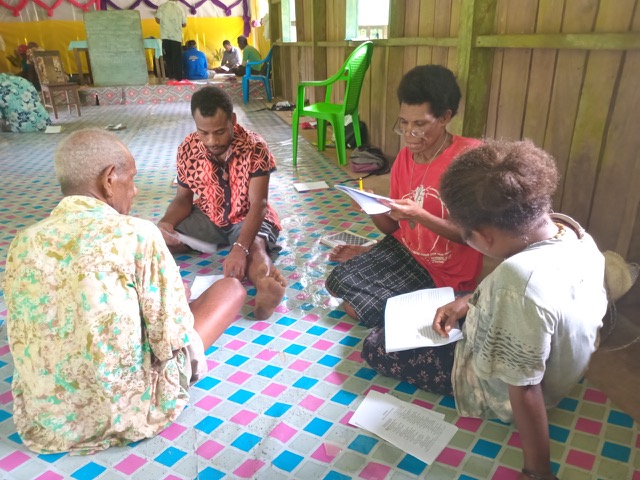
Catechists practise reading Aiwoo reading materials. Photo credit – Martha Matzke
Eighteen clergy and 31 catechists are said to be equipped the Holy Scriptures in the Aiwoo language following two sets of training by Solomon Islands literacy group, SITAG.
The book of Mark has been published and the books of Luke and Matthew are due to be consultant checked later this year, a statement by the Ministry last week said.
While Reef Islands Clergy recognise the value of the reading of Scriptures in Aiwoo, many have expressed a desire for training that would enable them to be more confident and fluent readers.
In response the Mikilinuave Aiwoo Translation Ministry planned an Aiwoo Reading Fluency training, the statement said.
A one-week training for priests and pastors, led by SITAG Literacy Consultant Timothy Matzke was held from March 17-21 in Otelo Village.
During the workshop, participants were introduced to a transition reading primer to help them understand the differences between reading English and the Aiwoo Language.
The clergy members spent time practising reading in Aiwoo and Pijin, the statement said.
During the morning devotional sessions, Timothy shared foundational principles from Scripture and the history of Bible translation.
These sessions led to participants gaining a better understanding of the importance of communicating the Gospel in a language that the people understand and value.
The clergy members expressed gratitude for the greater understanding they gained from this teaching, the statement said.
It is hoped that the clergy will continue to practise their Aiwoo reading skills and feel more confident in reading Aiwoo Scriptures and liturgies during church services.
During the closing of the training, Pastor James Lenube of the Kingdom Salvation Centre speaking on behalf participants said, “Because you came, you have woken us up to the real purpose God has given each of us.
“You have helped us see that we have been using a ‘borrowed’ language in our church ministries. You have taught us the value of using our language – the language of the common people.
“Aiwoo is the language of the people and a real language which we should be using.”
A similar training was successfully held the following week, March 24-28, for catechists, the statement said.
As a result of the two trainings, 18 clergy and 33 catechists are now better equipped to read Aiwoo Scriptures.


