Home Blog Page 247

The long walk for education

2

BY BEN BILUA
Gizo

Education slogans like “access to better education,” “education for all,” and “inclusive education” sound noble and inspiring but for the children of Marava and Niubare communities on Ranongga Island, Western Province, those words ring hollow against the harsh reality of their daily lives.

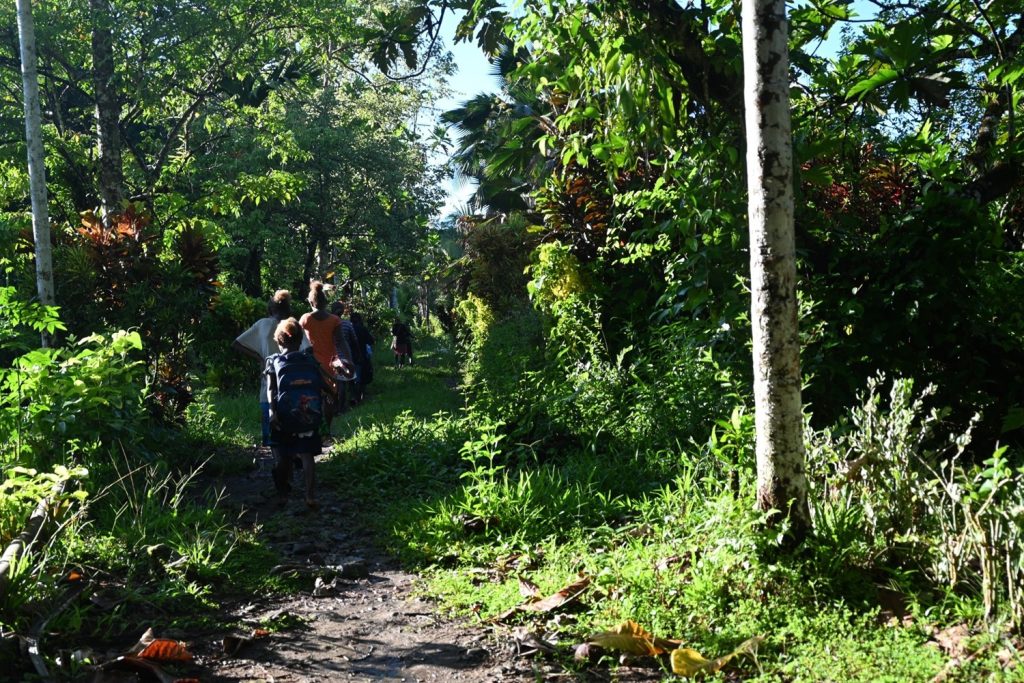
Every morning before sunrise, children lace up worn-out slippers or go barefoot for a two-and-a-half-hour journey to Pienuna Primary and Secondary School.

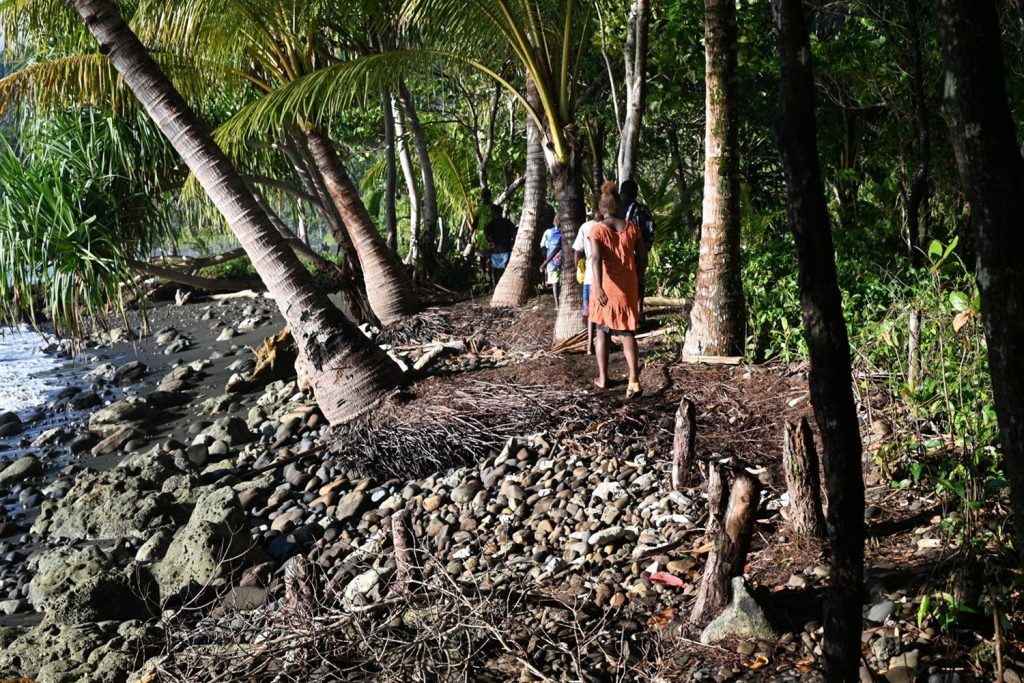
Along the way, they cross four rivers, climb treacherous slopes, and tread over sharp rocks that have bruised and bloodied countless feet. Some never make it to class; others return home with tears and injuries after slipping on the unforgiving terrain.

For 14-year-old Larrender Goletaru, this is a path of both pain and purpose. She has walked this same road for the past seven years, the same road her aunt, Mabent Sidu, once took three decades ago.

“I wake up every morning at 5:30, get ready, eat breakfast if I’m lucky, and start trekking.

“Sometimes heavy rain meets us mid-way, and we hide under coconut trees. When my books and uniform get soaked, I just turn back home,” Goletaru shared softly.

When the rivers flood, students rely on community canoes, fragile wooden canoes that sometimes capsize, forcing them to swim back to safety.

Hunger, too, is a constant companion.

“Sometimes I walk to school with an empty stomach. If my parents have no money, I just go without food until 4 p.m.,” she said.

“But I keep going because I believe education is my way out. If I quit, all my parents’ sacrifices will mean nothing,” Goletaru added.

Her aunt, Mabent, knows that pain too well. Once a determined student herself, she gave up her schooling after years of struggle.
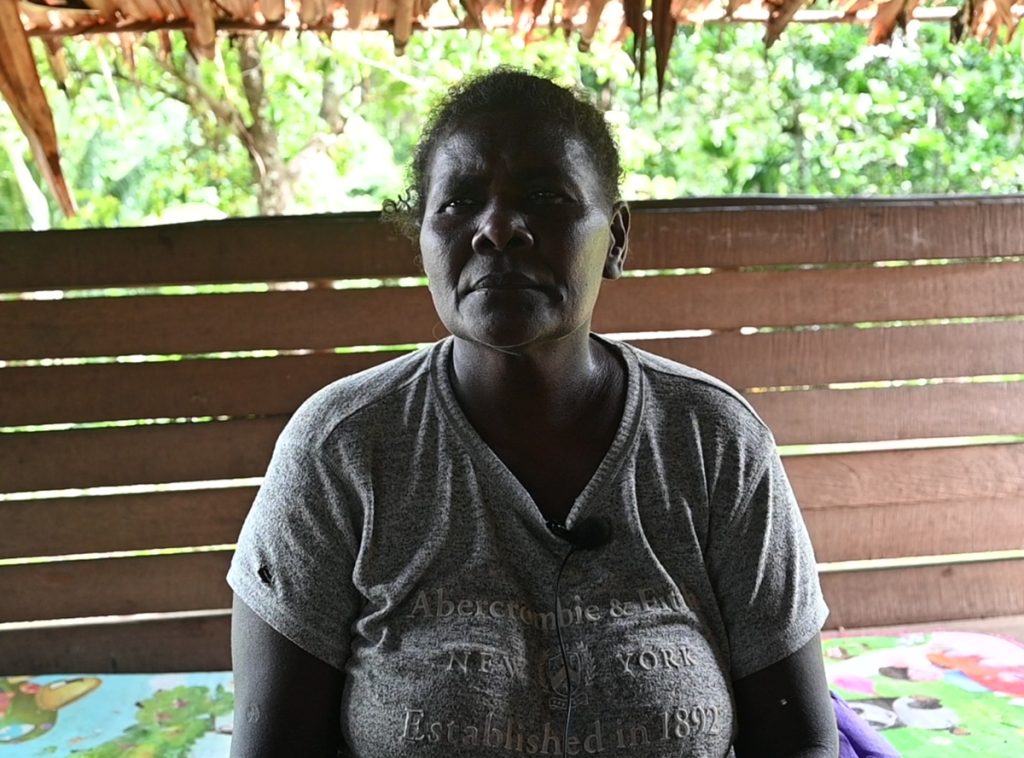
“Our parents wanted us to succeed, but the suffering was too much,” Mabent recalled.

“Now, seeing my niece walking the same road, it breaks my heart. We parent still struggle to support our children, sometimes they leave home with no breakfast, no lunch, not even a coin for food,” she said while her eyes socked with tears.

For elders like Denty Aqolo of Marava, watching the children pass by each morning is both pride and sorrow.
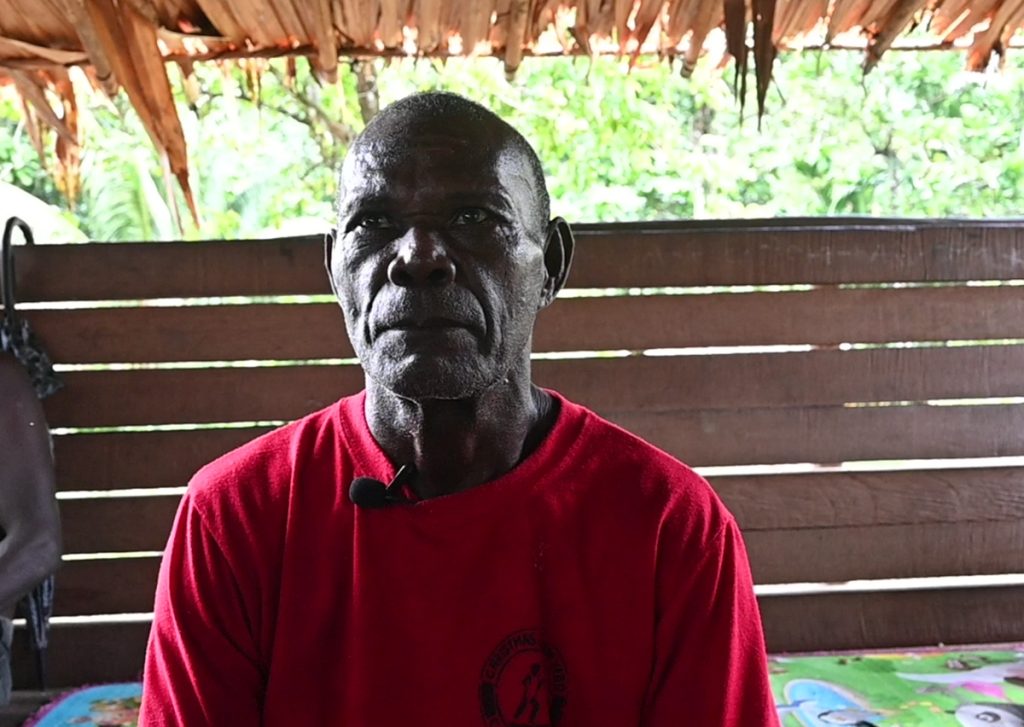
“I see them walk past my house every day,” he said quietly.

“It hurts to watch, but what can I do? I’m just a village elder. The government must come and see for themselves, see our pain and feel our struggles,” Agolo said.

In Marava and Niubare, education is not just a right, it’s a test of endurance, courage, and faith.

These children carry not only their schoolbags but the hopes of generations who still wait for fairness in the distribution of basic services such as education and health.

Until that day comes, they will keep walking, across rivers, through rain, and over rocks, chasing a dream that, for now, feels as distant as the classroom they struggle to reach.

*Reporting for this story was supported by Pacific Media Assistance Scheme (PACMAS)

For feedback, contact: [email protected]

SICTU, ACTU slam Australia’s backflip on 30-hour work week for Pacific workers

0

BY NED GAGAHE

The Solomon Islands Council of Trade Unions (SICTU) has expressed deep disappointment over the Australian Government’s decision to revoke its commitment to a 30-hour work week for Pacific Islands workers under the Pacific Australia Labour Mobility (PALM) scheme, a move described as a betrayal of Pacific partners and workers’ rights.

SICTU in a strong statement said the reversal represents not just a policy change, but “a significant setback for workers’ rights and a breach of trust that undermines the very spirit of partnership” the PALM scheme was built on.

SICTU National Secretary Adrian Tuhanuku said the decision effectively abandons Pacific workers who contribute to the Australian economy under challenging conditions.

“Our counterparts at the Australian Council of Trade Unions (ACTU) have rightly fought for Pacific workers to receive the same standard working conditions as their Australian counterparts,” Mr. Tuhanuku said.

“The 30-hour work week was a hard-won victory for fairness and dignity. Its revocation is a betrayal of that progress and leaves our workers vulnerable once again.”

He said the policy reversal maintains the outdated 120-hour monthly average, a loophole that allows employers to vary work hours from week to week, often resulting in long periods of underemployment and lost income.

“This decision prioritises employer flexibility over the physical and mental health of our workers.

“It risks institutionalising a lower standard of working conditions for Pacific workers doing the same jobs as Australians,” Tuhanuku said.

SICTU also criticised the timing of the announcement, just weeks before the Pacific Australia Labour Mobility General Meeting scheduled to take place in Honiara from 3–6 November, calling it “disrespectful and diplomatically insensitive.”

“To make such a unilateral decision on the eve of a meeting to be hosted here in our capital, where we are meant to engage as equal partners, is a severe diplomatic misstep,” Tuhanuku said.

SICTU has called on the Solomon Islands Government to raise the issue at the highest bilateral level with Canberra and seek an official explanation from the Australian Federal Government, noting that the reversal has not been announced on the official PALM scheme website.

The Australian Council of Trade Unions (ACTU) also condemned the Albanese Government’s decision, warning that more than 14,000 PALM workers across the Pacific will be worse off every year as a result of the policy backflip.

In a media release issued on 15 October 2025, ACTU said the government’s move to abandon the guaranteed 30-hour work week “is a backwards step for workers’ rights in Australia.”

“Employers can hold the PALM program to ransom by threatening to use backpackers instead of PALM workers every time changes are made to prevent exploitation,” ACTU President Michele O’Neil said.

“Workers’ rights should not be discounted for migrant workers. The Government must take extra steps to protect these vulnerable workers and ensure they are not exploited on this program.”

ACTU said that without a weekly minimum, PALM workers could again face situations where they work insufficient hours to meet living costs or repay debts for accommodation and transport — deductions often controlled by their employers.

The union movement in both countries is urging the Australian Government to reinstate the 30-hour minimum by April 2026, as originally promised, and ensure transparency and consultation with Pacific governments and trade unions in future decisions.

Both ACTU and SICTU reaffirm their support for the PALM scheme as a mechanism for mutual benefit and skills development, but stressed that its credibility depends on fair and equal treatment for Pacific workers.

“The PALM scheme must continue to be a vehicle for mutual benefit and shared prosperity, not a source of exploitation and broken promises.

“The Australian Government must reverse this decision and honour its commitment to fair work for our people. The credibility of the entire scheme among Pacific workers depends on it,” Tuhanuku said.

For feedback, contact: [email protected]

Solomon Islands dangerously dependent on extractive industries: PM Manele

0

BY NED GAGAHE

Prime Minister Jeremiah Manele warns that Solomon Islands remains dangerously dependent on extractive industries such as logging, fishing, and mining—sectors that take from the country’s land and sea but fail to create lasting prosperity for its people.

Mr. Manele made the remarks at the launch of the National Development Strategy (NDS) Medium Term Review Report and four related strategic documents at Mendana Hotel in Honiara on Friday, October 17, 2025.

Speaking on Economic Growth (Objective One) under the NDS, the Prime Minister said the country’s economic structure remains fragile and overly reliant on resource-based industries.

“Our economy remains dangerously dependent on logging mainly, followed by fishing and mining—extractive industries that take from our land and sea but did not really build lasting prosperity,” he said.

He revealed that the government’s targeted GDP growth rate of 3.5 percent by 2020 and 5 percent by 2025 has not been achieved, with Solomon Islands only managing to reach 3 percent in 2023.

Mr. Manele attributed this shortfall to deep-rooted structural challenges, including limited diversification and regulatory barriers that continue to constrain private sector development.

On Poverty and Basic Needs (Objective Two), the Prime Minister highlighted persistent social and economic challenges.

He said while the country’s Human Development Index (HDI) improved from 0.507 in 2010 to 0.565 in 2020, it still fell short of the targeted range of 0.625 to 0.675.

“Twenty-three percent of Solomon Islanders—nearly one in four—cannot meet their basic needs. Seventeen percent of our population suffers from malnutrition,” he said.

However, Mr. Manele said there are reasons for optimism, pointing to the Seasonal Worker Programme, which contributes around SBD 500 million annually to the economy.

“That’s 500 million reasons to believe that when we nurture real opportunities, our people thrive.

“But that’s not enough. What else can we do? Certainly, there is so much more that we can do collectively,” he said.

The Prime Minister said his government will continue to explore strategies to diversify the economy and create sustainable pathways for inclusive growth and development.

For feedback, contact: [email protected]
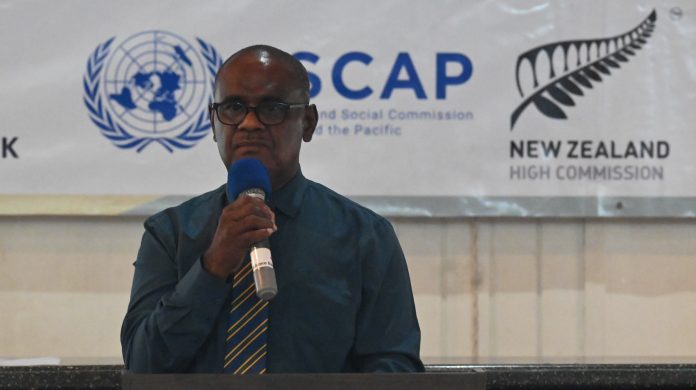
Modernisation of public service imminent: Kumi

0

BY SAMIE WAIKORI

The Member of Parliament for Temotu Nende, Stephen Kumi, says the modernisation of the public service is crucial as the country moves forward.

Speaking during the debate on the Public Service Bill 2025 in Parliament last week, Kumi highlighted that as the nation plans for the future of public service delivery, modernisation is not just necessary, it is imminent.

He noted that the new bill strengthens the legal framework guiding service delivery, while introducing modern systems and technologies that will enhance efficiency, responsiveness, and the ability to address emerging challenges.

Kumi also emphasised the importance of integrity among public servants, stating that ethical values such as honesty and moral uprightness must be upheld.

“It ensures that government employees serve with integrity, respect, and dedication—thereby enhancing public trust and confidence in government services,” he said.

He further stressed the importance of the principle of merit in public service, noting that appointments, promotions, and rewards should be based on ability, performance, and qualifications rather than favouritism or political interference.

“The principle of merit requires a strong legal framework. This means clear laws and regulations must govern how the public service operates,” Kumi explained.

He added that such a framework should also establish fair remuneration packages, define organisational structures, and provide legal guidelines to ensure the public service functions effectively and consistently.

Drawing from over nine years of experience working in the provinces, Kumi recommended that disciplinary committees be decentralised to better address misconduct at the provincial level.

“There are public servants in the provinces abusing their powers—some even misuse government vehicles,” he said.

Kumi concluded by reiterating that the push for modernisation aims to build a professional, ethical, and capable public service that operates with transparency and effectiveness.

For feedback, contact: [email protected]
Respecting boundaries between politicians and public servants important: Wale

0

BY SAMIE WAIKORI

Leader of the Parliamentary Opposition Group and Member of Parliament for Aoke Langalanga, Matthew Wale, has emphasized the importance of understanding and respecting the boundary between elected representatives and public servants.

Wale made the remarks during the introduction of the Public Service Bill 2025 in Parliament last week, referencing past instances where this boundary was breached, leading to abuse of power and corruption.

He explained that while political governments come and go, their primary role is to provide policy leadership and direction for the country. These policies may be legislated into law, but it is the public service that is responsible for implementing them.

“Once policy decisions are made, it is the public service that must implement them. It is not the role of politicians to directly carry out those decisions.

“This is the boundary between political leadership and the public service—and it must be respected by both for our system of government to function effectively,” he said.

Wale stressed that the public service, being unelected, must not assume the policymaking responsibilities of elected leaders, just as politicians must not interfere in the execution of policy.

“We have witnessed too many cases where this boundary has been deliberately crossed, and in almost all of those, some form of power abuse occurred,” he added.

Wale also underscored the concept of trusteeship, saying that both elected representatives and public servants are entrusted with power and resources on behalf of the people.

“This principle of trusteeship is fundamental to public service. When those in public office, whether elected or appointed neglect or disregard it, abuse and corruption follow,” he stated.

He calls for the principle to be embedded in the ethics curriculum of the Institute of Public Administration and Management (IPAM), using real-life case studies to help trainees understand its application in practice.

“A government must have a strong and professional public service bureaucracy. It remains the most efficient, consistent, and rational mechanism for implementing laws, managing public resources, and delivering essential services to citizens,” Wale said.

For feedback, contact: [email protected]
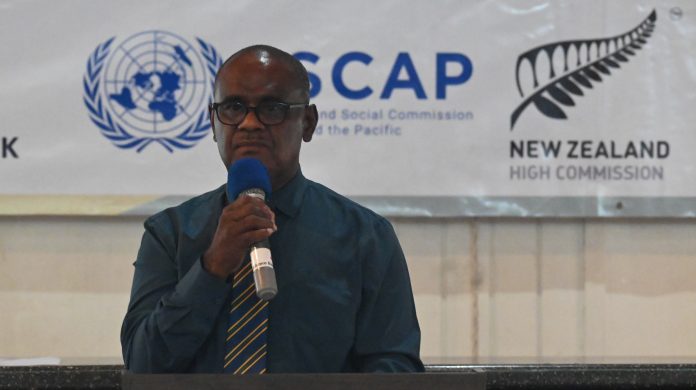
NDS review exposes deep challenges in health, education and environment

1

BY NED GAGAHE

Prime Minister Jeremiah Manele has urged decisive national action to address critical health, education, and environmental challenges, stressing that Solomon Islands’ long-term future depends on it.

Speaking at the official launch of the National Development Strategy (NDS) Medium Term Review Report and four related strategic documents at the Mendana Hotel in Honiara last Friday, October 17, 2025, Mr Manele said while there has been progress in some areas, the country still faces serious setbacks in health, education, and environmental sustainability.

“Let me share a stark reality: non-communicable diseases, diabetes, heart disease, cancer, now account for 70 percent of deaths in Solomon Islands. Seventy percent! Our target was 10 per 1,000. We’re seven times worse than where we should be,” he said.

He revealed that Solomon Islands currently has one doctor for every 4,000 people, with the situation even worse in some provinces.

He said access to healthcare, particularly in remote and rural areas, remains difficult due to poor infrastructure, staff shortages, and lack of medical supplies.

However, he said there are progress in maternal and child mortality, describing it as a sign of hope that should encouraged.

“We should celebrate that. But we cannot celebrate ourselves into complacency when so many other health challenges remain unaddressed,” Manele said.

On education, the Prime Minister said while enrolment numbers have improved, quality remains a pressing concern.

“Enrolment without quality is a hollow victory,” he said. “We must strive for excellence, not just in attendance and placement.”

Manele said many schools still face infrastructure gaps, limited trained teachers, and a shortage of learning materials.

Turning to environmental issues, the Prime Minister painted a grim picture of the country’s declining ecological health.

He revealed that over the past four decades, the Environmental Performance Index has dropped dramatically from 51.1 to 26.7.

“Walk through our forests and you’ll see the scars of unsustainable logging. Dive in our reefs and you’ll see coral bleaching, depleted fish stocks and pollution,” he said.

“Visit our coastal communities and you’ll hear stories of shorelines disappearing, of saltwater intruding into fresh water, of traditional food sources vanishing.”

Manele described the environmental decline not only as an ecological issue but as a national crisis that cuts across all aspects of life.

“This is not just an environmental crisis. This is a cultural crisis. An economic crisis. A moral crisis,” he emphasized.

Despite the grim outlook, the Prime Minister acknowledged areas of improvement, particularly in disaster risk management, where the country has become more capable and organized in responding to cyclones and other natural disasters.

“When cyclones strike, we are better prepared, better organised, better able to protect our people.

“If we can manage disasters, we can manage our environment—we must,” he said.

For feedback, contact: [email protected]

‘WRONG TIMING’

0

Trade Union questions govt move towards defence force amid many unresolved welfare and resource challenges with RSIPF

BY NED GAGAHE

The Solomon Islands Council of Trade Unions (SICTU) is questioning the government’s plan to establish a Solomon Islands Defence Force (SIDF), saying it is misguided and ill-timed while the Royal Solomon Islands Police Force (RSIPF) continues to face serious welfare and resource challenges.

In a strong worded statement, SICTU President Tony Kagovai said the union recognises the government’s intentions to strengthen national sovereignty and self-reliance but believes such ambitions are misplaced when the country’s existing security institutions are struggling.

“The government must first fix the foundations before building something new,” Kagovai said.

“How can we talk about forming a defence force when the RSIPF, our primary security institution, is being systematically failed?”

According to Kagovai, the government, through the Minister of Police and National Security, Jimson Tanangada has outlined the proposed defence force as means to fill capability gaps in maritime surveillance, border protection, disaster response, humanitarian relief, and national emergencies.

But SICTU argues that the RSIPF already has a Maritime Department that performs many of these functions, including patrols of the country’s Exclusive Economic Zone (EEZ).

“Before spending vast public resources on a new defence structure, the government must explain why the existing RSIPF capacities are deemed insufficient and why investment cannot be scaled within the current framework,” Kagovai said.

He said SICTU’s main concern is not just about structure, but about priorities while the government talks about future security capacity, it continues to neglect the welfare of police and correctional officers who currently bear the country’s security burden.

Kagovai also raised alarm over what he describes as deliberate interference by the Ministry of Police, National Security and Correctional Services in delaying the Annual General Meeting (AGM) of the Solomon Islands Police Officers Association (SIPOA) — the official body representing RSIPF and Correctional Services officers.

He said despite approval from the Police Commissioner, the Ministry’s Human Resources Directorate has continued to block the meeting.

“This is not an administrative oversight; it is a deliberate attempt to silence the collective voice of our officers,” Kagovai said.

“How can the government talk about nation-building and resilience when it actively suppresses those on the front line?”

SICTU further highlighted the ongoing welfare crisis faced by police and their families due to the lack of an active SIPOA body.

The union said officers continue to endure difficult working conditions, low pay, and inadequate support for their mental and physical wellbeing despite carrying heavy responsibilities in disaster response, maritime security, and public safety.

“These men and women serve our nation with dedication, yet their welfare is neglected. There is no proper platform to advocate for their needs,” Kagovai said.

In its statement, SICTU outlined three immediate actions it wants from the government:

  • Address Current Failings First: Drop the Defence Force proposal and focus on strengthening the RSIPF and Correctional Services with adequate funding and support.
  • End Interference with SIPOA: Direct the Permanent Secretary and HR Directorate to facilitate the SIPOA AGM without further delay.
  • Commit to Welfare Dialogue: Enter into genuine dialogue with a duly elected SIPOA board to address officers’ welfare and working conditions.

Kagovai concluded that any talk of a defence force is meaningless unless the RSIPF, the foundation of national security, is properly supported.

“A defence force can only be a strategic investment if it stands on a solid foundation. Right now, that foundation is cracking. The government must fix the welfare and morale of our police before building anything new,” he said.

For feedback, contact: [email protected]

‘PSB 2025 will lay a foundation for a renewed Public Service culture’: Choylin

0

BY SAMIE WAIKORI

The Minister for Culture and Tourism and Member of Parliament for Ngella constituency, Choylin Yim Douglas, believes the Public Service Bill 2025 will lay a foundation for a renewed culture within the public service.

She made the statement when contributing to the second reading of the bill in parliament last week, highlighting the objectives of the bill.

The minister highlighted two important areas, customer service and cultural obligation, where public servants often get criticized for.

“Too often, our public servants are criticized for poor customer service, for not treating clients, visitors, or members of the public with courtesy and respect.

“This must change. The public service must remember that we are here to serve the people.

“Every interaction between a public officer and a member of the public reflects the face of government,” Choylin said.

She emphasized that good customer service must become an essential part of our work culture, built on respect, empathy, and professionalism.

The minister said another important issue is cultural obligations, as it sometimes affects work ethics within the public service.

“We all value our culture. It defines who we are as Solomon Islanders.

“However, when cultural obligations interfere with the performance of duties, for example, absenteeism due to prolonged social or cultural engagements, it affects productivity and undermines the efficiency of the public service,” she stated.

The MP stressed that clear codes of conduct and accountability mechanisms within the bill will help to strike a balance.

“This is by respecting our culture but also ensuring that public servants uphold their professional duties and responsibilities.

“Beyond this, the bill also reinforces the principles of professionalism, good governance, ethical leadership, and honesty within the public service.

“It emphasizes merit-based employment, integrity in decision-making, and accountability for results.

“These are the hallmarks of a modern, effective and trusted public service, one that delivers for the people and upholds the values of transparency and fairness,” she said.

The minister expressed her strong support for the bill, as it represents a bold and necessary step forward in transforming the public service into one that is more dynamic, professional, and truly dedicated to serving the nation.

“I believe this bill will lay the foundation of a renewed public service culture, one built on excellence, integrity, and service to the people of Solomon Islands,” she said.

For feedback, contact: [email protected]

PSB 2025 to address longstanding gaps within Public Service: Garu

0

BY SAMIE WAIKORI

The Member of Parliament for West Guadalcanal constituency, Mary Daniella Garu, says the Public Service Bill 2025 will help to address long-standing gaps and bring much-needed reforms to the Public Service of the country.

Contributing to the debate on the second reading of the bill in parliament last week, the first-time MP described the bill as a transformative piece of legislation.

“As someone who has served in the public service, I speak from experience when I say this bill addresses long-standing gaps and introduces much-needed reforms.

“This bill introduces a robust performance management framework, a system that will ensure accountability, transparency, and merit-based progression within our public institutions.

“It establishes professional standards in a dedicated professional standard unit, which will help restore public confidence in the integrity of our service,” she said.

Moreover, Garu underscored the prioritization of the bill, especially on workforce development and training for public servants.

She emphasized that the bill provides a structured approach to identifying skills, gaps, building capacity, and nurturing future leaders within the public sector.

“This is not just about efficiency. It is about empowering our people to serve with excellence.

“I believe this bill lays the foundation for a modern, responsive, and people-centred public service. It also aligns with our national vision for good governance and sustainable development.

“But more importantly, it reflects our collective aspiration for a public service that is fair, inclusive, and accountable to the people it serves,” the MP added.

As a former public servant, she witnessed these shortfalls within the organization, which she believes can now be addressed through this upgraded piece of legislation.

For feedback, contact: [email protected]

‘Government will consider 67 recommendations on Public Service Bill 2025’: Manele

0

BY SAMIE WAIKORI

Prime Minister, Jeremiah Manele, has assured parliament that recommendations made by the Bills and Legislative Committee on the Public Service Bill 2025 will be looked at.

The recommendations were presented in the BLC report, and compiled during the consultation stage of the bill that was carried out with government line ministries, CSO, NGOs, and other stakeholders.

According to PM Manele, the Bills and Legislation Committee report made 67 recommendations on the bill.

Speaking during the debate on the second reading of Public Service Bill 2025 last week, he explained that about 10 of the recommendations were for new clauses or policy suggestions, while 57 recommendations were based on the clauses of the bill.

“As highlighted by the Minister of Public Service, we will look at these recommendations during the committee stage of our deliberations next week.

“And where possible, we will accommodate or take on board the agenda and use Standing Order 51 to accommodate some of these recommendations,” he said.

Manele said his brief examination of the recommendations highlights important areas with the public service in the country.  

“My cursory inspection of the accepted recommendations emphasizes legal clarity, ethical governance, and institutional accountability across the Solomon Islands Public Service,” he said.

The PM thanked the chairman and members of the Bills and Legislation Committee for putting together the recommendations for consideration in the bill.

For feedback, conact: [email protected]