The Solomon Islands Government will establish a Sovereign Wealth Fund that aims to secure long-term benefits from the country’s mineral resources for future generations.
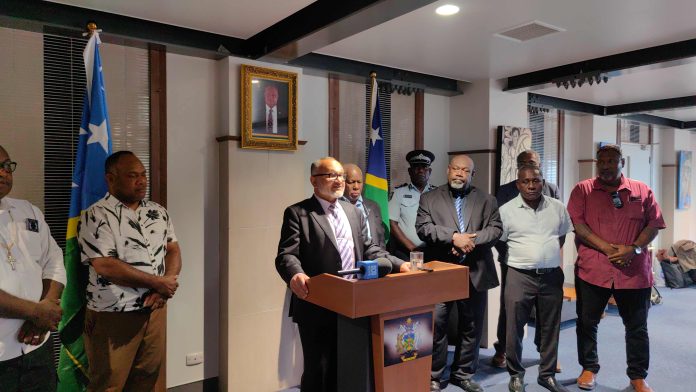
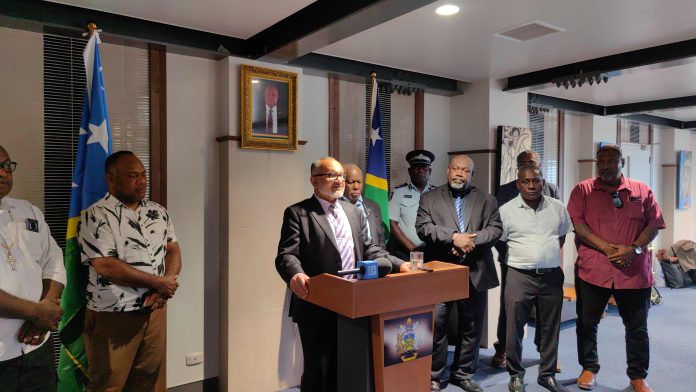
Prime Minister Matthew Wale revealed the plan while outlining ongoing reforms in the country’s mineral sector.
Speaking to media upon return from his official visit to Australia and New Zealand on Wednesday, Prime Minister Wale said the government is determined to avoid repeating the mistakes experienced in the logging industry, where the country failed to fully benefit from its natural resources.
“Reforms in the mineral sector will continue and there are more reforms coming in this sector,” Wale said.
“What we all want in the mineral sector — we all do not want to see a repeat of what is happening in the logging sector. They robbed us, and we do not want that happening in the mineral sector.”
The Prime Minister said the Finance Minister is expected to table legislation in Parliament towards the end of next year to formally establish the Sovereign Wealth Fund (SWF).
“Towards the end of next year, the Finance Minister will take a bill to Parliament to set up a Sovereign Wealth Fund where all the revenue from mining will go into it,” he said.
According to Wale, the fund will invest mining revenues both locally and overseas to generate strong financial returns for the country.
“It will be invested where the highest returns are, not necessarily here. It will be overseas as well,” he said.
“And dividends will come back to the budget to finance health and education.”
Wale described the initiative as a “generational policy” designed to ensure the country’s mineral wealth remains sustainable for future Solomon Islanders.
“As you know, we have some big mining assets and some world-class mineral reserves,” he said.
The Prime Minister added that part of the government’s reforms will ensure the state secures larger shares in mining projects while also guaranteeing benefits for landowners and provincial governments.
“So, part of these reforms is to ensure that the government holds big shares in it,” he said.
“Also, these shares ensure landowners and provinces benefit and raise revenue from it.”
Meanwhile, the Central Bank of Solomon Islands has strongly advocated for the creation of a Sovereign Wealth Fund, describing it as an important mechanism to secure long-term macroeconomic stability.
CBSI Governor Dr Luke Forau earlier said the fund will help the country better manage revenue from natural resources while building resilience against future economic and climate-related shocks.
Prime Minister Matthew Wale says Solomon Islands will continue to play a neutral and balanced role regarding the Bougainville issue.
Speaking to media following his return from Australia and New Zealand, Wale acknowledged Bougainville’s independence aspirations while stressing the importance of respecting Papua New Guinea’s sovereignty.
“I recognise Bougainville’s independence aspirations and the overwhelming result that came out of the referendum,” Wale said.
“But at the same time, of course, recognise that they are still part of Papua New Guinea, and therefore we must respect that fact also.”
Wale said Solomon Islands has consistently maintained a balanced approach on the issue over many years.
“Solomon Islands’ position has always consistently been not to anger PNG, but to help facilitate whatever the two of them agree on,” he said.
The Prime Minister was responding to questions on whether the Bougainville issue would be placed on the agenda during the upcoming Pacific Islands Forum meeting in Palau where Solomon Islands currently holds the Chairmanship role.
He revealed that he has already been communicating with Papua New Guinea (PNG) Prime Minister James Marape on Bougainville and other regional matters.
“I’ve just been communicating with Prime Minister James Marape on that and other regional matters,” Wale said.
“We’re trying to work out some dates, so I will be going to Moresby over the next two weeks to further those discussions and then have a much clearer idea.”
Wale said he was not fully aware of the discussions behind last year’s decision not to place Bougainville on the Pacific Islands Forum agenda under the previous Solomon Islands Government.
“I’m not privy to all the discussions that led to that particular decision, so I’m unable to pass judgement on it,” he said.
“But I certainly will be wanting to find out more from Prime Minister James Marape to have a better understanding.”
The Prime Minister reiterated that Solomon Islands will continue its traditional role of helping facilitate dialogue between Papua New Guinea and Bougainville.
“We will play that kind of supportive, facilitating role,” he said.
“It’s been a very healthy role that Solomon Islands has played for many, many years.” Wale said.
Attorney General demands full records on missing 33 Bauxite shipments from the Director of Mines
BY JOHN HOUANIHAU
ATTORNEY General Gabriel Suri has demanded the full disclosure of documents relating to the controversial 33 shipments of bauxite within 14 days.
The directive follows a letter issued by AG Suri to the Director of Mines, requesting all documents and records associated with the disputed bauxite shipments, according to a statement from the PM Press Secretariat yesterday.
AG Suri in a letter dated June 1, 2026, wrote to the Mines Director requesting full disclosures of the following documents;
1. The relevant Export Permits issued by your office in relation to the 33 shipments.
2. The relevant Consignment Permits issued by your office relating to the 33 shipments.
3. Any MOU or Agreement made between your office, Mines Board or the Minister relating to the 33 shipments, whether with APID or BMSI.
4. Refinery Assay Reports relating to the 33 shipments.
5. Customs export documents relating to the 33 shipments.
6. All correspondences, both letter and email, relating to the 33 shipments. This includes any advice given to you by the Attorney Generals’ Chambers or a law firm.
7. The relevant General or Specific Authority issued by the Central Bank of SI relating to the 33 shipments.
It adds that AG Suri has also requested a written explanation demanding why the office continue to issue Export Permits and Consignment Permits although royalties were not paid within 90 days as required by section 46(1) of the Mines and Minerals Act.
The AG made reference to section 46(1) that;
“Royalties shall be paid within ninety days after the end of each month on minerals obtained in that month.”
He said the documents are necessary also to be presented to the SI Financial Intelligence Unit (SIFIU) for their review and assessment.
This is to consider whether the offence of money laundering has occurred in relation to the 33 shipments, and whether SIG can initiate proceeding for recovery of proceeds of crime.
The AG in the letter also intends to instruct the SIFIU to request and collect financial records from CBSI, commercial banks, the Ministry of Finance and Treasury and from overseas.
The AG emphasised that this is something that should have been done by past governments.
How copra farmer Adabule was supported to recover from Maila
BY TONY IROGA
The Commodities Export Marketing Authority (CEMA) is proactively supporting farmers, not only during the good times – CEMA is rescuing farmers who have been devastated by cyclone Maila.
The country has rallied to support Maila victims recover. The national government, provincial governments, development partners and private sector are all in.
CEMA is likewise on the ground for the farmers in the affected provinces.
One farmer of the Western province shares his story.
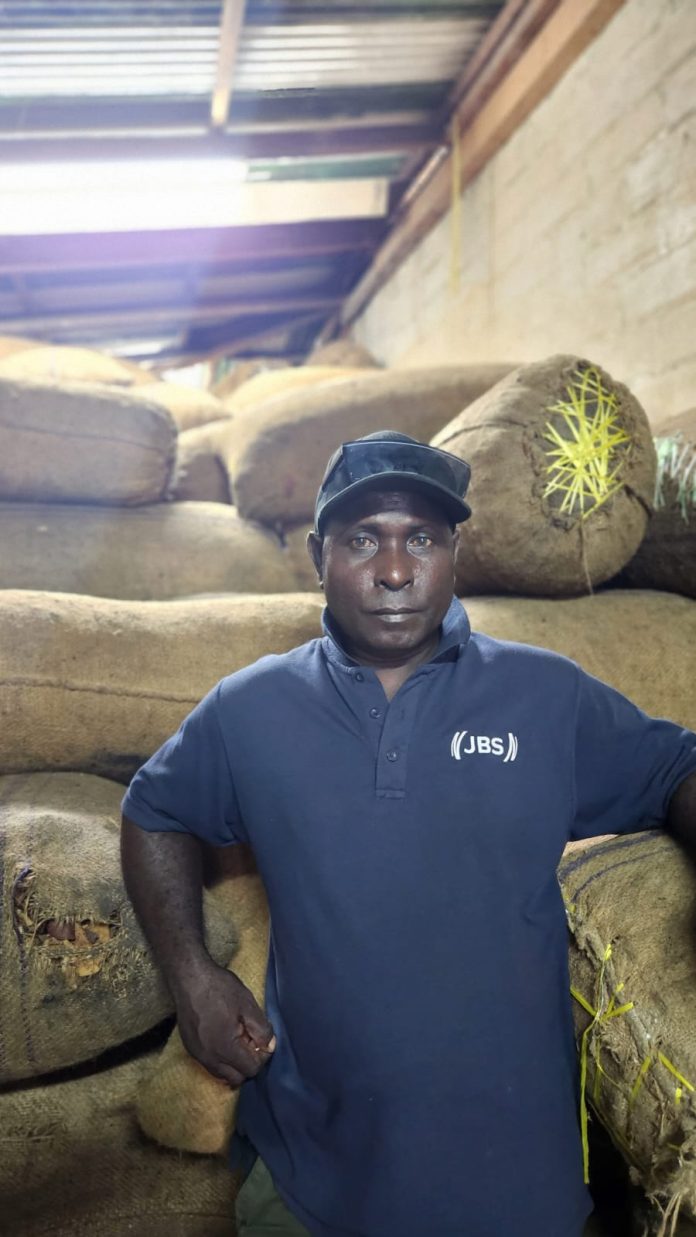
For Keron Adabule, of North Vela la Vella, Western province, cyclone Maila brought him to the point where he was faced with questions of either continue with copra farming or just leave it.
Adabule lost 54 bags of copra to Maila, within a few hours, in just one night.
The sea stopped being water and became something else entirely — something angry, something without mercy, something that did not care what a man had spent years building.
He stood in the dark and watched it happen.
Fifty-four bags of copra. His stock. His income. His next school term and his family’s next meal and every hour of labour that had gone into filling those bags — all of it lifted by the surge and swallowed by the sea between the hours when the world was asleep and the sky had not yet decided to be morning.
Fifty-four bags. Gone.
He grabbed what he could. A few essentials. The things you reach for when you realise that the building is lost and all that is left to save is the people inside it. He got his family out. He held them together in the dark while the wind screamed and the water rose and Leona Village shook.
When the light finally came, Keron Adabule stood on what remained of his life and looked at the water.
The copra was not coming back.
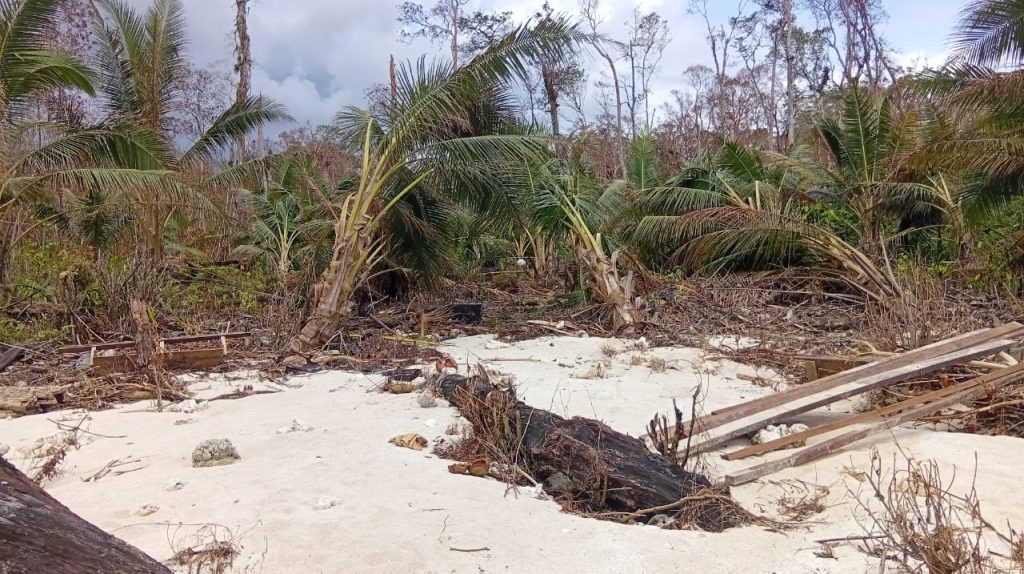
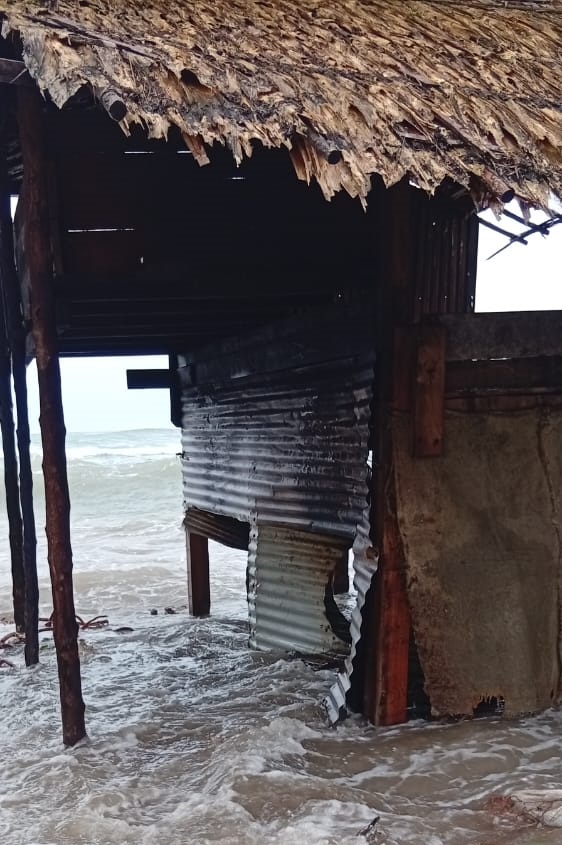
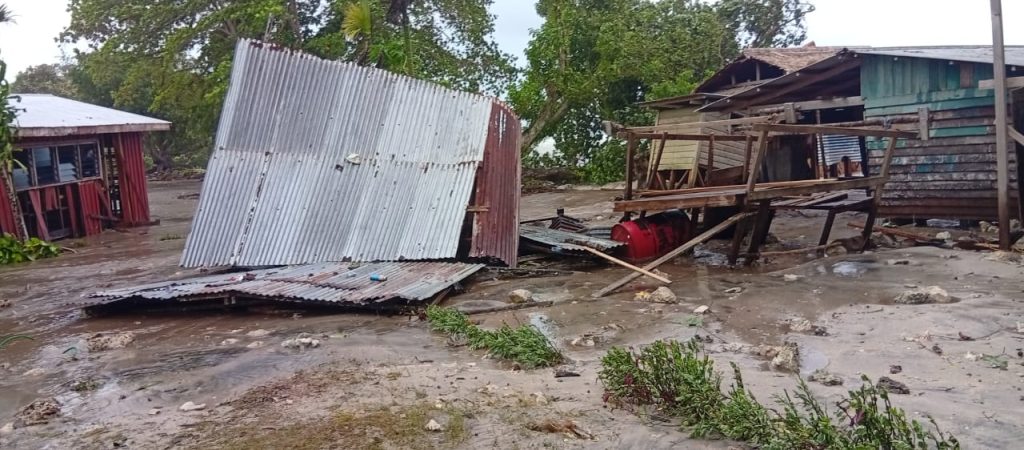
Damage near the copra shed, Photo-Supplied
And neither were the driers. Neither was the storage shed. The coconut trees he had planted with his own hands — young trees, trees that had not yet had a season to prove themselves — were snapped and scattered like they had never existed at all.
In a single night, the cyclone had taken not just his present. It had reached into his future and torn that out too.
In the days that followed, the promises came.
A copra shed ravaged by waves, Photo-SuppliedDamaged sheds, Photo-Supplied
A director visited from Malaita. He looked at the damage. He shook his head the way officials do when they want to appear moved. He promised a new storage shed. He promised a kukum drier, to be funded through provincial government procedures.
Keron listened. He nodded. He was grateful.
He waited.
He followed up. He made the calls, sent the messages, asked the questions that a man asks when he is trying to rebuild and needs what he was promised. He was not aggressive about it. He was patient. He believed that when a person in authority gives their word, they mean it.
The shed never came.
The drier never came.
The director never came back.
Keron sat in Leona Village with nothing but the same two hands he had always had, a community that still needed him, and a silence where the support was supposed to be.
This is the part of the story where many men break.
And no one would have blamed him. Not after a cyclone. Not after losing fifty-four bags in a single night, every drier destroyed, every new tree flattened. Not after being promised help by the very institutions that existed to provide it, and then abandoned without explanation or apology.
The easy thing — the understandable thing — would have been to walk away. To stop making calls that went unanswered, to let the bush take back what the sea had already started.
Keron Adabule did not do the easy thing.
He went back to work.
Not because help arrived. Not because anyone made it simple. He had no drier of his own anymore. No shed to store under. But there was a community copra drier in the village — a modest facility, funded by the province — and Keron used it. Humbly, practically, without complaint. He adapted to what existed rather than waiting for what had been promised.
Because the farmers in his community were still showing up. Still carrying their copra. Still looking to him as the man who stood between their harvest and a market that would treat them fairly. And he could not look those farmers in the eye and tell them that a cyclone had broken him when it had not broken them.
So he started again. Slowly. Painfully. Bag by bag.
Here is something else about Keron Adabule that matters.
The land beneath his feet has never been in question.
Through his father’s tribal ownership and his mother’s, Keron holds rights to enough land to do something that many farmers in this country only dream about — to expand. To plant more trees. To grow deliberately and with vision rather than simply maintaining what already exists.
The cyclone damaged his young plantation severely. But it could not take the land itself. And a man who still has his land still has everything he needs to begin again.
That is exactly what Keron intends to do.
When the facilities are rebuilt — and he will rebuild them, because that is the kind of man he is — the land will be ready. The roots of this thing go deeper than any storm can reach.
And then CEMA came.
Not with a director in a clean shirt. Not with a promise wrapped in procedure. CEMA came the way that real rescue comes — not loudly, but reliably. Not with ceremony, but with commitment.
Market access. A fair price. And the simple, revolutionary act of bringing the buyer to the village instead of forcing the farmer to the wharf.
This is what Keron wants people to understand about what CEMA’s presence actually means for a farmer in North Vela Lavella.
Without CEMA, a farmer here faces a brutal choice. Load your copra. Find your own transport. Make the long journey to Honiara wharf and wait — wait at the main port for a buyer to come to you, on their terms, at their price, at their convenience. The transportation costs alone are enough to hollow out a man’s earnings before the negotiation even begins.
With CEMA, the market comes to the village.
Fair price. Local access. No wharf. No waiting. No losing half your income to the cost of simply getting there.
That is what Keron delivers to every farmer who walks through his door. Not charity. Not sympathy. A genuine economic alternative that treats rural people as if their time and their labour and their distance from the capital are not disadvantages to be exploited but realities to be solved.
When the government’s promise evaporated and the silence from Malaita became permanent, CEMA did not evaporate. CEMA did not go silent. It stayed. And in staying, it gave Keron the one thing he needed more than a shed or a drier or a government grant.
It gave him a reason to keep going.
Today, the numbers tell a story that the cyclone did not expect to write.
Seventy-six bags. Each one averaging eighty-five kilograms of copra. Produced from a community drier that is not yet his own, on land that has always been his, by a man who had nothing left to his name in the hours after the storm.
But Keron does not talk much about himself when you ask him how things are going.
He talks about his farmers.
He talks about the satisfaction on their faces when they bring their copra and receive a fair price — not a price squeezed down by someone who knows they have no other option, but a genuine price, offered with respect. He talks about what it means to have the market at your doorstep rather than a day’s travel away in Honiara. He talks about the dignity of honest work that is honestly rewarded.
“They are satisfied,” he says. And the way he says it makes clear that this matters to him more than anything else. A CEMA agent’s measure of success is not what fills his own shed. It is what fills the lives of the people he serves.
There is a particular kind of courage that does not look like courage from the outside.
It gets up before sunrise and opens a buying point. It uses a community drier because its own was destroyed and it refuses to stop producing while it rebuilds. It holds onto land that a cyclone tried to ruin and plants the vision of what that land will one day become. It keeps showing up for farmers who need it, even when the institutions that should have shown up for it did not.
That is Keron Adabule’s courage.
He is grateful to CEMA. He says so plainly, without flourish. But CEMA should be grateful to him too.
Because men like Keron — men who survive a cyclone, survive broken promises, adapt without bitterness, and still stand in their community offering a fair deal to every farmer who walks through the door — these are the people on whom everything else is built.
The land is ready.
The man is ready.
And when those new driers finally rise and the young coconut trees grow tall again on land that has belonged to his family for generations — that will not be a comeback story.
That will be a continuation of something that was never truly stopped.
Former futsal stars unite to nurture future Kurukuru talents through new grassroots development programme
BY RICHARD MENANOPO
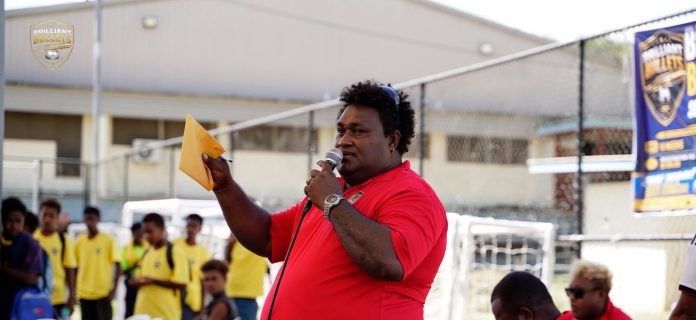
Former Kurukuru legends have joined forces to inspire the next generation of futsal players following the official launch of the Brilliant Bullets Futsal Club School of Excellence in Honiara on Saturday.
The launch, held at the Multi-purpose Hall outdoor court on June 6, attracted hundreds of young futsal players, parents, officials from the Honiara City Council (HCC) and Solomon Islands Football Federation (SIFF), along with former Kurukuru stars including Elliot Ragomo, Jeffrey Bule and Francis Lafai.
The official launching programme featured welcome remarks by former Kurukuru player Jeffrey Bule, speeches from club representatives, HCC and SIFF officials, before the programme was officially declared open by a SIFF representative.
Founder and President of Brilliant Bullets FC, Jimmy Henry, said the initiative is a long-term grassroots development programme that aims to groom future futsal talents in Solomon Islands.
“This project is projected for 10 years.
“We will roll out the program in 10-week sessions every Saturday from 9am to 11am. The main objective is to train, develop and excel young players who attend this School of Excellence,” Henry said.
The program caters for Under-10, Under-12, Under-14 and Under-16 divisions for both boys and girls.
Henry said the initiative focuses not only on futsal development but also on building young people mentally, physically and spiritually.
“In terms of development, this program is to develop the kids spiritually, physically and mentally. This is one of the pillars of the School of Excellence,” he said.
He said the club is currently using the Multi-purpose Hall facility through its affiliation with the Honiara City Council Sports Council under the umbrella of SIFF, with training currently limited to Saturday mornings because of venue availability.
Registration is set at $100, which covers the full 10-week training program and includes a free training shirt.
Henry said the involvement of former Kurukuru players is central to the initiative’s mission of giving back to the sport and community.
“The former Kurukuru players came together with this initiative because there is a need to continue developing the sport so Solomon Islands can remain competitive in the region,” he said.
Former Kurukuru star Elliot Ragomo said the program is about creating opportunities for children who may not have had the chance to play futsal before.
“We want to share the knowledge and experience we have acquired to help the future generation.
“What these kids are going through now is also how we started, and now it is our responsibility to help them begin their journey as well,” Ragomo said.
Ragomo said futsal had shaped his life and opened many opportunities during his career with the Kurukuru national team.
“I think it is now time for me to come back and help give back to the kids and the community by sharing what I have experienced,”
“You never know — one of these kids here today could one day help Kurukuru win a World Cup in the future,” he said.
The Brilliant Bullets FC School of Excellence will continue every Saturday at the Multi-purpose Hall outdoor court as organisers look to strengthen grassroots futsal development in Honiara.
The initiative comes as Solomon Islands continues to build on its strong futsal reputation in Oceania through grassroots development and youth participation, with former national representatives now stepping forward to mentor and guide the next generation of players.
A group of students from the Solomon Islands National University (SINU) took their classroom learning beyond lecture halls this week by visiting the Solomon Islands National Institute of Sport (SINIS) to explore the growing importance of ethics in sport.
The visit, carried out by students undertaking the SNU600 Ethics Studies course under SINU’s Faculty of Education and Humanities, focused on understanding how ethical values influence leadership, decision-making and behaviour within the sporting sector.
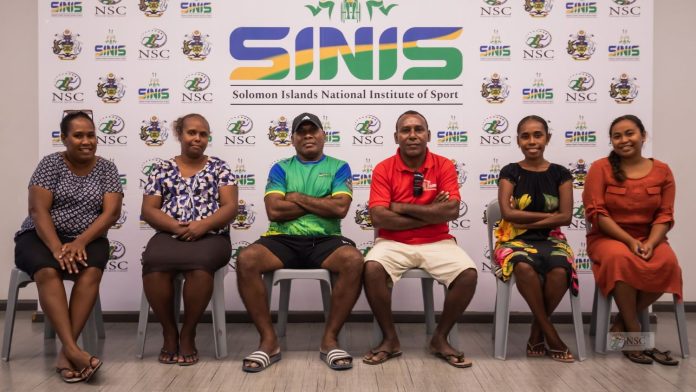
The students met with SINIS Performance Manager for Portfolio Three — Racquet, Aquatic, Target and Individual Sports — Jimmy Luitolo, who shared practical insights drawn from his experiences working in sports development and athlete management in Solomon Islands.
Speaking after the interview session, student representative David Kikolo said the discussion gave the group a clearer understanding of how ethics shapes sporting environments both on and off the field.
“We came to SINIS to conduct an interview with Mr Jimmy Luitolo to gather information and perspectives on ethics in sport.
“Through the discussion, we gained valuable insights from his experiences and understanding of how ethical principles play an important role in sports,” Kikolo said.
Kikolo said the engagement formed part of the students’ course assignment and will contribute significantly to their ongoing research work.
He also acknowledged the support provided by the National Sports Council (NSC) and SINIS staff for accommodating them during the visit.
“We sincerely thank the NSC and SINIS staff, especially Mr Jimmy Luitolo, for his time and willingness to share his knowledge with us.
“We appreciate the opportunity to engage directly with professionals in the sports sector and learn from their experiences,” he said.
Luitolo, in response, commended the students for selecting ethics in sport as a research topic, saying such discussions are important in shaping responsible future leaders.
“Ethics is an important foundation not only in sport, but also in education, leadership and community life.
“Discussions like this help students understand how ethical leadership and decision-making can positively influence sport, education and society,” Luitolo said.
He encouraged the students to apply the lessons learned through their studies, in their future careers and personal lives.
“The understanding they gain now will become valuable in their workplaces and communities in the future, whether they become teachers, leaders or professionals in other fields,” he added.
Students who participated in the visit included David Kikolo, Barbara Awao Manetei, Joyce H. Fafale, Betrice Vahimana and Rayline Neretaba.
The SNU600 Ethics Studies course covers a broad range of themes including ethical leadership, environmental ethics, political and government ethics, as well as ethics in sport.
As part of their assignment, the students selected sport ethics to better understand how values such as fairness, respect, accountability and integrity are applied in real-life sporting situations across Solomon Islands.
The National Sports Council, through SINIS, continues to support educational and research initiatives that aim to develop future leaders while strengthening awareness around the role of sport in national development.
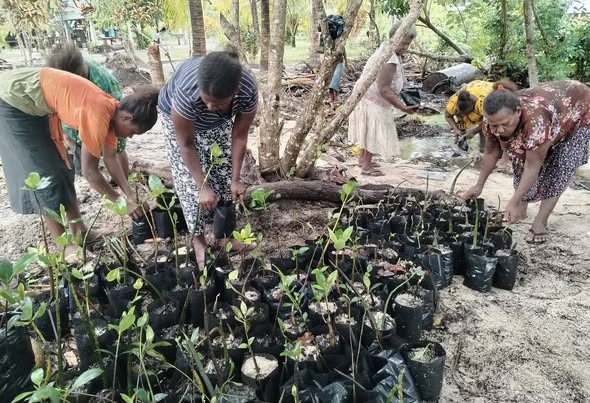
Communities on Marauiapa Island in Guadalcanal Province received practical training in mangrove restoration and marine resource management as part of ongoing efforts to strengthen climate resilience and protect coastal ecosystems.
The Guadalcanal Province Fisheries Division said the training workshop, organised by the Guadalcanal Province Fisheries Division under the IUCN–Kiwa Initiative Local Project Component (LPC), focused on nature-based solutions, climate resilience, mangrove seedling collection, and the establishment of community mangrove nurseries.
The initiative forms part of the Division’s broader Community-Based Fisheries Management (CBFM) Programme, which is being expanded across Guadalcanal Province to improve sustainable fisheries management and biodiversity conservation.
Participants were provided with hands-on training in mangrove conservation and restoration techniques, equipping them with practical skills to support future environmental rehabilitation projects within their communities.
A key outcome of the workshop is the collection of at least 300 mangrove seedlings and the establishment of community-managed mangrove nurseries that will supply seedlings for future restoration activities.
According to the Guadalcanal Province Fisheries Division, the training intends to strengthen local capacity in environmental management and promote community ownership of marine and coastal resources.
The workshop also aims to encourage greater participation by young people in conservation efforts and increase awareness of the important role mangrove ecosystems play in protecting coastlines, supporting fisheries, and reducing the impacts of climate change.
Marauiapa Island is one of the project sites supported under the IUCN–Kiwa Local Project on Nature-Based Community Fisheries Management for Climate Resilience and Biodiversity Restoration.
The project seeks to improve community livelihoods and socio-economic well-being while enhancing biodiversity conservation throughout Guadalcanal Province.
The training was delivered by the Guadalcanal Province Fisheries Division with technical and financial support from the International Union for Conservation of Nature (IUCN) through the IUCN–Kiwa Initiative.
The programme is funded by a consortium of development partners and implemented by the Guadalcanal Provincial Government in partnership with local communities, with the goal of strengthening climate resilience, restoring biodiversity, and promoting sustainable management of marine resources across the province.
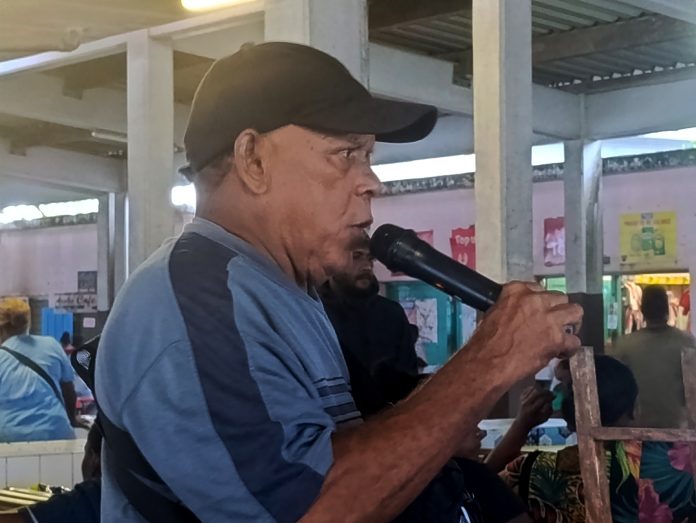
Market vendors in Auki, Malaita Province were urged to stay away from construction areas to avoid tragic incidents as the rehabilitation project progresses in town.
The strong message was conveyed by the Auki Central Market fee collector, David Laeta, yesterday in the Auki Central Market.
He said that as the construction gets closer to the market area, care must be taken to avoid creating any problems or incidents.
He urged the vendors to look for areas that are free for movement and to avoid walking close to the construction.
“I just want to remind everyone to stay out of the construction areas and keep ourselves safe from any problems or incidents.
“We know that the construction is close and right in front of our gate, so we must look before we go when it is safe,” he said.
He also reminded the vendors to continue following the market rules to maintain a clean environment for everyone.
He said the market is a place that everyone will go to get food, and it must be kept clean at all times.
“We must follow our market rules to avoid unnecessary littering in our market.
“So, we must keep it clean every time because this is a place that different people will come to buy our produce,” he said.
The vendors appreciate the Auki Market Authority for addressing their concerns about the illegal marketing of betelnut and cigarettes in the market area.
This paper understands that Auki Central Market does not allow smoking or the selling of betelnut in their area.
It also has a specific smoking zone for the vendors to enjoy their smoke and to chew betelnut.
While members of Parliament of Malaita Province continue delivering project materials to their constituencies, constituents are being urged to do their part in supporting MPs with the transportation of the materials.
One concerned mother from Buma, West Kwara’ae, Malaita Province, commented on a post in the West Kwara’ae forum yesterday after their second material shipment arrived earlier this week in Auki.
Freda Obi Faita said they must not depend on their MP for everything and must meet some costs.
“Yes, of course, we do our part. We must not depend on our MP for everything that we need. We must meet some costs.
“I know that we are fortunate to have received the materials while others have not, so we must not be selfish,” she said.
She added that the whole constituency will not receive what they aim to receive and need, but at least they should have some support from their MP.
She also discouraged the reselling of materials they receive from MP.
“We still have a sick mindset that needs counseling. When we get small support from our MP and think that it might not solve what we need, we consider reselling it.
“This reflects a sick mindset, and this is a real issue that some of us are doing,” she said.
She also urges constituents of West Kwara’ae to make use of opportunity when they receive support from their MP.
The project materials from the second shipment for the constituency are packed in their storage, waiting for distribution.
The materials include housing scheme materials and community projects, which aim to improve the standard of living of the people of West Kwara’ae constituency.
M-SELEN is marking its third anniversary with the launch of the “Celebrate with M-SELEN” promotion, a nationwide customer rewards campaign designed to thank customers for their continued support while encouraging greater use of digital financial services across the Solomon Islands.
Running from June 11 to October 2, the promotion gives customers the opportunity to win a share of $15,000 in weekly prizes. Every successful M-SELEN daily transaction valued at $10 or more automatically qualifies for entry into the weekly prize draws, a statement by M-Selen yesterday said.
The promotion applies to all eligible M-SELEN transactions conducted throughout the promotional period, including sending money, paying bills, purchasing mobile top ups, cash power and cash water, foreign remittances, and utility bill payment, school fees payments, making deposits and withdrawals, and paying for goods and services through M-SELEN.
By rewarding customers for transactions, they already perform as part of their daily lives, the campaign aligns with M-SELEN’s commitment to making digital financial services more accessible, convenient, and rewarding for all Solomon Islanders.
Since its launch three years ago, M-SELEN has played an important role in expanding financial inclusion by providing customers with a secure and convenient way to manage money, make payments, and access financial services without the need to travel long distances or rely solely on traditional banking channels.
The anniversary promotion also supports local businesses, merchants, and M-SELEN agents by encouraging increased digital transaction activity throughout the country, helping strengthen local commerce and economic participation.
Customers do not need to register to participate. Every qualifying transaction of $10 or more daily automatically earns an entry into the weekly draws. The more transactions completed during the promotional period, the more chances customers have to win.
As M-SELEN celebrates three years of service, the company remains committed to delivering innovative digital financial solutions that empower individuals, families, and businesses across the Solomon Islands.