Home Blog Page 1636

The people have spoken

0

DEAR EDITOR, last week the Acting Prime Minister received a petition from a representative of the local Civil Society Organisations (CSOs) which called for the re-introduction of a raft of anti-corruption legislation earlier withdrawn from Parliament by the Prime Minister.

Responding to the petition at the entrance to the Prime Minister’s Office, the Acting Prime Minister said the anti-corruption bill is with Cabinet and as soon as it is finalised, it will go to Parliament to be re-introduced at the upcoming sitting in October.

Quoting an article in the Solomon Star which referred to the handing over of the petition, the Secretary of the Development Services Exchange (DSE)-the Umbrella body of the CSOs in Solomon Islands, Jennifer Wate, said:

“Solomon Islands is crippled by corruption.”

“Corruption affects the hardworking God-fearing men, women, young people and children of Solomon Islands every single day and we will no longer remain idle while schools and hospitals are overflowing with students and patients and essential supplies remain inadequate and infrastructures deteriorate.

“Corruption is an enemy to development and we would like to remind the Members of Parliament are accountable to the citizens of this nation which is growing in numbers.

“We demand that Members of Parliament who were elected to represent the people in the highest decision-making body in the land to represent our best interest to pass the bill without any further delay.

“Your wise decision on this matter will be remembered at the polling booth in the next general elections and in other general elections.”

One must really hope that the long delayed anti-corruption laws will be approved by Parliament when they are re-introduced and the various provisions will have the ‘teeth’ to do what is clearly needed, but the fight against corruption will not be cheap and, as I see it, some reforms of the state will be needed regardless of the anti-corruption measures aimed at stopping corruption.

I have in mind, for one, the need for much better oversight and auditing of the money MPs receive annually to be spent on constituency projects and development.

The success of recent JANUS operations has, no doubt, also created the view that there are some in the top echelons of government that are not providing the right examples of honesty and leadership by having alleged corruption charges brought against them.

When the top political leaders or senior public servants of an organisation do not set the right example, either by allegedly having engaged in acts of corruption, or have condoned other such acts on the part of relatives, friends and wantoks, it cannot be reasonably expected that their juniors in public office will behave any differently.

What I have previously written about the need for effective administrative controls to counter corrupt practices needs re-emphasising and, to quote an analysis by Gary Becker, a Nobel Laureate in economics, he wrote in one of his recent Business Week columns:-

“The existence of these controls reflects to a large extent the attitude of the political body towards the problem.

“Generally, the most effective controls are those that exist inside institutions.

“This is the first line of defence. Honest and effective supervisors, good auditing and clear rules on ethical behaviour should be to discourage or discover corrupt activities.

“Good and transparent procedures should make it easier for those offices to exercise their controls.”

The causes or factors that have been commonly cited as promoting corruption in the Solomon Islands have included, certain government spending decisions, regulations and suspect authorisations, a lack of audits, the provision of goods and services, a lack of transparency in several laws, rules and processes, inadequate penalty systems, examples set by the leadership, logging infringements, customary practices and the level of public sector wages, to name but a few examples.

Procurement spending by the government has often been referred to by TSI as needing better oversight and regulation to enhance accountability.

If, ultimately, the passing of the anti-corruption Bills to be brought before Parliament next month leads to the establishment of an Independent Commission Against Corruption (ICAC) in the Solomon Islands then that body must be fully independent from the political establishment, have adequate resources and staffed by fully skilled, competent personnel of the highest integrity.

It goes without saying that the investigators of a local ICAC must be provided with full powers of investigation, arrest and prosecution.

A draft ICAC Bill in neighbouring Papua New Guinea is under fire from an Opposition Group this week because it is claimed that Bill does not provide for the independence of the office and those that would have the responsibility of examining corrupt acts.

When it comes to considerations about culture and alleged corrupt practices, I turn for a response to Peter Larmour who wrote in his published paper ‘Corruption and the Concept of Culture: Evidence from the Pacific Islands.’

“Despite attacks on cultural relativism, and the universalistic doctrines of TI and the international community, ideas about culture still seem useful in understanding how people recognise and respond to what is judged to be corrupt behaviour.

“These reflections on culture do not deny the ethical basis of judgments about corruption. Rather, they show how ethical meanings develop and change, how people give different weight to different factors in weighing up what is the right thing to do, and to how they may displace onto others the ethical load of doing business.

“Anti-corruption practices need to adapt to this more nuanced picture of how different people decide to behave.”

Yours sincerely

FRANK SHORT

Helping the needy in the SI – an open letter to New Zealand

0

DEAR EDITOR, on the island of Malaita in the Solomon Islands the registered charity trust, ‘Hearts of Hope,’ administered daily by a dedicated team of volunteer women cares for thousands of orphans and elderly widows that are scattered across the vast province.

The charity is desperately in need of all kinds of second hand clothing, especially clothing for children.

There is also a huge demand for donated eye glasses for people in the Solomon Islands who are unable to pay for eye glasses or repair old ones.

LIONS CLUBS in New Zealand very kindly donated 3,000 pairs of eye glasses a year or so ago to the National Referral Eye Centre in Honiara, an excellent facility built with money provided by the New Zealand Government’s Overseas Aid Program.

The eye glasses were freighted to Honiara by ‘Take My Hand’ charity trust, based in Auckland, an organization that has been aiding the Solomon Islands Ministry of Health and Medical Services for several years already.

This letter is by way of an appeal to the good people of New Zealand and to the members of LIONS CLUB (NZ) to kindly consider helping all those in need in the care of Hearts of Hope and those urgently in need of eye glasses throughout the Solomon Islands.

Gifts of second-hand clothing and eye glasses could be donated to ‘Take My Hands’ at the organizations storage depot in Auckland by prior arrangements with the management team. Tel number:   +64 (02) 27-433-4978

Any enquiries can be made to me via the link on my website – www.solomonislandsinfocus.com

Yours sincerely

FRANK SHORT

Aipia questions why ban breakers are scot free

0
Dr Reginald Aipia

BY BARNABAS MANEBONA

Dr Reginald Aipia

DR Reginald Aipia questions why the Ministry of Fisheries is not considering arresting people who had harvested Beche-de-mer when the ban was still in place.

Aipia, one of Solomon Islands’ renowned medical doctors, was brought in by police recently for questioning over his beche-de-mer farming project.

He is facing two counts; operation without licence and harvesting beche-de-mer while ban was active.

“I do not know why they have charged these on me but only the court will decide,” said Dr Aipia.

“I want this farming project to continue as I have already spent 2.5 Million on it.”

“Under the section the Ministry of Fisheries is pointing to for our arrest, it states that an approval can either be for a licence or an endorsement authorised from Fisheries in which I have that since 2014.

“The authorisation for the project to be carried out was given during June this year which is why I went on with this operation.

“If the Ministry of Fisheries had already known that such move is wrong then they should have stopped me in the first place so that I will not lose my money and be in this situation.”

Last week Friday, the Chairman and directors of Ontong Java Association (OJA) arrived in Honiara after travelling for 260km from Ontong Java purposely to support Dr Reginald Aipia with his case.

According to them, the communities in Ontong Java are anticipating Aipia gets approval from the government to continue with the farm project.

“Beche-de-mer farming is the future for our people, with this farming process is one way to help us through years of crying to the government for lifting the ban. It is better to farm and harvest rather than usually harvesting only,” said the members of OJA.

“If the government approves this, then it can take for more than ten years to do Beche-de-mer harvesting and exporting.”

PM Sogavare highlights 2017 challenges at UNGA

0
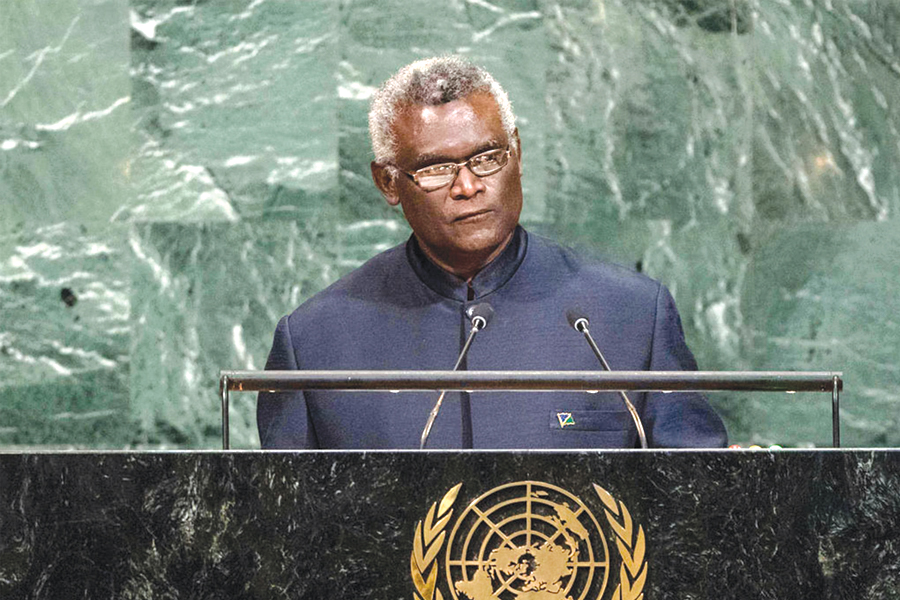
Prime Minister Manasseh Sogavare will attend the UN meeting in New York.

MANASSEH SOGAVARE, Prime Minister of the Solomon Islands, noted that 2017 had been dominated by intentional provocations and natural disasters.

Emphasizing the need to address the needs of the 65 million people around the world who had been forcibly displaced from their homes as a result of persecution, conflict, violence and human rights violations, he reaffirmed his Government’s support for the concept of the “responsibility to protect”. He urged the international community to stand firm in the fight to prevent crimes against humanity. “While [Pacific countries] played a minor role in the geopolitics of this world, we are now once again caught in the midst of a global power play,” he said, pointing out that those countries continued to deal with the remnants of foreign-imposed events, from world wars to nuclear testing.

“Today, we refuse to remain silent,” he declared, condemning the actions of the Democratic People’s Republic of Korea in the strongest terms and calling on that country to abide by all relevant Security Council resolutions. The recent testing of ballistic missiles over the Pacific Ocean was an insult to the region’s people, he said, adding that “the sea is our sanctuary” as well as their source of food and income. Maintaining the health of the world’s oceans was not only in their self-interest, but in the interest of all people, he said, reaffirming the principles enshrined in the 1982 United Nations Convention on the Law of the Sea on the peaceful use of ocean spaces.

Small island developing States such as the Solomon Islands faced the threat of climate change, the effects of which were occurring at an alarming rate on their shores and presenting a “clear and present danger”. Ocean acidification exceeded safe levels, he said, adding that his country had already lost six islands due to the effects of climate change. “We are in survival mode,” he said, stressing that while the horrors of a nuclear attack were undeniable, those caused by climate change were just as cruel. “If it’s not happening yet, it will shortly,” he said, warning that an unstable climate and the subsequent drivers of displacement and relocation could exacerbate some of the drivers of conflict, including migratory pressure, clashing cultures and competition for resources. Those challenges could in turn morph into threats to global peace and security, he said. He called upon major greenhouse-gas emitters to meet their nationally determined contributions, urging the United States, in particular, to reconsider its position on the Paris Agreement.

Recalling that the Solomon Islands had recently made its first “humble contribution” of five police officers to the African Union-United Nations Hybrid Operation in Darfur (UNAMID), he thanked the international community for having come to his country’s aid through the Regional Assistance Mission to the Solomon Islands (RAMSI), noting that its mandate had ended on 30 June. He also thanked the Peacebuilding Commission for having facilitated the National Dialogue on Peace and Sustainable Development, which reflected an inclusive and clear consensus on the country’s priorities.

He called for Taiwan’s inclusion in the work of the General Assembly, also voicing support for New Caledonia’s planned 2018 status referendum. It was to be hoped that the administering Power would show the same level of cooperation on the issue of French Polynesia, he said. The Solomon Islands condemned consistent human rights violations in West Papua, he said, adding that the people there had never been allowed to exercise their right to self-determination.

–UN NEWS CENTRE

SISA elects new executive

0

SOLOMON Islands students in USP’s Laucala campus, Fiji, have elected the new Solomon Islands Students Association (SISA) Executive over the weekend.

The SISA Executive consists of the President, Vice President, Treasurer and the Secretary who manage the association in one-year term basis.

The election’s Returning Officer, David Mapuru officially announced last Friday evening that Mr Lawrence Ini Kopuria is the new President, with 147 votes.

Harold Beck was elected as the new Vice President with 132 votes.

Lucy Bobogare was elected as the new Treasurer with 154 votes, while Charlie Salini was elected in as the Secretary with 202 votes.

All winning candidates are members of the Students’ Action Party (SAP).

Kopuria is a Solomon Islands Law student at the USP, Laucala Campus, the Vice President Harold Beck is a Computer Science student, Lucy Bobogare is an Accounting and Finance student and Charlie Salini is studying Journalism and Psychology.

Kopuria has no work experience however says that he is confident to take up the leadership responsibilities.

Mr Beck has been working with the Bank South Pacific, Solomon Islands and has gained a good knowledge on the financial management related job.

Ms Lucy is well known to students as she have been working with the USP, Honiara Campus, Accounts section for nearly ten years and is well familiar with the accounting and financial management job, and Charlie Salini has a good experience in media and communication, working with local newspapers and the Solomon Islands Broadcasting Corporation (SIBC) before leaving for study this year.

President Ini said his executive believes in teamwork to achieve the common goal of ensuring better academic living of all Solomon Islands students at USP, Fiji.

Returning Officer Mr Mapuru expressed thanks to the contesting candidates who have not made it through in the election, for their interest to help students through the SISA body.

11 candidates contested the SISA Executive election this year.

Mapuru said that the outgoing SISA Executive will inform students about the official swearing-in of the elected Executive and handing over ceremony soon.

By JUNIOR OIOFA

Journalism Student

USP, Fiji

Finance ministry called to explain unjust action on grant application

0

BY LORETTA BRIGIDIA MANELE

A concerned citizen is calling on the Ministry of Finance and Treasury to give reasons as to why their application for a grant for small scale projects was halted while others in the province received approval.

Mr Silas Topi of Western Province explained that he and others had applied for the grant and signed an MOU with the Ministry of Commerce and Trade on August 25, 2017 which was then submitted to the finance ministry.

However, he said that they were disappointed to find out that after their application reached the finance ministry, it was halted while those from the eastern part of the province got approval for their applications.

Mr Topi stressed that this issue has caused them inconvenience and they feel that they have been unfairly treated labelling the ministry’s action as ‘unjust’.

He added that not one word of explanation was given on the ministry’s decision.

On another note, whilst referring to an article that was published in the Solomon Star newspaper on Sept 5, 2017 headlined “Cash Crisis Is Over” citing the Finance Minister’s statement indicating that the country’s cash crisis was over, Mr Topi questioned why the Finance Permanent Secretary failed to approve their application if this was the case.

“Who is telling the truth?” he said.

Mr Topi stated that this is something that needs to be sorted out thus is calling on the Permanent Secretary for Finance and Treasury to clear the air on the matter.

Police investigate money allegedly stolen from vehicle in hotel carpark

0

POLICE at Honiara Central Station are investigating a report that $16,000 was removed from a car of a guest visiting the Iron Bottom Sound Hotel on September 20, 2017.

It was alleged that the guest left the car in the hotel carpark and the money was placed in a yellow envelope under the driver’s seat.

When the guest returned to the car, he discovered that the vehicle had been broken into and its doors unlocked.

The matter was reported to police the next day, September 21, 2017.

Police are investigating the report

“I appeal to the public especially those in the vicinity of the Iron Bottom Sound Hotel in West Honiara to come forward with any information that might assist them with their investigation into the report,” says Rolland Tautaumao, Head of the Honiara Central Police Investigations Unit.

–POLICE MEDIA

Police’s crime prevention strategy to be adopted by gov’t soon

0

BY SAMIE WAIKORI

THE successful police crime prevention strategy (CPS) will likely become a national government strategy next year.

Deputy Police Commissioner, Mr Gabriel Manelusi recently revealed the intention of incorporating the CPS into a national strategy.

He said the role of RSIPF now is to lead the government and community into planning and coordination of action.

Mr Manelusi said they are looking also to partner with businesses to support development of mechanisms of community stability and development.

He said this is the correct response to crime prevention which acknowledges that crime is just the symptom of the problems, which is invariably far-reaching across different aspects of society.

Mr Manelusi said police is working with many institutions across the country to strengthen the CPS.

He said their works are in areas including, education, health, agriculture, infrastructure and development, environment, women youth and families and others.

This is so that communities and government engage in understanding problems that cause crime and collectively find and implement solutions.

He said the effective CPS will move the country towards less reliance on being a cash-based society and remove lots of opportunity for potential crime, as well as support developments in infrastructure around the economy.

Mr Manelusi said the ultimate purpose of the crime prevention strategy is to ensure all communities to be a problem solvers to their problems rather than living it for police.

He said community leaders and everyone needs to stand up and assist the police in whatever problem.

Government plans to host bigger ICT workshop

0

BY BEN BILUA

THE Government through the Ministry of Communication and Aviation is looking at hosting one major information and communication technology (ICT) workshop next year.

Speaking during the closing of the first ICT awareness programme on Friday last week, Permanent Secretary of the Ministry of Communication and Aviation Mr Moses Virivolomo said the major ICT workshop will take place around May next year.

He told those present that more players will be invited to the workshop.

Mr Virivolomo said the proposed event will provide an avenue for the government, ICT regulators and operators to discuss ways forward for ICT in the country.

“As we know relationship with government, regulator and operators are not effective and that this proposed event will help get the actors together,” he said.

Mr Virivolomo said his Ministry will need to plan ahead of the awareness programme so that everyone involved will get a better idea of the importance of ICT to the economic development of the country.

“I can assure you that this ICT awareness programme will not be the last, my Ministry along with our core partners will facilitate more awareness as we implement our National ICT policy,” he said.

On the same note Mr Virivolomo acknowledges the participants and the organising committees for facilitating and also being part of the first ever ICT awareness in the country.

PM Sogavare travels on official visit to Taipei

0
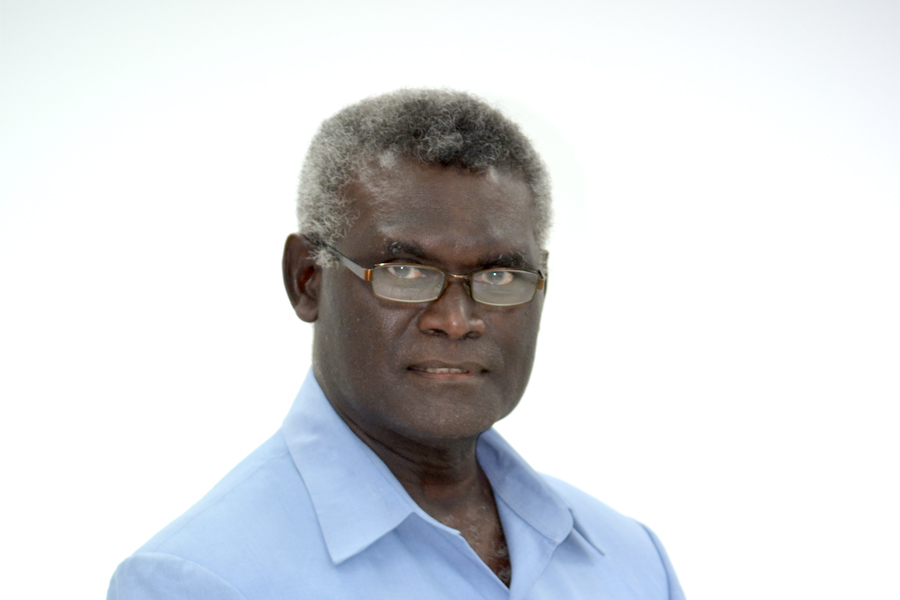
Deputy Prime Minister Manasseh Sogavare

SOLOMON Islands Prime Minister Manasseh Sogavare travels to the Republic of China (ROC) on Taiwan this Sunday on an Official Visit following an invitation by the ROC Government.

The Prime Minister and his delegation leaves New York early on Sunday morning (New York time) after successfully attending the 72nd Session of the UN General Assembly last week.

While in Taipei, Prime Minister Sogavare is scheduled to meet President Tsai Ing-wen and will also be engaged in a number of official talks including discussions on the proposed construction of the 2023 Pacific Games Stadium in Honiara.

Over the past 39 years, Solomon Islands and ROC Taiwan has enjoyed cordial and mutually beneficial diplomatic relations and continue to work closely together to successfully implement a fair amount of development aid and technical cooperation programs through several signed agreements.

The Solomon Islands Government has consistently expressed in international forums and multinational meetings its strong support for Taiwan gaining membership in multilateral development agencies concerned with promoting democratic governance and protection of nations’ sovereign rights.

These includes protection of human rights, health and education, poverty alleviation, and global environment protection from climate change and its adverse effect on peoples’ right to secure and just livelihood standards.

At the UNGA on Friday 22nd September, Prime Minister Manasseh Sogavare called on the UN to act swiftly to address the right of Taiwan and its 23 million people to self-determination.

The Prime Minister’s delegation includes Madam Emmy Sogavare, the Minister for Education John Dean Kuku, the Minister for Culture and Tourism Bartholomew Parapolo, Special Secretary to the Prime Minister John Muria Junior and five officials from OPMC and Foreign Affairs.

—OPMC