Home Blog Page 1628

Cocoa factory for Makira

0
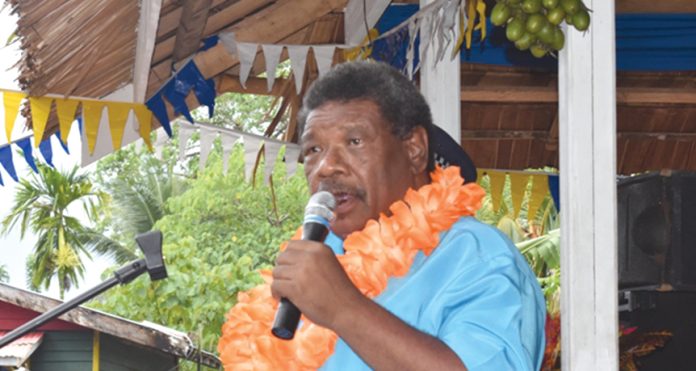
Premier of MakiraUlawa province, Hon Stanley Siapu.

BY SAMIE WAIKORI

CABINET has approved a cocoa factory for the Makira-Ulawa province, it is reported.

An elated premier of Makira-Ulawa, Stanley Siapu, tells Island Sun that his government and the people of Makira-Ulawa are grateful, especially the cocoa farmers.

He said they are planning to have the factory set up in the province’s capital – Kirakira.

“The factory will product varieties of cocoa products ranges from cocoa oil or lavender, cocoa powder for chocolates and cocoa roasts.

“Currently famers in the province are producing cocoa roasting, but not really much to the standard product.

“With the establishment of this factory we are looking forward for more production of cocoa products for market,” Siapu said.

In addition to that he said the proposed ramp for Kirakira wharf will solve the immediate needs of people especially farmers in terms of transportation.

“This is our first move and we are hoping to work more closely with the national government through its relevant ministries to establish an industrial park close by to Kirakira.

“There are other areas of development like growth centres are also working towards. And we will be very happy if the government put status of eyeing one for the province.

“We hope that having that will boost the economic activity as well as providing services for the people.

“And with those activities we optimist it will enable to generate necessary revenue for the province and the national government.”

Premier Siapu also commended the national government for other infrastructure development proposed for the province.

He assured the national government that his government and people will always help in areas needed towards the proposed developments for Makira-Ulawa province.

Beche-de-mer paralyses reef fish trade

0
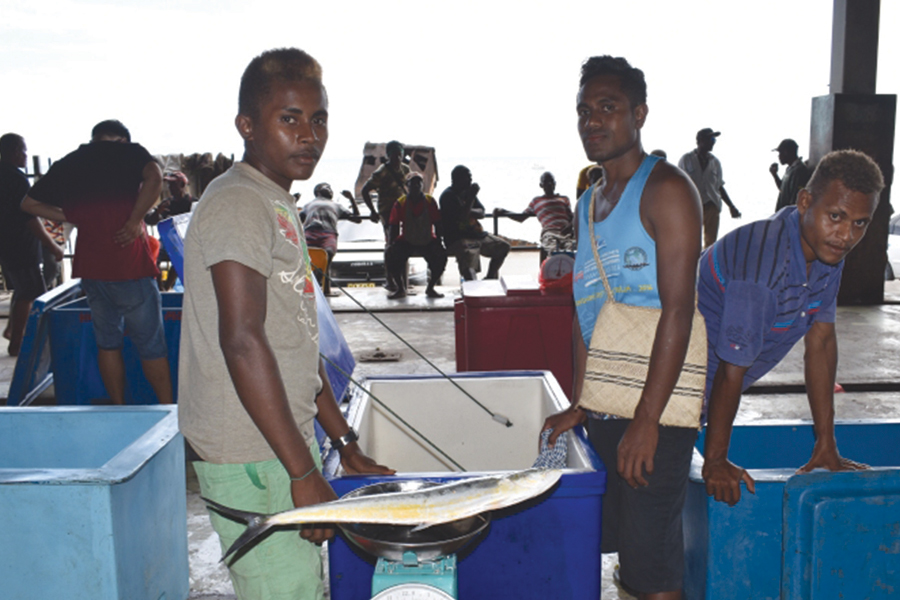
Two young lads from Isabel province with their reef fish at the central market

BY LYNTON AARON FILIA


THE open beche-de-mer season is taking its toll on the supply of fresh reef fish in the local market, it is reported.

Honiara’s central market, which used to be teeming with reef fish venders, is now host to only a handful.

This decline has caused a dramatic surge in the price of reef fish, irking customers and public alike.

From the usual price range of $10-$15 per pound, the cheapest one can find now is $20 per pound.

Central-market fish venders explain to Island Sun that this is due to fishermen in the provinces switching to diving beche-de-mer, giving their fish stocks a breather.

Hence the supply of fish reaching the capital is in its all-time low.

The venders continue that they cannot do much since they are fish-buyers themselves, who purchase fish from fishermen in the provinces and re-sell them at the market outlets.

Their main supply of reef fish come from the Isabel and Western provinces.

Honiara City Council’s Market Master Jimmy Hanson Riunga confirmed that beche-de-mer has affected the fish trade in Honiara.

He adds that it was obvious the reef fish decline began days after the beche-de-mer open season was announced.

Meanwhile, the supply in the high-seas species, especially bonito, remains untouched.

Ministry of Fisheries was called for comments, but unsuccessful.

Parliament reaches out to Eastern Solomons

0
Members of the 3 Committee Groups after a welcome session with Hon. Premier David Maina (2nd from left front row) and the provincial executive at the Provincial Head Quarter in Lata.

A recent historical and successful visit by three Parliamentary Standing Committees to the eastern borders of Solomon Islands uncovered the seriousness of police security and deterioration, poor health services and the increasing threat of sea level rise on low lying Islands in this remote part of our country.

This visit was highly commended by rural Temotuans.

Towards the end of September ( 23rd Sept – 3rd Oct 2017), the three Parliamentary Standing Committees: Police, National Security and Correctional Services Committee; the Health and Medical Services Committee and the Environmental and Conservation Committee conducted three separate inquiries based on their terms of references in Lata.

For the Police, National Security and Correctional services (PNS&CS), the recent inquiry was their second to be conducted after the 2015 inquiry done in the western borders. The purpose was to hear views on border security and police integrity deterioration from members of those communities who come to present their views as witnesses.

Acting Chairman of the Police Committee, Hon. Mathew Wale, told eastern border witnesses that the hearings allowed Parliament to engage with the public, thus, this process is significant to the Members of Parliament and the institution.

“We would like to hear your thoughts on border security and police integrity in this eastern part of the country.” Hon Wale said.

Witnesses in the eastern regions of Temotu willing shared their observations and provided the Committee with adequate information with evidences concerning their border with Vanuatu.

Like in the Western border, people of the outer islands of Temotu have informed the Committee that the issue of border security and threat and its impacts is so imminent and complex, consequently as a result of a chain of other issues.

Many recommendations were also made by various sectors like the biosecurity, customs, police and immigration officers who were also present at the hearings.

The committee will consider these in its report to Parliament when completed.

For the Environmental and Conservation Committee (ECC), the recent inquiry in Temotu was their third formal inquiry after its dialogue with the Climate Change Division of the Ministry of Environment and first provincial inquiry on Malaita, in Langalanga lagoon and Lau lagoon.

As per the ECC TOR, the hearing in Lata was also to hear from the eastern islanders of Temotu on Impacts of Sea Level Rise due to climate change on their low lying coastal and atoll communities. Majority of Islands in this region are low lying.

Chairman of the Environment Committee, Hon. Culwick Togamana, explained to the witnesses that the inquiry was part of his Committee’s initiative to gather information from relevant stakeholders regarding sea level rise and its impact in the Solomon Islands due to climate change.

It was evident from the witnesses’ contributions that they were really affected from this global threat of sea level rise.

A site visit to the low lying coastal village of Tuo in the Reef Islands by the Environment Committee further justified the witnesses’ sentiments during the hearing in Lata.

Their cemetery was now covered with sea water and remaining clothes and bones of their diseased family members are noticeable.

Among other areas affected, food security and drinking water are the main problems faced due to the increasing level of sea erosion onshore.

“Our wells used for drinking now taste salty and our root crops become smaller in size” explained a concerned Chief of Tuo.

The Environment Committee viewed such places like Tuo and other outer islands like Pileni, Duff, Anuta and Tikopia as very vulnerable to sea level rise due to their atoll characteristics and the only means for adaptation is to relocate. However, relocation is a sensitive issue given the nature of tribal land ownership.

Sea level rise threat and its impacts is so imminent and complex consequently as it results from a chain of other issues. However, the details will be made known to the public after the Committee’s report has been compiled and tabled in parliament.

Meanwhile, for the Health and Medical Services Committee (HMSC), this hearing in Lata was also in its second phase. This is after its first round of inquiry in 2016 where it took evidences from the general public and health officials from Kilu’ufi and Malu’u hospitals in Malaita Province.

Likewise, the Committee conducted inquiry in Lata purposely to gather collective information from Temotuans and health officials from Lata hospital and surrounding health centres and to hear their stories on the status and quality of medical services provided in this remote part of the country, by medical and healthcare facilities.

Temotu Province has only one hospital, one area health centre, six rural health clinics and nine nurse aid posts that provided health services in the province. Furthermore, most nurses that served in Temotu Province are secondary health care nurses. This showed that there is need to strengthen primary health care services of prevention.

It was obvious during the Committee’s sight visit to Lata hospital and Manuopo area health centers in the Reef Islands that most facilities are run down and unfit to use.

The Health Committee organized a public forum for the Lata general public to finally wrap up the inquiry. This was purposely for those who did not have the chance to share their thoughts and experiences regarding health services in their province.

The Chairman of the Health and Medical Services Committee, Hon. Charles Sigoto, assured the general public and health officials during the inquiry and the open forum that his Committee has taken onboard all their concerns and will be compiled in a report to be presented to Parliament.

Details of each of the three committees’ series of inquiry will not be pre-emptied or will not be disclosed for now. However, the general public will be informed through other forms on the outcome of all hearings after each Committee’s report has been compiled and tabled in Parliament.

All three committees are Standing Select Committees and are mandated by Parliament to perform oversight over the executive government’s decisions and actions.

This is to ensure that the government’s service delivery and sustainable development programs are maximized and prioritized to improve the socio-economic status and well-being of its people and the country as a whole.

The Temotu Provincial excutive and the rural Temotuans have expressed their gratitude and commended the three Parliamentary Committees as this was the first time in their history to receive seven Members of Parliament on their shores at one time.

Members of Parliament who are either Chair or members of each of the three Committees at the Temotu inquiry are: Hon. Mathew Wale, Hon. Culwick Togamana, Hon. Charles Sigoto, Hon. Connelly Sandakabatu, Hon. Peter Tom, Hon. Dickson Mua and Hon. Commins Mewa

–Parliament Media

Sogavare welcomes MOU signing of Honiara and Kaohsiung ports

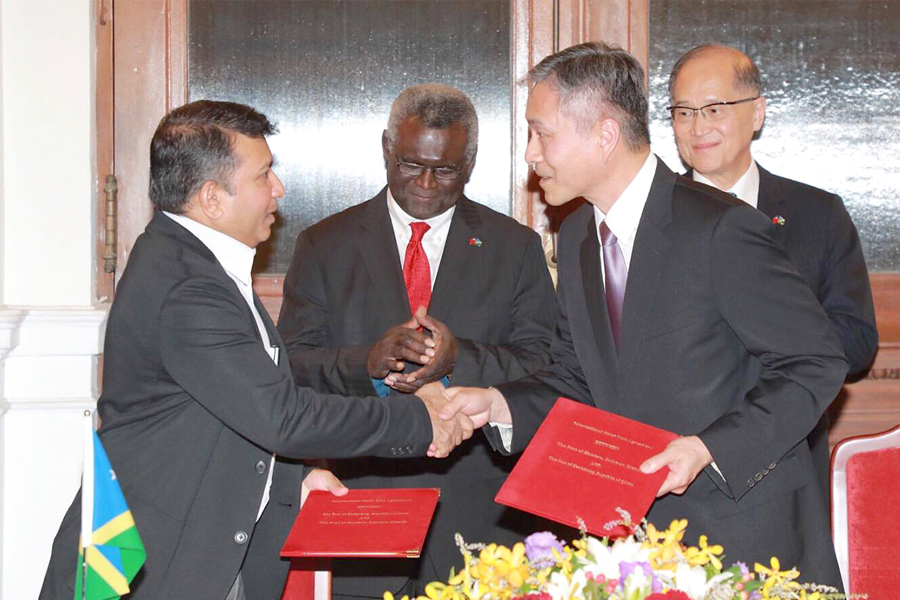
PM Sogavare (second left) applauds signing of MOU between SIPA and Kaohsiung Port. SIPA CEO Eranda Kotelewala (far left) shakes on the agreement with vice-president and CEO of Kaohsiung Port, Taiwan International Ports Corp, Shao-Liang Chen (second right).

PRIME Minister Manasseh Sogavare has openly welcomed the formal signing of a Memorandum of Understanding (MOU) to confirm a sister relationship last month between the Port of Kaohsiung in Taiwan and the Port of Honiara in Solomon Islands.

Sogavare and his delegation were at hand to witness the signing ceremony alongside ROC’s Foreign Affairs Minister David Lee in Taipei when he was on Official visit to the Republic of China on Taiwan.

The MOU was sealed on September 25 by the Chief Executive Officer (CEO) of the Solomon Islands Ports Authority Eranda Kotelewala and the vice-president and CEO of Kaohsiung Port, Taiwan International Ports Corp, Shao-Liang Chen in the presence of SIPA Chairman Billy Titiulu and SIPA Directors Johnny Sy and Humphrey Tura.

The historic achievement for the Solomon Islands leading SOE is the first sister port MoU with one of the largest ports in the world.

The MoU sets out areas for corporation between the two ports which will promote and develop greater understanding, friendship, and trade opportunities between the Port of Kaohsiung and the ports of Honiara and Noro.

Through this sister port relationship, the Port of Kaohsiung and the Port of Honiara mutually agree to conduct exchanges of information and personnel related to port development, administration and operations in order to enhance mutual understanding.

The benefits expected from the MoU are the enhancement of the traditional friendship between the Republic of China and Solomon Islands and fostering of greater mutual prosperity and growth by the sharing of information and ideas regarding port planning, infrastructure and technology.

–GCU

How strata schemes work on mortgaged properties

0

BY CAROL-ANNE SULEGA

MP Rick Hou, a member of the Bills and Legislation Committee (BLC), queries how the strata development scheme will work for fixed term estate owners who have mortgaged their properties.

Hou asked this to the sponsoring ministry of the Strata Titles Bill 2017, the Ministry of Lands, Housing and Survey who appeared before the committee this week.

“How will this work if a current property which is mortgaged and the owner of the property wants to develop it into a strata property how will this work with the bank?

“Will it be apportioned among the different units?” said Hou

Technical Advisor Allan McNeil responded agreeing that the question is in fact very technical.

He then said, “If you are an owner of a fixed term estate and you have a mortgage on your land and wish to do strata development you will need the permission of the bank.

“Key point will be the registration of the new strata lots in the subdivision so as the owner when a strata scheme gets registered then all those strata lots will come into your name and the loan will be transferred as well then he can then sell those lots,” McNeil said.

He then added that this could be a faster way to pay off a loan and is the reason why the scheme is attractive to developers because then they do not necessarily have to sell out all the lots.

They will still be able to keep some.

The BLC will be holding inquiries with various stakeholders on the bill this week and possibly into the next.

How the strata bill will boost development in SI

0

BY CAROL-ANNE SULEGA

THE strata titles bill 2017 poses to boost development and many other industries in the Solomon Islands, it is reported.

Technical Advisor Allan McNeil reveals this when queried by the Leader of the Independent Group, Dr Derek Sikua, on the similarities of strata developments in Vanuatu and Australia in the proposed legislation to do the same in Solomon Islands.

Dr Derek made the query during the Bills and Legislation Committee (BLC) hearing to the sponsoring ministry of the strata titles bill 2017 this week after the two countries were given as a similar scheme example to what Solomon Islands is moving towards.

The Ministry of Lands, Housing and Survey is the sponsoring ministry of the Strata Titles Bill 2017.

“Explain to the Committee what is really happening in Vanuatu and in Australia jurisdiction in terms of the strata titles – what is in practice? What types of developments do you see instead of simple straight forward construction?” said Hon Sikua.

McNeil told the committee that Vanuatu and Australia have had strata development schemes for some years now but their situations are different as there are many expats and retirees that are interested in purchasing strata developments.

He gave Vanuatu as a more similar example being another Melanesian country itself.

He added that in Vanuatu their tourism industry is much stronger than Solomon Islands’ and many expats choose to retire there and many are interested in purchasing strata developments, whether it be land or building units.

McNeil added that Vanuatu’s legislation was abused through subdivision of land but in the proposed Bill currently before the BLC, it’s more on buildings.

“We have learnt lessons from Vanuatu.

“Most it has been about land, now it has been amended and is for subdividing buildings,” he added.

The BLC was told that there will be more interest from Solomon Islands to buy strata units in Solomon Islands than Vanuatu.

“Lots of strata developments in Australia, form of subdivision of land and buildings, and have different names but are essentially the same thing but where there is common property is for all the unit owners,” McNeil further added.

The BLC was also informed that consultations on the Strata Titles Bill 2017 were also done in Australia with legislative drafters and stakeholders who have dealt with strata development schemes.

The combined value of strata development value in Australia amounts to over 1 trillion Australian dollars and can be seen in cities in Australia dotted in their skylines.

All of which are dominated by strata development.

He then added that Solomon Islands will not turn out like that just yet through this scheme as it will be on a much smaller scale.

Strata Titles Bill to control urban sprawl

0

BY CAROL-ANNE SULEGA

THE Strata Titles Bill 2017 that is currently before the Bills and Legislation Committee (BLC) for consideration is an answer to controlling urban squatters.

This was confirmed to the BLC by the sponsoring Ministry of the new Bill, the Ministry of Lands, Housing and Survey.

According to the witnesses from the Ministry that appeared before the BLC, the principle reason for the Bill is the need to address acute shortage of affordable residential accommodation in Honiara.

The objective of the Bill is to facilitate high density development in Solomon Islands while at the same time protecting the interest of persons who buy units in such developments.

The Bill is also expected to result in additional housing in Solomon Islands who cannot afford to buy whole parcels in Honiara and this cannot be achieved but through strata titles.

The Bill is similar in nature to schemes in Vanuatu and Australia.

Their legislative schemes are designed to be simple and as flexible as possible to avoid areas that have rights to abuse by developers.

The Strata Titles Bill 2017 went to Cabinet in the form of a white paper and was approved in concept having the Government agreeing to adopt it as a priority form of economic development.

Since the concept was deliberated on by Cabinet with the assistance of DFAT and SPC, a contract was signed with the Drafter of the Bill, Ms. Christine Swift, finalised by the Attorney General’s Chambers and is therefore now before the BLC.

According to the Ministry of Lands officials, the concept had wide consultations prepared in 2015 along with the draft Bill before Cabinet consideration.

This included the Honiara City Council Executive, Association of Valuers, Solomon Islands Chamber of Commerce and Industry (SICCI), National Provident Fund, SI Bar Association, the Law Reform Commission and commercial banks.

The Ministry told members of the BLC that there have been wide spread support on this proposed legislation in the country and there are hopes to have it also be used outside of Honiara to control urban sprawl.

In terms of implementation of the proposed legislation, the Ministry has confirmed that they have resources and ongoing expenses will be minimal and easy to handle.

They added that for a start, they do not expect a big turnout of applicants but its innovative progress will encourage construction diversity.

The Bill has achieved lots of merit and is designed for both oversea and local investors.

SIMSA desperate for modern equipment

0
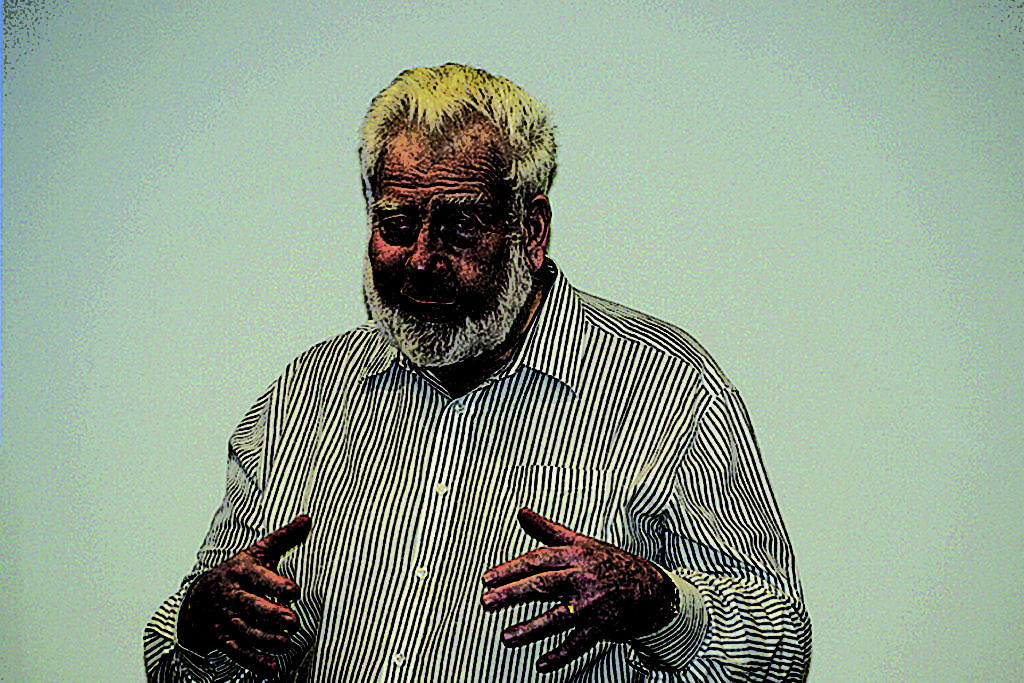
Director of SIMSA Mr Tim Harris

BY SAMIE WAIKORI

THE Solomon Islands Maritime Administration (SIMSA) is in need of modern technological equipment.

Director of SIMSA, Mr Tim Harris says the organisation and the government need to embrace modern technology more closely, and do away with misconceptions that technical and electronic systems are unreliable.

“The real situation is that time and time again technological solutions have been found more reliable and cost effective than human systems.

“In the maritime industry incidents and accidents have been analysed and show that more than 70 [percent] have been caused by human failings and less than 30 [percent] by technical failures.”

He said SIMSA needs automatic identification systems (AIS) and long-range identification and tracking (LRIT) to monitor shipping activity in the Solomon Islands EEZ.

Mr Harris said other needed technical instruments include radar sets, gyro-compasses, echo sounders, global positioning system (GPS) receivers, electronic navigational charts (ENC) and electronic chart display (ECDIS) systems, etc.

He adds training for staff to man these equipment is also vital.

Will strata developments be culturally adaptive?

0

BY CAROL-ANNE SULEGA

QUESTIONS have been raised by the Bills and Legislation Committee (BLC) on how culturally adaptive strata developments will be in the proposed strata titles bill 2017.

The questioned was raised by the Leader of the Independent Group Hon Dr Derek Sikua, a member of the BLC.

The BLC has been conducting inquiries into the strata titles bills 2017 this week straight after Parliament was adjourned on Monday this week.

Technical Advisor Allan McNeil then responded to the committee that Solomon Islanders are attuned to the cultural aspect of living.

This is being accustomed to having outdoor time in their kitchens, gathering outside together and rarely always indoors.

“Right now it will be more of a planning and building question rather than a strata development question and the way the buildings are built to suit this type of living,” McNeil said.

He then added that many people around the world who have been directed into strata developments who too are outdoor social people have all well adapted to strata developments.

The Ministry then said the strata development scheme is voluntary in terms of design and will be up to fixed termed owners to have culturally aspects maintained in a modern context or not.

Trade boost

CEO of SIPA Mr Eranda Kotelawala.

SIPA unveils infrastructure development plan for Noro and Honiara, engages world’s largest shipping line


By Alfred Sasako

SOLOMON Islands Ports Authority (SIPA) has embarked on a multi-million dollar infrastructure development plan, which will lay the foundation for economic growth at the nation’s seaports for the next 50 years, its Chief Executive Officer, Eranda Kotelawala has revealed.

Part of the plan, which will see the expansion of Noro wharf in Western Province, involves a tripartite partnership arrangement with MAERSK, the world’s largest shipping line and Tri-Marine.

A Memorandum of Understanding (MOU) cementing the relations is expected to be signed in Honiara on October 18, Mr Kotelawala told Island Sun in an exclusive interview yesterday.

“This is going to be the beginning of massive changes for the way we do things at our ports. Extensive training would be provided particularly to the stevedoring staff as much of the operation would be mechanised,” Mr Kotelawala said.

Under the arrangement, MAERSK will call into Noro Ports twice a month to pick-up reefer containers and carry them to several international destinations.

MAERSK’s regular visits would also be an opportunity for all Solomon Islands products, including sawn timber, cocoa and coconut virgin oil to be sent to markets around the world.

“To help us prepare for this project, MAESK will provide two fish off loaders and two generators for emergency use in the event there are power cuts in Noro,” he said.

“Solomon Islands is in a geo-strategic position, which unfortunately was not taken advantage of in the past. Now, large shipping companies are coming to us and saying they are willing to partner with us in building our ports in order to handle the volume of cargoes envisaged to pass through our seaports.

“They are giving us an opportunity to prove that we can do it,” Mr Kotelawala said.

He said he wanted to “set the foundation for this growth, which will result in Noro and Honiara becoming the hubs for handling regional cargo.

The potential is here, but we’ve got to prepare for it”.

In Noro, there are plans to extend the 60-metre berth by another 90 metres.

At the same time SIPA has begun paving the container area as part of the new development.

As well, work has begun on the International Shipping Ports Security (ISPS) area in line with international requirements.

In Honiara, there are plans to upgrade part of the old international wharf as well as the local jetties to withstand earthquakes and tsunami.

This is to build a life-line section for both international and domestic shipping in Solomon Islands.

Mr Kotelawala said these important infrastructures have been neglected for far too long and he is pleased the SIPA Board is being supportive of the overall development plans for both Noro and Point Cruz.

Meanwhile SIPA has signed an International Sister Port Agreement with Kaohsiung Port in southern Taiwan.

The MOU is intended to promote and develop “greater understanding, friendship and trade opportunities” between the two ports.

Kaohsiung is one of the busiest seaports in the world, handling an estimated 100 container ships at any one time, compared with Point Cruz which can handle only two.