Home Blog Page 1599

SI helps push for Indigenous Peoples’ Platform milestone achievement in COP23

0
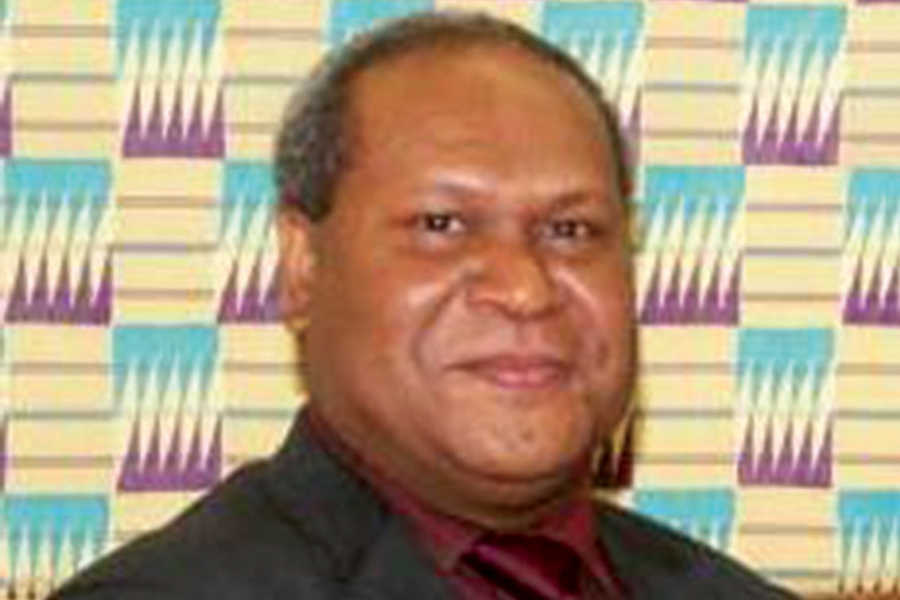
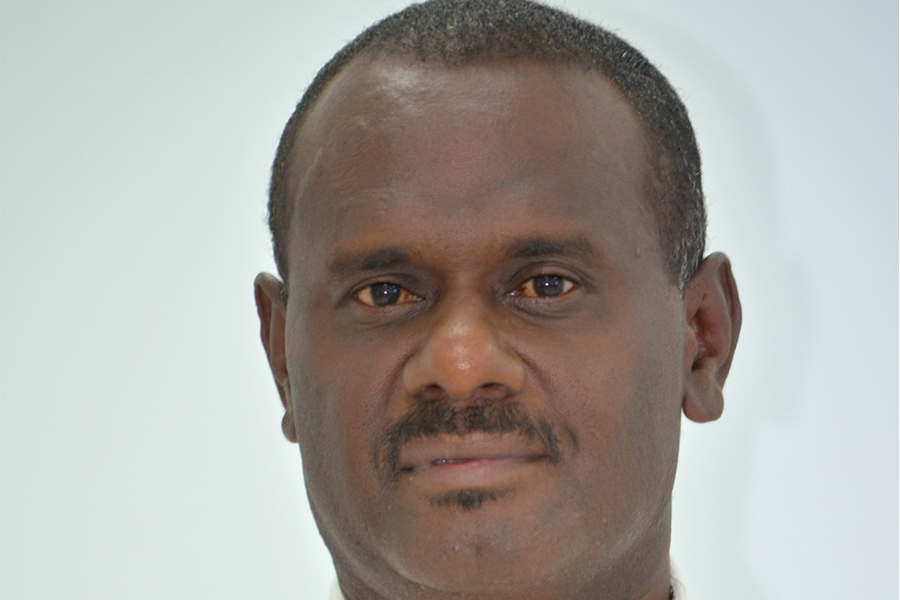
Dr Samson Viulu, left, and his assistance Philip James Taisie at the COP23 in Bonn

By PRIESTLEY HABRU

In Bonn, Germany


SOLOMON Islands has played a key role in ensuring the Indigenous Peoples’ (IPs) Platform at the United Nations Framework Convention on Climate Change (UNFCCC) was adopted at the 23rd Conference of Parties (COP23) here in Bonn, Germany.

Dr Samson Viulu, who is a member of The Network for Indigenous Peoples of Solomons (NIPS) who represented Solomon Islands Government, was instrumental in pushing for the IP to be adopted.

“The IPs Platform has formally been adopted during the high plenary session of the Subsidiary Body for Implementation (SBI) on Wednesday,” he told Island Sun in Bonn.

This means the IP Platform has been officially adopted as one of COP23’s decision and what it entails is the adoption by parties for its full operations.

Dr Samson Viulu, left, and his assistance Philip James Taisie at the COP23 in Bonn

“This clearly demonstrated that parties have now recognised the importance of engaging IPs in the decision-making processes at the international stage and hopefully parties will streamline this into their respective national legislation.

“Moreover, with this positive outcome, I can proudly say that Solomon Islands have achieved one of their objectives in this COP23. It is a huge positive outcome for IP communities throughout the globe and the Solomon Islands as a country, with a population of more than 90 percent indigenous peoples.”

Dr Samson, who currently works as a research fellow at the University of the South Pacific in Suva, Fiji Islands, said the adoption of the IP platform is very important as it will not only recognise the rights of IPs but it will also strengthen and protect their traditional knowledge systems.

“IPs can now meaningfully contribute to achieve the global initiatives on Nationally Determined Contributions (NDCs), mitigation and adaptation initiatives by states.”

Dr Samson said this milestone took many years and struggles to achieve, considering that, the IP communities throughout the globe have used their traditional knowledge and practices for centuries to navigate through disasters and calamities.

“Therefore it is only fitting that parties to the UNFCCC COP should finally recognise their importance as equal partners.

“The platform will complement the modern science as a vehicle of solutions to combatting climate change.”

He said the Solomon Islands government played a key role in getting the IP Platform recognised within the UNFCCC processes and the International Indigenous Peoples Forum on Climate Change (IIPFCC) fully appreciate this assistance.

Representatives of Indigenous Peoples from Native America conducting a traditional ceremony outside the Bula Zone where COP23 is taking place this week

Dr Samson said in terms of the climate change negotiations to operationalise the Paris Agreement, not much has been made in most of the thematic areas such as loss and damage, mitigation and adaptation, finance, technology, NDCs, global stock take, reporting and compliance and so forth in this COP23 negotiations.

“Most of these negotiations will now shift to COP24, which will be in Poland next year.

“However, the full operationalization of the Indigenous Peoples (IP) Platform is one of the only few agendas that has made a huge progress at this COP23 and will go down as Fiji’s biggest legacy in hosting this COP23.”

Dr Samson explained that parties, states and all the concerned non-government constituents in the UNFCCC processes managed to reach an agreement on the draft text around 8pm on Tuesday night, and was formally adopted by the high plenary of the UNFCCC bodies the next day on Wednesday November 15; and is now a decision of the COP23.

“This was possible after hard fought negotiations against some reluctant states by friendly states led by Ecuador, Bolivia and the Solomon Islands to name a few.”

The decision to fully operationalise the IP platform in this COP23 was a follow up from the Paris Agreement where the establishment of the IP platform was adopted. With its adoption for full operationalisation, the IP communities throughout the globe will now remember Fiji as the COP Presidency that helped ushered in a new dawn of hope to preserve, protect and strengthen their traditional systems.

The adoption by parties for its full operationalisation clearly demonstrated that parties have now recognised the importance of engaging IPs in the decision-making processes at the international stage and Dr Samson is hopeful parties will streamline this into their respective national legislation.

Important policy plans announcement by newly elected Solomon Islands PM

0

Dear Editor,

IN his first post-election speech the newly appointed Solomon Islands Prime Minister, announced some important first-steps for his administration.

Quoting from the Solomon Star newspaper, published on 20 November, 2017, the following policy measures were outlined.

“Corruption has caused inefficiencies in operations, it has undermined public trust in government, and it has exhausted public resources and money as well as causing injustice through advantaging a few at the expense of many.

“It has robbed vital resources from our schools and hospitals.

“I assure this nation that my administration will deliver this important legislation and we are committed in ensuring its implementation before the end of the 10th Parliament,” Mr Hou said with an air of determination.

“Prime Minister Hou said other immediate priorities of his government are addressing the government’s ‘ailing’ financial situation and completing the national undersea cable project.

“An important objective of the government is to stabilise our ailing fiscal situation. It is my government’s immediate priority to immediately address the cash-flow situation.

“My government will ensure there is fiscal discipline across government sectors and to assist line ministries to execute their respective budgets more efficiently, effectively and responsibility.

“I assure you that my officials have already identified key areas in the productive, social and resource sectors that my Government will prioritise as our immediate short term plan.”

“Mr Hou added that given the limited timeframe, his government will prioritise achievable, identified infrastructure projects only.

“We will accelerate necessary work to fast track those infrastructure projects that are crucial to quickly resuscitate government finances and the economy more broadly.

“It is important to prioritise and invest in Infrastructure development that will provide opportunities for growth in the rural sector.”

“Underscoring the Undersea Cable Project, Mr Hou said:

“The submarine cable is also one of the immediate priorities of my government.

“I am aware new arrangements have been re-negotiated with Australia. This project is crucial to reducing telecommunication costs so the new Government will see to its completion without any further delay.”

“The new Prime Minister said an Immediate Strategy entailing a set of priorities of his government for its short-term in office will be put in place.

“The strategy is to continue with the projects and programs of the previous DCCG with increased level of policy implementation aimed to stabilise the fiscal situation, strengthen budget implementation and ensure we achieve tangible results in the short term.”

“Prime Minister Hou also took the opportunity to assure Solomon Islands development partners of his government’s readiness to re-engage with them in advancing the country’s interest.

“For too long, we have left our development partners in the cold which has negatively affected the progress of important Government programmes.

“But today, I assure you that my government will take extra efforts in working closely with each and every one of our partners as we work towards our common goal to move this country forward. On that note, I would also like to thank our developing partners for their continuous support.”

“Mr Hou had served as Governor of the Central Bank of Solomon Islands and also as Senior Advisor to the Executive Director of the World Bank before beginning his political career after winning the national general elections in 2010.

He is the country’s 17th Prime Minister since it attained nationhood on the 7th of July 1978.

“The Prime Minister’s election yesterday was necessitated by the successful moving of a motion of no-confidence in former Prime Minister Sogavare on Monday last week by the Independent Group Leader Dr Derek Sikua.

Source:   Solomon Star newspaper.

Yours sincerely

Frank Short

SI wins bid to host Pacific labour mobility meeting

0
Deputy Secretary of Foreign Affairs Joseph Ma’ahanua

SOLOMON Islands has won the bid to host the Pacific Labour Mobility Annual Meeting (PLMAM) in 2018.

A delegation led by Deputy Secretary of Foreign Affairs Joseph Ma’ahanua has expressed Solomon Islands’ intention to host the event during a PALMAM meeting in Brisbane last week.

The delegation included Solomon High Commissioner to New Zealand Mrs Joy Kere, Madame Helen Beck, Mr George Tuti and Mrs Louise Ellerton from the Australian High Commission in Honiara.

The PLMAM meeting brought together responsible authorities from Australia and New Zealand, including their departments of Immigration, Employment and Foreign Affairs and Trade.

It also provided a session for employers and contractors to talk about issues they expect from labour-sending countries.

Two key issues of concern to the Solomon Islands delegation are communications and illegal work using holiday visas, the latter being more of a concern for Australia.

“Some of our local recruitment agents have limited access to Internet therefore from time to time, visited the Labour Mobility Unit (LMU) in the Solomon Islands Ministry of Foreign Affairs and External Trade to access Internet mainly for this purpose,” Ma’ahanua said.

On the illegal work using holiday visas, an academia expressed concern that whilst Solomon Islands is trying its best to use the formal and recognised schemes/programmes, there are a good number of Solomon Islanders who are also hindering the good work which the SIG is trying to do in terms of using the formally recognised employment pathways such as the SWP.

The other interesting opportunity for the Pacific island countries is the Australian Prime Minister’s announcement of the Pacific Labour Scheme (PLS) during the Forum Leaders meeting in Samoa earlier this year.

This is a new labour scheme focusing more on semi skilled workers unlike the Seasonal Worker Programme (SWP), which is mainly focusing on unskilled labour.

A design team is currently consulting with Pacific countries but also academia, think tanks, civil society and private sectors to finalise the design and ready to be implemented by June 2018.

Solomon Islands during PLMAM commented on the need for equitable re-distribution of employment opportunities under the labour mobility schemes.

“We understand that the schemes are demand driven, meaning that employers will determine what the numbers are and also preference for the source of labour.”

The delegation also make their voices heard that Solomon Islands should be part of the newly Australian announced and piloted programme – the Pacific Labour Scheme but also the piloted programmes in New Zealand.

Solomon Islands is committed to promote the labour mobility schemes and hosting this event is one way the country can bring responsible authorities from both Australia and New Zealand including employers/farmers/contractors and other stakeholders involved in facilitating the schemes.

–GCU

Manele vows to restructure MDPAC

Jeremiah Manele

BY MAVIS NISHIMURA PODOKOLO

THE new Minister of Development Planning and Aid Coordination (MDPAC) Hon Jeremiah Manele has vowed to restructure the ministry’s approach in delivering its services.

Speaking in Parliament on Monday, the Member of Parliament for Hograno/Katova/Kia/Havulei said his ministry will take a close look at the 2016 -2035 national development strategy with robust engagement with development partners as well as core working groups.

“We are now looking forward with much closer and robust engagement with our development partners including through the core economic working group which was just recently being reactivated by the former minister for treasury and finance.

“Some partners understand and continue to fund some of our programs in 2018 including the first quarter period covered by this resolution.”

He said his ministry, through the support of the government, is strongly committed to working closely with donor partners to develop a comprehensive developed programme and to access budget support from multilateral and bilateral donor partners.

Manele said the resolution passed by the Parliament provides and reaffirms his ministry’s engagement with development partners on a road map to advance and progress till the term ends.

Magistrate lashes out at police investigators

0

BY JENNIFER KUSAPA

PRINCIPAL Magistrate Fatimah Taeburi has raised concerns over the delay in police investigations which are leading to an increase in pending court cases.

Taeburi voiced this yesterday when prosecution admitted that they were still waiting for investigators to complete their task before the court could be updated on the status of a case.

This is the case against accused, Leslie Manekesa, who faces counts of grievous harm and assault causing actual bodily harm.

Taeburi says Manekesa has been in custody for four months, which she believes to be ample time enough for police to have completed their investigations.

She reminds the prosecutor that police have vehicles which should be used to attain statements from witnesses, rather than using the vehicles to roam around wasting government fuel.

Taeburi also encourages prosecution to harry investigators when they are perceived to be slow; report them to their in-charge or write to the Director of the national investigation division and even to the police commissioner.

“Tell their superiors so that they knew that their officers are not doing anything,” Taeburi urges.

She said prosecution cannot just charge and remand people in custody without dealing with their cases – accused persons are human beings and should be treated fairly.

She then adjourned the case for November 24 for mention and possible oral pre-trial conference.

The offence is alleged to have taken place in the Bonege area, west of Honiara.

Chinese nationals trading beche-de-mer without permits

0

BY SAMIE WAIKORI

A good number of Chinese nationals are currently engaged in illegal Beche-de-mer trading in the country.

A source tells Island Sun that around 20 are in the Lord Howe islands, trading beche-de-mer without work permits.

90 percent of foreigners, according to the source, who are buying and harvesting the lucrative resource are without work permits.

“If the Immigration and Police would have the opportunity to check Lord Howe islands now, they will be able to locate more than 20 Chinese foreigners most of whom do not have work permits but engaged in illegal trading of Beche-de-mer on the Island.

“It is utterly important that steps are taken to ensure illegal activities is stopped and that everyone follows the laws of Solomon Islands,” the source said.

When contacted, the Director of Immigration yesterday he said his office was not aware of any foreign national dealing with beche-de-mer without a work permit.

Mr Henry Fugui exclaims that it is news to him and his office, assuring the paper that they will investigate the matter.

Codes of conduct and practice for the police service in the Solomon Islands

0

Dear Editor,

THE online webpage of the Solomon Star newspaper continues to feature an editorial piece, first published on 16 November 2017, relating to an allegation of unlawful detention and assault by the RSIPF reported by two youths.

Without going into the specifics of the allegations made the story raises in my mind whether or not it is time to introduce legislation in the Solomon Islands that governs the major part of police powers over and above the statutory provisions relating to police contained in the existing Police Act and Regulations.

The reputation and standing of the re-built RSIPF cannot be allowed to be sullied by allegations of misconduct but, equally, misconduct that is proven cannot be allowed to go unpunished.

In 1997 I issued this order to the then members of the police service to try to ensure proper conduct, both on and off duty.

“It is the duty of every member of the Force to cultivate good relations with all sections of the public, and always to bear in mind that, where such relations do not exist, police officers work under a severe handicap and cannot therefore. be fully efficient,

“In their daily dealings with the public, police officers are often required to exercise firmness, and sometimes obliged to resort to force in the exercise of their duty. Firmness, however, must be tempered by tact, patience and good humour, and any force used must be the minimum necessary to secure compliance with the law.

“Members of the Force have special powers not possessed by the ordinary citizen, and it is of the utmost importance that these powers should be used with discretion and forbearance.  Harsh or oppressive conduct, incivility, and the use of unnecessary violence can in no circumstances be justified or tolerated, and are punishable offences against discipline.

“Members of the Force must avoid altercations of any nature.  If an officer is wantonly assaulted he has the legal power to arrest his assailant.

“Arguments with members of the public on matters of duty must be carefully avoided; it rarely convinces anyone and naturally irritates persons smarting under some real or imaginary grievance.

“All ranks must, moreover, constantly remember that one offender in this respect may give a bad name to the police generally, and that a display of surliness or ill-humour, or the harsh or oppressive use of authority, by one police officer may have the adverse effects of a far-reaching nature on the Force as a whole.”

In 1984, in the UK, the government introduced The Police and Criminal Evidence Act 1984

This Act is commonly referred to as PACE and it governs the police powers of investigation, including arrests, detention, interrogation, entry and search of premises and the taking of samples.

Quoting from In Brief.co uk, a leading legal website, the legislation contains PACE Codes of Practice, which police officers should consider and refer to when carrying out various procedures associated with their work

The Act attempts to strike a fair balance between the exercise of power by those in authority and the rights of members of the public.

There are 8 Codes of Practice laid down in the Act.

“Failure by a police officer to adhere to the Codes of Practice does not render them liable to criminal or civil proceedings. However, their failure to adhere to what the Codes state can be introduced as evidence in civil and criminal proceedings (PACE, s 67). Additionally, any evidence obtained by the police in relation to the investigation of any criminal offence where they have failed to adhere to PACE, can be deemed inadmissible in court thus harming the case against the defendant.”

Yours sincerely

Frank Short

Where there is a will there is a way

0

Dear Editor

MY recent letter to the media mentioning that the Indian Prime Minister had promised in 2015, to provide several of the smaller islands states in the Pacific region, including the Solomon Islands, lighting for 200 homes in each of 14 island states with electricity generated by renewable energy sources, brought immediate comment from three doctors in service at the NRH.

The sum of the comments put forward was as the Solomon Islands is already an independent nation why can’t the country produce enough electricity to light the homes? “
it was quoted by all three that “Where there is a will there is a way.”

The old English proverb asserts itself with complete assurance: “Where there’s a will, there’s a way.” Like many time-worn sayings, this claim that mind always rules over matter rings true only some of the time. Sometimes we don’t have the will; sometimes we lose our way.

Have I witnessed a new spirit emerging,however,from this trio of doctor and a spirit that will continue to emerge amongst Solomon Islanders till eventually the country’s over-dependency on foreign aid will be radically diminished?

One must hope so, but perhaps not in my lifetime.

In support of the refreshing and enterprising commentary by the doctors, it might be worth recording that total dependence on foreign aid means that it becomes the opiate of the Third World.

In a similar way to how the development of the welfare state in some developed countries has helped undermine society by removing the need for communities to develop themselves through cooperation and exchange but by instead supporting and facilitating anti-social and irresponsible behaviour, foreign aid has largely encouraged Third World governments and their populations to rely on hand-outs instead of on themselves for development.

Yours sincerely

Frank Short

Win-win deal

Office of the Prime Minister

PM defuses internal row over chief of staff appointment – Djokovic or Usuramo, new post created

By Alfred Sasako

PRIME Minister Ricky Hou has used his management skills in defusing an internal row which has the potential to tear his new government apart, sources close to the government have revealed.

The row is over who to fill the position of Chief of Staff (COS), occupied by Robson Djokovich during Hon Manasseh Sogavare’s three-year tenure as prime minister. Mr Djokovich is Mr Sogavare’s nephew.

Sources told Island Sun yesterday on one hand, diehard DCC members are pushing for Djokovich to remain in the post. On the other, Prime Minister Hou has put forward the name of the President of DAP, John Teddie Usuramo, to fill the position.

“It’s a rather explosive situation which has the potential to tear the new government apart,” one source said.

“Fortunately, Prime Minister Hou has used his management skills in defusing the situation by suggesting a new position be created. The position will carry the title of Coordinator, Policy Implementation, Monitoring and Evaluation Unit (PIMEU) in the Prime Minister’s Office. This Unit drives the implementation of the government’s policy and priorities,” the source said.

“The Chief of Staff position will remain but will be relegated to the Prime Minister’s Private Political Office. The Coordinator will be required to report to the Prime Minister through the Office of the Chief of Staff.”

The proposed change is still subject to formal approval, which could be given as early as later this week.

An announcement of the new appointees to fill the two positions is due to be made following endorsement by Caucus.

It is unclear whether Djokovic would be offered the job of Coordinator.

Meanwhile the new government is set to start shedding Political Appointee (PAs) positions soon as a cost-cutting and clean-up measure.

Many in the government are convinced the PAs should go, given that the national general election is just around the corner.

Up to 45 PAs could lose their jobs in the shake-up being foreshadowed.

It is understood the next level for the axe to fall on would be Permanent Secretary positions.

“The priority focus for the Prime Minister is to clean up the mess and to weed out non-performing individuals in the public sector, starting with the Office of the Prime Minister,” one source told Island Sun yesterday.

It is not clear how soon these measures would be undertaken, with observers warning time is against the Prime Minister’s programme of action.

“What I want Prime Minister Hou to put at the back of his mind is that he has no time to do what he’s announced he would do,” businessman and West Are’are community chief, Charles Karaori, told Island Sun yesterday.

“My message to the Prime Minister is that some of the people around him are not there to help him. These people are there to frustrate the process so that nothing moves forward,” Mr Karaori said.

“Prime Minister Hou must be aware of this and the people I am talking about. If it means removing these people, the Prime Minister must do so, before he is overtaken by events,” he said.

We need answers

0

Parents’ last hopes rest on MEHRD as uncertainty over children’s future troubles them

BY BARNABAS MANEBONA

PARENTS of students who sat this year’s examination are still uncertain and are worrying over their children’s future.

Speaking with Island Sun, a parent who last week had brought the issue to the newspaper with her story of proactively going against the network responsible for leaking the exam papers, says that the education ministry’s media assurance in Solomon Star newspaper yesterday only reveals that the ministry and police are investigating the matter.

However, Ms Elizabeth Dima says parents across the country need to be comforted with assurance from the Ministry of education (MEHRD) that their children who have studied and prepared earnestly for the exams will not be bottle-necked by students who had cheated.

“It’s good to see MEHRD engaging police in investigating the matter, but that is only one side of the issue. We parents need to hear from the ministry that our children who have genuinely sat the exams won’t be pushed out by cheaters who have scored higher marks.

“Does the ministry have any mechanisms in place to filter out students who have cheated from those who have sincerely prepared and sat for the exams?

“Can MEHRD reassure us parents that this will not happen again next year and the following years? This needs to stop.”

It is understood that there are only limited spaces in forms four, six and seven, and the exam leakage may mean that students who accessed leaked copies of exams may score higher marks hence push out students who had sat the papers in earnest.

Island Sun had been trying to contact responsible officers in the MEHRD since last week. Attempts to get in touch with Director of National Education Assessment Division (NEAD) Mr John Liliu was futile as the ministry switchboard kept saying “he is in a meeting”.

It was also odd to note that last week’s follow up calls were met with an electronic voice notification that the MEHRD switchboard line was out of service. Yesterday, however, the line was working again when Island Sun called. Surprisingly, it was engaged when the paper made follow-up calls after.

This silence from the ministry is disturbing, which implies that it might be hiding something or is not ready to face the hard questions of the media regarding this serious issue.

Meanwhile, Dima had alerted Island Sun last week that she had led police to the arrest of two men on November 8, who were selling copies of leaked exam papers.

According to her private investigation, students of KGVI, Tuvaruhu, St John, Naha, Mbokona and White River secondary schools had copies of leaked exam papers well before their exam dates.

During her search, she obtained a mobile number belonging to a person selling copies of form six exam papers; she managed to book an appointment with the person and took the police with her, leading to the arrest of two men who were in possession of exam papers.

Of the six schools alleged by Dima, only KGVI responded, denying any incidence relating to students being caught with copies of leaked exam papers.

School Tutor Mr Viva admits that they have heard rumours that some of their students had copies of leaked exam papers, however confirms that upon inspection of their students’ examination forms, found that none of their students had used leaked exam papers.

“I have heard that KGVI is also accused for its students cheating but after going through inspection, we deny accusations.

“It might be other schools outside but not KGVI.”

The other schools mentioned above are without phone contacts or have had their lines cut due to unpaid bills.