Home Blog Page 1598

Gov’t purge begins

Djokovic out, Usuramo new PMO chief of staff, all political appointees told to leave

By Alfred Sasako

PRIME Minister Ricky Hou has put his stamp on his new administration, issuing instruction that all Political Appointees (PAs) under the previous administration vacate their offices immediately to make way for a limited number of newer ones to be appointed.

At the same time the Prime Minister has reportedly ended the internal wrangling over the position of Chief of Staff in the Office of the Prime Minister and Cabinet.

He appointed the President of his Party, the Democratic Alliance Party (DAP), John Teddie Usuramo, yesterday as his new Chief of Staff.

It is understood Mr Usuramo took up the much-coveted position as of yesterday.

He replaced Robson Djokovic, the nephew of former Prime Minister Manasseh Sogavare, who was swept out of office in a no confidence motion two weeks ago.

Mr Djokovic held the position for almost two years.

Sources told Island Sun Usuramo’s first task yesterday was delivering the Prime Minister’s instruction to Political Appointees (PA) that they vacate their offices immediately.

“New appointments will be based on merits rather than on political party affiliations,” sources said last night.

Prime Minister Hou also told officials he wanted just 30 Political Appointees whose appointment would be based on merits rather than on political affiliation.

“The number of Political Appointees is the first thing the Prime Minister had to deal with. Initially he was informed of just 33, but when he sent the information back to officials, the number increased to about 44,” one source told Island Sun yesterday.

“I think it’s the Kadere Party that wants to increase the number of PAs, but Prime Minister Hou has made it clear he wants just 30 or even less.

“The point is this, if the PAs have done nothing in the last three years since they took up their appointments, what justifications are there that they would perform in the remaining 12 months?” the source said.

The source said the Prime Minister is expected to meet with each of the Political Appointees either this week or early next week.

It is understood the previous administration had engaged in terminating certain individuals as Political Appointees while covertly engaging replacements. Former Customary Land Reform Management consultant, Genesis Kofana was a case in point.

Soon after his contract was terminated in the name of cost-cutting, the then Office of the Prime Minister recruited the younger brother of private lawyer, Wilson Rano, to replace him.

The Ministry of Lands, Housing and Survey confirmed the appointment but added the Ministry had nothing to do with it as the contract for the engagement was prepared and signed by the Prime Minister’s Office.

SI work programme on Paris Agreement slow

0
Permanent Secretary of the Ministry of Environment, Climate Change, Disaster Management and Meteorology (MECDM) Dr Melchior Mataki

BY PRIESTLEY HABRU

In Bonn, Germany


SOLOMON Islands work programme on the Paris Agreement is slow, says the country’s head of delegation to the 23rd Conference of Parties (COP23) of the United Nations Framework Convention on Climate Change (UNFCCC) Dr Melchior Mataki.

The Permanent Secretary of the country’s Ministry Environment, Climate Change, Disaster Management and Meteorology said the 2015 Paris Agreement is a near universal Agreement signed by 195 countries and ratified by 170 Parties, including Solomon Islands.

As such Solomon Islands has a mandate to operationalise the Agreement by 2018.

“Regrettably, progress on the Paris Agreement work programme is slow. Substantive discussions have yet to begin. A clear and defined roadmap into 2018 with milestones to complete our work is needed before we leave Bonn,” he told delegates and heads of states in the High Level Segment Statements of COP23 in Bonn on Thursday afternoon.

Mataki said ambition under the Paris Agreement remains low.

“To date we have a run-away climate change, global temperature continues to rise to 1.1 degrees Celsius above pre industrial level. Ocean acidification is now at 403 parts per million after the Paris Agreement was adopted.

“We are heading for a 3 degrees Celsius world; as such we need to decarbonise our economies, and keep coal in the ground.”

He told COP23 President and Fiji’s Prime Minister Frank Bainimarama that Solomon Islands is committed to work with Fiji through the Talanoa Dialogue review and enhance “our Nationally Determined Contributions (NDCs) to put us back on a 1.5 degrees Celsius trajectory, guided by IPCC’s (Intergovernmental Panel on Climate Change) Special 1.5 degrees Celsius Report due out next year”.

Mataki said in doing so it would preserve the credibility and integrity of the Paris Agreement.

“My delegation calls for more Pre-2020 action, in particular those who have not signed the Doha Amendment to do so with a sense of urgency to put the Paris Agreement on a firmer foundation by 2020.

“On adaptation, Solomon Islands considers the Adaptation Fund to serve the Paris Agreement a natural step, we support the draft decision by G77 and China and hope to see this effected at this COP.

“On Loss and Damage (L&D) as climate change continues to define our future, we look to your leadership, to have L&D be a standing Subsidiary Bodies Agenda noting we have loss and damage activities in SBI 2018 and 2019.”

Mataki shares that it was sad the United States of America have announced its intent to withdraw from the Paris Agreement. And Solomon Islands finds this regrettable.

“We call on the United States to take leadership in climate action, and not to stand in the way of current negotiations.

“Combating climate change requires our collective action; every country should be part of the solution, Solomon Islands supports the Republic of China (Taiwan)’s meaningful participation within the UNFCCC process. Let Taiwan help.”

He said Solomon Islands also welcomes the signing of the World Bank and Green Climate Fund Accreditation Master Agreement on Monday this week.

“This development will see funds roll out for our Tina River Hydropower Project.”

The hydro-power project has sourced USD86 million under GEF which when up and running would provide electricity for capital Honiara and saving the national government from purchasing and importing fuel.

Another achievement Mataki highlighted in his statement was the historical adoption of the Indigenous Peoples Platform in COP23.

“Solomon Islands celebrates the operationalisation of the local communities and indigenous People’s platform and look forward to discussion on the structure of the engagement of the Platform with the UNFCCC process.

He added that ‘below 1.5 degrees to stay alive remains’ Solomon Islands call.

“The Paris Agreement is our last line of defence; we must work constructively to make the Agreement work for humanity.”

Mataki said COP23 was a historic COP for Solomon Islands in that after two decades of COP, he was indeed proud to see a first Island President takes on the Presidency of COP 23.

“Even more special to see a Pacific Islander and a neighbour take on the global task. Solomon Islands assure you of our support during your tenure in office,” he told COP23’s President Bainimarama.

Greater coordination needed in climate finance: Mataki

0
Dr Melchior Mataki (RIGHT) speaking at a pacific high level plenary session

BY JARED KOLI

IN BONN, GERMANY


GREATER coordination is needed in the management of Climate Finance, says Permanent Secretary of the Ministry of Environment, Climate Change, Disaster Management and Meteorology (MECDM) Dr Melchior Mataki at the global climate change talks (COP23) in Bonn, Germany this week.

Dr Melchior was speaking as a panellist at a side event dubbed “Accessing and Managing Climate Change Finance – Experiences from the Pacific Region”.

Dr Melchior acknowledged that Solomon Islands has accessed a significant amount of funding, with majority of funding coming from multilateral sources (54 percent) and the remaining 46 percent from bilateral sources.

But, he said, “While a number of government and non-government agencies are implementing climate change and disaster related activities, they are operating in silos and greater coordination is needed. Further improvements in vertical and horizontal engagement and coordination with line ministries would augment institutional strengthening.”

Dr Melchior said direct access to global climate change funds such as the Green Climate Fund (GCF) and other international funding sources require robust PFM systems to meet necessary fiduciary standards.

“Serious reforms are still required, particularly in the pursuit for accreditation. The National Transport Fund was found to be best placed as a potential NIE to the GCF, specific to the transport sector, while the Ministry of Finance and Treasury potentially could be strengthened as a candidate for multi-sector projects.

“While there is sufficient capacity to access and manage international climate change and disaster risk financing at the national level, serious limitations exist at the sub- national or provincial level,” he said.

Dr Melchior said coordinating and capitalising on the different expertise that exist in different agencies is also challenging. An opportunity exists in capitalising on the NGO networks and presence in communities to complement government’s capacity.

While there is intent and a basis in the Government policies to develop integrated Child-centred Disaster Risk Reduction (CCDRR) programmes, Dr Melchior adds that measuring gender and social inclusion outcomes remains a weakness that could be further enhanced by supporting policy commitments towards gender equality, youth and disability in order to strengthen multi-sectoral coordination and resource allocation for implementation.

“Significant improvements to strengthen institutional arrangements and capacities to effectively manage development assistance has been made but ensuring leadership and ownership by government to drive development, and improving coordination, delegation, reporting and harmonisation by development partners remain as key areas for strengthening.”

Owing to the cross cutting nature of climate change and disaster risk reduction, Dr Melchior said a large component of climate change and disaster risk related expenditure is embedded in sector expenditures with other primary objectives, and not necessarily or predominantly within the expenditure and budget of the Ministry responsible for climate change and disaster risk reduction (MECDM).

Sharing lessons learned from the issue of climate finance, Dr Melchior highlighted that having an effective high level, multi-agency or multi-stakeholder committee or body responsible for oversight and monitoring of the national climate change and disaster risk reduction agenda with an effective secretariat to support its work is necessary.

“Planning and Finance institutions have a leading role to play in facilitating the incorporation of climate change and disaster risk issues into policy development and public investment planning at sector and local levels. Elevating the climate change and disaster risk reduction agenda and tagging it to the core mandates of central agencies such as finance and planning is therefore important.

“The level of financing accessed is significantly influenced by having strong PFM (Public Financial Management) systems and not necessarily by a country’s level of vulnerability. Ensuring a credible and robust PFM system is essential to increased access to CCDRM finance.

“Do you think this is fair to those that are most vulnerable?” he questioned in the midst of the panel discussion.

The Environment and Climate Change Permanent Secretary pointed out that a common message emerging from the recommendations of the finance assessment was that effectively addressing climate change and disaster did not require government to establish new systems and mechanisms but rather to strengthen and build upon already established systems and mechanisms.

He concluded that Climate Change and DRM finance assessment helped government and stakeholders to review how climate change and disaster risk reduction policy aims were being reflected in public expenditures and how institutions might be strengthened and adjusted to ensure that financing a response to climate change and disaster risk is being delivered in a coherent way across Government.

“The finance assessment also provided a starting point for longer term government-led stakeholder dialogue on how the Government might utilise increased financing and the support that partners can provide as part of a coordinated and integrated national response to climate change and disaster risk reduction.

“Accessing climate finance from dedicated climate financial mechanisms such as the Global Environment Facility and the Green Climate Fund has come with a lot of requirements and “red-tapes” most of which are to do with financial risk management,” he said.

To add salt to our wounds, dedicated climate finance has to be accessed via intermediaries who are not even parties to UNFCCC and the other Rio Conventions, suggested Dr Melchior.

“These arrangements have to be revisited because whilst they serve the purposes of the financial mechanisms, they undermine our capacity to address climate change in ways that are meaningful to us, and respect our sovereignty and the fact that we are a party to the UNFCCC.

“The paradox here is whilst we have to use intermediaries for dedicated sources of climate finance, our national government takes commercial loans from multilateral banks and is a recipient of direct budget support from donors – what is the difference here?” he concludes.

World heritage sites contribute to addressing climate change

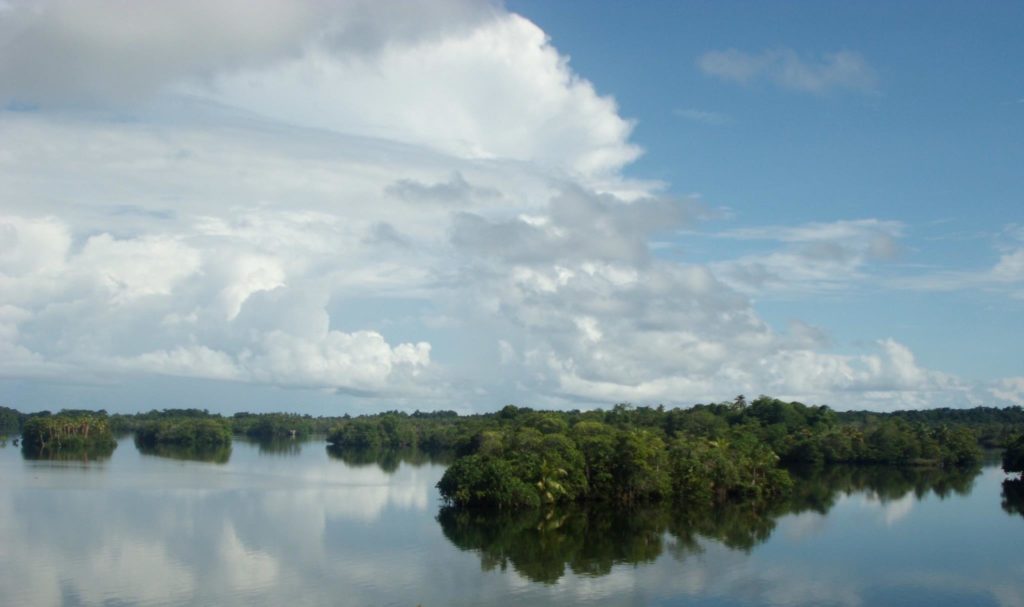
Lake Tengano

By PRIESTLEY HABRU

In Bonn, Germany


NATURAL World Heritage Sites have contributed to addressing climate change according to preliminary findings by the International Union for Conservation of Nature (IUCN).

IUCN’s Monitoring Officer for World Heritage Programme Ms Elena Osipova revealed this during a side event of the global climate summit currently underway in Bonn, Germany.

She said this was the first global assessment of natural world heritage sites been done by IUCN through Conservation Outlook Assessment.

The assessment are a projection of the potential for Natural World Heritage sites to conserve its values over time which was proven to be beneficial to combating climate change especially with carbon stocks provided by forests and mangroves.

Mr Osipova said mangroves cover contains about 60 percent of carbon stock in the world and as such, mangroves in World Heritage Sites should be preserved and not destroyed.

Although IUCN did not carry out specific assessment of mangroves in the Solomon Islands where one of the world heritage sites of East Rennell Island is located, the largest raised coral atoll in the world has already been added to the List of World Heritage in Danger since 2013.

“And it’s up to the local landowners to ensure they work hard to regain their World Heritage Site,” she said.

Dr Stephen Crooks, left, and IUCN’s Monitoring Officer for World Heritage Programme Ms Elena Osipova

According to the United Nations Educational, Scientific and Cultural Organization (UNESCO); East Rennell was the first natural property inscribed on the World Heritage List with customary ownership and management in 1998. A prominent feature of the site is Lake Tegano, the former lagoon of the atoll, which at 15,000 hectares is the largest lake in the insular Pacific. The lake contains species found nowhere else on the planet, and is surrounded by dense and unique forest that is considered part of the sites’ Outstanding Universal Value.

“East Rennell was inscribed on the List of World Heritage in Danger in 2013 for threats to it Outstanding Universal Value posed by commercial logging of its forests and the uncontrolled invasion of rats. The site also suffers from over-exploitation of its marine resources of which little is known to date.”

Apart from Rennell Island, forests in Solomon Islands have the potential to contribute to regulating climate and mitigating the effects of climate change.

IUCN states that climate change mitigation roles involves absorbing and retaining carbon that would otherwise be released into the atmosphere. If forests are removed for agricultural purposes or logging, the soil organic carbon beneath may become exposed and susceptible to oxidation and contributes to the release of carbon to the atmosphere.

Principal of the Wetland Science and Coastal Management from Silverstrum Climate Associates Dr Stephen Crooks said it was important for countries with significant blue carbon ecosystems to understand the impacts of development on those carbon stocks and other associated ecosystem services.

“In 2013 the IPCC (Intergovernmental Panel on Climate Change) released guidelines to assist counties calculated and report emissions and removals associated with human impacts to wetlands.

“This report is known as the 2013 IPCC Wetland Supplement and I was a lead author for Chapter 4: Coastal Wetlands.”

Mr Crooks said the mechanism is there for the Solomon Islands to calculate and report emissions with mangrove impacts, and the benefits of remediate actions.

“Reporting would be improved by collection of country’s specific data for trees and soils if none exists currently,” he added.

He noted that Solomon Islands are perhaps the most biodiversity and carbon rich mangrove regions of the world.

“Therefore is important to know the consequences of human impacts. Potentially, conservation of carbon stocks in mangroves and perhaps seagrasses could be a significant component of the Solomon Islands Nationally Determined Contributions (NDCs) should they chose to include Blue Carbon ecosystems in their report,” Crooks said.

NDCs are at the heart of the Paris Agreement and the achievement of these long-term goals. It embody efforts by each country to reduce national emissions and adapt to the impacts of climate change.

Meanwhile IUCN has released World Heritage Outlook 2 during COP23 which is a new report revealing that one in four natural World Heritage sites, including coral reefs, glaciers, and wetlands are threatened by climate change, nearly double the number from the first report in 2014.

IUCN said the number of natural World Heritage sites threatened by climate change has grown from 35 to 62 in just three years, with climate change being the fastest growing threat they face.

World Wide Fund (WWF) has worked closely with IUCN, through our Together, Saving our Shared Heritage campaign, to help protect these sites from climate change as well as harmful industrial activities.

SI helps push for Indigenous Peoples’ Platform milestone achievement in COP23

0
Dr Samson Viulu, left, and his assistance Philip James Taisie at the COP23 in Bonn

By PRIESTLEY HABRU

In Bonn, Germany


SOLOMON Islands has played a key role in ensuring the Indigenous Peoples’ (IPs) Platform at the United Nations Framework Convention on Climate Change (UNFCCC) was adopted at the 23rd Conference of Parties (COP23) here in Bonn, Germany.

Dr Samson Viulu, who is a member of The Network for Indigenous Peoples of Solomons (NIPS) who represented Solomon Islands Government, was instrumental in pushing for the IP to be adopted.

“The IPs Platform has formally been adopted during the high plenary session of the Subsidiary Body for Implementation (SBI) on Wednesday,” he told Island Sun in Bonn.

This means the IP Platform has been officially adopted as one of COP23’s decision and what it entails is the adoption by parties for its full operations.

Dr Samson Viulu, left, and his assistance Philip James Taisie at the COP23 in Bonn

“This clearly demonstrated that parties have now recognised the importance of engaging IPs in the decision-making processes at the international stage and hopefully parties will streamline this into their respective national legislation.

“Moreover, with this positive outcome, I can proudly say that Solomon Islands have achieved one of their objectives in this COP23. It is a huge positive outcome for IP communities throughout the globe and the Solomon Islands as a country, with a population of more than 90 percent indigenous peoples.”

Dr Samson, who currently works as a research fellow at the University of the South Pacific in Suva, Fiji Islands, said the adoption of the IP platform is very important as it will not only recognise the rights of IPs but it will also strengthen and protect their traditional knowledge systems.

“IPs can now meaningfully contribute to achieve the global initiatives on Nationally Determined Contributions (NDCs), mitigation and adaptation initiatives by states.”

Dr Samson said this milestone took many years and struggles to achieve, considering that, the IP communities throughout the globe have used their traditional knowledge and practices for centuries to navigate through disasters and calamities.

“Therefore it is only fitting that parties to the UNFCCC COP should finally recognise their importance as equal partners.

“The platform will complement the modern science as a vehicle of solutions to combatting climate change.”

He said the Solomon Islands government played a key role in getting the IP Platform recognised within the UNFCCC processes and the International Indigenous Peoples Forum on Climate Change (IIPFCC) fully appreciate this assistance.

Representatives of Indigenous Peoples from Native America conducting a traditional ceremony outside the Bula Zone where COP23 is taking place this week

Dr Samson said in terms of the climate change negotiations to operationalise the Paris Agreement, not much has been made in most of the thematic areas such as loss and damage, mitigation and adaptation, finance, technology, NDCs, global stock take, reporting and compliance and so forth in this COP23 negotiations.

“Most of these negotiations will now shift to COP24, which will be in Poland next year.

“However, the full operationalization of the Indigenous Peoples (IP) Platform is one of the only few agendas that has made a huge progress at this COP23 and will go down as Fiji’s biggest legacy in hosting this COP23.”

Dr Samson explained that parties, states and all the concerned non-government constituents in the UNFCCC processes managed to reach an agreement on the draft text around 8pm on Tuesday night, and was formally adopted by the high plenary of the UNFCCC bodies the next day on Wednesday November 15; and is now a decision of the COP23.

“This was possible after hard fought negotiations against some reluctant states by friendly states led by Ecuador, Bolivia and the Solomon Islands to name a few.”

The decision to fully operationalise the IP platform in this COP23 was a follow up from the Paris Agreement where the establishment of the IP platform was adopted. With its adoption for full operationalisation, the IP communities throughout the globe will now remember Fiji as the COP Presidency that helped ushered in a new dawn of hope to preserve, protect and strengthen their traditional systems.

The adoption by parties for its full operationalisation clearly demonstrated that parties have now recognised the importance of engaging IPs in the decision-making processes at the international stage and Dr Samson is hopeful parties will streamline this into their respective national legislation.

Important policy plans announcement by newly elected Solomon Islands PM

0

Dear Editor,

IN his first post-election speech the newly appointed Solomon Islands Prime Minister, announced some important first-steps for his administration.

Quoting from the Solomon Star newspaper, published on 20 November, 2017, the following policy measures were outlined.

“Corruption has caused inefficiencies in operations, it has undermined public trust in government, and it has exhausted public resources and money as well as causing injustice through advantaging a few at the expense of many.

“It has robbed vital resources from our schools and hospitals.

“I assure this nation that my administration will deliver this important legislation and we are committed in ensuring its implementation before the end of the 10th Parliament,” Mr Hou said with an air of determination.

“Prime Minister Hou said other immediate priorities of his government are addressing the government’s ‘ailing’ financial situation and completing the national undersea cable project.

“An important objective of the government is to stabilise our ailing fiscal situation. It is my government’s immediate priority to immediately address the cash-flow situation.

“My government will ensure there is fiscal discipline across government sectors and to assist line ministries to execute their respective budgets more efficiently, effectively and responsibility.

“I assure you that my officials have already identified key areas in the productive, social and resource sectors that my Government will prioritise as our immediate short term plan.”

“Mr Hou added that given the limited timeframe, his government will prioritise achievable, identified infrastructure projects only.

“We will accelerate necessary work to fast track those infrastructure projects that are crucial to quickly resuscitate government finances and the economy more broadly.

“It is important to prioritise and invest in Infrastructure development that will provide opportunities for growth in the rural sector.”

“Underscoring the Undersea Cable Project, Mr Hou said:

“The submarine cable is also one of the immediate priorities of my government.

“I am aware new arrangements have been re-negotiated with Australia. This project is crucial to reducing telecommunication costs so the new Government will see to its completion without any further delay.”

“The new Prime Minister said an Immediate Strategy entailing a set of priorities of his government for its short-term in office will be put in place.

“The strategy is to continue with the projects and programs of the previous DCCG with increased level of policy implementation aimed to stabilise the fiscal situation, strengthen budget implementation and ensure we achieve tangible results in the short term.”

“Prime Minister Hou also took the opportunity to assure Solomon Islands development partners of his government’s readiness to re-engage with them in advancing the country’s interest.

“For too long, we have left our development partners in the cold which has negatively affected the progress of important Government programmes.

“But today, I assure you that my government will take extra efforts in working closely with each and every one of our partners as we work towards our common goal to move this country forward. On that note, I would also like to thank our developing partners for their continuous support.”

“Mr Hou had served as Governor of the Central Bank of Solomon Islands and also as Senior Advisor to the Executive Director of the World Bank before beginning his political career after winning the national general elections in 2010.

He is the country’s 17th Prime Minister since it attained nationhood on the 7th of July 1978.

“The Prime Minister’s election yesterday was necessitated by the successful moving of a motion of no-confidence in former Prime Minister Sogavare on Monday last week by the Independent Group Leader Dr Derek Sikua.

Source:   Solomon Star newspaper.

Yours sincerely

Frank Short

SI wins bid to host Pacific labour mobility meeting

0
Deputy Secretary of Foreign Affairs Joseph Ma’ahanua

SOLOMON Islands has won the bid to host the Pacific Labour Mobility Annual Meeting (PLMAM) in 2018.

A delegation led by Deputy Secretary of Foreign Affairs Joseph Ma’ahanua has expressed Solomon Islands’ intention to host the event during a PALMAM meeting in Brisbane last week.

The delegation included Solomon High Commissioner to New Zealand Mrs Joy Kere, Madame Helen Beck, Mr George Tuti and Mrs Louise Ellerton from the Australian High Commission in Honiara.

The PLMAM meeting brought together responsible authorities from Australia and New Zealand, including their departments of Immigration, Employment and Foreign Affairs and Trade.

It also provided a session for employers and contractors to talk about issues they expect from labour-sending countries.

Two key issues of concern to the Solomon Islands delegation are communications and illegal work using holiday visas, the latter being more of a concern for Australia.

“Some of our local recruitment agents have limited access to Internet therefore from time to time, visited the Labour Mobility Unit (LMU) in the Solomon Islands Ministry of Foreign Affairs and External Trade to access Internet mainly for this purpose,” Ma’ahanua said.

On the illegal work using holiday visas, an academia expressed concern that whilst Solomon Islands is trying its best to use the formal and recognised schemes/programmes, there are a good number of Solomon Islanders who are also hindering the good work which the SIG is trying to do in terms of using the formally recognised employment pathways such as the SWP.

The other interesting opportunity for the Pacific island countries is the Australian Prime Minister’s announcement of the Pacific Labour Scheme (PLS) during the Forum Leaders meeting in Samoa earlier this year.

This is a new labour scheme focusing more on semi skilled workers unlike the Seasonal Worker Programme (SWP), which is mainly focusing on unskilled labour.

A design team is currently consulting with Pacific countries but also academia, think tanks, civil society and private sectors to finalise the design and ready to be implemented by June 2018.

Solomon Islands during PLMAM commented on the need for equitable re-distribution of employment opportunities under the labour mobility schemes.

“We understand that the schemes are demand driven, meaning that employers will determine what the numbers are and also preference for the source of labour.”

The delegation also make their voices heard that Solomon Islands should be part of the newly Australian announced and piloted programme – the Pacific Labour Scheme but also the piloted programmes in New Zealand.

Solomon Islands is committed to promote the labour mobility schemes and hosting this event is one way the country can bring responsible authorities from both Australia and New Zealand including employers/farmers/contractors and other stakeholders involved in facilitating the schemes.

–GCU

Manele vows to restructure MDPAC

Jeremiah Manele

BY MAVIS NISHIMURA PODOKOLO

THE new Minister of Development Planning and Aid Coordination (MDPAC) Hon Jeremiah Manele has vowed to restructure the ministry’s approach in delivering its services.

Speaking in Parliament on Monday, the Member of Parliament for Hograno/Katova/Kia/Havulei said his ministry will take a close look at the 2016 -2035 national development strategy with robust engagement with development partners as well as core working groups.

“We are now looking forward with much closer and robust engagement with our development partners including through the core economic working group which was just recently being reactivated by the former minister for treasury and finance.

“Some partners understand and continue to fund some of our programs in 2018 including the first quarter period covered by this resolution.”

He said his ministry, through the support of the government, is strongly committed to working closely with donor partners to develop a comprehensive developed programme and to access budget support from multilateral and bilateral donor partners.

Manele said the resolution passed by the Parliament provides and reaffirms his ministry’s engagement with development partners on a road map to advance and progress till the term ends.

Magistrate lashes out at police investigators

0

BY JENNIFER KUSAPA

PRINCIPAL Magistrate Fatimah Taeburi has raised concerns over the delay in police investigations which are leading to an increase in pending court cases.

Taeburi voiced this yesterday when prosecution admitted that they were still waiting for investigators to complete their task before the court could be updated on the status of a case.

This is the case against accused, Leslie Manekesa, who faces counts of grievous harm and assault causing actual bodily harm.

Taeburi says Manekesa has been in custody for four months, which she believes to be ample time enough for police to have completed their investigations.

She reminds the prosecutor that police have vehicles which should be used to attain statements from witnesses, rather than using the vehicles to roam around wasting government fuel.

Taeburi also encourages prosecution to harry investigators when they are perceived to be slow; report them to their in-charge or write to the Director of the national investigation division and even to the police commissioner.

“Tell their superiors so that they knew that their officers are not doing anything,” Taeburi urges.

She said prosecution cannot just charge and remand people in custody without dealing with their cases – accused persons are human beings and should be treated fairly.

She then adjourned the case for November 24 for mention and possible oral pre-trial conference.

The offence is alleged to have taken place in the Bonege area, west of Honiara.

Chinese nationals trading beche-de-mer without permits

0

BY SAMIE WAIKORI

A good number of Chinese nationals are currently engaged in illegal Beche-de-mer trading in the country.

A source tells Island Sun that around 20 are in the Lord Howe islands, trading beche-de-mer without work permits.

90 percent of foreigners, according to the source, who are buying and harvesting the lucrative resource are without work permits.

“If the Immigration and Police would have the opportunity to check Lord Howe islands now, they will be able to locate more than 20 Chinese foreigners most of whom do not have work permits but engaged in illegal trading of Beche-de-mer on the Island.

“It is utterly important that steps are taken to ensure illegal activities is stopped and that everyone follows the laws of Solomon Islands,” the source said.

When contacted, the Director of Immigration yesterday he said his office was not aware of any foreign national dealing with beche-de-mer without a work permit.

Mr Henry Fugui exclaims that it is news to him and his office, assuring the paper that they will investigate the matter.