Home Blog Page 1554

White River CHS launches new computer lab for form 6 & 7

0
Cr Eric Tema cut the ribbon to mark official launching of the new computer lab

BY LYNTON AARON FILIA

Cr Eric Tema cut the ribbon to mark official launching of the new computer lab

THE White River Community High School has officially opened a new computer lab yesterday for its forms six and seven students.

The new computer lab combines a general computer lab with 15 updated computers, colour printer and unique tutoring space – all expenses covered with the tuition fees collected this year.

The facility has a friendly space ensuring tutors and students can fully access services.

The new lab has one master computer to monitor students’ work, and White River School is the first to be introduced which this – installed by the Understanding Technology group.

The creation of the lab was primarily in response to form six and seven students’ learning need for technology with an aim to prepare them for university and knowledge and skills to work independently with computers.

The push to have a computer lab was led by Mr Richard Tepuke Pautangata as coordinator along with the School committee.

Pautangata said it had taken them three weeks to complete the project, which came from tuition fees and cost around $120,000.

He said the computer lab plays a pivotal role for students’ learning, producing quality assignments and research which will contribute to their pathway to university studies.

Mr Richard Tepuke Pautangata and tutors picture in the new computer lab officially launch on Tuesday

Pautangata adds that they had also carried out renovations in terms of a new walk way, new chairs and table and two new leaf huts for forms six and seven.

He says this feat by White River school shows how much can be done just be relying on tuition fees alone rather than depending on school grants.

White River School Board Caretaker, Vice Chair, Mrs Hilda Rade Tango urged the students to take good care of the facilities especially the computers, and feel proud for them.

“Success and failure of our school rests in our hands so let’s put aside personal differences and work together to make 2018 the best academic year.”

On her final note, Tango thanked the teachers and school management for seeing the importance of having a computer lab for the students.

Meanwhile, the event yesterday has coincided with the opening of this year’s academic programme which was attended by Counselor Eric Tema, School board and students.

Road work all in prep for 2023 games

0
Director of Civil Engineering under the Ministry of Infrastructure and Development, Mr Harry Rini.

BY LORETTA BRIGIDIA MANELE

FROM construction of new bridges to upgrading the main road curved with smooth sidewalks, the initiative is all in preparation for the 2023 Pacific games.

This was expressed by Mr Harry Rini who is the Director of Civil Engineering for the Ministry of Infrastructure Development (MID).

Speaking of feeder roads in the capital, he stressed that the state is deteriorating fast especially in areas like Kola Ridge, Naha, Vura and Lengakiki.

In this regard, Mr Rini proceeded to say that while his ministry is looking at ways of addressing the ordeal they are currently engaged in sealing work at Mbokonavera, Kaibia and Border area with the resources they have at the moment.

He adds that they are able to carry out this work with support of the national transport fund co-financed by SIG and DFAT.

In the case of continuity on major work along the main road, Mr Rini said that while they have included the road stemming from HCC to White River in their study plan with the partnership of ADB, JICA has hinted interest of engaging with MID on road work along fisheries area, further up along Kukum Highway.

He furthers that current road work should finish by November.

An Australian direct aid project failing

0

DEAR EDITOR, in the Solomon Times newspaper, yesterday, February 12, 2018 a coconut crushing mill operator in Malaita Province, Billy Funusulia, revealed a troubling story in which a potentially income generating project is failing because of operating costs and marketing options

Quoting the newspaper article this is what was revealed: “Operating a coconut crushing mill is a great income generating opportunity for many rural Solomon Islanders.

“But keeping the operation going and maintaining the crushing mill machine can be challenging and costly.

“Billy Funusulia looks after his community crushing mill at Gwa’adingale village, Malu’u, in north Malaita.

“He said the challenges faced by rural communities operating coconut crushing mill are enormous.

“The most critical challenge is finance and keeping the operation going,” Mr Funusulia said.

“There were a lot of overhead costs that are beyond the income we are generating from this operation,” he added.

The community coconut crushing mill Mr Funusulia is managing was funded through Australia’s direct aid program more than a year ago.

Mr Funusulia said since their operation started last year, they’ve so far made three shipments.

“But we were unable to cover our costs,” he admitted.

“In fact our trend in revenue has gone from bad to worse.

“Thus, we were not able to regularly produce coconut oil as expected.”

Mr Funusulia said unlike copra producers, crushing mill operators are very selective in buying coconut fruits that are needed to extract the oil.

“So it is not that easy to get the quantity and the quality we want,” he explained.

“Furthermore, the local coconut oil market is being monopolised.

“So mill operators have no choice because the local buyer controls the selling price.”

“Mr Funusulia said he believed if there are more local buyers, mill operators will have choices to sell their oil to the highest offer.

“He also appealed to the Ministry of Agriculture and Livestock (MAL) to assist coconut mill operators to meet the challenges.

“We are struggling to keep our operations going,” he said.

“I know there is the National Coconut Rehabilitation Program through which assistance in the agriculture sector can be sought.

“The government should come in and help us through this program.”

“When contacted, Deputy Director of Planning within MAL, Simon Iro said the Ministry can help when requests are made through the formal process.

“In the case of those in north Malaita, submissions for assistance should be channelled through the relevant offices at Malu’u and Auki.

“He said the Malu’u based agriculture officer should receive the request and send it to their Auki office for approval, before it is communicated to Honiara.

“Mr Iro said once Honiara office receives the request then they will respond to it, as it comes under Malaita Province.

“He also revealed that coconut crushing mill operators around the country have to work along with Kokonut Pacific Solomon Islands (KPSI), in order for them to control the costs incurred in their productions.

“If they employ more than five people in the crushing mill then they will experience losses,” Mr Iro concluded.”

The bottom line here, it seems to me, is Mr. Funusulia and others like him operating coconut crushing mill plants throughout the country needs to start making a profit and not subjected to bureaucratic rules akin to ‘passing the parcel’ or restricted practices tied to a monopoly in the coconut oil market when it comes to selling their product.

Yours sincerely

FRANK SHORT

100 police vehicles

0

DEAR EDITOR, in reference to 100 vehicles for police force as stated by Police Commissioner, note a good number of them are garaged and used by senior police administrators during office hours and after working hours.

Those Executive Police Officers who are supposed to be eligible to garage Police vehicles are those four or five high ranked executive officers from Permanent Secretary, Police Commissioner, his Deputy and Controller of Prison.

At least only four or five vehicles should be garaged by administrators at the executive levels while the rest to be used by police operations.

Also, all police vehicles must be labelled “Police” including those administer executive vehicles.

Those vehicles are public government vehicles hence G-plates do not provide better responsibilities and accountabilities on the vehicles.

Moreover, due to government’s current financial constraint, Police Commissioner should proactively re-allocate all those police vehicles for operation purposes in order to fully utilise those vehicles to maximise full productivity.

Our people wish to see more police vehicles on daily operation activities.

J Diau

Honiara

Taiwan’s infrastructure impresses SI Speaker: Hon Nasiu

0
Speaker, Hon Nasiu greeted during Taiwan visit.

BY LORETTA BRIGIDIA MANELE

Speaker, Hon Nasiu greeted during Taiwan visit.

ISLAND Sun, yesterday had the opportunity to speak with Solomon Islands Speaker of the National Parliament, Hon Ajilon Jasper Nasiu about his recent trip to Taiwan.

Loretta—when did you travel to Taiwan?

Speaker—we travelled to Taiwan on Jan 28th, arrived in Taiwan on Jan 29th and returned on Feb 3rd.

Loretta—was this an official trip?

Speaker, Hon Ajilon— this was an official trip, in fact the Taiwan Embassy in Solomon Islands offered 2 trips. This is the first trip which I led and the second will be headed by the Prime Minister.

Loretta—who did you meet in Taiwan?

Speaker, Hon Ajilon—we met a few people while we were there, but the most important ones we met include the President of the Taiwanese Legislative Yuan who we met on Tues, 30th Jan. On Wed 31st Jan, we met with Taiwan’s President, Her Excellency Tsai Ing-wen.

We also met with the Minister of Foreign Affairs and doctors from Kaohsiung Medical University who carried out medical checks on some of the members of our delegation.

Loretta—what is the main purpose of your trip to Taiwan?

Speaker, Hon Ajilon—the purpose of the trip is mainly to seal or consolidate the friendship between Solomon Islands and Taiwan because we are friends for 35 years now. Since 1983, we established diplomatic ties with Taiwan.

So the idea is for Solomon Islands leaders to go and see Taiwan and her leaders. Likewise, we also invite Taiwan to come over to Solomon Islands so that our friendship and relations remains firm.

I also appreciate how they treated us during our stay in Taiwan. They were very friendly and executed great hospitality. How they looked after us was next to none.

One thing that really impressed me was the site of Taiwan’s infrastructure. Even as a young country, Taiwan is impressive with it’s infrastructure development.

They are here to help us. In fact, they built our hospital and also promised to build a stadium in the country for us to host the 2023 Pacific Games.

So we want them to help us especially in sectors like infrastructure, health services and education. They have the technology and expertise.

Loretta—did you meet with the Solomon Islands students who are studying in Taiwan?

Speaker, Hon Ajilon—we didn’t have the time to meet with our students, but heard that they are enjoying their stay in Taiwan and encourage that we send more of our students to study in Taiwan.

Loretta—did you visit any sites in Taiwan?

Speaker, Hon Ajilon—yes, we visited 2 museums in Taiwan. One was about Taiwanese custom and culture. There was also a section for Solomon Islands which we really enjoyed that had shell money and other items. The other was science related, filled with all kinds of plants and animal remains. This museum like the first one also had a section for Solomon Islands.

There was Taiwanese Doctor who came to Solomon Islands, went to Makira as well as to other places in the country and collected orchids and information about plants.

They expressed that our plants may have value and components vital for medical use hence will continue their study on this and will probably visit Solomon Islands again.

We also went to Sun Moon Lake and visited one of the 16 tribes of the Aboriginal people in Taiwan. They wore very bright clothing and some of the words in their dialect are similar to ours.

Cigarette butts Gizo beauty aside

0
Cigarette butts smokers carelessly throwing all over the street of Gizo as public concern over smokers to throw at the right places

BY ALFRED PAGEPITU

GIZO

GIZO is reportedly littered with cigarette butts, an eye-sore for members of public who are concerned for the town’s environment.

A concerned Mr Andrew Koke questions why people do not hesitate to flick a cigarette butt in the Western provincial capital town.

“Smokers are not taking more care when they finish their cigarettes and there are still an unacceptable number of cigarette butts being thrown on the ground.

“Cigarette butts in the environment are a litter issue, not a smoking issue.

“Be a responsible smoker and use an ashtray to dispose of smoking litter at the right places but not throwing all over the street.”

Koke calls on the venders, general public and visitors to dispose cigarette butts and rubbish responsibly at the right places provided by Gizo Town Council.

Classic Tuti

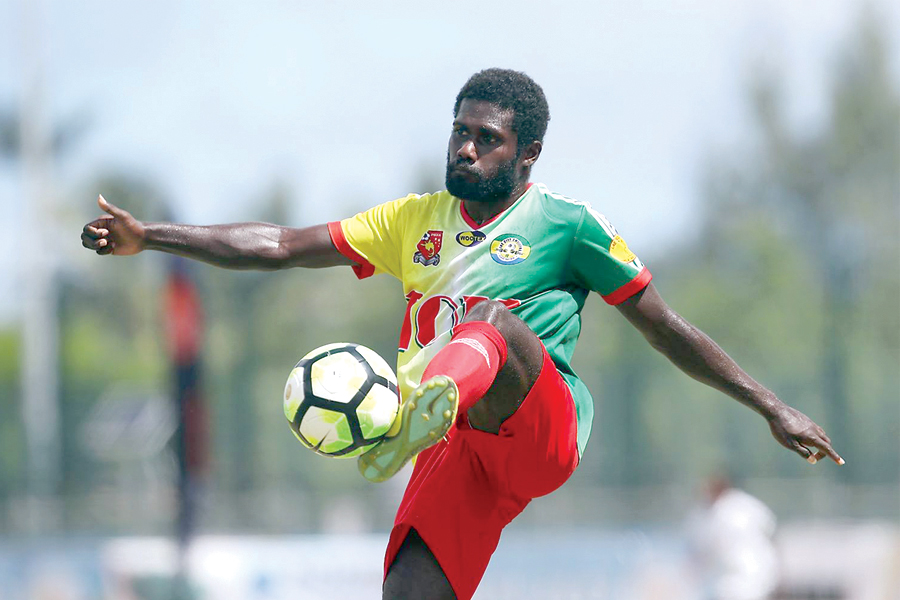
Lae City Dweller’s Tuti Zama Tanito OFC Champions League 2018, Group A, Lae City Dwellers FC Vs Ba FC, Korman Stadium, Vanuatu, Tuesday 13th February 2018. Photo by Shane Wenzlick.

Dwellers and Nalkutan into quarterfinals

BY ROMULUS HUTA

Lae City Dweller’s Tuti Zama Tanito OFC Champions League 2018, Group A, Lae City Dwellers FC Vs Ba FC, Korman Stadium, Vanuatu, Tuesday 13th February 2018. Photo by Shane Wenzlick.

A 63rd minute strike by Solomon Islands international Tutizama Tanito helped Papua New Guinea (PNG) club Lae City Dwellers defeated Fiji’s Ba FC 1-0 in match day two of the Oceania Club Champions League Group A competition at Port Vila’s Korman Stadium in Vanuatu yesterday.

Tanito’s tidy goal emerged through a set-up from Raymond Gunemba.

The narrow win helped the PNG outfit to book qualification into the quarterfinals with a match to spare in the pool play.

Fellow Solomon Islander and defender Andrew Rarangia also featured in the Dwellers line-up alongside Tanito in the win.

I’m proud of the boys,” Lae City Dwellers coach Raymond Gunemba said.

“When we saw Ba play on Saturday we were thinking ‘can we go through?’, but we got our confidence and thought we could win and we did.

“Ba is a very good side, very experienced in the Champions League but we also thought we could surprise them.”

Ba coach Ronil Kumar was somewhat lost for words at the full-time whistle.

“Actually I can’t say much about it. We learned a lot out of it. We started the game really well but the thing was, you have to score if you want to win. We didn’t score, they win. They score, they win.

“One positive from the performance was that of Josaia Ratu, who impressed despite carrying an injury.

“He was the number one goalkeeper for us and when he was on the field, he did his best.”

The result means Ba is now out of contention for a place in the quarterfinals following two losses.

Ba’s first loss was against Ni-Vanuatu side Nalkutan, where a spot kick by Solomon Islands beach soccer poster boy James Naka inspired the hosts to a first win at the Oceania level, giving a bright start to their campaign.

Besides Naka, another two Solomon Islander also features for Nalkutan in the form of Joses Nawo and veteran defender Nelson Sale. Nawo is currently serving match suspension following his dismissal in the first match.

Nalkutan joins Dwellers in the quarterfinal after their second win yesterday.

This follows their 4-0 thrashing of Cook Islands representative Tupapa Maraerenga in the final action of Group A match day two with goals coming from Azariah Soromon, Naka, Raoul Coulon and Roddy Lenga.

Nalkutan and Lae City Dwellers’ six points from two matches mean they’ll finish in the top two positions in the group, and their final match on Friday will determine who gets the home quarter final.

Prior to the showdown at 5pm, Ba and Tupapa Maraerenga will meet at 2pm in their final encounter of the OFC Champions League Group A competition.

West Africa’s Fisheries Commission looks to learn from FFA

0
Members of the African delegation who are part of the Pacific-Global Zone-based Tuna Fisheries Management Knowledge Exchange program currently taking place at the FFA Conference Centre, pausing with the FFA Director General James Movick (centre), after the first yesterday’s first set of roundtable discussions and presentations

By Gary Hatigeva

WITH a diverse amount of resources in its pocket, the West African regional fisheries body is looking at how best they can better manage and sustainably use their resources with effective measures and approaches.

Looking to the Pacific might just be the answer says Ibrahim Turay, Regional M&E Specialist for the West Africa Regional Fisheries Programme, the Regional Coordination Unit (WARFP-RCU).

The West African Fisheries Programme is part of world fisheries agencies and commissions represented at the Pacific-Global Zone-based Tuna Fisheries   Management Knowledge Exchange currently underway in Honiara.

In an exclusive interview yesterday, the Regional M&E Specialist for the WARFP-RCU it was only day one (yesterday) of the conference but their group has already picked out so much they intend to learn from and adopt.

The conference looks into the whole set up and operation of the Pacific Agency with detailed features, which includes the advent of enhanced aerial surveillance, new e-monitoring and satellite coverage, which has now given FFA members the ‘eyes in the sky’ to keep a close watch on fishing fleets in the region.

Members of the African delegation who are part of the Pacific-Global Zone-based Tuna Fisheries Management Knowledge Exchange program currently taking place at the FFA Conference Centre, pausing with the FFA Director General James Movick (centre), after the first yesterday’s first set of roundtable discussions and presentations

This was also something the West African group sees as another opportunity and positive learning area for not only them but so as the rest of the global fisheries bodies being represented at the summit.

“We are hoping to take back home the lessons learned and see how we can replicate them back home with the view of improving our management regime in West Africa.

“Back home, we are working on the same initiative, for instance, developing a regional registry and then also trying to put in place a Regional Vessel Monitoring Systems (VMS) to be able to monitor our waters properly.

“And we’ve been hearing good management and best practices from FFA and so we really want to come and have some of those experiences and their challenges and learn how those challenges are being dealt with.”

The FFA has been praised for its high standards and quality on how they have been managing and dealing with their members especially when it comes to using and managing their fisheries resources.

According to Turay, the FFA module has really pushed other fisheries agencies and commissions to step up their systems and this he said is evident with their West African Fisheries regime.

He said members of their sub-regional commission are now working to come together to cooperate and sustainably managing their resources and by participating in the learning exchange programme is vital for the intention to eventuate.


Other areas of discussion are based on assessing stocks and sustainability, securing market access and increasing local participation in the value-added onshore processing.

A centrepiece of the discussion will be the RoadMap for Sustainable Pacific Fisheries endorsed by Island leaders in 2015.

The West African Fisheries Commission is mandated by nine countries in that region, some of which have the biggest fishing industries in Africa.

These countries include Cabo Verde, Guinea, Guinea Bissau, Mauritania, Senegal, Sierra Leone, Ghana Liberia and Gambia.

In February 2017, FFA was also invited to participate in a similar lessons learned programme by the West African Sub-regional Fisheries Commission, with what has been described as impressive presentations.

“FFA was well represented during our learning exchange programme.

“We were so impressed with the management regime (system) that they are implementing here in the Pacific and that is what gave us the confidence and drive to come and be part of this one,” Mr Turay expressed.

Meanwhile, the West African Regional M&E Specialist on behalf of their group acknowledged FFA as an institution for inviting them to be part of this south-south cooperation initiative.

The also thanked FFA and its partners for not only for inviting them but also for providing interpretation services, which has helped most non-English speaking participants learn and understand in-depth of what have been presented.

“That’s a very good consideration on their part and we thank FFA and SPC for that,” the excited representatives added.

Praising the existence of the South-South cooperation

0
FFA Director General James Movick and the program facilitator, welcoming and giving an overview of the meeting and an overview of the agenda

By Gary Hatigeva

REPRESENTATIVES from the African and Indian Ocean who are currently here in Honiara for a learning exchange programme on the fisheries sector have acknowledged and praised the Forum Fisheries Agency (FFA) for continuously promoting and working on the improvement of the South-South Cooperation in the development aspect of the global fishing industry.

Based on collective response and individual interviews conducted, all have shared similar sentiments based on the positive impacts the skills and knowledge sharing initiative has for them, which comes as part of the learning exchange program currently taking place in Honiara.

This is just an ongoing fulfilment of the south-south cooperation and initiatives extracted especially from the FFA one is also very vital for most participants in the development of policies and frameworks for their nations, which would have positive impact on national agencies and regional fisheries as far as managing marine resources, particularly tuna resources in their respective countries is concerned.

They further acknowledged FFA for the opportunity with the vision to continue improving and promoting the South-South cooperation, which they felt has given them the chance to be part of what they also see will help their countries to sustainably manage our marine resources right around the world.

For many of the participating regions, similar set ups to the FFA have been worked with the establishment of regional registries and proper guidelines to properly manage the interactions between their people and their resources, and the benefits that will come with.

It is through this South-south Cooperation that participating members have also stepped up their monitoring systems and nations in the West African region have already began putting in place Regional VMS, which have now enabled them to monitor their waters properly, something they feel has also been working out very well for the Pacific Island Nations.

The South-south cooperation has so far bridged the gap in lack of capacities some of the Asian and African countries face while dealing with developmental problems by sharing interests in the fisheries industry and this initiative has had economic impacts on ordinary but vulnerable fishermen in nations across India and Africa.

LO thanks PS Vigulu for response on MFR allegation

0

BY SAMIE WAIKORI

in Auki

A landowner in Malaita who reported the alleged corrupt practice by staff within the Ministry of Forest and Research (MFT) has thanked Permanent Secretary (PS) Dr Vaeno Vigulu for his clear media response.

The landowner acknowledged Vigulu especially for clarifying procedures; now it is clear to resource owners on how they can go about these issues.

However, the landowner insists that now that Vigulu is aware of the allegations, he should do something about it rather than releasing a mere media statement.

“I suggest when PS heard of such complaint, he should either dispose an internal investigation in his office or talk to his officers to stop the practice.

“Let me clarify here that this allegation is not only targeted at an individual but his ministry.

“The reason I say this is I knew lot of logging companies that they told me of this and even I had witnessed for myself.

“Maybe the PS is not aware of what is happening in his office, and with this allegation I urge him to do what he can to stop this practice,” the landowner said.

“It is more than enough for resource owners to continue to be denied by his office on their concern of related logging issues in the country.

“The reason is Mr PS’s staff keeps on asking money from logging companies in the country, so anything might infringe the logging companies raised by resource owner to MFR, the staff will turn them down.

“What we tend to know now is even procedures or whatever in place, they are only there to protect the interest of the government and its cronies and not the resource owners.

“This is the reason I’m talking and any resource owner can say the same thing,” the landowner said.

The landowner said what people expect from public servants to serve the interest of the public is no longer there.

“They only look at who has money to serve their interests,” he said.

Thus, the landowner encourages the PS and his staff to protect the interest of the citizens of the country.