Home Blog Page 1118

Political Party Crisis

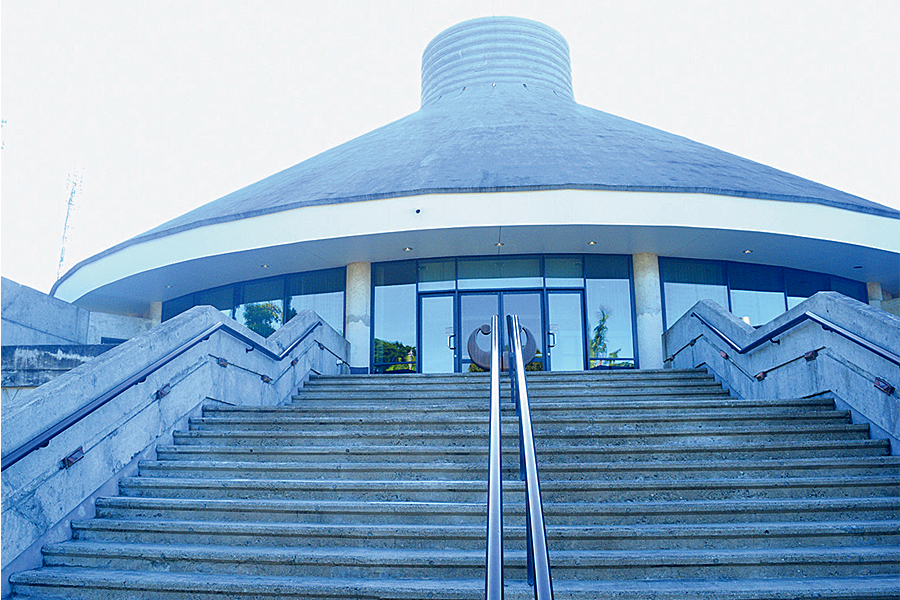
National Parliament of Solomon Islands

Lawmakers’ oversight plunges nation into a partyless state

By Alfred Sasako

A serious oversight or ignorance of the new Electoral Act by our Members of Parliament has plunged the nation into a political party crisis.

The oversight, reportedly discovered by prominent private lawyer, Andrew Radclyffe, has in effect wiped out all the political parties registered under the Political Parties Integrity Act 2014.

“Section 143(6) of the Electoral Act 2018 was kept in when Parliament recently passed the Act. This section repeals Part 2 of the Political Parties Integrity (PPI) Act which establishes the PPI Commission.

“In effect, there remains no PPI Commission and Registrar which means no body exists to register political parties.”

“It also means that all political parties registered under the PPI Act 2014 are no longer in existence,” some said yesterday.

Social media commentators said the Government needed to bring a short amendment to the new Electoral Act to remedy the situation or it will affect the coming elections as far as political parties are concerned.

“It has three weeks to do that or we are back to square one in terms of political party development in this country,” they said.

Parliament will be dissolved on 17 December 2018, in preparation for the national general election due in the second week of March next year.

Commentators also pointed out that the oversight was the result of a “rushed job,” adding Members of Parliament should not rush into passing important Bill so close to the dissolution of Parliament.

“They should not rush passing such important Bill close to dissolution of Parliament. If they miss something substantive but the House has already dissolved, who will fix it?” one commentator said.

“(It’s) plain old common sense. Now it has come to pass but luckily it was spotted before the House dissolves. Just imagine the confusion and mayhem this would cause had this not been noticed,” the commentator said.

Abana blasts PMO

Office of the Prime Minister

Over handling of PER, called for neutrality and matters related to PER of MPs be given back to Parliament

By Gary Hatigeva

MEMBER of Parliament for Fataleka Constituency, Steve Abana has lashed out at the Office of the Prime Minister on the manner in which matters related to Medical Entitlement of members of Parliament (MPs), are being handled.

This, the Fataleka MP threw out at representatives from the Prime Minister’s Office when presenting their case, during the Public Accounts Committee (PAC) hearing into the 2018 Supplementary Appropriation Bill (2) on Wednesday.

He said the office of the PM is currently responsible for processing their documents, but the OPMC ought to realise that a lot of MPs are sick, unfortunately, the projection under the Office’s head only requested for six.

“The problem with the Prime Minister’s Office is that, you guys have a very sluggish, useless and wasted system in terms of dealing with MPs.

He further pointed out that there is always this uncalled for delay in how the office is handling this matter, with prolonged processions by officers responsible.

“What kind of a system are you guys using in there to send MPs out when they are sick? We’d wait until they almost die before you intend to send them.

“I see that sometimes, officers within the PMO turned to act as if they are more powerful than us the Members of Parliament,” Abana stressed.

He then shared that some former MPs could have been saved if such matters are being handled well and given to neutral bodies or people.

He then strongly recommended and suggested for the matter to be transferred back to Parliament to administer and allow for the Speaker and Clerk who will be more neutral to handle it and not with the PMO where it continued to be politicised.

“I speak from within the government, and this is not on, and this budget, I hope are not using the heads just to get funding, which you guys will use for your own travel expenses and those selected ones who are sick.

“We need to give this head back to Parliament, before we die one by one in the carelessness and hands of those in that office,” the Fataleka MP added.

In addition, the MP for East Makira, Alfred Giro also shared similar concerns with the Fataleka MP, reiterated that in the PMO, political influences and interests are always practised over the PER.

“In there, politics is very much involved in the PER, and they chose who to go first and who to be delay, but the situations are all the same,” Giro shared.

He also agreed that anything to do with PER of MPs should be brought back to Parliament than it remaining with PMO.

This according to the Chairman of PAC and MP for East Honiara, Douglas Ete, is a matter for the officials representing the PMO to take serious note of as it should be a matter handled by a separate body apart from the OPMC or Caucus.

“This is something that is on the discretion of the Prime Minister himself, but it shouldn’t be treated as such. It should be an independent body, or person,” the PAC Chair further stressed.

Taking the points raised, the Deputy Secretary to the Prime Minister noted and assured that the PMO team will see that the matters are relayed to the bosses and officers responsible within the office.

“We do acknowledge the concerns, but in terms of overseas cost, it something that is not under the budget of other ministries, but that’s probably one thing that could be looked at, or even to come back to Parliament.

“So in times where it is not budgeted for under the ministries, the Prime Minister’s Office take on the responsibility, and so it would be easier to move it back to parliament.

“Also, it would be good if such areas are clearly spelt out in the Parliamentary Entitlement Regulations so that administration would be easy,” the Deputy Secretary to the Prime Minster said.

Local boxers shine in Suva

0
The trio. Henry Kia, Lemmel Silisia and Joshua Ooku.

By Taromane Martin

The trio. Henry Kia, Lemmel Silisia and Joshua Ooku.

THREE of the country’s local boxers, Lemmuel Silisia, Joshua Ooku and Henry Kia have shined in Suva, Fiji over the weekend.

Hatanga Boxing club’s Lemmuel Silisia and Covenant’s Joshua Ooku both scored first round technical knockouts in their fights while national lightweight champion celebrated his 27th birthday with a win over experienced

The trio is part of a first ever two weeks inter-club exchange program organized between Team Brave of Fiji and Covenant Boxing Club of Solomon Islands.

HABA interim Vice President and Covenant Club founder Mr Calvin Ziru told SunSPORTS the boxers are the first to trial the inter club exchange program between Solomon Islands and Fiji boxing clubs, under the auspices of the Honiara Amateur Boxing Association and the Central Amateur Boxing Association in Fiji.

He congratulated the trio for the positive results and thanked their sponsors, families and friends for their support.

“Lemuel Silisia winner by first round TKO after referee stops contest. I first met Lemuel in April 2018,” the Vice President said.

“The boys we were training all knew of him and his ambition to fight as a career. Since then he has spent numerous nights at my home with the rest of the Covenant Boxing Club fighters on pre-tournament camp nights.

“It was his love for Christ and his desire to learn that stood out so strongly for me.

“This was a kid who would do everything you asked him to. You knew he wanted to succeed.

“Back home Lemuel had suffered a few defeats and was a questionable inclusion on this trip.

“But we knew that with the right coach, he would better respond to new technical skills coaching than others.

“And we were right. It’s a good feeling to be right. We remain humble in victory. To God be all glory,” Mr Ziru said on Silisia.

“Joshua Ooku wins by first round TKO. Referee stopped contest. What a trip it’s been for young OJ, as his closest friends call him.

“With only three fights under his name, this tournament was surely going to be a challenge. But he excelled in training, in camp and in the ring.

“At the airport he was the last one to arrive. He had gone to school to tell them he was leaving for a week and then to the Central Market to ask his mum to come to the airport. I met her for the first time.

“Although a quite and simple woman, I had come to learn of her and her husband’s support for their son. Kata told me she cried as the plane flew out of Henderson airport. I reminded Joshua of this before his fight.

“So why did he come? Character Courage Christ. And that is what he has. Joshua congratulations kid. To God be the Glory.

“For Kia to be honest it wasn’t easy fight. I’ve seen Kia fight a few fights already. I have been in the corner for a couple of them. And for many of them fights, it’s a walk in the Park.

“He came to Fiji to learn a few things from technical coach Osea Nanovu, one of the best in the country, but this last week has been pure gains for him.

“He fought an experienced southpaw fighter with 16 years behind him, who has fought at professional level and wasn’t afraid of Henry at all.

“But after their battle, and the pure determination of the man, Kia came out victorious, and set the platform for his other two brothers,” Ziru said.

The two-week program saw the boxers undergoing training with Team Brave, under coach Osea Nanovu from 12 to 16 November, and then fight in the Fiji Revivial Boxing Tournament held at the Suva fitness and boxing gym on Saturday.

Business operators flies Solomon flag higher

0
Uepi Island Resort (Photo supplied).

BY GEORGINA KEKEA

SOLOMON Islands might not be one of the best place to live in the world but it sure has something which Solomon Islanders can be proud of.

In the recent DIVE Travel Awards 2018, Solomon Islands has scooped three awards. Only one was mentioned in Island Sun’s Friday’s edition. It was for the fifth position in the best scuba diving destination in the world.

However, two other awards were also received by Solomon Islands. One was for the Best Dive Centres and Resorts in the World while the other was for the ‘pick for the boats’, the best Liveaboards. In this category, Bilikiki Cruises scooped fourth position, while Uepi Island Resort scooped 10th position for the best best Dive Centres and Resorts in the World.

Uepi Island Resort (Photo supplied).

For the Best Dive Centres and Resorts in the World, Uepi Island resort was described as one of the best resorts in the world. Uepi Point and its near vertical reef corner is coated profusely with corals – especially gorgonian fans and colourful spiky soft corals was described as a MUST see site in Solomon Islands.

DIVE described the 30m coral peninsula that juts out into the deep blue, providing the stage for a spectacular procession of pelagics which turn to hunting and feeding at certain points during the tide, creating a lot of exciting underwater action.

Giant trevally, mackerel, wahoo, rainbow runner, big-eye jacks, dogtooth & smaller tuna, sharks, barracuda and others cruise are said to relentlessly move back and forth waiting for inattentive smaller fish to become their next meal. The explosive sounds and sights of a large number of fish all taking evasive action at the same time fill the water. Families of garden eels, arrays of colourful gobies and a diverse collection of invertebrate life inhabit the sand patches of the shallows. All these are what was described as Uepi island resort, must see locations.

Coral in Solomon Islands (Photo supplied).

Uepi island resort has six bungalows, two units and two guest rooms. They are said to offer clean and comfortable accommodation with a 26-bed maximum capacity. All the rooms are spaced throughout the resort’s tropical gardens for privacy.

Most of the dive sites are only a few minutes away from the dive centre, dived either from the shore or just a short boat ride away. Uepi island resort is an SSI dive centre and offers the full range of training programs up to divemaster level.

At the same time, Bilikiki cruises that won fourth position in the ‘Liveaboard’ category has been operating in Solomon Islands for 28 years, offering trips from seven to 14 nights around Florida and Russell islands, Marovo lagoon and Mary Islands.

Bilikiki cruise boat (Photo supplied).

It can take up to 20 guests in the ten air-conditioned ensuite cabins. All trips starts and finishes in Honiara.

The Solomon Islands remains one of the last scuba diving wildernesses, with incredible biodiversity in terms of both the reefs and the critters that inhabit them. The topography varies from the shallow and sheltered coral gardens of the lagoon to vertical drop-offs in an area known as The Slot, stretching 2000m to the sea floor and where passing pelagic species can be spotted. DIVE described Solomon Islands as an area where divers can enjoy the wrecks of WW2. Solomon Islands lies at the southeastern corner of the Coral Triangle and boasts some of the dynamic biodiversity that attracts divers from around the globe in search of everything from tiny hermit crabs that make their homes in the corals, to swirling schools of fish.

The DIVE Travel awards 2018 is an initiative of DIVE Magazine, one of the most popular scuba diving magazine in the world.

The awards won by business operators in Solomon Islands is a boost in the right direction for Solomon Islands tourism sector.

Locals bringing food to the cruise boat (Photo supplied).
Aerial view of the islands in Solomon Islands (Photo supplied).

Solomon can learn from Taiwan’s Agricultural revolutionaries

0
Solomon Islands participants who currently in Taipei Taiwan

BY LYNTON AARON FILIA

IN TAIWAN

Solomon Islands participants who currently in Taipei Taiwan

SOLOMON Islands can learn from Taiwan’s world-shattering agriculture to industrial economy.

Inspired by the session on Taiwan’s transition of development Mr Dennis Marita, Director for Culture Division of the Ministry of Culture and Tourism said Solomon Islands can learn from Taiwan.

He said Taiwan’s journey to become a developed state started as an agriculture economy at the age of 40 which is similar to the current status of Solomon Islands.

Marita said Taiwan’s successful stories will give countries greater understanding of how Taiwan progress forward as a country and its transition from being a developing state to a developed state.

He said it is fascinating to learn how Taiwan transit from an agricultural state into an industrialize one and now into technologies. All this started simply from agriculture sector, Marita said.

Taiwan has transited from developing state to developed state only within 40 years.

Meanwhile, six Solomon Islanders are currently in Taiwan for 10 days with other young leaders across the Asia Pacific to learn about Taiwan’s politics and diplomacy and economic development.

Marita said it is a learning process for them with an opportunity to see what can be contributed towards development of Solomon Islands in their own respective areas.

“The biggest challenge is what our leaders think about this, we can take ideas and form policies but if our leaders don’t vision that kind of mindset or taken into consideration, these things will remains a challenge,” Maritia said.

“We cannot change the world on our own, we cannot change our country on our own or overnight but if we get those ideas and implement within our respective sectors then small changes can happen,” he said.

Participating in the 2018 Taiwan Study Camp for future leaders from the Asia Pacific, Marita said it is significant for its mental and intellectual growth to help them in their careers.

The trip for the 86 young leaders across the Asia Pacific was funded for by Taiwan’s Ministry of Foreign Affairs.

This week is their final week but so far participants have been going through seminars, tours and sightseeing particularly to experience Taiwan’s political, cultural and modern technologies.

UNPBF supports women and youths

0
Youths from Hakaroa, West Gizo discuss community issues at the social innovation and entrepreneurship workshop in Gizo, Western Province on 31 October 2018. Photo: UNDP/Merinda Valley

BY GEORGINA KEKEA

Youths from Hakaroa, West Gizo discuss community issues at the social innovation and entrepreneurship workshop in Gizo, Western Province on 31 October 2018. Photo: UNDP/Merinda Valley

AN orientation workshop for provincial women leaders will be held in Honiara tomorrow. The orientation workshop aims to provide an opportunity for women’s caucus leaders from Malaita, Western and Guadalcanal provinces to review the draft Terms of Reference for the provincial caucus and how this could increase the political participation of women in decision making.

Another aim of the workshop is to build skills and confidence among rural caucus women leaders to engage in policy discussions with executives, other government officials and traditional and religious leaders. Also another aim is to determine possible caucus agenda items with timelines, in accordance with the national, provincial women’s policies and in view of the upcoming national elections.

Women leaders are said to play a significant role in addressing development and other challenges in their communities.

To support women’s caucus leaders, UN Women is organizing this orientation workshop in partnership with the Ministry of Women, Youth, Children and Family Affairs (MWYCFA) and the United Nations Development Program (UNDP) through the United Nations Peacebuilding Fund (UNPBF) project.

At the same time, UNPBF is also supporting young leaders in the Western province in a Youth Peacebuilding Innovation Forum in Gizo, Western province.

To commence today, this forum is the second Youth Peacebuilding Innovative Forum at the provincial level. The Forum will highlight how to use social entrepreneurship and innovation to build peace and address local challenges. Participants in this Youth Forum in Gizo will connect with speakers and peers and teams of young innovators who will pitch their ideas to a panel of judges for the chance to win seed funding, mentoring and training to establish a social enterprise.

UNPBF is anticipating the attendance of 160 youth leaders and innovators from across Western Province.

Dugong sculpture to be unveiled today

0

BY GEORGINA KEKEA

A sculpture on a mother and calf dugong will be unveiled today at the National Art Gallery. The dugong sculpture is to bring awareness to the communities on the importance of the sea mammal in the marine eco-system.

Made by Riaz Maninga Haikiu, Brian Afia, Peter Fikiafi and their crew, this is not the first sculpture of a mother dugong and calf in the Pacific. Dugongs are classified as vulnerable to extinction on the IUCN Red List of Threatened species, thus this sculpture is crucial in reminding people of the importance of this mammal species.

In Solomon Islands, it is against the law to fish, retain and be in possession of, buy, sell or export dugong. Any violation of this law is punishable by four months in prison and/or SI$40,000 fine (US$5,000). The new Fisheries regulation formally prohibits dugongs hunting and trading.

The dugong is a large herbivorous marine mammal which spans the waters of at least 37 countries throughout the Indo-Pacific.

The ‘Mother and Calf’ Dugong Sculpture is funded by the GEF Dugong and Seagrass Conservation Project (DSCP) which is coordinated and implemented by the National Facilitating Committee (NFC) through the Solomon Islands Community Conservation Partnership (SICCP), Coastal Marine Management (CM2), and World Fish.

The GEF Dugong and Seagrass Conservation Project supports partner countries to conserve seagrass ecosystems through a combination of science and research, conservation policy development and implementation, community incentives, as well as outreach and education programmes.

The Project is executed by the Mohamed bin Zayed Species Conservation Fund (MbZSCF), with financing from the Global Environment Facility (GEF), implementation support by United Nations Environmental Program and technical support from the Convention on Migratory Species’ Dugong MoU Secretariat.

Solomon Islands join 86 participants from Asia Pacific in Taipei

0
Group photo of the 86 young leaders participants across the Asia Pacific with the Director General Dr Klement Gu at the MOFA Head Quater

BY LYNTON AARON FILIA

IN TAIWAN

EIGHTY-SIX young leaders from the Asia Pacific region has gathered in Taipei for a 10-day seminar on leadership.

Following the successful event last year, this year Taiwan’s Ministry of Foreign Affairs has once again hosted the 2018 Taiwan Study Camp for future leaders from the Asia Pacific.

The seminar convened 86 leaders from across Asia Pacific who came from government and private sectors to learn about Taiwan’s politics and culture through presentation and tour trips.

Among the 86 participants are six Solomon Islanders with three representative from government sector and three from private sectors.

According to Taiwan’s MOFA, the Taiwan Study Camp for Future leaders is a platform initiated to engaged young leaders across the Asia Pacific as an opportunity to learn about Taiwan’s historical culture and its successful stories.

It also said one important aspect about such initiative is it will help promoting Taiwan’s democracy and cultural diplomacy across Asia Pacific region.

Following that, MOFA also said the reason behind hosting the seminar is basically for 86 participants to cultivate perspectives, increase knowledge of Taiwan and foster friendship among participants.

Group photo of the 86 young leaders participants across the Asia Pacific with the Director General Dr Klement Gu at the MOFA Head Quater

Team Leader for Solomon Islands delegation, Mr Dennis Marita, Director for Culture Division of the Ministry of Culture and Tourism said, he hope the seminar will benefits individual Solomon Islands representatives.

He said they will go through segments of seminars and interaction activities relate to leadership which is a takeaway for them to utilize at their respective workplace.

With the programme, Maritia said it offers an opportunity not only for Solomon Islands but other participants across the Asia Pacific region to learn about Taiwan. An example is its transition period from agriculture.

As a representative from private sector particularly churches, Mr Harrison Oldom from the Anglican Church of Melanesia (ACOM) said he was excited that the event is offering an opportunity to learn about Taiwan diplomacy and to create network with other Asia Pacific countries.

He adds that such platform brings potential young leaders in different sectors across Asia Pacific which will boost leadership for the development of young people in churches or Solomon Islands as whole.

The 10 days seminar is built under a theme that includes Taiwan’s political and economic development’s effort to reduce energy use, carbon emissions, environmental protection and epidemic prevention.

Not only that, participants also have the opportunity to learn how Taiwanese relate to their local cuisine as well as visiting Taiwan’s most natural scenery.

The seminar commenced on Thursday 15 at the MOFA Head Quarter. The first-day was a presentation on Diplomacy Policy in Taiwan and Green Energy Technology Industry and Climate Change Policy in Taiwan.

Participants also visited Academic Sinica: Institute of Earth Science Research Centre for Environmental Changes.

Youths reportedly frustrated following the UDP sponsored Malaita Land Conference

0

LAST week in a letter to Solomon Islands media and also posted on Linkedin I reported on the UDP sponsored three day Land Conference held in Malaita Province.

I mentioned the young people attending the Summit had called for their inclusion in decision making on all matters when their interests were involved, including decisions being made about land issues and tenure.

I also mentioned that some had raised their voices in criticism of leaders and questioned whether one or two had spoken out in excess of what I considered might have gone beyond free speech.

One young leader subsequently wrote to me following my story and said the young people were frustrated during the Summit and told me (quote).

“What we all felt was heck this is just another conference and we are not important because they only gave us one hour to present and on the last day.

Did you know that at the previous conference they have 136 recommendations not implemented and now the women and youth have like another 30+ recommendations to add on their waiting lists?

We are going around in circles, we need to look at the constitution and see what is relevant to our time.”

If previous conferences have led to recommendations made by the young attendees at such gatherings not having been attended to and, as claimed, not enough time allocated for the youths to raise their concerns when meetings take place, such as allegedly occurred at the Land Summit, then it would be my suggestion, indeed plea, that all their outstanding claims be addressed as soon as possible and better time arrangements be considered for all future meetings when people, young and old, need to make their statements and air grievances.

Young people make up the majority of Solomon Islanders to-day and their rights, needs, ambitions and desires require full consideration and to sideline them would be a mistake.

Yours sincerely

Frank Short

A plethora of issues we must face in the race against time

0

By Alfred Sasako

This is the first of a feature-type article by Alfred Sasako on the Malaita Land Summit.


A plethora of issues – largely land related ones came out in the open during the Malaita Land Summit held in Auki last week.

Azusa Kubota, UNDP’s Solomon Islands’ Country Manager, was one of the speakers at the official opening of the three-day Summit on Tuesday 13th November. She revealed that despite table-thumbing speeches by politicians on development over the years, the national government is as much to blame as anyone else.

For example, Solomon Islands’ failed to achieve any of the Millennium Development Goals (MDGs), set by political leaders at the United Nations, when the MDGs expired or ran out in 2015.

That year, we, along with 192 countries, made commitments to achieving 17 Sustainable Development Goals by 2030 – only twelve years away. These goals talk about people having access to good education and health care system, safe drinking water and sanitation and food.

We have only 12 short years to beat the race to achieving these goals.

“Is the Solomon Islands going to look different in 2030?,” Ms Kubota asked. This question leads to another – does the national leadership has the capacity to deliver on any or all of the 17 Sustainable Development Goals (SDGs) leaders set at the United Nations three years ago?

Here’s what Ms Kubota said.

“Premier Peter Ramohia, Provincial Assembly Members, Representatives from the Ministry of Unity, National Reconciliation and Peace, Ministry of Lands, Housing and Survey, Chiefs, Women and Youth Representatives of Communities in Malaita

Distinguished resource persons and representatives of academic institutions

On behalf of the UN Peacebuilding Fund project, I would like to welcome you all and thank you for coming.

This summit is supported by the UN Peacebuilding Fund project, which is implemented by UNDP and UN Women. The first project started in 2016 to support the country with the transition from the withdrawal of RAMSI. The current project started early this year and focuses on addressing issues that are identified as triggers for conflicts.

Last year, the UN conducted a nation-wide survey, targeting 2,500 people in eight provinces. The survey asked people to identify the most common cause of dispute. Almost half of the respondents identified land disputes.

This means that there is a close linkage between land and peace. Therefore, we are working with partners to have a close look into the land issues.

Similarly, the survey asked people to identify two most important actions for ensuring lasting peace in the Solomon Islands. The top response was increased access to economic opportunities and employment.

People said that economic growth that leads to job creation is important for maintaining peace in the country. Inequalities in income and access to services create conflicts and tensions.

At the same time, we know that the economic growth and development efforts are often hampered by land disputes across the country.

For example, together with the government and communities, the UN has been implementing several development projects. They include providing a sustained supply of drinking water to communities by installing water tanks and rehabilitating water sources and training rural famers to adapt to the impact of climate change.

Many times, these projects were affected by land disputes. Communities of a hundred families could not benefit from a drinking water supply because a handful of individuals contested the land ownership. Many women farmers in the coastal villages could not grow vegetables for their families because their access to highlands to fetch fertile soil had been denied.

Several large-scale infrastructure development projects and investments have been blocked, denying opportunities to bring prosperity to the communities and to Solomon Islands as a nation.

Solomon Islands’ economy is growing at the rate of about 3 percent per year. At the same time, the population of the country is growing at the same rate. This means that the economy is growing just enough to support the fast-growing population, and arable land won’t be available. The economy needs to grow much faster in order to bring new jobs and economic opportunities to the people.

Solomon Islands did not meet any of the eight Millennium Development Goals, which expired in 2015 while many of the emerging countries met most of them through rapid economic growth and proactive policy interventions.

In 2015, along with 192 countries, the Solomon Islands made commitments to achieving 17 Sustainable Development Goals by 2030. These goals talk about people having access to good education and health care systems, safe drinking water and sanitation and food. 2030 is only 12 years away. Is the Solomon Islands going to look different in 2030?

To ensure that people in Solomon Islands have adequate social services and economic opportunities, something very different needs to take place to unblock the stagnation and accelerate economic growth.

History has taught us that peace cannot be achieved without development. Similarly, development cannot be attained without peace. So how do we ensure development takes place while fully respecting people’s rights to land and customs? How can we move forward as a united country, one people, one nation and one future, so that the interests of the collective population can be reflected in the decision-making processes?

These are the questions I hope we will be able to discuss and answer through a concrete set of action points with the commitment of the decision makers and community representatives. We fully appreciate that land issues are complex matters¬ that cannot be resolved during one summit. However, I hope it will help trigger a chain of action towards solutions.

In closing, we would like to commend the government of Solomon Islands for its continued efforts to address the land issues and also to Malaita Province for leading a way to tackle this complex issue of land reform.

The sustainable development agenda calls for leaving no one behind. While many countries grow rapidly, it is important no one is left behind from the benefits of such growth. Therefore, decision making process should be fully inclusive of women, youths and other marginalized groups, representing the population of Malaita. I would like to commend the provincial government for making sure a full participation of the community representatives in this summit and beyond.

The issue of land disputes is not only affecting Malaita, but the Solomon Islands as a whole. If solutions are not found in the immediate future, Malaita might be left behind, and Solomon Islands might be left behind while the rest of the world achieves greater prosperity and peace.

This is an agenda that requires collective efforts and a shared vision. I wish all of you a fruitful discussion and hope there will be a concrete set of actions to take the discussion forward.”