Home Blog Page 1025

Payment for covid-19 tests under review

0

BY BARNABAS MANEBONA

Government approach meeting 100 percent of the entire Coronavirus (Covid-19) tests for all persons entering the country is under review.

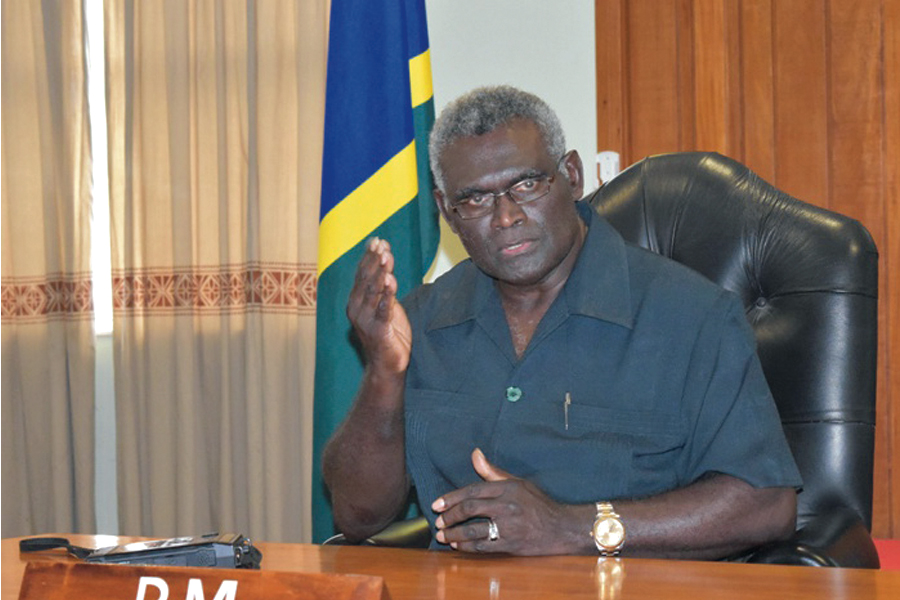
This is confirmed by Prime Minister Manasseh Sogavare early this week, explaining that many countries require foreign nationals to meet the cost of their Covid-19 tests.

In addition, Mr Sogavare said they are required to also meet their accommodation and food costs.

Speaking during his nationwide address, the Prime Minister said a decision will be made later this week on charges for Covid-19 tests during the quarantine period.

“Fellow citizens up to now, the government have met 100 percent of all the COVID -19 tests for all persons entering the country.

“This is currently under review. Many countries require all foreign nationals (and some even their returning citizens) to meet the cost of their COVID-19 tests, in addition to also meeting their accommodation and food costs. A decision will be made later this week on charges for COVID-19 test during the quarantine period.

“We will continue to charge pre-departure COVID-19 fees for those that depart from Solomon Islands to countries that require such tests,” said Sogavare.

Pre-arrival requirements are not negotiable: Sogavare

0
Prime Minister Manasseh Sogavare

BY BARNABAS MANEBONA

PRE-ARRIVAL requirements for people travelling to Solomon Islands during this State of Public Emergency (SOPE) period are not negotiable state Prime Minister Manasseh Sogavare.

In order to minimize the risk of further importation of Coronavirus (Covid-19) into the country, Mr Sogavare said all foreign nationals and returning citizens must comply with strict entry requirements.

For foreign nationals, all foreign nationals wishing to enter the country must first be approved and exempted to enter the country by the Prime Minister and have their names gazetted. Second, they must comply with the country’s strict pre-departure quarantine requirements.

“I advise all foreign national that just having your names on the gazette does not guarantee entry into the country. Each must comply with our strict pre-departure requirements applicable to the country you are in.  If you do not comply with the pre-departure COVID-19 requirements applicable to the country you are travelling from, that is an offence and any person committing such offence is liable to prosecution after the quarantine period ends,” said Sogavare.

For citizens, the Prime Minister said citizens do not require approval to enter the country. However, each returning citizen must comply with Solomon Islands strict pre-departure quarantine requirements before they can enter.

“If citizens do not comply with the pre-departure COVID-19 requirements applicable to the country you are travelling from, that is an offence and any person committing such offence is liable to prosecution after the quarantine period ends,” said Sogavare.

Meanwhile, it is understood that National Government while still dealing with Covid-19 will also introduce some control on the ‘frequency’ foreign nationals can leave and re-enter the country.

This is because Prime Minister Manasseh Sogavare said such frequent trips put a lot of pressure on the country’s Covid-19 front-liners, all of whom had not had any rest since the start of repatriation in 2020.

To date, there is no new additional Covid-19 positive case in Solomon Islands from the 17 registered.

Solomons’ elephant

0
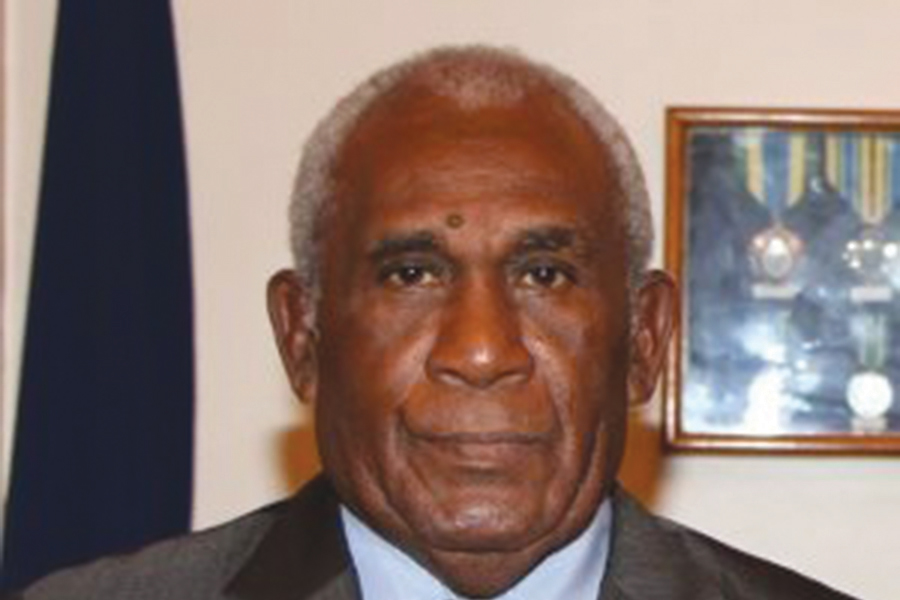
Former Governor General and chairman of SIICAC Sir Frank Kabui

-Country gets low score on corruption

-But, very, very hard to eliminate it here

By EDDIE OSIFELO

SOLOMON Islands has a no single solution to eliminating corruption, a panel discussion has established.

Leadership Code Commission, Solomon Islands Independent Commission Against Corruption (SIICAC), Media Association of Solomon Islands (MASI), Council of Women, Ombudsman, United Nations Development Programme and social media representative could not come up with one solution when they discussed the country’s approach on corruption and reflect on her Corruption Perception Index (CPI) ranking.

Solomon Islands ranked 44 out of 180 countries in the CPI ranking, announced by former Governor General and chairman of SIICAC, Sir Frank Kabui yesterday.

CPI uses a scale of 0 to 100 to rank nations, where 0 is highly corrupt and 100 is very clean.

Sir Frank suggested one way is to improve internal procedures in the public service as a lot of officers cannot comply.

He said most public servants could not even make decision on legal basis.

“We need to think right to live right or think wrong to live wrong, “he said.

Sir Frank stated that when one public officer wants to do things, the other colleagues would take a soft measure.

“If you report us, for what reason.

“Or they may say the rules does not belong to your dad,” he said.

As such, Sir Frank said it is really hard to eradicate corruption.

Furthermore, Sir Frank believes corruption in the country may be attributed to certain factors like:

1.         Decline in morale standard in population;

2.         Poor, people don’t have money because most come from villages;

3.         Environment, our wages are low and cannot sustain through out the month plus trying to feed many people in the house.

Sir Frank said corruption is not a new thing as it has been on the penal code since 1963.

He said the Anti-Corruption Act just expands the definition and scope of provision in the Penal Code.

In 2017, Solomon Islands ranked 39.

It moved up to 44 in 2018 after the government passed the Anti-Corruption Act, the Whistle-blowers Protection Act, and government working with civil society more openly welcoming people’s participation.

However, in 2019, it dropped to 44.

But last year, Solomon Islands made a huge jump to 77 out of 180 countries.

The theme for this year’s launch of the 2020 CPI is COVID-19 AND CORRUPTION.

No illegal entry from western border since Christmas period

0

BY BARNABAS MANEBONA

No illegal entry had been reported since the Christmas Period along the declared emergency zone in the western border as well as in Choiseul province.

This is according to Prime Minister Manasseh Sogavare during his nationwide address this week, saying that a breach of the State of Public Emergency was however reported and responded to at the Noro International Seaport involving a crew from a logging ship who disembarked the ship and went into the Noro Township market.

Despite their being little risk of Coronavirus (Covid-19) transmission, the vessel was detained and only released following the owner’s and agent’s compliance with the country’s legal requirements said Mr Sogavare.

“Work is also progressing on the refurbishment of staff houses for health workers in the three clinics along the border catchment area. This work is expected to be completed by the end of this month. All 3 clinics will soon be fully operational and contribute significantly to the overall COVID-19 operations along the border with Bougainville.

“Fellow citizens in Choiseul, Western province, and Malaita Outer Islands, please continue to be vigilant and report any suspicious movements or illegal entries along our western borders to nearest police or health authorities or call health toll free line 115 or police toll free line 999,” said Sogavare.

Corruption ranking to be unveiled today

0

By EDDIE OSIFELO

SOLOMON Islands will know its ranking in the Corruption Perception Index (CPI) today.

Transparency Solomon Islands (TSI) has organised a one and half hour panel discussion today starting 1.30pm at Solomon Islands Broadcasting leaf hut to discuss the country’s approach on corruption and reflect on her CPI ranking.

Leadership Code Commission, Solomon Islands Independent Commission Against Corruption (SIICAC), Media Association of Solomon Islands (MASI), Council of Women and social media representatives are participating in the panel.

CPI uses a scale of 0 to 100 to rank nations, where 0 is highly corrupt and 100 is very clean.

In 2017, Solomon Islands ranked 39.

It moved up to 44 in 2018 after the government passed the Anti-Corruption Act, the Whistle-blowers Protection Act, and government working with civil society more openly welcoming people’s participation.

However, in 2019, it dropped to 44.

But last year, Solomon Islands made a huge jump to 77 out of 180 countries.

The huge jump was due to Solomon Islands witnessed the national general election and the period leading up to the formation of the new Executive Government.

Substantial evidence has identified that the new regime was very much open to political party financing and politicians were open to undue influence from vested interests and such a government was obviously less able to combat corruption on its own and they have failed to partner with the people in the fight against corruption.

According to TSI, there are two most widely used indicators of Corruption today.

These are the Transparency International’s Corruption Perception Index [CPI] and Control of Corruption Indicator one of the six Governance Indicators [WGIs] produced by World Bank Researchers.

The Corruption Perception Index [ CPI] is the leading global indicator of public sector corruption since its inception in 1995. 

In 2012, Transparency International revised the methodology used to construct the index to allow for comparison of scores from one year to the next.

The CPI analyses perceptions of corruption in the public sector and scores 180 countries and territories, drawing on 13 surveys of businesspeople and expert assessments.

Corruption Perceptions Index (CPI) ranks countries “by their perceived levels of public sector corruption, as determined by expert assessments and opinion surveys.”

The CPI defines corruption as “the misuse of public power for private benefit”.

The theme for this year’s launch of the 2020 CPI is COVID-19 AND CORRUPTION.

Japan signs Kukum Highway Phase II

0
Group photo of Japan’s Ambassador to Solomon Islands, Jeremiah Manele, DPM Manasseh Maelanga, JICA rep, and Mr Ramofafia after the signing ceremony of the Kukum Highway Phase two project.

BY MAVIS N PODOKOLO

THE Japan’s government sealed an agreement with the Solomon Islands Government through the Ministry of Foreign Affairs and External Trade (MFAET) through a signing for the extension of the Kukum Highway phase-two project.

The first phase of this project was signed and implemented on May 26, 2015 and concluded on December 5, 2018. This phase-one of the project include the improvement of highways, bus bays, crossings, overhead bridges and underground tunnels.

Speaking at the signing ceremony yesterday Japan’s Ambassador to Solomon Islands Morimoto Yasuhiro said the signing of the Kukum highway phase-two project is a significant event and a milestone in the ongoing cordial bilateral relationship between Solomon Islands and Japan.

“I am pleased to sign the EN today after the approval of the cabinet of Japan last month. The government of Japan decided a grant up to three billion one hundred and Fifty-nine million Japanese Yen (Y3, 159,000,000), approximately 243.6 million Solomon Dollars, for the construction and supervision works.

“The Kukum Highway Phase two project is the continuation from the where Kukum Highway Phase one ended. The project will cover the 6.5 kilometres road from the Ministry of Fisheries to Honiara International Airport. The project component will include 4.3 kilometres of four-lane road to Lunga Bridge and two kilometres of two lane road from Lunga Bridge to the airport. Ancillaries to the road project are, the drainage systems, bus stations, street lights, traffic sign boards and pavement markings. The project time-line will be 24 months and it is expected to complete by June 2023.

“I would like to highly commend all those who have been involved in the preparatory works and the design finalization on both sides of our two countries. Despite the difficulties cause by the global pandemic Covid-19 you have worked untiringly and made all efforts into promoting and meeting deadlines to ensure the signing today (yesterday) possible,” said Yasuhiro.

Minister for MFAET Jeremiah Manele in response said the signing ceremony is another validation between the two countries.

“The signing of the Exchange of notes and the grant agreement of the Kukum Highway phase two projects with the government of Japan, signifies another milestone of the partnership, engagement and cooperation between our two countries.

“I wish to acknowledge the government of Japan’s grant of three billion, one hundred fifty-nine million Japanese Yen, which is equivalent to more than SBD243 million for phase II of the Kukum Highway project.

“The duration of the project for construction is 24 months. Excellency, I wish to reassure you of the commitment by the Solomon Islands government to working closely with your government to successfully implement the project. Despite the impact of COVID-19, we remain committed in ensuring this national project commences and is completed schedule.”

Schools told to be flexible with parents

0
Florence Young Christian School primary school girls at school yesterday. Photo by Barnabas Manebona.

By EDDIE OSIFELO

SCHOOL registrations in Honiara and in the provinces started very slowly this week ahead of the school openings next Monday.

Many schools noticed few parents and guardians turning up to pay school fees of their children.

Unlike in the past, registration normally attracted a long queue.

One teacher told Island Sun the low turn out of parents to do registration was due to economic impact caused by the coronavirus pandemic last year up until now.

Furthermore, the teacher said delay of school grants from Ministry of Education and Human Resources may affect the start of classes next week.

“Schools need their grants to purchase stationaries and pay bills to start the academic year.

“Schools cannot depend entirely on fees to start the operation because of low number of fee payers,“ he said.

Island Sun understands more parents have applied for loans at different commercial banks in order to pay their children’s’ school fees.

In the meantime, Honiara City Council owned schools are advised to be flexible in charging school fees on parents and guardians this year due to the impact of coronavirus pandemic.

Councillor Clement Terewauri, who is also the Chairman of Education Division issued the advice to all HCC schools ‘administration this week.

Terewauri said the council agreed for students to pay registration fee of $100 and $150 for Form 7 classes.

He said for school fees, schools ‘administration should not impose strict rules on parents and guardians to pay up quickly.

“Most parents find it really hard to get school fees because of the economic impact.

“As such, the school administrations should be flexible to students until such time the parents secure their fees, “he said.

There are about 12 Community High Schools and some private schools affiliated to HCC.

Furthermore, Anglican Church of Melanesia run schools are proposed to start on Monday next week.

Education Secretary James Memua said parents can pay fees at any time to enrol their children.

He said it normally takes two months for the ACOM schools to remove students’ names out of the enrolment lists if they don’t pay up their fees.

Memua said parents who applied for loans can pay up the school fees once they get the money.

‘Malaita first’

0
Premier of Malaita province Daniel Suidani

Malaita premier warns province’s investors not to mess around

BY BEN BILUA

DONORS and investors intending to develop or invest in Malaita province are being warned to “think carefully” before doing so.

The welfare and needs of the people of Malaita are the forefront to any investment venture.

Malaita will no longer tolerate investors that aim only to exploit the province’s resources, make profit, and leave the resource owners high and dry.

Premier Daniel Suidani issued the warning yesterday in his address during the launch of a disaster programme in Honiara.

“The time is up for nontangible partnership, which has been a practice over the past years,” Suidani said.

“So many times, we heard about the need for collaborative approach to development but sadly that is often easier said than done,” he stated.

“As a government, we feel it’s important that we know what developments are taking place within our jurisdiction and how best we could be partners in such endeavours.

“We want to see appropriate partnership and one that sees our people and their needs as the key priority to be dealt with.

“MPG wants to see a more meaningful engagement than what has been seen in the past.

“We want to be partners right at the beginning of any developments and not in the middle or at the end of developments.

“This is the call that I would like to make to all those who wish to conduct developments in Malaita province,” he said.

Suidani said the Malaita Alliance for Rural Advancement (MARA) Government is pursuing restoration as an economic direction with strict policies and regulations.

He said his government has established appropriative provincial ordinances to safeguard its people and will be mindful of who is crossing into Malaita province’s jurisdiction to do business or any development.

Premier Suidani adds that the Auki Communique, sealed between MARA Government and MALAMOI council of Chiefs, signifies the new approach to any development.

“This was a historical document for the Provincial Government as it outlined its principal stands on the development of Malaita province.

“While some may say that the days for protectionism policies are over; and that protectionism policies are inhibitors to foreign direct investment, I need not remind them that any good principles are as good as the contextual realities within which these principles are applied,” he said. 

Premier Suidani said Malaita Province has had its fair share of dealing with dishonest business houses which is costly to the province and that his government cautions any developments carried out by NGOs or investors to follow the same trend.

He stressed that the MARA government welcomes donor partners and investors who have integrity and respect the resources, culture and people of Malaita province.

Front-liners first to be vaccinated

0
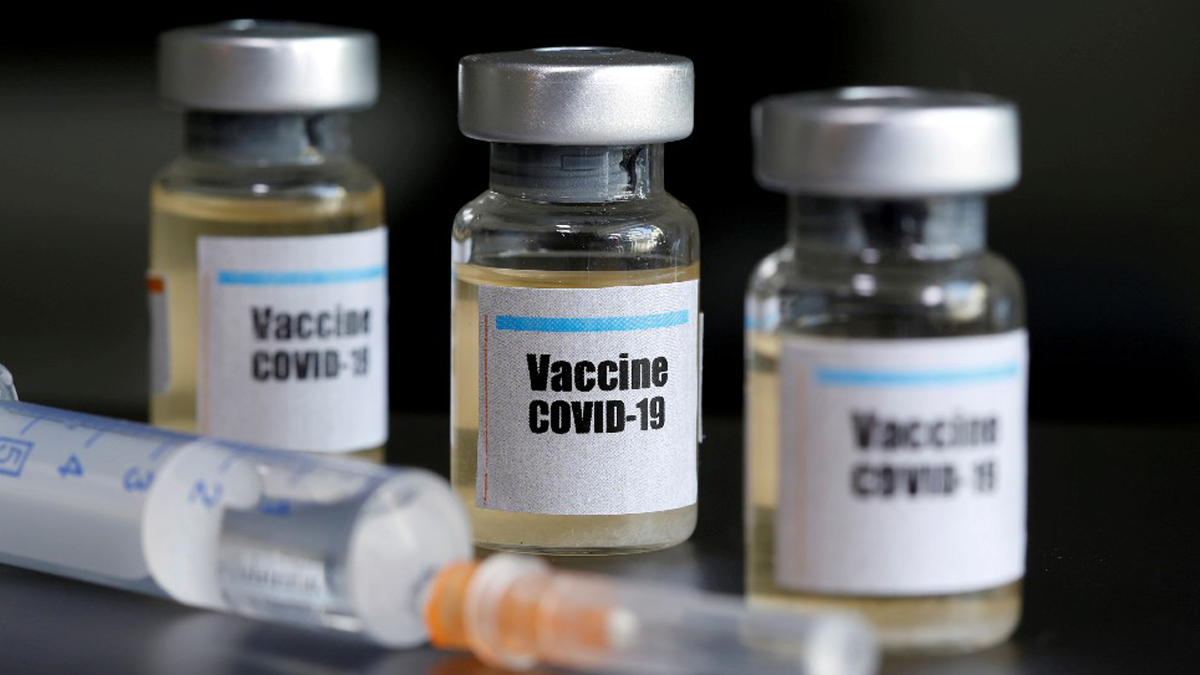
Covid-19 Vaccine. REUTERS/Dado Ruvic/File Photo

BY BARNABAS MANEBONA

THE first tranche of Coronavirus (Covid-19) vaccines will be targeted to the country’s front-liners.

Prime Minister Manasseh Sogavare said initial application to cover the first 0.25 percent of population had been submitted to and had been received by GAVI.

In his nation-wide address, Monday, he said his government is committed to vaccine coverage of 50 percent of the population through the GAVI facility with the remaining 50 percent of the population to be secured through bilateral arrangements with development partners.

“Fellow citizens the Oversight Committee will be meeting with the COVAX National Coordinating Committee and the COVAX Technical Working Group to agree a timeline for the presentation of our COVID-19 Vaccine roll-out strategy to Cabinet for its consideration,” Sogavare said.

“I am happy to inform the public that our initial application to cover the first 0.25 percent of our population had been submitted to and had been received by GAVI,” he added.

“This first tranche of vaccines will be targeted to our front-liners.

“My government has committed to vaccine coverage of 50% of our population through the GAVI facility with the remaining 50% of the population to be secured through bilateral arrangements with our development partners.

“In this regard I applaud the commitments of Australia that has announced the amount of 14 million Australian dollars to assist Solomon Islands procures and distribute vaccines, and other countries including New Zealand and the People’s Republic of China that have already committed to support the government’s COVID-19 vaccination roll out program.

“I also thank the UN Agencies in particular the UNCEF and WHO as well as well as other international and regional agencies including the Pacific Islands Forum Secretariat and the Secretariat of the Pacific Community for their ongoing support to my government.”

Consultation on health bill starts

0
PM Manasseh Sogavare

BY BARNABAS MANEBONA

FINAL consultations into the ‘Public Health Emergency Bill’ start this week and will run for the next month.

That’s according to Prime Minister Manasseh Sogavare in his latest nationwide address, Monday.

Sogavare said provinces to be invited for the consultations include Temotu, Makira, Renbel, Isabel, Choiseul and Guadalcanal.

“Non-Government organizations, the private sector and the Parliamentary Opposition will also be consulted.

“It is the wish of my Government to broaden the consultation base of the bill as much as possible.

 “The current State of Public Emergency will end on the 24th March 2021. 

“It is the intention of my Government to bring the new bill to Parliament to be debated and commenced before 24th March 2021,” Sogavare said.