Home Blog Page 250

FISHING VESSEL DETAINED

0

Foreign ship caught at Indispensable Reef under Kurukuru operation which targets illegal, unreported, and unregulated fishing

BY JOHN HOUANIHAU

A fishing vessel is being detained at the Royal Solomon Islands Police Force (RSIPF) Maritime Unit Aola Patrol Base awaiting further investigation.

HUA SHENG 1 was apprehended on Wednesday this week at the Indispensable Reefs 50km south of Rennell Island and escorted to the patrol base at around 6-7pm.

An officer from the RSIPF Maritime Unit on condition of anonymity told Island Sun yesterday at the Aola base that the vessel was captured during a joint operation known as “Operation Kurukuru”.

“Operation Kurukuru is an annual initiative by the Pacific Islands Forum Fisheries Agency (FFA) to combat Illegal, Unreported, and Unregulated (IUU) fishing in the Pacific. With regards to this one, it is a joint operation between the RSIPF Maritime Unit, FFA, Ministry of Fisheries and Marine Resources (MFMR),” the officer said.

The vessel’s crew includes foreign nationals and locals as witnessed by Island Sun on the ground yesterday.

When contacted for comment, a Ministry of Fisheries and Marine Resources (MFMR) spokesperson from the Compliance Division who also spoke on condition of anonymity said the joint operation investigation started last week.

“This matter is now under investigation. Right now (yesterday) we are preparing to go and conduct inspection on the vessel and crews,” she told Island Sun yesterday via phone call.

“As of now, no further detail will be provided until investigation is caried out. We usually have an operation three times a year. We join with FFA, and Police. It is called operation Kurukuru which involved Patrol engagement to monitor activities in our waters,” she said.

She said that the operation is part of the (MFMR) and every year to ensure that these vessels  comply to their conditions under the MFMR police and laws.

“So, it was from that operation that the vessel was seized and escorted to Aola police base for detention and thorough investigation. They seized the vessel at Indispensable Reefs. A locally flagged vessel but includes foreign and local crew members,” she said.

She said that the joint investigation is between RSIPF, FFA and MFMR.

She said that Operation Kurukuru ended this week since commencement last week.

“If the investigation found some breach of law, then, penalties would then be imposed whether through fine or court. Now it is still in the early stage of investigation,” the spokesperson said.

For feedback, contact: [email protected]

Malaita receives two new vehicles

0

By RODRICK DESURI 

Auki 

The Malaita Provincial Government has received two new brand double-cabin Toyota land cruisers from the Ministry of Provincial Government and Institutional Strengthening (MPGIS).

The donation was done this month as part of Malaita and MPGIS ongoing cooperation and partnership under the Provincial Governance Strengthening Programme’s (PGSP’s) auspices. 

The two vehicles will help strengthen Malaita Provincial Government’s efforts to connect with the communities in the wards in relation to service delivery, particularly the monitoring of PCDF projects by works and provincial planning teams. 

Premier of Malaita Province, Hon. Elijah Asilau’a, during a brief reception ceremony for the handover occasion earlier this month, expressed deep gratitude for receiving the vehicles and assured that they would be used for their intended purposes.

He stated that the people and government of Malaita Province are appreciative of the ongoing partnerships under the PGSP, which have provided the province with many advantages.

“On behalf of the Malaita Provincial Government and our people, I would like to express our sincere gratitude for the ongoing cooperation and partnerships under the Provincial Governance Strengthening Programme’s (PGSP’s) auspices.

“With this, it has produced numerous priceless results for the nine provinces since the programme’s inception, with Malaita also greatly benefiting, as examples of which we are witnessing today,” he said.

He urges for more collaboration on the ground in regards to achieving the goals of the PGSP and the objectives of the PCDF.

Meanwhile, the Permanent Secretary of the Ministry of Provincial Government and Institutional Strengthening (MPGIS), Dr. Derek Futaiasi, stated that it’s a privilege to formally transfer two Toyota Land Cruiser Double Cabin vehicles to the Malaita Provincial Government on behalf of the MPGIS.

He said the vehicles were purchased under the PCDF 2024–2025 allocation through the Integrated Development and Resilience Program (IEDCR), a World Bank-Solomon Islands Government partnership that generously contributes to strengthening provincial service delivery and institutional capacity building.

PS Futaiasi stressed that the vehicles are not an asset, but are to improve the efficiency of provincial operations.

He said these vehicles are to assist with project evaluation, oversight, and monitoring tasks by the provincial planning team, monitoring officers, and engineers.

For feedback, contact: [email protected]

Seven communities in Western province declared ‘no open defaecation’ status

0

BY BEN BILUA
Gizo

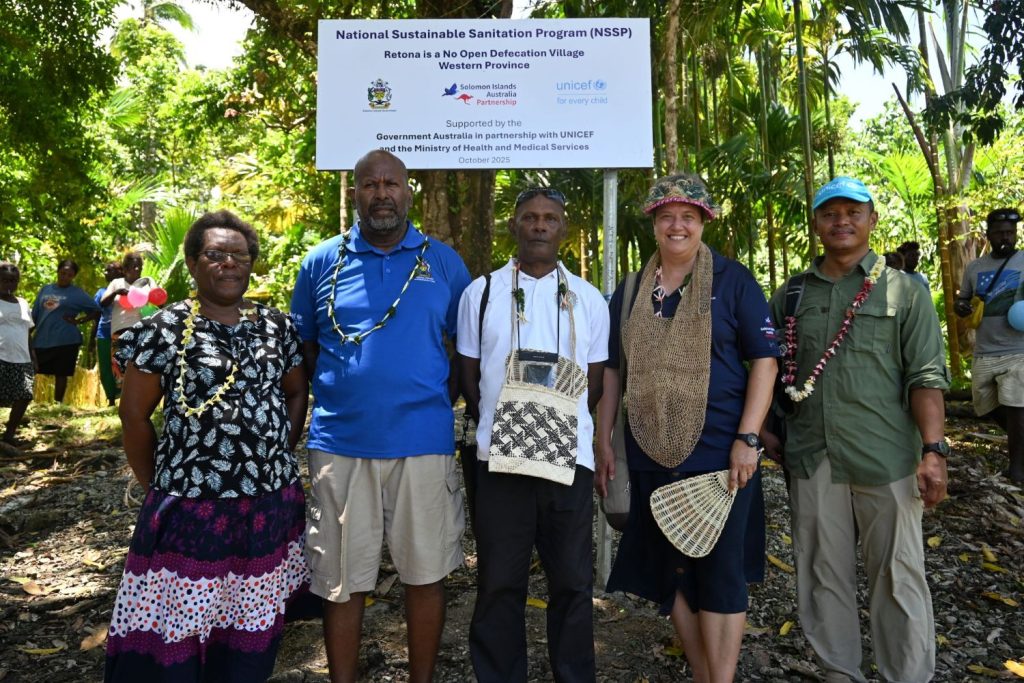
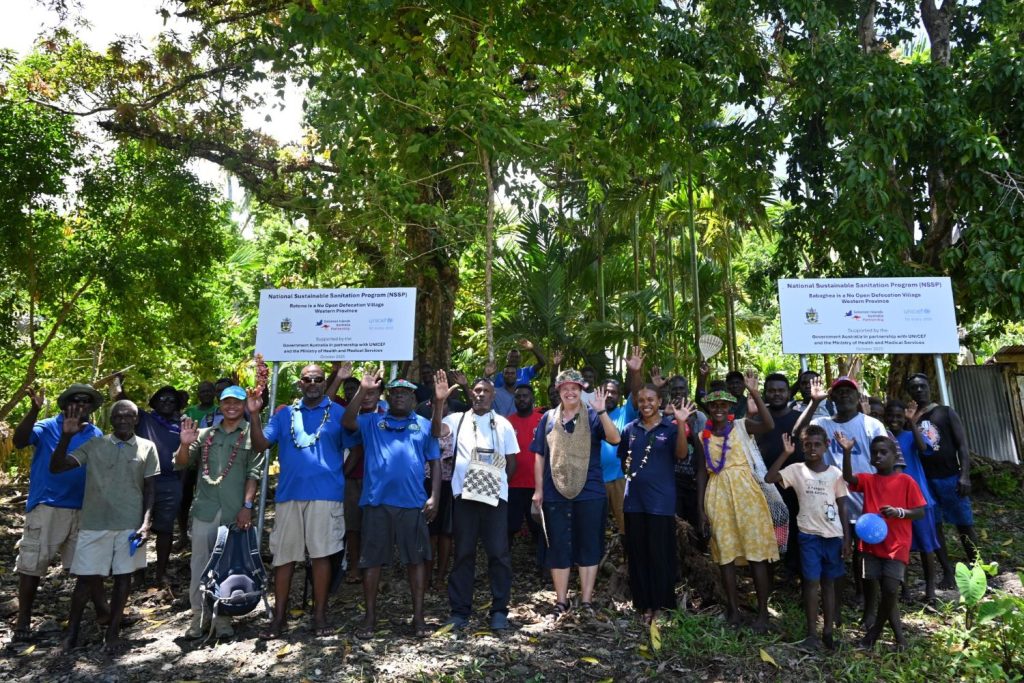
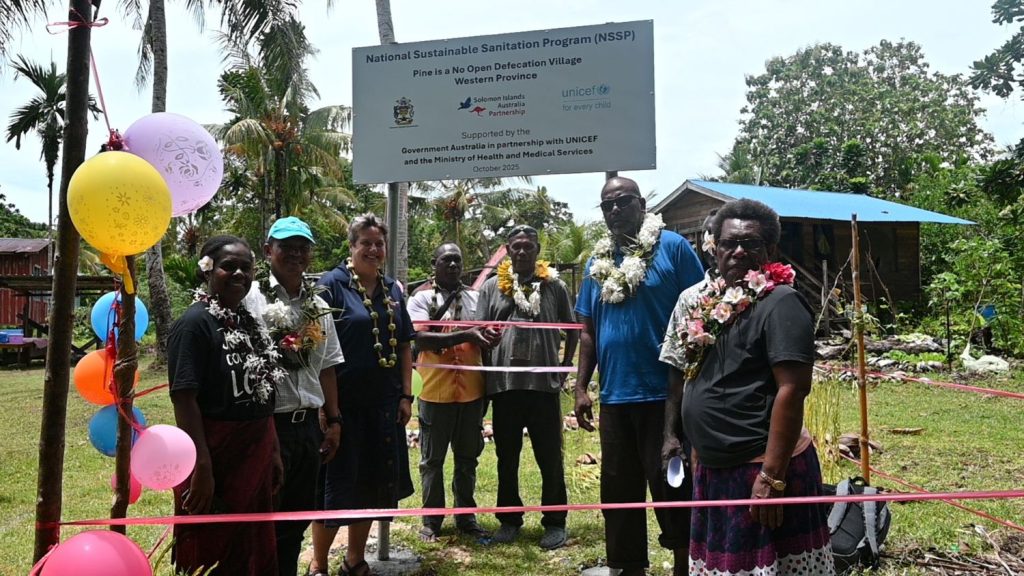
SEVEN communities in Western Province have officially achieved No Open Defaecation (NOD) status, marking another major milestone in improving sanitation and hygiene across the province.

The newly declared NOD communities are Babagea, Retona, Central Buri and Logha on Ranongga Island, and Patupaele, Pine and Ilitona on Kolombangara Island. The achievement follows sustained collaboration among communities, government agencies, and development partners.

The project was supported by funding from the Australian Government through the Department of Foreign Affairs and Trade (DFAT), in partnership with UNICEF, ADRA, the Ministry of Health and Medical Services (MHMS), and the Western Provincial Government (WPG).

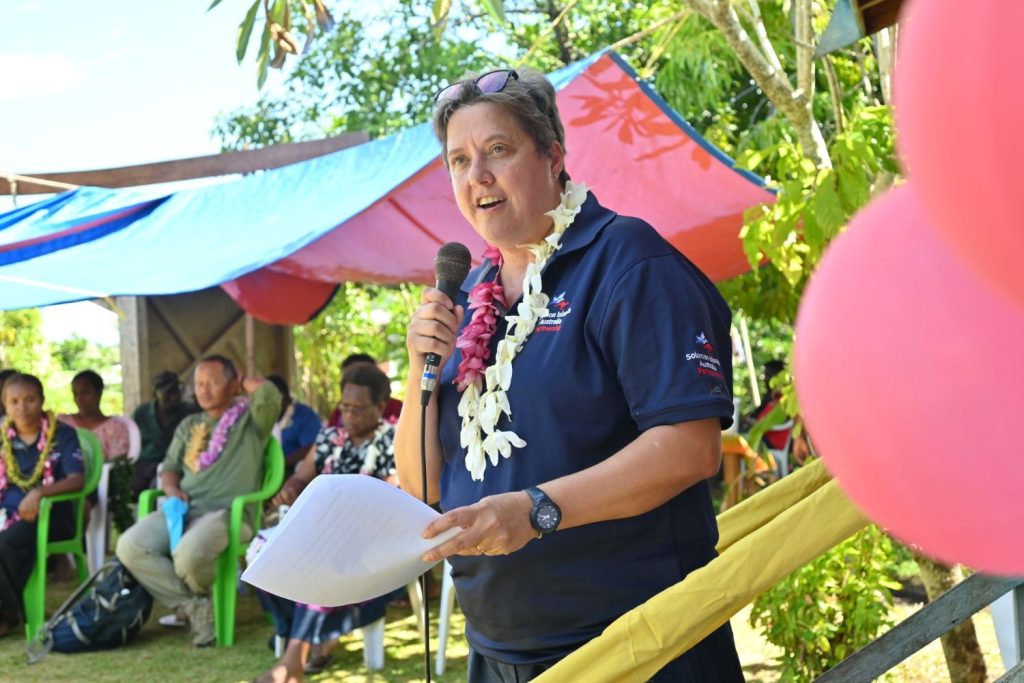
Speaking during the declaration of NODs in respective communities, First Secretary Health Programme of DFAT, Elise Newton said adequate sanitation facilities are not just essential for maintaining hygiene and preventing the spread of preventable diseases but also a fundamental right for every individual.

She said proper sanitation enables safer and easy access to elderly and people with disabilities as well as to promote the safety and dignity of women and girls.

Newton said the Australian Government is very proud to donate 3.5 million to the Ministry of Health and Medical Services to support the NSSP programme.

“This funding is a clear demonstration of Australia’s commitment to improving the health and well-being of communities across Solomon Islands.

“This project is a powerful example of Australia’s commitment to locally led development – championing locally led initiatives and homegrown solution to community challenges.

“We ensure that the solutions are not only relevant and sustainable but also tailored to your unique needs by placing communities like yours at the forefront of change.

“It’s through this kind of partnership that we can create lasting impact and build healthier, safer environment for generation to come,” she said.

Newton said Australia is proud to stand alongside Solomon Islands as its principal health partner.

She said the Australia-Solomon Islands Health Partnership enables health service delivery across the country to improve health outcomes for all Solomon Islanders, and to support the Ministry of Heath to achieve the ambition of the National Health Strategic Plan.

Newton explained that Australia is investing over SBD150 million over the next four years to improve the health of Solomon Islanders.

She said the investment goes to through the Ministry of Health and Medical Services while other funding goes directly to provincial health departments across the country.

Newton said half of the new funding worth SBD75 million will support provincial departments to deliver essential primary health services, through provincial grants.

“We are proud to providing SBD2.4million to Western Provincial Health Authority this year – a total of SBD46.1 million since 2016.

“We’re delighted that today’s certification and celebration brings us one step closer to achieving outcomes we envision for Solomon Islands,” she said.

Newton acknowledges the implementing partners; MHMS, UNICEF, ADRA, WPG, Western Province’s Health Authority and communities for the great achievement.

She also congratulates the communities for the declaration as NOD communities.

Minister of Health for Western Province Kenneth George said Western Province has long been recognised for its leadership and commitment to improving the health and wellbeing of its people.

He adds that Western Province has made a great stride in promoting safe sanitation and hygiene, thanks to partners like the Ministry of Health and Medical Services, UNICEF, DFAT, ADRA and other stakeholders.

George said 31 communities have now been declared as NOD communities within Western Province.

“To ensure Western Province achieves full NOD status, we have set an ambitious yet achievable target to build 95 toilets in 2026 and 100 toilets each from year 2027 to 2030,” he said.

George acknowledges DFAT, UNICEF, MHMS, ADRA and Western Province’s Health Authority for supporting the project.

He also acknowledges community leaders, women and youths for their contributions towards the NOD project.

For feedback, contact: [email protected]

Adau’a students benefit from cyber bullying awareness 

1

By RODRICK DESURI 

Auki 

Students from Adau’a Secondary School in Fataleka, Malaita Province received an awareness training on cyber bullying.

The awareness programme held on Tuesday at the school hall was conducted by police officers from New Zealand and the Royal Solomon Islands Police Force (RSIPF). 

The one-day awareness training aims to equip students with fair knowledge of cyber bullying, its effects, and consequences, as the usage of social media is currently on the rise. 

In an interview with Island Sun Auki, a teacher from Adau’a Secondary School, Mua Tua’Alohainaia, stressed that the awareness is very important for teenagers, especially students. 

He said since the use of mobile devices is common and widely used by students, this awareness will help to show the real value of education and how it disrupts their studies.

“My view as a teacher is that this kind of awareness is very important for teenagers, since they are very active in using social media all the time.

“Most of the time, our students spend time on their mobile devices and Facebook without realizing that it also has side effects on their lives,” he said.

He stated that spending more time on Facebook also causes disturbances for the students and affects their studies.

He added that they also had the opportunity to learn about issues related to cyberbullying in school.

Island Sun understands that the police officers also handed out soccer balls, a volleyball net, and balls for the students of Adau’a Secondary School.

The awareness was made possible by New Zealand police officers.

For feedback, contact: [email protected]

Minister acknowledges WFD organisers

0

BY JOHN HOUANIHAU

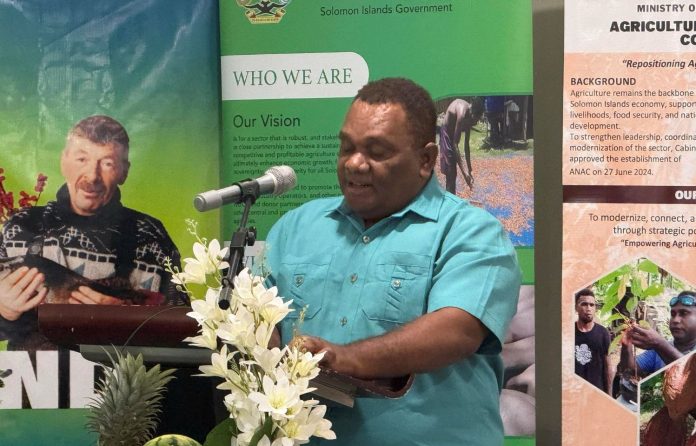
Minister of Agriculture and Livestock (MAL) Franklyn Wasi has acknowledged this year’s organisers of the World Food Day event.

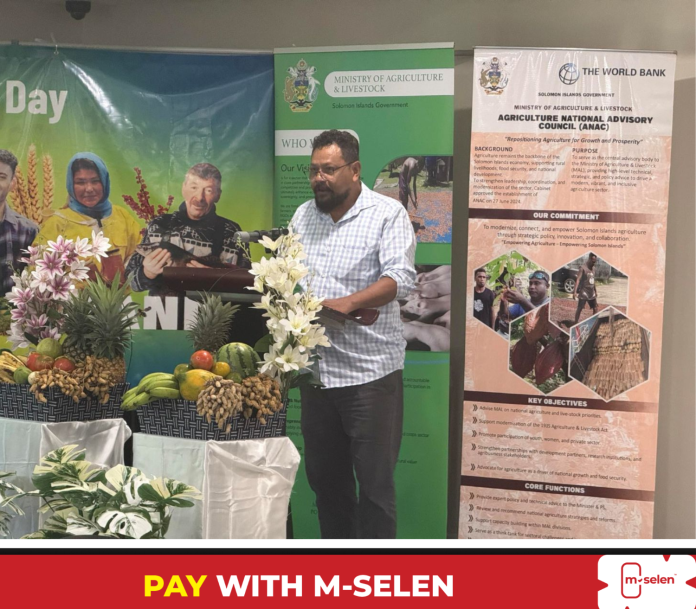
The 2025 World Food Day celebration was marked at the Heritage Park Hotel on Monday this week themed “Hand in Hand for Better Food and a Better Future”.

The theme highlighted the need for governments, organizations, communities, and individuals to work together to transform agrifood systems.

To top this event were the launch of MAL’s first-ever Agriculture National Advisory Council (ANAC), and MAL’s Corporate Plan 2025–2028.

The Agriculture National Advisory Council (ANAC) is a landmark initiative that aims to strengthen leadership, coordination, and modernisation across the agriculture sector.

Wasi said that the new Corporate Plan provides a clear roadmap to guide agricultural development and modernisation over the next four years.

He adds that it aligns with the Solomon Islands Government’s national vision for inclusive economic growth, food security, and improved rural livelihoods.

He said the plan is a reflection of the government’s renewed commitment to modernise agriculture, empower farmers, and ensure sustainability of the country’s natural resources.

Minister Wasi said that MAL through the government is focusing on transforming the sector to become more resilient, inclusive, and productive in the years ahead.

“I would like to acknowledge everyone who contributed to organising this event, the staff of the Ministry of Agriculture and Livestock, our partners, exhibitors, and participants. Let us continue to work together hand in hand for better food, better health, and a better life and future for our beloved Solomon Islands. God bless us and bless Solomon Islands from shore to shore,” Minister Wasi said.

For feedback, contact: [email protected]

80th anniversary of FAO serves as powerful reminder: Yee

0

BY LORETTA B MANELE

This year’s 80th Anniversary of FAO (Food and Agriculture Organisation) serves as a powerful reminder of Solomon Islands independence especially when the country endured difficult times.

Douglas Yee, National Project Coordinator for Integrated Forest Management Project expressed this whilst delivering remarks on behalf of FAO Sub-Regional Coordinator, Mr. Yangzhou Hu on Monday at Heritage Park Hotel.

He was speaking at Ministry of Agriculture and Livestock’s (MAL) three-tier program which included the launch of MAL’s Corporate Plan (2025-2028), launch of MAL’s first ANAC (Agriculture National Advisory Council) and World Food Day 2025.

Yee said World Food Day is observed on October 16 each year to celebrate the establishment of the Food and Agriculture Organization (FAO) of the United Nations.

“This year is special in the sense that we also mark the 80th anniversary of FAO’s founding as we come together today, we contemplate this year’s theme “Hand in Hand for Better Food and Better Future”.

“This serves as a powerful reminder of our independence particularly during challenging times such as economic downturns, crises, disasters, but even during prosperous times,” he said.

Yee went on to state that most importantly, the theme calls for global solidarity to create a more sustainable and equitable food system for all.

He added that the theme also underscores the necessity for international collaboration and collective efforts to tackle hunger and malnutrition.

Moreover, Yee said Solomon Islands, as many regions worldwide, faces numerous challenges.

He said the country is progressing through this historical period and have come across difficulties varying from social discord, environmental issues including climate change and pollution, resource depletion to loss of biodiversity.

“Additionally, we face sector-specific challenges such as disruption in supply chains. Overall, the nation is highly susceptible to disasters and is further endangered by its small island economy and threatened for security.

“The rise in sea levels and extreme weather events complicates our ability to cultivate food, safe-guard our resources and ensure food accessibility for all. For island nations, these challenges particularly are ancient and significant, affecting lives, livelihoods and the environment itself,” he said.

Amidst these challenges, Yee said there is support which aims to foster resilience.

He stated that efforts are being made to ensure adaptation in the face of these challenges through various means.

Yee said it is now recognised that initiatives are in place to enhance parametric insurance, for example, as a tool to address catastrophes.

As in the case of food systems, he explained that significant measures have been implemented to create more sustainable and resilient food systems within communities in the Solomon Islands, facilitated by support and assistance in diverse forms.

Yee highlighted that FAO is privileged to accompany Solomon Islands on this journey.

He said FAO works with government agencies, local farmers, fishers and communities to boost food production to improve sustainable farming and fishing practices and guarantee that nutritious food is accessible to all.

Yee mentioned that whether through the introduction of primary resilient crop varieties, or the promotion of sustainable fishing methods, or the support of nutrition programmes for children and families, the organisation is dedicated to nurturing a food source so that Solomon Islands can be food secured.

He pointed out that this demands partnership.

“It demands partnership. The FAO appreciates the opportunity to work alongside the government of Solomon Islands, community organisations, regional partners, to exchange knowledge, mobilise resources and advocate for policies that would ensure this.

“Together we are creating pathways for an improved life today through enhanced food security, thereby laying the groundwork for a brighter future,” said Yee.

In closing remarks, he stressed that as we commemorate World Food Day 2025, we should bear in mind that securing better food for a better future is not merely an objective but a pledge to dignity, health and hope for all.

“By ensuring that every individual has access to food, we not only enhance lives, but also fortify families, communities and ultimately the future of Solomon Islands. I extend my gratitude to everyone for your commitment, your diligent efforts and for uniting in this shared vision. Together, let us persist in striving towards a world where better food is a reality for all,” he said.

For feedback, contact: [email protected]

Alarming rise in NCD admissions at NRH in past two years

0

BY SAMIE WAIKORI

The Ministry of Health and Medical Services (MHMS) has reported an alarming increase in patient admissions at the National Referral Hospital (NRH) over the past two years, with Non-Communicable Diseases (NCD) accounting for the majority of cases.

During a recent parliament session, Minister of Health and Medical Services, Dr Paul Popora Bosawai expressed deep concern over the statistics, emphasising the urgent need to address the growing NCD crisis in the country.

Bosawai revealed that in 2023, out of 3,810 total admissions at NRH, 56 percent (2,149) were male and 44 percent (1,661) female.

He added that 69 percent of these admissions were related to NCDs, including heart diseases, diabetes, kidney complications, brain and central nervous system disorders, and cancers.

He further noted that 69 percent of admissions in the medical ward and 60 percent in the surgical ward were linked to NCD-related conditions, reflecting the widespread impact of these illnesses.

In addition, Bosawai disclosed another concerning trend — a sharp rise in cancer cases.

He said the number of patients attending the cancer day care clinic more than doubled in 2023, increasing by 85 percent compared to the previous year.

Medical records documented 2,183 cases in 2023, up from 382 previously. While this spike could partly be due to improved reporting, the minister said the trend remains “alarming and concerning”.

To address the escalating NCD burden, Dr Bosawai said the MHMS and NRH plan to:

  • Create more space, facilities, and technology to care for NCD patients;
  • Increase staffing levels; and
  • Expand hospital services and supplies.

While acknowledging ongoing efforts to improve healthcare services, the Minister stressed the importance of prevention, warning that NCDs often lead to other serious illnesses, including cancer.

“By preventing or controlling diabetes, you are also preventing other forms of NCDs,” he said.

Bosawai appeals for strong collective action.

“We must all work together to combat the NCD crisis across the country. And I want to say, please—the food!”

For feedback, contact: [email protected]
National NCD policy and roadmap 2025-2030 calls for champions at all levels

0

BY SAMIE WAIKORI

The Ministry of Health and Medical Services (MHMS), through the National Non-Communicable Diseases (NCD) Policy and Roadmap 2025-2030, aims to reduce NCD-related deaths by 2040.

As part of the initiative, the ministry is ramping up efforts to improve healthcare services and reach key targets in the fight against NCDs.

The National NCD Policy and Roadmap calls for strengthened leadership and governance at the national, provincial, and community levels. It places a strong emphasis on collaboration with the private sector, community groups, and churches.

During a recent Parliamentary session, Minister of Health and Medical Services, Dr Paul Bosawai, appealed to all citizens to actively engage in this crucial health campaign.

Bosawai highlighted the ministry’s commitment to improving the quality of care for those living with NCDs, aiming to reduce both morbidity and mortality rates.

The Ministry has set ambitious targets for health centres in Honiara City Council, Guadalcanal, Malaita, and the Western provinces.

These goals include:

  • 80 percent of patients requiring diabetic screening at area health centres will be screened appropriately.
  • 80 percent of patients with pre-diabetes or newly diagnosed uncontrolled diabetes will receive proper management.
  • 50 percent of patients with low to high risk of food-related issues will be managed effectively.

By 2030, he said the target is to ensure that 80% of patients visiting primary health clinics across the country are screened for diabetes if they meet the criteria, with proper care provided for diabetes and food-related issues.

The goals also include:

  • 80% of diabetic patients will undergo proper diabetes or foot screening.
  • 50% of people with hypertension will have their condition well-controlled.

Bosawai emphasized that achieving these targets will prevent 262 cases of diabetic amputations annually by 2030 and avert 165 deaths related to amputations each year.

Additionally, the Minister also said ministry aims to prevent 2,300 deaths from NCDs by 2040.

“If we achieve 50% hypertension control, we will significantly reduce NCD-related deaths and make a major impact on our targets,” he said.

For feedback, contact: [email protected]
Collective effort is crucial to tackle NCD: Bosawai

0

BY SAMIE WAIKORI

The Ministry of Health and Medical Services (MHMS) appeals for a joint effort to address the Non-Communicable Diseases (NCDs) crises facing the country.

This is by supporting the implementation of the Multisectoral Non-Communicable Disease Strategic Plan 2019-2023, which was reviewed by the ministry last year. There are also other relevant health policies in place that need support in the campaign.

Speaking recently in Parliament, Minister for Health, Dr Paul Popora Bosawai said the new NCD policy and roadmap will be implemented and monitored with different strategies in accordance with the National Development Strategy 2016-2035.

He said NCDs are severely affecting us and had some impact on the economy.

Bosowai emphasized that through the implementation of the National Health Strategic Plan 2022-2031, guided by this multisectoral NCD roadmap, there is need for commitment and response from all ministries and everyone to address NCDs.

He added that the effort will see engagement with private sector, churches and communities on NCD activities.

Bosowai said there’s also a recognised emphasis for non-governmental stakeholders to community engagement, involvement, and collaboration using churches as partners in reaching and sustaining NCD community interventions with the provincial health services.

He voiced that by creating healthy settings for our people to live healthy and strive for all people, both young, old, women, men, disabled can achieve their full potential without the threat of NCDs.

“This is because 80 percent of NCD outcomes are determined by non-health-related social, economic, commercial, and environmental determinants that require a solid collaboration and support from other sectors,” he said.

Bosawai reported that based on the ministry’s information system, NCD is among the top five causes of death nationally for both males and females in 2023, and now in 2025.

“The Ministry of Health and Medical Services would like to underscore that we must work together on our multisectoral approach.

“Working together means you as an individual must be careful of the food you eat. That’s how you can contribute to tackle the NCD crises in the country.

“I want you to read the packaging materials of the food, understand before cooking them. You don’t just buy and eat,” he said.

Bosawai said this is because food is the number -one cause of NCDs, and people must take extra cautious about what they eat.

He reiterated the commitment of MHMS through the revised Multisectoral Non-Communicable Disease Strategic Plan 2019-2023 and relevant policies to establish a society that creates health and an enabling environment with a health system that works closely with communities to promote health and well-being of all.

For feedback, contact: [email protected]
ANAC important in helping MAL overcome challenges

0

BY JOHN HOUANIHAU

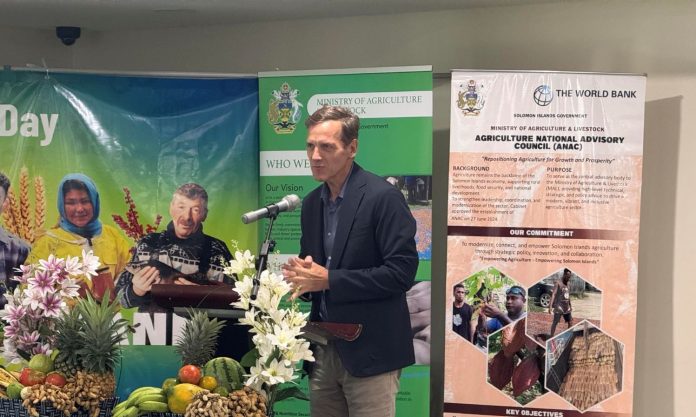
The Agriculture National Advisory Council (ANAC), will play an important role in helping the Ministry of Agriculture overcome challenges related to food, says World Bank Country Manager, Bernard Harborne.

ANAC was approved by Cabinet on June 27, 2024 and formally launched at the Heritage Park Hotel on October, Monday 27th by the Minister of Agriculture and Livestock (MAL) Franklyn Wasi and UNDP Deputy Resident Representative, Prof. Raluca together with members of the Council, at this year’s World Food Day event.

Speaking at the launch of the ANAC during the World Food Day celebration, Mr Harborne said that there was an interesting report recently released by Save the Children on nutrition and climate in Papua New Guinea (PNG), Solomon Islands (SI) and Vanuatu.

He said that the report brought the challenges the Pacific faces in terms of climate, food production and nutrition of children, either undernutrition or related issues of non-communicable diseases and imported food and ultra-processed food.

“That’s something that clearly the National Advisory Council (ANAC), can really play an important role in helping the Ministry of Agriculture overcome the challenges. The agricultural sector itself is such a critical one, given that 80% of the S.I population live in rural areas,”

“It’s like a sector that you cannot ignore. So, it is so critical to the life of this country. We estimate that there’s a potential of growth and productivity to replace something like $80 million worth, US dollars’ worth of unprocessed agriculture commodities to be grown in this country,” said Harborne.

“And in turn, to really grow the cash crops such as cocoa, copra and kava, which run at about 25 million US dollars every year. So, there’s a real potential here and a real opportunity and the question is how,” he added.

He said that the corporate strategy and the advisory council (ANAC), are really important elements in that support of the ministry.

“We stand ready to support, looking at how we can support you in inclusive production.  Good luck with the hard work ahead and we look to support you in those efforts,” said Harborne.

For feedback, contact: [email protected]