BY BEN BILUA
Gizo
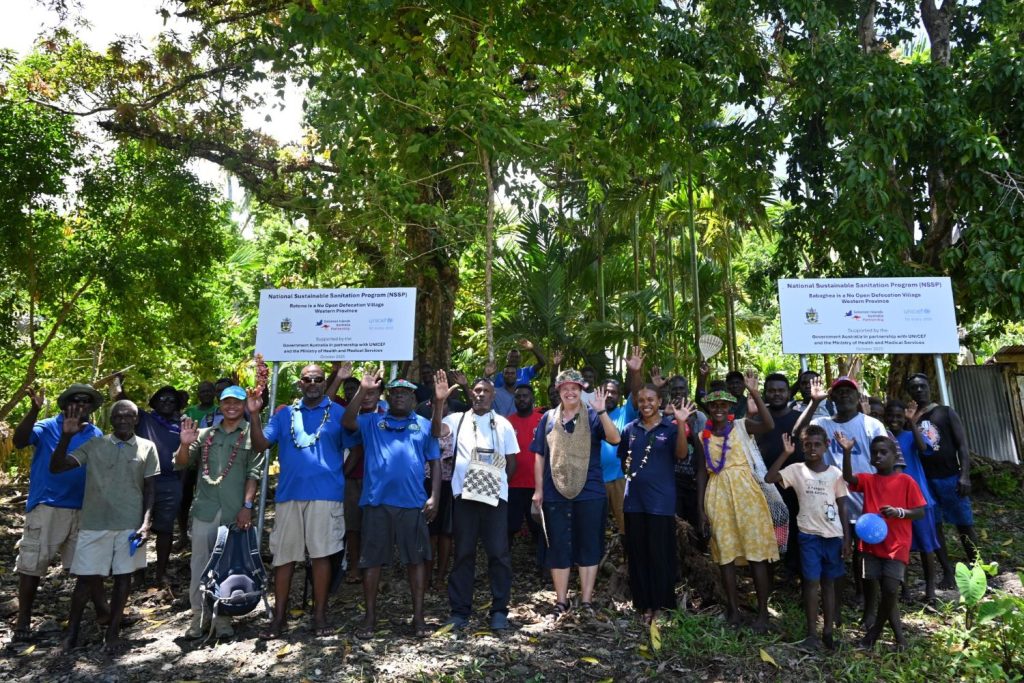
SEVEN communities in Western Province have officially achieved No Open Defaecation (NOD) status, marking another major milestone in improving sanitation and hygiene across the province.
The newly declared NOD communities are Babagea, Retona, Central Buri and Logha on Ranongga Island, and Patupaele, Pine and Ilitona on Kolombangara Island. The achievement follows sustained collaboration among communities, government agencies, and development partners.

The project was supported by funding from the Australian Government through the Department of Foreign Affairs and Trade (DFAT), in partnership with UNICEF, ADRA, the Ministry of Health and Medical Services (MHMS), and the Western Provincial Government (WPG).
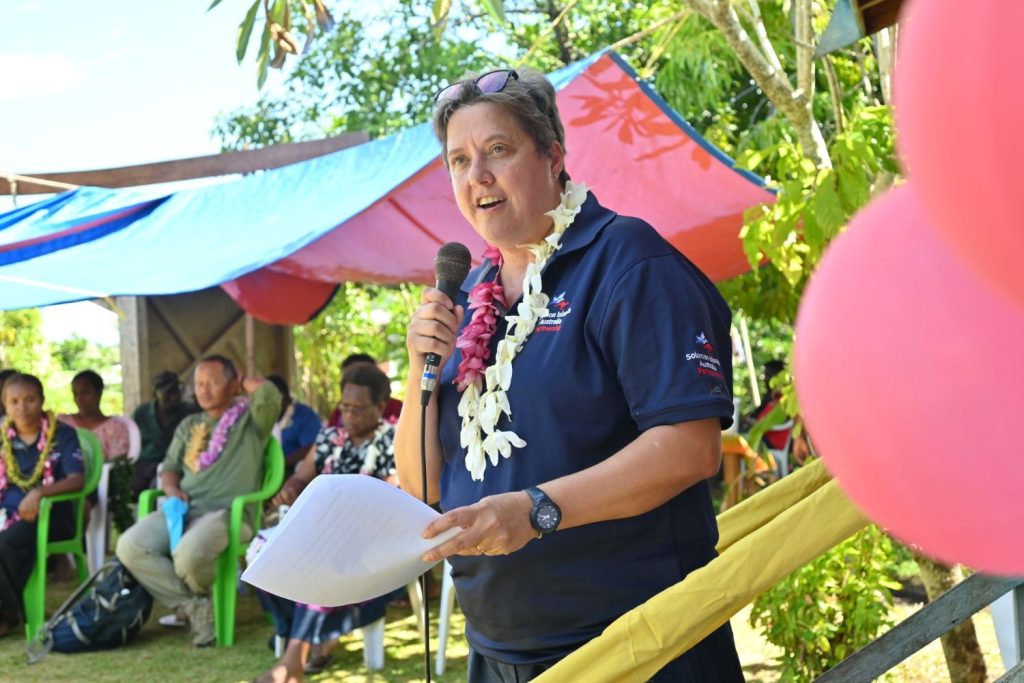
Speaking during the declaration of NODs in respective communities, First Secretary Health Programme of DFAT, Elise Newton said adequate sanitation facilities are not just essential for maintaining hygiene and preventing the spread of preventable diseases but also a fundamental right for every individual.
She said proper sanitation enables safer and easy access to elderly and people with disabilities as well as to promote the safety and dignity of women and girls.
Newton said the Australian Government is very proud to donate 3.5 million to the Ministry of Health and Medical Services to support the NSSP programme.
“This funding is a clear demonstration of Australia’s commitment to improving the health and well-being of communities across Solomon Islands.
“This project is a powerful example of Australia’s commitment to locally led development – championing locally led initiatives and homegrown solution to community challenges.
“We ensure that the solutions are not only relevant and sustainable but also tailored to your unique needs by placing communities like yours at the forefront of change.
“It’s through this kind of partnership that we can create lasting impact and build healthier, safer environment for generation to come,” she said.
Newton said Australia is proud to stand alongside Solomon Islands as its principal health partner.
She said the Australia-Solomon Islands Health Partnership enables health service delivery across the country to improve health outcomes for all Solomon Islanders, and to support the Ministry of Heath to achieve the ambition of the National Health Strategic Plan.
Newton explained that Australia is investing over SBD150 million over the next four years to improve the health of Solomon Islanders.
She said the investment goes to through the Ministry of Health and Medical Services while other funding goes directly to provincial health departments across the country.
Newton said half of the new funding worth SBD75 million will support provincial departments to deliver essential primary health services, through provincial grants.
“We are proud to providing SBD2.4million to Western Provincial Health Authority this year – a total of SBD46.1 million since 2016.
“We’re delighted that today’s certification and celebration brings us one step closer to achieving outcomes we envision for Solomon Islands,” she said.
Newton acknowledges the implementing partners; MHMS, UNICEF, ADRA, WPG, Western Province’s Health Authority and communities for the great achievement.
She also congratulates the communities for the declaration as NOD communities.
Minister of Health for Western Province Kenneth George said Western Province has long been recognised for its leadership and commitment to improving the health and wellbeing of its people.
He adds that Western Province has made a great stride in promoting safe sanitation and hygiene, thanks to partners like the Ministry of Health and Medical Services, UNICEF, DFAT, ADRA and other stakeholders.
George said 31 communities have now been declared as NOD communities within Western Province.
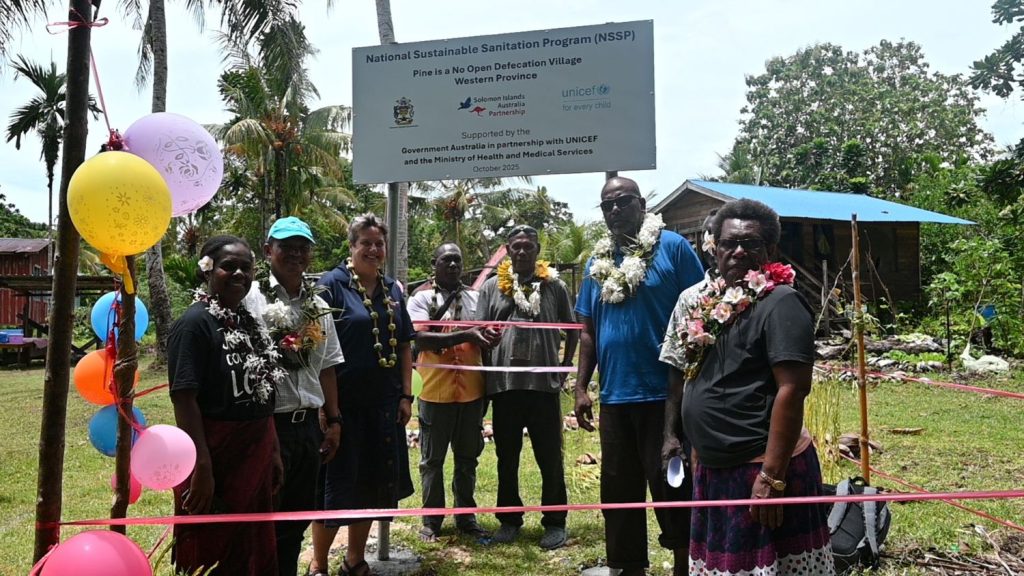
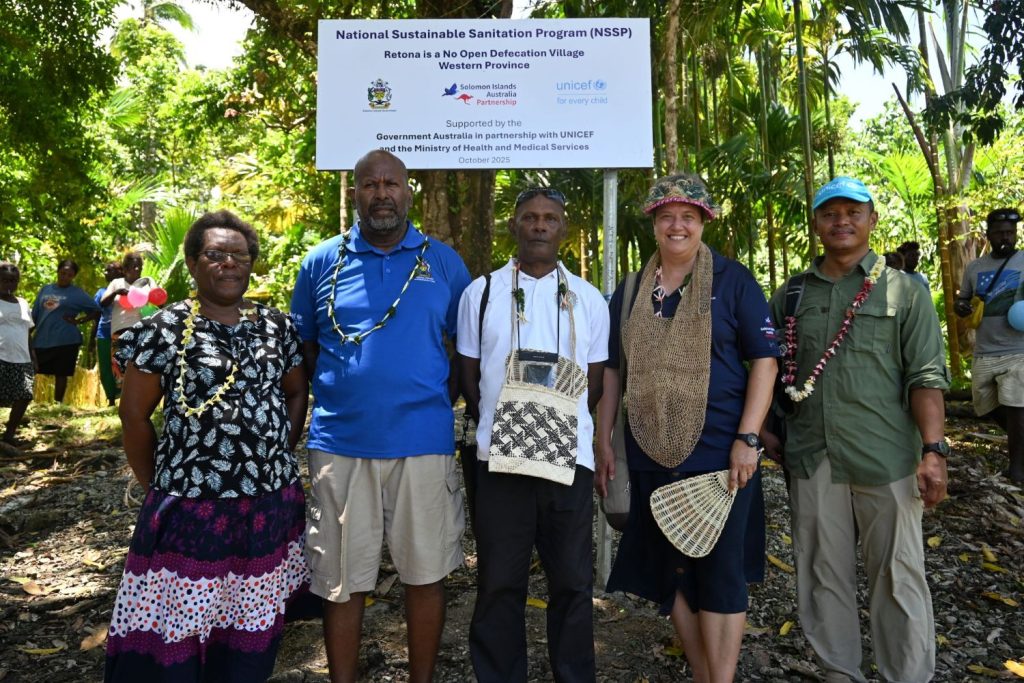

“To ensure Western Province achieves full NOD status, we have set an ambitious yet achievable target to build 95 toilets in 2026 and 100 toilets each from year 2027 to 2030,” he said.
George acknowledges DFAT, UNICEF, MHMS, ADRA and Western Province’s Health Authority for supporting the project.
He also acknowledges community leaders, women and youths for their contributions towards the NOD project.
For feedback, contact: [email protected]