Home Blog Page 1508

Gov’t close to getting Nickel mining projects running: Tovosia

0

By Gary Hatigeva

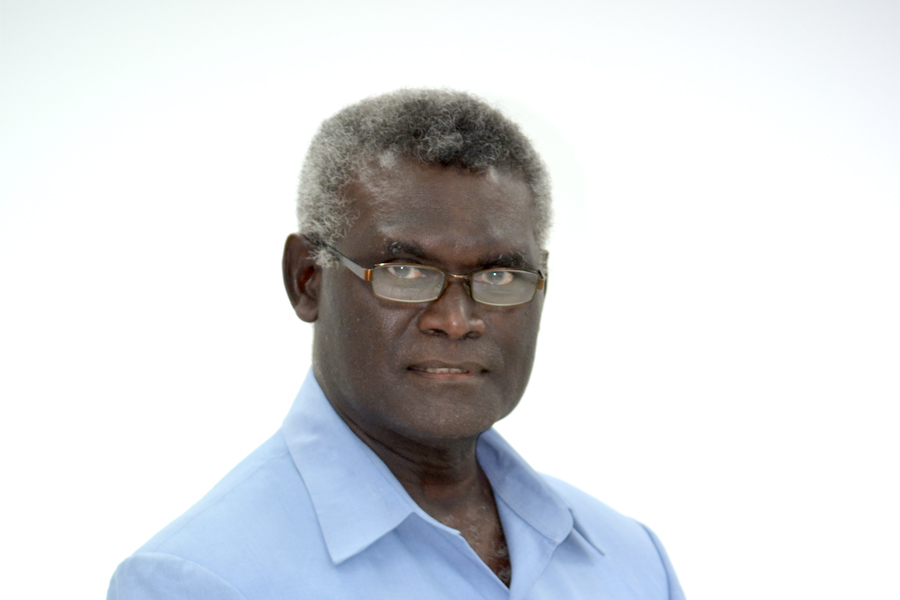
MINISTER of Mines, Energy and Rural Electrification, Bradley Tovosia says the government is confident with the progress in which things are handled regarding the Nickel Mining Projects in Isabel province.

The Minister made this statement when responding to questions raised in Parliament yesterday where he was asked to update Parliament on the status of the projects and enlightened the house on the government’s policy on the projects.

Mr Tovosia said with the current position of the consultation and meeting stages, the government is close to getting the projects started and are hoping that identified companies finalise necessary requirements.

It is understood that the government has been holding thorough talks with landowners and also met with companies the resource owners have earmarked to operate in their tenements.

In his response, Tovosia confirmed that the government has had successful meetings and consultations with landowners where joint conclusions were extracted.

He also confirmed that his ministry has met with the investors whom he said are genuine mining operators and not middle agents and two of them have shown keenness to start off with the projects.

The operators include two companies from the Asian region and one from Australia.

He said it is also the government’s wish to see that this project eventuates as soon as possible but will have to ensure that all procedures and processes are followed and completed before operations can actually start.

Following much confusions and uncertainty in the Industry over the past decades, the government has chosen to set high focus on getting things right and that came with the projection of reviewing mineral exploration and mining in the country, which according to the minister, is now taking shape.

Under its policy statement and priority guide and following years of uncertainty in the industry, the government is looking to see the advancement of Nickel mining in Isabel and Choiseul provinces.

Talking security again 20 years after a strategic security review

0

DEAR EDITOR, it was reported in the Island Sun newspaper last week that Prime Minister Hou met in Honiara with the visiting Head of Australia’s Intelligence Organization, ASIS, Mr. Paul Symon, when the PM was briefed on the proposed South Pacific Intelligence Dialogue (SPID) to be held in June this year.

The planned SPID meeting will follow a previous one held in Fiji last year.

During the course of his meeting with Mr. Symon, Prime Minister Hou was reported as having informed the ASIS head of the challenges faced with national security in the country, mentioning the Solomon Islands border with Papua New Guinea, confidentiality of information, cyber security and financial intelligence.

Rather surprisingly the PM was quoted in the paper as having said to Mr. Symon, “I believe we do have a national intelligence committee in the country but it has been operating on an ad hoc basis. Therefore, there is a need to establish a proper institution to address these issues.”

Taking the meaning of ad hoc for “a special or an immediate purpose without previous planning”, it was perhaps not untimely for the PM to add there was the need for a proper institution to address these (security) issues.

Twenty years ago there was a body in the Solomon Islands known as the National Security Council but that too seemed to have functioned on an ad hoc basis.

Just as PM Hou said the incumbent police commissioner briefed him and his Cabinet on the most recent incident regarding the much reported apprehension in February of 29 Boungainvilleans for allegedly entering the country’s border illegally, I too, as a former Commissioner of Police, reported security matters weekly to the Prime Minister and his Cabinet during the Solomon Alliance for Change (SIAC) administration.

My weekly reports were presented on information that had been provided to me by the RSIP Special Branch which was a valuable and much needed security intelligence branch that had been instituted during the Colonial era and its most senior personnel, including the Director of Special Branch and his Deputy, trained in security intelligence matters in the United Kingdom.

The Special Branch’s function and mandate was to identify any threat or potential threat to the security of the Solomon Islands and to develop intelligence of a political or sensitive nature and conduct investigations to protect the country from perceived threats of subversion, terrorism and other extremist political activity.

The Special Branch reports provided me with the means of giving the SIAC government the very early warnings of the serious threat posed by the activities of the GRA in November 1998 and subsequent reports provided by the Special Branch, aided by a British intelligence specialist I recruited to the Special Branch, provided the accurate ongoing security assessments which were disregarded by SIAC and by regional governments during my time in office from 1997 to mid 1999.

When the Regional Assistance Mission (RAMSI) arrived in the country the RSIP Special Branch was disbanded.

A Strategic Review of the Solomon Islands Security was conducted in 1998 by Australia at the request of the Solomon Islands (SIAC) Government and at my urging.

The concluding report of the Strategic Review which was handed to Prime Minister Bartholomew Ulufa’ala in April 1999 set out some specific recommendations on barrier control measures needed and I will quote some of the measures that were publically released at the time.

It has to be said that the Strategic Review did not spell out any financial support for any of the recommendations and in 1999 the SIAC government was faced with a dire financial crisis (a staggering USD 200 million debt) and soon became overwhelmed by the onset of militant activities (although predicted by the regular Special Branch reports). As a consequence none of the recommendations made in the Strategic Review were implemented. As I left in July 1999, I cannot say what happened to implementing anything in my absence from the Solomon Islands.

Quoting from the Strategic Review on Barrier Control and generally here is a précis.

“The key to effective barrier control operations lies in the implementation of a comprehensive surveillance regime to provide early and a reliably high probability of detection together with the effective coordination of response operations among relevant control agencies.”

“The situation will be significantly improved with the introduction of a new layered strategy. The first layer will be the information provided by regional intelligence sharing.” (Then there was little or none taking place but occasional drop-in visits from liaison officials from security agencies in Australia and New Zealand).

“Cooperation with neighbours in this regard is not well developed at present and it will be the task of the National Security Operations Centre (through the Intelligence and Communications Cell) to promote such exchanges.”

“The maintenance of a comprehensive national picture of sightings and movements is essential to developing this cooperation.”

“Some wide area surveillance will also be provided by patrols of the two Pacific Patrol Boats and aerial surveillance reports from flights by cooperating security partners.” (In 1997-1999 I received no such aerial surveillance reports).

“All government agencies must work together to manage current problems and to tackle the underlying causes of any future instability.” ( A remarkable sentence given that when the Strategic Review was given to Prime Minister Ulufa’ala in April 1999, GRA militancy was then intense and thousands of Malaitan plantation workers and their families coming under attack and being forced out of Guadalcanal)

It went on – “The contribution of areas such as education, youth affairs, and national development plans play a valuable part in avoiding tensions and dislocation within society and promoting realistic expectations and support networks, especially for the nation’s youth. Similarly, the effective administration of justice is essential to giving credibility to enforcement operations.”

“The National Security Council is being revived as a focus for this new approach.”

I do not believe the National Security Council got off the ground.

There was much more in the Strategic Review, including the suggested composition and make-up of the National Security Operations Centre, but hardly worth going into more details since the many recommendations were all ‘pie in the sky’ given what I have already had to say about the SIAC government’s finances, no support for the implementation phases of the Review from Australia and the onset of armed militancy.

In conclusion, I would like to endorse the words of Prime Minister Hou in saying that the Solomon Islands does, indeed, need to have a proper functioning institution to address the nation’s security situation if all that exists is a ad hoc Committee in 2018.

Yours sincerely

FRANK SHORT

Service to others and accountability of leaders

0

DEAR EDITOR, an article in the Island Sun newspaper on Tuesday this week cited a claim that voters in a certain Ward in Malaita province had questioned their MPA about the ward grant the MPA had allegedly received over a period of eight years and how he had spent that money, allegedly about $1.6 million over that time.

Without going into specifics, the voters of the ward in question raised concerns because they claimed they had not received any assistance from the particular MPA.

In keeping with previous comments I have often made in writing to the local media, MPs, whether those sitting in the National Parliament or MPAs in provincial assemblies are first and foremost servants of the people they are elected to represent and are duty bound to serve the interest of the voters.

If allegations of corrupt practices in the administration of the country are to be resolved then those who represent the people must be held to account and in the case of the distribution of ward grants or the disbursement of CDF funds subject to close supervision and auditing of all monies they receive on behalf of their constituents.

It is all too common to read of allegations of corruption involving leaders and perhaps unjustified in some cases, but to counter such allegations it would be in the best interest of all to be open and accountable for all dealings.

Yours sincerely

FRANK SHORT

Regulate area council acts – Chiefs responsibility

0

DEAR EDITOR, I would like to speak for the chiefs who are implementing an important role within our country that also liaise with the government’s plan of action but they were ignored for their time, sweat and thoughts.

It is understood for the establishment of chiefs acts, the Late Mr Solomon Mamaloni who initiated the local government and called it Area Council and amend its Acts for the chiefs in the rural communities to implement the Acts that the chiefs may as well achieve at the end of the day.

Engaging and trusting the chiefs to carry out major issues in the rural communities for example, land settlement and problem solving without recognition from the central government to me is seen as an illegal while the government considers others for permanent employment.

The government of Solomon Islands while engaging and trusting the chiefs for implementing their roles in the communities should set up a structure for the chiefs according to this:

1)              House of Chief- Chiefs sat at the panel for hearing of land settlements should be paid an allowance from the government budget and not for the parties who brought forth the land dispute for settlement.

2)              Local Court Judge- Those appointed to be members of the local court if the Solomon Islands government may consider their payment to a level in the Ministry of Justice and Legal Affairs as level 4/5 with a sitting and travelling allowance.

3)              Customary Land Appeal Court Judge – The members of this legal body should be considered employment to a level, as level 6/7 also with sitting allowance, travelling and dangerous allowance.

The Solomon Islands Government since the country has grown up and mature in its 40 years, need to change and improve some of the Acts.

Read Psalm 92:6, it reads, Senseless man never know, stand, fools will never understand.

Jessie Bobby,

Baelelea, Malaita

Saying sorry is a position of strength, not weakness

0

DEPUTY Prime Minister Manasseh Sogavare had a go at his boss on the floor of Parliament two days ago, accusing him of ignoring his brief for the recent Melanesian Spearhead Group (MSG) in Port Moresby, Papua New Guinea

That brief, according to Mr Sogavare, was essentially to hand over the MSG baton to the next chairman, PNG’s Prime Minister Peter O’Neil, and not to apologise. It’s quite a departure from the protocols of Parliament.

You are allowed to make such comments in Caucus and Cabinet, but not outside those two foras, which is open to the whole nation, given that proceedings of Parliament are transmitted on air.

But like it or not, the Deputy Prime Minister’s position is one many of our MPs support.

They believe it is wrong to apologise.

They also believe that by apologising as Prime Minister Ricky Houenipwela has done, we have weakened our position as a sovereign nation.

“We should have maintained our position on the West Papua issue, not apologising which made us a laughing stock before Fiji and Papua New Guinea,” they said.

That may be so.

But in a world where ego controls some, it is a breather to see someone has the guts to take the lead in showing servant leadership. Servant leadership, not macho leadership, is needed today more than anything else.

Macho leadership achieves practically nothing – we have seen that in the last three years. $4.2 billion in budget were used and there was little to show for such a phenomenal amount of money.

Servant leadership exudes greatness and strength. Apologising is therefore an outward demonstration of what is within and that we are prepared to forgive and forget.

Apologising is a position of strength, not weakness. It raises an individual who hitherto has been somewhat an unknown to the height of greatness. If follows then that if we want our nation to be great and recognised there is only one way to achieve that.

We must not only demonstrate our willingness to say sorry, but must be seen to be doing so. For the only way up is the way down – on our knees.

I firmly believe that Prime Minister Houenipwela did the right thing by us in apologising. We should never poke our nose into an issue which is already on the UN agenda.

Apologising does not mean we are precluding ourselves from making contributions to international debates on the matter. Far from it.

Apologising means we support all UN efforts being pursued to ensure the plight of the West Papua people remain on the UN radar at all times. By taking the position we did under the most recent administration implied that we are more powerful than the UN, which has already taken the matter on board.

Furthermore, Papua New Guinea the country that shares the common land border with Indonesia has taken a position that should be exemplary. Solomon Islands would do well to take a common stand with Port Moresby on the issue, instead of pushing it. There could be repercussions.

And so the position taken by Prime Minister Houenipwela is probably the best for us and the region, now and in the future. It is a position of strength, a position of peace, not of fear. It is a position that many world leaders lack at the present time.

And for us, it is a position that tells the world that it works for us. They should also try it.

By Alfred Sasako

Women press for progress, so do men

0

INTERNATIONAL Women’s Day (IWD) is fast approaching and once again achievements of women past and present will be celebrated with the theme “Press for Progress”.

Solomon Islands women have come a long way in a short time frame.

‘Breaking through the glass ceiling’ is the term which WDD Director Pauline Soaki used to describe women who are now occupying positions usually occupied by men.

Needless to say, some people might be skeptical of IWD and some might even say ‘olowe nomoa?’

Often we hear that ‘this women rights thing is getting to our women’s head that they don’t listen to their husbands anymore and that it is a waste of time’.

Humans as we are, these are the very challenges faced by women thus the theme ‘Press for progress’ is very appropriate.

Women’s struggles are real and only empathetic people will understand where women are coming from.

Despite the challenges, our men should also be commended for trying their best to support our women.

The road hasn’t been easy for everyone.

As we strive for equality, let us be professionals and act like professionals in our areas of work as well as in our homes.

Let us not fight against each other but support each other. Women don’t gossip nor back bite but empower one another.

As we commemorate IWD, women let us also take the time to salute our men and ourselves. Together we work hand in hand for the development of our country.

On this note, Island Sun newspaper will be featuring an exclusive centerpiece spread of some women who had ‘broke through the glass ceiling’ in tomorrow’s paper, thank you to Ministry of Women Youth Children and Family Affairs and UN Women.

Happy celebrations olketa mere. #PressForProgress

Training – key to improve construction sector

0
Day one of the workshop at the SIBC.

By Mike Puia

TRAINING is the key to improving the construction sector. This is according to the Ministry of Infrastructure Development (MID) training programme coordinator, Michael Wairamo.

Wairamo made the statement at the opening of the Certificate 111 in Civil Construction Plant Operations and Certificate IV in Civil Construction Operations workshop at the SIBC yesterday.

A total of 41 locals are attending this two-set workshop. 35 of them are from the private sector representing nine construction firms.

Day one of the workshop at the SIBC.

The workshop will start with the first group that will undertake Certificate 111 in Civil Construction Plant Operations. The second group that will undertake Certificate IV in Civil Construction Operations will enter next week.

Each group will have a session each month until October.

The training programme is supported by the Australian government and is facilitated by international facilitators from Performance Training and Civil Contractors Federation.

Mr Wairamo said the training programme came about after they found out that skill was an issue among supervisors and contractors.

A certificate 11 in civil construction was held in 2017 and 16 representatives from the private sector attended. With 41 more joining their training programme, Wairamo said it will increase their pool of qualified people.

Performance Training’s chief executive officer, Bryce Coventon said the workshop is a rare opportunity for contractors.

Facilitator of the workshop with one of a participant of MID’s early trainings. The former trainee now deals with own construction firm (Red Devil).

Mr Coventon said the training programme is a privilege for the contractors as it brings Australian experts into the country to do some of the trainings, saying it’s going to be very practical.

He thanked the Australian government for its support towards improving the skill of government and private supervisors and contractors.

Central Project Implementation Unit (CPIU) team leader, Patrick Mannix, said the workshop is part of the Ministry’s ongoing human resource development.

In the past, Mannix said the Ministry conducted training for supervisors.

Mannix said it is clear it is no use training only supervisors, adding that this is the reason for having this training and getting contractors involved.

“I hope this training will help upgrade the skill of everyone in the industry,” Mannix said.

He said he hopes at the end of the training programme, everyone will have solid foundation in the sector.

Participants of the training

The Australian High Commission’s First Secretary for economic infrastructure, Skye Bale, said for this country to have a transport infrastructure sector that is capable of high-quality works; it requires a competitive, highly-skilled private sector workforce.

Ms Bale said there are very few options available to Solomon Islanders to obtain these qualifications, and most of these will involve travelling overseas.

She said bringing trainers into country, through this training programme, presents a key opportunity for individuals in the sector to gain important qualifications.


Worrying find of CRB in Russell Islands

0
Larvae and adult of coconut rhinoceros beetle from Moe, Russell Islands. Photo from Bob MacFarlane

BY BARNABAS MANEBONA

THERE is worrying development in the campaign against the Rhinoceros beetle with larvae and adult insects found on one of the islands in the Russell Islands group.

While it is too early to cry ‘outbreak’, the find is an unsettling turn of events for the industry and the campaign against the pest.

And, the government and palm industries CRB taskforce are leaving no stones unturned to verify the status of the situation in Russell.

In a press statement, the taskforce said last week Biosecurity Solomon Islands (BSI) received a worrying new report from James Leho, the Ministry of Agriculture and Livestock (MAL) Field Officer in Yandina, Russell Islands.

For routine surveillance of at-risk areas, BSI had asked James to gather together a team to survey several islands in the Russell islands group.

James, along with Francis, Clement Fagi, and Frank Korai, quickly visited the islands of Moe, Loun, Small Loun, Tain, Telina, Banika, Yandina and Alokan.

Larvae and adult of coconut rhinoceros beetle from Moe, Russell Islands. Photo from Bob MacFarlane

They found damage, larvae and adults of coconut rhinoceros beetle on Moe only. James immediately reported this directly to BSI, who will take action as soon as they are able. No damage, larvae or adults were observed on the other islands.

“Remember the larvae look similar to many other beetle larvae but the adult looks quite different and samples of adults are needed before an outbreak can be confirmed.

“This is a very worrying development. Russell Islands are home to the largest coconut plantation in the Southern hemisphere. The impact on the Solomon Islands coconut crop and copra exports could be severe if the beetle gets well established on the main islands.

“James, the chiefs, leaders and people of Moe have done the right thing and have begun destruction of the main beetle breeding sites, dead and rotting coconut palms.

“It is very important that this is done thoroughly and quickly if spread to the main islands is to be slowed. There is no need to destroy damaged palms that still have their central growing spike as they can recover if the beetle attack is reduced.”

The statement suggests that although Moe is one of the closest of the Russell Islands to Guadalcanal but it is still more than 40km away, which is much too far for the beetle to fly.

“It is therefore most likely that it travelled by canoe or small inter-island vessel as it did to Ngella and Savo and possibly has all ready done to other islands in the Russell Islands group.”

BSI will shortly (as soon as funds permit) travel to Moe and the other islands to carry out a survey to determine exactly where the beetle is present now. Once this information is clear BSI will plan a campaign to help villagers destroy the breeding sites.

“If we act quickly there is a chance of eradication.”

“People need to be aware of the serious nature of the beetle problem and the very high importance of destroying the breeding sites. At the moment this is the only tool we have for reducing the beetle population. It is up to the people of every area where the beetle is present to destroy breeding sites. Failure to do this will mean the population will increase and more palms will be damaged or killed.”

People are requested to inspect their cargoes in canoes and inter-island vessels before they travel to make sure no beetles are present.

Senior police officer suspended

0

THE Commissioner of the Royal Solomon Islands Police Force (RSIPF) has suspended a senior police officer after a vehicle accident on March 1, 2018 at lower Kola Ridge road above Florence Young School in East Honiara.

It was alleged the officer was under the influence of alcohol and driving a private car when it went off the left side of the road and hit an electricity post.

Commissioner Matthew Varley says, “The crash last week involving one of my senior officers has been investigated by Police Professional Standards and Internal Investigation jointly with our Traffic officers.

“This is a very serious matter and it is alleged the officer was under the influence of alcohol when the accident occurred.

“He was breath tested and found to be allegedly under the influence of alcohol. He was arrested and later charged.

“I can assure the public, the officer is being dealt with according to law, charged with four counts and released on bail to appear in the Honiara Central Magistrates Court at a later date.”

–POLICE MEDIA

Sogavare defends decision on West Papua

Deputy Prime Minister Manasseh Sogavare

By Gary Hatigeva

FORMER Chairman of the Melanesian Spearhead Group (MSG), Manasseh Sogavare has defended his strong stance on the decisions he made when he was chair, on the issue of West Papua.

The former Prime Minister expressed this during a Question and Answer (Q&A) session of Parliament on Monday regarding highlighted issues within MSG that were said to have caused sour relations amongst Forum members.

The Member of Parliament for Aoke/Langalanga, Matthew Wale during the Q&A session put to notice, Prime Minister Rick Hou’s apology statement made at the recent MSG summit in Papua New Guinea last month.

Prime Minister Hou at the summit apologised for what he described as ‘sour relationships’ Solomon’s Chairmanship over the last two years may have caused.

In his response to the questions raised, Prime Minister Hou revealed and highlighted six issues, which he said were some of the major reasons for saying sorry to member countries, most of which seemed to have blamed the former PM’s tenure in office as Chair of MSG.

But in his remarks, Sogavare said his government’s position then on the issue of West Papua was made in consistency with its position on the issues of independence referendum for New Caledonia.

Sogavare said his decisions then were also made within the bounds of the MSG Charter and that he sees nothing wrong with how things were handled.

He said decisions made on the application of the West Papuans were also in consistency with guidelines and procedures in which the application of the FLNKS of New Caledonia was handled.

“The ongoing debate on the admission of ULMWP West Papua into MSG is just consistent with the decisions of the leaders when they admitted FLNKS into the forum as a political entity representing the interests of the indigenous Melanesian people of West Papua.

“We follow strictly the procedure when we admitted West Papua as an observer and it must start there,” Sogavare explained.

He added that leaders though came to agree with the given status to the West Papuans, the influence pressed on MSG by Indonesia continues to prevail because leaders don’t really see eye to eye on it.

The now Deputy Prime Minister explained that his government’s position on the issue of West Papua then, took into account the facts that the people of West Papua are Melanesian yet have continued to be less represented at the MSG level.

The Q&A session had also attracted contributions from the leaders of the Opposition and Independent groups most of whom raised supplementary questions and expressed disagreements over the apology statement.

Many including the Deputy Prime Minister, the leaders of groups from the other side of the house also questioned the future and integrity of MSG as a body that was initially established to fight for the interests of Melanesians.

Looking back at the history of this organisation, it was established purely as a political body to free Melanesia from the hands of colonisation.

He said it was the MSG who fought for New Caledonia and has successfully put them on a path that the UN has approved and this year they will have a referendum.

Meanwhile, in his concluding remarks, the Aoke/Langalanga MP also supported Sogavare’s statement and shared similar sentiments on the issue of West Papua and how MSG has been dealing with their plight.

Wale described MSG at its current status as a bad joke, which continue to serve the interests of certain members, having shifted away from its sole purpose of existence.

Wale, in a strong toned statement called on Parliament to remain standing beside their Melanesian West Papuan brothers and sisters.

Over the last two years, prior to his ousting as head of government, Manasseh Sogavare under his capacity as Prime Minister then was also Chair of MSG and during his term saw the admission of United Liberation Movement for West Papua (ULMWP) as associate member in the Forum.

ULMWP is a political entity mandated by the people of West Papua to represent their interests in political avenues and diplomatic levels.