Home Blog Page 1369

Project management training in Malaita

0
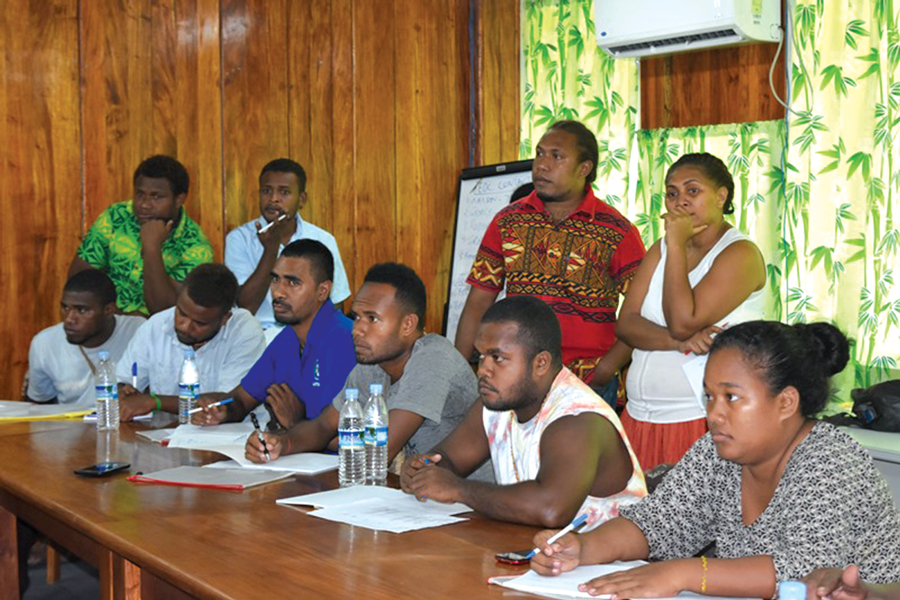
Reps from various government ministries under Malaita provincial government attending the project management training currently held in Auki.

BY SAMIE WAIKORI

Auki

Reps from various government ministries under Malaita provincial government attending the project management training currently held in Auki.

A one-week training on project management for government seconded officers and directors started yesterday in Auki.

Mr Steven Shadrach Amasia from IPAM who is facilitating the training, said it is purposely to equip officers on relevant knowledge and skills in project management.

He said the training is very important as it captures some essential areas needed to be understood when managing projects.

Amasia said the training is very important as it is in line with government policy on National Development Plan (NDS).

“And within NDS it all about projects in which the plans captured were all on government development projects.

“So when we train the officers with right skills and knowledge on project management it will help them properly implement projects and activities within their ministries,” he said.

Amasia said there are four modules under the project management training.

The training looks at six cycles of project management including initiation, set-up, monitoring and evaluation, implementation and close-up phases of projects.

Amasia said the training also covers discipline of project management which looks at scope, time, stakeholder, communication, resources and waste managements.

He said the final module of the training is project proposal writing where participants will work on proposals on their interest especially for understanding of what they learn in the training.

Amasia said the training is implemented by IPAM through the Ministry of Public Service for government officers in the country.

He said the training has already been conducted in Western province, Makira Ulawa, and will roll to every province.

Promoting migration while combatting the brain drain

0

CONCERNS from the Pacific about brain drain could undermine Australia’s new commitment to promoting Pacific labour mobility.

Stage 3 of the Australia-Pacific Technical College (APTC), and the Pacific Mobility Scheme (PLS) are new initiatives to increase access to high-income work in Australia.

Even with the time-bound work visas of two to three years under the PLS, the loss of experienced workers with post-secondary qualifications may cause Pacific employers to react unfavourably.

Pacific employers could also be upset about the loss of experienced APTC graduates with trade qualifications who decide to seek work in Australia and New Zealand.

In Australia’s case, APTC graduates with trade qualifications in up to 16 occupations are also eligible for the medium-term stream (four years) of the Temporary Skilled Shortage (TSS) visa, which has a pathway to permanent residence.

The loss of experienced skilled workers such as carpenters, chefs, diesel motor mechanics, electricians and plumbers will not be easy to replace due to the long lead time needed to train up a replacement.

It is vital the Australia’s new efforts to promote international labour mobility should not be seen as causing harm.

Much thought has already gone in to the redesign of the APTC to promote labour mobility without increasing brain drain.

As I discussed in an earlier blog, there will now be two APTC tracks: a home track including those sponsored by existing employers, and an away track, who will be given additional support to find work overseas.

APTC is also committed to ensuring a net domestic skills gain.

The problem goes beyond APTC though. A system of simple indicators need to be developed and used by Pacific countries so they can monitor and report on the domestic and overseas demand for and supply of skills.

Australia and New Zealand have also made relevant commitments in the side agreement to PACER Plus called the Arrangement on Labour Mobility.

These commitments include agreeing to strengthen the collection and harmonisation of labour market statistics in sending countries to improve labour market planning and to respond to the export of skilled labour.

Also included in the agreement is a recognition of ‘the importance of further enhancing technical and vocational education and training (TVET) and other tertiary education programmes that build the labour supply capacity to respond to domestic and regional labour market demand’.

A small number of indicators of skills in demand, based on simple and accessible measures, can provide a dynamic skills profile of each Pacific country.

These measures can be derived for the most part from existing data sources such as the national census and administrative records.

Also needed will be tracer surveys by education and training providers of graduates with post-school qualifications, as APTC does now.

The first indicator identifies a Pacific country’s national skills pool or skills profile. A good measure for this indicator is the proportion of workers with a post-secondary qualification in each skills-based occupation.

The data for this measure can be taken from the national census, as nearly all Pacific countries code their census data on occupations using ILO’s International Standard Classification of Occupations (ISCO-08).

The degree of detail collected in the census on post-school qualifications varies from country to country, so a more standard approach across the Pacific as to how they are identified is needed.

The second indicator shows the balance between domestic skills supply and employment demand for specific qualifications.

The most relevant measure is the employment rate and wage level of graduates reported for each post-secondary qualification.

Every education and training provider should be required and funded to conduct and report publicly on a tracer survey of their graduates.

This information can be used by prospective students to make an informed decision on whether to take the course or not.

Education and training providers should also use the information to adjust their own supply of graduates in response to the evidence of the demand for a specific qualification.

The third, and most important, indicator refers to national skill shortages. One measure is information on the occupations of foreign workers granted a work or employment permit to work in the country.

This information needs to be coded from work permit applications, using ISCO. Another data source that may be more accurate is information from the census on the occupations and qualifications of foreign citizens.

A third measure of national skill shortages is the occupations listed in job advertisements in the print and radio media, and coded using ISCO.

These measures need to be compared with each other to identify and further verify specific skill shortages.

A fourth indicator is the demand in Australia and New Zealand for migrants with post-school qualifications.

Detailed data are available at regular intervals from Australian and New Zealand immigration authorities on the occupations of those granted temporary and permanent skilled work visas by nationality.

In the case of migrants gaining access to New Zealand under the Pacific Category visa and Samoan Quota, a special request will need to be made to New Zealand authorities to collect information on the visa applicant’s occupation and to report on this, using ISCO occupation categories.

Provision of greater opportunities for international labour mobility has the potential to deliver major benefits for all in the Pacific, both sending and receiving countries.

However, this will not be an automatic outcome, especially for small Pacific countries such as Tonga and Samoa which already have among the highest skilled emigration rates in the world.

Australia and New Zealand will need to work together with interested Pacific sending countries to coordinate and manage the supply of skills to respond to identified demand, domestic and abroad.

Richard Curtain is a Research Fellow with the Development Policy Centre. His research focuses on international labour mobility in the Pacific and Timor-Leste.

By Richard Curtain

So the public and taxpayers to pay for others’ mistakes

0

It was once called the People’s Budget. Over the years it has become crystal clear that the government workers create problems and expect ordinary taxpayers to pay the cost of others’ mistakes.

Take the Airport Tax which the government has just introduced. The new tax is additional to airfares that you and I – the ordinary battlers who meet our own airfares – will have to pay in additional to the airfares for domestic and international travels on all Solomon Airlines routes.

Solomon Airlines confirmed yesterday it began collecting the new tax from last week.

Travelers could pay as much as $610 on a return ticket from Brisbane to Honiara. This is in addition to the airfares. The same tax applies to domestic travelers. They are required to pay $150 a single return ticket from Honiara to any destination around the country.

It is a huge amount of money – if you are meeting the cost yourself, particularly if you are traveling as a family. They add up.

The reason the government has given for this new tax is to help it set up a new State-Owned Enterprise (SOE) to be known as the Solomon Islands Airport Corporation Ltd (SIACL), making it the sixth SOE in the country.

It is rumoured that the move was a measure taken to avoid the repeat of alleged misuse of funds from the Ministry of Civil Aviation and Communication, particularly the funds received from airlines overflying our airspace.

Substantial amounts of money were allegedly misused and could not be accounted for. The reasoning behind this is a bit muddled up in terms of the guarantee that such alleged wrongdoings would not repeat itself?

Tourism, the sector identified by the government as a potential money spinner for the nation could end up being a victim of this new set up unless tourists are exempt from the tax.

Figures show that in the nine months to September last year, some 18, 507 visitors came to our shores. The new tax slug could impact on visitor arrivals. They may opt to visit other destinations where such a silly tax does not apply.

Many in Solomon Islands have the perception that overseas tourists have a lot of money to spend.

They do have money to spend, but it took many of them months to save up for their travels. To add another SBD600-plus on top of the airfares is an additional burden they would be only too happy to avoid. In the end, who lose?

It is obvious some tourists have a lot of money to spend. But we must never forget that tourists count every single penny they spend or will spend. They carefully work out a budget, so they live within their means.

Is this new SIACL an attempt on the part of government to kill the goose that lays the golden egg?

But why should others, innocent as they are, be made to pay for our mistakes? And how long must we continue to do this, allowing the alleged wrongdoers to walk scot-free?

It is totally unfair, don’t you think?

In the case of the Ministry of Civil Aviation and Communication, no one accused of allegedly misusing public funds have been thoroughly investigated. Why?

Why indeed are we encouraging this? People misused public funds must be made to account for their deeds – good or bad. We simply cannot continue to rely on others to keep paying for our mistakes.

The time of reckoning has come and is here. Appropriate actions must be taken or be seen to be taken by law enforcement agencies to help restore an image of decency and respectability to our shores.

PM Hou arrives in Tokyo

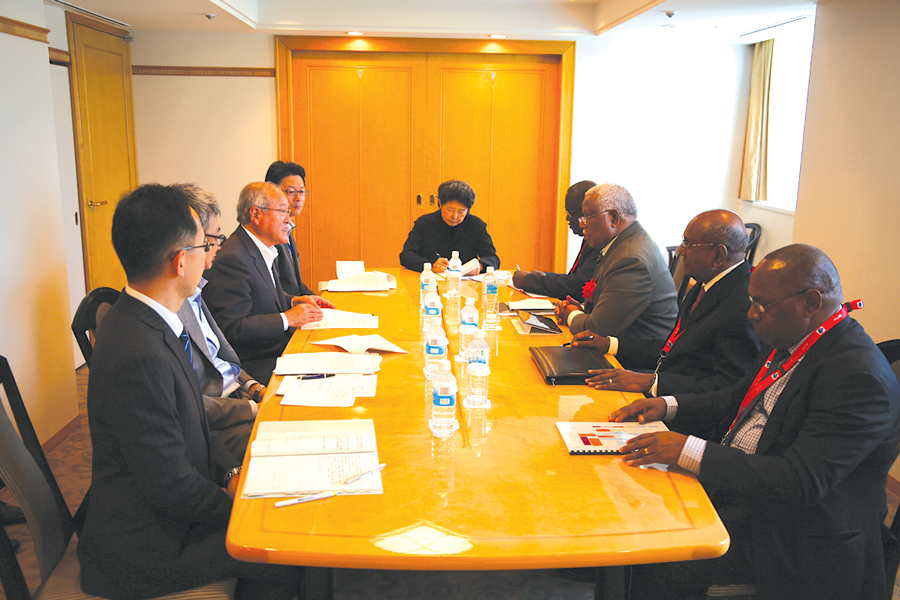
PM Hou and his delegation (right) during bilateral with Japanese Minister Suzuki and his delegation.

PRIME Minister Rick Hou arrived in Tokyo, Japan on Monday this week ahead of the Pacific Alliance Leaders Meeting (PALM 8).

The Prime Minister and his Foreign Affairs Minister Milner Tozaka yesterday held a bilateral meeting with the Japan’s Minister in charge of the Tokyo Olympic and Paralympic Games, Shunichi Suzuki.

During the meeting, Minister Suzuki briefed the Prime Minister on Japan’s preparations ahead of the Olympic and Paralympic Games in 2020.

PM Hou (centre), Foreign Minister Tozaka and Consular Mr Kitano.

He said Japan will not only host the 2020 Games but will also support in the preparations of athletes in the Pacific Island countries.

“Apart from the Games, we will also take this opportunity to strengthen our people to people relations with the Pacific Island countries like Solomon Islands,” he said.

The Olympic Minister said Japan is prepared to host the best and greatest Olympic and Paralympic Games ever.

In response, Prime Minister Hou thanked Mr Suzuki for his invitation to have an audience with the Prime Minister.

PM Hou and his delegation (right) during bilateral with Japanese Minister Suzuki and his delegation.

Prime Minister Hou also highlighted the importance of the people to people relations through sports and welcomes the initiative by the Japanese Government as part of the 2020 Games.

The Prime Minister also informed Mr Suzuki that like Japan, Solomon Islands is also preparing to host the Pacific Games 2023.

As such, the Prime Minister thanked Japan in leading the way in infrastructure developments that will supplement preparations towards the Pacific Games.

The Prime Minister and Minister Suzuki have also discussed training proposals between both countries.

Meanwhile, Prime Minister Hou has also met with the Honorary Consular of Solomon Islands in Japan Mr Takahiro Kitano.

A reception was also hosted by the Japan – Solomon Islands Friendship Association Mr Issei Inoue.

–OPMC PRESS

PM and Japan’s Olympic Minister Mr Suzuki

Trail of failed projects prompts need for more govt officers to be trained

0
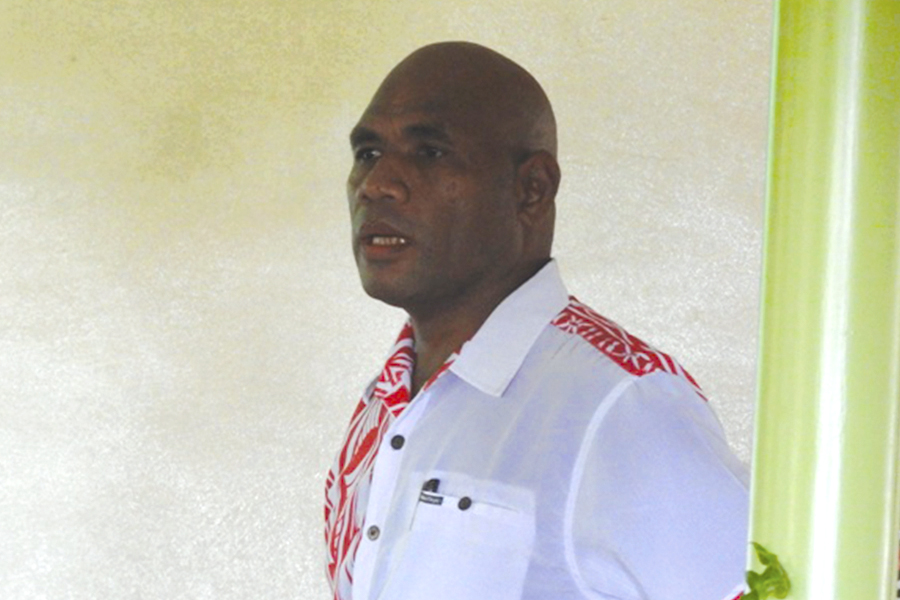
Facilitator of the Project Management training currently in Auki, Steven Shadrach Amasia from IPAM.

BY SAMIE WAIKORI

Auki

Facilitator of the Project Management training currently in Auki, Steven Shadrach Amasia from IPAM.

IT is identified that there is a need for government officers to train or further their knowledge and skills on project management.

Mr Steven Shadrach Amasia from IPAM under the Ministry of Public Service who is currently facilitating a training on project management in Auki made the statement yesterday.

He said according to experience by Solomon Islands government the country has lots of failed projects.

Amasia said the failures came about because those who are managing or implementing the projects lack proper skills and knowledge on project management.

He said it can seen anywhere with government projects as lots of them fail to reach completion.

This directly impedes development in the country.

“So the MPS sees when projects were failed or project funds were not properly executed, this is because people don’t have knowledge, skills, competency and capacity.

“However, the importance is to equip these people with necessary skills and knowledge so that they can successfully manage the projects,” he said.

Amasia said this is the area of improvement the ministry is looking at and came up with the training for government officers.

“One general important aspect of project management is if we able to successfully completed projects it will encourage donors for assistance.

“The same is also when we don’t have proper skills and knowledge and continued to fails, it will discourage donors from assistance,” he said.

Amasia said those are the areas the training is targeting to ensure people have proper capacity to do the work.

Youth orientation opens rare opportunities to youth groups

0
Young people with the HCC Youth Desk Officer Mrs Mary Tuhaika and HYC Coordinator Mr Bobby Siarani

BY LYNTON AARON FILIA

THE Youth Development Division of the Honiara City Council held an ‘HCC Community Youth Group Orientation workshop’ which opened learning opportunities for young people.

The youth group orientation workshop is aiming young people to understand the functions, mandates and youth development programme of the Honiara City Council.

HCC-Youth Officer Mrs Mary Tuhaika said the orientation marked an opportunity for the community youth groups to learn and be informed about how Honiara youth development work fits into HCC’s ‘bigger picture’.

Young people listen attentively to the presentation about HCC’s functions and mandates at the HCC Chamber

She adds youth groups will have clear insights about HCC management and politics and be informed about the function of the HCC political arm and administration level.

Tuhaika explained that the four-day workshop will enable community youth groups to learn and be informed about how youth desks work and the rationale behind the establishment of the Honiara Youth Council.

She also adds participants will be given the opportunity to learn about key stakeholders’ role in youth development work, and the specific projects and programme that target young people in Honiara.

Throughout the four days, youth groups will undergo sessions regarding successful stories and projects, sharing lessons learnt and tips on how to work with donor partners and management of a youth project, she said.

Young people with the HCC Youth Desk Officer Mrs Mary Tuhaika and HYC Coordinator Mr Bobby Siarani

Tuhaika said she will have a session on presenting the priorities for the remaining six months in order for youth groups to be informed about upcoming programme and events.

On the other hand, she adds youth groups will also be requested to present a realistic priority programme to identify where the Youth Desk could assist with, in terms of usage, technical advice and materials and equipment usage.

Acting City Mayor, Mr Eddie Ngava encourages young people to make use of the four days and ensure they advance with a good understanding of the HCC’s functions and mandates.

Ngava acknowledges Tuhaika and team for facilitating the four-day youth orientation.

“This four-day workshop are going well and I want to acknowledged all of you and by stepping forward be counted in your city, my city, our city,” Ngava said.

Today, youth groups will visit the Ministry of Women, Youth, Children and Family Affairs.

Participants of the HCC Community Youth Group Orientation workshop

Tigoa police station without PPC

0

BY BARNABAS MANEBONA

THE police station in Tigoa, Rennell and Bellona province is reportedly running without a commander.

The provincial police commander, Inspector Aloysio Manegaua is said to have left the station in early April and has not been seen since, according to reports from concerned elders of the Tigoa community.

The Royal Solomon Islands Police Force (RSIPF) meanwhile, clarifies that the PPC for Renbel has been away from the province’s only police station to attend to his sick wife in Guadalcanal province.

“He was given permission by RSIPF to be absent for this purpose. An officer at Tigoa Police Station has been given authority to be in charge while the PPC is away,” said RSIPF Media Unit in response to Island Sun yesterday.

Speaking to Island Sun in anonymity, three prominent figures amongst Tigoa community say PPC Manegaua had left Tigoa early April and has not been seen since.

They add that there has not been a replacement for Manegaua and the station is being manned by constables.

Tigoa community leaders say there is an observed increase in anti-social behaviour, especially related to drunk and disorderly and public rows in which they call on police to act upon.

They are calling on the RSIPF HQ in Honiara to seriously consider Tigoa police station because Rennell island needs a working, visible and active police presence since it is a hub for extractive operations.

Power MOU for Niumada and Titiana

0

BY ALFRED PAGEPITU
GIZO

A MEMORANDUM of understanding (MOU) has been signed between elders of Niumada and Titiana communities and the Western provincial government and Solomon Power in Gizo, Western province.

Signatories of the MOU include the Western provincial secretary (PS) Jeffrey Wickham, elders of Titiana Village, elders of Nuka Motu, elders of Niumada and Hon Atkin Kamaka, Chairman of Government Caucus and MPA for ward 19, North Rendova.

This MOU was signed on April 24.

Wickham yesterday said Solomon Power, an authority mandated to provide electricity to the people of Solomon Islands, will immediately embark on providing the service to the communities in the MOU.

“This MOU is for Solomon Power to carry out such activities along the road to these Villages.”

“This will continue to consult with each other on the matters relating to this project, and to solve problems that might arise amicably.

“The MOU that the elders of Titiana and New Manda agreed for the project to continue and that no further dispute will be experience.”

Closing submission on man facing attempted murder adjourns

0

BY JENNIFER KUSAPA

THE closing submission into the case of a man charged with one count of attempted murder will be made in the next 14 days.

The case was adjourned yesterday because the prosecution responsible had been busy with another case in the High Court.

Defence Lawyer Rodgers Tovosia having heard that prosecution has sought to adjourn the case, made no objection and the court granted adjournment on the case for the next 14 days.

This is the case against John Kebol who was charged in relation to an incident which occurred in Sukiki village, Weathercoast of Guadalcanal.

Prosecution said the accused on June 13, 2015 had an argument with his nephew regarding a bicycle, their argument heated up in which the accused intended to stab the victim with a kitchen knife.

The allegation said when the knife missed the victim all others who were present during the argument reacted and stoned the accused and he fell onto the ground having sustained injuries.

Office of the Director Public Prosecution prosecutes the matter in court while Rodgers Tovosia is representing the accused.

Gizo/Kolombangara constituents reminded on importance of voting

Election

CONSTITUENTS of the Gizo/Kolombangara constituency are reminded to ensure they participate in the democratic process of electing their new Member of Parliament in the upcoming by-election.

The Solomon Islands Electoral Commission (SIEC) in a press statement said May 23 (Wednesday next week) is the polling day therefore those who have been registered to vote should go to their respective polling stations to cast their vote.

SIEC encouraged registered voters to check the final notice which should by now be pinned up at polling centres.

“The final notice should be put up as of yesterday (May 15) at polling centres by Assistant Returning Officers.

“The notice is accompanied by the voters list, therefore it is important that you check and see the polling centre that you will be casting your vote at.”

SIEC also reminded the Gizo/Kolombangara constituents that the voting process is the same as the 2014 National General Election.

“Place your tick in only one box against the candidate of your choice.”

SIEC encourages new eligible voters who were registered during last year’s registration update, to check out the final notice for important information on voting.

Meanwhile SIEC officials will travel to Gizo next week to prepare polling officials who will be dispatched to help out at polling stations during the polling day.

Polling stations will open at 7am and close 5pm; therefore people are urged to turn up during that time to cast their vote.

Five candidates have been nominated to contest the Gizo/Kolombangara constituency by-election.

They are: Lanelle OlandreaTanangada, Gordon Darcy Lilo, Peter Soqoilo, Ronald Philips Dive, and Kenneth Bulehite

Returning Officer Christian Siale acknowledges people of Gizo Kolombangara for respecting and allowing the process to reach this far and called for the same support and cooperation for the remaining campaign period and during the polling and counting period.

Governor General Sir Frank Kabui officially proclaimed Wednesday, May 23, 2018 as the date for the Gizo Kolombangara By-Election.

SIEC advises voters from Gizo Kolombangara constituency, to be prepared to choose their representative Wednesday next week.

–SIEC PRESS