Home Blog Page 1335

Barana celebrates World Environment Day

0
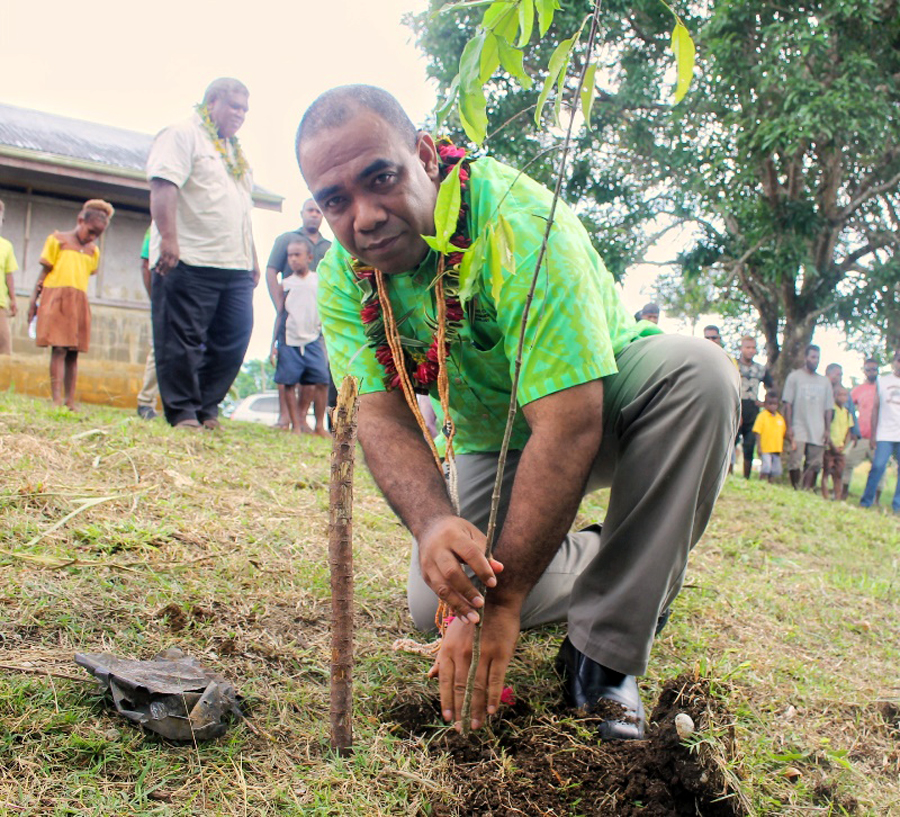
Guests pose for a group photo after planting the tree to mark the world environment day.

BY LYNTON AARON FILIA

AS part of promoting ecosystem-based adaptation to climate, the Barana community of Central Guadalcanal province kick-started with planting trees and community clean-up while celebrating World Environment Day yesterday.

Villagers of the Barana community together with local and national leaders celebrated the World Environment Day yesterday under the theme: “Beat Plastic Pollution”.

The event started with Solomon Islands Scouts doing environment expedition from Daviqori to plant trees around the sites of the Barana Community Nature Park and awareness talk at the school compound.

Participating students from Barana school helping out in rubbish collection during the world environment day
celebration.

Permanent Secretary for Ministry of Environment, Climate Change and Disaster Management, GP Premier, SPREP and Hon Nano also took part in planting trees at the Barana primary school.

Representative from the SPC also handed over new rubbish bins to the community as part of promoting ecosystem, climate change resilience and management of environment.

Premier for Guadalcanal province Mr Anthony Veke welcomed the kind of support Secretariat of the Pacific Regional Environment Programme is implementing at Barana.
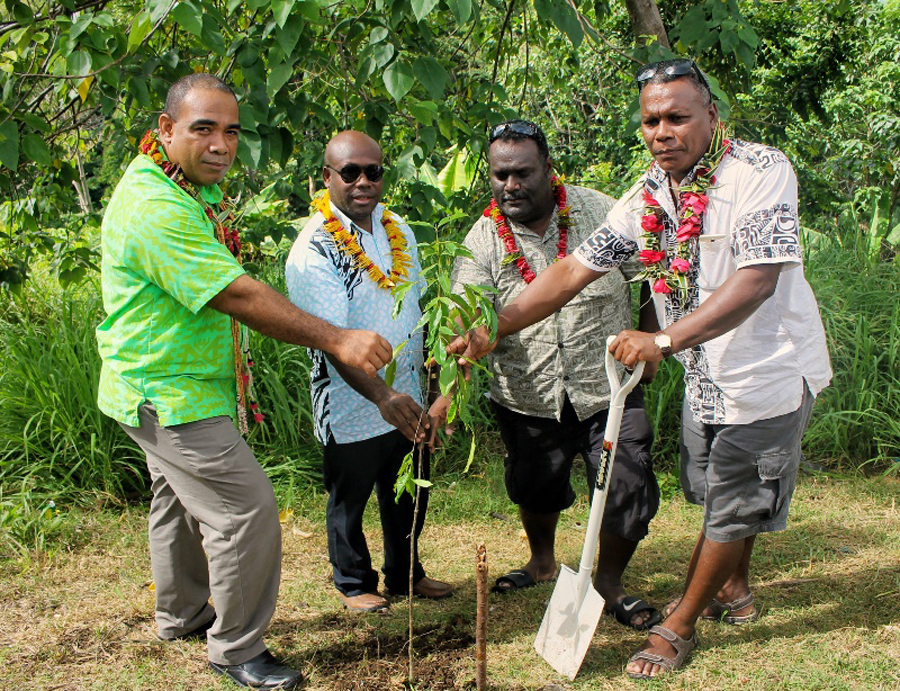
Guests pose for a group photo after planting the tree to mark the world environment day.

He said the project’s intention for climate change resilience will turn the community to focus on ecosystem which has been lost due to impact of climate change and other social and economic activities.

Veke also adds environment management which the Barana Community Natural Park focus on will leads to the sustainability of the livelihood of Barana people from now and future.

With the theme, Veke said it is relevant to the current status of Solomon Islands especially Guadalcanal province which is the hub of plastic pollution.

Guest members stand to honour the national anthem.

“This theme is most relevant to Solomon Islands, Honiara, Guadalcanal and more so people of Tandai in which Barana community located which they are forefront to pollution of plastics and all socio-environment issues in Honiara city,” Veke said.

SPREP-PEBACC Country Manager Mr Fred Siho Patison said celebration of World Environment Day at the Barana Community Nature Park is part of its campaign and awareness activities.

He said that is to promote climate change resilience through nature based solution and the nature park focuses on community natural resources and watershed management.

The SPREP-PEBACC thanked the GP, Ministry of Environment, Climate Change and Disaster Management, SPC-GEF 6 R2R, SI Scouts, SIVB, Barana Community, Island Sun and SINU.

Barana community women entertaining in Guadalcanal cultural dance. Photos by Daniel Kakadi.
Barana students witnessing the World Environment day celebration.

National Standards launch marks milestone in journey of WASH in schools: Acting PM

0
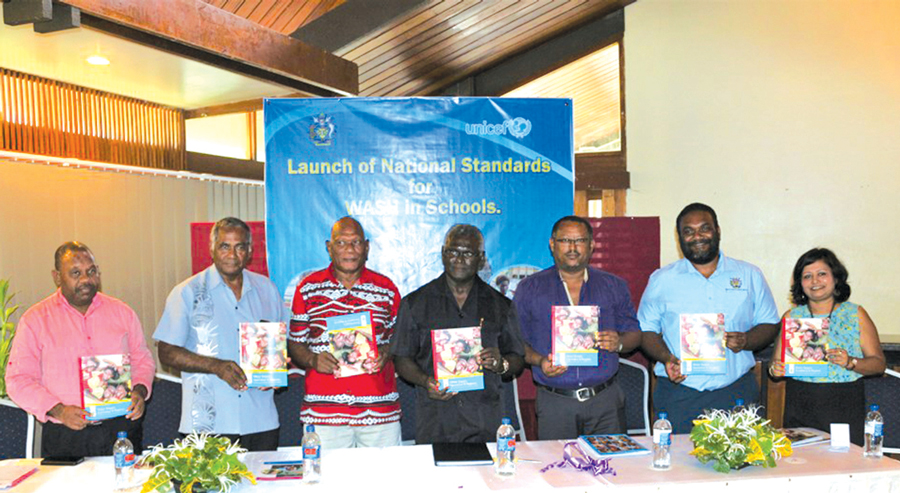
Acting PM and DPM fifth from right with heads of MEHRD, MHMS, and Deputy Premier of G Province and UNICEF officials.

BY LORETTA BRIGIDIA MANELE

IN recognition of the importance of water and sanitation, WASH in schools is implicitly and explicitly captured in the post-2015 Sustainable Development Goals (SDGs). The terms “universal” and “for all” in Targets 6.1 and 6.2 implicitly highlight the need for expanding WASH services to schools.

The above statement was made by acting Prime Minister and Deputy Prime Minister Hon Manasseh Sogavare who was speaking at the launch of the National Standards on WASH (Water Supply, Sanitation and Hygiene) in schools at Mendana Hotel yesterday.

Initially, he said that the launching occasion is a major milestone in the journey of WASH in schools.

Moreover, Hon Sogavare stated that drinking water, sanitation and hygiene goes beyond the household thus is crucial to the health and education of children.

Acting PM and DPM fifth from right with heads of MEHRD, MHMS, and Deputy Premier of G Province and UNICEF officials.

“Children spend a significant portion of their day at school where WASH services can improve educational opportunities and decrease the potential for disease transmission between students,” he said.

The Finance Minister voiced that the sustainable development goals (SDGs) call for special attention to the needs of girls as well as those in vulnerable situations.

He added that it contributes to a better learning environment which leads to a significant reduction in absenteeism and dropout rates, especially among girls.

Hon Sogavare proceeded to stress that research carried out by UNICEF and other organisations worldwide have proven that WASH in schools is critical for health and educational outcomes.

“Handwashing is critical at times before eating and after using the toilet ‐ can reduce diarrhea rates by almost 40 percent”, he said.

Hon Sogavare further emphasised on the how WASH can induce positive impact among children who can later help their communities in the long run.

“The positive outcomes in education are also coupled with children becoming young advocates of sanitation and hygiene.”

“These empowered children carry messages learnt in schools back to their families and communities, thereby increasing their awareness which results in long-term health and economic benefits for the community,” he said.

GP Premier pledges support for Barana community nature park

GP Premier Anthony Veke making his speech during the world environment day at Barana on Tuesday. Photo by Daniel Kakadi

BY LYNTON AARON FILIA


GP Premier Anthony Veke making his speech during the world environment day at Barana on Tuesday. Photo by Daniel Kakadi

GUADALCANAL Premier has pledged his support towards the Barana Community Nature Park as it will offer opportunities to people.

Premier Anthony Veke in his remarks on the World Environment Day yesterday registered its support for the Barana Community Nature Park because such initiative will offer tremendous opportunities that community can benefit from.

He said creation of the Barana Community Nature Park represents an opportunity that community can tap on for their sustainable livelihood and ecosystem.

Mr Veke said, “This is an opportunity to showcase our natural environment, showcase our efforts to sustainably manage our forests, showcase our biodiversity, our culture and showcase our small contribution to address the global impacts of climate change.

“As a province we will support the effort by SPREP in partnership with the community to ensure long term sustainability and its success.”

Veke said establishment of the nature park will also provide opportunities in terms of generating sustainable income from eco-tourism activities as well as other sources.

He said Guadalcanal provincial government is looking forward to work in partnership with the Ministry of Environment, SPREP, Barana community and other partners to ensure such project are successfully implemented and sustained.

Permanent Secretary for the Ministry of Environment, Climate Change and Disaster Management Dr Melchior Mataki appreciated that the Barana Community and Guadalcanal province have accepted such initiative to work with SPREP.

Mr Mataki thanked the Barana community and GP for their support in this kind of initiative that SPREP is promoting on behalf of the Solomon Islands Government for the establishment of a community nature park.

He adds, presence of SPREP PEBACC project at the Barana community is part and parcel of government efforts of promoting environment management and sustainable natural resource management through the country.

Besides, Mataki urged Barana community and GP to take ownership of the Nature Park that SPREP-PABACC project has established.

Barana & Guale commended for support

Permanant Secretary for Ministry of Environment, Melchior Mataki help in planting the tree to mark the world environment day at Barana.

By Ezekiel Talatau

Permanant Secretary for Ministry of Environment, Melchior Mataki help in planting the tree to mark the world environment day at Barana.

THE Permanent Secretary for Ministry of Environment, Climate Change and Disaster Management, Dr Melchior Mataki thanked Barana community and the Guadalcanal province supporting SPREP’s initiative to create a nature community park.

He said these types of development shows Guadalcanal province’s ambition to protect and promote sustainable natural resources management in the provincial and community level.

He said in 2011, Honiara produced 2000 tonnes of waste.

The SPREP project here in Barana is part and parcel of the government to promote environmental management and sustainable natural resources throughout the country.

Mataki stated that the Ministry of Environment, Climate Change, Disaster management and Meteorology (MECDM) has an on-going project to rehabilitate and clean the Mataniko River.

Mataki further stated that there is a new strategies control on waste management and pollution that have been endorsed by the cabinet included policy direction to address plastic pollution.

Launch of National Standards on WASH in Schools – A new beginning for children in Solomon Islands

Acting PM and DPM, fourth from right with MEHRD, MHMS officals, G Province Deputy Premier and UNICEF officials pose with the National Standards document.

BY LORETTA BRIGIDIA MANELE

ON Tuesday, the National Standards on WASH in schools was launched at Mendana Hotel.

The project was developed by UNICEF in collaboration with Ministry of Education and Human Resources Development (MEHRD), Ministry of Health and Medical Services’ (MHMS), RWASH program and sector stakeholders with support of the New Zealand government.

Guests at the occasion included the likes of Acting Prime Minister and Deputy Prime Minister, Hon Manasseh Sogavare, Permanent Secretary of MEHRD, Dr. Jimmy Rodgers, Under Secretary for MHMS, Dr Nemia Bainivalu, Deputy Premier of Guadalcanal Province, Hon Peter Aoraunisaka, UNICEF WASH specialist Ms Mamita Bora Thakkar, Zelalem Taffesse from UNICEF and MEHRD Deputy Secretary, Mr James Bosamata.

Acting Prime Minister, Hon Sogavare in his address stressed that since embarking our journey of WASH (Water Supply, Sanitation and Hygiene) in schools, the launching is a major step taken given that the national standards were developed to help define the requirements for school WASH facilities and are a set of achievable standards of which each school can progress to attainment over time.

Acting PM and DPM, fourth from right with MEHRD, MHMS officals, G Province Deputy Premier and UNICEF officials pose with the National Standards document.

He stated that the standards will be used as primary reference by the Solomon Islands WASH sector, national government, and project donors for standards related to construction of, or rehabilitation of, school WASH facilities.

Hon Sogavare also mentioned that studies have shown that children of mothers who have completed primary education are more likely to survive and be healthy.

He mentioned that the availability of adequate and well maintained toilet facilities with running water are a key requirement to ensure the dignity, safety and privacy of girls particularly during adolescence when they face menstruation.

Education Permanent Secretary, Dr Jimmy Rodgers emphasised that handwashing is not practiced on a regular and sustained basis given that a 2015 survey had depicted that only 14 percent of schools have access to basic water services while only 25 percent have access to basic sanitation services.

The essence of sanitation improvement was also another aspect discussed at the launch by Under Secretary for Health, Dr Nemia Bainivalu.

He voiced that sanitation improvements are vital in regards to the cause of a subclinical gut condition called environmental enteropathy (EE).

“Sanitation improvements are vital since constant exposure to fecal contamination is the primary underlying cause of a subclinical gut condition called environmental enteropathy (EE) which prevents proper food absorption and hence results in chronic malnutrition.

“Chronic malnutrition leads to stunting, reduced brain function and chronic diseases like diabetes, hypertension and renal malfunctions in adulthood,” said Bainivalu.

He stated that the Pacific Region is rated the highest in the prevalence of childhood chronic malnutrition (stunting) and is also the only region where this figure is increasing.

“In the Solomon Islands, the number of malnourished children almost doubled from 1989 to 2015, the current rate is 32 percent, and villages with more OD have more severe stunting in children. Sanitation is vital for better education, economic improvement, cleaner environments and better quality of life. It also protects girl’s and women’s safety and protects dignity,” said Bainivalu.

UNICEF WASH specialist, Ms Mamita Bora Thakkar was the Master of Ceremony who also delivered a presentation on the WASH in schools standards.

She highlighted that WASH in schools contribute to the achievement of five key SDGs and noted that the national standards set the framework for school WASH improvements and lays down the principles of water, sanitation and hygiene.

“Schools need to make incremental improvements based on the designs and ladders laid down in the standards. School WASH facilities need to be accessible, inclusive and gender friendly,” said Ms Thakkar.

Adding value to our wastes

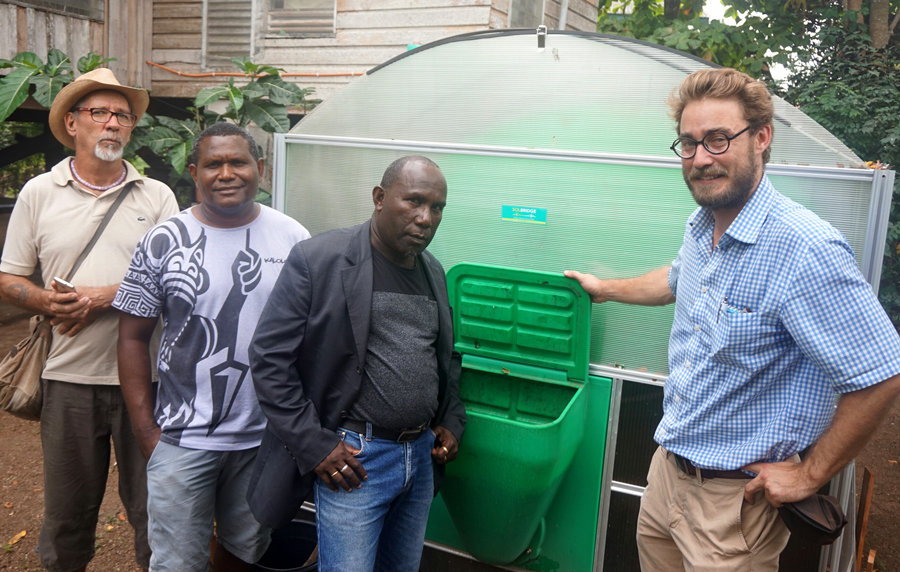
Left to right - Richard Joyce, Shane Tutua, Korlesh Tutua, Andrew Bulman after a demonstration of how the system works.

By Gary Hatigeva

COULD this be the answer to the ever growing issue of having to get rid of our wastes, even if they recyclable or reusable and they create even more hazardous wastes and environment?

Newly introduced, a recycling system known as the ‘Biogas and Liquid fertiliser production’ that was invented to add value to our everyday wastes, particularly food and other wastes, which includes that of animals.

Also known as the Sup Sup BioDigestor, the recycler is an anaerobic digester that according to experts, treats organic waste such as animal manure, food waste, grass clippings and green garden waste, which also releases methane gas that has been tested and can be used for heating, lighting, cooking.

Left to right – Richard Joyce, Shane Tutua, Korlesh Tutua, Andrew Bulman after a demonstration of how the system works.

Speaking on this simple but effective system, Andrew Bulman of Solbridge Waste Solution, explained that the larger units produce enough gas to run electric generators but the most efficient way is to the use the gas directly for cooking or lighting.

“This gas replaces wood fires that are typically operated in confined spaces and is the cause of respiratory disease within the communities.

“It is mostly the women and children who suffer this problem. If the community is capturing the energy from their waste it allows the persons who collect the wood to spend more time growing food in their gardens for the family,” Mr Bulman explained.

He said the liquid fertiliser that is produced from the Sup Sup BioDigestor has a high nutrient value that can be used directly on the garden plants or mixed into the soil.

This section is where it all starts with a removable bucket where the wastes are desposed for processing.

He added that in most cases, people use plots for gardening for a period of time and move on to another, allowing for the used section to regain nutrients and right minerals in the soils, but with the system, soil in one particular area can be used over and over given that the end products of the biodigester comes into play.

He further added that unlike raw manure, there are no viruses or bacteria as the biodigestor contents undergo a pasteurisation process over the 25 days it is in the digester, and this will greatly improve the food yields for community crops.

This section is where it all starts with a removable bucket where the wastes are desposed for processing.

Meanwhile, Bulman highlighted that for people who don’t have access to electricity, we believe that the Sup Sup BioDigestor that comes in a flat pack can offer an energy source that is an affordable option to wood fires and LPG, something many who have already been part of its test, believe is suitable for the country’s mass rural setting.

“The biodigester can be easily built and operated daily with little training and can be a family operation to produce onsite energy and fertilisers.

Gas produced from the BioDigester System being put to test and the result is as shown in the photo.

“Sup Sup Biodigester is 5 cubic metre set up and can accept up to 20kg of food waste per day while it also produces 2 m3 biogas per day, which is approximately 2 to 3 hours cooking time a day.

“It includes daylight insulations panels, aluminium frame, digester bladder, feed-in chute and disposal tap.

“It has associated appliances, which includes, a stove, scrubber unit, gas light and piping that can be connected directly into your house for cooking,” Bulman further explained.

A sample display of the recycling system

Solomon Airlines returns to Parasi

0

AFTER an approximate 10-year absence Solomon Airlines will recommence scheduled air services to Parasi Airport in South Malaita from June 8, 2018.

The national carrier’s decision follows the recommissioning of the airport by the Civil Aviation Authority of Solomon Islands (CAASI).

The new service will operate between Honiara and Parasi every Monday and Friday.

Announcing the development, Solomon Airlines manager commercial, Colin Sigimanu acknowledged the efforts the Solomon Islands government, the Malaita Provincial Government and local landowners have gone to in ensuring the return of what he described as “a much-needed air service between Honiara and Parasi.”

Mr Sigimanu advised the airline has appointed a Parasi-based airport agent to manage all aspects of the airline’s local operation.

“We see this as a huge opportunity to open up the South Malaita region to increased business and commercial opportunity as well as to the benefits of tourism,” Sigimanu said.

“It goes without saying we are very excited with this long-awaited development.”

For further information, visit www.flysolomons.com or contact the airline on its dedicated toll free 177 telephone number or the sales office on 20152 or 20031.

–SOLAIR PRESS

Malaita schools benefit from reforestation programme

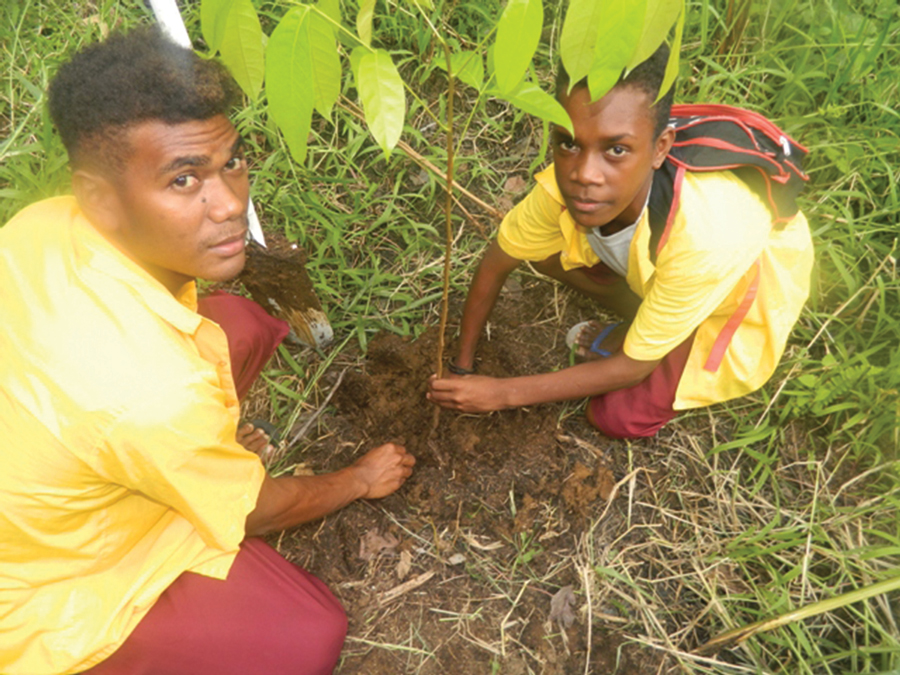
Students from Arabala school enjoying planting their hybrid Mohagany tree.

BY GEORGE MANFORD

AUKI

THE forestry department office in Auki has introduced a school reforestation programme for five secondary schools in Malaita.

This is the connection programme from the forestry office in Auki with schools in Malaita in tree planting.

Officer in charge reforestation department in Auki Mr Ronny Aiwewe said the program started in 2016.

Two female students from Gwaidigale secondary school doing the tree planting process.

“We made awareness programmes for eight schools and now we engage the first five schools to undergo tree planting process.

“During our awareness programmes we provide knowledge and skills and teach them how to plant trees.

“Our school students must need to know the work of forestry department in the country regarding reforestation.

The main concept of these programmes with schools is at the moment we have a high demand to our local forest in terms of Logging and gardening.

Students from Arabala school enjoying planting their hybrid Mohagany tree.

“Logging is one of the key factors that destroy our local forest where in the near future we will be having no forest in our lands.

“The office of forestry department and the national government see this issue and try to adopt the tree planting programmes back in our communities and rural areas.

“At the moment we introduced three major spice raised nursery, Teak (Techona grandis), Mahogany / swim ( Switenia Macrophylla) and Eucalyptus Deglupta.

“Those species are rare in our country and we take them into our country from other countries, Mr Aiwewe said.

Students from Gwaigeo preparing the sites for tree planting.

“These species however we see them as medium term trees which are suitable for timbers that have a short period of time for harvesting.

“At the moment some of the schools we have selected for this program are currently doing their tree planting process within their school boundary.

“The forestry department is looking forward to work closely with the schools and the communities to regain our forests that have been spoilt by activities such as logging.”

The five schools undergo this programme are Dala, Gwaigeo, Gwaidingale, Maoro and Arabala secondary schools.

A forestry officer in Auki preparing trees for the school reforestation programme for schools in Malaita
A student from Dala standing beside her newly planted tree.
A student from Maoro planting the trees provided by the forestry office in Auki.

How many others are doing it?

0

The official website of Solomon Islands Postal Corporation (SIPC) – the nation’s smallest State-Owned Enterprise (SOE) – says it all. It shows its board may have outlived its legal mandate.

One wonders how many other SOEs are in a similar position, given that roles and responsibilities of each SOE’s Board are clearly defined in terms of the prescription in their respective legislation.

In the case of SIPC, its website shows the position each director holds and when it expires. For example:

Director                                  Position          Expiry

Robert Bokelema                  Chairman      10/10/2015

Benjiman Oatasia                Member         16/09/2016

Christian Alan Siale              Member         10/10/2012

Patrick Taloboe                    Member         10/10/2014

George Selwyn Kiriau          Member         16/09/2015

Mr. Gideon Zoleveke          Member         16/09/2016


What is not clear is whether these directors have had their terms of office renewed. If not, who is responsible for making sure information on its website remains current at all times.

This certainly is not the case of SIPC in terms of its board of directors. One member for example has had his membership expired in October of 2012 – that’s six years ago.

Is it possible that decisions made by a board whose terms have expired border on illegality? If so, who is responsible? Is it the Chief Executive Officer? Is it the Chairman? Or is it the Minister or Ministers responsible for the SOE?

Perhaps this is a fine line. But someone somewhere should be held to account for ignoring the requirement(s) of the law. Ignoring the law does not mean the law will go away.

No wonder our nation is going through so much chaos today. A couldn’t careless culture seems to be taking hold and spreading. Unless some affirmative action is taken, the worst is yet to come.

As everyone knows, Solomon Islands Postal Corporation (SIPC) is a state-owned enterprise established by an Act of Parliament in 1996. Its mandate is to provide postal services within Solomon Islands and to countries abroad.

As an SOE, it is subject to the State-owned Enterprises Act 2007 and State-owned Enterprises Regulations 2010, according to its website.

SIPC is governed by a board of directors that is responsible to the Accountable Ministers – the Minister of Finance and Treasury as well as the Minister for Communications and Aviation.

Its Vision is to be “a trusted leading provider of world-class postal services and other related innovative services and to be recognized as the best model of SOE in the South Pacific,”

Its Mission is to “provide high quality and modern postal services within Solomon Islands and other countries, carry on any business or activity relating to postal services to bridge customers, provide telecommunications, value added services including electronic mail, electronic data interchange, internet services, electronic funds transfer services, financial services, e-commerce services and any other appropriate or related services for customers’ better life”, according to its website.

SIPC’s case raises more questions than it answers.

For example, how many of its existing directors have had their positions renewed. All of them? Just some, how many?

Is it possible decisions made in the course of their being directors had fallen short of the legal requirement? If so, how is this going to be addressed?

There are far too many questions.

One can only hope that SIPC’s situation provides a timely wake-up call to clean up other SOEs. In doing so, it is not a tall order that a new breed of directors be appointed to assume the reins instead of using worn out records to play the games over and over again.

They are not the only people who have the brains to change this country. Many have failed this country more than they are prepared to admit.

It’s time they are shown the door. It’s time for change.

Mitigating the use of costly imported fossil fuels

0

DEAR EDITOR, the Solomon Islands is heavily dependent on costly fossil fuel imports, so I was pleased to read last month that the PM had signed a Memorandum of Understanding (MOU) between Solomon Power and Hitachi Ltd.

The MOU was aimed at resolving energy issues in the Solomon Islands and facilitating Hitachi Ltd and Solomon Power venturing into collaborative construction to design a solar power plant with, other stakeholders, in the country.

At the time of signing the MOU, Prime Minister Hou said Solomon Power would be assisted to lower the cost of energy generation thereby reducing the electricity tariff and to improve energy security for the country.

While I see the signing of the MOU as a very welcome step there remains a gap between the renewable energy aspirations of the government and the ability of public funds to invest both stronger and more resilient networks and renewable energy generation.

Improving access to climate finance could provide additional means to support renewable energy and mitigate climate change.

I do not have recent figures on percentage renewable electricity energy in the Solomon Islands but in the period 2013-2016 renewable electricity generation grew from less than 1 to 5 percent.

While the 4 percent growth was notable comparison figures for other small island states for the same period were much higher.

Tuvalu’s renewable electricity generation rose from 4 percent to 43 percent.

In the Cook Islands renewable electricity generation rose from 4 percent to 15 percent.

Clearly, more needs to be done to develop long term electricity system development plans that identify least-cost renewable generation sources and reduce carbon emissions but this will not an easy task given the Solomon Islands long-term dependency on fossil fuel imports for electricity generation and transportation use and a particularly weak economy.

Nevertheless, the signing of the MOU with Hitachi and Solomon Power was a step in the right direction, as indeed is the ongoing project for the Tina River Hydro Power scheme continuing to be funded substantially by Australia.


Yours sincerely

FRANK SHORT