Home Blog Page 1223

Stop politicising Solomon Games’

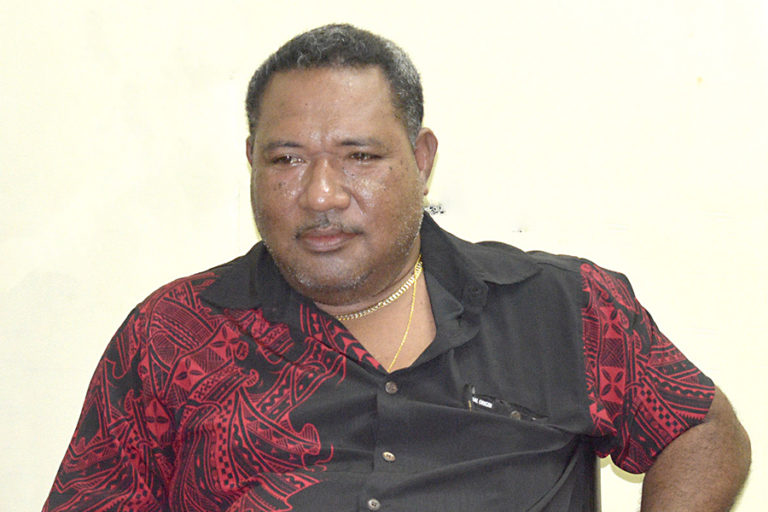
Premier Collin Singamoana

Renbel Premier blasts PM Hou and Gov’t over plans to postpone Solomon Games 2018

BY BARNABAS MANEBONA

Premier Collin Singamoana

THE Premier of Renbel province has condemned what he describes as ‘politicising of the Solomon Games to be hosted by Renbel province’ by the government.

Premier Collin Singamoana says the government’s proposal to postpone the 2018 Solomon Games (SG) being hosted Renbel province is received as a slap on the face for the Renbel people and provincial government.

Speaking to Island Sun, Premier Singamoana says the real reason behind the government’s proposed decision is political in nature, and not due to slow preparations as claimed in the statement by the Prime Minister’s Office [Read OPMC Press Release in page 23].

“There are political elements relating to the hosting of the Games in Renbel which threaten the Renbel MP. And, the Prime Minister and his caucus are backing their colleague to move the Games and at the same time make a scapegoat out of the province.

“There is no problem with preparations from our part because we have been slowed by the national government’s withholding of funds for many months, and since receiving funds a few weeks ago, we have been hell-bent on preparations, and we are absolutely confident that everything will be ready before the event begins.”

He insists that the national government has no one else but itself to be blamed for the slow preparations, since it had withheld funds for many months since last year – only releasing it few weeks ago.

However, while the national government is trying to undermine the event taking place in Renbel province, the Renbel province Solomon Games taskforce along with the LOC have been working tirelessly towards the goal of completing the facilities in time for the Games.

It is understood from a press statement by the Prime Minister’s Office yesterday that decision to postpone or allow the SG to continue in Renbel is pending, awaiting a report from NOCSI.

Premier Singamoana furthers that the ease with which government opts to move the games from Renbel is just another fine example of how the national government views the Renbel province – ‘as a minority and insignificant group’.

“I know what I’m saying when I play this ‘marginalised’ card, because it is true. The Renbel province has been second-placed everytime in national issues, and Prime Minister’s and Caucus’s latest stint just comes to show how they view Renbel, like nothing.

“I tell you, it would have been a different story had one of the bigger provinces been the host. But, since it is Renbel, they simply rush to off the SG being held there.”

Singamoana says there are past precedents which question the Prime Minister’s claim that Caucus’s proposal to move the SG is based on slow preparations.

“In previous Solomon Games in other provinces, it is a well-known fact that while the games were going on there were still work going on to complete other facilities at the same time. In Tulagi, even the soccer pitch was half grass and half ground. So who is the government trying to fool by saying that slow preparations is the basis of their proposed decision to postpone the SG in Renbel?”

He urges Prime Minister Rick Hou and Caucus to rethink what they are planning to do, because apart from Renbel’s confidence in completing preparations in time, the Renbel province and people see this as a huge honour to host a national event, and taking it away or postponing it is utter injustice for many reasons.

“To the Prime Minister and his caucus, just ensure that you play your part with releasing the rest of the funds and we will continue with our part faithfully and complete preparations well before the official opening.

“Do not bring politics into this event, because you will only do more damage than good. Already, public opinion has been negatively influenced by MP Tautai’s non-procedural Facebook post, and innocent hardworking people who have put in a lot are being made scapegoat of by your politics.”

On Monday this week, a Facebook post in MP Tautai’s page claimed that PM Hou had personally sent him (Tautai) a text saying the SG has been moved from Renbel.

PM Hou has confirmed sending the text in a press statement yesterday [see page 23].

Attempts to get the Ministry of Home Affairs response yesterday were not possible as the new Acting Permanent Secretary (PS) was in a meeting almost the whole day. This was the same for the MP of Renbel when making an attempt.

Port Vila-based Malaita community celebrates provincial day

0
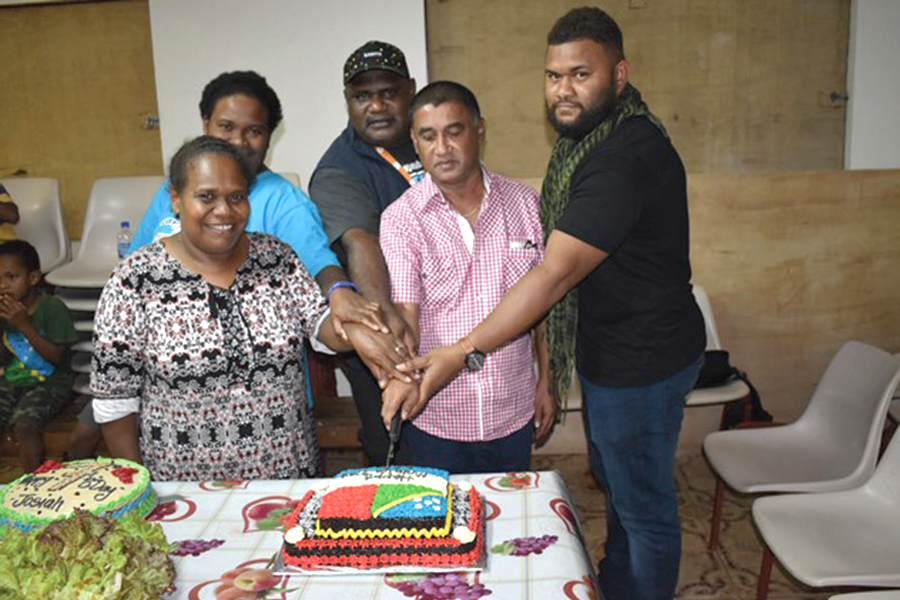
The Cutting of the Malaita Second Appointed Day Cake during the celebration in Port Vila.

BY ROMULUS HUTA

In Port Vila, Vanuatu

Malaitan Community members singing a song.

THE Malaitan community based in Port Vila, Vanuatu have come together to celebrate their provincial second appointed day last Saturday.

The celebration was held at the Church of the South Seas compound in the Vanuatu capital.

More than 30 members which includes law students studying at the University of the South Pacific’s Emalus Campus and other Malaitans working and residing in Port Vila attended the get-together.

Delivering her welcome remarks, influential community member Miltus Formani who is a Solomon Islander currently working with the Vanuatu Police Department, said the small gathering was aimed at celebrating Malaita Second Appointed Day as Malaitans although it’s unplanned and decided upon in the last minute.

“Though we are not in the Solomon Islands, but as Malaitans, at least we come up with something to celebrate our provincial day.

“I would like to say thanks to community members for making this happen despite short notice.

“It’s such an informal gathering but I hope it means something to us.”

Another Malaita community leader in Port Vila, Philip Fiuka highlights the importance of coming together as one community.

The Cutting of the Malaita Second Appointed Day Cake during the celebration in Port Vila.

He added that the Malaita community in Port Vila is proud to stand together as one family under one banner, one province and one country Solomon Islands.

The Malaita second appointed day celebration also coincided with the seventh birthday celebration of young Josiah Kofana, son of a Solomon Islands pastor who resides in Port Vila.

Young Josiah, whose father is currently in Honiara on missionary purposes hails from Kwai and Kwaio in East Malaita.

Kofana was pleased that his birthday coincides with his province’s big day.

Few leading members of the Solomon Islands Hockey team who participated in last week’s World Hockey Series qualifiers in Port Vila were also invited to the event.

They include President of Solomon Islands Hockey Federation (SIHF) Nihal Seneviratne and his executive member Patteson Akipu.

The duo expressed great excitement upon meeting the Malaitan community.

MAL’s new PS with vision to redirect agri sector

0
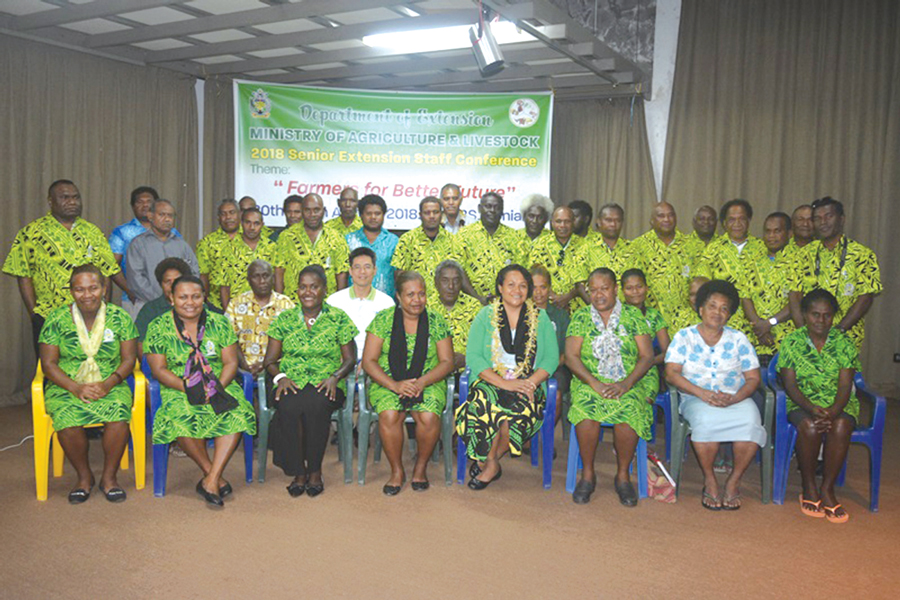
Group photo of the senior officers of the MAL who attends the Senior Extension Staff conference

BY LYNTON AARON FILIA

Group photo of the senior officers of the MAL who attends the Senior Extension Staff conference

MINISTRY of Agriculture and Livestock’s new Permanent Secretary is looking at drawing the Agriculture Sector Growth Road Map with aim to redirect the agriculture industry in Solomon Islands.

Making her first remarks at the Senior Extension Staff Conference after taking the PS role for MAL recently, Mrs Ethel Frances said she is planning on drawing out the Agriculture Sector Growth Road Map.

She said the idea is to redirect the agriculture sector to become the country’s revenue base as well as addressing the rising unemployment rate and imported goods in the country.

Frances said she has already discussed with donor partners and is happy to lend support for developing agriculture sector, and it is important to develop the agricultural sector growth road map.

“I already have discussion with donor partners and happy to assure they wanted to come and help agriculture sector and that is we need to draw an agricultural sector growth road map.

“It’s good to export and get revenue in but we need to feed ourselves, we need to create employment—we need to work together on achieving our goals.”

She challenges MAL’s extension officers to fight agriculture sector must recognise as a sector, that this is the backbone of this nation but it’s up to us to produce something convincing and presenting them to the government.

“I have been taught that donor partners are interested in agricultural sector and that is something I will aggressively go and find all the opportunities that there for us.

“It’s going to be challenging but that’s what I have in mind. Everyone one here your single contribution will help us draw that.”

MAL’s Director Extension/Project Sub Coordinator Mr Michael Ho’ota said agriculture continues to face challenges due to ever changing global economy, social issues and climate change.

He said MAL’s extension services require the resources and manpower to overcome these challenges.

This week, MAL’s officers convened at SIBC conference room for a series of discussion on ways to develop the sector across the country.

For the five-day conference, it was built under the theme: Farmers for Better Future.

SICCI congratulates new PS for Agriculture

0

THE Solomon Islands Chamber of Commerce and Industry (SICCI) acknowledges the Government through the Ministry of Agriculture and Livestock (MAL) for recognising the need of having women in leadership positions.

SICCI, as the peak body representing the private sector, congratulates Ms Ethel Tebengi Frances following her appointment as the new Permanent Secretary of the Ministry of Agriculture and Livestock (MAL).

Ms Frances becomes the third female Permanent Secretary to head a ministry in the current Government after been sworn-in at the Government house last Tuesday.

SICCI CEO Mr Dennis Meone says, “In developing nations like Solomon Islands, having women at the table impacts how policy resources are utilised and managed because of the simple fact that they can often see things from a different lens.”

Mr Meone says productivity and innovation, whether in private sector or the public sector, is positively affected by gender diversity.

“Agriculture plays an important role in the economy and we look forward to working closely with Ms Frances and her team in exploring new opportunities and innovative ways in developing the sector,” says Meone.

SICCI is leading the Waka Mere Commitment to Action initiative in partnership with the International Finance Cooperation (IFC) working with seventeen of the country’s largest companies in undertaking measures to build respectful and supportive workplaces and encourage women into leadership positions based on performance.

Coordinator of the SICCI-IFC Gender Programme, Mrs Ruth Maetala said empowering and encouraging women to leadership and management roles in the workplace is of importance.

“More gender diversity can translate to increased productivity, greater innovation, better products, better decision-making, and higher employee retention and satisfaction.

“Any specific efforts to recruit women to leadership roles can only be encouraged if organisations encourage a work culture where they can succeed,” Maetala said.

–SICCI PRESS

Delivery in infrastructure through PCDF

0
Premier Peter Ramohia delivering his speech. Photos from PM press secretariat

BY GEORGE MANFORD

AUKI

MALAITA province since 2008/9 has delivered more than 106 complete projects of good quality through the meagre resources received from the Provincial Capacity Development Fund (PCDF).

Premier of Malaita province Peter Channel Ramohia said, “Reading through from our daily news papers in the country, one would see the efforts that have so far been made by provinces in delivering infrastructures.”

He said this during the Malaita second appointed day celebration in Afio, Small Malaita.

From 106 projects completed by Malaita, 72 of them are all health and education infrastructures, Ramohia said.

“We do this to facilitate service delivery for our people.”

He calls on the SIDCCG government to consider by increasing the PCDF in 2019 back to SBD50 million.

This programme has been a success story for the people of Malaita in particular, and the whole of Solomon Islands in general, Ramohia revealed.

He added, by reducing the PCDF so drastically has almost killed the spirit of our people who have started to benefit from the programmes we deliver.

“Prime Minister Rick Houenipwela has promised before all my colleague premiers during the 9th Premiers conference held in Auki last December that the current SIDCCG government would continue to support the PCDF and the PGSP at the same level.

“Even though budgetary constraints are there, we would appreciate if you could maintain the level of funding for PCDF as the only capital budget for provinces or Otherwise the only thing the provinces may be doing the whole year is to pay salaries and allowances which may defeat the whole of purpose of provincial governance.”

He added to make or allow us to deliver for the national government may require the national government to resource provinces adequately.

“Now that you have stabilised the fiscal situation, I would like to appeal that you prioritise funding allocation to PCDF for the nine provinces.

“The 2018 capital development fund for the nine provinces represents less than 1.5 percent of the approved development budget.

“Whilst we implement projects, we simultaneously and create jobs.”

60 endangered species shipped to Singapore

0
Endangered species shipped to Singapore

BY MAVIS NISHIMURA PODOKOLO

LACK of breeding sites in the Solomon Islands has led to 60 Santa Cruz ground doves being shipped to Singapore two weeks ago with the hope of repopulating their inhabitants.

With the absence of prioritising breeding and management sites in Solomon Islands for its various endangered spices has resulted in transporting of Santa Cruz ground-doves to Singapore’s Junrong Bird Park to be repopulated.

Because of the breeding facilities absenteeism Solomon Islands Government through the Ministry of Environment, Climate Change, Disaster management and Meteorology (MECDM) have signed an agreement on June 18, 2018 with the Singapore’s Junrong Bird Park.

The agreement allows shipping endangered species from Solomon Islands to Singapore for repopulation purposes, and 60 doves have already been sent two weeks ago.

In an exclusive interview with Joseph Hurutarua senior officer of MECDM he said the idea of transporting the doves to Singapore was done purposely because the country lacks proper breeding site.

Also the dove population is facing treats from the Tinakula volcanic activity, invasive rats eaten their eggs and poachers hunting them for consumption which contributed in the wiping out and decreasing of the doves hence the birds were transferred to be repopulated

“After the breeding timeframe is lapsed they(doves) will be released back to their original sites in the country Solomon Islands but their release will after an informative and effective awareness is first done as wells as addressing the issues of the invasive rats,” said Hurutarau.

According to Ministry’s corporate plan 2018 -2020, such activities are part of protecting ecosystems, biodiversity and endemic and threatened plan and animal species.

Meanwhile, report sited from Yahoo news Singapore video stated that the doves are currently undergoing a one –month quarantine at the bird park.

Thereafter, they will be on display at the park’s Wings of Asia exhibit, which houses other threatened birds from the Indo-Pacific such as the Bali Mynah, Black-winged Myanah, Edward’s Pheasant, Blue-crowned laughing thrush and straw-headed Bulbul.

HEBERPROT-P Medication for diabetic foot ulcers

0

DEAR EDITOR, last week I was moved to read a rather sad story in the Island Sun Newspaper reportedly contributed by a diabetic-inpatient at the National Referral Hospital (NRH) surgical ward which concerned a plea for the surgical ward to have more wheel chairs to aid the mobility of patients having had leg amputations.

I subsequently wrote to say that ‘Take My Hands’ Charity Trust in New Zealand, my partner charity, has promise to freight up to 30 wheel chairs very soon, possibly in a 40 container with hospital beds for the NRH due to sail from New Zealand on 29 August 2018.

Yesterday, I was again able to read in the Island Sun newspaper, under Letters to the Editor, that the same in-patient at the NRH’s surgical ward had made a more significant plea for patients suffering from diabetic foot ulcers,

The plea centered on what the patient described as a Cuban medication for the treatment of diabetic foot ulcers, citing by using the medication many amputations had been prevented in Cuban hospitals treating diabetic cases.

The writer believed the medication, known as Heberprot-P Medication should be introduced to the Solomon Islands where it was claimed it could be curing diabetic foot ulcers and reduce the need for life changing amputations.

I was not aware of the medication but thought it might be useful for the MOHMS to have some early knowledge of the Cuban developed medication, if not already fully known about.

The most comprehensive review of Heberprot-P I came across was a report published last August in Havana, Cuba and re-published by Xinhua.

Here is the full text

“HAVANA, Aug. 7 (Xinhua) — Luis Navarro is a young Cuban who at 34 years of age already suffers from chronic diabetes for the past 23 years. Recently, several ulcers have appeared on his foot, putting it at risk of being amputated…

“However, this has not happened, thanks to a unique Cuban product Heberprot-P, a drug that has sparked acclaim for its effectiveness in controlling and healing diabetic foot ulcers.

“A few weeks ago, Navarro was admitted at Havana’s Institute of Angiology and Vascular Surgery, a medical institution where comprehensive treatment is given to patients suffering from chronic diabetes.

“I had a big wound on my foot and it was pretty bad. The doctors applied Heberprot-P and I could see the substantial improvement in just 20 days. Since then I was discharged and my ulcer is almost closed,” the man told Xinhua.

“This drug registered in 2006 was created by Cuban scientist Jorge Berlanga and a team from the Center for Genetic Engineering and Biotechnology of the island.

“It contains epithermal growth factor (EGF) as an active pharmaceutical ingredient, while being applied by direct infiltration or injections in the wound site closing the ulcers in a period of 45 to 90 days.

“The change with this drug is incredible. Heberprot-P has been the best product invented by Cuban scientists. Whoever lives with this disease knows that foot ulcers improve a lot with this treatment,” added Navarro.

“In 2001, when Heberprot-P clinical trials began at this medical institution, Dr. Jose Fernandez Montequin was one of the first to apply the treatment to Cuban patients.

“According to Montequin, before local scientists created the drug, there were high rates of amputations in the Cuban diabetic population.

“With the application of this medication, we were able to reduce amputation rates in the country from 70 percent to 5 percent today,” he told Xinhua.

“In 2016, out of about 35,000 Cuban patients with diabetic foot ulcers, only 480 amputations were performed.

“We have improved the quality of life of patients and especially mortality.

“Another benefit of Heberprot-P, according to the expert, is that its application drastically reduces the resurgence of ulcers to just 5 percent of patients treated.

“Following its implementation in more than 450 clinics in the island, Cuban doctors and scientists have provided guidance and recommendations on the product in more than 20 countries, including Russia, Kuwait, Algeria, Argentina, Ecuador, China and Venezuela.

“Currently, Heberprot-P is registered in 23 countries and is effectively applied in 10 countries that have already authorized its use and marketing.

“Our product has already been used on more than 60,000 patients in Cuba and around 250,000 patients worldwide, capable of preventing more than 70 percent of amputations,” said Montequin.

“Scientists on the island now hope to see the drug used in China, which currently has the largest population of diabetics in the world.

“Heberprot-P is currently undergoing clinical trials in China for its future use and marketing to diabetic patients.

“Meanwhile, the Havana Institute of Angiology and Vascular Surgery uses it every day to treat dozens of patients.

“In Cuba, budgets for the treatment of diabetic foot ulcers have decreased due to the drug’s emergence. In 2006, we had more than 40 beds dedicated to diabetic foot ulcers, now we only have 28,” said Montequin.

“Direct and indirect costs to the Cuban health system have been reduced with the Heberprot-P national program,” he said.

“On June 30, the Cuban health ministry celebrated the 10th anniversary of the national diabetic foot ulcer program and its treatment with Heberprot-P.”.

Perhaps, the Solomon Island Ministry of Health and Medical Services might wish to investigate whether Heberprot-P could indeed prove beneficial to patients with diabetic ulcers at the NRH and who face the prospect of surgery.

I really do hope so.

Sincerely

Frank Short

RSIPF completes POM training for CSSI officers

0
PRT officers during the training demonstration.
ERG officers during the training demonstration.

OFFICERS of the Emergency Response Group (ERG) in the Correctional Services of Solomon Islands (CSSI) are urged to maintain their skills learnt during a one-week intensive Public Order Management (POM) training from August 13-17, 2018 at the Rove Police Headquarters in Honiara.

Trainers from the Police Response Team (PRT) within the Royal Solomon Islands Police Force (RSIPF) delivered the training to the CSSI officers.

A second group consisting of 22 ERG officers of the CSSI demonstrated their skills at Hells Point, East of Honiara on August 17, 2018.

Speaking after the demonstration at Hells Point, Supervising Deputy Commissioner National Security and Operational Support, Simpson Pogeava says, “Today you have completed your training on POM.

“I understand it was not an easy training but both executives of the CSSI and the RSIPF are proud to see what you have demonstrated so far.

“It is good to see that we share our capabilities in this kind of training and we will continue to do so as we work together to fight against crime in our society.

PRT officers during the training demonstration.

“I am looking forward for you to demonstrate those skills when you go out into the field.

“Maintain the skills that you have learnt. I would also want to encourage you to maintain the team work and make all effort to implement what you have learnt.”

The levels one and two of the POM training were conducted for two CSSI ERG teams for two weeks at the Rove Police Headquarters.

48 CSSI officers participated in the POM training.

Six instructors from the ERG are now qualified as levels one and two trainers to maintain training within the CSSI.

–POLICE MEDIA

Waste and pollution everybody’s business

0
Major provincial challenges and issues.

BY GEORGINA KEKEA

MANAGING waste and controlling pollution for Solomon Islands will require national effort that

includes high-level political leadership, effective policy and legal frameworks, development of

appropriate institutional capacity and changing attitudes starting at individual to community,

provincial and national level.

This was highlighted in the National Government’s Waste Management and Pollution Control Strategy 2017 – 2026.

Launched in November last year, this strategy focuses on managing waste and controlling pollution in the natural environment for the next ten years with the vision for clean, healthy and green happy isles.

As the country enters a period of rapid social and economic change, the framework set out in this strategy will try to address waste and pollution from a very practical perspective.

“The major challenges include land availability for landfills, limited financial resources, limited human resources, poor coordination, limited awareness and poor collection systems.”

However in order to address the waste management issues, all stakeholders must play an important role in managing waste and pollution control.

Major provincial challenges and issues.

Many of the waste and pollution issues are said to require collaborative efforts and significant investment of financial capital and broad based awareness campaign.

The strategic plan says to strengthen the manner in which waste is managed in Solomon Islands, there has to be an environment conducive for it to occur.

The enabling environment in terms of policy, legislation and capacity must also be fully realised.

In his foreword address, Environment Minister, Dr Culwick Togamana says the Solomon Islands Government, having recognised the need for waste management and pollution control, developed its first National Solid Waste Management Strategy and Action Plan 2009–2014 in 2008.

“This Strategy has been the country’s roadmap for the improvement of solid waste management over the past five years and has been a catalyst for many initiatives to manage waste.”

Togamana says it emphasised a broad recognition that waste is increasingly a development challenge.

“The timeframe for the implementation of this strategy has come to a close, and the time has come to review the progress of its implementation, reflect on the challenges and lessons learnt and determine what the next steps will be to build on the current progress.”

He said the country’s increasing population, heavy reliance on imported products and changes in consumption patterns stimulated by economic growth also pose significant challenges due to the diversification of waste streams.

“Other prevalent waste streams such as hazardous waste and chemicals, liquid wastes, health-care wastes and electronic wastes were not covered in the previous strategy but are becoming major concerns for the country.

“Management of these types of waste is crucial to ensuring the protection of the environment and people.”

The National Government’s Waste Management and Pollution Control Strategy 2017 – 2026 is said to encompass the management of these different waste streams.

The strategy was developed through an extensive consultative process with government ministries, provincial governments, private sector entities, non-governmental organisations, civil societies and donor partners.

This Strategy addresses five main waste streams: Solid Waste, Liquid Waste, Hazardous and Chemical Waste, Health-care Waste and E-waste.

The Strategy serves as a blueprint for waste management and pollution control that captures the national priorities and targets and identifies the relevant strategies to realise the priority targets in the next decade.

Slowly but surely renewable energy for Selwyn College

Selwyn College optimistic to generate power from sun.

BY GEORGINA KEKEA

Selwyn College optimistic to generate power from sun.

COME June 2019, Selwyn College will be using electricity generated from solar powered grid.

Revealing this last week before the Public Accounts Committee (PAC), Permanent Secretary to the Ministry of Environment Climate Change and Meteorology, Dr Melchior Mataki says this project has been long in coming because it is a pilot project and they want to make sure everything is thorough before this project is put out for tender, sometimes in October.

Selwyn College as all boarding schools in the country, do not have access to the national electricity utility grid.

Thus this project is seen as very crucial for them.

Being one of the biggest boarding schools in rural Solomon Islands, Selwyn College have been selected to be a part of this pilot project titled ‘De-placement of diesel powered generation with low voltage solar grid smart system in large boarding schools in Solomon Islands’.

Currently Selwyn College uses 38,400 litres of diesel each year.

The cost of fuel alone takes up 20 percent of the school’s annual budget.

“Just to run a generator from 5.30 in the morning to 10 o’clock at night, annually it costs us $400,000 to just run diesel fuel generator,” Project Manager, Fox Qwaina said.

With 70 houses, on campus, this project will assist Selwyn College in its electricity needs.

The objectives of this project are to reduce the amount of diesel fuel usage and reduce costs on fuel while at the same time increase the availability of electricity and fresh water to staff and students of Selwyn College.

Another objective is to promote clean and environmentally friendly energy technology. This in return will also minimize the emissions of carbon into the atmosphere.

Since the school rely on water pumps to generate water for their needs, going into renewable energy is said to be environmentally friendly and cost effective for the school.

Not only will the school benefit from such an incentive but also neighboring communities and the country as a whole.

Student’s academic performance and health shall be improved with sick persons from nearby communities can also have access to safely stored vaccines from the school’s clinic but to name a few.

At the same time, PS Environment Mataki says one of the ground work which they did was to work closely with the Anglican Church of Melanesia (ACOM).

This is to make them aware of their obligations and what they will expect once the school goes into solar energy.

Mataki says maintenance and safe keeping of the equipment are areas to consider and areas which the church need to understand first before going into this project.

Already this project has impressed the beneficiaries including Committee members of PAC.

This project was brought before PAC because government is the implementing agency through the partnership arrangement between the Ministry of Environment (MECDM) and the Ministry of Mines (MMERE).

The PS of MECDM is the national focal point of this project.

This pilot project is funded by the German Government through their international enterprise GIZ and the European Union.

At the national level, the project is in alignment with objectives four and seven of the National Development Strategy 2011 – 2020.

The project also relates to the objective of the National Climate Change Policy 2012 – 2017 which is to guide and ensure the country benefits from clean and renewable energy.

Also, this project addresses the National Energy policy 2014 which aims to increase electricity in rural households to 35 percent by 2020 and to increase the use of renewable energy sources for power generation in urban and rural areas to 50 percent by 2020.

On the global level, it is also addressing the Sustainable Development Goals (SDGs).

SDG 7 aims to address clean and affordable energy by 2030.