Home Blog Page 1213

Traditional & custom bill in parliament

0
Solomon Islands National Parliament

By Gary Hatigeva

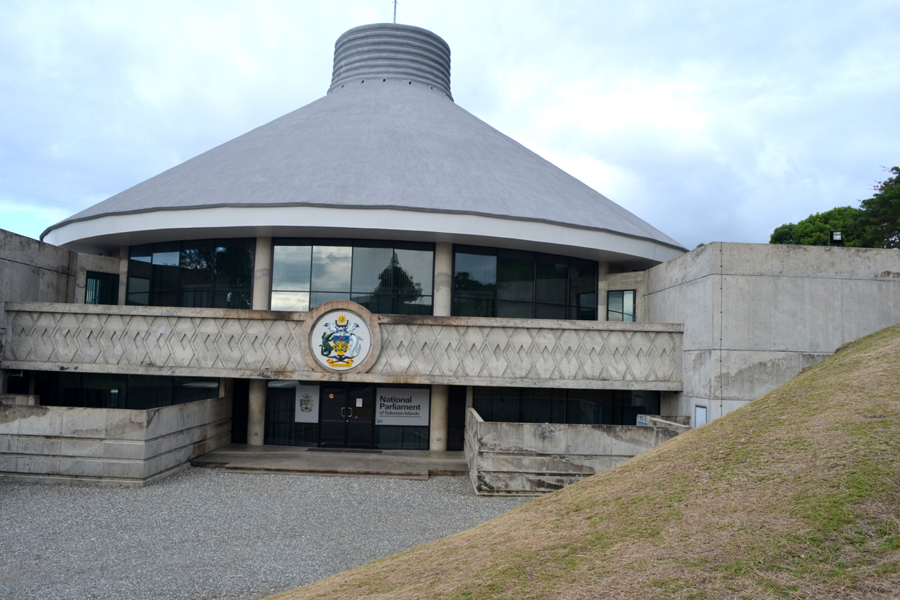
THE Traditional Governance and Customs Facilitation Bill 2018, has made it through its second reading in parliament and is now set down for debates, but that will happen after it is to put before the Bills and Legislation Committee (BLC) for its scrutiny.

This is an Act designed under the Ministry of Unity, Peace and Reconciliation, to provide for the recognition of Traditional Governance System, amending the Provincial Government Act 1997, and other related matters that deal with the traditional and custom practices in Solomon Islands.

According to its objectives, the proposed law looks to empower and allow for tribal chiefs and traditional leaders to participate in decision making on social and economic matters in the country, whiles at the same time, provides a frame work for the promotion and preservation of Traditional norms, protocols, values and practices.

The proposed legislation also aims to provide a framework for the institutionalisation, management and regulation of traditional governance systems.

Once enacted, the bill will enable the traditional governance system to become part of the formal governance system, as it will also fulfil intentions to preserve the customary governance system, for the future generation of the country.

As described and explained in the bill, the Roles of traditional governance and leadership maybe identified as an act of responsibility that is expected or vested upon them when they are in leadership levels or upon being appointed to take such responsibility.

It also identifies the Roles and matters of traditional nature or on subject issues that have direct relations to the structure and context of our society, and of which is important to the social and economic aspirations of the country.

Presenting the bill before moving a motion for its second reading, Minister for the Ministry of National Unity, Peace and Reconciliation, Commins Mewa explained that making this bill become realised was an agenda of the former government and he thanked the now Solomon Islands Democratic Coalition for Change Government (SIDDCG) for maintaining the policy which according to the Minister, is what the people needed for the purpose of governance for the traditional system.

Mewaw further added that the subject of social harmony and stability are prominent when it comes to the roles of chiefs or traditional leaders, and therefore pointed out their roles directly complement or to a certain extent, supplement formal state’s institution’s roles particularly, in the areas conflict management and resolutions.

This form of leadership according to Mewa, has the ability to pursue in brining those contentious social matters that are detrimental to the state, or for example, security issues, with regards to law and order within the bounds and this according to the government, needed the formal recognition.

“The theme for this year’s Anniversary Independence Celebration is redirecting our journey at 40 and the introduction of this bill, which when passed, will become the flagship legislation for our traditional governance system, as it also resonates well with this theme.

“Since independence 40 years ago, we have not provided our chiefs and tribal leaders, who reside and interacted with our people on a day to day basis, the platform for them to participate in formal decision making,” the Minister added.

He then pointed out that the governance system has not fully recognised the roles of chiefs and tribal leaders in all communities and empower them to expand and increase their roles, and the minister said this bill also aims to fulfil that.

“This Traditional Governance and Customs Facilitation Bill when passed and implemented, will add meaning and value to other acts of parliament, which will initiate reforms or amendments especially laws or natural resources development aspects on forestry, mines, agriculture and fisheries.

“I believe there will be realisation by all Honourable colleagues that this bill will facilitate partnership by our people who are the resource owners on developments, instead of being spectators, and it will also build more direct and tangible benefits to our people.

“If there is a time and opportunity for us to recognise, strengthen and empower our traditional leaders and traditional governance system and structures, it is now,” Minister Mewa said.

He further added that the bill gives leaders the perfect opportunity to give a voice and power to the traditional and tribal leaders.

“We have promised our people especially, our traditional and tribal leaders that we will enact legislations to recognise, strengthen and empower their roles and responsibilities, this is the bill.

“We owe it to our people to pass this bill and this is part of the redirection of the journey as we reach 40 years, and this is also an opportunity to give a voice and empower our traditional leaders and this also adds value to the call for a redirection to our country,” he said.

The bill if passed, will also establish a ministry of its own, to develop and implement policies relevant to improving the Systems provided for in the Act, as well as facilitating the institutional reforms across the Government for the purpose of achieving the objects of the Act.

Called the Ministry of Traditional Governance, it will also consult with the Ministry of Provincial Government to assist provincial governments to make Ordinances codifying customary law, and other functions related to the administration of this Act determined by Cabinet.

Meanwhile, the Minister responsible for the tabling of the bill highlighted that before parliament debates and move to pass this very important bill, it is worthwhile to refresh the minds with the roles, conscience, and structures of traditional governance and leadership.

The bill has a major advantage according to experts involved in the its compilation, will also allow for the management of customary properties and this, they said, will give an upper hand to tribal and traditional landowners who are expected to get high benefit in return.

Following its presentation on the floor of parliament after its second reading, debates into the bill was adjourned, with no actual dates on its return to parliament for deliberation, but the government according to insiders, is anticipating its return after the ‘Goods Tax Bill’, the ‘Supplementary Appropriation Bill 2018’, the ‘Solomon Islands Maritime Authority (SIMA) Bill 2018’, and the ‘Legal Profession Bill’ are dealt with.

Democracy vs Development in West Makira constituency

0

DEAR EDITOR, one notable feature of democracy is the majority always wins. This is mostly expressed during voting – a common system of electing leaders in democratic nations. These leaders in turn are elected purposely to become the mouthpiece and the voice of its people being represented in the governing house.

Equally important as well is that they are elected to facilitate, coordinate and fulfil the development aspiration and visions of the represented populace – a popular notion being widely uphold nowadays as a result of the dual function nature of our MPs better described as legislator and a development planner.

Thus we see on a general perspective that a leader has a direct link with the development of our country hence our respective constituencies. Moreover, it is interesting to see that respective leaders have different development visions, goals and objectives, plans and programmes for its followers, and that it is of their high interest to see their development dreams come true. And so is the people.

However for a leader with such development visions, the possible and probably the most favourable step to undertake towards fulfilling his or her development dreams is to get into the highest governing body – the parliament.

And this is where most have a problem with, because the key to that round house is with the people. And they cannot give you on granted purposes. They can lock you in and lock you out anytime they want or whenever they wish. Infact this peculiar right is granted to them by the legitimate principles of democracy.

However, experience tells that the way we applied these rights can either have positive or negative impacts on development initiatives we undertake.

To the West Makira constituents how we use our rights to put someone up there in the parliament is not explicit neither subtle and is quite undetectable but it can be deduced from our political history and two real practicable observable facts.

First of these two facts is, there has been too much playing around with the key to the round-house since late S S Mamaloni reign comes to an end and; secondly, we uphold psychologically, a typical development ideology that implies that major and wholesome developments are practical initiatives of life that can occur overnight.

Too much playing around with the key to parliament can be clearly comprehended when we glance back on our political history since Mamaloni’s reign ends. To be straight, since the beginning of this 21st century, we have locked in and thrown out four respective leaders successively, with full completed terms.

Each leader embarking on its own route to developing west Makira based on his development ideologies. And interestingly to note, each successive one never picks on from where his former ends – an act based on self-realisation which does not promote the “all” but the “I”. None the less, looking at this political scenario, can we draw something out that has a relative effect on our progressing developments?

In other words, what is the effect of toying around with this key on our development strive? Or to an extent, do you think we can have a consistent, logical, economically relevant and priority, and a fast-paced progressive developments?

Answering these questions will enlightened us why we need to be more careful with the key we hold to parliament, And hopefully would give us better understanding on why we need to apply key rightly in the best interest of our development strive.

In addition, how we use our voting rights appears to be rooted from a kind of development project ideology that implies that major significant developments projects can happen overnight.

And the effect of this ideology is clearly seen in the political scenario just recently described. In other words, we are often dissatisfied with every leader we appoint probably because they might have not done any major significant developments projects which can address the entire constituency socio-economical needs and wants. However we need to scrutinise such mindsets because practically it is wrong and does not conform to practical natures of project implementations.

Literally, huge projects that can have an entire effect on our constituency cannot happen in a day neither in a year except on very rare occasion, in the Solomon Islands context and setting. There are a lot of factors contributing to this and it is not the MP that delays the process or doing nothing.

Let us get informed that project implementation is a difficult task that does not demands a day to get it done. In fact development planners, project managers and implementer know all too well the difficulty and the complexity of the task. It’s not that easy as we might think as well as not too soon as we might expect. Practically four years is sufficiently not enough.

And to you all the MPs of this country whom you have managed to give in and developed your constituency with whatever resources being possibly available to you, I commend you for your hard work.

But in truth, implementing major significant development projects that could have a dynamic effect and satisfy us all (should we ever be satisfied) is a difficult task that demands time and energy. And this is one reason why only a few insignificant projects taking place in the first four years.

And as you have experienced these insignificant projects are merely community, household or personal projects. But let me tell you the truth, unless these insignificant projects were in line with the constituency development plans and policy ,they are the least of projects the MP and his team should spend their time and energy on; but somehow they were done as means to pacify our self-gratification and self-centred interests.

Huge constituency development projects that can have a whole effect on the entire constituency generally needs more than four years or so. Thus the ideology that implies that wholesome developments can happen overnight must be discarded.

These two facts then have exposed two very abstractive notions on developments which can be stated as: voting leaders one after another hinders progressive development but result only with a stagnant development.

And secondly, sufficient time is needed by a leader to fully implement his development plans and visions, thus I reckon two terms in the parliament is reasonable.

So far I have seen nothing too negatively serious about our current leader’s performance relating to his work. After all he’s far better off than the others before him. In fact he made a difference by compiling his team in a transparent and procedural manner. That is his CDO, project manager and the accountant were chosen on merit through application for the respective post while in the past hand-pick is the usual practise which is a typical of corruption.

Not only that, but already he has done some significant changes in our socio- economic development. He has invested a lot too in the education sector-a worthwhile investment in which you will see its fruit in the next ten years or so. Moreover there are still more good things yet to come and we are picking up. And though we are a bit slower, we are accelerating.

Our worst fear however, at this remaining months is, if this current development scheme and programme comes to halt once more, by electing another new MP, as we have been doing all along, then definitely we are sliding down again to square one.

Consequently the status qou is maintained and worst still (instead of moving forward, we are not only moving backward but rotating on a dead end cycle. This is why we can describe our development situation as a stagnant development situation)

It’s high time we take a serious consideration on our previous practice on electing leaders. It’s time we should focus and think more heavily on the progression of our development rather than on preferring leaders.

It is time we evaluate the effect of putting one leader after another on our development strive. And above all, it is really high time we identify and honestly state who really is to be blame for the slow development progression we are experiencing. To be frank, our MPs are totally out from any form of blames, for don’t you remember that the government is of the people, by the people and for the people.

This statement apparently states (clarify) that all responsibilities and hence blames falls on you: not the MPs. Nonetheless, in regard to changing an MP, let that be an ad hoc matter. In fact time and nature will tell exactly when to change a leader. Let us not rush hence to change a leader just for the sake of ticking somebody different.

Of course we will have additional candidates vying for that sacred chair in this upcoming national election as well definitely they are going to cause imbalance on our minds. However it is important that we know and understand that such is the ways and natures of democracy, which if we carefully considered, are just illusions and fancies of the system. To be straight, these are the deceptive parts of democracy that carry ones minds away from the current development scheme and programmes that are going on.

So let us not focus, dwell and fooled around on those impractical natures of democracy, rather let’s be pragmatic towards our development strive.

And this can be truly achieved through communicating, cooperating and collaborating with our MP which apart from other modes, can be simply shown through our ballot papers by appointing him on another second term. This might sound a bit undemocratically but this is an expedient approach for the sake of speeding up worthwhile developments in west Makira.

To conclude democracy provides legitimate principles whereby we can exercise our rights based on our free conscience to choose and elect leaders. But exercising some of these rights can have an impact on certain aspect of live, in particular, our development strive. So far we have been using these rights to prefer leader after leader that we do not realise that it has a detrimental effect as well as a hindrance to our progressive development.

It is time we turn around and exercise our rights wisely for a positive and a progressive development in our constituency.

Finally lest we forget, all our leaders envision a healthy, active, wealthy and a prosperous constituency – not bad things. They just need time to fulfil those dreams.

Long live west Makira!

Hansel Sau

USP Solomon Islands

Honiara youths empowered under Crime Prevention Strategy

0
RSIPF and the Solomon Island Police Support Program.

BY LYNTON AARON FILIA

YOUTHS in Honiara have successfully completed a workshop on Crime Prevention Strategy held at the Honiara Youth Hub, aimed to increase young people’s awareness and engagement in issues affecting them and society.

The workshop was facilitated by the National Community Policing Team of the Royal Solomon Island Police Force (RSIPF) and Solomon Island Police Support Programme (SIPSP).

The event was organised with aim to increase awareness and engagement of young people on the Crime Prevention Strategy which the RSIPF are working on.

As part of implementing the strategy, the RSIPF is also introducing a new model called SARA which is part and parcel of the Crime Prevention Strategy, and young people have a part to play in it.

RSIPF and the Solomon Island Police Support Program.

National Community Policing Programme Coordinator Sergeant (Sgt) John Manegaua said the workshop was organised with aim for the RSIPF and youth leaders to come together and learn about crime prevention and problem-solving using the SARA model.

“In any problem solving we need to Scan-by asking what the problem is, Analyse-what contributes to the problem, response-what can we do to improve the problem and Asses-did the response work.”

“We had the opportunity with the presence of former Prime Minister of New Zealand Ms Clark who spoke at the occasion and took questions from the audience which was a fantastic bonus.

“As a former NZ Prime Minister and former Head of the United Nations Development Programme, Ms Clark has a wealth of knowledge and experience that she was more than happy to share.

“Ms Clark’s message of active citizenship was well received and timely as it coincided with the intent of the workshop.”

Ms Clark encouraged young people to get involved in politics, enrol to vote and cast a ballot in the general election next year.

She noted that 80 percent country’s population is under 30 years and their voice and influence must be heard.

The City Mayor Andrew Mua during the workshop strongly supported the importance of involving and encouraging youth on the Crime Prevention Strategy.

He thanked the New Zealand Government’s support in the ongoing development of facilities for Honiara youth, including an extension to the multipurpose stadium.

Police officers picture with a youth dressed in cultural costume before the workshop.

Makira-Ulawa overdue problem addressed

0
The new Kirakira market building with guests during the opening.

BY MAVIS NISHIMURA PODOKOLO

Makira Ulawa Deputy provincial secretary Mr Wilson Billy Rafiau.

MAKIRA Ulawa provincial government has stepped in to address an ‘overdue problem’ in constructing a new proper market facility which was launched on Monday.

Market venders across Makira/Ulawa province again have a venue to sell their products after the old market house was demolished few years ago.

Premier for Makira Ulawa province Stanley Siapu said the driving force behind this facility is the fact that market venders especially women who come with their markets are exposed to sun and rain.

Mr Siapu in his remarks assured venders that this is just the beginning of the provincial government’s commitment to continue improving the facility in the near future.

“Therefore let me assure you (market venders) this is the first step and as soon as other related matters are settled the whole area near the market building will be developed for you vendors and the people of Makira Ulawa province,” said Siapu

On the same note deputy provincial secretary Wilson Billy Rafiau thanked the current executive members led by Hon Premier for the wisdom and the vision they have for the people of the province in addressing one crucial need of market vendors.

Mr Rafiau said having this newly built facility chases away the days of being exposed to sun and rainy weather.

“To you market vendors I guarantee you today (yesterday) that the days the rain and heat chased you are all gone. You will now find a new home to do your buying and selling,” said Rafiau.

Cecilia Tagua on behalf of the market venders said, “The completion of this market building is great relief to our cries for a proper market facility also thanks to the provincial government for fulfilling its obligation in the completion of the market house.”

The opening ceremony of the market building was held at the provincial headquarter yesterday at the Kirakira town, in Makira.

The facility was successfully through the support of the Ministry of Provincial government & Institution strengthening (MPGIS) through the Makira Ulawa provincial government and was constructed by Jabez Construction, a Honiara based company owned by Mr Jason Fa’akelema Takila.

The new Kirakira market building with guests during the opening.
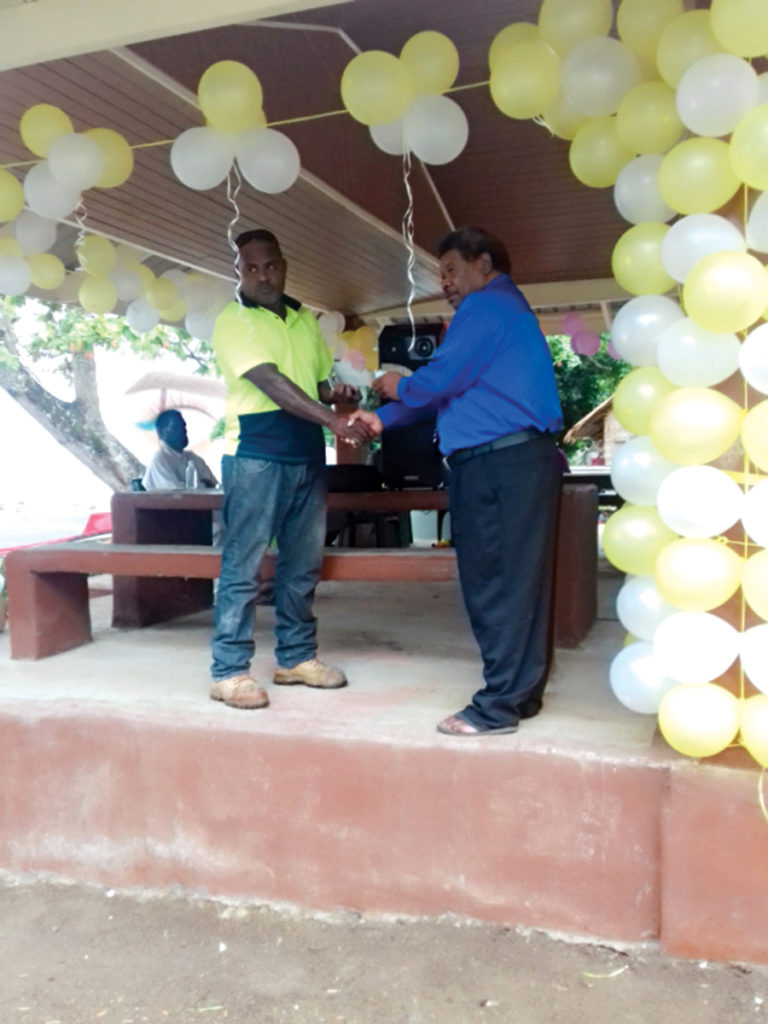
Makira Ulawa Premier Hon Stanley Siapu receives the handover from Jabez Construction managing director Mr Jason
Fa’akelema.

Three suspects arrested in North Malaita following store break-in

0

POLICE in North Malaita, Malaita province have arrested three suspects in connection with an alleged store break-in which occurred on Saturday, August 25 at the Malu’u station.

Supervising Provincial Police Commander (PPC) Malaita Province, Superintendent Timothy Apaesi says, “The value of goods stolen is estimated at around $5,000.

“The three suspects aged between 20 and 30 years old were arrested and charged for alleged store break-in and have been formally bailed.

“The three suspects are expected to appear in the Auki Magistrates Court on 8 October 8, 2018.”

–POLICE MEDIA

Court urges investigators to execute warrants of arrest

0

BY JENNIFER KUSAPA

PRINCIPAL Magistrate Augustine Aulanga has again urged police investigators to execute warrants of arrest issued by the court in relation to accused released on bail but never turn up for court hearing.

He made the comments in court yesterday when few cases were called for review of the warrants of arrest.

The Police Prosecutor told the court that the warrants are yet to be executed but will be checking on the investigators for any feedback in relation to the warrants.

But Magistrate Aulanga said there are many outstanding warrants yet to be executed and police investigators must follow up on the warrants.

He told the prosecutor to convey the orders from the court to the investigators so that investigators quickly execute the warrants.

Traffic accident claims one life in Malaita

0

A 22-year-old male person was killed during a traffic accident at the Ferakui Hill, near Dala North, West Kwara’ae, Malaita province on August 25, 2018.

Supervising Police Provincial Commander Malaita Province, Superintendent Timothy Apaesi, “It is alleged that the incident occurred when the vehicle was on its way to the North Road to do trading of cargo at villages along the road.

“Besides the cargo there were also 17 passengers on board the vehicle.

“Whilst driving up the Ferakui Hill, the vehicle engine stopped, veered off the road and overturned.

“The male person died instantly while four others have been admitted at the Kilu’ufi Hospital near Auki.

“The driver has been arrested and Police are now investigating the matter.

“I want to remind vehicle owners and drivers to properly check your vehicles before travelling.

“Some of our road conditions are in a bad state and we must be mindful of how we drive on those roads.

“Make sure our vehicles are road worthy and have a valid vehicle licence.”

–POLICE MEDIA

Croc attack kills 14-yr in West

0

POLICE officers in Munda, Western province have received a report about a crocodile attack on a 14-year-old boy in the Rendova Harbour area on August 24, 2018.

Supervising Provincial Police Commander Western Province, Superintendent Cedar Nevol says, “On Friday evening children from Rendova Harbour went out on a diving trip to an Island called Bao not far from their village.

“Whilst diving, a crocodile grabbed the victim and pulled him into the sea. On seeing this, the other children went back to the village and reported the incident.

“The matter was reported to police at Munda and two officers assisted the villagers to search for the victim.

“And it was not until 6pm in the evening that the boy was found already deceased.

“Arrangements are underway to deploy Police Response Team (PRT) officers to the place of incident as soon as possible.

“I want to extend my condolences to the family of the deceased, and want to encourage others if you sight any crocodile around your villages and want police assistance, please go to your nearest station so that officers can assist you to fill in a form required for the destruction of crocodiles.”

–POLICE MEDIA

Status on cost of living calls for an overall review to SI Tax system: Wale

The Aoke/Langalanga MP, Matthew Wale

By Gary Hatigeva

“HAVING compared to neighbouring countries in the region, Solomon Islands has one of the highest costs of living,” says Matthew Wale, Member of Parliament for Aoke/Langalanga and Chairman of the Bills and Legislation Committee.

Presenting his speech on the debate session of the Goods Tax (Amendment) Bill 2018, the Aoke/Langalanga MP stressed that food and transportation, electricity, water, accommodation, basic healthcare system, the basic education and clothing are basic necessities for all families.

He said families are however struggling to make ends meet, as most of the economy does not pay a living wage, and families are unable, on the basis of their income, to meet all the necessities of life.

“Thus, the quality of life is not where it should be. It must be government responsibility to address these through robust and responsible policy.

“Taxation is a burden on the family. No one is arguing that we must not contribute. However, there is a strong case against the arbitrariness of the GST formula – its inclusion of customs duty as the base amount that GST is then calculated on,” Wale said.

He added that the inclusion represents an unjustified intrusion into family incomes, as it represents a cost of government that is unfairly levied on the people, and he suggested for it to be changed.

“And if it is changed, that saving must be passed on to the consumers, and not be hoarded by the wholesalers.”

He further pointed out that this is a result of an overdue taxation system, which needs a complete overhaul.

Wale said such an overhaul must aim, above all considerations, to strike the balance between incentivising or encouraging increased private investment in the appropriate sectors of the economy and efficient government expenditure in reasonable quality public services.

The BLC Chair said this is not an easy balance to achieve, but the country through responsible governments, must strive for it, and such a balance will be demonstrated by the number of quality job opportunities that will be created in the economy over the mid to long term.

“And such jobs should provide a reasonable living wage, and that taken with reduced cost of living will afford families savings and the means to meet the basic necessities of life in our country.”

Meanwhile, in his concluding remarks, Wale stressed that the government needs revenue to fund public services sustainably, and Taxation is the government’s primary revenue raising tool, but this policy must be guided by the principles that contribute to creating a just, fair, and a more equal society.

This bill remedies a loophole in the current Act that allows some wholesalers to evade paying the correct amount of GST.

“In that objective, it is laudable and the House must support it. However, the formula for calculating GST betrays an arbitrariness that is inherently unfair to taxpayers.

“Further, it is a major contributor to the high cost of living in our country. Government ought to review this formula to ensure that these considerations are given adequate weight in the on-going reforms to our taxation system,” the legislator further stressed.

RSIPF warn communities in North Guadalcanal of bomb blasting

0

THE Royal Solomon Islands Police Force (RSIPF) Explosive Ordnance Disposal (EOD) Team will conduct a live demolition of a bomb in the Taihohoru Area of North West Guadalcanal on Wednesday, August 29, 2018.

Officer In-charge (OIC) of EOD, Inspector Clifford Tunuki says, “This bomb was reported recently to EOD by communities in the area. The task is to safely destroy the bomb by explosive means.

“The Taihohoru area in North West Guadalcanal area will be active from 9am to 4pm on August 29, 2018.”

“Farmers, hunters and the people living in the Taihohoru area are kindly asked to keep out from the area while the operation is underway.

“I am appealing to all communities in and around the Taihohoru area to also keep out from the area while the operation is in progress.”

–POLICE MEDIA