
BY BEN BILUA
Gizo
RESIDENTS of Gizo are beginning to feel the harsh impacts of a prolonged dry spell brought about by the developing El Niño weather phenomenon, which is threatening communities across the Solomon Islands.
For the past month, Gizo has experienced little to no rainfall, leaving many households struggling to access clean water for drinking, cooking, and other daily needs.
People carrying buckets and containers along roads and footpaths in search of water have become a common sight throughout the town since last week as household water tanks continue to run dry.
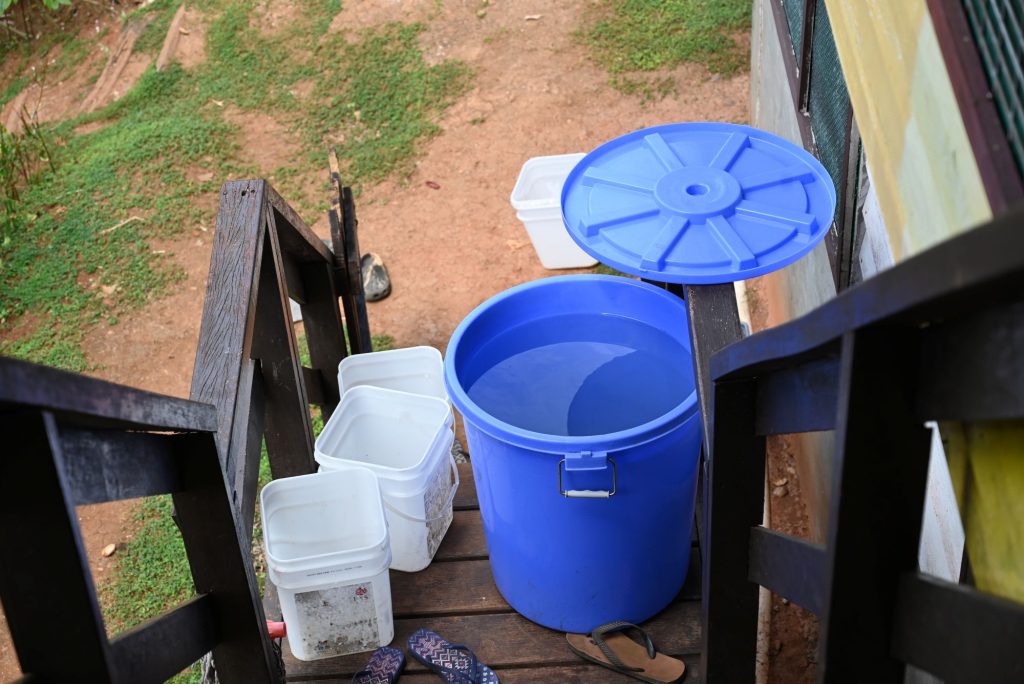
With no reliable reticulated water supply serving the township, many residents are heavily dependent on rainwater harvesting systems.
The absence of rain has placed immense pressure on families, forcing them to travel long distances to find alternative water sources.
Some households are still relying on small wells for washing and other domestic purposes, but concerns are growing over how long underground water sources can continue to meet the increasing demand.
Gizo has been without a proper water supply system for more than two decades, making residents particularly vulnerable during extended dry periods.
“No rain means no water for the people of Gizo,” one resident said.
Island Sun understands that the Government has activated its national drought contingency plan following the onset of El Niño conditions in Solomon Islands.
National Disaster Management Office (NDMO) Director and Chairman of the National Disaster Operations Committee, Jonathan Tafiariki, said the National Emergency Operations Centre will continue to coordinate response efforts to Tropical Cyclone Maila and will also prepare for potential drought impacts throughout the country.
Speaking to the media, Tafiariki said authorities are closely monitoring the situation and working with relevant agencies to ensure preparedness measures are in place.
Climate agencies and forecasting centres have warned that El Niño conditions are expected to strengthen over the coming months.
As of June 2026, forecasts indicate that El Niño is developing and is very likely to persist through late 2026 and into early 2027.
The World Meteorological Organization estimates there is an 80 per cent chance of El Niño conditions during June to August 2026, with the probability rising to more than 90 per cent later in the year.
Most climate models suggest the event could reach moderate to strong intensity, while some forecasts indicate it may become exceptionally strong.
Several meteorological agencies have warned that the 2026 El Niño event could become one of the strongest experienced in decades, although uncertainty remains regarding its peak strength and the extent of its impacts across different regions.
For Gizo residents, however, the effects are already being felt, with water scarcity becoming an everyday challenge as the dry season intensifies and communities anxiously wait for rain.
For feedback, contact: [email protected]
Editor: [email protected]