
Home Blog Page 7

REVIVING SIICAC

0

PM Wale pushes for stronger anti-corruption body, advises revisiting issue of blocked Director General candidate as starting point

BY TONY IROGA

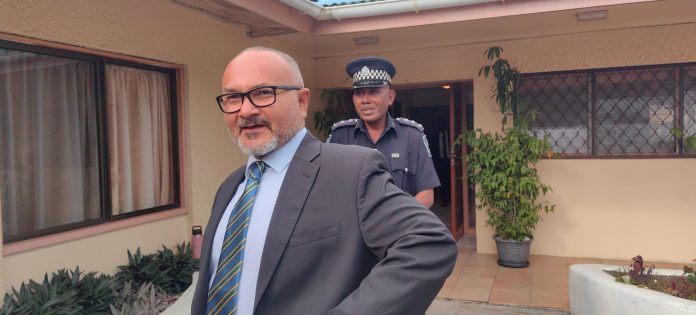
PRIME Minister Matthew Wale has reaffirmed his Government’s commitment to ensure the Solomon Islands Independent Commission Against Corruption (SIICAC) is fully equipped to carry out its mandate effectively.

Mr Wale also revisited the issue of the previously recommended candidate for the position of Director General of SIICAC as a step forward to strengthen the institution, a statement by the PM Press Secretariat yesterday said.

SIICAC has gone without a director general for one year and two months, after former DG John Kouni’s contract expired in April last year.

The search for a new DG was politicised after Solomon Kalu, former chairman of the Leadership Code Commission, was recommended by an independent recruitment interview panel but was blocked by former Attorney General John Muria Jnr in January this year.

Speaking during his meeting with SIICAC Chairman James Apaniai at the Prime Minister’s Office yesterday, Prime Minister Wale stressed the urgent need to restore public trust and integrity in the institution.

“It is time to bring back integrity and trust. We must prove to our people that SIICAC is working,” the Prime Minister said.

He acknowledged that while progress has been made, more work is required to strengthen the Commission’s operational capacity and public confidence, the statement said.

The Prime Minister emphasised that reforms must be accelerated to ensure SIICAC delivers on its intended purpose.

Mr Apaniai welcomed the Prime Minister’s stance, agreeing that urgent action is needed to address existing weaknesses within the organisation, the PM Press Secretariat said.

Apaniai noted that key challenges have already been identified but progress has been slowed due to the absence of a Director General.

“The lack of a Director General has significantly stalled our work. Addressing this must be a priority,” Apaniai said.

In response, Prime Minister Wale acknowledged the concern and advised the Chairman to engage with the Attorney General regarding the appointment process, including the previously recommended candidate, the statement said.

Both agreed on the need to urgently strengthen the institution, improve its effectiveness, and ensure it operates with independence and credibility.

Prime Minister Wale reiterated that the Government remains accountable for ensuring SIICAC is properly supported and functional, adding that restoring trust in the system is critical.

“We must make this institution work. Our people must see results and have confidence that corruption will be addressed,” he said.

The main role of SIICAC is to prevent, investigate, and prosecute corruption across both public and private sectors.

Established under the Anti-Corruption Act 2018, its core responsibilities are divided into four main pillars:

1. Investigation and Prosecution

Independent Powers: SIICAC can independently investigate allegations of corrupt conduct, such as bribery, embezzlement, and abuse of office by public officials, politicians, and private individuals.

Prosecutorial Authority: Unlike regular police units, SIICAC has the direct power to prosecute corruption cases in court, bypassing the traditional Office of the Director of Public Prosecutions (DPP).

2. Prevention and Public Sector Reform

Systemic Audits: The commission conducts Corruption Risk Assessment and Management (CRAM) surveys to identify loopholes within government ministries and recommend fixes to block corrupt practices.

Integrity Standards: It assists public bodies in designing codes of conduct and transparent procurement systems.

3. Education and Public Awareness

Community Engagement: SIICAC runs public awareness campaigns to educate citizens, businesses, and civil servants on the social and economic costs of corruption.

Reporting Channels: It establishes and maintains confidential mechanisms for whistleblowers and the general public to safely report suspected corrupt activities.

4. International Cooperation

Global Alignment: The agency ensures the country complies with the United Nations Convention Against Corruption (UNCAC).

Cross-Border Enforcement: It collaborates with international anti-corruption bodies to trace, freeze, and confiscate proceeds of corruption hidden overseas.

SIICAC has not received sufficient government support for most of its existence since 2018, though recent systemic reforms aim to reverse this trend.

PM Wale’s statements of support for SICAC during his meeting with Chairman Apaniai yesterday could indicate a government that aims to be the first to fully support and empower SIICAC to perform its important duties.

For feedback, contact: [email protected]

Editor: [email protected]

Coastal environment key to livelihoods and national development

0

BY TONY IROGA

Our coastal environments are natural assets that support livelihoods throughout the country.

Karl Kuper, Deputy Secretary Corporate for the Ministry of Environment, Climate Change, Disaster Management and Meteorology (MECDM) made the above statement when he delivered the keynote address at a recent launch of a major week-long environmental clean-up campaign at Rove Children’s Park in Honiara.

He said coastal environments contribute to tourism, recreation, culture, tradition, and many other aspects of our daily lives.

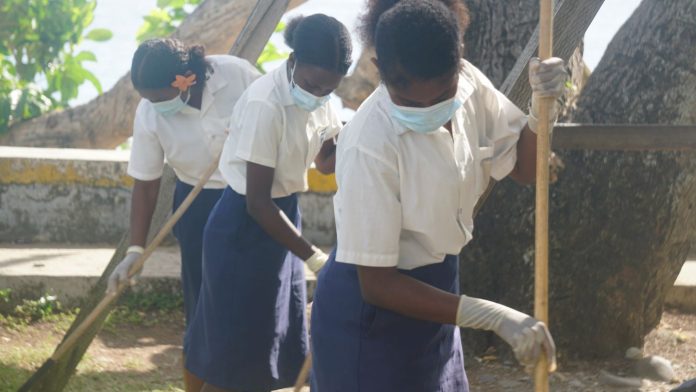
The campaign, which coincided with the observance of World Environment Day 2026, Coral Triangle Day and World Ocean Day, brought together civil society organisations, community members and students from Mbokona, Tamlan and White School in a united effort to restore the capital’s coastal environment.

Kuper highlighted that Solomon Islands’ beaches and marine ecosystems are valuable national assets that not only sustain livelihoods but also support tourism, recreation, cultural practices and traditional activities throughout the country.

“I would like to remind us to sustain what sustains us, to protect what protects us.

“Environmental stewardship is not just the business of government. It is the responsibility of communities, individuals, businesses and every citizen,” he said.

He stressed that environmental protection cannot be left solely to government agencies and calls for greater public participation in preserving the country’s natural resources.

According to Kuper, the rubbish washing onto Honiara’s shores is a visible reminder of how waste is being managed inland and highlights the urgent need for better waste management practices.

The clean-up operation, supported by the Honiara City Council (HCC) and sponsored by The Nature Conservancy (TNC), will target heavily littered beaches and public recreational areas throughout the capital over the coming week.

Kuper also commended the students and young people who participated in the clean-up campaign, describing them as future leaders in environmental conservation.

“To all our young people, you are key partners in building a sustainable future.

“Your participation today is greatly appreciated. You have demonstrated leadership at a young age and shown a strong commitment to environmental stewardship,” he said.

He encourages all Solomon Islanders to take greater responsibility to protect the environment, saying that collective action is essential to safeguard the country’s coastlines and ensure a cleaner, healthier future for generations to come.

Photo credit: Tony Iroga

For feedback, contact: [email protected]

Editor: [email protected]

UNDP focuses on strengthening provincial governance and rural development

0

BY NED GAGAHE

The United Nations Development Programme (UNDP) says strengthening provincial governance systems and improving rural infrastructure remains a key priority in its development support to Solomon Islands.

UNDP Pacific Office Resident Representative Ms. Munkhtuya Altangerel said provincial-level capacity building is essential to ensure effective service delivery and sustainable development across the country.

Speaking to local media in Honiara recently, Ms. Altangerel said UNDP is working closely with the Ministry responsible for provincial governance to help strengthen administrative and financial systems.

“For example, we work with the provincial governance ministry, and we help support provincial governments to determine their own priority,” she said.

She said support is also focused on building capacity in financial management, procurement processes and asset management systems within provincial administrations.

“…but also, to have that capability to have their own financial management systems, including also capacities to conduct procurement, to have asset management,” she said.

Ms. Altangerel said strengthening these systems is crucial for to improve transparency and efficiency in the delivery of services at the provincial level.

She added that UNDP is also supporting investments in rural infrastructure, particularly projects that are designed to be climate-resilient and responsive to local community needs.

“…but also, to invest in rural infrastructure, which is climate resistant,” she said.

The UNDP representative said community development and benefit-sharing arrangements are also important considerations, particularly in areas affected by resource extraction and development activities.

She said that empowering provincial governments to make informed decisions on local priorities will contribute to more inclusive and balanced national development.

Ms. Altangerel made the remarks following a week of high-level meetings with government ministries, Parliament, development partners and civil society organisations in Honiara.

During her visit, she engaged with a broad range of stakeholders as part of UNDP’s ongoing support for governance, resilience and institutional strengthening in Solomon Islands.

UNDP continues to work with national and provincial authorities to strengthen systems that support long-term development outcomes across the country.

For feedback, contact: [email protected]

Editor: [email protected]
Auki Capital League set for kickoff

0

BY RICHARD MENANOPO

The Auki Capital League 2026 competition is set to officially kick off this month with the men’s and women’s divisions scheduled one week apart in Auki, Malaita Province.

Speaking to Island Sun Sports in a phone interview on Thursday last week, Malaita Football Association (MFA) General Secretary and Local Organising Committee (LOC) Secretary Johnson Maemua confirmed that the men’s competition will begin on Saturday June 20 while the women’s league will commence on Saturday June 27.

“Women’s will be on the 27th as I have indicated in the post, and men’s will be on the 20th and that is on Saturday as well,” Maemua said.

He said technical meetings for both divisions will be conducted ahead of their respective kick-off dates.

“The men’s technical meeting will be on Monday while the women’s technical meeting will be on Thursday, and games will begin on Saturday the 27th,” he said.

Maemua said ten teams have officially qualified for the men’s division of the competition.

According to him, participating teams are drawn from Ward 6 through West Mbaelelea, Fo’ondo and South Road in Arabala, including teams around Auki township.

All matches will be played at the Aligegeo Sports Ground.

On the competition format, Maemua said this year’s league will run for one round only as organizers shift focus towards upcoming national events.

“We will run one round because we need to prepare for the Solomon Cup and through this competition we will also identify teams and players that we will prepare for the Solomon Games in November,” he explained.

Maemua said one of the major objectives of the competition is to engage young people positively through sport while supporting football development in the province.

“We have aligned our programs with SIFF and we are trying to engage our young people to involve in sports so as to avoid unwanted activities arising in our communities,” he said.

The MFA official also revealed that four top teams from last season have retained their places in the league competition while six new teams advanced through a pre-season qualifying competition.

“We had more than ten teams competing in the pre-season and six of them qualified to join the four remaining teams from last year,” Maemua said.

“Our defending champions are W4 from Ward 4.”

Meanwhile, organisers are still appealing for sponsorship support ahead of the season opener.

“Usually, we only receive assistance from SIFF through the TFTs. We are still appealing for sponsors within the province and have submitted letters to sponsors like Telekom Auki because we really need assistance to host the competition,” he said.

Maemua also encouraged football fans and participating teams to support the competition and uphold the true spirit of the game.

“This competition is more than just football — it is a celebration of talent, unity, discipline and sportsmanship.

“To all participating teams, we encourage you to compete with integrity, respect your opponents and uphold the true spirit of football both on and off the field,” he said.

He added that the league will also serve as a pathway for player development and talent identification.

“The league is not only focused on competition but also serves as an important platform for player development and talent identification,” Maemua said.

He said standout players throughout the competition will be monitored by coaches and technical officials for possible opportunities in higher-level training and representative football programs.

The Auki Capital League continues to be one of the growing football competitions in Malaita Province, providing opportunities for grassroots football development and community participation while helping to identify emerging talents for higher-level competitions in Solomon Islands football.

For feedback, contact: [email protected]

Editor: [email protected]
UNDP calls for greater youth participation in Solomon Islands politics

0

BY NED GAGAHE

The United Nations Development Programme (UNDP) has highlighted the need to strengthen youth participation in Solomon Islands’ political and democratic processes, noting that young people make up the majority of the country’s population.

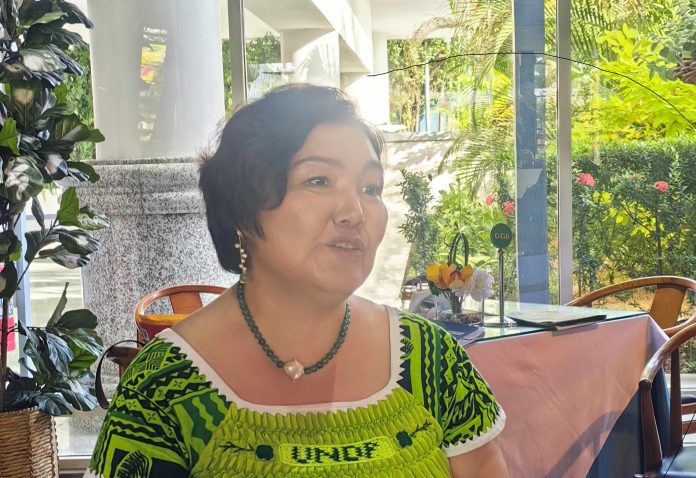
UNDP Pacific Office Resident Representative Ms. Munkhtuya Altangerel said increasing youth engagement in governance and decision-making is a key priority in the organisation’s ongoing support to Solomon Islands.

Speaking to local media in Honiara, Ms. Altangerel said targeted efforts are needed to ensure young people are not only aware of democratic processes but are actively involved in shaping national development.

“We also want to look at political participation of especially young people,” she said.

Ms. Altangerel pointed out that approximately 75 per cent of Solomon Islands’ population is under the age of 35, making youth engagement a critical factor for the country’s future governance and stability.

“Seventy-five per cent of the population of Solomon Islands is under the age of 35,” she said.

She said UNDP is working with key institutions, including the Solomon Islands Electoral Commission and civil society organisations, to strengthen civic education and encourage broader participation in electoral and governance processes.

According to Ms. Altangerel, youth inclusion is essential not only for elections but also for long-term nation-building and policy development across sectors.

She said discussions held during her week-long visit included engagements with government ministries, Parliament, development partners and youth-focused organisations, including the National Youth Congress.

Ms. Altangerel also emphasised the importance of preparing young people to take on leadership roles in the future, particularly as the country moves towards the 2028 election cycle.

She added that governance remains one of UNDP’s core areas of support in Solomon Islands, alongside climate resilience and institutional strengthening.

The UNDP representative said ensuring meaningful youth participation will help strengthen transparency, accountability and inclusive decision-making across all levels of government.

Her comments come as UNDP continues its broader engagement with the Solomon Islands Government on governance reform, electoral preparedness and community development initiatives.

Photo credit: Ned Gagahe

For feedback, contact: [email protected]

Editor: [email protected]
Environment protection is everyone’s daily responsibility: Kuper

0

BY TONY IROGA

The growing pollution problem along Honiara’s coastline is a direct result of poor waste management practices on land, Ministry of Environment, Climate Change, Disaster Management and Meteorology (MECDM) Deputy Secretary Corporate Karl Kuper said.

He made the remark while delivering the keynote address during the launch of a week-long environmental clean-up campaign at Rove Children’s Park recently.

The campaign brought together government officers, community volunteers and young people to clean the coastline and raise awareness about the importance of protecting the environment and properly managing waste.

Kuper said protecting our environment is not a one-day event but a daily responsibility for all citizens

“The cleaner beaches we create today reflect the healthier future we want for our communities, our children and our country,” he said.

He reminded participants that environmental protection is a shared responsibility and should not be limited to special events or campaigns.

Kuper encouraged residents to embrace the “Three Rs” approach Reduce, Reuse and Recycle as a practical way to address the country’s growing waste problem.

He urges households to separate their rubbish, compost organic waste and make proper use of waste collection services provided by the Honiara City Council.

As part of the campaign, volunteers carried out a general clean-up around the coastal area surrounding Rove Children’s Park, collecting large amounts of rubbish that had accumulated along the shoreline.

At the same time, a technical team conducted a waste audit to identify and analyse the types of pollution commonly found along the coast. The findings are expected to assist authorities in future environmental planning and policy development.

Kuper said improper waste disposal on land has serious consequences for the marine environment.

“If waste is thrown onto roadsides, into rivers, or drainage systems, it ultimately reaches our marine environment. That is why proper waste management is essential for protecting our oceans.

“When we visit communities, we must be mindful of how we dispose of waste because whatever we do on land eventually ends up in the sea,” he said.

Following the official launch, officers from the Environment Conservation Division reinforced the importance of proper waste disposal and explained how litter from households, roadsides, drains and communities eventually finds its way into the ocean.

The campaign also highlighted the important role young people play in environmental protection and sustainability.

“To all our young people, you are key partners in building a sustainable future.

“Your participation today is greatly appreciated. You have demonstrated leadership at a young age and shown a strong commitment to environmental stewardship,” Kuper said.

He expressed hope that the week-long campaign will encourage communities across Honiara to adopt better waste management practices and work together to keep the city’s coastlines and marine environment clean for future generations.

The campaign aims to promote greater environmental awareness and inspire long-term behavioural change to protect Solomon Islands’ fragile coastal and marine ecosystems.

For feedback, contact: [email protected]

Editor: [email protected]
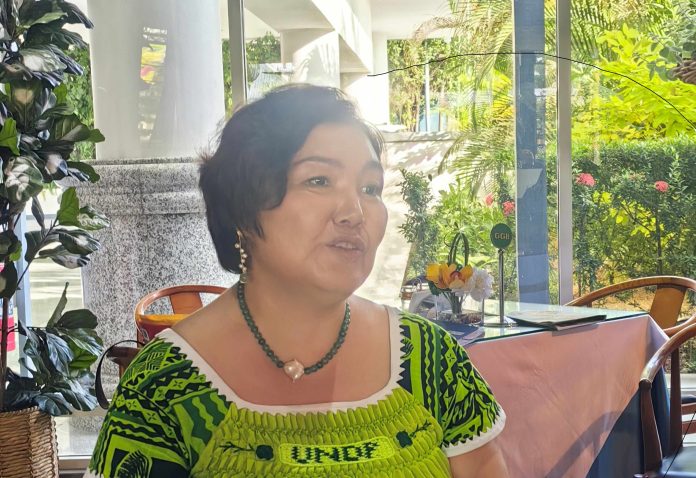
UNDP prioritises electoral readiness ahead of 2028 polls

0

BY NED GAGAHE

The United Nations Development Programme (UNDP) says strengthening electoral readiness ahead of the 2028 national and provincial elections remains one of its key priorities in Solomon Islands.

Speaking to local media in Honiara recently, UNDP Pacific Office Resident Representative Ms. Munkhtuya Altangerel said preparations for the next election cycle must begin early to ensure transparency, accountability and effective participation.

“2028 is just nearby, so we really need to ensure that our Solomon Islands Electoral Commission is ready to again hold the elections with accountability and transparency,” Ms. Altangerel said.

She said UNDP will continue supporting the Solomon Islands Electoral Commission (SIEC), particularly in improving voter registration systems and civic participation.

Ms. Altangerel revealed that she met with SIEC Chairperson and commissioners during her official visit to Solomon Islands this week.

“I met not only with the Madam Chairlady, but also with the commissioners of the Electoral Commission,” she said.

She said discussions focused on strengthening voter and civic registration systems ahead of the next joint elections for both provincial and national governments.

“I understood that it will also be joined-up elections, both for provincial as well as national, like it was done in previous years,” she added.

“So that’s quite a big transformation.”

Ms. Altangerel said, one major area of support will involve enhancing and cleaning up voter and civic registry systems to improve the credibility and efficiency of future elections.

She also highlighted the importance of increasing youth participation in the democratic process, noting that young people make up the majority of Solomon Islands’ population.

“We also want to look at political participation of especially young people, as 75 per cent of the population of Solomon Islands is under the age of 35,” she said.

Ms. Altangerel said governance remains a core pillar of UNDP’s work in Solomon Islands, alongside resilience and climate change initiatives.

During her visit, she held meetings with government ministers, Parliament representatives, development partners, civil society organisations and provincial governance stakeholders.

The UNDP representative described the week-long engagements as “very substantive”, saying the discussions covered governance, elections, provincial development and transparency issues across the country.

Photo credit: UNDP

For feedback, contact: [email protected]

Editor: [email protected]
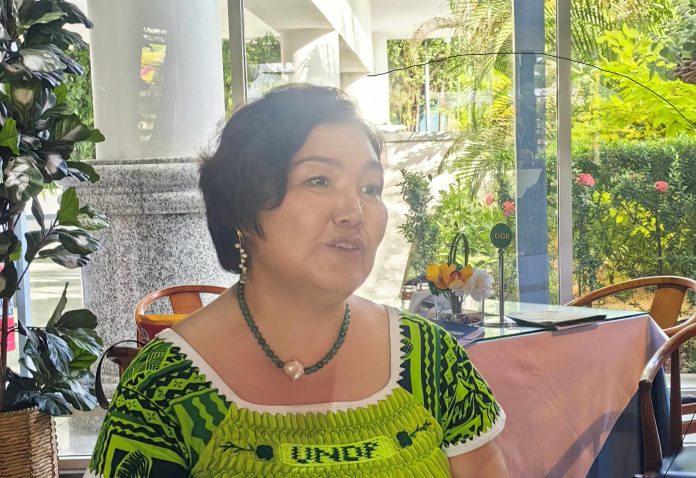
UNDP deepens engagement with new coalition government

0

BY NED GAGAHE

The United Nations Development Programme (UNDP) has reaffirmed its commitment to strengthen partnership and development cooperation with the new Solomon Islands Government following a series of high-level meetings last week.

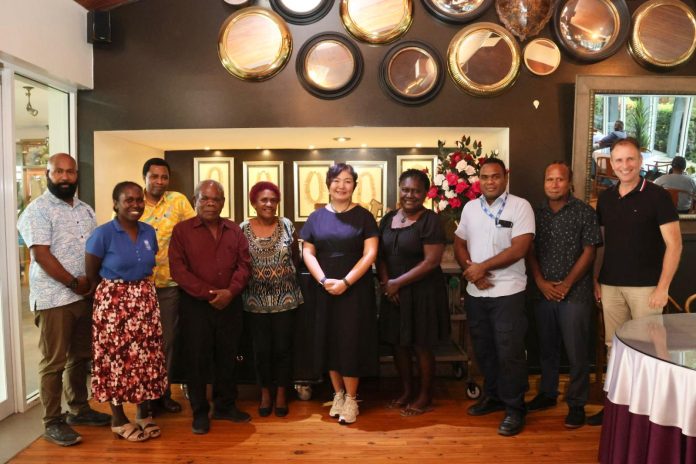
UNDP Pacific Office Resident Representative Ms. Munkhtuya Altangerel said her official visit to Solomon Islands involved extensive consultations with government ministers, Parliament leaders, development partners and civil society organisations.

Speaking to local media in Honiara last week, Ms. Altangerel described the engagements as “very substantive”, saying discussions covered a wide range of national development priorities.

“I had a meeting with most ministers, the new ministers in the Government of Solomon Islands, the Great Coalition,” she said.

Ms. Altangerel said her mission began with meetings with the Ministry of Foreign Affairs before holding discussions with Minister of Planning and officials from the Ministry of Finance.

“We had a very substantive dialogue with the Minister of Finance,” she said.

She also held meetings with the Ministry of Mines, Ministry of Provincial Government, Ministry of Police and Ministry of Rural Development, as well as the Forum Fisheries Agency.

“So, I would say we’ve covered the entire spectrum of the civil service here in Solomon Islands,” Ms. Altangerel added.

The UNDP representative also met with the Solomon Islands Electoral Commission, Parliament representatives and several civil society organisations, including the Solomon Islands National Women’s Council, disability organisations and youth groups.

“I also had a discussion with the partners, including Australia, United Kingdom, China, Japan and also New Zealand,” she said.

According to Ms. Altangerel, governance remains a central pillar of UNDP’s support in Solomon Islands, particularly in areas relating to provincial governance, elections, transparency and community development.

“UNDP is a United Nations agency that works on governance. So, it’s a key pillar of any nation building,” she said.

She highlighted continued UNDP support for provincial governments in areas such as financial management systems, procurement capability, asset management and climate-resilient rural infrastructure.

Ms. Altangerel also stressed the importance of transparency and accountability in the extractive sector, revealing that UNDP and the United Kingdom will support Solomon Islands to rejoin the Extractive Industries Transparency Initiative (EITI).

During her visit, she also met Prime Minister Matthew Wale and Speaker of Parliament Patteson Oti during celebrations marking King Charles’ birthday.

“In general, it’s been quite busy,” Ms. Altangerel said.

Photo credit: Ned Gagahe

For feedback, contact: [email protected]

Editor: [email protected]
UNDP backs Solomon Islands’ return to extractive transparency initiative

0

BY NED GAGAHE

The United Nations Development Programme (UNDP) says it will support Solomon Islands to rejoin the Extractive Industries Transparency Initiative (EITI) as the country pushes for stronger accountability and transparency in the mining and extractive sector.

Speaking to local media in Honiara over the weekend, UNDP Pacific Office Resident Representative Ms. Munkhtuya Altangerel said transparent governance arrangements in the extractive sector are critical for the country’s long-term sustainable development.

“This whole week, there has been a lot of news on the transparency in the extractives industry,” Ms. Altangerel said.

“So together with the United Kingdom, we will be supporting the Government of Solomon Islands on rejoining the Extractive Industries Transparency Initiative, or EITI.”

She said accountable and transparent governance systems in the extractive industry are essential to ensure that benefits from the country’s natural resources reach communities.

“Having a good governance, and not just good governance, but also accountable and transparent governance arrangements for the extractives sector is the foundation for sustainable development of the country,” she said.

Ms. Altangerel added that transparent revenue-sharing arrangements for communities living around mining areas are equally important.

She made the remarks following a week of consultations with government ministers, state institutions, development partners and civil society organisations during her official visit to Solomon Islands.

The UNDP representative met with several government ministries, including the Ministry of Finance, Ministry of Planning, Ministry of Mines, Ministry of Provincial Government and the Ministry of Rural Development.

She also held discussions with the Solomon Islands Electoral Commission, members of Parliament, development partners and civil society organisations.

Ms. Altangerel said governance remains one of UNDP’s core priorities in Solomon Islands.

“UNDP is a United Nations agency that works on governance. So, it’s a key pillar of any nation building,” she said.

She said UNDP is continuing to support provincial governments with financial management systems, procurement capacity, asset management and climate-resilient rural infrastructure development.

The renewed push for EITI engagement comes amid increasing public discussion around transparency and accountability in Solomon Islands’ extractive industries sector.

Solomon Islands was previously an EITI implementing country before withdrawing from the initiative in 2018. Recent consultations involving UNDP, the United Kingdom and stakeholders have focused on helping the country re-engage with the global transparency framework.

Photo credit: Ned Gagahe

For feedback, contact: [email protected]

Editor: [email protected]

Youth population a national asset, not a burden

0

BY JOHN HOUANIHAU

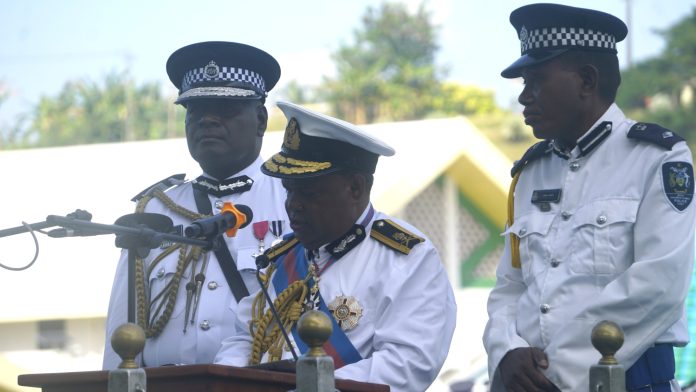
Solomon Islands’ rapidly growing youth population must be viewed as a national asset rather than a social burden, Governor-General His Excellency Sir David Tiva Kapu says.

Speaking on the country’s development challenges at the 77th official birthday of His Majesty King Charles III event last Friday, he said more than 70 per cent of the population is under the age of 18, presenting both opportunities and risks for the nation.

 “This is not just a statistic. It is a tremendous source of potential,” he said.

However, he said increasing migration of young people from rural communities to Honiara in search of jobs and opportunities is creating social pressures.

According to Sir Kapu, many young people arrive in urban centres with high hopes but often struggle to find employment, training opportunities and support services.

He said this situation contributes to social problems and highlights the need for greater investment in youth development.

He calls on the government to bridge the gap between traditional education and the demands of a modern economy by expanding technical and vocational training opportunities.

He said young people should be equipped with practical skills to build careers, establish businesses and contribute meaningfully to national development.

Sir David also urges for the decentralisation of economic opportunities to the provinces so young people do not have to relocate to Honiara in search of employment.

“Our youth are not a problem to be managed. They are our resources to be empowered,” he said.

He stressed that investing in young people will be critical to ensure the country’s long-term social and economic stability.

Sir Kapu advocated for a sustainable economy built on responsible use of the country’s natural resources, including fisheries, conservation initiatives and partnerships with the private sector to create opportunities for young people.

Photo credit: John Houanihau

For feedback, contact: [email protected]

Editor: [email protected]