Home Blog Page 6

CBSI open day promotes financial literacy: Forau

0

BY TONY IROGA

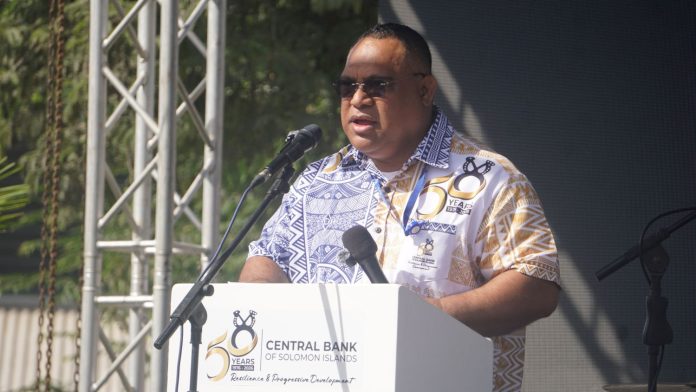
Governor of the Central Bank of Solomon Islands (CBSI), Dr Luke Forau says the bank’s Open Day celebrations is designed to educate and inspire Solomon Islanders, particularly young people, about the role of the country’s central bank and the importance of financial literacy.
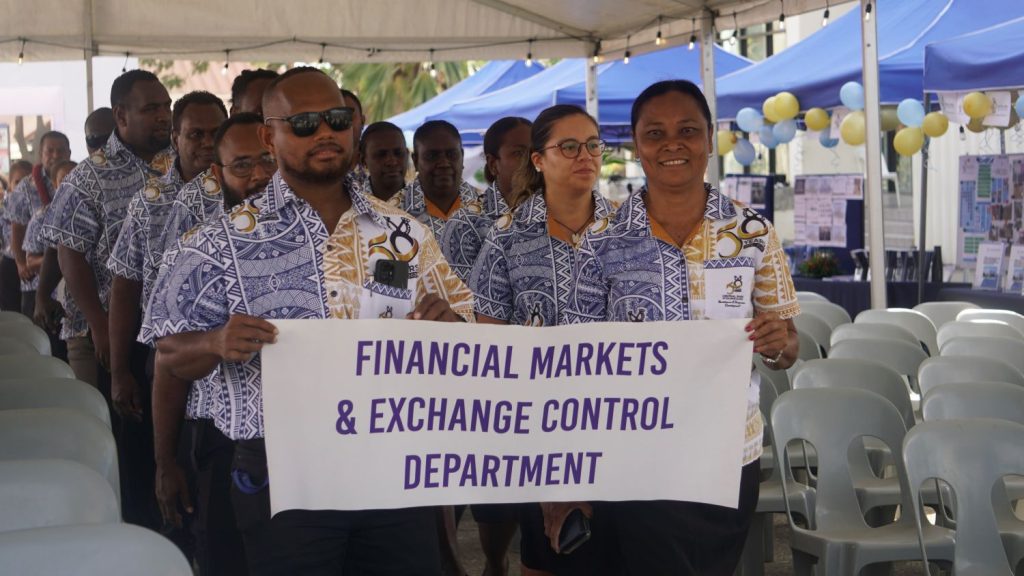
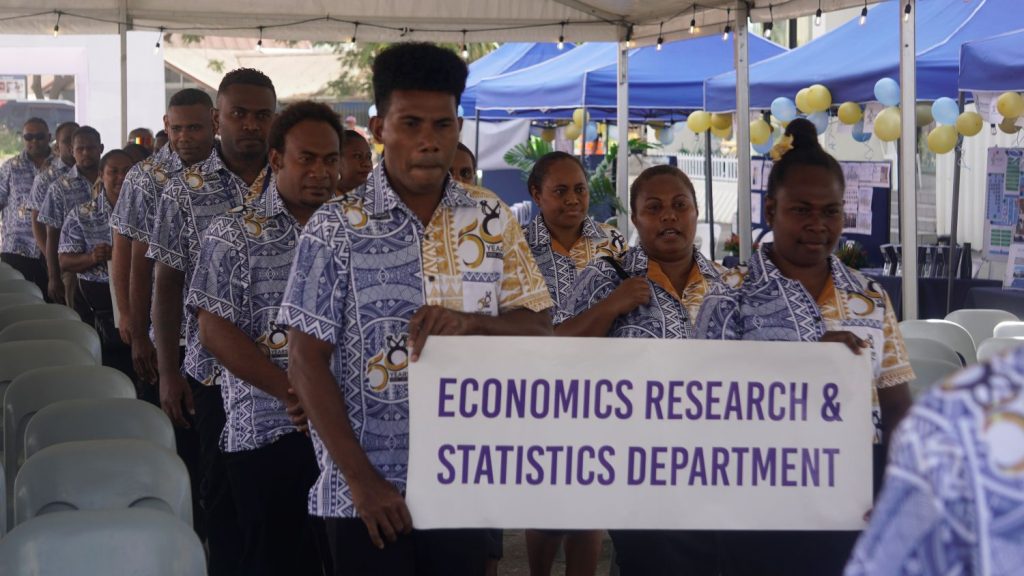
Mr Forau made the remarks yesterday during the official opening of CBSI’s 50th Anniversary Open Day held near the CBSI headquarters and Mud Alley Road Avenue in Honiara.
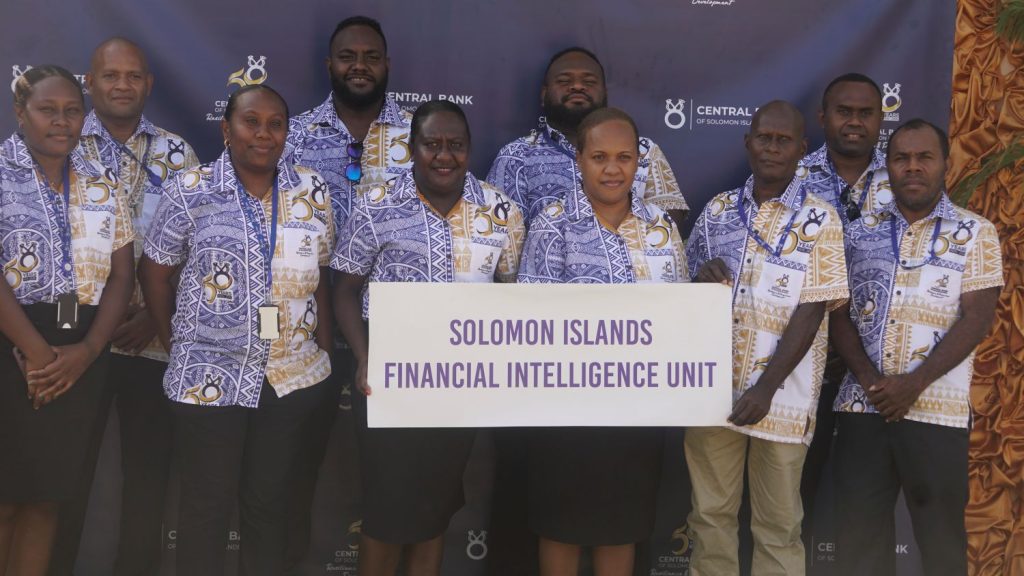
Addressing members of the public, students and invited guests, Forau said the Open Day forms part of the bank’s golden jubilee celebrations under the theme, “50 Years of Resilience and Progressive Development”.

“Today is a very special day for the Central Bank. Not only because we are opening our doors to the public, but because we are marking a significant milestone under the theme ‘50 Years of Resilience and Progressive Development’,” he said.

Forau said the event aims to provide Solomon Islanders with a greater understanding of the Central Bank’s role, operations and contributions to the nation’s development.

“Today’s Open Day is designed to give all Solomon Islanders, especially our young people and students, a better understanding of who we are as the Central Bank, what we do, and how our work impacts your daily life,” he said.
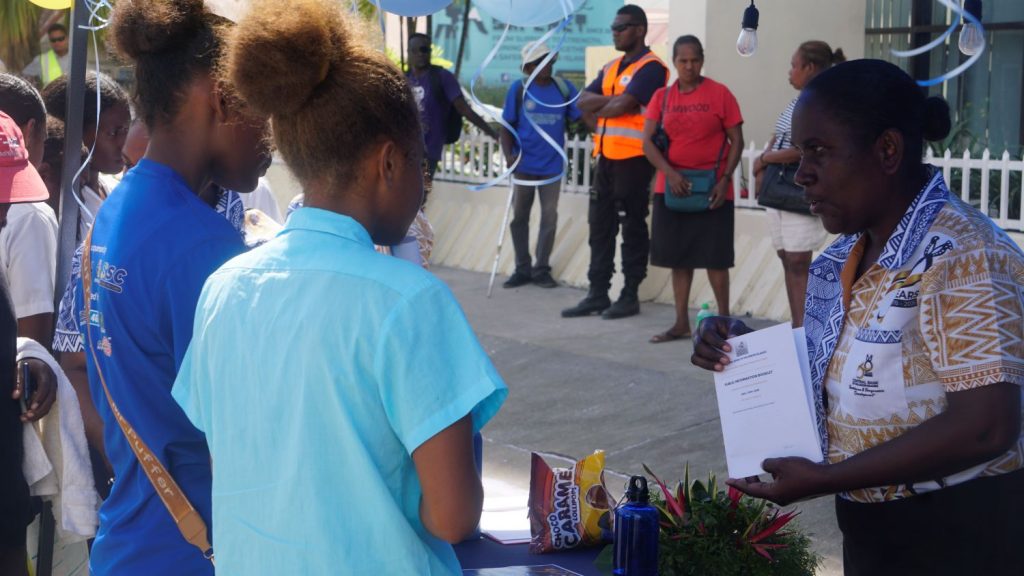
He explained that the programme features departmental exhibitions, school tours, financial literacy sessions and interactive activities to make the Central Bank more accessible and relatable to the public.
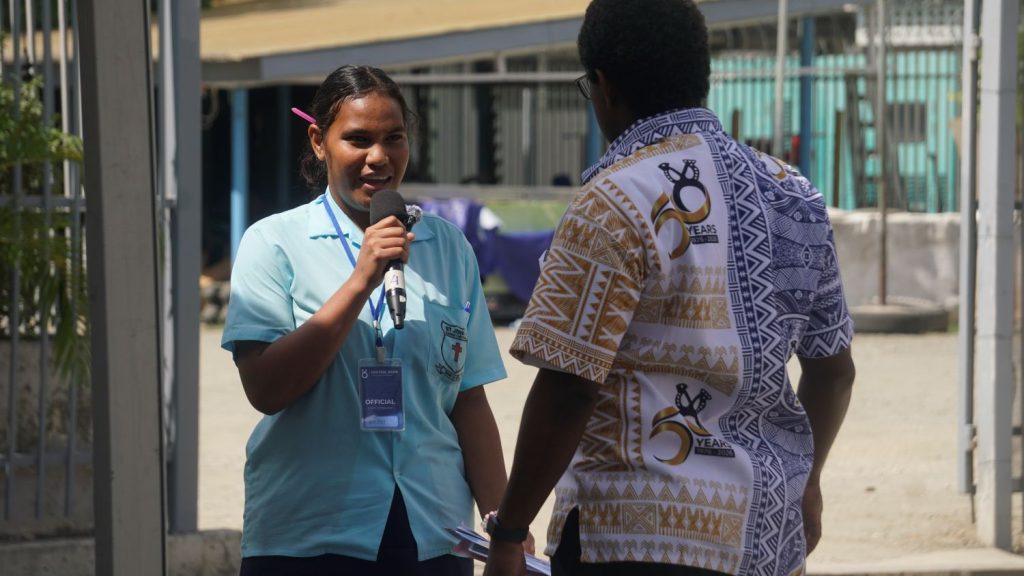
The Governor said students visiting the bank’s headquarters wo have the opportunity to gain first-hand knowledge of the institution’s operations and learn about the country’s financial system.

He added that financial education sessions and interactive quizzes will provide practical knowledge about money management and financial technology, while evening cultural and entertainment activities will bring communities together in celebration.
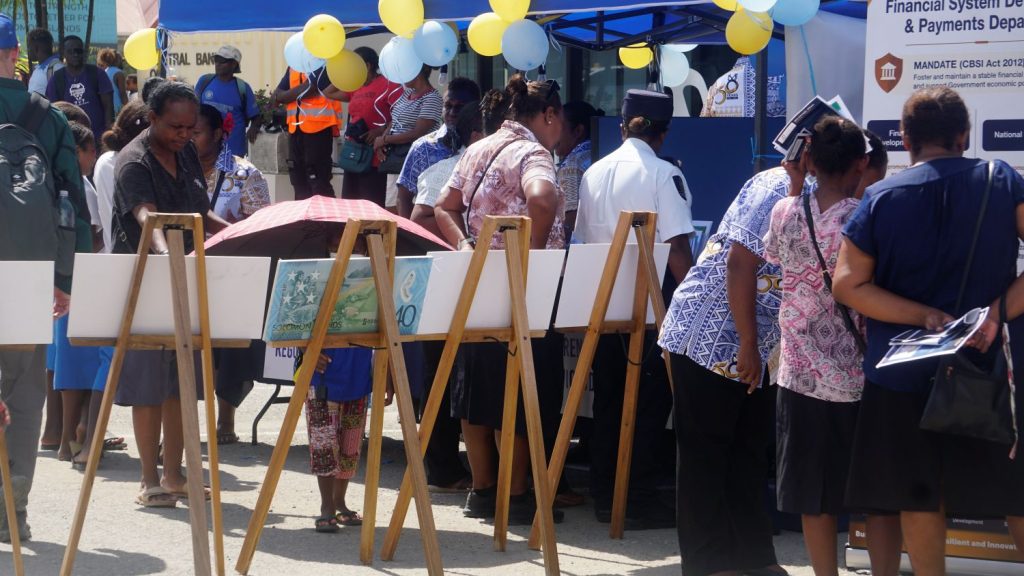
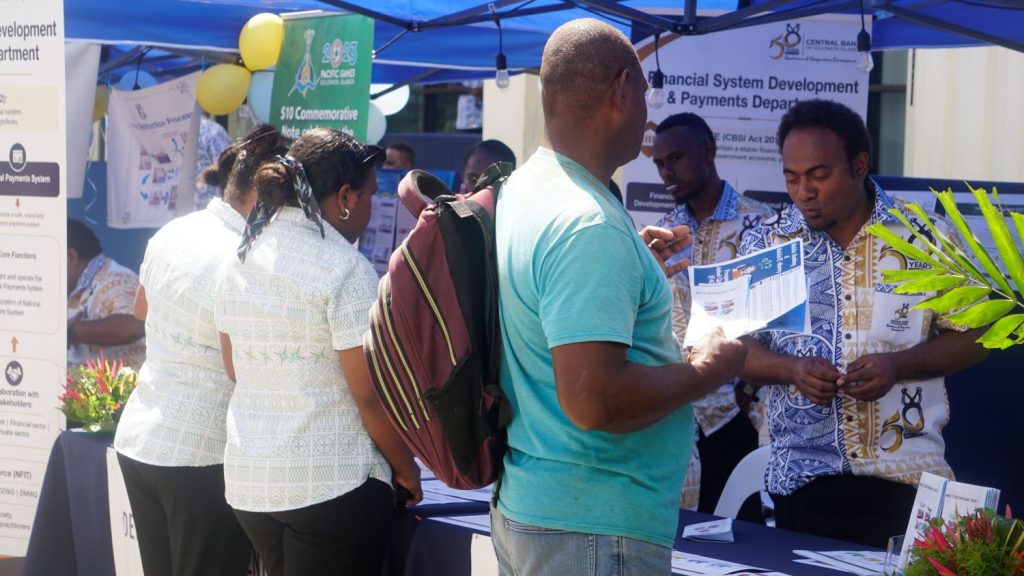
Forau also highlighted the bank’s ongoing national financial literacy awareness campaign, which has already reached schools around Honiara and will be expanded to other provinces in the coming months.

“Over the past week, we have conducted a national financial literacy awareness campaign, promoting savings, smart financial decisions and digital finance awareness,” he said.

The Governor said the anniversary programme will continue with the Governor’s Annual Public Lecture and panel discussions on economic resilience and the future of central banking, followed by an official ceremony to commemorate the bank’s 50-year milestone and launch key initiatives.

He stressed that the work of the Central Bank goes beyond formulating policies and providing banking services to the government.

“Our work is also about enabling businesses to grow, helping families manage their finances, promoting financial inclusion so that no one is left behind, and building a stable and resilient economy for future generations,” he said.

Forau calls on Solomon Islanders to take an active interest in understanding the country’s financial system and make responsible financial decisions.

“Encourage our people, especially our youth, to become economically productive citizens of our beloved country and work together to build a more financially resilient nation.

“The future of Solomon Islands depends not only on one institution like the Central Bank, but on each and every one of us,” he said.

Photos: Tony Iroga

For feedback, contact: [email protected]

Editor: [email protected]

THREE-POINTS

0

Geniagu United claims important win over West Honiara

BY TONY IROGA

Geniagu United FC collected a valuable three points after defeating West Honiara FC 2-0 in Round Seven of the Solrais Women’s Premier League (SWPL) at the KG VI East End Playground in East Honiara over the weekend.

The victory strengthens Geniagu United’s position on the league table and gives the team added confidence heading into the next round of competition, a statement by SolRais Women’s Premier League yesterday said.

Speaking in post-match interview with Solomon Islands Football Federation (SIFF) after the match, Geniagu United coach Rosemary Dolson expressed her delight with the result despite facing challenges leading up to the game.

“I am very happy with the three points that we gained today,” she told SIFF.

Dolson admitted that her side’s performance was affected by the absence of some key players, but praised the depth of the squad and the determination shown by those who stepped up.

“Our game dropped a little because of some issues with our players, but we had alternatives to support the team when some key players could not turn out for the match,” she explained.

She also commended her players for their teamwork and communication on the field.

“I am so happy with the girls because they communicated very well during the game and, as a result, we managed to beat West Honiara FC today,” she said.

Preparation for the match was also disrupted due to poor weather conditions and players’ academic commitments.

“In terms of fitness, it is very low because we had planned to train for five days this week but only managed to train for two days. Some of our players are students and were busy with their examinations.

“The rain also disturbed our training sessions, but we will work hard to make up for those missed days and regain our momentum,” she said.

The win gives Geniagu United a timely boost as they continue their campaign in the Solrais Women’s Premier League and look to maintain their push for a strong finish this season.

For feedback, contact: [email protected]

Editor: [email protected]

SINU & Pasifiki HR sign deal to boost graduate employment

0

 BY TONY IROGA

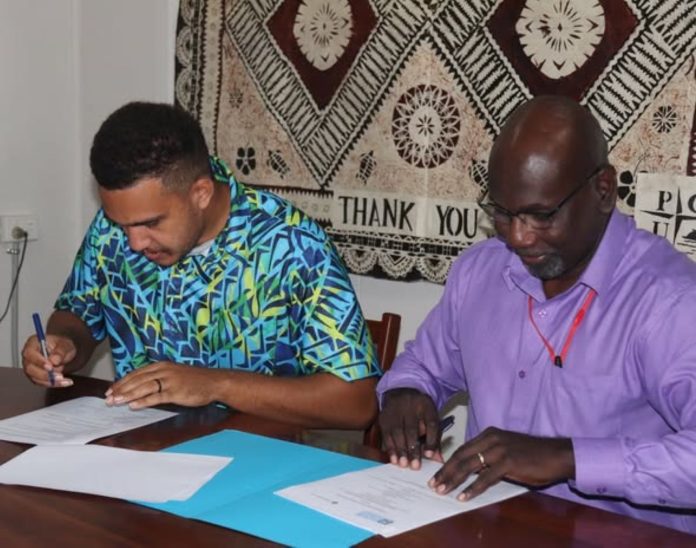
The Solomon Islands National University (SINU) and Pasifiki HR have signed a new partnership agreement that aims to improve employment opportunities for students and graduates across the country.

The strategic partnership was formalised through a recent signing of a Memorandum of Understanding (MOU) between SINU Acting Vice-Chancellor, Associate Professor Eric Katovai and Pasifiki HR Director Caleb Pollard.

Speaking during the signing ceremony, Associate Professor Katovai said the partnership comes at an important time as the university continues to produce increasing numbers of graduates each year.

The three-year agreement is designed to enhance student employability, strengthen workforce readiness and build stronger links between higher education and industry.

Under the partnership, both organisations will work together to create internship opportunities, establish graduate recruitment pathways, provide career readiness training and share information on labour market trends and employment opportunities.

“While opportunities exist, connecting our students and graduates to those opportunities can often be a challenge. This partnership provides a more structured way of supporting our students as they transition from education into employment,” Associate Professor Katovai said.

He said the collaboration will help bridge the gap between education and the labour market and create greater awareness of career opportunities available to students and graduates.

Associate Professor Katovai also thanks Pasifiki HR for taking the initiative to engage with the university and expressed confidence that the partnership will strengthen industry linkages.

Mr Pollard said the agreement reflects the company’s commitment to help Solomon Islanders secure meaningful employment.

“Education is important, but the real question is what it leads to. Our goal is to ensure that education translates into meaningful opportunities, purposeful careers, and sustainable employment for our graduates,” Mr Pollard said.

He said Pasifiki HR is determined to move beyond traditional job advertising by creating structured pathways that directly connect employers with qualified graduates and emerging talent.

“We want to create stronger links between education and industry so that young people can move confidently from the classroom into the workforce and contribute meaningfully to the country’s development,” Pollard said.

The partnership will also include CV writing workshops, interview skills training, job creation initiatives and collaborative research on labour market trends and workforce development in Solomon Islands.

Photo credit: SINU

For feedback, contact: [email protected]

Editor: [email protected]
Japan donates 3 fire trucks to boost emergency response

0

BY NED GAGAHE

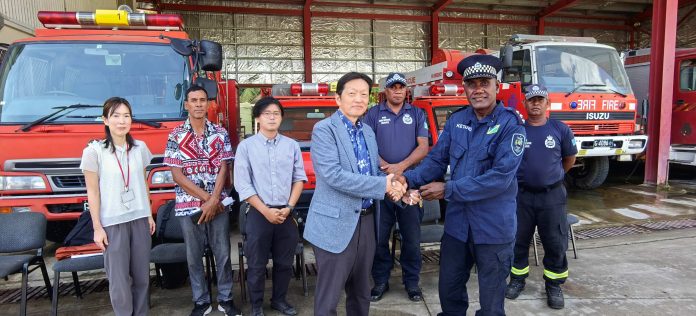
The Royal Solomon Islands Police Force (RSIPF) Fire Service has received a major boost to its emergency response capability following the handover of three fire trucks yesterday donated by Japan.

The donation includes two pump truck carriers from Gojome Town in Japan, which will be deployed to Gizo in Western Province and Auki in Malaita Province, while a third fire truck gifted by the Matsudo Fire Department will be stationed in Honiara.

Speaking during the handover ceremony, Director Supervising of the RSIPF Fire Service, James Ketaru, expressed gratitude to Gojome Town and the Matsudo Fire Department for their generous support.

Mr Ketaru said the donated vehicles will significantly enhance the Fire Service’s mobility and operational readiness in responding to fires and emergencies across the country.

“The gifting of this fire trucks will support our firefighters in executing the aims and objectives of the RSIPF Fire Service, which are to save lives, protect properties, and render humanitarian services,” he said.

He added that the availability of the fire trucks will enable firefighters to reach communities and citizens in need of assistance more effectively and efficiently.

“The donation will upgrade our mobility readiness and strengthen our capacity to respond to fire and emergency situations as expected by the public,” Mr Ketaru said.

He assured the donors that the fire trucks will be used for their intended purpose and help provide effective and efficient services to save lives and protect the properties of Solomon Islanders.

Mr Ketaru also expressed hope for continued cooperation with Japan, including future training opportunities for local firefighters.

Meanwhile, Japanese Ambassador to Solomon Islands, Keiichi Higuchi, said Japan is honoured to support life-saving services in Solomon Islands through the donation.

“I am honoured and delighted to represent the Government and the people of Japan at this handing-over ceremony with representatives of the Royal Solomon Islands Police Force, particularly the Fire Services,” Ambassador Higuchi said.

He said Japan has long sought ways to support life-saving activities in Solomon Islands and described the handover as another milestone in the strong partnership between the two countries.

Ambassador Higuchi said, the donation is part of Japan’s Grant Assistance for Grassroots Human Security Projects programme.

He revealed that on November 11, 2024, Japan signed an agreement for the Project for Procurement of Second-hand Fire Trucks for Honiara City and three provinces in Solomon Islands, with grant funding amounting to USD$89,705, equivalent to approximately SBD$747,500.

Through the project, Japan provided three second-hand fire trucks equipped with firefighting equipment to strengthen firefighting and emergency response capacities in the communities where they will be deployed.

One truck will remain in Honiara to support rapid emergency responses in the capital and surrounding areas, while the other two will serve communities in Auki and Gizo.

Ambassador Higuchi encouraged the Fire Service to maintain the vehicles properly to ensure they continue providing reliable service for many years.

“I hope these resources will be kept in good condition through proper maintenance and put to good use so they contribute to safer, faster and more reliable responses during emergencies,” he said.

He added that Japan’s Grassroots Projects programme aims to improve access to essential services and strengthen community safety throughout Solomon Islands.

“It is my sincere hope that these fire engines will be put to good use by the well-trained officers of the Fire Services during times of fire disasters. Equally, I hope this project will further strengthen the relationship between Japan and Solomon Islands for many years to come,” Ambassador Higuchi said.

For feedback, contact: [email protected]

Editor: [email protected]
‘We must identify practical solutions’

0

BY BEN BILUA
Gizo

MINISTER of Health for the Western Provincial Government, Kenneth George, calls on stakeholders to identify practical solutions and strengthen partnerships to ensure healthcare services reach every village, island and community across Western Province.

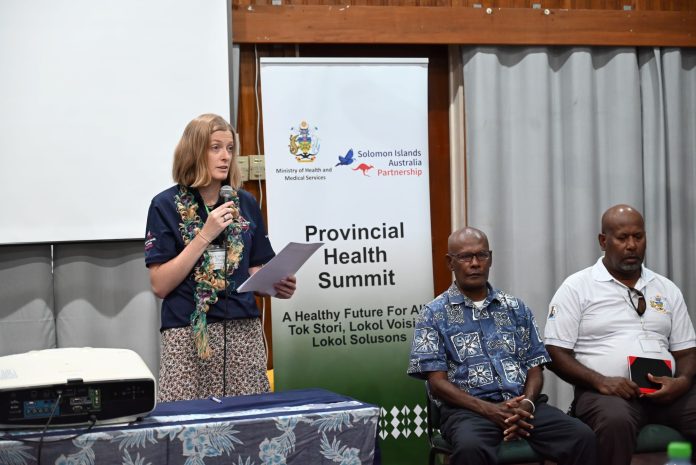
Speaking during the opening of the Western Province Health Summit in Gizo, George said the gathering is an important platform not only to reflect on achievements and challenges but also to chart a clear pathway forward for the province’s health sector.

He said the summit comes at a critical time as Western Province continues to face numerous health challenges, including communicable and non-communicable diseases, maternal and child health concerns, workforce shortages, infrastructure limitations, and the growing impacts of climate change and natural disasters on health services.

George said recent experiences have highlighted the importance of preparedness, resilience and collaboration in responding to emergencies and protecting vulnerable populations.

He said leaders and stakeholders must share a collective responsibility to ensure quality healthcare services are accessible to all citizens.

“As leaders and stakeholders, we share a collective responsibility to ensure that every mother receives quality maternal care, every child has access to essential health services, every family is protected from preventable diseases, and every citizen can enjoy a healthy and productive life,” George said.

He encouraged participants to actively engage in discussions and contribute ideas that will shape future health priorities for the province.

“I encourage all participants to engage openly, share experiences and contribute innovative ideas during the meeting. Let us use this opportunity to build consensus, strengthen coordination and develop actionable recommendations that will guide our health priorities in the years ahead,” he said.

George also paid tribute to dedicated health workers who continue to serve rural communities despite difficult circumstances.

He acknowledged that their professionalism and commitment have contributed significantly to improvements in health awareness, immunisation coverage, disease surveillance and healthcare partnerships throughout the province.

George further acknowledged the support of the Ministry of Health and Medical Services (MHMS), development partners, churches, non-government organisations and community leaders for their continued collaboration with the Western Provincial Government.

“I wish to acknowledge the support of the Ministry of Health and Medical Services, our development partners, churches, NGOs and community leaders who continue to work alongside the Western Provincial Government in advancing healthcare services for our people,” he said.

“Together we can build a stronger, more resilient and more inclusive health system that leaves no one behind.”

For feedback, contact: [email protected]

Editor: [email protected]
Provincial Health Summit underway in Gizo

0

BY BEN BILUA
Gizo

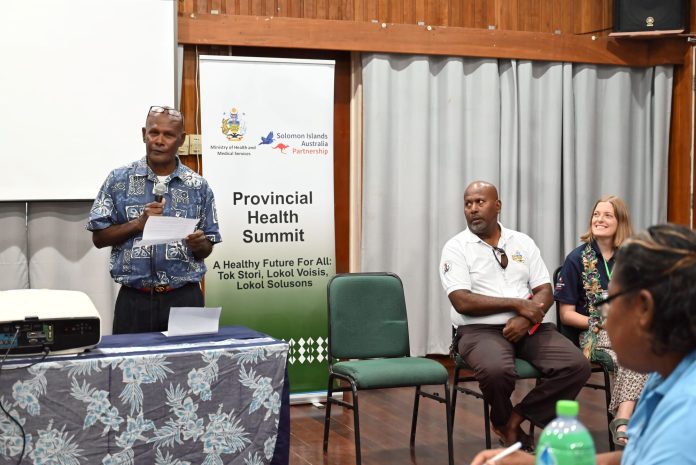
THE Provincial Health Summit for Western Province is currently underway in Gizo, bringing together health leaders, government representatives, communities and development partners to discuss ways to strengthen health services across the province.

Aim of the summit is to improve the health system performance and strengthen primary health care delivery throughout the country.

It provides an opportunity for provincial health services, provincial governments, communities and key partners to jointly assess health system performance, identify priority challenges and develop practical and achievable actions to improve health services.

A key feature of the summit is the use of the Primary Health Care Performance Initiative (PHCPI) Framework, an internationally recognised tool to assess and strengthen primary health care systems.

Primary Health Care (PHC) remains the foundation of an effective, equitable and resilient health system.

It encompasses prevention, treatment, health promotion and partnerships with communities and other sectors to improve health outcomes noting that the health services across provinces operate under diverse conditions influenced by geography, population distribution, workforce availability, infrastructure and climate risks.

These differences often result in uneven outcomes despite national policies and standards.

The framework supports improved use of data for decision-making and has been adopted by the Ministry of Health, (MHMS) at the provincial level.

The purpose of the summit is to apply the PHCPI framework at the provincial level to strengthen understanding of health system performance and support practical improvement planning.

Its objectives include engaging stakeholders in a shared review of provincial health system performance, developing provincial health scorecards to strengthen accountability and transparency, identifying priority system gaps through structured analysis and developing practical improvement actions using Root Cause Analysis (RCA) and Plan-Do-Study-Act (PDSA) cycles.

Expected outcomes of the summit include the development of provincial health performance scorecards for all provinces and Honiara City Council, clear prioritised provincial improvement plans, strengthened collaboration and ownership, and evidence-based planning to support the National Health Strategic Plan 2022–2031.

Throughout the week, participants will review provincial core health indicators and the 2025 provincial health financial status, share self-assessments of the adapted PHCPI framework and discuss assessment findings including orientations on gender equality, disability and social inclusion (GEDSI), climate change concepts and their integration into health systems. Participants will further receive training on Root Cause Analysis and the PDSA planning tool to develop practical and prioritised action plans.

The summit reflects the Government’s commitment to build stronger, more responsive and community-centred health systems that deliver better outcomes for all Solomon Islanders.

The summit is supported by the Solomon Islands Australia Health Partnership and is held under the theme: “A Healthy Future for All – Tok Stori, Local Voices, Local Solution.”

The Ministry of Health and Medical Services (MHMS), through its Policy and Planning Division, is leading the provincial health summits across all nine provinces, including Honiara, as part of the country’s national health sector reform agenda.

For feedback, contact: [email protected]

Editor: [email protected]
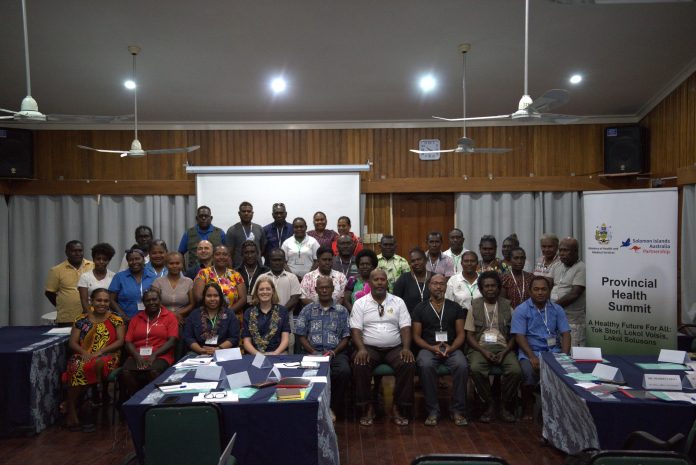
Boara welcomes participants to Western Province health summit

0

BY BEN BILUA
Gizo

DIRECTOR of Western Province Health Services, Dr Dickson Boara, welcomed participants who travelled from across the province and beyond to attend the Provincial Health Summit currently underway in Gizo.

In his welcome remarks, Boara acknowledged the commitment of participants who travelled from far and near to be part of the important gathering that aims to improve health services in the province.

He said Western Province continues to face growing health challenges driven by environmental, social and economic changes.

Boara also said the province is highly vulnerable to natural disasters, placing additional pressure on the health system and its ability to deliver services effectively.

He said communicable diseases such as malaria and tuberculosis (TB), together with the increasing burden of Non-communicable diseases (NCDs) continue to overwhelm health facilities across the province.

“With these challenges, we are here to discuss how best we can withstand them. Some of you have better solutions and I acknowledge your presence today.

“I’m confident that we will discuss, share experiences and find the right solutions to mitigate our challenges,” Boara said.

He said the Provincial Health Summit is held for the first time in Western Province, providing a structured platform for government officials, health leaders, communities, churches, non-government organisations and development partners to analyse provincial health systems using a common evidence-based framework and to agree on priority actions tailored to local realities.

Boara acknowledged the presence of participants at the summit.

“I acknowledge the presence of staff from the provincial government, community representatives, area health supervisors within the six zones, other health service providers and key partners,” he said.

Boara said he looks forward for participation and commitment to improve health outcomes in the province.

Dr Boara said Western Province Health Services has established various programmes to address many health challenges facing the province, but realities on the ground continue to place a heavy burden on service delivery efforts.

He stressed that collective action is essential to finding lasting solutions and strengthening healthcare delivery.

“Some of the solutions can be found in communities as well as through support from other stakeholders.

“Our collective efforts can address most of the health challenges we continue to face as a province and a country,” Boara said.

The summit is expected to generate practical recommendations and priority actions that aim to build a stronger and more resilient health system for Western Province.

For feedback, contact: [email protected]

Editor: [email protected]
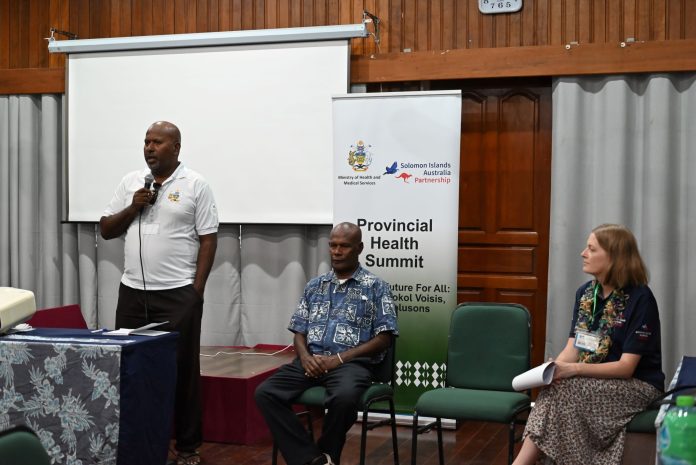
Strong economic foundations needed before SI exits LDC status in 2027: UNDP warns

0

BY NED GAGAHE

The United Nations Development Programme (UNDP) has cautioned that Solomon Islands still has significant work to do before its scheduled graduation from its Least Developed Country (LDC) status in 2027, despite promising reforms already underway.

Speaking in response to questions on the country’s readiness for the transition, UNDP Pacific Office Resident Representative, Munkhtuya Altangerel, said the move out of LDC status will bring both opportunities and challenges for Solomon Islands.

“As you know, the graduation from LDC status has been deferred many times, and now 2027 is the year. Hopefully, the country will graduate then,” Ms Altangerel said.

She explained that while graduation reflects development progress, it also means Solomon Islands will no longer enjoy some of the special benefits currently available to LDCs.

“Very low-rate concessional financing may no longer be available, and the country’s banking and financial systems will need to meet international standards,” she said.

Ms Altangerel said that Solomon Islands must also work towards achieving stronger credit ratings to improve its ability to access international financing on favourable terms.

She said graduation will require the country to adapt to a more competitive global environment, particularly in trade.

“LDC countries usually benefit from preferential trade agreements, but after graduation they must compete on a level playing field. The same rules will apply to Solomon Islands as they do to other developing and middle-income countries,” she said.

The UNDP representative questioned whether the country is fully prepared for the demands of global trade and international finance, stressing that reforms must continue to ensure a successful transition.

“I feel there is still a lot of work that needs to be done for the country to fully embrace both the challenges and benefits of graduation,” she said.

Ms Altangerel encouraged Solomon Islands to make full use of the remaining period before graduation to access available preferential treatments and development support mechanisms.

She welcomed the Government’s ambitious reform agenda, saying it could help accelerate the country’s preparedness for graduation.

However, she stressed the importance of building strong economic foundations before pursuing rapid growth.

“If we do not have strong foundations and we build too fast, it could crumble,” she warned.

She identified trade development, prudent fiscal management and sound financial governance as critical pillars for a sustainable transition.

Ms Altangerel also praised Prime Minister Matthew Wale’s proposal to establish a sovereign wealth fund, describing it as an important step towards strengthening the country’s long-term economic resilience.

“These are really good stepping stones to graduating in a very sustainable way from LDC status,” she said.

Solomon Islands is currently scheduled to graduate from the United Nations’ Least Developed Country category in 2027, marking a significant milestone in the nation’s development journey.

Photo credit: UNDP

For feedback, contact: [email protected]

Editor: [email protected]
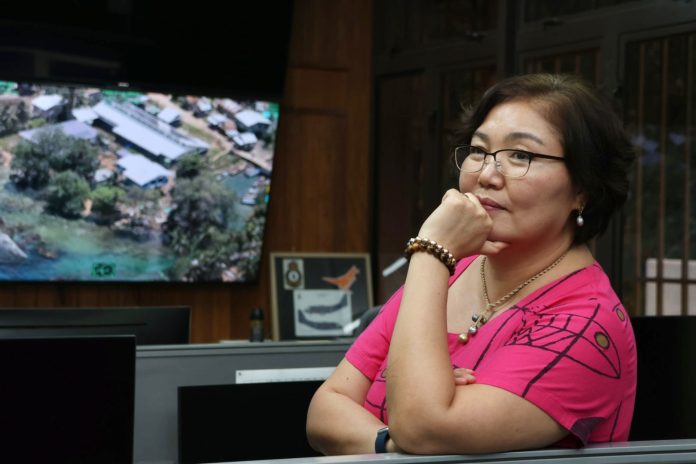
UNDP support helps Solomon Islands prepare for LDC Graduation

0

BY NED GAGAHE

The United Nations Development Programme (UNDP) has been supporting Solomon Islands’ preparations for its scheduled graduation from Least Developed Country (LDC) status in 2027, including efforts to strengthen the country’s capacity to access international export markets.

Speaking to the media on Solomon Islands’ readiness for graduation, UNDP Programme Specialist Solomon Kalu highlighted one example of the organisation’s assistance through support for the country’s public health laboratory accreditation process.

Mr Kalu said UNDP had worked closely with the Government through the Ministry of Foreign Affairs and the Ministry of Health to assess the National Public Health Laboratory and prepare it for international accreditation standards.

“Years ago, we supported the Government through the Ministry of Foreign Affairs and the Ministry of Health to conduct assessments of the National Public Health Laboratory so that it can eventually be accredited to certify exports,” Mr Kalu said.

He explained that achieving accreditation is an important step towards expanding Solomon Islands’ access to overseas markets and strengthening the country’s competitiveness as it transitions from its LDC status.

“We are looking at what products and opportunities Solomon Islands can access in external markets. At the moment, the laboratory does not yet have that accreditation, but the process has been initiated and supported by UNDP,” he said.

Mr Kalu said while the accreditation process remains ongoing, the support provided is part of broader efforts to ensure the country is better prepared for the economic realities that will come with graduation.

He said that strengthening national institutions and meeting international standards are important components of Solomon Islands’ transition from LDC status, particularly as the country seeks to diversify exports and participate more effectively in global trade.

The comments come amid growing discussions on the country’s readiness for graduation in 2027, when Solomon Islands is expected to lose access to some of the special concessions and preferential treatment currently available to Least Developed Countries.

UNDP continues to work alongside the Government and development partners to support reforms and capacity-building initiatives that aim to ensure a smooth and sustainable transition.

For feedback, contact: [email protected]

Editor: [email protected]
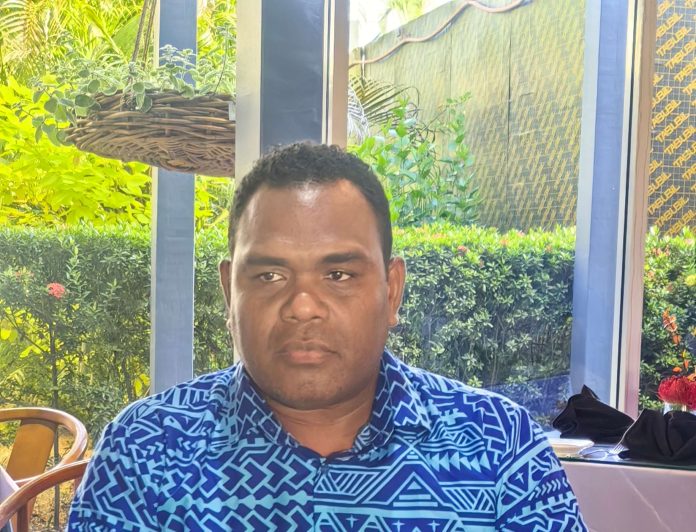
Australia reaffirms commitment to strengthen Solomon Islands health system

0

BY BEN BILUA
Gizo

THE Australian Government has reaffirmed its commitment to support the health sector in Solomon Islands through long-term partnerships that aim to strengthen health systems and improve service delivery.

Speaking during the opening of the Western Province Health Summit in Gizo yesterday, Australia’s First Secretary for Health, Jemma Thompson, said Australia is pleased to support the Provincial Health Summit, which seeks to build a stronger and more resilient health system in Solomon Islands.

She said the support reflects Australia’s longstanding partnership with the Solomon Islands Government to improve healthcare services across the country.

“Our focus is on strengthening health systems, not just supporting individual services. That means building local capability, supporting leadership, and backing reforms that can be sustained over time,” Thompson said.

She said the Health Summit scorecard initiative demonstrates a strong partnership that is locally led, evidence-based and focused on supporting practical decision-making by those closest to the health system.

Addressing participants, Thompson outlined what success would look like for Western Province.

“Success means having a clear and credible picture of how the health system is performing today. It means identifying the most important gaps and pressure points, rather than trying to fix everything at once.

“It means developing a shared understanding across stakeholders. Most importantly, this process should create a platform for ongoing monitoring, learning, and improvement – not just a one-off assessment,” she said.

Thompson stressed that the true measure of success will not be the scorecard itself, but how it is used to guide decisions and deliver practical improvements for frontline health workers and communities.

She said the summit presents an opportunity for Western Province to lead efforts in strengthening provincial health systems in Solomon Islands and to set an example for other provinces to follow.

“I encourage everyone participating in this summit to engage openly and constructively.

“Please focus on the practical realities of the system, and on solutions that make sense in the local context. And ensure the voices of communities and frontline health workers are reflected in the discussion – they see the system at work every day,” Thompson said.

She said strong ownership by Western Province will be essential for the success of the initiative, alongside close alignment with the Ministry of Health and Medical Services and a shared commitment to implement outcomes beyond the summit.

Thompson reaffirmed Australia’s commitment to support stronger primary healthcare, better use of data for decision-making, and improved health outcomes for communities in provincial settings.

The Western Province Health Summit is part of ongoing efforts to strengthen healthcare systems across the country through collaboration between the Government, development partners, health workers and communities.

For feedback, contact: [email protected]

Editor: [email protected]