BOAT operators providing transport services between Gizo and Noro have increased their fares effective immediately, citing the continued rise in fuel prices.
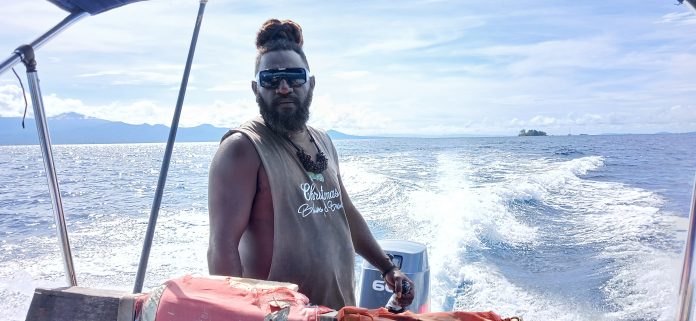
Speaking to Island Sun, transport provider Loncey Dalton confirmed that the new fares will range from SBD250 to SBD300 for adults, while students will pay between SBD200 and SBD250.
He said the decision was reached following a meeting among transport operators last week, where the majority agreed that an increase was necessary to sustain their businesses.
“As we all know, fuel prices will continue to increase, and we as transport providers must make decisions that will keep our business going.
“If we do not increase the boat fare, it will be our loss,” Dalton said.
He said the fare adjustment will impact passengers but stressed that operators had no alternative given the current economic pressure.
Meanwhile, taxi drivers in Noro are also facing similar challenges due to rising fuel costs.
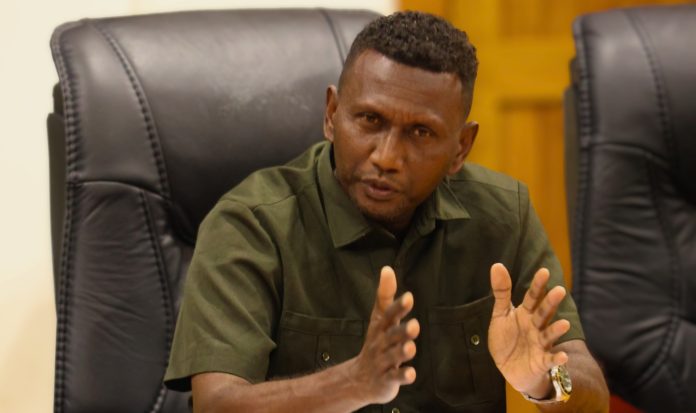
Local driver Brenden Posala said discussions are underway to revise taxi fares and zone pricing.
“We have set price tags for different zones in Noro. For example, from Noro Market to the Finance Building is SBD10. We will be revising our prices according to distances,” Posala said.
Taxi operators are expected to meet soon to finalise the new fare structure.
The Court of Appeal Clerk has warned members of the public, lawyers and journalists to switch off mobile phones or place them on flight mode and refrain from taking photos or videos during court proceedings.
The reminder follows recent breaches of courtroom protocol, including phones ringing during hearings and individuals allegedly recording proceedings.
One such incident occurred last Wednesday during a Court of Appeal hearing into the Attorney General’s appeal against a High Court ruling in favour of the majority opposition coalition.
Clerk reminded attendees that photography and video recording are strictly prohibited in court.
A similar disruption was recorded on Friday last week during a Magistrate’s Court session when a mobile phone rang multiple times.
The Principal Magistrate questioned the disturbance before the owner of the phone—later identified as a legal counsel who was asked to step outside.
“Please counsel, go outside and answer your phone. You are disturbing my proceedings,” the Magistrate said.
The Clerk emphasised that while courts remain open to the public under the principle of open justice, all attendees must respect courtroom rules and avoid actions that disrupt proceedings.
Minister for Police Jimson Tanangada says the appointment of the Royal Solomon Islands Police Force (RSIPF) Commissioner Ian Vaevaso was carried out through the constitutional process.
Tanangada made the clarification during a press conference on Saturday, addressing public concerns linked to methamphetamine allegations involving the new Police Commissioner.
“The Ministry of Police, National Security and Correctional Service wishes to clarify public discussion surrounding the appointment of Mr Ian Vaevaso as Commissioner of Police and the matter concerning the destruction of illicit drug exhibits. The key point is that Mr Vaevaso’s appointment was made through the constitutional process,” he said.
He said Vaevaso was sworn in on 24 April, appointed by the Governor-General on the advice of the Prime Minister after consultation with the Police and Correctional Service Commission.
Tanangada said the drug-related matter stemmed from the seizure of methamphetamine in late 2023 and the subsequent handling of the exhibits by RSIPF.
He said the Director of Public Prosecutions (DPP) advised the Police Commissioner on 15 January 2024 that the substance was a prohibited drug and should be destroyed.
On 16 January 2024, that advice was operationalised through internal instructions from the Commissioner’s office, including directions to then Deputy Commissioner Vaevaso to prepare and carry out the destruction.
The drugs were reportedly destroyed on 17 February 2024.
Tanangada said an internal inquiry file was later opened on 21 August 2024 as part of oversight processes. On 27 June 2025, the DPP issued further correspondence indicating the matter required further investigation.
He said that on 2 July 2025, the then Police Commissioner wrote to the Chair of the Police and Correctional Service Commission clarifying the chain of command, stating that Vaevaso acted on instructions based on the DPP’s advice.
“The same letter further stated that the removal and destruction of the drugs were carried out transparently and in good faith,” Tanangada said.
He added that the appointment process for the Police Commissioner proceeded separately through the constitutional pathway.
He said the position was advertised on 3 July 2025, with interviews conducted on 26 and 27 November 2025. The Office of the Prime Minister and Cabinet received the interim committee’s report on 16 December 2025, followed by constitutional consultation on 17 March 2026.
Tanangada stressed that the Police and Correctional Service Commission operate independently under sections 119 to 121 of the Constitution, with authority over appointments, discipline and removal of police officers.
He said the Commission does not act under the direction of the Minister or Ministry.
“The appointment of Mr Vaevaso as Commissioner of Police proceeded through the constitutional process,” he said.
David Gina hops across to GNUT after 6 weeks with opposition coalition. Sworn in as new minister for Rural Development
By JOHN HOUANIHAU
Member of Parliament (MP) for South New Georgia/Rendova- Tetepare Constituency, David Gina, has moved and joined the Government for National Unity and Transformation (GNUT).
GNUT has welcomed Mr Gina by appointing him as the new Minister for Rural Development.
It is not clear whether Gina had officially resigned from Solomon Islands Democratic Party (SIDP) to join GNUT after leaving the new coalition.
This leaves the new coalition group with 27 MPs, while GNUT has 23 MPs.
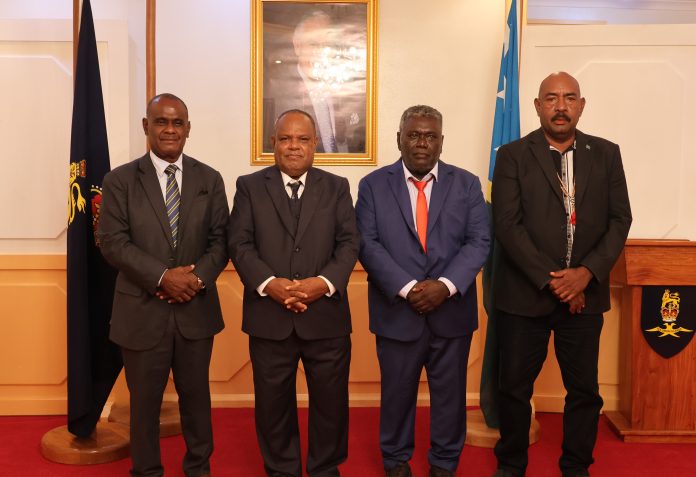
Gina was sworn in by the Governor General yesterday evening at the Government House as the Minister for Rural Development.
Gina was with the Independent group before the mass defection of government MPs happened on March 15-17 which started the political impasse.
It is unclear whether he will join OUR or Kandere party, the two remaining parties in the GNUT.
The Government for National Unity and Transformation (GNUT) experienced a mass defection of 19 Government MPs from March 15-17.
The resignation of 19 government ministers and backbenchers to the Opposition and independent group ranks had left GNUT with 22 MPs and the new coalition with 28.
This led to a political impasse when Prime Minister Jeremiah Manele refused to call parliament even after a motion of no-confidence against him matured in parliament.
This political crisis eventually landed in court. The High Court ruled in favour of the opposition coalition on April 14.
The Attorney General filed an appeal and the matter is now before the Court of Appeal.
The Court of Appeal is expected to deliver its judgement on Friday this week.
While fuel prices are soaring, GNUT is selectively assisting certain businesses ‘friendly’ to it by granting them tax exemption.
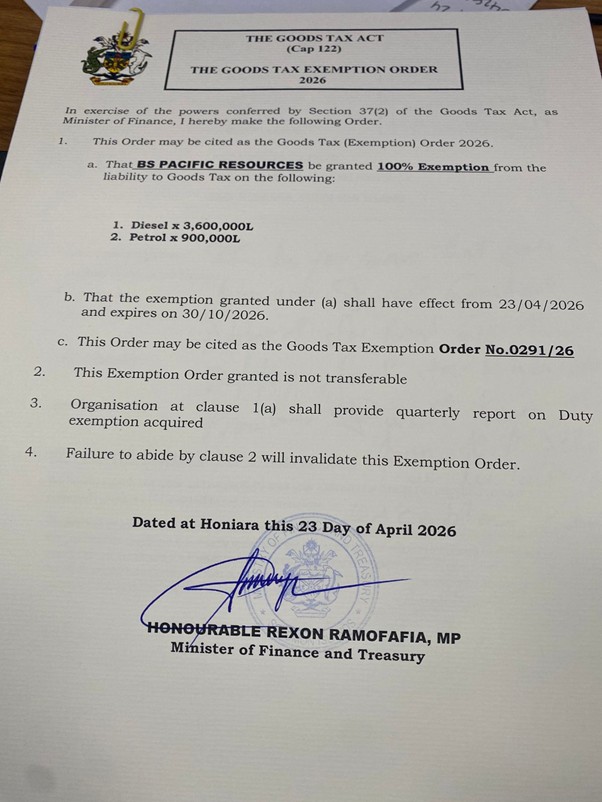
Finance Minister Rexon Ramofafia on Thursday last week signed a 100 percent tax exemption for 4.5 million litres of petrol and diesel for BS Pacific Resources.
Government is set to lose more than $6 million in taxes, since GST is 15 percent, due to this exemption.
Mr Ramofafia told Island Sun last night he had revoked that tax exemption the next day.
But, this is not new. GNUT government is well-known for issuing out tax exemptions left and right to ‘friendly’ businesses.
3,600,000 litres of Diesel and 900,000 litres of Petrol is exempted tax by the instrument signed by Finance Minister Ramofafia for BS Pacific Resources.
This is equivalent to more than six months worth of fuel. Major fuel stations in Honiara on average sell out 200,000 litres of fuel per week.
BS Pacific Resources is a business name and not incorporated as a company, Company Haus records show. It’s addressed at Supreme Plaza, Kukum Highway, Honiara.
BS Pacific Resources is known to have connections with GNUT government and deputy prime minister Manasseh Sogavare.
Mr Sogavare had granted BS Pacific Resources few tax exemptions when he was the finance minister for GNUT including tax exemptions for six dump trucks on March 11, 2025 totalling more than $325-thousand.
The latest tax exemption by Finance Minister Ramofafia is estimated to give BS Pacific Resources as a gas station more than $10 million in clear profit.
Ramofafia, speaking to Island Sun last night was shocked that media had a copy of the tax exemption.
“I had cancelled that tax exemption on Friday. A lot of fuel stations had applied for tax exemption.
“After signing the tax exemption, I later realised that it is not good to just give tax exemption to just one company since a lot of them had applied for tax exemption. So I cancelled it.
“Only Markwarth and SP Oil have been granted tax exemption under GNUT strategy. We will issue a press release on it,” Ramofafia said.
“I am surprised why the tax exemption is quick to reach media, although these companies who get exemptions have not received it yet,” Ramofafia said.
“The tax exemption for BS Pacific Resources will not be effective because I revoked it the next day,” Ramofafia said.
BS Pacific Resources is reportedly connected to the BSP gas station on Auki, Malaita province, which sells at $15 per litre for petrol, and $14 per litre for diesel.
BS Pacific Resources is a business name registered to Rabataua Tarakabu, according to Company Haus records.
Tarakabu has not responded to attempts for comments by Island Sun.
Business pundits have reacted with shock to GNUT’s tax exemption for the 4.5 million litres of fuel to a business name.
“It makes no sense as to how the government would possibly even consider tax rebates based on an application from a business name. It just makes no sense,” one business person said.
“A business name would normally be used by a sole trader, an individual. Most trading companies of any type of volume would be using a company structure because the tax rate’s 30 percent as opposed to an individual which will be in excess of 40 percent,” another business person said.
“So, it makes no sense to have a business name as a company structure for any business of any repute or scale. So, to me, the concept of a business name operating and using 4.5 million or 5 million litres of fuel doesn’t sound right.”
NESTLED within the calm, turquoise waters of the Vona Vona Lagoon lies Kinamara, a small village with a powerful identity.
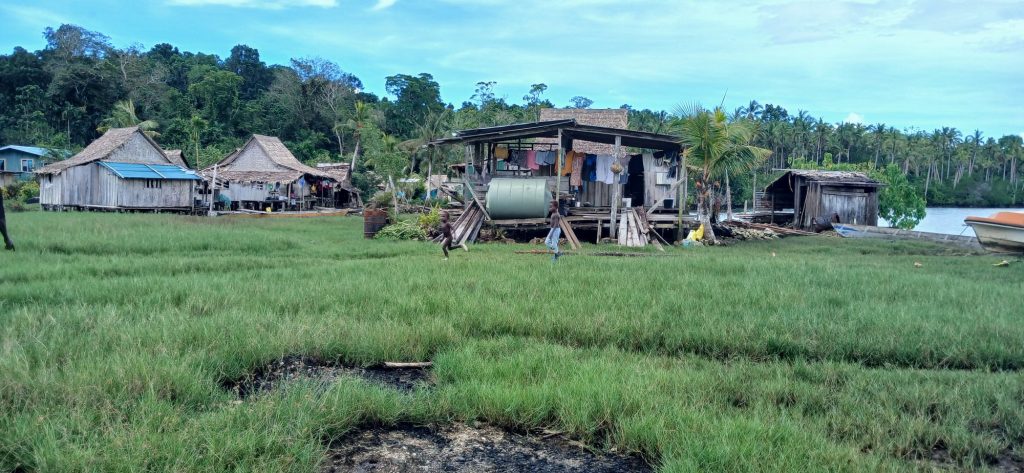
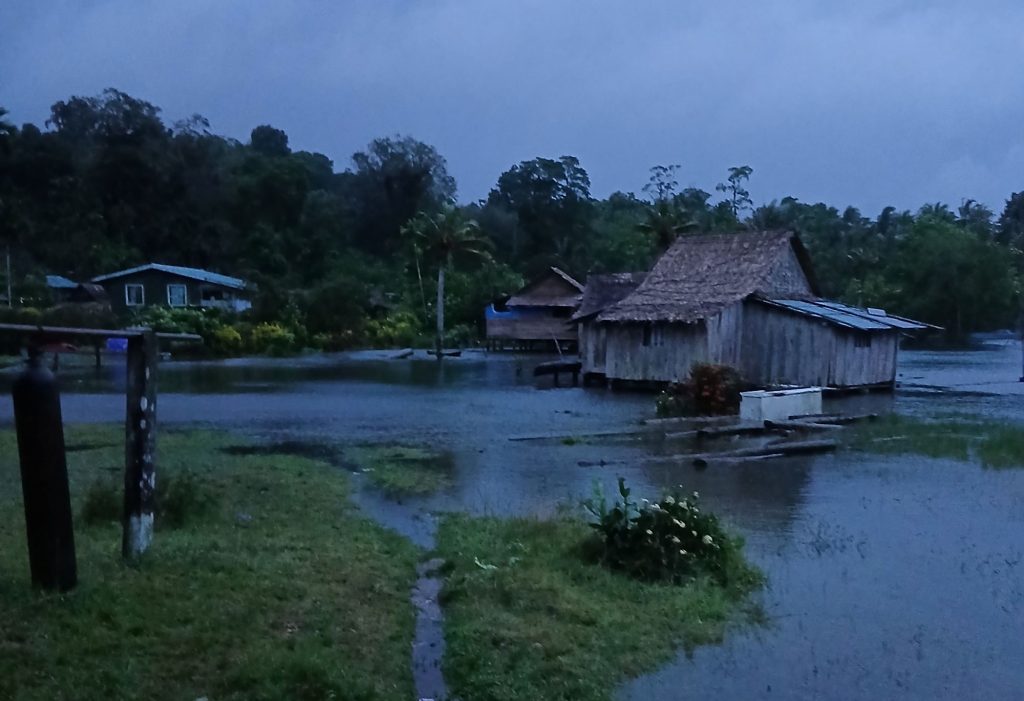
Some of the semipermanent houses close to the shoreline, Photo by Ben Bilua
Home to more than 200 people, its residents proudly call themselves “sea legends,” a name born from generations of survival on scattered islets surrounded by ocean.
For years, the lagoon has been both their lifeline and their legacy.
But today, that legacy is under threat.
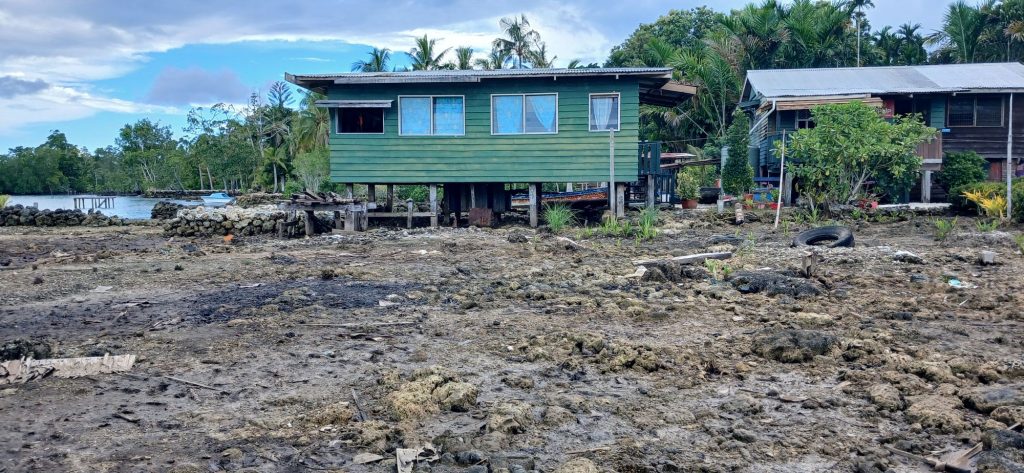
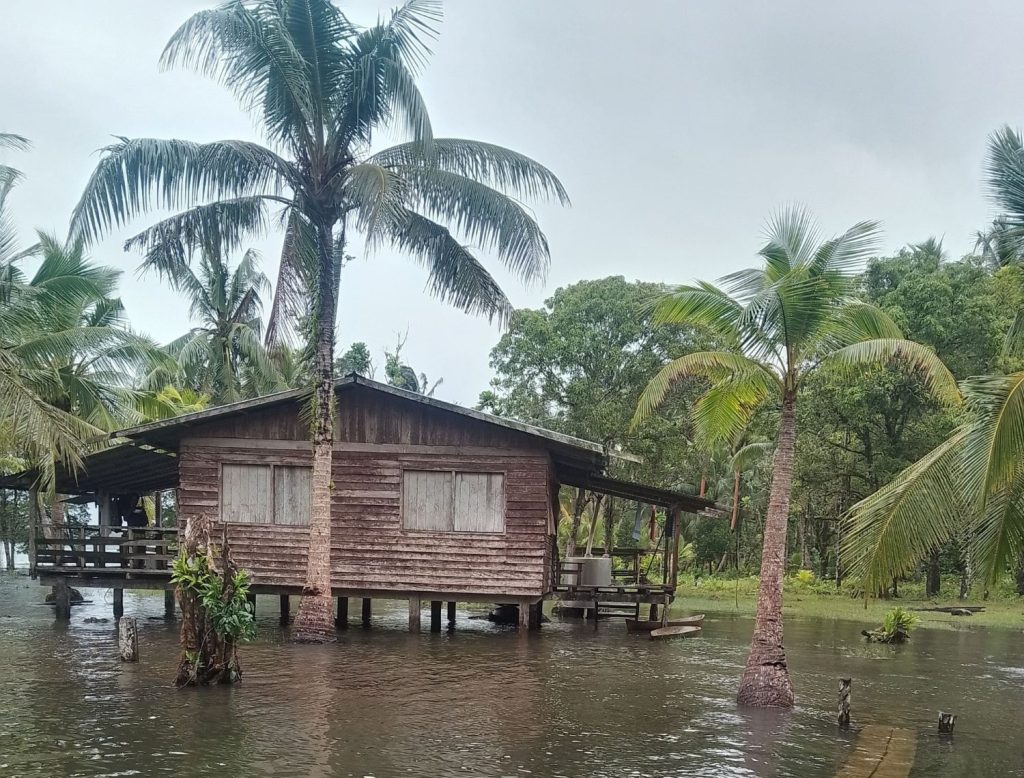
A permanent house at Kinamara village sitting on top of the sea, Photo by Ben Bilua
This week, I travelled to Kinamara to witness firsthand the growing impact of sea level rise on this fragile community.
The journey took us past several small inhabited islands before we finally reached the village, a place where the beauty of island life contrasts sharply with an unfolding environmental crisis.
Upon arrival, I met Ale Robert, Chairman of the Kidu/Gohigo House of Chiefs, alongside community elder John Revolo and women’s representative Margarett Angarau. Together, they shared a story of resilience now being tested by forces beyond their control.
He said Kinamara village was established in 2000, with the intention of bringing families closer to their gardening areas.
But what once seemed like an ideal location is now increasingly vulnerable.
Robert recalls that when he was a child, the shoreline stood 10 to 15 metres further out than it does today.
“Five years after we established this village, we realised the shoreline was sinking and the sea was slowly creeping in year after year,” he said.
Robert said a decision made in the early days of the settlement, the clearing of trees along the shoreline to make way for canoe landings has proved to be a bad decision.
“Those trees were our natural sea barriers. Their roots held the coral stones and soil together. When they were cut down and the roots rotted, the land began to give way,” he said.
According to Robert, the situation worsened dramatically after the 2007 earthquake and tsunami, which stripped away what remained of the village’s natural defences.
Since then, the sea has steadily advanced.
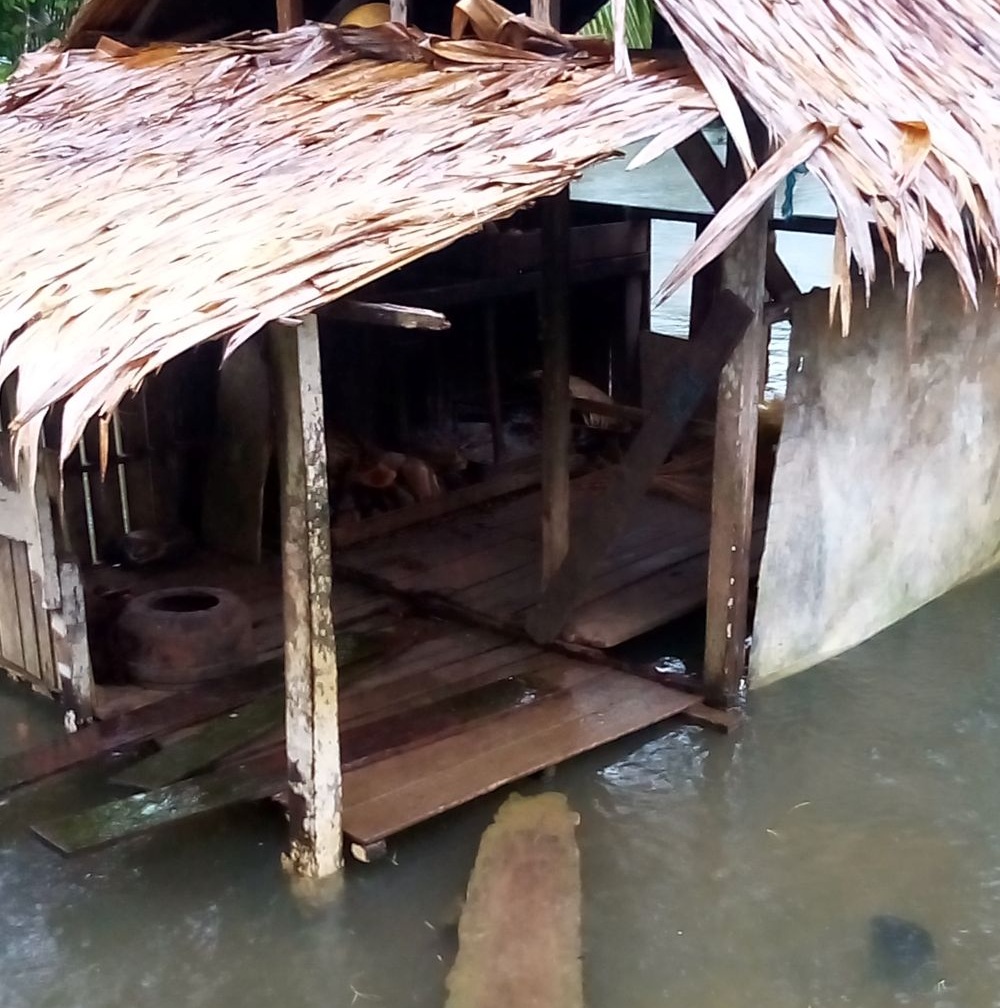
A kitchen floating during high tide, Photo by Ben BiluaHigh tide at Kinamara village, Photo by Ben Bilua
Today, parts of Kinamara sit only centimetres above sea level. During high tide, seawater reaches areas once considered safe. Some homes now stand partially over water, placing families at constant risk.
But the crisis goes beyond rising tides.
Villagers speak of shifting weather patterns that have disrupted traditional farming practices. Crops like taro, once planted according to seasonal knowledge passed down through generations, are now difficult to manage.
“It’s hard to predict the weather. Even pests are behaving differently. They’re eating crops they never used to touch,” Robert explained.
He said food production has declined, placing additional strain on families who rely on both gardening and fishing for survival. Fishing, too, has changed.
Robert said reefs have sunk, fish have become scarce, and fishermen must now paddle much farther out to sea to make a decent catch.
“In the past, I could fish just near the village and catch plenty. Now there’s nothing there. I think the fish have moved to deeper waters,” said elder John Revolo.
He said community members are trying to adapt to the changing environment without success over the years.
Revolo also said new dangers have emerged as environmental pressures mount.
He said crocodiles once rarely seen near the village are now venturing closer, particularly during high tides.
“There have been incidents where crocodiles have taken pigs, dogs, and even human lives,” Revolo said quietly.
For many, this is a frightening and unfamiliar reality, especially women and children.
Women and children are among the most affected.
Margarett Angarau described the daily challenges faced by women in Kinamara, including the struggle to access clean water.
With saltwater encroaching on their surroundings, women must walk long distances to find fresh water for drinking and washing.
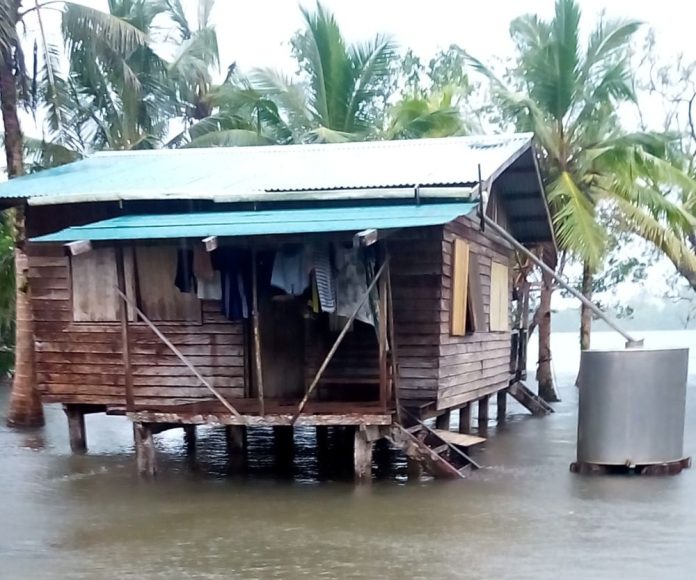
High tide at Kinamara during the cyclone, Photo by Ben Bilua
She also recounted a terrifying experience during the recent Cyclone Maila.
“I was fast asleep when neighbours called me to escape. When I stepped outside, the sea below my house was more than two metres high,” Angarau said.
Her family fled to higher ground, joining others at the community evacuation centre.
“It was frightening,” she added.
Despite the growing risks, relocating inland remains a sensitive issue. Some villagers are reluctant to move, fearing the loss of their connection to the sea — their primary source of food and income.
Elder Revolo continues to urge his people to consider relocation before disaster strikes.
“I’ve advised them to move inland, but many still want to stay close to the sea. I will keep encouraging them,” he said.
Kinamara’s story is not just about one village. It reflects a broader reality faced by many coastal communities across the Pacific — where climate change is no longer a distant threat, but a daily challenge.
For the people of Kinamara, the ocean that once sustained them is now slowly taking their land, their livelihoods, and their sense of security.
Yet even in the face of rising tides, their identity as “sea legends” endures — a testament to their strength, their history, and their determination to survive.
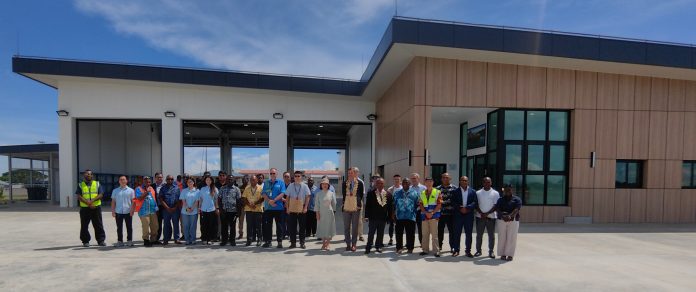
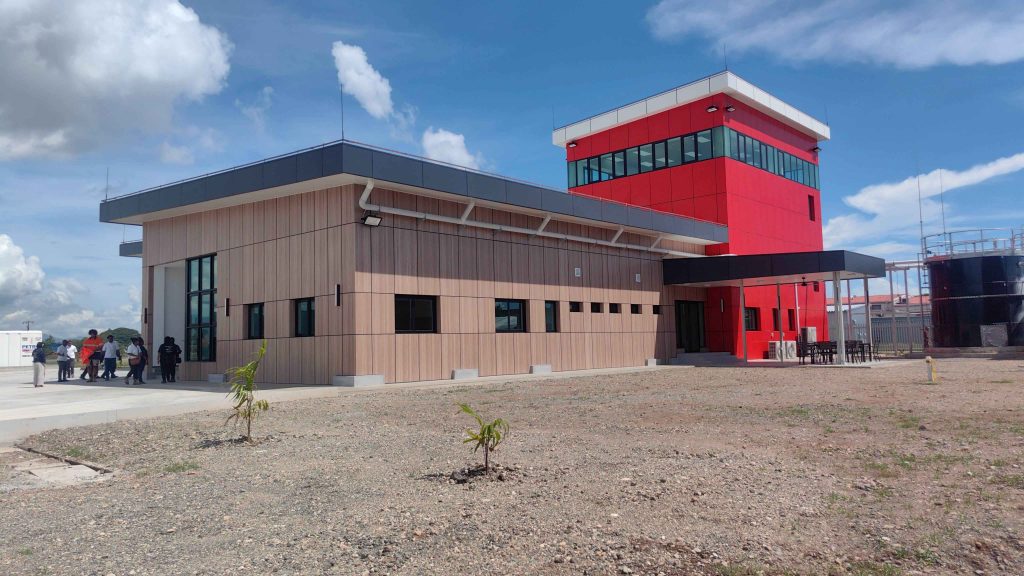
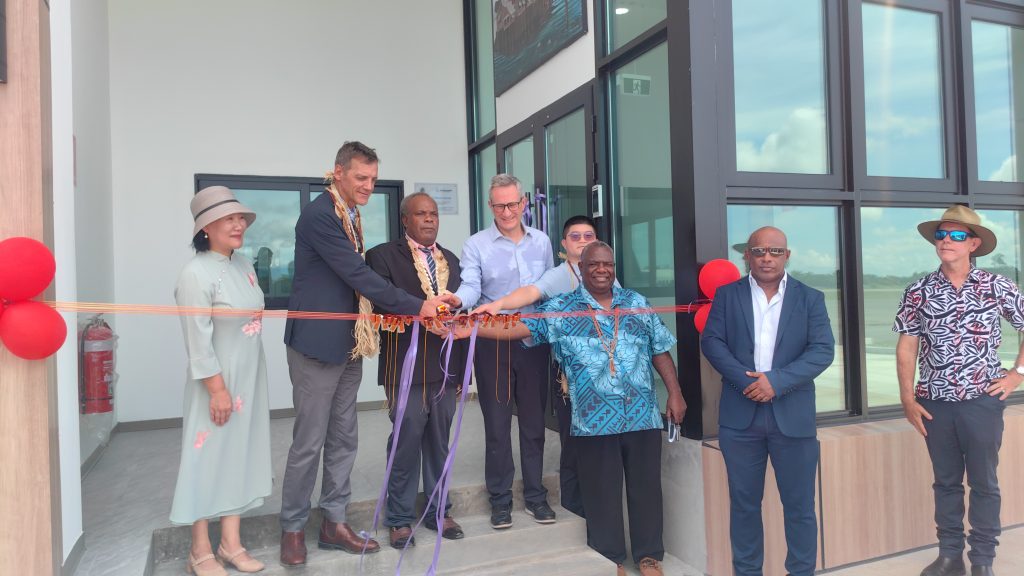
A new Rescue Fire Service Station at Honiara International Airport was officially handed over yesterday, marking a major milestone in strengthening aviation safety in Solomon Islands.
The new-state-of-the-art modern facility officially opened yesterday, Photo by Ned GagaheCutting of the ribbon to officially open the building, Photo by Ned Gagahe
The state-of-the-art modern facility is part of the Second Solomon Islands Roads and Aviation Project (SIRAP2), funded by the World Bank and implemented by the Ministry of Communication and Aviation (MCA).
Construction was undertaken by China Railway Civil Engineering Group, with supervision by Egis.
Permanent Secretary of the Ministry of Communication and Aviation (MCA), Alwyn Danitofea, said the new station will significantly boost emergency response readiness and enhance safety for air travel.
“The new facility we are here to witness its handing over will significantly strengthen Solomon Islands Airport Corporation Limited’s capacity and capability to maintain safety of passengers, visitors, and vital infrastructures,” he said.
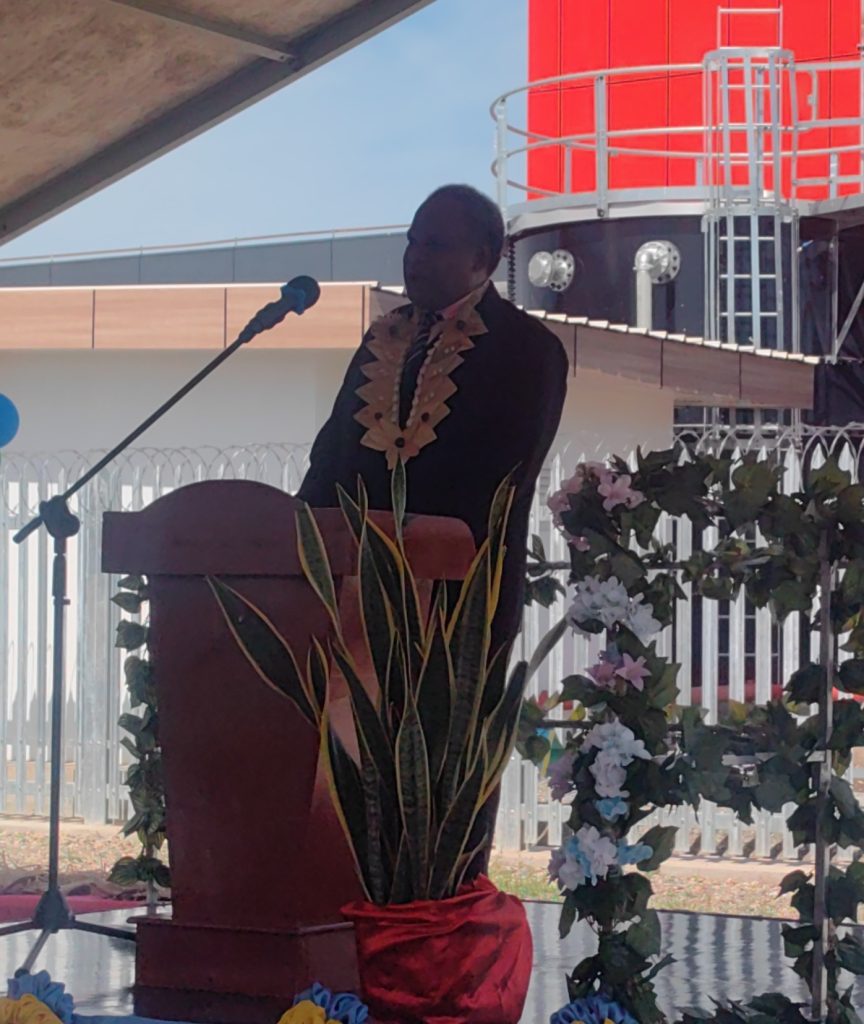
Minister Tuasulia making his remarks, Photo by Ned Gagahe
The handover ceremony was officiated by MCA Minister, Alfred Tuasulia, as Guest of Honour, and attended by senior government officials, development partners, and representatives from the Chinese Embassy.
Minister Tuasulia said the new Rescue Fire Service Complex will serve as the operational base for a team of highly trained aviation firefighters dedicated to responding to emergencies.
“Rescue and firefighting are a critical component of any emergency response plan, with the primary objective of saving lives in the event of an aircraft accident within or near the airport,” he said.
He added that the modern facility provides an enhanced safety net for travellers and is equipped with state-of-the-art infrastructure to support efficient emergency response operations.
Gym for Fire Rescue personnel, Photo by Ned Gagahe
The new station also offers improved working conditions for rescue personnel, including dedicated training classrooms, a fully equipped gym, and better storage and maintenance areas for firefighting vehicles and equipment.
“With this new facility, the Honiara Airport Rescue Fire Services will achieve faster emergency response times, enhanced training capacity, and improved operational readiness,” Minister Tuasulia said.
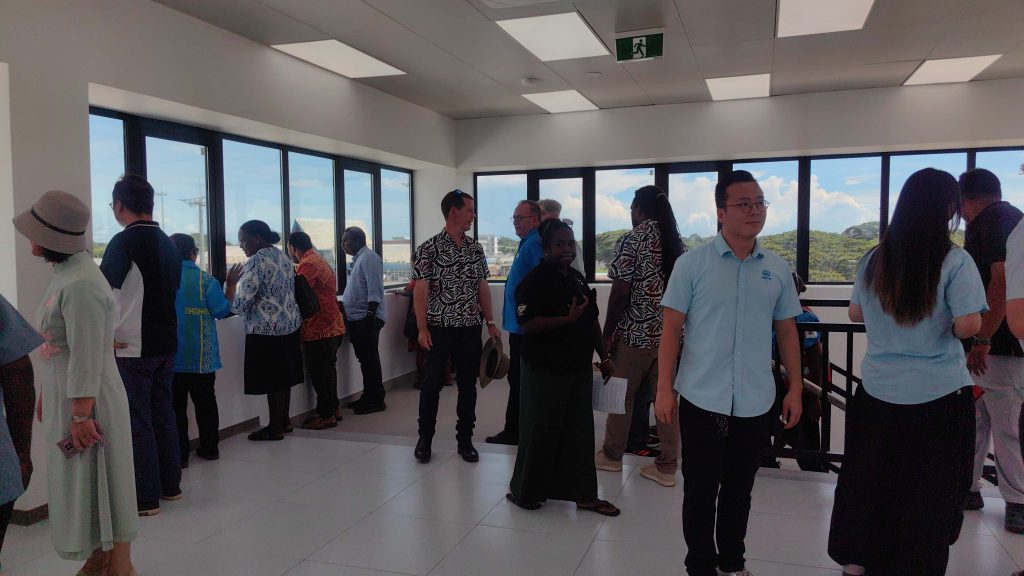
A tour inside the fire rescue complex, Photo by Ned Gagahe
The ceremony included a dedication prayer, ribbon cutting, presentation of gifts to project partners, and a guided tour of the facility.
Also, present was World Bank Country Representative Bernard Harborne.
The project is part of SIRAP2, which continues to deliver key infrastructure upgrades across Solomon Islands, including roads, bridges, and improvements to provincial airports and airfields.
High school rugby fun festival concludes yesterday
BY TONY IROGA
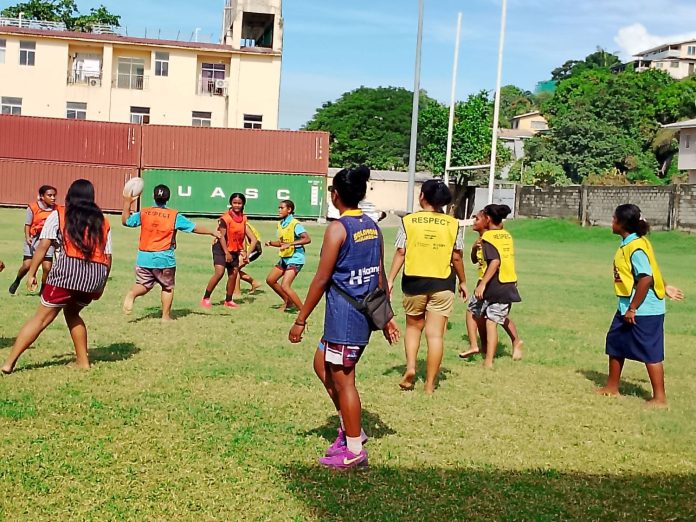
The high school rugby fun festival within West Honiara constituency successfully concluded yesterday at the town ground rugby ground, marking a vibrant and engaging event for young athletes.
A total of five schools took part in the festival, bringing together students in a spirited display of rugby skills, teamwork, and sportsmanship.
The event highlighted the growing interest in rugby at the grassroots level and provided a valuable platform for students to learn and compete in a positive environment.
In an interview with Island Sun yesterday High School Rugby Festival Coordinator, David Siapu emphasised the importance of sports in schools.
He expressed satisfaction with the turnout and performance of the students, noting that the successful completion of the West Honiara program sets the stage for upcoming rugby festivals in other constituencies across the city.
Frinda Tai of St John School said the program was very important for students’ health and their understanding of sport.
“The training means much to me not only promote physical fitness but also help me gain knowledge, discipline, and teamwork skills through participation in rugby,” she said.
She also encourages students who did not participate in the program yesterday to take part in the upcoming school festival activities, assuring them that coaches and teachers are available to guide and support them.
Shirley Vilavuru of Kelyn School said rugby is a very good sport, describing her first experience playing the game as both exciting and educational.
“I found this rugby game very interesting, and I learned most of the basic skills of rugby 7 aside and look forward for the next training in the future,” she said.
Meanwhile, said Ronny Dofe of New Hope School said he learned a lot from the program especially about respecting each other and the basic skills of rugby 7s.
He said he looks forward to upcoming rugby training sessions and is excited to be a part of it.
Arnold Fika, a teacher at New Hope School, said the rugby tag festival is very important as students learn key values such as discipline, integrity, passion, solidarity, and sportsmanship.
Coordinator Siapu said the rugby festival has become a standout event for students across West Honiara constituency, showcasing not only young sporting talent but also promoting teamwork, discipline, and healthy lifestyles.
He said with support from the Solomon Islands Rugby Union Federation (SIRUF) and key stakeholders, the festival brought together several schools in a vibrant display of grassroots rugby development.
“Students actively participated in matches and skill-based activities, gaining valuable experience while building confidence on and off the field,” he said.
Through rugby, students are encouraged to develop respect, unity, and a positive mindset.
Siapu said the next school festival program will be held for Central Honiara schools, followed by activities for schools in East Honiara constituency.
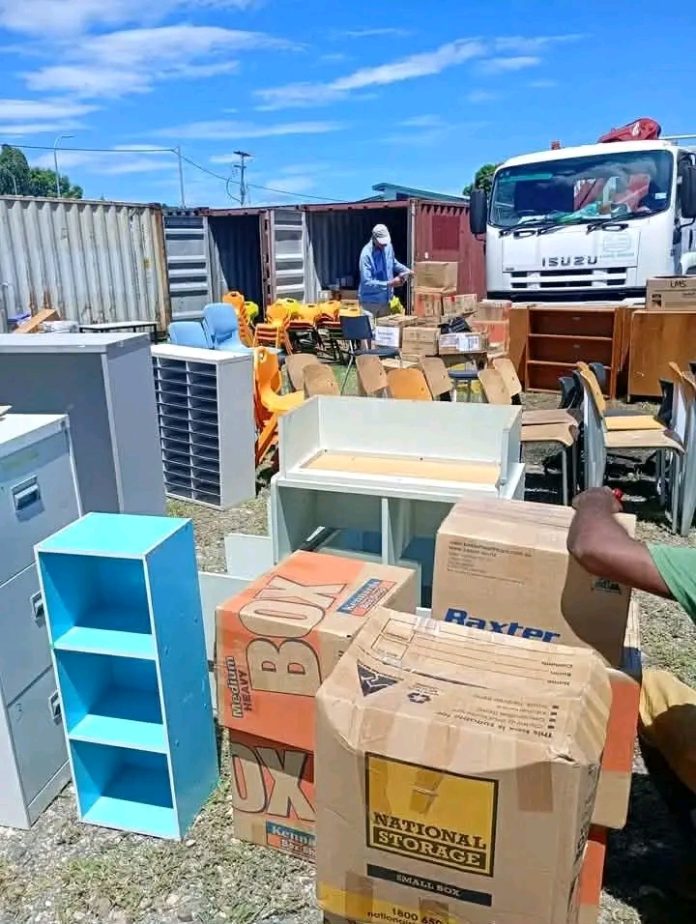
Rokera Primary School in West Are’are, Malaita Province, appreciates the Rotary Club of Solomon Islands for the timely support they have given to the school.
The school’s deputy head teacher, Belasio Hitee, expressed that the support in the form of materials, including furniture has touched their hearts and addressed their long-standing needs.
“On behalf of the Rokera Primary School head teacher and committee, I would like to extend our sincere gratitude to the Rotary Club of Solomon Islands for your generous support.
“It is because of organisations like yours that we can continue to strive for excellence and inspire the young minds of tomorrow,” he said.
He mentioned that through this kind support, they will provide better resources and create a better learning environment for their students.
“Your kindness and dedication will make a significant impact on our students and staff, and we are truly grateful for your commitment to our educational goals.
“It will truly enable us to enhance facilities to provide better resources and create a more conducive learning environment for our students,” he said.
He said Rotary Club Solomon Islands is a true partner in their mission to educate and empower our students.
The materials and furniture will be shipped to Rokera on Monday.
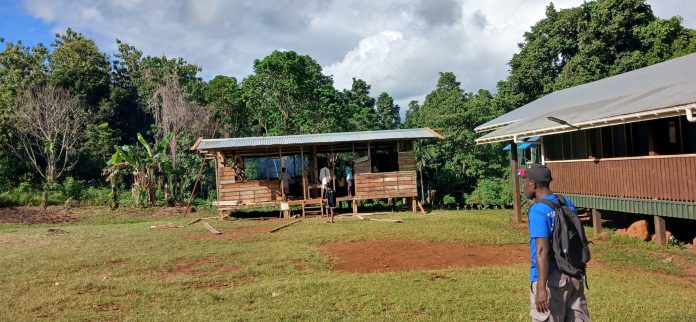
TIROKURI Primary School at Kinamara is in urgent need of new classrooms after two of its buildings were destroyed by the recent Tropical Cyclone Maila, leaving students at risk of missing out on their education.
School Head Teacher Alekera Boaz told Island Sun that one classroom was partially damaged while another was completely destroyed by strong winds during the cyclone.
“One classroom was partly destroyed, but it was unsafe for both teachers and students, so our school decided to pull down the building.
“Another classroom was totally destroyed by the cyclone, only the foundation is left,” he said.
Boaz said Kinamara community has stepped in and is working tirelessly to construct at least one temporary classroom to keep lessons going.
He said the school is now desperate for support to rebuild two proper classrooms to accommodate its students.
“We are trying our best as a community, but we really need assistance to rebuild so our children can continue their education without disruption,” Boaz said.
He said that the school is also facing serious challenges with water supply and sanitation.
Boaz said access to clean water has been an ongoing issue for teaching staff, while sanitation facilities remain inadequate.
“We also lack sanitation. Only the teachers have sanitation. This is urgent as it is also a health concern for our school,” he said.
He said Tirokuri Primary School continues to grow, and additional support is critical to ensure the school is properly equipped for future generations.
The situation underscores the broader impact of natural disasters on rural education in the Western Province, as communities struggle to recover and rebuild essential services.