118 of 210 shipwrecks in SI considered as pollution threats
BY LORETTA B MANELE
ONE hundred and eighteen of 210 shipwrecks in Solomon Islands could be considered as pollution threats.
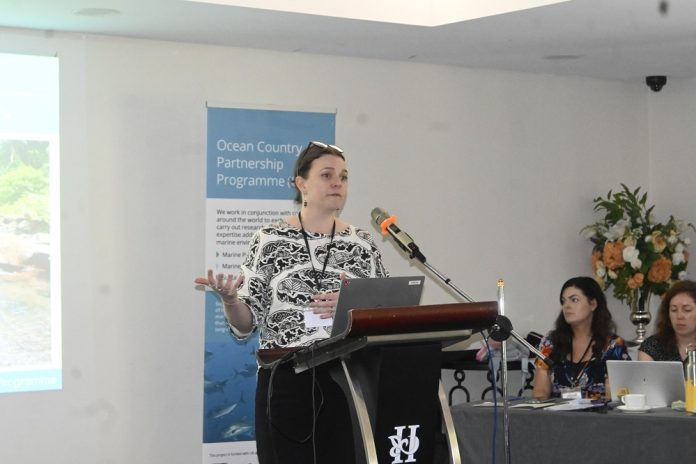
This is according to Dr Matt Carter, the research director for “major project foundations” who spoke about the status of Potentially Polluting Wrecks (PPW) in Solomon Islands at the “Strengthening Marine Pollution Incident Resilience in the Pacific Islands” workshop last week at the Heritage Park Hotel.
A potentially polluting wreck (PPW) is said to be a shipwreck which holds fuel or cargo that could cause environmental harm.
In Solomon Islands, around 210 major wrecks were found across the country’s Exclusive Economic Zone (EEZ) and 118 of these could be considered as pollution threats.
“We believe around 118 of those could be considered pollution threats, and we’ve identified a top 20 of highest kind of risk, and we’ve gone through and actually done some additional research on those top 20”
Carter expressed that fuel from these wrecks can be the fuel from the ship itself, including a cargo like a fuel tanker that has oil as well as hydrocarbons.
He emphasized that it’s these kinds of wrecks that pose an environmental hazard in Solomons and in the Pacific.
Carter said an additional problem with these shipwrecks is that a lot of them still contain unexploded ordinances.
Apart from PPWs there are also APWs (Actively Polluting Wrecks) as well.
He said this is happening now because some of the shipwrecks are out there, just a couple of kilometres away and are leaking oil and are actively polluting the environment.
“Some of them are doing that in what we call chronic leakage where relatively small amounts of oil coming are out, coming to the surface over a long period of time. That can still be toxic for sensitive species, especially small baby fish and coral. So even though it might be a small amount, it can still do damage”
Speaking of the 118 wrecks, Carter said from the top 20 highest kind of risks identified they broken down those top 20 into four core areas of where these wrecks are.
He said “Area 1” is Honiara and surrounding areas where the shipwrecks there range basically on the shore, from zero metres deep to 130 metres deep.
Carter mentioned that they are in a range that’s challenging but it’s not incredibly difficult to investigate these shipwrecks.
Area 2 is said to be the area around Savo Islands with shipwrecks 750 to 2,500 metres deep which as stated as very deep in terms of any sort of marine work.
Carter said even though these wrecks are really deep, traditionally people haven’t really worried about deep shipwrecks.
However, he mentioned that satellite imagery shows that oil is coming to the surface of the sea from these wrecks.
Tulagi and surrounding areas come under Area 3 and as mentioned, this area has shallower wrecks.
“These are shallower wrecks again, so anything kind of deeper than about 80 metres starts becoming really quite challenging, but these are, they’re at a depth that they can be investigated with the right equipment to understand what condition they’re in”
Lastly, there is Area 4 which is the Western Solomons and the three wrecks identified in this region as noted could either be potentially polluting or actively polluting wrecks that require further research.
Carter said nobody really knows how much oil has been lost from these wrecks and if a shipwreck’s leaking even a small amount over a long period of time, that can significantly reduce how much oil is in it today.
He stressed that there’s around 8800 shipwrecks right across the world and this is a global problem.
Carter said what they’ve found is that in some shipwrecks, people look at it and say that it can’t hold an oil.
This however differs in quantities and how sensitive the wreck-stricken area is.
Carter said some of these wrecks do hold oil, even in small quantities and if a ship wreck is in a sensitive enough area and releases oil, it can cause really significant damage.
“So, something which I’ve got here is the wrong wreck in the wrong place. It can be even a small amount, it can be really damaging, or the opposite to that too”