Home Blog Page 506

SINGLE-MINISTER OVERSIGHT RAISES CONCERNS

0
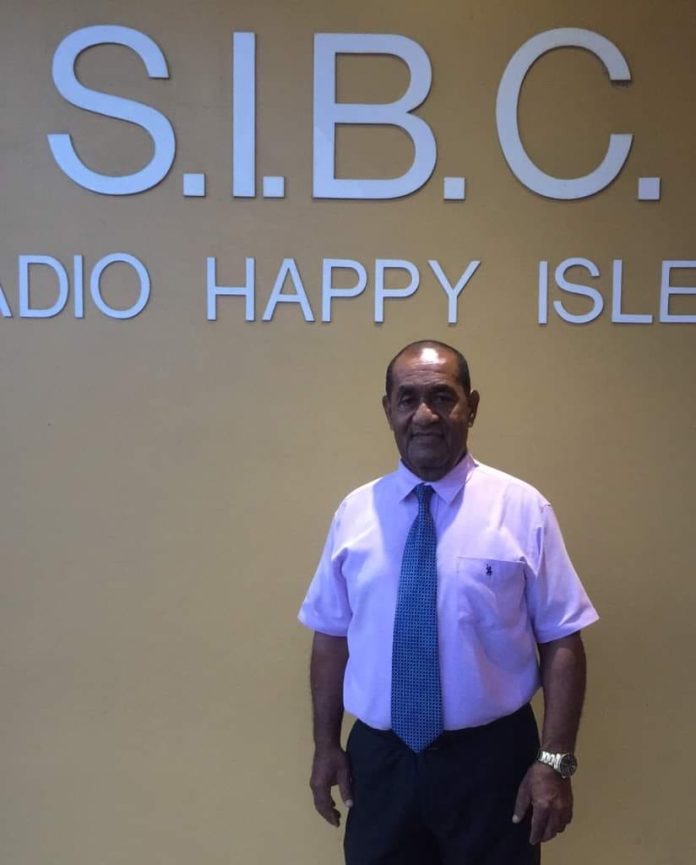
SIBC Chief Executive Officer (CEO) Johnson Honimae. Photo supplied.

SIBC CEO warns of risks in single-Minister oversight proposed in SOE Bill

BY NED GAGAHE

The Chief Executive Officer (CEO) of the Solomon Islands Broadcasting Corporation (SIBC) Johnson Honimae has voiced strong opposition to the first objective of the State-Owned Enterprises (Amendment) Bill, stating that consolidating power in the hands of a single minister poses significant risks.

The State-Owned Enterprises (Amendment) Bill 2024 aims to revise the State-Owned Enterprises Act 2007 in line with the Government’s SOE Ownership Policy 2018 and the National Gender Equality and Women’s Development Policy 2016-2020. The key objective of the bill include consolidating the ownership monitoring responsibility solely with the Minister of Finance.

The bill also aims to clarify the process for state-owned enterprises to provide Community Service Obligations, enhancing publication requirements for documents presented to Parliament, and establishing regulation-making powers concerning the evaluation of directors and the election of board chairpersons and deputy chairpersons.

Speaking during the Bills and Legislation Committee (BLC) hearing last week, Honimae emphasized the potential dangers of this monopoly of authority and called for careful consideration of its implications.

“The first objective of this State-owned Enterprise Amendment Bill, as far as the CEO of SIBC is concerned, I think this is very dangerous, putting the power into the hands of one minister. I’ll stop there.” CEO Honimae said.

The SIBC CEO said whilst he concurs with a lot of comments that have already been made by our other SOEs, he also made clarification that legally SIBC is no longer an SOE.

“In case you don’t know about that yet.” He said.

However, Leader of the Opposition Matthew Wale clarified that SIBC is still an SOE but was only removed from the schedule of the Act.

Mr Honimae also commented on why the government has removed SIBC from the schedule stating that they haven’t receive any clarification on that matter.

“There is a bit of confusion. We haven’t had any clarifications from the Office of the Prime Minister on that matter.

“The reason why we were omitted was that we were not making any profit for the government. There was a different reason for when the other SOE was omitted recently.

Regarding Community Service Obligations (CSO), CEO Honimae highlighted that SIBC actively engages in them, as every minute of its airtime contributes to fulfilling this role.

“All these free announcements that we make, which are not paid for, are considered Community Service Obligations.

“We don’t have to go on a tour of a certain area in the country to be considered as Community Service. When we announce the weather, what the weather is going to be like for us, that is considered Community Service Obligations.

“Nobody pays us for that one. So that is our short comment on that Objective B.

Regarding Objective C, the requirement of a State-owned Enterprise to publish whatever documents it has brought into Parliament a week after, CEO Honimae said they have no problem with that.

On the issue of appointment of Board Members, Honimae said this is one that must be considered very carefully, because in some cases at SIBC the issue of conflict of interest comes into play.

“Because under the State-owned Enterprise we’re looking for people who have experience or qualifications in the area that the SOE is operating in. But those Board Members may have a current business that is related to their qualifications, and there is clearly a conflict of interest in some of the Board decisions. So, what we at SIBC have done is we have a standing agenda item.

“Whenever the Board meets there is a standing agenda item which asks for anybody who has a conflict of interest in the matter that is before the Board. They have to declare their interest before the issue is discussed by the Board.

Honimae stated that when making board appointments, it is essential to consider the potential candidates, specifically looking into their current business dealings. He emphasized that these factors should be taken into account during the selection process.

SIEA raises concerns on State-Owned Enterprises Amendment Bill 2024

0
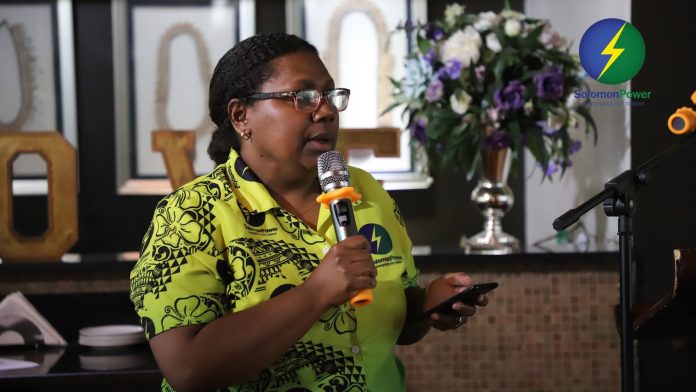
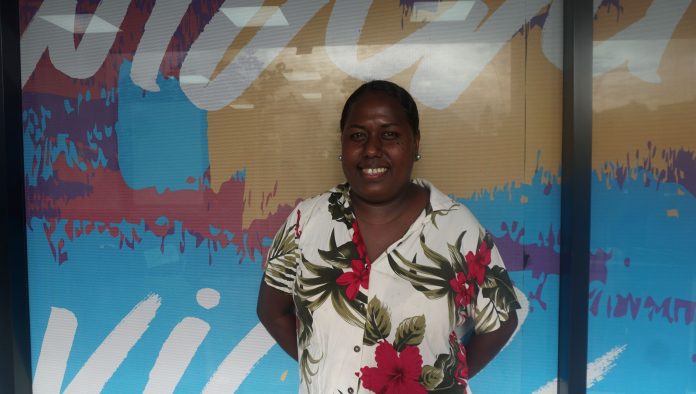
Delilah Homelo, new appointed Acting CEO for Solomon Power.

BY NED GAGAHE

Chief Executive Officer (Acting) of the Solomon Islands Electricity Authority (SIEA), Delilah Homelo, highlighted concerns during the hearing on the State-Owned Enterprises (Amendment) Bill 2024.

Appearing before the Bills and Legislation Committee (BLC) last week, Acting CEO Homelo presented five comments during her appearance before the committee.

“The first one is on the consolidation of ownership and monitoring responsibility that will now sit with the Minister of Finance alone. Under this bill, the Minister of Finance may direct the Board regarding the statement of corporate objectives. The Board shall be accountable solely to the Minister of Finance. The Minister of Finance shall exercise the powers available under the SOE Act. We do not anticipate that the amendment will have much impact on Solomon Power, as the Minister of Finance is expected to exercise these powers consistently with government and cabinet policy.”

Acting CEO Homelo stated that the SOE Act provides governance for state-owned enterprises. Given that the principal objective of a state-owned enterprise is to operate as a successful business and to be profitable and efficient it seems practical for the Minister of Finance to have this oversight role under the SOE Act.

She added that the Electricity Act, which establishes Solomon Power as a statutory corporation and provides for its statutory functions and duties, remains in force despite the amendment to the SOE Act.

Homelo also stated that under the Electricity Act, the Minister of Mines, Energy and Rural Electrification has certain powers, including the right to receive advice from Solomon Power on all matters related to generation, transmission, distribution, and use of electricity, as well as to receive statements of accounts, allow reports, determine appeals against the revocation of licenses, and make regulations based on recommendations from Solomon Power.

Regarding community service obligations, Homelo stated that under this Bill, the responsible Minister’s power to direct a SOE to provide a community service has been removed.

“Instead, a SOE must comply with prescribed procedures for proposing, costing, and authorizing the provision of community service obligations. Solomon Power’s comments on this amendment reference Section 24 C of the SOE Act. The Minister of Finance has the power to make regulations for directing a state-owned enterprise to provide community service obligations pursuant to Section 8 of the SOE Act.

“However, by Clause 12 of the Bill, Section 24 C will be omitted, and therefore it is unclear where the power to make regulations for the purpose of Section 8 will come from. This should be clarified. Furthermore, under the Bill as drafted, it appears that the provision of community service obligations is to be proposed by the state-owned enterprise rather than by the Minister. This should also be clarified.”

CEO Homelo explained that the community service obligations defined under the SOE Act include providing goods or services to customers or users on terms that are not expected to generate a normal return to the SOE.

“In essence, the provision of community service obligations may conflict with the principal objective of a state-owned enterprise, which is to operate as a successful business and to be profitable and efficient. Therefore, when providing community service obligations, it is critical to maintain the right balance to avoid risking the sustainability of the SOE. We would like to know what the prescribed procedures regarding community service obligations will be.”

Her third comment was on the evaluation and remuneration of directors and the election of the chairperson and deputy chairperson.

“Under the Bill, the Minister of Finance may make regulations for the selection, appointment, reappointment, evaluation, remuneration, removal, and disqualification of directors of a state-owned enterprise. The additions specifically relate to the evaluation and remuneration of directors. The Minister of Finance may also regulate the election of the chairperson and deputy chairperson of the Board of a state-owned enterprise. Solomon Power welcomes these amendments, as they appear to strengthen governance, and we are interested in knowing what the regulations, particularly regarding these amendments, will entail.”

CEO Homelo’s fourth comment addressed the publication requirements for documents tabled in Parliament.

“Under this Bill, the state-owned enterprise must publish the same document or information within one week after it is tabled in Parliament, by publishing a summary in a newspaper, on a website maintained by the state-owned enterprise, and making copies available free of charge at the offices of the state-owned enterprise. Solomon Power welcomes the removal of the requirement to publish in the Gazette, but we do not have direct control over publications in the Gazette, as this is a matter for the government.”

Lastly, Mrs. Homelo discussed the personal policy provisions, including those on discrimination.

She explained that under the Bill, a provision will be included in the personal policy of a state-owned enterprise to ensure there is no discrimination on the grounds of gender, race, place of origin, political opinion, color, or creed.

The Acting CEO said Solomon Power’s comments on this amendment highlight that the SOE Act requires state-owned enterprises to have personnel policies that ensure fair and proper treatment of all employees. Solomon Power does have policies that ensure there is no unjustified discrimination.

However, she noted that there may be instances where certain policies and practices might be perceived as discriminatory.

“For example, in recruitment, diversity in the hiring of employees in terms of gender, race, and place of origin may be encouraged. Additionally, as Solomon Power is an essential service, employees in certain fields may need to work late and on weekends. Therefore, clarification is needed on what types of discrimination are prohibited and which may be accepted and thus lawful.” She said.

Biggest challenge in pacific region is PPW

0

BY LORETTA B MANELE

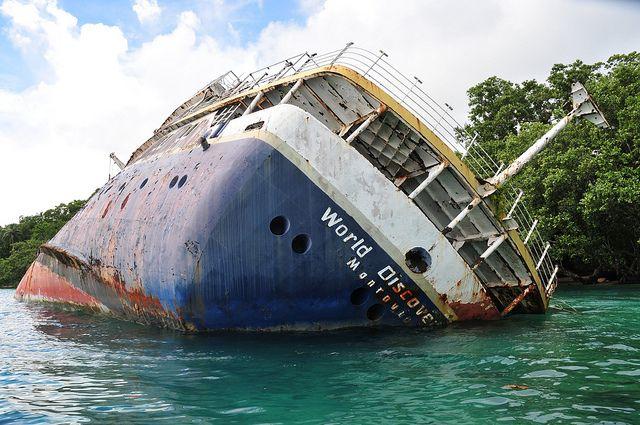
One of the biggest challenges in the Pacific are PPWs or Potentially Polluting Wrecks.

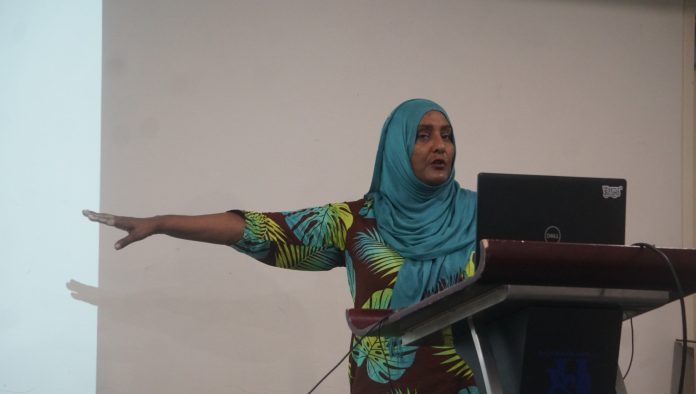
This was expressed by Dr Zullah Mohammed, the Pollution Advisor for SPREP (Secretariat for the Pacific Regional Environment Programme) who spoke on PPWs at the “Marine Pollution Incident Resilience in the Pacific Islands” workshop that was held at the Heritage Park Hotel last week.

Mohammed said SPREP developed a regional strategy that was more focused on the World War 2 wrecks and the current focus for them in the region or globally is the triple planetary crisis which include; climate change, biodiversity loss and pollution.

“What we are talking about here is one of our biggest challenges in the region, the potential polluting wrecks. We have international rules that covers the World War II wrecks, but in our region, I think we still come across those challenges of managing them”

Mohammed mentioned that not all countries in the region have World War 2 wrecks and every other member country of SPREP actually have fishing vessels, convention vessels and domestic vessels.

He explained while some vessels are sunk intentionally others are sunk unintentionally.

Mohammed said it was in 2014 that SPREP member countries agreed to identify and characterize wrecks.

“MDF actually has got an exhaustive list of those 3,800 wrecks that we have in the region and they have mapped with the historical data in terms of the volume of different type of fuel it holds”

Mohammed said that apart from this, there are some risks assessment carried out with some of those wrecks, but still there is a lot of work that needs to be done.

He added that following the development of their regional strategy and the reporting back to our members, the next step basically was for them to agree on intervention of different risk level.

Mohammed stressed that before moving further, one of the important questions they need to ask SPREP member countries is what they will do about the wrecks they have in their backyards.

“How do we agree on a regional level the interventions that a regional agency such as us can actually take with the development partners and donors?”

“How do we actually plan up a short-term, medium and a long-term strategy to manage these wrecks?”

Mohammed said in the last executive board meeting following the recent triple planetary crisis, they got the approval to revise their regional strategy.

CEMA wants dual minister oversight in SOE Bill

0

BY NED GAGAHE

The Commodity Export Marketing Authority (CEMA) has voiced its support for dual ministerial oversight in the State-Owned Enterprises (SOE) Amendment Bill 2024.

Appearing before the Bills and Legislation Committee (BLC) hearing last week, CEMA representative Brian Keniasia highlighted the need for both the Minister of Finance and the Minister of Commerce to have a role in overseeing state-owned enterprises.

Keniasia stated that consolidating decision-making authority in a single minister could lead to potential governance issues and stressed that shared oversight would enhance accountability and operational effectiveness within revitalized state-owned enterprises.

“So much has been revitalized, so most of the changes here were here to get familiar with. But looking at the amendment, currently we, under the Minister of Commerce, which is dealing with one minister responsible for most of the authority to reach him, but the inclusion of the Minister of Finance, in our view is that if we have two ministers responsible for dealing with the affairs.

“I think that would be okay with the current revitalization, putting more powers in one minister. It falls along the line where there are certain things that shouldn’t be happening, but it happened because one minister responsible for most of the decision of the board.

“So, if we have the Minister of Finance coming in and the Minister of Commerce, at least along the line of decision-making that would be appropriate for a new revitalized CEMA, than leaving it on one minister carrying out the whole responsibility for decision-making.” Mr Keniasia said.

The Opposition Leader, who is also a member of the Committee, described Keniasia’s remarks as “very courageous,” acknowledging the challenges faced by CEMA.

He echoed the sentiment that consolidating power in one individual may not be the best path forward for the organization.

Chairman of the BLC, MP for West Are’are, John Maneniaru reminded the committee of historical precedents that led to the current amendments.

“We’ve experienced the pitfalls of one-man decision-making before, and I hope you recognize why this act is in place,” he cautioned, stressing the need for a more collaborative approach moving forward.

Disparity between media reports on human rights violations and government response

0
Island Sun Sub - Editor Irwin Angiki responded to question on the role of media with regards to human rights.

BY JOHN HOUANIHAU

Government authorities do not take legal action in response to human rights violation contained in media reports in the country.

This was highlighted during a panel discussion at a Human Rights Defenders workshop last week, which also saw the establishment of a working group to set up Solomon Islands’ first Human Rights Defender Network.

Irwin Angiki, Island Sun Newspaper’s sub-editor and one of the panelists, shared that the Newspaper on average produces nearly 11,000 local stories every year – almost half of which directly report human rights violations or imply them.

When asked by a participant whether their stories containing elements of human rights violation receive action by government authorities, Mr Angiki said “the sad answer or fact to your question is no”.

He shares that government authorities have been flaunting their own channels of receiving complaints, which they adamantly stick to despite reading and being aware of human rights violation issues from the media.

Government authorities prioritise their reporting procedures above the incidents, which results in many human rights violation incidents in Solomon Islands ending up only being a media report – nothing else.

Renowned local women’s and environmental rights activist Afu Lia Billy also shared the same sentiment as one of the key panelists at the event. 

“We work a lot against violence against women but the authorities like the police are not very supportive,” said Ms Afu.

Afu said that while there is already legislation in place like the Family Protection Act, work cannot happen without support and resources from the government.

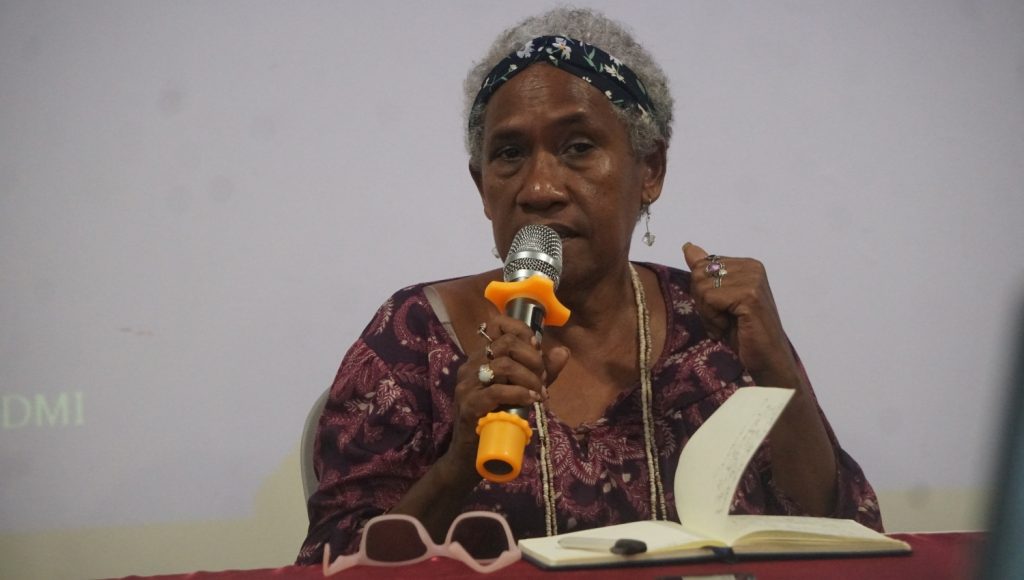
Renowned local women’s and environmental rights activist Afu Lia Billy.

“Legislation should have resources attached to it so work can be implemented and in addition, the government didn’t see Human rights as a priority,” she said.

She said there are some major challenges working in this space.

“When you ring the police to attend to a case, all they are saying is there is no transport.

“There should be an educated unit within the Police Unit regarding Human rights defenders and just for violence against women and also a vehicle to run and respond.

“Without resources, nothing will happen. I want the donors to step in where these shortfalls have come in,” she said.

The three-day workshop was run by the Pacific Human Rights Defenders Network in partnership with the Office of the United Nations High Commissioner for Human Rights (OHCHR) and Swiss embassy in Canberra, which was held at the Heritage Park Hotel.

Family ties turn dangerous

0
Dr Natasha Khan a Human rights defender in Fiji, and also the current Chair of the Pacific Human Rights Defenders' Network.

JOHN HOUANIHAU

Studies have found that 78 percent of child abuse perpetrators were immediate family members.

Dr Natasha Khan a Human rights defender in Fiji, and also the current Chair of the Pacific Human Rights Defenders’ Network said at the recently concluded human rights defender (HRD) workshop in Honiara.

Natasha said the findings were made possible through research they conducted in 2019 for the Department of Women and Children in Fiji regarding the causes relating to child abuse and violence.

She highlighted the matter when she responded to a question raised by one of the USP-SI students on the rise and the cause of increased rape cases in the country.

According to Khan, she said that they found two major reasons for child abuse or sexual violence across the board.

“One is the opportunity- the perpetrator had the opportunity and accessibility to the child and Two is the security, perpetrators knew that they would get away with it or they did not know what abuse is,’’ she said. 

Khan said that there is a common assumption that the stepfathers or strangers are bad.

“The assumption in our minds that stepfathers and strangers are bad yet it’s the ones inside our home, the homes,’’ she said.

“78% of the perpetrators were immediate family members, grandfathers, fathers. The majority of them are brothers, fathers, grandfathers. Stepfathers only make up 7.5%,’’ said Khan.

She said that it is something the Solomon Islands could also look at in terms of conducting research and providing data on the ground to find out the root cause of increased child abuse, especially rape in the country.

“So, this is something the Solomon Islands can look at, like collecting data and doing some research, something similar to find out what causes child abuse in the community,’’ she said.

Rape charge changed to indecent act

0

BY ROMINAH FAKA

The case against a 20-year-old man has been changed from rape to indecent act.

Court heard yesterday investigation is ongoing.

Prosecution sought 14-day adjournment for time to collect outstanding documents.

Court adjourned for October 28 and ordered the accused to remain in custody.

The victim in this matter is a juvenile, a 11-year-old girl when the offence took place.

Police alleged on August 20, 2024 the victim, her brother, her aunt and uncle and their children including the defendant where at the victim uncle house having dinner.

After the dinner, they watched a movie on the defendant’s phone.

While watching the movie, the victim fell asleep while the others continued watching the movie.

It was alleged the victim’s brother woke her up and told her to go upstairs in their dwelling house to sleep.

The victim then left and instead of going upstairs, she went and laid on their hammock under the house.

The accused later came and committed the sexual acts on her.

The uncle and aunties later reported the matter to police and the defendant was arrested.

Irene Mae of Office of Director of Public Prosecution appears for the crown and PSO for the accused.

Bonfire festival draws fans for a vibrant celebration of Pacific music

0
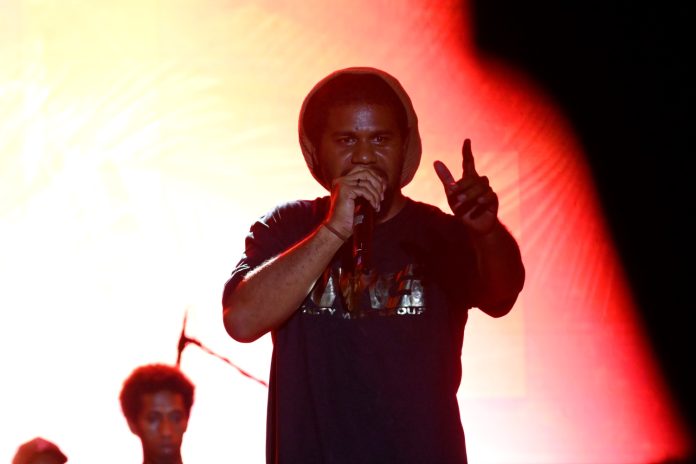
Jaro local hyped the crowd at the Bonfire Fest on Saturday.

BY JOHN HOUANIHAU

The Bonfire Festival 2024 ignited a vibrant celebration of Pacific music on Saturday night, attracting around 3,000 enthusiastic fans.

The event featured an eclectic lineup of renowned artists from the Solomon Islands, Papua New Guinea, and Vanuatu, showcasing the diverse sounds of Pacific music.

Vanuatu artist Shazza rocked the crowd on Saturday

Starting at 7 PM and extending late into the night, the festival dazzled attendees with captivating lighting effects and electrifying performances. Music lovers were treated to live acts from acclaimed local talents like Jahboy, Jaro Local, Blanco, Ruff Neck, Devande, One Tox, and Young Devi. The event also featured special appearances from Papua New Guinean artist Tonton Malele and Ni-Vanuatu performers Shazza and Stonie B.

Tonton Malele from PNG.

In an exclusive interview, Jaro Local expressed his gratitude, saying, “We have a strong support system and wonderful people around us. This is why we were able to make this show a success beyond our expectations. I am immensely grateful to everyone who contributed their efforts to Bonfire 2024.” He further commended the performers, adding, “All the bands and artists performed admirably, and the audience’s response was very positive. A special thanks to our MC, Solo Boy, for his excellent work throughout the event.”

Ismuki performed at the event.

Paeva from the Black Wine Band, who took part as a session musician, shared his experience, highlighting the joy of working with younger artists and his commitment to the local music scene. “As an artist, it brings me joy to be surrounded by talented musicians who spread love and peace to humanity. This evening represents a significant achievement not only for us but also for the Solomon Islands and our local musicians. Whenever we travel abroad, we strive to promote our own music,” he remarked, speaking as the head of Big Wave Production studio.

Master of Ceremony Mr Duane Baiabe also expressed his delight, noting, “I was fortunate to serve as the MC for Bonfire 2024. Among all the major festivals in town, this one stood out as the best due to its seamless execution without disturbances. A big shoutout to Telekom, the gold sponsor of the Bonfire Festival 2024, and to all the other sponsors—thank you very much.” The Bonfire Festival 2024 has set a new standard for music festivals in the region, leaving attendees and performers alike eager for future events

POLLUTION RISK IN SI

0

118 of 210 shipwrecks in SI considered as pollution threats

BY LORETTA B MANELE

ONE hundred and eighteen of 210 shipwrecks in Solomon Islands could be considered as pollution threats.

This is according to Dr Matt Carter, the research director for “major project foundations” who spoke about the status of Potentially Polluting Wrecks (PPW) in Solomon Islands at the “Strengthening Marine Pollution Incident Resilience in the Pacific Islands” workshop last week at the Heritage Park Hotel.

A potentially polluting wreck (PPW) is said to be a shipwreck which holds fuel or cargo that could cause environmental harm.

In Solomon Islands, around 210 major wrecks were found across the country’s Exclusive Economic Zone (EEZ) and 118 of these could be considered as pollution threats.

“We believe around 118 of those could be considered pollution threats, and we’ve identified a top 20 of highest kind of risk, and we’ve gone through and actually done some additional research on those top 20”

Carter expressed that fuel from these wrecks can be the fuel from the ship itself, including a cargo like a fuel tanker that has oil as well as hydrocarbons.

He emphasized that it’s these kinds of wrecks that pose an environmental hazard in Solomons and in the Pacific.

Carter said an additional problem with these shipwrecks is that a lot of them still contain unexploded ordinances.

Apart from PPWs there are also APWs (Actively Polluting Wrecks) as well.

He said this is happening now because some of the shipwrecks are out there, just a couple of kilometres away and are leaking oil and are actively polluting the environment.

“Some of them are doing that in what we call chronic leakage where relatively small amounts of oil coming are out, coming to the surface over a long period of time. That can still be toxic for sensitive species, especially small baby fish and coral. So even though it might be a small amount, it can still do damage”

Speaking of the 118 wrecks, Carter said from the top 20 highest kind of risks identified they broken down those top 20 into four core areas of where these wrecks are.

He said “Area 1” is Honiara and surrounding areas where the shipwrecks there range basically on the shore, from zero metres deep to 130 metres deep.

Carter mentioned that they are in a range that’s challenging but it’s not incredibly difficult to investigate these shipwrecks.

Area 2 is said to be the area around Savo Islands with shipwrecks 750 to 2,500 metres deep which as stated as very deep in terms of any sort of marine work.

Carter said even though these wrecks are really deep, traditionally people haven’t really worried about deep shipwrecks.

However, he mentioned that satellite imagery shows that oil is coming to the surface of the sea from these wrecks.

Tulagi and surrounding areas come under Area 3 and as mentioned, this area has shallower wrecks.

“These are shallower wrecks again, so anything kind of deeper than about 80 metres starts becoming really quite challenging, but these are, they’re at a depth that they can be investigated with the right equipment to understand what condition they’re in”

Lastly, there is Area 4 which is the Western Solomons and the three wrecks identified in this region as noted could either be potentially polluting or actively polluting wrecks that require further research.

Carter said nobody really knows how much oil has been lost from these wrecks and if a shipwreck’s leaking even a small amount over a long period of time, that can significantly reduce how much oil is in it today.

He stressed that there’s around 8800 shipwrecks right across the world and this is a global problem.

Carter said what they’ve found is that in some shipwrecks, people look at it and say that it can’t hold an oil.

This however differs in quantities and how sensitive the wreck-stricken area is.

Carter said some of these wrecks do hold oil, even in small quantities and if a ship wreck is in a sensitive enough area and releases oil, it can cause really significant damage.

“So, something which I’ve got here is the wrong wreck in the wrong place. It can be even a small amount, it can be really damaging, or the opposite to that too”

Innovative initiative bridges business gaps

    0
    Nambi Pituvaka

    BY INDY MAEALASIA

    LOCAL entrepreneurs in the Solomon Islands face significant hurdles—limited promotions and fragmented information keep their businesses hidden from potential customers, however, one ambitious entrepreneur is rising to the challenge with her innovative initiative aimed at bridging this gap.

    Twenty-nine-year-old Nambi Pituvaka, owner and founder of “Solomon Savvy”, aims to solve the issues by designing a “centralized information system” that serves as a directory for local businesses and entrepreneurs.

    Her grand idea involves setting up a dedicated booth at the airport where international travelers- her primary targeted customers- can access printed brochures featuring local businesses, activities, and services such as transportation, Arts and Craft and many more.

     By providing easy access to this information, she aims to cater not only to tourists but also to locals who may be unaware of available options.

    “Even people in the country are not aware of some of these entrepreneurs and their businesses,” Pituvaka remarked, “Though there are several existing promotions, very few businesses have the visibility they deserve.” 

    Her initiative was fueled by a visit to the United States a few years ago, where she had her “light bulb moment,” “I traveled to the US and saw how technology plays a huge role in their daily lives, where people simply scan brochures and access various services,” she recalled.

    Describing herself as an “adventurous type,” Pituvaka has progressively laid the groundwork for her dream. She usually travels out of Honiara on sightseeing trips to connect with local entrepreneurs and build her network.

    However, she recognizes that much work remains. This includes collaborating closely with the Ministry of Culture and Tourism, the Solomon Islands Chamber of Commerce, and local entrepreneurs.

    Recently, Pituvaka took a significant step toward realizing her dream by joining the inaugural cohort of thirty-three women participating in the US-funded Academy of Women Entrepreneurship (AWE), launched last month.

     Reflecting on how the program will aid her efforts, she expressed its potential impact, “This program provides an invaluable opportunity for female entrepreneurs like myself to learn how to manage our businesses and effectively execute our goals financially,” she added.