Home Blog Page 505

Couple in rape case to know fate tomorrow

0

BY ROMINAH FAKA

A couple accused of raping a girl in Ngella, Central province in 2017 are expected to receive their judgement tomorrow.

Judge Leonard Maina presides over the case against the two accused – George Solopoto and Elizabeth Koka.

Solopoto and Koka stood trial before Judge Maina in 2021 after both pleaded not guilty to the charges.

Solopoto faced one count of rape while Koka faced one count of compelled sexual intercourse.

The prosecution called about four witnesses and after it closed its case the two accused opted to remain silent without calling any witnesses.

The couple were charged in relation to an incident occurred on July 1, 2017 at a beach on Ngella island.

Crown alleged that Koka asked the victim’s parents for the victim to follow them to another village to attend the closing of the traditional 10 days mourning period of a man at Olevuga Village.

They went to the Olevuga village that day and later that night the couple took the girl to an isolated beach.  

It was alleged at the beach Koka assisted her husband by holding the alleged victim’s hands while her husband raped her.

They were caught by a man who came from the seaside and flashed his torch light at them.

The couple and the girl then walked back to the village.

On August 3, 2017 the matter was reported to police and the couple were arrested on August 5, 2017.

Olivia Ratu Manu acts for the crown and Frank Brenan Kama acts for the couple.

Court dismisses petition against Agovaka

0

BY ROMINAH FAKA

The High Court has dismissed the petition against Central Guadalcanal Member of Parliament, Peter Shanel Agovaka.

Chief Justice Sir Albert Palmer delivered the ruling on Monday.

Petitioner Jeromy Manengelea Rex had filed three bribery allegations against Agovaka, as well as nine allegations of Electoral Act 2018 breaches against the Electoral Commission and its officers.

However, the court accepted Agovaka’s lawyer’s application to strike out the bribery allegations, citing insufficient particulars that failed to establish a reasonable cause of action against Agovaka.

The Chief Justice ruled that the bribery allegations were frivolous, vexatious, and lacked sufficient grounds to warrant a hearing. Similarly, the allegations against the Electoral Commission and its officers were dismissed due to their vague, ambiguous, and presumptive nature.

Agovaka was represented by McChesney Ale, while Freliz Fakari’i acted for the Electoral officers, and Evan Olofia represented the petitioner, Jeromy Manengelea Rex.

Increase in rape cases

0

DEAR EDITOR, as a concerned Solomon Islander attending USP, I am writing this letter concerning the alarming rise in rape cases across our country Solomon Islands.

This disturbing issue is not just a violation of basic human rights but a direct danger to the safety and dignity of numerous individuals, especially women and children.

This year alone registered more than four cases and even though there are laws in place to protect victims and punish offenders, their enforcement remains weak and rigid, and the justice process is often delayed, leaving survivors to suffer in silence and fear.

We the people urgently need some stronger legal frameworks that ensure instant justice and tougher penalties for rapists.

Additionally, more comprehensive support systems must be established to help survivors rebuild their lives, including access to medical care, psychological support, and legal assistance.

Public awareness campaigns should be strengthened to promote education on consent, respect, and the importance of reporting such crimes.

Moreover, authorities, community leaders, and educational institutions must work together to change the cultural and societal norms that breed gender-based violence.

Empowering woman and children through education and creating safe spaces where victims can seek help without fear of judgement or retaliation is crucial.

Rape is not only a personal calamity but a social crisis that demands instant and cooperative action.

It is our responsibility as the people of Solomon Islands to protect the weak and vulnerable, uphold justice, and strive towards a society where such terrible crimes are no longer tolerated.

Michael Diau

USP, Honiara

Youth violence in Honiara

0

DEAR EDITOR, it is noticeable in Honiara City that violence is reportedly caused by young people.

The following are the major causes of violence.

Marijuana, illegal homebrew called ‘kwaso’ and frustrations due to unemployment.

Marijuana is illegal in Solomon Islands but easily accessible to youths.

When youths come together and take the drug, they usually plan unwanted activities that lead to violence.

Some youths ended up being mentally ill and become violent.

Kwaso is locally brewed, easily accessible and cheaper than other legal alcohol.

When youths get drunk, they disturb their communities and when community leaders try to correct their drunkard behavior, they become violent.

Lack of employment causes youths to resort to robing and other illegal activities for survival.

I recommend our government invest in youth activities like educational programs and other social and economic activities to equip youths with knowledge and skills for self-sustenance.

Patisha Olitisa

USP

Solomon Airlines likely lowest in SOE remuneration: Chairman Wickham

0
Frank Wickham.

BY NED GAGAHE

Frank Wickham, Chairman of Solomon Airlines Limited (SAL), indicated that the company is possibly the lowest in terms of employee remuneration compared to other State-Owned Enterprises (SOEs).

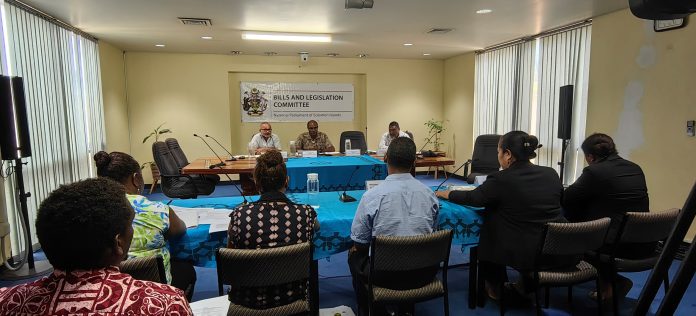
Wickham made this revelation when he appeared before the Parliamentary Bills and Legislation Committee last week on the State-Owned Enterprise (Amendment) Bill 2024.

“We probably are the lowest remunerated of the SOEs, but if the standard is deemed to increase, we will be very happy,” the Chairman said.

SAL is one of the State-Owned Enterprises that presented its views on the proposed legislation before the Committee.

The State-Owned Enterprises (Amendment) Bill 2024 seeks to amend the State-Owned Enterprises Act 2007 in alignment with the Government’s SOE Ownership Policy 2018 and the National Gender Equality and Women’s Development Policy 2016-2020.

It aims to consolidate ownership monitoring under the Minister of Finance, clarify the process for SOEs to fulfill Community Service Obligations, strengthen publication requirements for documents tabled in Parliament, and introduce regulations for evaluating directors and electing board chairpersons and deputy chairpersons.

Commenting on the proposed amendment, Chairman Wickham noted that the change designates the Minister of Finance as the primary overseer of SOEs.

He suggested that previously, having two ministers involved allowed for shared responsibility—one focusing on the technical aspects and comparative strengths of the SOEs, while the other addressed broader ministry concerns.

“It’s important for the expertise related to the functions of the SOE to be considered in the process. However, we recognize that it now falls under the Ministry of Finance. Additionally, Chair, we acknowledge the new criteria for appointing directors, which include remuneration and performance evaluation—elements that were not part of the original Act. We have no objections to these changes.

“While we may be among the lowest in remuneration compared to other SOEs, we would welcome any increases to that standard. The decision is ultimately yours. We acknowledge the change, and we suggest that there could be a mechanism for involving the relevant ministry, which has the expertise related to the SOE’s mandate, in this process.” He said.

Wickham stated that he understands others may wish to discuss specific interventions, particularly regarding dividends.

He noted that the provision allowing the minister to call for dividends from SOEs aligns with the rights of the majority shareholder.

However, he suggested that SOEs should be encouraged to develop their own dividend policies, which could then be negotiated with the minister.

“Some SOEs may want to reserve a good proportion of their dividends for their capital budgets and other reasons, so perhaps there could be a rationale for negotiating the dividend payout by the SOE to the government,” Chairman Wickham said.

Solomon Airlines Limited (SAL) is a Solomon Islands company registered under the Companies Act 2009. One hundred percent of its shares are owned by the Government of Solomon Islands, through the Investment Corporation of the Solomon Islands (82.3%) and Solomon Island Holdings (17.7%).

This SOE is commercially focused on providing domestic and international air and ground handling services that fully maximize the benefits for its customers. The company is subject to the State-Owned Enterprises Act 2007 and State-Owned Enterprises Regulations 2010.

Solomon Airlines is governed by a board of directors that is responsible to the Minister of Finance and Treasury, who is the Accountable Minister for Solomon Airlines Limited.

According to reports, Solomon Airlines received SBD 9.9 million, SBD 3.039 million, SBD 2.766 million, SBD 3.8 million, and SBD 4.0 million in payments for the provision of community service obligations (CSOs) from the Government in 2016, 2017, 2018, 2019, and 2020, respectively.

These CSOs are air services to provincial airstrips where ticketing revenue is insufficient to cover the costs of service.


PWDSI urges marijuana eradication

0
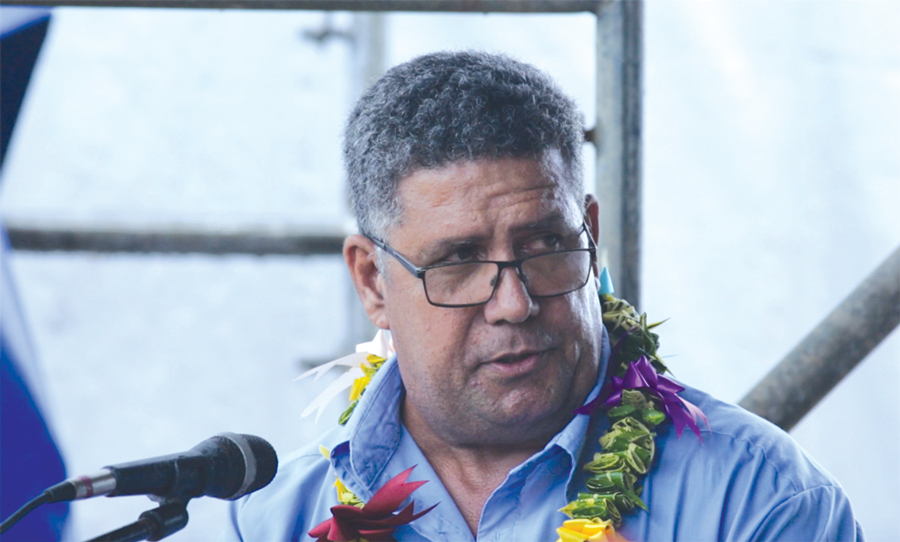
WDSI's CEO Casper Fa'asala.

BY INDY MAEALASIA

PEOPLE With Disability Solomon Islands (PWDSI) has urged the Minister of Health and Medical Services (MHMS) and the Royal Solomon Islands Police Force (RSIPF) to launch an urgent campaign to eradicate marijuana in rural communities.

PWDSI’s Chief Executive Officer (CEO), Casper Fa’asala made this request during World Mental Day last week, alluding it to being a major cause to mental health conditions. 

“…we go to the gardens where marijuana is planted among the vegetables, that’s where the cause is,” he stated “You don’t need a survey, you don’t need data, it’s all evidence in the village.”

Fa’asala emphasized that addressing this issue could significantly reduce the prevalence of mental health conditions.

“Seriousness is what I am talking about, it’s not about a campaign of awareness. It’s about going to the villages, pulling every marijuana out, then we can realize the realities of bringing this country to some normalcy,” he said.

He warned that failing to take action could hinder the country’s progress for its youth and children.

“I just simply call on the government to commission the authorities to be more proactive, to carry those roles to reduce the effect of what we see today.” he added.  

Apaniai voices support and concern over SOE oversight proposed in new bill

0

BY NED GAGAHE

Chairman of Solomon Islands Postal Corporation (SIPC) James Apaniai has expressed both support and concerns regarding the proposed consolidation of oversight for State-Owned Enterprises (SOEs) under the Minister of Finance.

Appearing before the Bills and Legislation Committee (BLC) on the State-Owned Enterprise (Amendment) Bill 2024 last week, Chairman Apaniai said that consolidating oversight under one minister could streamline governance but may limit essential international representation and expertise needed for effective operation of SOEs.

One of the objectives of the bill is to consolidate ownership monitoring responsibility for State Owned Enterprises (SOE) in the Minister of Finance alone.

Apaniai said that bringing the SOEs under one minister comes with advantages and disadvantages.

He said in the proposed legislation the disadvantage would be the minister of finance may not be well acquainted with the issues relating to the functions of the SOEs, for example SIPC and Solomon Islands Airport Corporation Limited (SIACL).

The Chairman said these two SOEs are not only governed by domestic rules or laws but international laws or rules as well.

“In the case of postal corporation, we deal with quite a number of complicated postal issues. And one of the issues that I note is that postal corporation, as well as SIACL, the airport corporation, they are not only governed by the rules of domestic laws, but they are also governed by international laws or rules.

“For example, SIPC comes under the jurisdiction of a UN organisation called Universal Postal Union. The SIACL comes under the rules formulated by another UN organisation called International Civil Aviation Organisation (ICAO) rules. They make rules regarding safety of passengers, safety for airports, security for airports, and all that.”

Apaniai said in order for a minister to properly direct an organisation, he has to be familiar with those rules as well and that is one of the drawbacks identified if these corporations be placed under the ministry of finance.

“The ministry of finance is basically responsible for the financial matters of the nation.

“But they will not be responsible for the rules made by UN organizations which apply to these SOEs.

“So that’s one disadvantage we find with them.”

The Chairman adds that related to that is, there are times when these UN organisations will call for general assembly meetings and the SOEs are obliged to attend those meetings.

He said the ministers responsible for the SOE normally lead those organisations.

“In fact, on most occasions, we want these ministers to accompany us. Because they have more weight when they speak in overseas meetings.

“So now we have this minister of finance will be responsible. He will be the responsible minister for these organisations. So, one disadvantage we find is that maybe they might not be accompanying us even if we invite them to these overseas meetings,” Apaniai said.

Meanwhile, the Chairman said that after reviewing the proposed amendments, they found few significant differences compared to the existing legislation.

“In summary, we are generally satisfied with the proposed changes. While there aren’t many variations between the current act and the amendment, the key shift is the consolidation of all SOEs under a single minister. This has its advantages, but there could also be potential drawbacks.”

Case of unlawful wounding returns Friday for plea

0

BY ROMINAH FAKA

The case against two women charged with unlawful wounding has adjourned for this Friday for them to take their plea.

The women did not attend yesterday’s hearing and prosecution applied for a warrant of arrest.

However, court refused and exercised its discretion to extend bail for both accused.

Defence also informed court the two women Anna Vathagi and Lisa Kope now have legal representatives from the Public Solicitor Office (PSO).  

Defence sought an adjournment from court to give them time to obtain instructions from the two accused.

Court directed prosecution and defence to liaise with the police investigator to inform the two accused that they now have legal representation from PSO and to inform them to see their lawyer and to turn up in court on October 18.

Vathagi and Kope are sisters in law.

It was alleged on July 2, 2024 the complainant was preparing chemical for spray at GPPOL 2 Tetere, Estate Office chemical shed when the two accused approached and assaulted her.

Kope held on to the complainant’s arms while Vathagi hit her head with a rock.

Prior to the attack the complainant and Vathagi were not in good terms because the complainant had arranged a girl for Vathagi’s husband to have a sexual affair with.

A cultural reconciliation was held between Vathagi, her husband and the girl.

The attack happened after the reconciliation, it is alleged.

The matter was reported to the Tetere police station and the two accused were arrested and charged.

Georgina Oroi appears for crown and Ron Dicky Pulekera for Kope and Bobby Harunari for Vathagi.

SIPC has not made profit since 1990s

0

BY NED GAGAHE

Chairman of the Solomon Islands Postal Corporation (SIPC), James Apaniai disclosed that the organization has not turned a profit since its establishment as a State-Owned Enterprise (SOE) in the 1990s.

He shared this revelation when appearing before the Bills and Legislation Committee in Parliament regarding the SOE (Amendment) Bill 2024 in Parliament last week.

During the hearing, the Solomon Islands Broadcasting Corporation (SIBC) Chief Executive Officer Johnson Honimae shared similar sentiments with the Committee stating that this is one of the reasons why government has removed them from the schedule of the SOE Act.

“My friend, SIBC, has mentioned that they have not made any profit since they were incorporated. And I’m sad to say that SIPC is in the same boat. And it is likely we might join this team in removal from the schedule.” Chairman Apainiai said.

He said despite this the Postal Corporation is trying its best and is now in the process of proposing new ideas how to become profitable.

The Chairman said under the present Act SOEs are given the mandate to run businesses and to run them in a profitable manner.

“Under the existing act, as I said earlier, SOEs are allowed to run businesses. And the understanding was whatever business they run must relate to their core business. So that’s one of the understandings that we have relating to the SOEs powers to run businesses.” He said.

The Chairman during the hearing has expressed both support and concerns on the propose amendment.

“So that’s what we are doing. But as I said, we are generally happy. We don’t really disagree with the amendments that are proposed in this bill.

“But yes, we are generally happy with the proposed changes.

“As I said, there is not much difference, substantial difference between the old one. I mean the present; I think the proposed new ones. Except in certain areas.

“And getting in line with what my other colleagues have said. I have already mentioned. Those major changes are for us, for the corporation.” He said.

SIPC is a state-owned enterprise established by an Act of Parliament in 1996 to provide postal services within Solomon Islands and to other countries.

As a state-owned enterprise, it is also subject to the State-owned Enterprises Act 2007 and State-owned Enterprises Regulations 2010.

SIPC is governed by a board of directors that is responsible to the Accountable Ministers, being the Responsible Minister and the Minister of Finance.

The Responsible Minister is the Minister for Communication and Aviation, currently Minister.

According to its website SIPC received SBD1.9 million in 2015, 2016 and SBD2 million in 2018 and 2019 on Community Service Obligation (CSO) payments.

While in 2017 there were no CSO payments to SIPC.

These CSOs are for the provision of postal services to 8 provincial post offices (Auki, Buala, Gizo, Kirakira, Lata, Munda, Tulagi and Taro).

The CSOs were subject to a contract with the Ministry of Finance.

Access to internet in SI lowest in pacific

0
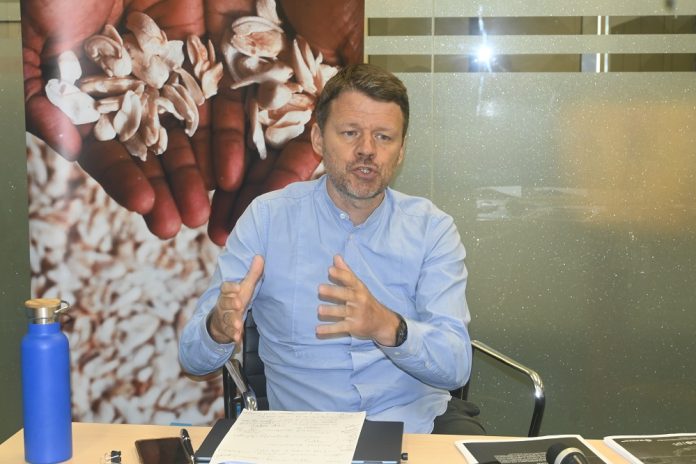
World Bank Economist for Solomon Islands, Lodewijk Smets.

BY LORETTA B MANELE

Access to the internet in Solomon Islands is one of the lowest in the Pacific.

This is according to Lodewijk Smets, World Bank’s Economist to Solomon Islands.

In an interview with the media yesterday, he said only less than 20 percent of the population in the country have access to the internet.

Smets spoke about the importance of digital connectivity.

He said with digital connectivity comes information for instance farmers could use it to have updates on weather so they know what they plan to do and when to do it.

Smets added that there is also financial connectivity especially now with the rollout of new digital wallets.

“So, if you have digital connectivity, you also have financial connectivity. The more people are digitally connected, the more they will be financially connected”

Smets said financial connectivity also gives you the opportunity to save money and to invest.

On the other hand, he said lack of digital connectivity really holds back growth and prevents households from saving money thus by expanding digital connectivity we can stimulate economic growth.

Smets stressed that there are many applications of digital connectivity.

“People can go online and sell their businesses online. Even governments could consider using digital techniques, for instance, digital education and digital health services”

However, he pointed out that digital connectivity will not necessarily lead to increased growth unless complementary reforms and investments are in place.

“For instance, if you want farmers to use the internet, you need to teach them and also teach them financial literacy”

Smets emphasized that there is always going to be a need not only to expand digital connectivity, but to ensure that it benefits the population and can lead to growth.