Home Blog Page 454

GG calls for action on developing AI policies

0

BY INDY MAEALASIA

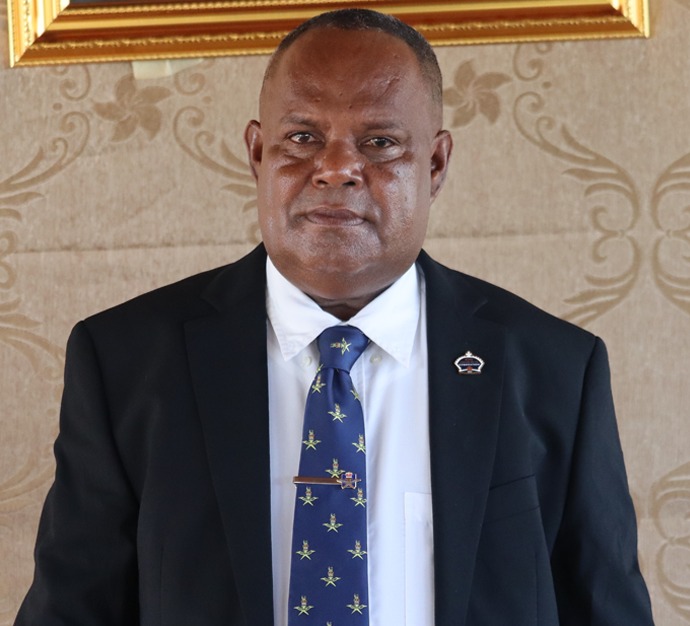
GOVERNOR-General David Tiva Kapu has warned Solomon Islanders about the potential impacts of Artificial Intelligence (AI), emphasizing the need for policies to regulate such modern technology.

“I urge those responsible to begin work on policies to regulate this to guide our nation in the use of such technologies in our daily lives,” Kapu said in his New Year’s message last week.

According to science experts, AI is a set of technology that enables computers to perform a variety of advanced functions, including the ability to see, understand, and translate spoken and written language and more.

He acknowledged that while AI has improved lives, it undoubtedly has its positive and negative impacts.

Kapu pointed out that a typical drawback is encouraging plagiarism among students in schools and universities.

 “Copy and paste has become a practice in the completion of assignments which challenges true learning,” he said.

Additionally, Kapu also highlighted the ongoing debate regarding the use of AI, its impacts, and deep ethical questions surrounding its future use.

“Regardless of these, it is an issue we now grapple with and must begin addressing to ensure that its benefits our people rather than having negative impact,” he added

Feedback, contact: [email protected]

‘SI can go back to that wonderful glorious past’: Wale

0

BY JOHN HOUANIHAU

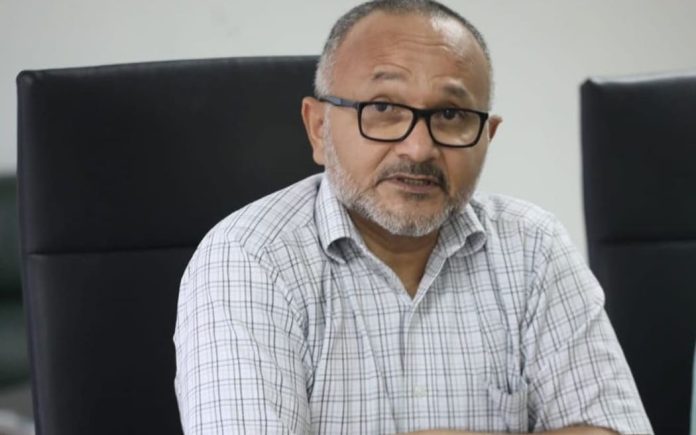
Opposition Leader Matthew Wale has said that the Solomon Islands was once completely free from corruption.

Reflecting on good leadership and governance during the SIDP Podcast recently, Wale discussed how the quality of political leadership in the Solomon Islands has evolved over time. He stated that corruption was virtually unheard of in the country’s earlier days.

Recounting his earliest memory of corruption, Wale shared the case of a logging company that bribed a minister to obtain a license to operate in East Malaita.

“It was SBD 4,000. People might say that our culture is already corrupt, but no, that is not true. Our culture is not corrupt,” Wale argued.

Acknowledging the changing nature of political leadership, Wale emphasized that corruption has gradually become entrenched, evolving into a “new normal” for the nation’s politics and culture.

“In the past, one of my uncles was jailed because he failed to account for just six cents. Our past leaders did not tolerate nonsense. They knew that what is right is right, and what is wrong is wrong,” said the MP for Aoke Langalanga.

He attributed the onset of corruption in part to the introduction of logging into the country, describing it as a decisive influence.

Wale called on citizens to play an active role in promoting good governance and leadership within the political sphere.

“Reflecting on corruption, there was a time when we were 100% free from it. We can return to that. But, of course, it requires commitment and willpower at various levels—not just at the political level, but across all levels of society,” he said.

He expressed hope that the Solomon Islands could return to its “wonderful, glorious past,” free from corruption.

“All citizens have a duty—a duty of care. This is very important. Care about what happens in the country, in the province, the constituency, the ward, and the tribe. Citizens must exercise this duty of care,” he said.

Wale stressed the importance of democracy, noting that power lies with the people, who must be adequately informed to exercise that power wisely.

“This means the people must demand good leadership, better leadership, good governance, and right governance. If there is no demand for good leadership and governance, it leaves the government highly vulnerable,” he said.

“All these things are connected. We deserve the leaders we get. That’s the basic principle,” concluded Wale.

For Feedback, contact: [email protected]

Engaged for positive impact: Wale

0

BY JOHN HOUANIHAU

Opposition Leader Matthew Wale has called on young people to take ownership of the future of the Solomon Islands.

Reflecting on the role of youth in the political landscape and future of the nation, Wale emphasized the importance of their active engagement.

“Young people have another 40–50 years ahead, with a greater stake in what happens in this country. And thus, you must be engaged. Do not back off, be indifferent, or lose interest. No, you must engage,” said Wale during a recent Solomon Islands Democratic Party (SIDP) podcast.

He urged young people to remain involved, even when circumstances are challenging.

“It’s about holding leaders and the government accountable,” he said.

Wale warned that when young people fail to engage, those who harm the country are often left unchallenged. He also highlighted the importance of maintaining clear boundaries.

“You have responsibilities within your homes. Public engagement should not interfere with your duties to your families,” he said.

Wale expressed hope and confidence in the current generation of young leaders, noting their awareness and frustration with the status quo.

“You see what is happening now, and you’re fed up. You’re angry. But it’s a good anger. When there’s no medicine in the clinic, young people should be angry. If you’re not angry, the situation will remain the same,” said Wale.

He encouraged young people to channel their anger into positive actions and improvements.

“This gives me hope—that more and more young people are getting angry. But don’t get angry and burn Chinatown. Be angry enough to engage. Demand better,” he said.

Feedback, contact: [email protected]

Lilo acknowledged for Mataniko Pikinini clinic’s resumption

0

BY JOHN HOUANIHAU

The Mataniko Pikinini Clinic resumed service last Thursday after being closed due to a burglary on New Year’s Eve, thanks to the support of Gordon Darcy Lilo, Member of Parliament for Central Honiara.

The nurse in charge of the clinic, Jemimah Kera, revealed that the intruders stole more than SBD $3,000 and several clinical items during the burglary on New Year’s Eve 2024.

Speaking to Island Sun on Saturday, January 4, Mrs. Kera detailed the stolen items, which included an otoscope, ear, nose, and throat (ENT) equipment, 10 rolls of wool, a container of Panadol, and Septrin.

“These were some of the additional items we identified as missing after conducting verification following the burglary,” said Mrs. Kera.

On behalf of her team, Mrs. Kera expressed gratitude to the Member of Parliament (MP) for Central Honiara for enabling the clinic to resume its services in the new year.

“We deeply appreciate and acknowledge GDL—Gordon Darcy Lilo—for providing the funds to purchase an otoscope and ENT equipment. He is the first MP to offer us such support,” Mrs. Kera said.

She emphasized that without this assistance, the clinic would not have been able to resume its services.

“With his support, we consulted with the Honiara City Council (HCC) Health Division Administration to secure additional funds for other materials such as wool and toiletries for the clinic. This allowed us to resume service last Thursday,” confirmed Mrs. Kera.

She called on the Members of Parliament for West Honiara and East Honiara to collaborate with the MP for Central Honiara to provide further assistance to the Mataniko Pikinini Clinic during times of need.

“I would also like to appeal to the other two MPs—for West and East Honiara—to offer similar support. We serve not just Central Honiara but also residents within the town boundaries,” said Mrs. Kera.

For feedback, contact: [email protected]

INFLUENZA CASES SURGE

0

BY JOHN HOUANIHAU

The Mataniko Pikinini Clinic is reporting a continuous increase in cases of influenza-like illnesses among outpatients.

Speaking to Island Sun recently, Nurse-in-Charge Jemimah Kera said the clinic has been treating numerous patients presenting with coughs, flu, and fevers since before the New Year.

She revealed that the clinic recorded approximately 200 cases, involving both children and the elderly, by the end of last year. Kera urged the public to exercise caution as the numbers continue to rise.

“Just before the New Year in 2024, we recorded a total of 200 cases. Illnesses like these usually follow events such as the rainy season, cyclones, and so on,” said Mrs. Kera.

She added that as of Thursday, January 2, 2024, the clinic had recorded 196 cases.

“Since we resumed operations on Thursday, we recorded 196 cases. By Friday, January 3, that number had risen to 210,” she said.

Mrs. Kera anticipates that the number of cases will continue to increase in the coming weeks.

“The best advice we can offer is for parents to take better care of their children. You cannot always depend on medication. As the saying goes, prevention is better than cure. Children are particularly vulnerable to these illnesses,” she said.

Mrs. Kera also noted that many of the cases involving children are linked to young parents.

“This highlights a concerning trend: young mothers and fathers are not taking proper care of their children. It is interesting to see how parenting has changed compared to the past, when older generations were more attentive,” she said.

She emphasized the importance of parents taking these rising numbers seriously.

“Yes, the number of cases has grown from 100 to over 200. It’s something parents need to pay attention to,” Mrs. Kera concluded.

For Feedback, contact: [email protected]

‘PARTNERSHIP DRIVES DEVELOPMENT’

0

Collaboration with provincial governments key to national development: Kapu

BY INDY MAEALASIA

IN his 2025 New Year’s message, Governor General David Tiva Kapu has emphasized that working together with provincial governments is essential to boost the country’s productive sector and foster overall development.

Kapu highlighted that collaboration is crucial to ensuring provincial governments actively seek ways to open their provinces to development opportunities that benefit local communities.

“We must continue to encourage our people, particularly those who own customary land, to open up their land. Even better, we must support them in actively engaging with the productive sector,” Kapu said.

He went on to note that the country is blessed with abundant natural resources, which he described as “divine gifts” meant to be wisely utilized and equitably distributed for the benefit of all citizens.

Education and Job Creation

Tiva also underscored the importance of re-evaluating the educational curriculum in schools and universities.

He pointed out that the traditional approach of preparing students solely for white-collar or even blue-collar jobs no longer meets the demands of today’s economy.

“The status quo of preparing students exclusively for office-based jobs is outdated,” Kapu remarked.

“We need to foster resilience and encourage students to take risks, empowering them to create their own jobs.”

Kapu stressed that it is the nation’s moral responsibility to ensure that graduates have the support and resources they need to succeed in the workforce, including access to financial facilities that can help them start businesses and create jobs.

Goshen Enterprise: Pioneering the Taro Industry in Malaita Province

    0

    BY INDY MAEALASIA

    GOSHEN Enterprise Limited, an agribusiness based in Malaita province, is making significant strides in the country’s untapped taro industry.

    Established in 2019 by business partners Levite Maesimae and Rex Maukera, Goshen has become a key player in the Taro-processing sector, contributing to the rural economy and providing a market for local farmers.

    A Vision for Rural Communities

    Levite explains that the vision to enter the taro business stemmed from a need in the rural communities, where many taro farmers struggled to find reliable markets.

    “The vision to go into taro was because there was a need for people in our rural communities, especially taro farmers who were always looking for a market for their products,” Levite recalls.

    Despite starting with limited resources, Levite and Rex worked tirelessly to build a successful local taro business.

     A major milestone came in 2022 when Goshen was awarded support from the Ministry of Foreign Affairs and External Trade (MFAET) under the Enhanced Capabilities of Agriculture Trade (ECAT) through the multi-donor program called Enhanced Integrated Program (EIF).

     “They advertised interest for those wanting to go into taro exporting,” Levite says, reflecting on the opportunity that helped propel Goshen’s growth.

    A Thriving Network of Farmers

    Over the years, Goshen has established a farm at Adaliua, Central Kwara’ae where Levite works full time.

     He dedicates his time to managing the farm, attending training sessions, and investing in capacity building.

     “I work at the farm, doing and attending training, capacity building, and engaging a few families to help run and maintain the farm,” he explains.

    Currently, Goshen has built a steady network of 24 taro farmers spread across the North region, West and Central Kwara’ae, West Kwaio, and West Are’Are.

    “This network is a voluntary setup, not registered yet, but we’re in the process of setting them up properly by registering them as an association with the support of various agencies and stakeholders,” Levite adds.

    The Taro Processing Journey

    Taro, a root crop that thrives in the tropical climate of the Solomon Islands, requires more than six months to mature.

    According to Levite, Goshen typically purchases taro three times a year, during the beginning, middle, and end of the year, or on a quarterly basis.

    Once harvested, women are engaged to peel, wash, chop, and pack the taro. “We use different shapes for cutting; no machines at the moment,” Levite says.

    The process of peeling is labor-intensive, requiring up to two days to peel one ton of taro, unless they work overnight.

    Despite lacking machinery and facing the challenge of small-scale production, Goshen has supplied a range of local institutions, including Kilufi Hospital, the Correctional Service in Auki, SINIS, and various catering groups.

    Levite emphasizes that they prioritize food safety. “We track everything. We know where the taro comes from, which farmers supplied it, and if anything happens, we can trace it,” he says.

    Overcoming Challenges

    Commercializing taro in the Solomon Islands is still a relatively new venture, and Goshen continues to face challenges.

     One major issue is the lack of tools and machinery for mass production. “Farmers have requested tools to work on their garden patches,” Levite points out.

    Despite the increasing demand for taro, there are not enough tools or workforce to meet capacity.

    Additionally, the purchasing system is often unfamiliar to rural farmers, and consistency in supply is an ongoing challenge.

     “Farmers are not always committed. They sell at the market or at events instead of supplying us consistently,” Levite explains.

    Taro is also a fragile crop that requires proper handling and preparation, which can be complicated by climate change.

    “Climate change is a big threat, as farms lack insurance and crops are vulnerable to rainfall and cyclones,” Levite says.

    He stresses the need for a secure system for farms and crops to protect the investment.

    A New Milestone: Introducing ‘Solomon Frozen Taro’

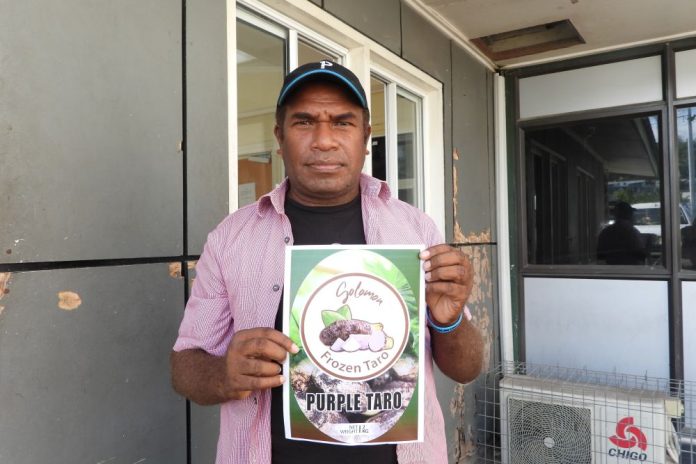
    In November 2024, Goshen expanded with its first-ever labeled product called ‘Solomon Frozen Taro’, which can be purchased at Meat Delights Shop at NPF Plaza, Point Cruz.

    This marks a new chapter for the company as it takes its locally processed taro to the next level of commercialization.

    Levite expressed his excitement about this achievement, saying, “I am thrilled to see this step forward in our journey. This is a major milestone as we work towards branding and labeling our products for broader markets.”

    Solutions and the Path Forward

    To overcome various challenges, Goshen is exploring ways to incentivize farmers to supply a consistent volume of taro. Levite suggests introducing a performance-based scheme where farmers who meet specific targets would receive bonuses.

    “We want to encourage farmers to supply a certain volume of taro,” he says.

    Levite also offers advice to the youth: “Young people must not see agriculture as a low-standard business. Agriculture in the Pacific can generate significant income. It requires time, commitment, perseverance, a strong mind, and resiliency. Innovative thinking is essential to drive success.”

    Levite believes the potential of agriculture in the Solomon Islands is immense, especially as the country strives to ensure food security.

     “We need to utilize the land that is currently barren and turn it into money,” he says. “The country’s future relies on agriculture, and we need to commit to the long-term process.”

    Despite the challenges, Levite remains optimistic. “The time and commitment invested in agriculture have great potential. The country will rely on agriculture for food security, and it’s important to turn land into money,” he adds.

    Feedback, contact: [email protected]

    Sustainable growth vital for country

    0
    Minister Hurry Kuma

    By Loretta B Manele

    Sustainable growth is vital for the country; for it’s wealth and GDP says former finance minister, Harry Kuma.

    The minister for the Ministry of Commerce, Industry, Labour and Immigration (MCILI) voiced this at the Sine Die Motion in parliament on Thursday 19th Dec, last year.

    He said from his perspective, there are four aspects to ensure sustainable flow of revenue for the government and sustainable growth in our country and economy.

    Kuma said the first is diversifying our economy hence, by not depending on any single sector.

    He stated that the second aspect is having quality infrastructure, pointing out that this is very important.

    Kuma said thirdly, is human capital development and under this aspect we have to develop our expertise and skills.

    He added that these expertise and skills are needed to support growth of our private sector to support the delivery of government resources, to be innovative and to be able to create growth and a sustainable environment.

    Kuma said the fourth aspect is that growth must be sustainable.

    “These are four features I believe we should work on so we can transform our country to be better and sustainable”

    MOC debate would allow us to hear the full story

    0
    Minister of Finance and Treasury Harry Kuma

    By Loretta B Manele

    Not withdrawing the Motion of No Confidence would have allowed us to hear the full story, the other side of the story and the end of the story.

    Harry Kuma, minister for the Ministry of Commerce, Industry, Labour and Immigration (MCILI) raised this whilst contributing to the Sine Die Motion in parliament just last month.

    He was referring to the Motion of No Confidence that was recently put against Prime Minister Jeremiah Manele by Central Honiara MP, Gordon Darcy Lilo.

    Kuma stressed that although the number might not be there to win the motion but what is important is not withdrawing the motion would allow for a debate on issues of concern that would have been taken on board, looked at and improved.

    He pointed out that through such discussions, they could hear about what went wrong, what the concerns were and this would have given the other side of the house to clear the doubts or correct what is being said on the floor of parliament.

    Kuma said that there is a process of continuous improvement that is part of our governance that this parliament started off.

    “One example is the PAC which has the process where we can exchange views and ideas and questions and answers in parliament”

    Kuma said their debates, perhaps the motion of no confidence could have been a climax of a continuous process of trying to find out ways to improve the ways they govern themselves or the way they manage their affairs.

    Six suspects arrested for brewing kwaso during Christmas

    0

    By Loretta B Manele

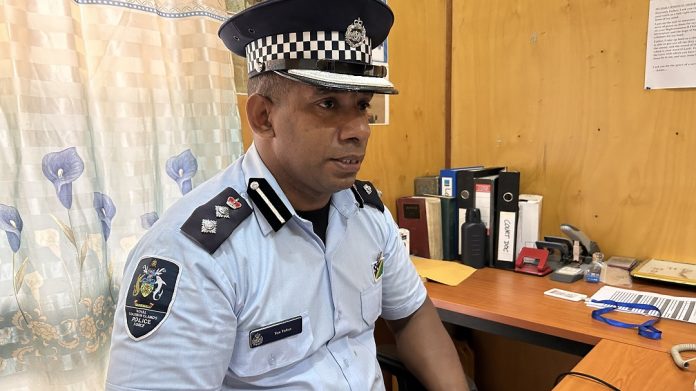
    Police in Auki, Malaita have arrested six suspects in their 20s and 30s for brewing kwaso, a locally produced alcohol drink in Malaita province during the Christmas operation.

    According to a press statement from RSIPF, the six suspects were arrested during a raid at Fiu village, Central Kwara’ae and at Gounaru’u in West Kwara’ae.

    Chief Superintendent, Tex Tafoa, the Provincial Police Commander (PPC) for Malaita province said all apparatus for cooking kwaso, including a large quantity of finished kwaso products were confiscated and taken to Auki police station as exhibits.

    He said police dealt with the suspects and processed their court documents for their trial at a later date.

    Tafoa stated that they should find other ways to make money because brewing of kwaso in their communities will cause trouble and lead to serious crimes.

    He thanked the community chiefs for coming forward and assisting Auki police for a successful police operation and appeals to leaders, parent and all good people to come forward and report to the police those who continue to be involved in brewing kwaso or illegal selling of liquor.