Home Blog Page 432

Minister Bosawai and Australia’s global health ambassador join forces to improve health

0

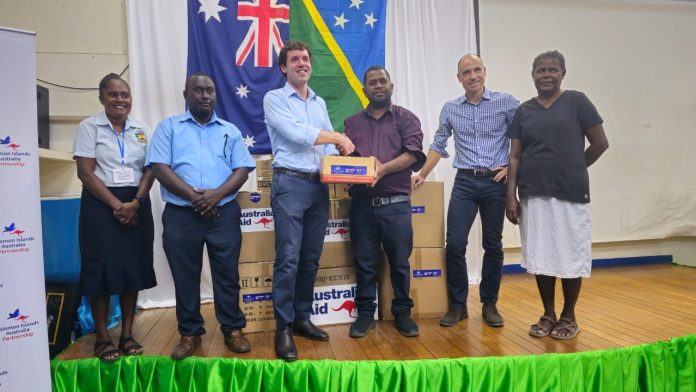
The Minister for Health and Medical Services,Paul Bosawai, joined Australia’s Ambassador for Global Health, Dr Lucas de Toca, during the first day of the Ambassador’s official visit to Solomon Islands.

Ambassador de Toca leads Australia’s relationship with multilateral health organisations and international development assistance in health.

The Minister and Ambassador toured health facilities in Honiara and Guadalcanal Province to hear firsthand from health officials and frontline workers about progress being made to improve local health services and to see how Australia’s support is assisting this effort.

At the National Referral Hospital, Minister Bosawai and Ambassador de Toca visited the High Dependency Unit, which is providing critical care to the most acute patients, to hand over new equipment.

Minister Bosawai said the equipment for the High Dependency Unit would significantly improve the care nurses and doctors provide for critically ill patients.

“The training and ongoing support provided by Australian advisors enables our staff to deliver high-quality care, improving how services are delivered in Solomon Islands’’, Minister Bosawai said.

Ambassador de Toca said he was pleased to have the opportunity to meet the dedicated staff of the National Referral Hospital, including Australia Awards alumni, and the Australian volunteers, students and visiting clinical teams working alongside them.

“This visit to the National Referral Hospital truly highlights the strong people to people links we have fostered under our longstanding partnership,” Ambassador de Toca said.

“It is so heartwarming to meet and hear about the many Australian doctors and nurses who have longstanding connections to support improved healthcare delivery in Solomon Islands.”

At the Good Samaritan Hospital in Guadalcanal Province, the VIPs met Sister Dali who explained how the new solar power system, funded by Australia, has allowed them to redirect funds previously spent on costly diesel for generators to patient care instead.

Minister Bosawai said the solar panels are a positive step, promoting sustainability by minimising environmental impact, and ensuring essential services can be delivered both day and night.

Ambassador de Toca said it was rewarding to see the positive impact of Australia’s investments in communities outside of Honiara, including provincial grants, solar electrification systems, and medical supplies for people living in Guadalcanal Province.

“Providing health services in rural areas is not an easy task, and I acknowledge the hard work that everyone has contributed to delivery of these essential services,” Ambassador de Toca said.

At the National Medical Store, Minister Bosawai formally received a new forklift which will greatly improve safety and efficiency for staff unloading stores.

The new outdoor forklift complements the indoor forklift and flat-bed truck, donated by Australia in 2022.

Japan and Solomon Islands sign additional grant for Kilu’ufi Hospital improvement

0

BY NED GAGAHE

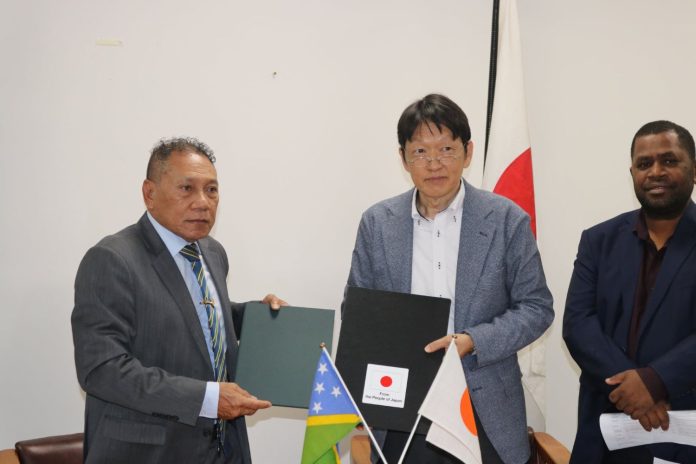
The Minister of Foreign Affairs and External Trade, Peter Shanel Agovaka, on Friday, signed an amended Grant Agreement for the Kilu’ufi Hospital Expansion Project with the Ambassador of Japan to the Solomon Islands, His Excellency Keiichi Higuchi.

The original Exchange of Notes and Grant Agreement for the improvement and expansion of Kilu’ufi Hospital in Malaita Province was signed in June 2023, with Japan providing an initial grant of 2.011 billion yen (SBD $120 million).

However, due to global price escalations and the depreciation of the Japanese yen, work on installing medical equipment and facilities was suspended following the project’s commencement in October 2024.

The amended agreement now provides additional grant aid to resume the suspended components of the project. An additional 356 million yen (SBD $20 million) has been allocated, bringing the total project value to 2.367 billion yen (SBD $130 million).

Minister Agovaka expressed his deep gratitude to the Government of Japan for its continued support and emphasized the significance of this collaboration.

“I am so honored to have you all here this morning to witness the signing of the amended Grant Agreement regarding the Kilu’ufi Hospital Expansion Project. Excellency, such a kind gesture shown by the Government of Japan is again one of those obvious indicators of the unwavering friendship between our two countries.

“Allow me to express our heartfelt and deepest acknowledgement and appreciation to the Government of Japan for the invaluable support extended to the Solomon Islands over the years,” Minister Agovaka said.

The Minister further highlighted that once completed, Kilu’ufi Hospital will serve at least 24% of the country’s population. He added that Kilu’ufi is the only public hospital in Malaita Province, which is the most densely populated province in the country.

“Given its accessibility by boats and aircraft, patients from neighboring provinces can also opt to seek medical treatments and services there once the Kilu’ufi Hospital Expansion Project is completed,” Agovaka said.

Ambassador Higuchi also expressed his appreciation to everyone involved in advancing the project and reaffirmed Japan’s continued commitment to the Solomon Islands.

He stated that the recent visit by Prime Minister Jeremiah Manele to the hospital site, noting that it reflects the enthusiasm surrounding the initiative.

“Although I have not yet traveled to Malaita Province, I would like to visit the hospital and explore Malaita at an early opportunity. This project responds to the calls made by Prime Minister Hon. Manele during the Tenth Pacific Islands Leaders Meeting (PALM10) held last year in Japan.

“Lastly, I would like to extend my sincere gratitude to all those who have been working for this project, including officials of the Ministry of Health and Medical Services, officials of the Malaita Provincial Government, staff at Kilu’ufi, consultants, and contractors,” Ambassador Higuchi said.

The newly improved Kilu’ufi Hospital is set to open next year.

For feedback, contact:[email protected]

Japanese Ambassador commits to visiting Malaita as Kilu’ufi Hospital expansion project gets underway

0

BY NED GAGAHE

Japanese Ambassador to the Solomon Islands, Mr Keiichi Higuchi, has reaffirmed Japan’s commitment to improving healthcare services in the Solomon Islands, particularly in Malaita Province, through the funding of critical medical equipment for the Kilu’ufi Hospital.

Speaking at the signing ceremony of the amended Grant Agreement for the Kiluúfi Hospital Expansion Project on Friday last week, Ambassador Keiichi Higuchi highlighted the importance of this project not only for Malaita but for the entire nation.

He acknowledged the province’s significant role as the most populous in the Solomon Islands and emphasized that the well-being of its people is central to the country’s overall development.

“Many people have mentioned to me that ensuring the well-being of people in Malaita is of great importance, not just to Malaita but to Solomon Islands as a whole.

“This visit by Prime Minister Hon. Manele to the hospital site further reflects the enthusiasm surrounding this initiative.” Ambassador Higuchi said.

The project, which was first initiated in 2023 with the signing of the Exchange Notes, is now in its active phase.

The latest phase of the project aims to cover medical equipment that was unable to be fully funded in earlier stages. With a total budget of ¥2,367,000,000 (approximately SBD 135 million), the funding will provide essential equipment to enhance healthcare delivery in the province.

The Ambassador also stated that this initiative aligns with the commitments made by Prime Minister Hon. Manele at the Tenth Pacific Islands Leaders Meeting (PALM 10) held in Japan last year, underscoring the collaborative relationship between Japan and the Solomon Islands.

“I look forward to visiting the hospital and Malaita Province in the near future to witness firsthand the progress of this important project,” He added.

Ambassador Higuchi expressed his sincere appreciation to all those involved in the project, including the officials from the Ministry of Health and Medical Services, Malaita Provincial Government, Kilu’ufi Hospital staff, as well as consultants and contractors.

He said their collective efforts are pivotal in ensuring the project’s successful implementation.

“The hospital project is part of Japan’s ongoing commitment to supporting the Solomon Islands’ development and improving the health and well-being of its citizens. The Japanese government has long been a partner in enhancing healthcare infrastructure across the Pacific region, with this project in Malaita representing a significant step forward in that mission.” Ambassador Keiichi said.

Meanwhile, the province is eagerly awaiting the completion of the hospital project, which is expected to significantly improve healthcare services for the people of Malaita and contribute to the overall health security of the Solomon Islands.

The improved hospital is expected to open next year.

For feedback, contact:[email protected]

BBC Media Action hands over equipment to Dreamcast Theatre

0

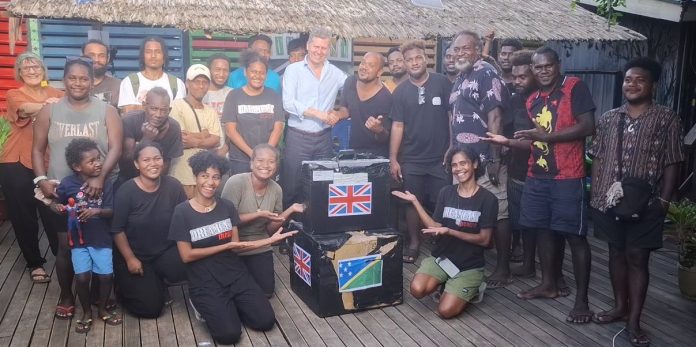
On March 5, 2025, BBC Media Action, in partnership with the British High Commission, officially handed over essential equipment to Dreamcast Theatre in Honiara.

The event, held at Dreamcast Theatre, marked a significant milestone in supporting the growth of media, arts, and storytelling in the Solomon Islands.

Dreamcast Theatre was founded in response to the civil unrest in the Solomon Islands as a community-driven drama group aimed at fostering peace through theater performances.

Over time, the group has evolved into a dynamic organization that supports local creative talent. Dreamcast Theatre provides a creative space for artists to collaborate, develop their skills, and create meaningful art for both personal and professional growth.

Since its official registration as a social business in 2016, Dreamcast has grown into a family of musicians, dancers, photographers, actors, and filmmakers. The theatre has expanded its creative output to include film, photography, music, and dance, while continuing to produce films for NGOs, businesses, and government agencies.

This project has been months in the making, with significant effort behind the scenes to ensure that the equipment was delivered to Honiara and placed in the hands of Dreamcast Theatre. The partnership began with a shared vision between BBC Media Action and Dreamcast Theatre to nurture creativity and artistic expression in the Solomon Islands.

Overcoming numerous logistical challenges, including coordinating the shipment across multiple locations and securing financial support, the British High Commission played a crucial role in facilitating the successful delivery of the equipment.

“This moment is not just about the official handover, but also about recognizing the dedication, persistence, and teamwork that brought us here,” said Georgina Kekea, BBC Media Coordinator for the Solomon Islands. “We acknowledge the efforts of those who contributed to making this possible, even though they are no longer in the country.”

Neil Nuia, Creative Director of Dreamcast Theatre, also expressed his gratitude for the timely support. “We are deeply thankful to the British High Commission and BBC Media Action for their generous contribution. This equipment will significantly enhance our work in the production space, enabling us to create even more impactful and meaningful content for our community and beyond.”

The equipment which was handed over by the British High Commission included an HS 1300 Mobile Cast System and an ITC 300 Intercom System. These audio and lighting systems will significantly enhance Dreamcast Theatre’s capacity for creative production and media expression. This equipment will enable the theatre to expand its operations and further its commitment to fostering local talent.

His Excellency Paul Turner, British High Commissioner to the Solomon Islands, shared his excitement about the ongoing collaboration with Dreamcast Theatre. He highlighted the vibrant media and artistic scenes in Honiara and expressed anticipation for the new productions made possible by the equipment.

“We are proud to support Dreamcast Theatre in their creative journey, and we look forward to seeing how this equipment will contribute to the future of media and the arts in Honiara,” said H.E. Turner.

This partnership between BBC Media Action, the British High Commission, and Dreamcast Theatre marks a significant step forward in empowering local talent and expanding the creative horizon of the Solomon Islands. With the support of this new equipment, Dreamcast Theatre is set to further elevate its impact on the media and arts scene, inspiring new generations of storytellers and creators.

Noro Community High School students off to Japan

0

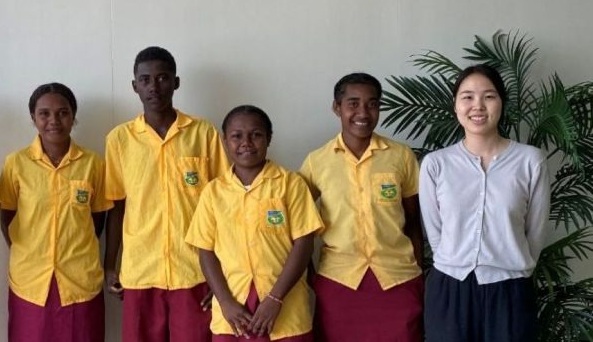
Noro Community High School will be representing Solomon Islands at the 2024 JENESYS Program.

The composition of the delegation consists of five year eleven (11) students and one (1) supervising staff. The delegation will leave on Tuesday 11th March, 2025 and will return on Thursday 20th March 2025.

The “2024 Japan-East Asia Network of Exchange for Students and Youths” (2024 JENESYS Program) is a people-to-people exchange program launched by the Government of Japan in 2015 between Japan and the Asia-Pacific region.

The two main objectives of the program are (1)To enhance the interest in and understanding of Japan among talented young people from other countries and regions and (2) To promote understanding of Japan’s politics, economy, society, culture, history, and foreign policy in accordance with the participants’ interests.

In this year’s program Solomon Islands will be joining seven other pacific island countries; Marshall Islands, Micronesia, Samoa, Cook Islands, Kiribati, Niue and Palau. The program will be held in Japan (Tokyo City, Oita and Kochi Prefectures) from March 12th,2025 to March 19th 2025. This year’s program will mainly focus on Climate Change/Sports and Japanese Culture. During the program the participants are going to attend lectures, visit historical sites, home stay, join exchange activities and finally the program will conclude with a  debriefing workshop. The debriefing workshop is mainly for participants to share what they have learnt during the program and to present their plan to disseminate information about their experience of participating in the program in their respective countries.

The supervisor for the delegation Mr. Franklyn expressed his gratitude for this historical opportunity given to Noro Community High School to represent Solomon Islands at 2024 JENESYS Program. He also said that this will be an opportunity for the students to learn about the culture and technology in Japan to motivate and reset their educational journey.

All the participants are grateful and looking forward to experiencing and learning the Japanese Culture, Lifestyle and build new networks and friendships through this program. The delegation also expressed their gratitude to the Ministry of Education and Human Resources Development and the Embassy of Japan in Honiara for selecting them to represent the country in the 2024 JENESYS Program.

The king’s commonwealth message to the UK, Realms and Commonwealth

0
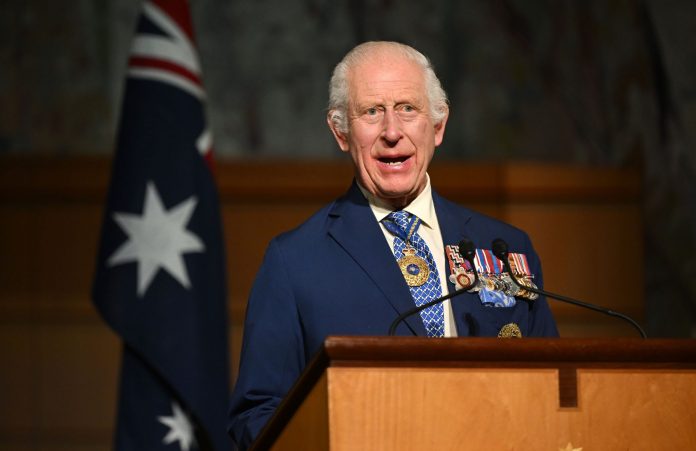
CANBERRA, AUSTRALIA - OCTOBER 21: King Charles III speaks during the ceremonial welcome and Parliamentary reception at the Australian Parliament House on October 21, 2024, in Canberra, Australia. The King's visit to Australia is his first as monarch, and the Commonwealth Heads of Government Meeting (CHOGM) in Samoa will be his first as head of the Commonwealth. (Photo by Victoria Jones - Pool/Getty Images)

Last October, leaders from across the Commonwealth came together in Samoa to reaffirm their “belief in the value of the Commonwealth as a trusted forum where diverse voices of our member states, the large and the small, the young and the old, come together as one family.”

These gatherings are important for helping all Commonwealth nations to tackle the challenges of the day,yet they also play another vital role.

In these uncertain times, where it is all too easy to believe that our differences are problems instead of a source of strength and an opportunity for learning, the Commonwealth’s remarkable collection of nations and peoples come together in the spirit of support and, crucially, friendship.

This year, the world reflects on the eightieth anniversary of the end of World War 2. More than one- and-a-half million men and women who served during the War came from across the Commonwealth to support the United Kingdom and its allies.

On this special anniversary, we remember with particular pride and everlasting gratitude the untold sacrifice and selflessness of so many from around our Family of Nations who gave their lives in that dreadful conflict.

The Commonwealth’s ability to bring together people from all over the world has stood the test of time and remains as ever-important today. Leaders recently reiterated the importance of collaboration for peace and human rights, as well as for the restoration of Nature both on land and in the oceans.

As we mark this Commonwealth Day together, there is no more important task than to restore the disrupted harmony of our entire planet. For the sake of our younger generations’ threatened future, I can only hope that the Commonwealth will continue its vital work to restore that harmony.

The Transformations Agenda; working to achieve 100 percent sustainable ocean economy

0

By Loretta B Manele

Under the “Transformations Agenda”, the aim is working towards achieving a 100 percent sustainable ocean economy.

Dr Tom Pickerill of World Resources Institute discussed this when contributing to the Honiara Summit which focused on SDG 14.4 “Achieving Sustainable Resources” in late February this year.

He explained that there is the Ocean Panel which is currently formed of 18 members from across the globe and they collectively contribute 37% of the world’s exclusive economic services.

Pickerill said they have prepared what is called the “Transformations Agenda” which is their roadmap to 2030 that sets the tone to how they are going to get a sustainable ocean economy.

“The keystone of this Transformations Agenda is their headline commitment, which is by 2025, or within five years of joining, whatever is soon, to sustainably manage 100% of their national waters.

So just to put that in perspective, we have 37% of the world’s exclusive economic zones committing to deliver 100% sustainable management of their national waters.”

Pickerill stated that this is a significant effort that goes towards ocean conservation and sustainable ocean economy.

He expressed that this initiative relates to the aim of the Honiara conference in three ways.

Pickerill said firstly, the 100% sustainable management is a solution to IUU (Illegal, Unreported and Unregulated fishing) and overfishing in the sense that the 100% approach commits nations to manage 100% of their national waters whilst also ensuring that fisheries are not only productive, but also well-regulated.

He added that this directly supports SDG 14.4 by integrating real-time monitoring, stronger enforcement, transparency, all to eliminate IUU.

Pickerill said the second point is the 100% sustainable management as a framework for achieving 30 by 30 and marine biodiversity goals.

He stated that the 100% approach not only works to protect the 30%, but also ensures that the remaining 70%, in this example, is managed responsibly through a framework called a Sustainable Ocean Plan, or SOP.

Pickerill said it helps to ensure the balance between conservation and sustainable use.

He went on to state that the final point is on the 100% sustainable management as a political and financial catalyst.

Pickerill said the 100% approach provides a clear, actionable commitment that enables governments, donors and investors to align funding with national ocean priorities.

Henceforth, he noted that by linking RFMOs, (Regional fisheries management organisations) UN agencies, and multilateral agreements, such as the High Seas Treaty or the World Trade Organization subsidies reform, this approach ensures policy coherence and long-term investment, all necessary for SDG 14.

Pickerill also took the opportunity to stress that the 100% approach can be really formative in transforming fisheries management, both including marine conservation and political action however it should be extended.

“37% is admirable and a huge achievement, but it means there’s an awful lot left, 63% of the world left.”

Pickerill stated that in September last year, they launched something called the 100% Alliance, which seeks to expand the approach to all coastal and island nations, providing technical and financial assistance and resourcing.

“We invite you to join us in this endeavour and commit to 100% sustainable ocean management.”

For feedback, contact:[email protected]

Partnership and cooperation vital for fisheries management

0

By Loretta B Manele

Partnership and cooperation have been stressed as vital components for fisheries management in the region and more broadly, globally.

Dr Darius Campbell, Secretary of the North-East Atlantic Fisheries Commission took the opportunity to share how global partnerships work towards fisheries management during the Honiara Summit on SDG 14.4 “Achieving Sustainable Fisheries” late last month.

He explained that the regional fisheries body, Secretariat for Networks comprised of about 50 inter-governmental organizations covers all of the regions and areas like deep-sea, pelagic fishing, tuna and inland lake fishing as well as providing advice and legal binding measures.

Campbell said while each of their members reflect very different social, economic and environmental circumstances of their regions and the priorities of their member states, for them SDG 14.4 is really business as usual.

“We’re already working in partnership to share information on ecosystem-based fisheries management, on climate change, on sharing operational data with each other, where our parties have allowed that.

So, we do have a focus around the globe tackling issues such as illegal fishing that we can again do through our partnerships”

Moreover, Campbell expressed that he is glad to see how discussions in the Pacific reflect the understanding that is at the heart of all the Sustainable Development Goals and not just on SDG 14.4.

“And not even just SDG 14 on life underwater, but on food security, on health, on nutrition, on land and water use, on employment and on gender roles and processes, etc.”

Campbell highlighted that as fisheries bodies they can’t cover all these aspects so they work in cooperation with other members in the region and across sectors.

He said one example is of that the Regional Secretariat’s network that has had two regional consultations, one in the Western Indian Ocean and one in the Eastern Central Atlantic.

Campbell stated that through this cooperation, all of the fisheries bodies in these regions were involved along with key players like the Southern African Development Community or the Economic Community of West African States.

“These meetings have tackled the sort of what, why, who and how of dealing with fisheries issues of common interest in the region, particularly overlaps and species and working out practical partnerships to deal with this.”

Campbell mentioned that fisheries bodies also have a central role in conservation, both as users of the environment and as managers of human impacts.

He said they have good monitoring and control systems, scientific capacity and can put measures in place for the long-term biodiversity benefits alongside sustainable use.

Campbell stated that another example of cross-sectorial cooperation is under the Convention on Biological Diversity and Sustainable Ocean Initiative.

He said under this cooperation, there have been meetings of about 25 regional fisheries bodies and regional seas conventions since 2016.

“We’ve been meeting to talk about our respective strengths and competencies in protection of biodiversity and in management of resources.

This has been a very effective way of collaboration on biodiversity issues and also has included a regional focus, so my Pacific brothers and sisters have also been really reactive in the Sustainable Ocean Initiative.”

He explained that in terms of how they operate as any governmental organization, it’s usually that one or another country leads a new initiative or partnership hence member states have the right of initiative.

However, also mentioned is that as individuals, secretaries and other members of the organisational secretariat, they also have a role to lead and engage with others, look for links, opportunities and to develop partnerships.

He pointed out that the bottom line is that they all have an individual responsibility and opportunities to initiate and to lead cooperation at every level.

Campbell furthered that in some regions, capacity and resources limit actions whereas in other places, all the elements are in place to do what is needed but there is lack of political will.

“So, I would say to those who are represented here at the highest levels in government, we in the fisheries bodies are willing and able and we look to you to help us deliver the real solution for your priorities.”

For feedback, contact:[email protected]

Namibia’s journey to achieving top sustainability

0

By Loretta B Manele

Namibia, a country on the south-west coast of Africa is a perfect example of how scientific outputs can successively led to top fisheries sustainability.

Graça Bauleth D’Almeida, Director of Resource Management at the Ministry of Fisheries and Marine Resources in Namibia spoke about this when contributing to “Session 4: Supporting fisheries sustainability through science” at the Honiara Summit on SDG 14.4 “Achieving Sustainable Fisheries” last month.

She said as is the case in the Pacific region, they depend heavily on fisheries income with the sector being the third contributor to their GDP after agriculture and mining in the first place.

D’Almeida explained that at their independence, 35 years ago, they faced a daunting task because most of their fish stocks at the time were either severely overfished or had collapsed.

She said they needed to rebuild these stocks to a sustainable level whilst at the same time allowing some harvesting and economic contribution from this sector to continue.

D’Almeida stated that to tackle this challenge, they first implemented a regulatory framework and one informed by science.

“Our Marine Resources Act specifically stipulates that the GACs are to be based on the best available scientific information.

Our situation has quite sometimes been challenging, especially to make the politicians understand and not sort of nail us in the uncertainty that is inherent in the fisheries science and decision-making process.”

D’Almeida they then immediately started conducting annual surveys for each of their commercial exploited fish stocks.

She added that for a period of about 10 years, they relied on these indices as the basis for the management of their resources.

“I would like to acknowledge that we have done this with the help of our development partners at that time, especially Norway through the NOW, FAO, PAF, Nansen Program, as well as Spain.”

She expressed that their assistance has really helped them to set up their management.

In this regard, D’Almeida said over time, as more data and information on the resources became available, they started using stock assessment models, which accounted for more data on the fishery and over time, they integrated harvest control rules in these assessments.

She stated that after that, they moved to more robust stock assessment methods and in addition, established time frames as to when the stock biomass levels are to reach biologically sustainable levels.

D’Almeida said without this, the whole poster has been changing, but these time frames, especially guided by the marine stewardship certification, where they have stock-based regeneration times, helped them to have one finish line that was basically fixed.

She went on to state that they are now in a phase where they are looking at a more holistic approach to fisheries management and are considering broader aspects, including the assessment and control of bycatch species and the impact of footprints of their fishery sector on the ecosystem.

D’Almeida furthered that while their stocks have not fully recovered to MSY (Maximum Sustainable Yield) levels, their trajectory is looking good and they expect their resources to make full recovery to MSY levels in the shortest time feasible as directed by Target 4 of SDG 14.

She is proud to say that Namibia has developed an enviable research infrastructure and regulatory framework.

For feedback, contact:[email protected]

International Women’s Day 3-day program starts today

0

By Loretta B Manele

An International Women’s Day 3-day program will kick off today at the National Museum Auditorium, Point Cruz.

These three days will be filled with interesting speeches, entertainment and a number of stalls will also be available for keen shoppers.

Today, the first day is themed “Leadership and Inclusion”.

The three key messages behind this theme are; participation and representation of women in leadership, International Women’s Day is about leaving no one behind and promote women of all diversity in leadership.

Two sessions for the first day will be on “Accelerate Action through Temporary Special Measures for Women in Provincial Assemblies” and “Leadership, Motherhood and Culture, Achieving the balance and its impact”.

There will also be entertainment with the final one being a Zumba session.

Today marks the first day in celebrating the roles of women at home, in the workplaces or in the communities.

It is a time to celebrate our women who are grandmothers, mothers, daughters, sisters, aunts, cousins, bosses, colleagues and individuals who all have the potential and power to make or be the change they want in their families, communities, country and in the world.

For feedback, contact:[email protected]