By Loretta B Manele
Namibia, a country on the south-west coast of Africa is a perfect example of how scientific outputs can successively led to top fisheries sustainability.
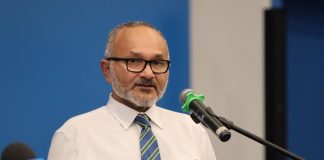
Graça Bauleth D’Almeida, Director of Resource Management at the Ministry of Fisheries and Marine Resources in Namibia spoke about this when contributing to “Session 4: Supporting fisheries sustainability through science” at the Honiara Summit on SDG 14.4 “Achieving Sustainable Fisheries” last month.
She said as is the case in the Pacific region, they depend heavily on fisheries income with the sector being the third contributor to their GDP after agriculture and mining in the first place.
D’Almeida explained that at their independence, 35 years ago, they faced a daunting task because most of their fish stocks at the time were either severely overfished or had collapsed.
She said they needed to rebuild these stocks to a sustainable level whilst at the same time allowing some harvesting and economic contribution from this sector to continue.
D’Almeida stated that to tackle this challenge, they first implemented a regulatory framework and one informed by science.
“Our Marine Resources Act specifically stipulates that the GACs are to be based on the best available scientific information.
Our situation has quite sometimes been challenging, especially to make the politicians understand and not sort of nail us in the uncertainty that is inherent in the fisheries science and decision-making process.”
D’Almeida they then immediately started conducting annual surveys for each of their commercial exploited fish stocks.
She added that for a period of about 10 years, they relied on these indices as the basis for the management of their resources.
“I would like to acknowledge that we have done this with the help of our development partners at that time, especially Norway through the NOW, FAO, PAF, Nansen Program, as well as Spain.”
She expressed that their assistance has really helped them to set up their management.
In this regard, D’Almeida said over time, as more data and information on the resources became available, they started using stock assessment models, which accounted for more data on the fishery and over time, they integrated harvest control rules in these assessments.
She stated that after that, they moved to more robust stock assessment methods and in addition, established time frames as to when the stock biomass levels are to reach biologically sustainable levels.
D’Almeida said without this, the whole poster has been changing, but these time frames, especially guided by the marine stewardship certification, where they have stock-based regeneration times, helped them to have one finish line that was basically fixed.
She went on to state that they are now in a phase where they are looking at a more holistic approach to fisheries management and are considering broader aspects, including the assessment and control of bycatch species and the impact of footprints of their fishery sector on the ecosystem.
D’Almeida furthered that while their stocks have not fully recovered to MSY (Maximum Sustainable Yield) levels, their trajectory is looking good and they expect their resources to make full recovery to MSY levels in the shortest time feasible as directed by Target 4 of SDG 14.
She is proud to say that Namibia has developed an enviable research infrastructure and regulatory framework.
For feedback, contact:[email protected]