
Home Blog Page 432

FFA has important role in global market access

0

By Loretta B Manele

The Forum Fisheries Agency (FFA) plays an important role in assisting its members to access global markets.

Chris Reid, Director of Fisheries Development for FFA spoke briefly about this at a side event called “Sustainable fisheries development initiatives” at the recent Honiara Summit which focused on discussions on Sustainable Development Goal 14.4 “Achieving Sustainable Fisheries”.

He said assisting FFA members to access global markets is a core activity of FFA.

Reid explained that they have a small dedicate team who work with members of industry to facilitate market access primarily to the EU (European Union) and North America.

He added that this work is expanding to other markets including Vietnam and China as their requirement for market access increases.

“Key activities in this area include seafood safety training, capacity building and technical competency development, DG Sante audit preparation and compliance and compliance monitoring and IUU regulatory changes all of which assist members and exporters to assess the lucrative access of the lucrative northern hemisphere markets for our channel.”

Reid said four FFA member countries, namely; Fiji, Solomon Islands, Kiribati and Papua New Guinea have an EU approved status which allows them to access the EU market without imposition of heavy tariffs.

He noted that work continues with three other countries; Federate States of Micronesia (FSM), Republic of Marshall Islands (RMI) and Tuvalu to attain this status.

For feedback, contact: [email protected]

Fisheries support in filling in gaps in unassessed stocks through science

0

By Loretta B Manele

Filling in gaps in unassessed stocks through science is one way of supporting fisheries sustainability.

Dr Eva Plaganyi, Senior principal research scientist and research group leader based at CSIRO (Commonwealth Scientific and Industrial Research Organisation) Environment, Australia spoke about this at the Honiara Summit last month.

Speaking as a panellist on Session 4: Supporting fisheries sustainability through science, she expressed that there is still a lot of work that needs to be done in filling some gaps around the numbers of unassessed stocks.

Plaganyi touched on the urgent need to address climate change through science.

In the case of applying science in fisheries sustainability, she outlined management strategy evaluation, forecasting techniques and modelling as scientific methods to test how resilient harvest strategies are.

Plaganyi said approaches like management strategy evaluation can be used to build the robustness of management methods that they are trying to use to help manage stocks sustainably.

On top of that, she stated that we can use some forecasting techniques and mentioned that there are a number of scientific advances in seasonal forecasting.

“That’s an example where we’re able to, again, use our scientific knowledge, share those outputs and enable better forward planning to respond to climate change.”

She went on to talk about modelling and stressed that to have adaptable and responsible frameworks there is the need for new modelling and data collection systems.

Plaganyi highlighted that modelling is a really powerful tool because it helps to test different strategies for how are we going to respond to future extreme events or climate events without actually having to first experience those events.

“We can try to figure out beforehand which strategies are winners and which ones are not likely to help us down the line.”

Plaganyi said that from the work being carried out by scientists around the world, there are a number of tools and methods that are now increasingly becoming available, like climate adaptation handbooks and seasonal forecasting tools.

She stressed that these are important not only in planning when is the best time to fish, but also to look after the fishes and communities themselves.

“In northern Australia, for example, we try to provide a heads up of when it might be too hot to go fishing, both because it’s harmful to the fishes as well as to handle the actual products and it would lose value if they fished at the wrong times.”

She furthered that these are the sort of gaps which she thinks science is being done at the moment on a case study basis, however, they are starting to pull that together and will be able to support the community.

For feedback, contact: [email protected]

Auki road network rehabilitation project officially launched

0

The Auki Road Network Rehabilitation Project was officially launched Wednesday in Auki, marking a significant milestone in the collaboration between the People’s Republic of China and Solomon Islands.

Funded by China, the project is contracted to the China Civil Engineering Construction Corporation (CCECC) and will involve the extensive repair and rehabilitation of a 3.8km main road, connecting Kilu’ufi Hospital in northern Auki Town to the Kwaibala Bridge in the south.

Furthermore, the project will enhance 16 critical connecting roads within Auki Town, totaling 5.5km, including a vital route to Kilu’ufi Hospital, ensuring improved access to essential services for the community.

In total, the project covers 9km of roadway in Auki, a media statement from the Ministry of Infrastructure Development said.

The main highway has been designed to accommodate vehicle speeds of 40 to 60km per hour, featuring a pavement width of 3.5 metres per lane.

The feeder roads will cater to vehicle speeds of 20 to 40km per hour, tailored to specific site conditions for safety and efficiency, the statement adds.

A key highlight of this project is the use of top-quality materials, akin to those utilised in the newly constructed roads in East Honiara. Each road will be equipped with a 50-millimetre-thick asphalt concrete pavement, ensuring durability and longevity. With proper maintenance, these roads are expected to serve the Auki community effectively for 10 to 20 years, significantly enhancing the local transportation network. Additionally, the project will incorporate improved drainage systems throughout Auki Town, facilitating efficient water management and safeguarding against erosion and flooding.

During the ground breaking ceremony, Minister of Infrastructure Development Manasseh Maelanga said, “We are building a stronger, safer, and more connected future for all citizens of Auki and the greater Malaita region. Together, let us take pride in our developments, ensure their longevity, and work hand in hand to create a thriving community that stands as a beacon of progress.”

Key guest speaker Prime Minister Jeremiah Manele highlighted the significance of this project as a grant rather than a loan.

“I urge the people of Malaita to take ownership of this project, a proud achievement stemming from the cooperative efforts of the Malaita Provincial Government, the National Government, and China.”

Chinese Ambassador to the Solomon Islands, HE Cai Weiming emphasised the project’s importance within the Belt and Road Initiative proposed by President Xi Jinping in 2013. This initiative aims to enhance policy coordination, infrastructure connectivity, unimpeded trade, and financial integration and strengthen people-to-people bonds, ultimately fostering conditions for win-win cooperation.

Malaita Premier Elijah Asilaua conveyed his appreciation to the Government for National Unity and Transformation (GNUT), stakeholders involved since the project’s inception in 2023, the China International Development Cooperation Agency, and the People’s Republic of China.

Stakeholders engaged in oil spill response exercise

0

BY JOHN HOUANIHAU

Stakeholders participating in the weeklong Oil Spill Response Training Workshop engaged in an oil spill response exercise yesterday at Aola Police maritime base in Honiara.

The oil spill response training workshop was made possible under the Ocean Country Partnership programme through Ambipar Response and SPREP.

The exercise aims to enhance the participating stakeholders’ response to oil spills with the resources available.

The workshop, set to end today, includes participants from the Solomon Islands Maritime Authority, South Pacific Oil, National Fisheries Development, Ministry of Health & Medical Services, RSIPF Maritime, and other organisations dealing with emergency responses.

“Part of the activity is to look at what equipment was available and how if there was a spill associated with, say the patrol vessel, how you might use that equipment like the boom to be able to ensure that the oil stays where it is and can be cleaned up,’’ said Paul Irving.

He said that the exercise is useful for people to understand that it’s not straightforward.

“It’s quite difficult to put the boom out; it takes some time, you need to figure out how it’s going to work properly, and you need to be aware of the other things going on,’’ he said.

He said that people who are involved in oil spill response need to learn through practice to experience them.

“After that, we went to South Pacific Oil, and South Pacific Oil very generously put their equipment out for us to see,’’ he said.

At the SPO at the Point Crus Jetty, participants were introduced to different types of booms and other equipment that can be used for oil spill response.

“There were three types of booms. There was a land sea boom, a harbour boom, a zoom boom, and brush skimmer and other equipment. So yeah, very interesting to be able to see the equipment that South Pacific Oil has available,’’ said Irving.

For feedback, contact: [email protected]
PawPatrolSollies complete second animal desexing mission

0

BY JOHN HOUANIHAU

The PawPatrolSollies, the Solomon Islands animal charity focussed on street dogs founded by Debbie McKee completed second successful animal desexing mission.

PawPatrolSollies has been about feeding, treating and finding homes for stray dogs and puppies around the streets of Honiara since 2021.

During this time, more than 100 puppies have been rehomed, but many other dogs have been helped to become healthier.

The PawPatrolSollies also focus on educating the community about dogs and how they behave if treated properly.

One key focus of PawPatrolSollies has been on getting the desexing programme to reduce the numbers on the street.

PawPatrolSollies approached the New Zealand team HUHANZ (Helping You Help Animals New Zealand) to step up and support the animals in Honiara.

PawPatrolSollies are grateful to HUHANZ for their work and commitment to a four-year desexing programme out of the Honiara Vet Clinic.

“We are also grateful to Honiara Vet Clinic for their facilities, time and support during these vests. The next desexing mission is scheduled for October, and I encourage those with dogs, compound dogs or stay dogs to bring them forward for desexing – so we will have less dogs and puppies on the streets,’’ said Debbie.

Several local businesses and individuals have stepped up to help PawPatrolSollies.

“I would like to take this opportunity to thank Markwarth Oil and PINK for their continued support and love for PawPatrolSollies,’’ Debbie said. 

The founder and CEO of HUHANZ Carolyn Press-McKenzie said, “Wednesday, 5 March was the final surgery day for the New Zealand team of vets and vet nurses.

“Over five days, we desexed 153 Sollie dogs and cats. This brings the total desexed during their two deployments over the last five months to just under 300 animals. This trip, we have loved not just helping the street dogs that PawPatrolSollies have a safe plan for but also directly helping locals with their pets,’’ said McKenzie.

For feedback, contact: [email protected]
Robust scientific outputs essential for fisheries management

0

By Loretta B Manele

Robust scientific outputs have proved to be essential for fisheries management.

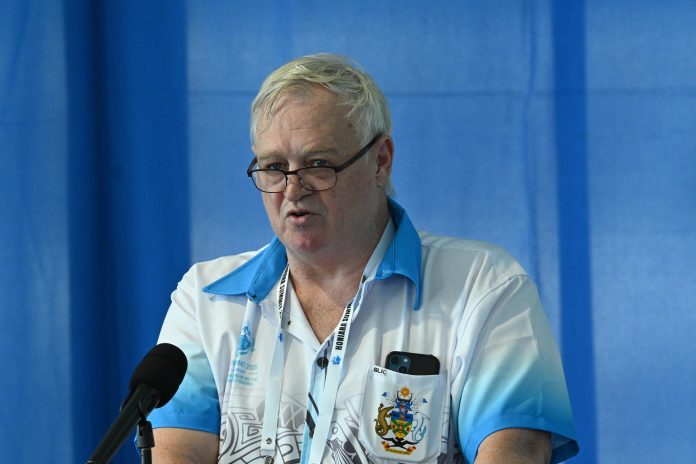
Rhea Moss-Christian, executive director for WCPFC (Western & Central Pacific Fisheries Commission) assured this whilst speaking at the recent Honiara Summit’s Session 4: “Supporting fisheries sustainability through science” last month.

She said in almost three decades of experience at the WCPFC, they have seen that robust scientific outputs have been essential in guiding fisheries management.

“We also know, for those who have been involved in negotiating conservation and management measures, that when our decisions are built on reliable and well-analysed data, we see tangible benefits.”

Moss-Christian stated that they have seen healthier fish populations, more resilient ecosystems and communities that continue to thrive.

She explained that these assessments conducted through rigorous data collection and advanced modelling techniques, have allowed fisheries managers to adjust conservation and management measures dynamically.

Moss-Christian said the ability to adapt to new data in real-time have proven invaluable, particularly in face-to-face uncertainties that we’re facing by climate variability and changing ocean conditions.

For feedback, contact: [email protected]

Vietnam’s ambassador presents letter of credence to Acting GG

0

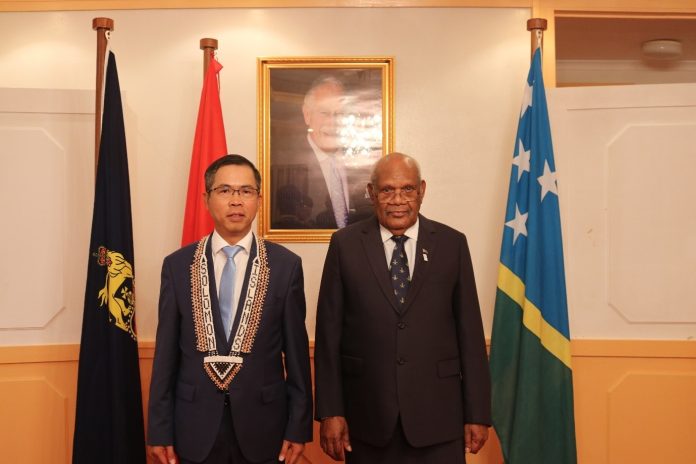
The non-resident Ambassador Extraordinary and Plenipotentiary of the Socialist Republic of Vietnam to Solomon Islands, His Excellency Pham Hung Tam, presented his Letter of Credence to the Acting Governor General, Patterson J Oti, at Government House on Wednesday.

Welcoming Ambassador Pham Hung Tam, the Acting Governor General reaffirmed Solomon Islands’ commitment to strengthening relations with Vietnam for the mutual benefit of both nations, a statement by the Ministry of Foreign Affairs yesterday said.

“Solomon Islands values its relationship with the Socialist Republic of Vietnam, and we look forward to deepening our cooperation for the prosperity of our peoples,” Mr Oti stated.

He highlighted that 29 years ago, both nations established diplomatic ties based on the principles of mutual trust, respect, and benefit.

“Our countries are connected not only by the vast expanse of the Pacific Ocean but also by our shared aspirations for a better future,” he added.

Oti noted the growing trade between the two nations and emphasized the potential for increased collaboration in agriculture, tourism, trade, and investment. He also underscored Solomon Islands’ interest in learning from Vietnam’s development experience.

“I hope that during your tenure, we can finalize a visa waiver arrangement and explore a trade framework that will create more economic opportunities for our people,” he said.

“On behalf of His Majesty King Charles III, King of Solomon Islands and the Commonwealth, I am honored to accept your Letter of Credence from the President of the Socialist Republic of Vietnam, appointing you as Ambassador Extraordinary and Plenipotentiary to Solomon Islands, with residence in Canberra.”

In his remarks, Ambassador Pham Hung Tam expressed Vietnam’s deep appreciation for its relationship with South Pacific nations, including Solomon Islands.

“In recent years, our two countries have made significant strides in strengthening bilateral relations. This progress is a testament to our shared commitment to fostering cooperation for the benefit of our peoples,” he said.

“We have built a strong foundation of trust and mutual respect, which serves as the cornerstone of our partnership,” the Ambassador added.

Solomon Islands and the Socialist Republic of Vietnam established diplomatic relations in 1996.

Ambassador of Peru presents credentials to acting GG

0

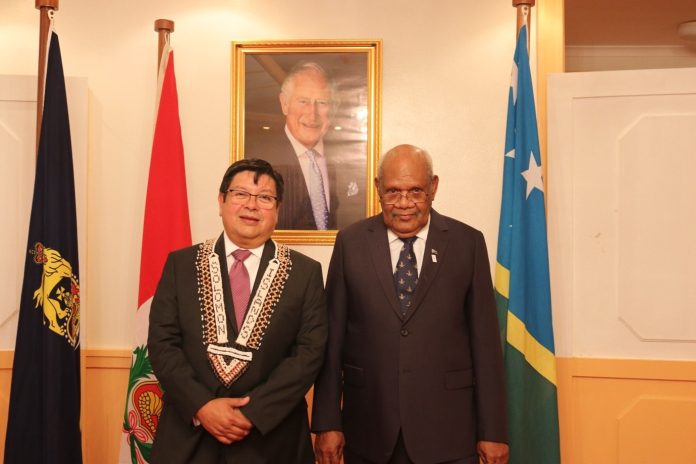
The non-resident Ambassador of the Republic of Peru to the Solomon Islands, His Excellency Vitaliano Gallardo, has presented his letter of credentials to the Acting Governor General, Patterson J Oti, at the Government House.

Mr Oti commended Ambassador Gallardo’s extensive diplomatic experience and expressed confidence that relations between the Solomon Islands and Peru can be further strengthened through deeper bilateral cooperation in areas of mutual benefit.

“On behalf of His Majesty, King of the Solomon Islands and the Commonwealth, Charles III, it is my great pleasure to accept your letter of credence as the Ambassador of the Republic of Peru to the Solomon Islands,” Oti said.

He highlighted the shared connection between the Solomon Islands and Peru through the vast Pacific Ocean, as well as their rich natural resources, geographic beauty, and unique cultural heritage.

Oti welcomed Peru’s optimism and commitment to enhancing engagement and cooperation in key sectors such as tourism, agriculture, and forestry. He also extended his best wishes to Ambassador Gallardo for a successful tenure as the non-resident Ambassador of Peru to the Solomon Islands.

“May our bilateral relations reach new heights in environmental, economic, social, and developmental collaboration,” he added.

In his remarks, Gallardo emphasised the similarities between Peru and the Solomon Islands, particularly their extraordinary biodiversity.

“Both of our nations are deeply committed to the sustainable and responsible use of our natural resources, acknowledging our role as stewards of the environment,” he stated.

He further underscored the shared commitment of both nations to upholding international law and fostering peaceful coexistence within the Pacific region.

Peru, officially the Republic of Peru, is a country in western South America. It shares borders with Ecuador and Colombia to the north, Brazil to the east, Bolivia to the southeast, Chile to the south, and the Pacific Ocean to the south and west.

UK-supported training set to boost response to pollution incidents in SI and Pacific

0

The capacity building and resilience to respond to pollution incidents in Solomon Islands and the Pacific has been boosted through a UK-supported training programme led by the Ocean Country Partnership Programme (OCPP).

In collaboration with the Secretariat of the Pacific Regional Environment Programme (SPREP) and Ambipar Limited, the training aims to increase the knowledge of pollution responders during an incident, including through witnessing the practical deployment of equipment, a statement from the UK Embassy and partners this week said.

The training programme has been developed to incorporate the country National Plan (NatPlan) to tailor the training modules and scenarios to best prepare participants to manage an incident based on their specific requirements.

The training which began Monday this week will be split where all participants will receive an IMO Level 2 certificate, which supports on-site supervision of a spill event.

There will also the opportunity for more senior staff to complete additional training in the evenings to receive an IMO Level 3 certificate, to increase knowledge on managing media and stakeholder management during spills and how to complete compensation claims.

At the end of the workshop today, Friday, March 7, participants will have a greater understanding of responding to an incident using their NatPlan, the steps to follow during an incident to have a more effective response and knowledge on pollutant types which will improve identification and early management of pollution.

The training has been scoped in collaboration with the Solomon Islands Maritime Association (SIMA), Vanuatu Maritime Safety Authority (VMSA) and Secretariat of the Pacific Regional Environment Programme (SPREP)), with the VMSA holding the same training programme the following week which will increase resilience across the Pacific.

Participants at the week-long workshop includes staff from the Ministry of Environment, Climate Change and Disaster Management’s Conservation division; Ministry of Fisheries and Marine Resource and National Fisheries Development; the Solomon Islands National University.

Others include private shipping company owners; provincial premiers; National Disaster Management Office; Ministry of Health and Medical Services; Solomon Ports; Markworth Oil Company Limited and other private sector organisations.

Healthy fish needs healthy oceans

0

By Loretta B Manele

To be able to thrive in the marine ecosystem, healthy fish need healthy oceans.

Dr Eva Plaganyi, Senior principal research scientist and research group leader based at CSIRO Environment, Australia stressed on the sentiment when contributing to a session at the Honiara Summit late last month.

She voiced that healthy fish will need healthy oceans to sustain and this is related to addressing plastic pollution in the ocean and ensuring a healthy habitat so fish can be conserved and sustained.

Plaganyi said one of the programmes they are rolling out is on the amount of plastic pollution there is in the ocean.

“My organisation is particularly passionate about trying to help with managing, assisting, as well as reducing some of that plastic pollution.”

Plaganyi stated that if we don’t look after the habitat for the fish, we won’t be able to specifically conserve them.

She said this on a broader scope, applies to habitat conservation including things like river inputs and estuaries where a number of fish rely on estuaries for their life cycle and to keep generating those sustainable yields.

Moreover, in this case, Plaganyi stated that we’re increasingly getting squeezed in the marine space by conflict between different sectors.

She said this is because of the need for water for different industries whether it is agriculture or mining.

“We need to improve the way in which we holistically look at how can we manage healthy fish stocks in conjunction with some of these other industries.”

She also stated that there needs to be transformation in our food systems so that collectively, we’re optimising the food security benefits and reducing the carbon footprint and the ecological footprint of those food production systems.

Plaganyi pointed out that this is an area where science can help with reducing the waste and helping ensure we’re protecting the habitats for fish species.

“There’s been a big move to ecosystem approaches to fisheries, which considers multi-species components, as well as ecosystem-based fisheries management, which more broadly considers interactions with other sectors.

Those considerations to frame our fisheries management are also really important, given, as I mentioned, the growing blue economy and the need to balance between conservation and sustainable utilisation.

That’s also an area where our scientific models are able to integrate some of the complexity of all of these different interactions and help make transparent what are the trade-offs in different management strategies, which is really important for us to proactively plan how we go ahead into the future.”

Plaganyi pointed out that to support sustainable fisheries going forward, we need to look after the industries and fisheries themselves and with extreme events increasingly impacting fisheries around the world, we don’t yet have mature marine insurance such as parametric methods that can help support those industries and communities to continue focusing into the future.

For feedback, contact: [email protected]