
Home Blog Page 407

BSP enters new era, championing prosperity for South Pacific

0

By Loretta B Manele

Bank of South Pacific (BSP) is entering a new era in its aspirations to champion prosperity for the South Pacific region.

Rohan George, group general manager for treasury and markets for BSP Financial Group Limited highlighted this at BSP’s launch of its new logo on Monday evening at Heritage Park Hotel.

Mr George voiced that as they step into a new era, their purpose is clear and is to champion prosperity for the South Pacific.

Speaking of prosperity, the bank is currently implementing a number of initiatives in its quest to provide more efficient and inclusive services.

These services include making significant investments to enhance financial accessibility and improve experiences and expanding digital banking services to provide 24-7 convenience.

BSP is also strengthening financial literacy programs to empower individuals and businesses and is increasing its presence in rural communities ensuring that nobody is left behind.

To add on, BSP is also launching customer-centric innovations that simplify and enhance banking interactions.

George emphasised that BSP is not just a bank but a trusted partner in financial empowerment.

“Our commitment to championing prosperity for the South Pacific means providing customers with the tools they need to succeed.”

George said the new brand and look is a revitalised identity and symbol of the region’s origins, transformation, ambition and excellence.

“It represents our ambitions to be South Pacific’s international bank. This is more than a logo; it represents our unwavering dedication to our customers. Our refreshed identity has been designed with contributions of many customers and staff across the South Pacific.”

Explaining the logo, George said four elements of it tell a story.

“Firstly, the stylised Kundu, is a drumbeat reverberating across the Pacific, reminding us of our heritage, calling us together.

“The hoop symbolises strength, stability and prosperity, anchoring us to the region. The South Pacific is our home. Waves represent the oceans that connect us and to the world.

“A bird in flight propels us forward on our journey to a shared prosperous future, supported by modern banking services.”

He expressed that their journey would not have been possible without BSP customers, communities and partners.

“You have been at the heart of everything we do and this transformation is as much yours as it is ours.

“We recognise that businesses have trusted us with their growth, the families rely on us for their financial needs and communities that we proudly serve.”

George said this moment belongs to everyone.

He furthered that looking into the future, BSP is stronger, bolder and more committed than ever to shaping the future of banking in the South Pacific.

For feedback, contact: [email protected]

Toiraena appeals to PRC embassy to support school

0

BY JOHN HOUANIHAU

Member of Parliament (MP) for East Honiara Constituency Morris To’iraena has appealed to the Chinese embassy to transform the future of Burns High Creek School.

Mr To’iraena appealed last Thursday at the handover of the China-donated basketball court to Burns Creek School at the school compound in East Honiara.

He said that the brand-new basketball hall, a gift made possible through the generosity of the Chinese government and the people of China, represents more than just a place to play – it is a symbol of friendship, support and shared commitment to the growth and success of young people.

“The school also needs specialised classrooms, such as industrial technology workshops and home economics labs, to equip students with practical skills to empower them for the workforce and entrepreneurship. There is also a need for a modern library to provide students with access to books research materials and even to broaden their knowledge and critical thinking skills,” he said.

“As we continue to improve our schools, we hope for further support in other critical areas of development. Burns Creek High School has been here for the past 60 years, and as you see, that’s the facility they have. In other words, the school also needs a fully equipped science laboratory to encourage hands-on learning and innovation in science and technology,” said MP To’iraena.

Mr To’iraena said that with continued support, Burns Creek High School can transform into a modern institution that will excel not only in sports but in academic and technical skills and personal development. 

For feedback, contact: [email protected]

Seminars vital in fostering interest in research: SINU

0

BY INDY MAEALASIA

A local academic at the Solomon Islands National University (SINU), Dr Vaeno Vigulu, has emphasised the importance of research seminars in fostering interest in academic research and building students’ capacity for future pursuits.

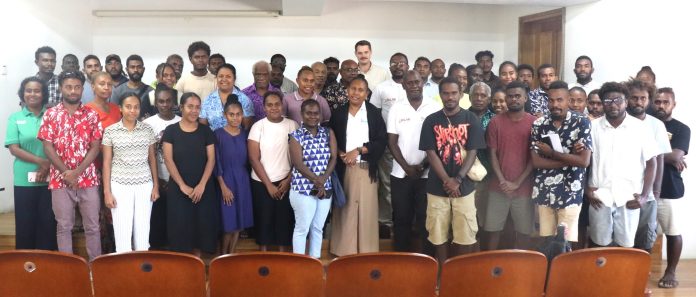
Speaking after the Family Farming, Lifestyle, and Health (FALAH) seminar held yesterday at SINU’s Ranadi Campus, Mr Vigulu, who also serves as Dean of the Faculty of Agriculture, Fisheries, and Forestry (FAFF), highlighted the role of such seminars in sparking curiosity and promoting knowledge sharing.

“These seminars are vital for sharing knowledge with staff and students while opening university students’ minds to explore potential research topics that ignite their interests,” Vigulu said.

He stressed that these events inspire young students to pursue advanced degrees in the future, including Masters and PhDs.

Vigulu noted that many students might have limited knowledge of conducting proper research but emphasized how seminars like these could serve as a stepping stone.

“Through these seminars, they gain insights into academic research and learn how to begin their own journeys.”

The FALAH seminar featured eight local academics who presented impactful research topics aligned with themes of family farming, lifestyle, and health. The diverse studies highlighted key issues affecting the Solomon Islands and their communities:

  1. Dr Hugo Bugoro – The role of traditional food preservation methods in strengthening food security and health resilience of small island communities in the Solomon Islands.
  • Dr Vaeno Vigulu – Root architecture of teak and fluggea in mixed species systems in the Solomon Islands.
  • Alex Maikini- Building Health and resilience; Improving food security and reducing non-communicable diseases through urban agriculture in Honiara.
  •  Dr Lindon Havimana- White-tailed crescent (Variola albimarginata): A preliminary study on size at sexual maturity, seasonal gonadal, variation and growth.
  • Dr Mary Tahu- Gender, Climate Change and indigenous ecological knowledge in the Solomon Islands Mangroves.
  • Patrick Miniti – Positive impact of teaching physical education and physical activities using locally available equipment and indigenous games in the Solomon Islands.
  • Marineth Magi- Personal factors affecting adherence in hypertension patients in the Solomon Islands
  • Danny Shadrech- the influence of ENSO on the rise of equatorial waters in the pacific and its impact on fishing.

For feedback, contact: [email protected]
Researcher sheds light on barriers to research

0

BY INDY MAEALASIA

DR Vaeno Vigulu, dean of the Faculty of Agriculture, Fisheries, and Forestry (FAFF) at the Solomon Islands National University (SINU), has highlighted significant challenges faced by research initiatives in the country.

According to Vigulu, insufficient funding and logistical barriers hinder the advancement of vital research projects.

“Research can be conducted by anyone, but the key lies in having the logistics and funding necessary to support it.”

Drawing from his own experience as a researcher, he emphasised the need for resources such as field equipment, extended periods of fieldwork, and travel to rural areas—all of which require substantial financial and logistical support.

Vigulu also addressed the issue of specialised support for local researchers, noting that partnerships with regional and international academic institutions could help fill these gaps.

“Some staff may need specialized resources that are sometimes unavailable at the university, leading them to seek assistance from other universities or institutions.”

Additionally, Vigulu urged the Solomon Islands Government to provide more support for SINU’s research initiatives.

For feedback, contact: [email protected]
ESSP ENDS

0

-Australia, New Zealand has given young Solomon Islanders hope and opportunity to dream, learn and thrive: Education Minister Leokana

-Biggest education reform since independence with the support of Aus, NZ

By Loretta B Manele

The Solomon Islands Education Sector Support Programme (ESSP) a partnership with Australian and New Zealand governments officially closed yesterday.

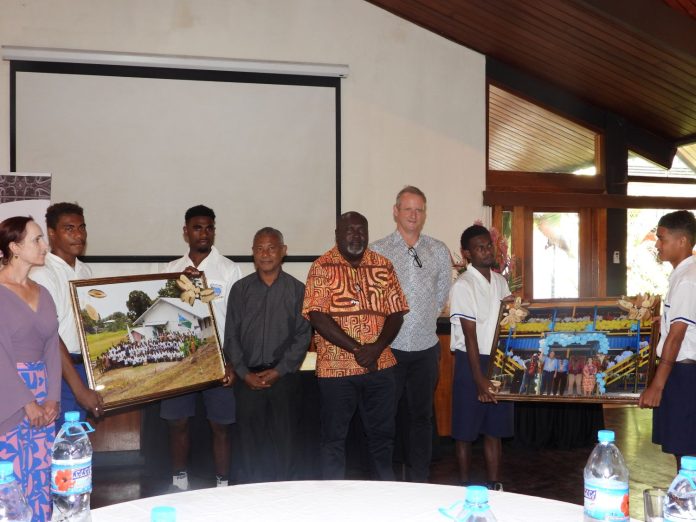
Marked with a function at Mendana Hotel, Tozen Leokana, minister for Education and Human Resources Development (MEHRD) took the opportunity to thank both governments for their support towards the Solomon Islands education sector.

He expressed that this moment is more than just a reflection on what has been accomplished as it is also a testament of power, partnership, commitment and unwavering belief that education transforms lives.

“At the outset, let me express my heartfelt gratitude to the Government of Australia and New Zealand for being true champions of education in the Solomon Islands.”

Leokana highlighted that their steadfast commitment and substantial investment over the past years have not only changed the landscape of our education system but it has also ignited hope in the hearts of countless children across our islands.

He added that they have helped to build schools, change policies and bring about new education acts to life.

Above all, Leokana said the two governments, more importantly have given young Solomon Islanders hope and opportunity to dream, learn and thrive.

Leokana said he has met with faces behind the statistics, eager students, passionate teachers, dedicated school principals and hopeful students.

“I have listened to their stories, shared in their triumphs, and reaffirmed the presence of my ministry, the Ministry of Education, and the government in their lives.”

He said these are living testaments of the transformative power of education and unbreakable bonds of collaboration.

Rod Hilton, Australia’s high commissioner also shared the success of ESSP in the country.

He said it is important for us to pause and look back at the past five years together to celebrate a lot of extraordinary achievements and lessons.

Hilton recalled since having arrived in Honiara over two years ago, he has seen significant change in the education sector through the work of ESSP.

Speaking on the success of ESSP, he said 45 school facilities have been built across every province, 3,500 teachers both pre- and in-service teachers have been trained and 170,000 textbooks and learning resources have been developed and distributed to students and teachers.

To top that off, Hilton highlighted that they are also very privileged that ESSP was supportive in the passing of the historic Education Act 2023.

“This is the biggest education reform for Solomon Islands since independence.”

Rebecca Williams, acting New Zealand High Commissioner to Solomon Islands also shared other success stories of ESSP.

She expressed that since 2019, New Zealand has been proud to support ESSP with its partnership between Australia and MEHRD for ensuring that every child in Solomon Islands has good access to education.

Williams said together they have achieved good progress on the above objective.

She voiced that ESSP has supported progress to improve participation in basic education.

“ESSP has provided new classrooms, dormitories, ablution blocks and dining halls for 39 schools across the country and boats and vehicles for education providers to improve engagement with schools.

“ESSP also supported a new education funding code to ensure that schools get funding.

“44 new curriculum textbook titles were also developed with more than 92,000 school books.

“More than 3,500 teachers received professional development of which 1,000 graduated with teaching certificates.”

She added that ESSP has also worked with the education ministry and local and international NGOs to support disadvantaged children.

Williams explained that this work includes infrastructure equipment for children with disabilities, dormitories and WASH facilities for girls to participate in school.

She mentioned that ESSP has also worked with these organizations to train sign language trainers and there are now 38 sign language trainers to help increase the language skills of deaf and hearing-impaired students.

“This program contributes towards strengthening the education sector management and includes support for development, socialisation and the implementation of the Education Act 2023.”

She noted that these are examples of some of the important work ESSP has helped to carry out.

“Every activity represents one step forward for education and learning in Solomon Islands.”

For feedback, contact: [email protected]

Country’s first cocoa factory nearing completion

0

BY SAMIE WAIKORI

Work on the country’s first cocoa processing plant is nearly done, with the building completed recently at Kirakira, Makira-Ulawa provincial capital.

Premier Stanley Siapu confirmed yesterday [April 1], “yes, the building structure for the cocoa factory has completed”.

Mr Siapu says this is a milestone accomplishment for Makira-Ulawa province (MUP) and the country.

Siapu said the next stage is the instalment of processing machines, which is expected this year.

He said machines will be funded by the national government through the Ministry of Agriculture and Livestock (MAL) and partners.

“Machines to be funded by MAL this year after finalising business partnership arrangements especially with MUPG, owner and other potential partners,” Siapu said.

The project is supported by national government through three of its line ministries; Ministry of National Development Planning and Aid Coordination (MNDPAC), Ministry of Commerce, Industry, Labor and Immigration (MCILI) and Ministry of Agriculture and Livestock.

In an earlier interview, Premier Siapu said the cocoa factory project will be the answer to the hardworking cocoa farmers in MUP and thecountry.

Adding the project is significant to stabilise the economy of the country.

He emphasised it will curb cocoa buying prices to farmers, create employment opportunities and provide specialist training, skills and knowledge transfer for locals.      

Siapu furthered the project would enable the factory to produce cocoa products and other bi-products for both internal and external market.

In the meantime, he appealed to cocoa farmers in the province and across the country to prepare for the project.

Siapu said MUPG planned to work with farmers to rehabilitate cocoa and coconut farms in the province.

He assured the commitment of his government to partner with national government and donor partners to ensure the project materialize and benefit by boosting the economy of the country.

For feedback, contact: [email protected]

MUP shows progress in PCDF

0

BY SAMIE WAIKORI

The Makira-Ulawa provincial government has shown progress in its PCDF execution, after coming back from several years of disqualification from the SIG and donor-funded programme.

MUP Minister for Finance and Treasury, Silas Wagatora highlighted this in his assembly speech, at MUP full assembly meeting held in Kirakira last week.

He said under MUP capital budget, all projects from the 2024/2025 revised budget attached to the PCDF qualified amount have been carried forward to the 2025/2026 financial year.

“Most of these projects have been tendered; however, the province is still awaiting the PCDF qualified funds as announced earlier this year.

“Once received in the MUPG–PCDF account, contractor’s engagements, contracts, mobilization and actual construction work will commence promptly.

“Some of the projects are already out on tenders, pending PTB’s decisions, whilst few are yet to be tendered.

“The province will tender more projects, after reports are submitted to the Provincial Secretary by specialists as required by donors, procurement process will commence,” Wagatora said.

Meanwhile, the finance minister said while MUP is facing delay of funding release from national government, it also raises alarm on the release of the PCDF funding.

“The delays of funding release will not threaten us, but trigger issues required for the release of PCDF funding, which is currently dealt with by the administration,” he said.

Wagatora said MUP is trying to stay on top of the matter, guaranteeing the dedication of the province to maintain its status on the PCDF programme.

He also mentioned that MUP’s capital budget also incorporates new indicative figures for SIG-PCDF, LoCAL PCDF, and IEDCR-PCDF.

Wagatora said the figures remain subject to the 2023/2024 assessment results. Hence, the overall fiscal performance of the 2025/26 budget is contingent upon the timely receipt of the PCDF funding.

For feedback, contact: [email protected]
Experiencing structural drivers of conflict

0

By Loretta B Manele

Today, people may experience structural drivers of conflict without actually knowing they are.

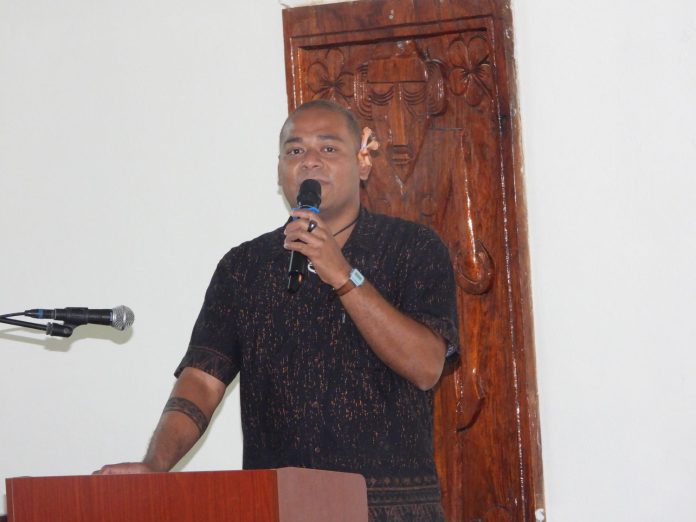
Raki Tuiloma, programmes assistant for Transcend Oceania shared his experience at the “Peacebuilding and Security Dialogue”, funded by UK-Integrated Security Fund and facilitated by Transcend Oceania and Conciliation Resources late last month at the King Solomon Hotel.

Speaking of “structural drivers” of conflict, he said this involves things like uneven distribution of resources, differing values, perceived threats, poor communication and social inequalities.

Tuiloma added that these situations can lead to a conflict as groups of people fight for control.

He took the opportunity to share his own experience with participants at the dialogue.

Tuiloma said for him, he originally came from a village located up in a mountain called “Mount Washington”, also the second largest mountain in Fiji.

“So, just right at the side of the mountain, that’s where my ancestors first settled.”

Tuiloma went on to explain how life was when things were being colonized back then.

He said when colonization occurred, the structure of how they were living also changed.

Tuiloma expressed that during this time, they were asked to move to a village located at the bottom of where the mountain is located.

After that move, life was not the same.

He said living in a new village, when they would do or say things they were told to keep quiet because they weren’t from that village.

Tuiloma mentioned that they weren’t even allowed to say anything during village meetings.

“So, sometimes it’s became a challenge for us.”

Tuiloma pointed out that situations like this is an example of structural conflict.

He emphasized that when there is social inequality, significant disparities in wealth, power and opportunity, this can lead to create sentiment and fuel conflict with lack of social mobility.

For feedback, contact: [email protected]

MUP plans to strengthen staff work performance

0

BY SAMIE WAIKORI

Premier of Makira Ulawa province, Stanley Siapu says his government is planning to revitalise the public service commitment, aimed at strengthening the work performance of its staff.

The undertaking is to counter the inconsistencies in commitment among public officers that continue to become a stumbling block for the province.

“We are launching a radical overhaul of our accountability frameworks, setting higher standards, and ensuring that excellence is both recognised and enforced.

“By revitalising the spirit of public service, we will inspire every officer to dedicate themselves wholeheartedly to transforming our province and driving forward the wave of change.

“The level of commitment from certain officers has been inconsistent, impacting the effectiveness of our service delivery mechanisms.

“We must strengthen accountability and ensure that every officer upholds their duty with integrity and diligence,” he said.

Siapu furthered that persistent inefficiencies and outdated practices have also long chained the potential of the province.

“We are committed to dismantling these barriers through strict reforms, technological innovation, and a renewed culture of accountability.

“Every public servant will be expected to operate with unyielding responsibility, transforming our governance into a lean, agile engine of progress.

“Despite our best efforts, we face governance and operational challenges, particularly in ensuring that all officers remain committed to their roles and responsibilities,” he said.

Siapu emphasized that while MUP is celebrating some of its groundbreaking achievements, it is also vital to confront the challenges threaten to impede the progress of the province.

For feedback, contact: [email protected]
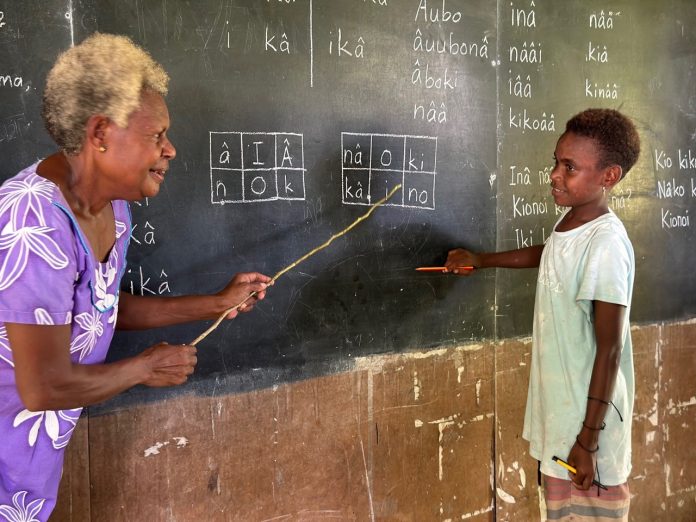
Keeping the Aiwoo language alive with literacy training

0

BY IRWIN ANGIKI

As languages in the Solomon Islands face threats of dying out, initiatives are working to keep them alive.

One such is the work of Solomon Islands Translation Advisory Group (SITAG) for the Aiwoo language of Reef islands, Temotu province.

Recognising the need for Aiwoo speakers to learn to read and write their own language, SITAG supported local group Mikilinuave Aiwoo Translation Ministry to hold a teacher training workshop March 17-28 in Ngamane village.

Photo credit-Martha Matzke

Church leaders from the five districts in the Aiwoo-speaking community identified the participants who came to be trained in using a reading primer for the Aiwoo Language, SITAG statement this week said.

Led by SITAG’s literacy specialist Martha Matzke, assisted by Timothy Matzke, the participants were taught basic Aiwoo phonics, reading and writing.

Photo credit-Martha Matzke

Photo credit-Martha Matzke

As part of the training, the teachers visited and practised their newly acquired skills with students at Gauwa Primary School.

Within the first morning of instruction, the children began to read and write Aiwoo, to the amazement and delight of the teaching staff, SITAG said.

Teachers reported that children who were not able to read English, demonstrated they could read and write in their first language, Aiwoo.

Photo credit-Martha Matzke

Photo credit-Martha Matzke

Gauwa Primary School head teacher Emily Bolami said, “I see that the students are progressing. They can easily write a story, make a sentence, in language and it will be easy for them to turn those sentences and stories into English. I think the Ministry of Education should consider this programme.”

Explaining this phenomenon, senior Linguistics lecturer at the University of the South Pacific (USP) Dr Fiona Willans said “The reason why the children find it easy to read their own language is because they already know what the words mean orally.

“It is easy to teach someone how to pronounce different letters, and how to put them together as words, but then you also need to teach them what these words mean.

Photo credit- Martha Matzke

“So I can teach you how to sound out ‘p – i – g’ and how to put these sounds together to pronounce the word ‘pig’. If you already know how to speak English, then you will immediately recognise that this word ‘pig’ refers to that animal running around. However, if your language has a different word for that animal, such as ‘vuaka’ in Fijian, or ‘boe’ in North-East Ambae (Vanuatu), then you will not know what the English word ‘pig’ means even when you read it aloud correctly.

“The reason why the children at Gauwa school should then be able to transfer their new reading skills from their first language into English is because they will have already mastered the process of sounding out letters and forming words and sentences.

“They will need to learn a few new pronunciation and spelling rules for English, but they will then quickly be able to read the language quite fluently. To read English with meaning, they will simply need to learn the new vocabulary and grammar, so that they understand what they are reading.”

Photo credit- Martha Matzke

Meanwhile, at the end of the training the newly trained literacy teachers met in district groups to plan for literacy awareness and to identify potential people (groups) who could benefit from literacy classes such as school drop-outs, adults, youth and children.

In the closing programme many expressed a desire to reach Aiwoo speakers who have not learnt to read their language.

This literacy training was made possible thanks to funding provided by donors in New Zealand through Wycliffe Bible Translators.

The Mikilinave Translation Ministry hopes to see literacy classes begin in the near future.

Photo credit- Martha Matzke

Dorothy Aliko, a member of the translation team, said that the newly trained teachers are determined to see that no Aiwoo speaker is left behind and they hope everyone will be able to read Aiwoo Scriptures.

For feedback, contact: [email protected]