
Home Blog Page 3

CEMA continues with its ‘farmers first’ commitment

0

BY TONY IROGA

The Commodities Export Marketing Authority (CEMA) has again reiterated how it is helping copra farmers throughout the country, especially with its Management Fee which the former government had removed.

CEMA CEO Colin Yow in a statement last week explained that the levy of $3.05 which it had introduced March 19, 2026 on copra exporters had aimed to help farmers, enable CEMA do its mandated work of helping farmers better, and target exporters who he said was making exorbitant profits from the trade.

The copra exporters have declined to comment, when sought by this paper through their spokesperson Bob Pollard last week.

In their response to CEMA on May 25, 2026, the exporters had denied CEMA’s claim that they were making huge profits. They challenged CEMA to publish its audited financial results for public to better understand the real situation.

What CEMA is and who it serves

CEMA is the Commodity Export Marketing Authority — an Authority established with one core responsibility: to promote, develop and protect the commodity industries that rural Solomon Islands depends upon. At the heart of that responsibility is a mandate that CEMA takes seriously every day: to ensure that producers receive the best possible returns for the commodities they work so hard to produce.

Copra farming is the backbone of rural livelihoods across this country. It is the income that puts children through school, pays for medicine, and sustains communities in provinces far from Honiara. CEMA exists to serve the men and women who do that work — to be the institution that stands firmly in their corner, speaks clearly on their behalf, and acts without hesitation when their interests are at stake.

“CEMA does not exist to serve the market. CEMA exists to serve the farmers who make the market possible,” the CEMA statement said.

The copra management fee — built for farmers

The copra management fee of SBD $3.05 per kilogramme is a legal instrument established under the CEMA Act. Every dollar it collects is required to be returned directly to the copra sector — not to administration, not to any other fund, but back into the industry and the farming communities that generated it. The management fee is, in every meaningful sense, a farmers’ fund.

This fee has existed for more than 20 years. CEMA first gazetted it at SBD 2 cents per kg in August 2004, raised it to SBD 3 cents in January 2005, and increased it to SBD 5 cents in April 2012. From that point, the fee was not reviewed for 14 years. During those 14 years, the costs that farmers face — fuel, transport, basic goods — all rose. But the fund meant to support them remained too small to make a real difference. The reset to SBD $3.05 per kg in March 2026 was CEMA’s long-overdue acknowledgement that farmers deserved more — and that the fund created in their name needed to be strong enough to actually serve them.

What the management fee delivers for farmers

The management fee gives CEMA the financial means to do the work that farmers have needed for a very long time. It funds regular transport access by landing craft to all nine provinces — reaching farming communities in even the most remote locations on schedules that farmers can rely upon. It funds CEMA’s direct buying presence, so that every farmer has a genuine choice and is never left dependent on a single buyer or a single price. It funds copra bags and quality control — practical support that lowers what farmers spend and raises the value of what they sell. It funds coconut replanting, because CEMA understands that without investment in the trees today, farming families face a diminished future tomorrow. And it builds a price stability reserve, so that CEMA can step into the market and protect farmer incomes when buying activity falls away and prices come under pressure.

For the farming families of Malaita, Makira, Choiseul, Isabel, Temotu, the Weather-coast and the outer islands, these services are not abstractions. They are the practical difference between a system that works for them and one that does not. CEMA designed the management fee with those families in mind — and every dollar it collected was a dollar committed to changing their conditions for the better.

How CEMA stood beside farmers — the record

From the day the management fee took effect on March 19, 2026, CEMA monitored the market closely and kept its attention firmly on farmers. When buying prices fell sharply in parts of the market — with some farmers receiving as little as SBD $1 to SBD $1.50 per kg after facilitation costs – CEMA acted without delay.

CEMA entered the market immediately. CEMA bought copra from local buyers at SBD $6 per kg and paid farmers SBD $4 per kg – the same fair price they had received before the management fee came into effect. In the first 39 days alone, CEMA purchased 901 metric tonnes of copra. Farmers across the country had a real, fairly priced option. They were not abandoned to the market. They were not left to accept whatever was offered. CEMA was there — present, buying, and paying a price that reflected what farmers’ work was worth.

Throughout that period, CEMA’s message to every farming community was clear – the reduced prices that had appeared in some parts of the market were not something farmers had to accept. CEMA’s commitment to a fair farmgate price was not a position held when it was easy. It was a commitment held when it mattered most — and CEMA delivered on it.

901 metric tonnes purchased at a fair price for farmers in 39 days. That is what Farmers First looks like — not in words, but in action.

CEMA’S COMMITMENT CONTINUES

The copra management fee was repealed on 28 April 2026. CEMA notes this and has continued to monitor the market with the same care and the same commitment to farmer welfare that has guided CEMA from the beginning.

Since the repeal, CEMA has continued to buy copra at SBD $6 per kilogram. That has not changed — because CEMA’s commitment to farmers does not begin and end with any single policy instrument. CEMA is in the market today. CEMA is buying today. And CEMA’s price remains the highest available to farmers. CEMA will welcome any development in the market that sees farmers earning more — because more for farmers is the only outcome that matters to this Authority.

What the period since 19 March has demonstrated clearly is that CEMA’s presence as an active, credible buyer with a fair price is the most direct protection available to copra farmers. When CEMA is in the market, farmers have a genuine choice. When farmers have a genuine choice, their bargaining position is stronger and their returns are better. That is the practical value of what the management fee funded — and it is the value CEMA is determined to provide, in every form available to it, for as long as farmers need it.

CEMA’s answer to every copra farmer in Solomon Islands is the same today as it was on 19 March, and the same as it will be tomorrow: we are here, we are buying, and we will not leave you without a fair price.

CEMA is here for farmers

CEMA’s door is open to every copra farmer and every rural community that depends on this industry. CEMA listens to farmers. CEMA’s decisions are shaped by what farmers experience, what farmers need, and what will genuinely improve their lives and livelihoods. That is not a principle CEMA applies selectively. It is the foundation on which this Authority operates.

Any farmer, local buyer or rural community with questions about copra pricing, CEMA’s buying programme, or the services the management fee is designed to fund is encouraged to reach out to CEMA directly. This Authority exists to serve you — and serving you means being accessible, transparent and honest about what CEMA is doing and why.

For feedback, contact: [email protected]

Editor: [email protected]

56 students graduate from Papapi Technical School

0

BY BEN BILUA
Gizo

A total of 56 students have successfully completed their training at Papapi Technical School, marking an important milestone in their educational journey.

The school yesterday hosted a graduation ceremony attended by students, parents, relatives, and invited guests to celebrate the achievement of the graduates.

Speaking at the ceremony, Inspector of Western Province Education Services, Willie Etupio, highlighted the importance of education in shaping a successful future and helping young people reach their full potential.

“Education is the key to a successful future and an important element in helping young people develop to their fullest potential,” he said.

Etupio told those present that education is a lifelong process of learning that opens doors of opportunity for those who are willing to dedicate themselves to acquiring knowledge and skills.

“Through education, people are exposed to new knowledge, skills, talents and experiences that help them discover who they are and what they are best suited for,” he said.

Etupio said the formal academic education system in Solomon Islands has not always been able to provide sufficient practical skills and knowledge needed by ordinary citizens to adapt to an increasingly competitive world driven by market forces, science and technology.

He said there remains a significant gap between the country’s labour market demands and the outcomes of the formal education system.

“The young generation cannot effectively enter the labour market with only the knowledge and skills obtained through the formal education system,” Etupio said.

He said the high number of students dropping out of the formal education system and facing limited employment opportunities has contributed to growing social issues within communities.

Etupio said there is a need for more technical and vocational institutions across the country to provide alternative pathways for young people who leave formal schooling.

“We need more technical schools to provide opportunities for those who drop out of our formal education system. Technical schools are the best way forward to address the missing link between our formal education system and the labour market,” he said.

Etupio congratulated the graduates for their hard work and dedication throughout their training.

He also acknowledged the support and commitment of parents and guardians who helped them reach this important milestone.

The graduation ceremony concluded with the presentation of certificates to the 56 graduates as families and friends joined to celebrate their success and future aspirations.

For feedback, contact: [email protected]

Editor: [email protected]

Onelafa CHS thanks Save The Children 

0

BY RODRICK DESURI 

Auki 

Staff of Onelafa Community High School in East Fataleka, Malaita Province, acknowledges Save the Children through the Solomon Islands Knowledge-Action-Sustainable for Resilient Villages (SOLKAS) project for reaching out to their school on Wednesday, June 3. 

The outreach aims to equip the community with the necessary knowledge and skills to build resilience at the school and community levels to support sustainable development in a changing climate. 

During the three-day event at the school, the school staff had the opportunity to identify natural hazards that impact the school, students, and staff. 

One of the staff members said they identified many natural hazards affecting the school that need to be addressed for the benefit of the school. 

“On the second day of the program, we were grouped into teams. From the groups, we were asked to identify and write down the hazards that affected the school.

“We also dramatised some of the hazards to give a real picture of it,” the staff said. 

Meanwhile, school principal, Alex Soloi, also thanked the Save the Children team for their support through the SOLKAS project.

He said they thank the team for showing them the green light in terms of providing water for the school.

“Once they support us, we will benefit from that, especially since water is our main problem here,” he said. 

The Solomon Islands Knowledge-Action-Sustainable for Resilient Villages (SOLKAS) project is building the climate resilience of children, young people, and communities in vulnerable rural areas. 

SOLKAS partners with the Ministry of Environment, Climate Change, Disaster Management, and Meteorology (MECDM) and is primarily funded by the Green Climate Fund with the support of Australia, New Zealand, and the Solomon Islands Government.

For feedback, contact: [email protected]

Editor: [email protected]

Be productive citizens: Etupio

0

BY BEN BILUA
Gizo

GRADUATES of Papapi Technical School have been encouraged to become productive citizens and contribute meaningfully to the development of their communities, Western Province and the country.

The call was made by Western Province Education Authority Inspector, Willie Etupio, during the school’s graduation ceremony yesterday at Outback Living in Gizo.

Speaking to the graduates, Etupio said completing technical training was a significant achievement, but securing employment and building a successful career will require determination, commitment and hard work.

“Congratulations for your achievement. You have made the right decision to further your education through technical training.

“Graduating means joining the labour market, especially in the fields of technology and industry.

“Furthermore, graduating from a technical school is the beginning of further studies at tertiary institutions such as Solomon Islands National University,” he said.

Etupio reminded the graduates that the knowledge and skills they have acquired will not only help them support themselves, but also their families and communities.

“I encourage you to use the knowledge and skills you obtained from the institution. You have become a pool of trained human resources for Western Province and we are proud of you.

“Be part of the productive citizens who contribute to the development of Western Province and the country,” he said.

A representative of Papapi Technical School, Gibson Buka, expressed satisfaction at seeing another group of students successfully complete their studies and prepare to enter the labour market.

He said the graduates successfully completed six months of training despite the challenges faced by the institution.

“I’m confident that you have obtained the knowledge and skills from the core courses. It is now your time to make use of those skills and knowledge to help yourself, your family, your communities, our province and our country,” Buka said.

Buka said Papapi Technical School was established in 2006 with the objective of providing vocational and technical skills training to school dropouts and young people seeking practical career pathways.

“Since the establishment of the school in 2006, more than 300 students have graduated from the institution by 2026.

“Some of our graduates are now working on ships as engineers, while others are employed as mechanics in vehicle repair workshops,” he said.

Buka said the achievements of former students demonstrate the importance of technical and vocational education in creating employment opportunities and developing a skilled workforce for the country.

The graduation ceremony marked another milestone for the institution as it continues to equip young people with practical skills needed to meet the demands of the labour market.

For feedback, contact: [email protected]

Editor: [email protected]

Malaita youth division continues to support and promote members

0

BY RODRICK DESURI 

Auki 

The Youth Division within the Malaita Provincial Government continues to support and promote the youths of Malaita Province through their internship programme.

Over the weekend the Malaita Provincial Government farewelled another three internship students from the Asian Pacific Sustainable Development (APSD) programme at the provincial area. 

The internship programme provides an opportunity for youths to feel, experience, and broaden their knowledge as their practicum in various areas of provincial government divisions.

According to the Malaita Provincial Youth Coordinator, Frank Samo Sari, the initiative first started in 2019 to support youths after they finish their education at Rural Training Centres (RTC).

He said that it is a nine-month work programme that initially began with students from Don Bosco School.

“It was established in 2019 with two students from Don Bosco.They came to experience the areas of work of business and administration.

“We have farewelled three students from the Asian Pacific Sustainable Development (APSD) for the successful completion of their nine months,” he said. 

He said the three students included one female and two males, who had the opportunity to gain experience in business and administration. 

“The three had the opportunity to practice in areas of Business and Administration and general office management. Not only that, but they also attended workshops and training from government ministries and NGOs,” he said. 

To mark the completion of the internship programme for the three students, the Malaita Provincial Government as organised light refreshments and handed tokens of appreciation to the three internship students.

For feedback, contact: [email protected]

Editor: [email protected]
Wairaha communities call for police to cull crocodiles 

0

BY RODRICK DESURI 

Auki 

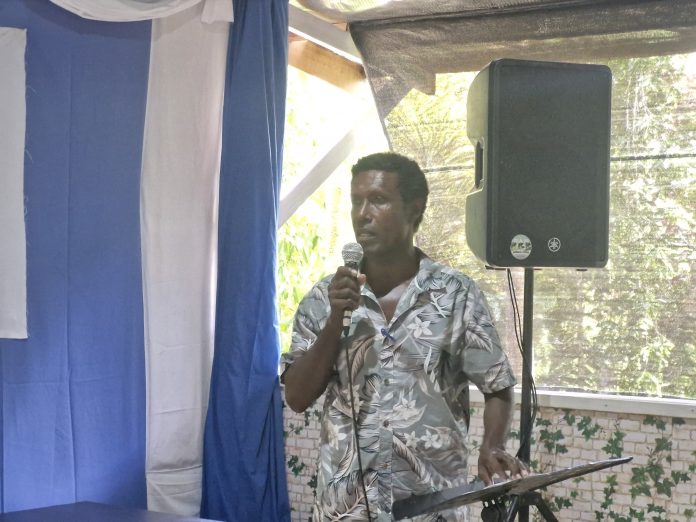
Wairaha communities in West Are’are, Malaita province, are calling police to urgently respond to their call to cull the rising numbers of crocodiles in their area.

The communities say they are yet to see a police team hunt crocodiles along the Wairaha River.

The concerns arose after community members saw crocodiles along the Wairaha River multiple times, causing fear among the villagers. 

A concerned community member, Izzat Toisutahana, who has lost two family members to crocodile attacks, said their lives are now at stake.

She said the population of crocodiles in Wairaha has increased, and police should now be hunting to kill them. 

She also questioned why an agreement between their community leaders and the police has failed to see police action to cull the reptiles.

“So far, our community leaders have agreed and discussed with the police to come and hunt those crocodiles, but until today, we haven’t seen anything happening.

“This has caused great fear and is really affecting our normal life here at home. We now can’t cross the river by canoe or swim,” she said. 

In April, two women over 20 years old lost their lives in separate crocodile attacks along the river, prompting all villages nearby to take extra precautionary measures. 

The first incident occurred on April 3, when a 22-year-old girl was attacked, followed by her niece on April 21, 2026. They were from Paunanu’u village. 

Attempts to reach out to the Malaita Provincial Police Commander, Superintendent Michael Ramosaea, were unsuccessful as he has a busy schedule.

For feedback, contact: [email protected]

Editor: [email protected]
EU signals stronger investment partnership with Solomon Islands

0

BY NED GAGAHE

The European Union (EU) has reaffirmed its commitment to Solomon Islands while signalling a shift towards greater investment-driven cooperation during a high-level visit to the country this week.

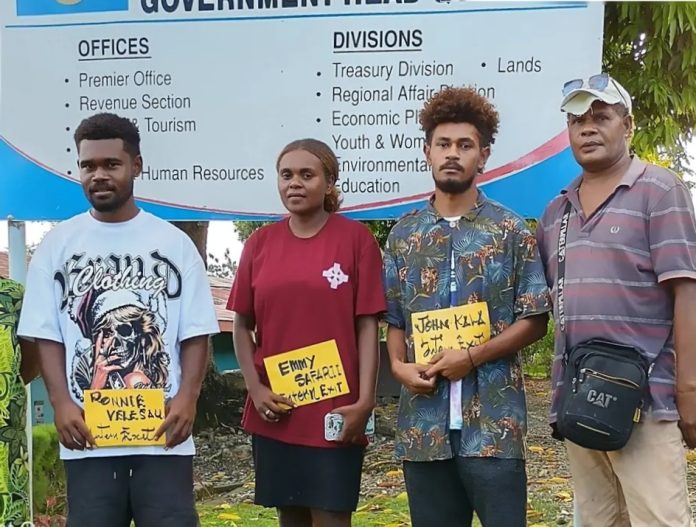
Speaking exclusively to the Island Sun at the conclusion of a three-day visit on Saturday, EU Ambassador to the Pacific Barbara Plinkert said the mission provided an important opportunity to engage with the new government and explore future areas of cooperation.

Ambassador Plinkert was accompanied by Peteris Ustubs, Director for Asia, Central Asia and the Pacific at the European Commission’s Directorate-General for International Partnerships (DG INTPA), and Maurizio Cian, Minister Counsellor and Head of Cooperation.

“We are very pleased to be here as representatives of the European Union to meet with the new government,” Ambassador Plinkert said.

She said the visit, which had been planned for some time, focused on reviewing EU-funded projects and discussing future cooperation priorities with Solomon Islands leaders.

During their stay, the delegation met with Deputy Prime Minister Francis Sade, Finance Minister Gordon Darcy Lilo, Energy Minister Derrick Manu’ari, Agriculture Minister Franklyn Derek Wasi in his capacity as Supervising Minister for Fisheries, and Provincial Government Minister Alfred Rimah.

The delegation also travelled to Malaita Province where they met Premier Elijah Asilaua and visited the proposed Bina Harbour development site, identified as a potential area for future EU support.

“It was a very fruitful visit. It was really good to understand a bit better the policy directions of the new government that are now evolving and being presented,” Ambassador Plinkert said.

She revealed that Solomon Islands remains one of the EU’s most significant development partners in the Pacific.

“Solomon Islands is the second-largest recipient of EU financing after Papua New Guinea among Pacific Island countries,” she said.

According to Ambassador Plinkert, the EU has committed approximately $46 million euros over the past four years to support development programmes in Solomon Islands, covering sectors such as climate resilience, water infrastructure, governance and sustainable economic development.

The Ambassador also highlighted Solomon Islands’ current role as Chair of the Pacific Islands Forum and the importance of cooperation within the regional body.

“The European Union is a dialogue partner to the Pacific Islands Forum and we are preparing to participate in this year’s Pacific Islands Forum Leaders Meeting in Palau,” she said.

The EU has formally applied to become a Strategic Partner of the Pacific Islands Forum, with a decision expected during the leaders’ meeting later this year.

“We look forward to the support of Solomon Islands in becoming a strategic partner in this important forum,” Ambassador Plinkert added.

She said that the EU and Solomon Islands share common positions on key international issues, including support for multilateralism, the rules-based international order and the principles of the United Nations Charter.

The Ambassador also expressed appreciation for Solomon Islands’ support for United Nations resolutions concerning Ukraine and for its continued engagement on global challenges such as climate change.

Ambassador Plinkert said discussions focused heavily on future cooperation and how the EU’s relationship with Solomon Islands is evolving.

She indicated that the EU is moving towards a more strategic partnership model that places greater emphasis on investment and economic opportunities alongside traditional development assistance.

The new approach, linked to the EU’s Global Gateway strategy, is expected to support major infrastructure and economic projects across the Pacific, including potential investments in Solomon Islands.

For feedback, contact: [email protected]

Editor: [email protected]

EU signals stronger investment focus in Solomon Islands

0

BY NED GAGAHE

The European Union has reaffirmed its commitment to strengthen cooperation with Solomon Islands, with future engagement expected to place greater emphasis on infrastructure investment, renewable energy and private sector development.

Speaking in an exclusive interview with Island Sun, EU Ambassador to the Pacific Barbara Plinkert said discussions with government leaders confirmed that both sides remain aligned on key development priorities.

“I think from my side, just to reconfirm our strong partnership and that we are heading in the right direction with this partnership in the sectors of cooperation,” Ambassador Plinkert said.

She identified renewable energy, infrastructure development and the water sector as key areas that will continue to shape EU support in Solomon Islands.

“Renewable energy is one. Infrastructure will be one that we will be looking into more, and also the water sector,” she said.

The Ambassador said that the delegation visited an urban water and sanitation project supported by the European Union in partnership with other development partners under the leadership of the Asian Development Bank.

She said the visit provided an opportunity to confirm with the government that these sectors remain priorities under the current administration.

Beyond development cooperation, Ambassador Plinkert also highlighted the importance of political engagement between the European Union and Solomon Islands, particularly through the Pacific Islands Forum, where Solomon Islands currently serves as Chair.

“The European Union is and remains a stable and predictable partner,” she said.

She added that discussions with government leaders demonstrated a strong interest in renewing and strengthening ties with the European Union.

“We come out of these meetings very reassured and very optimistic as to the future direction of EU-Solomon Islands cooperation,” Ambassador Plinkert said.

Meanwhile, Director for Asia, Central Asia and the Pacific at the European Commission’s Directorate-General for International Partnerships, Peteris Ustubs, revealed that ongoing EU budget support is helping advance reforms within Solomon Islands’ energy sector.

“We have ongoing budget support to the government related to energy sector reform,” Mr Ustubs said.

He explained that discussions with the Ministry of Energy focused on how reforms could improve the sector and create greater opportunities for renewable energy generation and usage.

“There are things that could be improved in the energy sector which would allow more usage of renewable energy in the system,” he said.

Mr Ustubs said the European Union is now seeking to expand cooperation beyond traditional development assistance through its Global Gateway strategy, which promotes investment partnerships and private sector engagement.

“We are looking not only at the traditional forms of development cooperation but also looking at ways of bringing and cooperating more with businesses and enlarging our traditional cooperation with more investments,” he said.

The Global Gateway initiative is designed to attract investment, support private sector growth and finance strategic infrastructure projects across partner countries.

Mr Ustubs identified the proposed Bina Harbour development and the energy sector as areas with significant investment potential.

“In the context of Bina Harbour and the energy sector, we see potential,” he said.

He added that discussions with government leaders had provided valuable insights into the country’s development priorities and future direction.

“This was a very useful exchange with the government, allowing us to see the clear direction in which the government would like to go,” Mr Ustubs said.

He confirmed that the European Union will continue discussions with Solomon Islands following the visit as both sides explore opportunities to advance concrete projects and investment initiatives.

For feedback, contact: [email protected]

Editor: [email protected]
Japan festival ‘Matsuri’ coming to Honiara

0

BY TONY IROGA

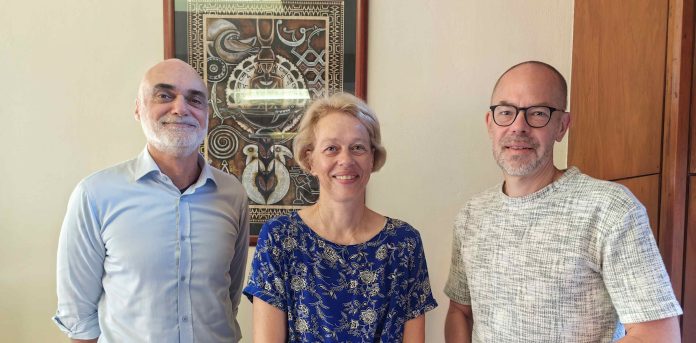
On July 11, the Embassy of Japan and JICA Solomon Islands will host a Japanese cultural event titled ‘Japan Festival Matsuri’.

Matsuri means ‘festival’ in Japanese and the event will showcase craft activities and entertainment that will reflect the culture of Japan.

The event is open to the public, and admission is free of charge, a statement by the embassy of Japan said.

Visitors will be able to experience Japanese culture through a variety of booths, including opportunities to try on traditional summer outfit ‘Yuakata’ and take part in craft activities, along with calligraphy and other traditional cultural activities, the statement said.

In addition, Kitano Mendana Hotel will feature a booth introducing Japanese festival food culture.

The programme will also include a performance stage, with opportunities for visitors to enjoy and participate in the traditional Japanese dance, ‘Bon Odori’, the embassy statement said.

The event will be held at the Futsal Court next to the Multipurpose Hall, in Chinatown, Honiara from 11am to 2pm.

All are warmly invited to attend and enjoy this cultural event, the embassy said.

For feedback, contact: [email protected]

Editor: [email protected]

‘NOTHING MISLEADING’

0

Mines Minister Manuari says cancellation of gold dealer licences part of wider transition in reform and strengthening governance of gold sector

BY TONY IROGA

Government has refuted the Opposition leader’s accusation that it has misled the country in announcing that it had cancelled gold dealers’ licences.

Opposition leader Manasseh Sogavare had said over the weekend that despite government’s announcement that it had cancelled gold dealer licences there are still 10 active gold dealer licences.

“No show-cause process has been invoked, no lawful cancellation procedure has been activated, and no evidence has been presented that any of the statutory grounds for cancellation have been established,” Mr Sogavare said.

“The Prime Minister therefore owes the country an explanation. Solomon Islanders deserve facts, not headlines. If the Government intends to reform the gold trading sector, it must do so lawfully, transparently and honestly.

“It is a serious public misrepresentation on a matter affecting miners, dealers, investors, provincial stakeholders and public confidence in the administration of the law.

Sogavare called on the Prime Minister to immediately correct the record and tell the nation:

-Which specific Gold Dealer Licences have been cancelled.

-On what date each cancellation took effect.

-What statutory ground was relied on in each case.

-Whether each licence holder was issued a show-cause notice as required by law.

-Whether any appeal rights have been triggered under the Act.

“If the Prime Minister cannot provide those answers, then he should withdraw his statement and apologise for misleading the public,” Sogavare said.

In response, Mines Minister Derick Manuari said there was nothing misleading about government’s position, adding that ‘Government’s decision regarding Gold Dealer Licences (GDLs) forms part of a broader reform programme’.

Mr Manuari emphasised that due process is being followed and that the cancellation of licences is only one component of a wider transition aimed at reforming and strengthening governance of the gold sector.

“This is not simply about cancelling licences. The Government is implementing a comprehensive transition from the existing Gold Dealer Licensing regime to a new framework that will provide greater transparency, accountability, oversight and national benefit from our gold resources,” Manuari said.

He said Caucus has already endorsed the policy direction to transition away from the current Gold Dealer Licensing framework.

Manuari said necessary reforms also support the establishment of a State-Owned Holding Company (SOHC) that will facilitate Government participation, investment, oversight and strategic management of the sector.

“The cancellation of existing licences is the final step in a process that includes due diligence reviews, legal requirements, transitional arrangements, and the establishment of a stronger regulatory and commercial framework for the sector,” he said.

The Minister further clarified that since taking office, no new Gold Dealer Licences have been issued.

He said of the almost 40 licences previously issued, only 10 remain active.

Manuari said all other licences are currently undergoing compliance reviews and due diligence processes as part of the Government’s reform programme.

“The Mines Division is undertaking comprehensive compliance assessments of all active licence holders. These reviews are necessary to ensure accountability and to address longstanding mismanagement that have undermined effective regulation of the sector,” Manuari said.

“The current licensing framework has exposed Government to potential revenue leakage, under-reporting, illicit trading risks and broader governance concerns. These are issues that this Government is determined to address through meaningful reform.

“Absence of political will by successive governments to reform and strengthen governance in the sector has resulted in a lot of mess that we are now trying to sort out, and of all people, the Opposition Leader should know better.”

For feedback, contact: [email protected]

Editor: [email protected]