

Home Blog Page 285

Real-time resilience – digital turbidity monitoring

0

BY CHRIS ALEX

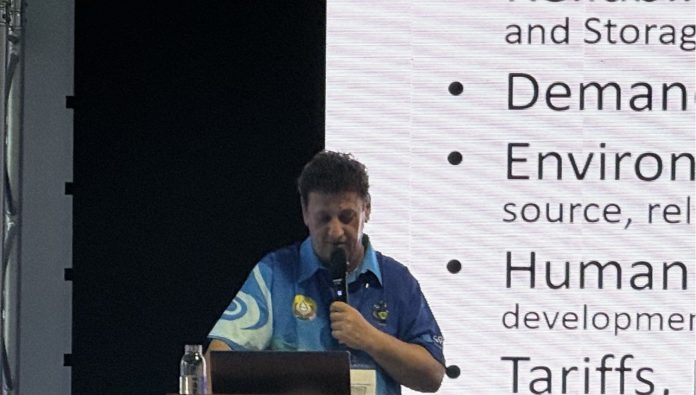
At the recent 16th Pacific Water and Wastewater Association (PWWA) Conference in Honiara, Mandus Boselalu, the country’s lead for Fluvio, captured attention as a passionate advocate for the future of water management.

A key figure among water professionals, Boselalu took the opportunity to share his journey in the water sector, emphasising the significance of collaboration among professionals across the Pacific to build a sustainable water future.

Boselalu detailed the exciting advances in water monitoring brought about by the Fluvio project, which has transformed how the Solomon Islands Water Authority (SIWA) tracks water turbidity.

Previously reliant on manual methods to record turbidity levels, SIWA now benefits from a cutting-edge system developed through the project.

The new mobile app and real-time monitoring stations have revolutionized how water quality is measured, especially in challenging circumstances such as at night or during floods.

“Through the Fluvio project, we’ve been able to digitize data collection and monitoring,” Boselalu explained.

“This makes it much easier to keep track of water quality, especially when weather conditions make manual checks nearly impossible,” he added.

Real-time monitoring stations have now been installed across SIWA’s water sources. These stations automatically record turbidity levels every 10 minutes, transmitting the data to a cloud database.

SIWA can then access these real-time reports and take immediate action when turbidity levels spike, particularly during the rainy season.

This innovation has not only saved valuable time but also enhanced decision-making, ensuring that water quality is effectively managed.

Boselalu also shared the pressing issue of water pollution, particularly concerning the Kongulai water source, which supplies Honiara’s main water supply.

The catchment area has been severely affected by logging operations, which pose a threat to the water quality.

To combat this challenge, SIWA is working on strategies to protect the catchment areas, including establishing a governance system with local landowners.

This collaborative effort ensures that landowners are not only safeguarding the water source but are also compensated for their role in protecting this vital resource.

“We’re not only focusing on protecting the catchment area, but are also working closely with landowners to ensure they benefit from preserving the water sources.

“This partnership will help create a sustainable model for managing our water resources while providing landowners with an income,” Boselalu said.

With the combination of real-time data collection and community collaboration, SIWA is taking significant strides towards ensuring a cleaner, more sustainable water supply for Honiara’s residents.

For feedback, contact:[email protected]

Honiara’s sanitation access faces complex challenges and potential solutions

0

BY CHRIS ALEX

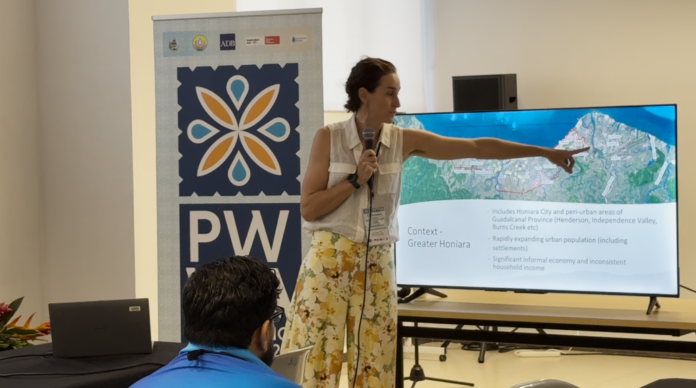
Rosie Sanderson, a Sanitation Expert, shed light on the critical sanitation challenges faced by Honiara during her address at the recent 16th Pacific Water and Wastewater Association (PWWA) Conference in Honiara.

Speaking before local and regional stakeholders, Sanderson called for a “Citywide Inclusive Sanitation” (CWIS) approach to address the city’s growing sanitation needs, an initiative supported by the World Bank’s Global Water Security and Sanitation Partnership (GWSSP).

As Honiara grapples with rapid urbanisation, particularly in informal settlements lie outside the city’s official boundaries, Sanderson emphasised that sanitation services must be expanded to cover the broader “Greater Honiara” area.

As informal settlements continue to expand without clear jurisdictional oversight, the city’s sanitation services are becoming more fragmented, with unclear lines of responsibility between local, like Guadalcanal provincial, and national authorities.

“Urban growth is pushing beyond the official city limits, and we need to consider Greater Honiara not just within the city boundaries when we look at sanitation services,” Sanderson remarked, noting that the city’s rapid expansion makes it increasingly difficult to implement a sustainable sanitation service model, especially as many residents in informal housing rely on inconsistent incomes.

90 pecent of Honiara’s population depends on on-site sanitation systems, such as septic tanks and pit toilets. While only 10% of the city is served by Solomon Water’s sewerage system, plans are underway to extend this coverage. However, for the majority, on-site sanitation systems will remain the primary method of waste disposal in the foreseeable future.

A significant concern raised by Sanderson was the alarming number of non-functional toilets in informal settlements. Recent surveys revealed that only half of the toilets in these areas are operational, creating a public health risk.

Sanderson highlighted the increasing risk of open defecation, particularly in densely populated areas where sanitation services are scarce.

“While there is demand for toilets, it’s more about upgrading the existing infrastructure and ensuring that it’s functioning properly,” Sanderson explained.

The current sanitation service chain in Honiara is a complex network of various actors, including the Honiara City Council, private operators, and Solomon Water.

The City Council plays a vital role in providing low-cost collection services, crucial for low-income households, but the absence of a clear regulatory framework poses challenges. Sanderson pointed out that while private operators manage much of the fecal sludge collection, they are not regulated, leading to inconsistencies in pricing and service reliability.

Furthermore, the inadequate management of fecal sludge disposal at the Ranadi landfill is a growing concern. Trucks currently dump waste into an open pit, which, due to poor management, results in environmental hazards, including leachate contamination in nearby creeks. With the landfill set to close under an Asian Development Bank (ADB) project, there is an urgent need to identify a more sustainable and safer disposal solution.

One of the most pressing issues is the lack of adequate treatment and disposal options for the city’s fecal sludge. While Solomon Water manages a few communal septic systems, they serve only a small fraction of the population. With many households relying on poorly maintained on-site systems, the risk to public health remains high.

In response to these challenges, Sanderson proposed a dual-market model for sanitation services, which would see both public and private operators working together to improve collection and transportation.

The Honiara City Council would continue providing low-cost services while taking on a more prominent role in regulating the industry. Additionally, Sanderson suggested that Solomon Water could lead efforts to construct a fecal sludge management treatment plant with support from the World Bank’s WASH.

The urgency of addressing Honiara’s sanitation issues has never been greater, as the city’s population continues to grow, and its sanitation infrastructure remains under pressure. Without strategic reforms and adequate financing, the city faces significant risks to public health and environmental sustainability.

For feedback, contact:[email protected]

SIWA’s vision for safe water

0

BY LORETTA B MANELE

Solomon Islands Water Authority’s (SIWA) five-year corporate plan sets out their vision of “safe water for a healthy nation”.

SIWA CEO Carmine Piantedosi spoke about the plan on Monday, August 25, 2025 at the 16th Pacific Water and Wastewater Association Conference and Expo 2025 at the Aquatic Centre in Honiara.

He said the plan, launched in 2024 sets out their vision for safe water for a healthy nation.

“It also spells out our mission, and that is to provide reliable safe water supply and sanitation systems. Working with communities to plan, deliver and operate infrastructure that minimises the social and environmental impacts of our activities,” said Piantedosi.

He added that the plan also spells out their core values of impartiality, morality, professionalism, accountability, consistency and transparency.

The CEO pointed out that what they mean by these values is treating all their customers and stakeholders with fairness.

“Uphold standards of what is right and good conduct.

“Provide our services with the highest degree of professionalism, competency and skills. Show our readiness to take full accountability for our actions. As well as to ensure consistency and operate in a fair and open manner and without prejudice in delivering water services,” he stressed.

Piantedosi mentioned that the values clearly underpin their corporate objectives.

“And that is being a customer centric organisation is a primary objective in our corporate plan,” he said.

Piantedosi explained that while they focus on human resource management and development, safety and financial management of the organisation is also another area objective along with sustainable use and management of environment and water resources.

He noted that they are also working on delivering services in a safe and sustainable manner.

“And enhancing our operational performance and delivering customer service standards and levels of service. But of course, all this path to recovery will be more improvable,” he said.

For feedback, contact:[email protected]
Tabaka Technical Institute opens new infrastructure projects

0

BY BEN BILUA
GIZO

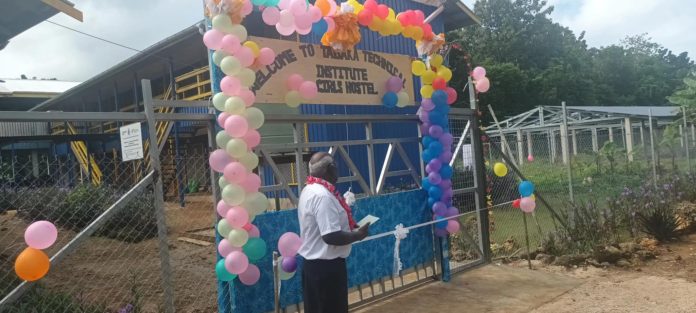
Tabaka Technical Institute (TTI) in Western Province marked a milestone in its development journey on Friday, August 29, 2025 with the official opening of three major infrastructure projects that aim to improve learning conditions and student welfare.

The projects include a refurbished double-storey classroom and workshop, a new boys’ dormitory, and perimeter fencing for the girls’ dormitory.

Representatives from the Assembly Office, Tabaka Board Members, community leaders, staff, students, and families of the institute witnessed the program.

Principal of TTI, Mr. Joash Lawrence, described the new facilities as a testament to the institute’s commitment to providing quality education in line with the Solomon Islands Tertiary Education and Skills Authority (SITESA) quality standards.

“These developments are more than just buildings. They are spaces that will create opportunities, ensure security, and help nurture the talents of our young people,” he said.

Lawrence said the double-storey classroom and workshop will provide improved spaces for both theory and practical lessons, while the boys’ dormitory addresses long-standing accommodation challenges.

He adds that the fencing around the girls’ dormitory enhances safety and security for female students.

The Assembly Office acknowledges the tireless contributions of Principal Lawrence, his staff, and students in bringing the projects to completion.

“These infrastructures represent a collective achievement and a solid foundation for TTI’s continued growth,” an Assembly Office spokesperson said.

The new facilities are expected to significantly benefit students by creating a safer and more conducive environment for learning and personal development.

For feedback, contact:[email protected]
Science project linking classroom learning to real island life

0

BY CHRIS ALEX

The Head Master of Anuta Primary School in West Makira, Alfred Uranagi acknowledges the successful completion of the Year Six Final Science Performance Task, calling it a major milestone for students, teachers, and the surrounding communities.

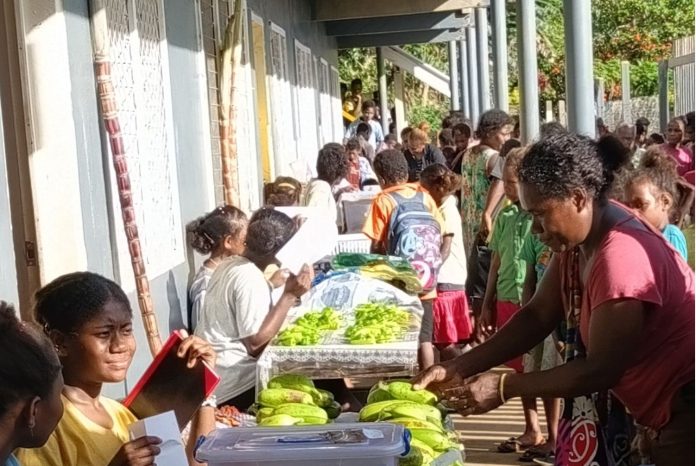
The task, titled “Selling Garden Produce” required Year Six students to carry out a community-based survey to determine which local garden produce is more or less economical.

This hands-on project was specifically designed to test students on scientific knowledge they gained throughout the year as well as to encourage them to apply their learning in a real-life, culturally relevant context.

“This final task is more than an assessment. It’s a celebration of learning that reflects our way of life.

“I proudly acknowledge the efforts of our students, teachers, and parents in making this milestone possible,” said Ura.

Assessment marks will be awarded based on a clearly defined marking criteria, focusing on students’ scientific understanding, data analysis, and their ability to effectively communicate their findings. This performance task forms a vital part of the students’ academic growth and progression.

Ura extended heartfelt appreciation to the Year Six teacher, school staff, parents and the surrounding community for their unwavering support.

“Your teamwork and encouragement helped turn this task into something greater than just a school assignment. It became a meaningful experience that challenged and inspired our learners,” he said.

He further emphasized the lasting impact of the initiative.

“This is the kind of learning that lasts. It’s grounded, hands-on, and rooted in the life we live here on Anuta Island. Together, we continue to grow strong, curious, and capable learners ready for the next chapter,” he said.

The project is being celebrated as a model of how education can be deeply relevant, practical, and empowering for students in rural communities.

For feedback, contact:[email protected]
Chinese delegation visits SINU

0

BY MORRIS NAFU

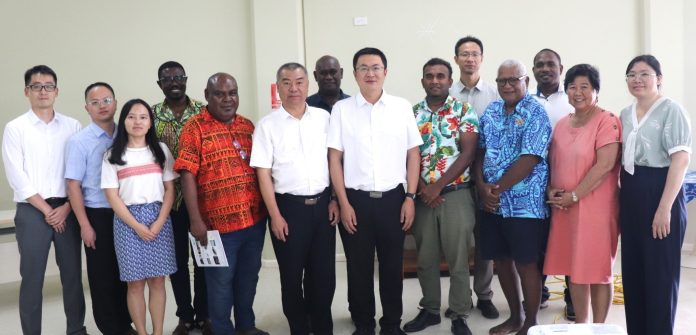
Delegation of six members of the Ministry of National Resources (MNR) of the People’s Republic of China (PRC), China visited the Solomon Islands National University (SINU) on Friday, August 29, 2025.

A statement from SINU said the visiting delegation was led by Dr Tan Jun, Deputy Director of the Island Research Center and included senior experts such as Dr Yu Fan, Mr Xie Jian, Ms Zhou Shuihua, Mr Su Bo, and Dr Ye Xiaomin, all bringing expertise from various marine and environmental departments within China’s MNR.

As stated, the visitors were warmly received by Pro-Chancellor and Council Chair Dr. Morgan Wairiu, Pro Vice-Chancellor Academic Associate Professor Erick Katovai, and key faculty members from the Faculty of Agriculture, Fisheries and Forestry (FAFF), including Dean Dr Vaeno Vigulu, Fisheries Head Dr Kofi Apreku, Dr Lindon Havimana, and International Relations Officer Mr Andrew Awa.

The discussions focused on shared interests and future collaboration opportunities in marine disaster prevention, ecological protection and restoration, and blue economy initiatives.

This visit highlights the vital role of international partnerships in promoting marine sustainability and reinforces SINU’s dedication to advancing research that benefits Solomon Islands and the broader Pacific community.

For feedback, contact:[email protected]
Fuel prices for September announced

0

BY NED GAGAHE

The Ministry of Commerce, Industries, Labour and Immigration (MCILI) has announced updated fuel prices for Honiara, which will come into effect starting September 1, 2025.

The new maximum wholesale and retail prices were approved under the Price Control Act 1982 (Cap 64) following consultation with the Prices Advisory Committee (PAC).

In a statement issued on Friday, August 29, 2025, the ministry confirmed that the new prices apply to petrol, diesel, and kerosene, and reflect ongoing changes in the global fuel market, international freight charges, and movements in the Solomon Islands dollar (SBD) against foreign currencies.

Under the new pricing structure:

  • Petrol (PMS) will be sold at $7.38 per litre wholesale, and $9.34 per litre retail.
  • Diesel (ADO) will be sold at $7.99 per litre wholesale, and $10.04 per litre retail.
  • Kerosene (KERO) will be priced at $7.35 per litre wholesale, with a retail pump price of $10.27 per litre.

The Ministry also clarified that kerosene is sold directly at service station pumps, and the retail price includes applicable government taxes and retailer margins.

A comparison with this month’s fuel prices (August 2025) shows mixed movements across the three products.

Petrol prices have decreased. The wholesale price fell from $7.54 to $7.38 per litre, a drop of $0.16, while the retail price dropped from $9.52 to $9.34 per litre, a decline of $0.18.

Diesel prices increased, with the wholesale price rising from $7.82 to $7.99 per litre, and retail climbing from $9.84 to $10.04 per litre, an increase of $0.20.

Kerosene prices also went up, with the wholesale price moving from $7.26 to $7.35 per litre, and the retail pump price increasing from $10.14 to $10.27 per litre, a rise of $0.13.

The Ministry explained that the adjustments are largely driven by global fuel market trends, including the Mean of Platts Singapore (MOPS) prices, which influence local fuel import costs. Other contributing factors include shipping rates and foreign exchange fluctuations.

The Ministry encourages members of the public, businesses, and fuel distributors to take note of the new prices and to contact relevant authorities for any queries.

For feedback, contact:[email protected]
LMU encourages care-workers to be good ambassadors

0

BY JOHN HOUANIHAU

The Labour Mobility Unit (LMU) has encouraged recently deployed care-workers to be good ambassadors for Solomon Islands.

Eight female care-workers left on Thursday, August 24, 2025 to begin their four-year contract with Bolton Clarke.

Bolton Clarke is Australia’s largest independent not-for-profit aged care provider, offering home and community support, retirement living and residential aged care.

The Labour Mobility Unit Solomon Islands their Official Facebook page said these workers will work at two different sites in New South Wales, Australia.

According to the LMU SI statement, four females will work in Murwillumbah while the other four will be based in Pa Nora Point.

“One of the females, Joyce Anna Rusi, a former nurse, expressed her excitement, stating that this is a great opportunity for her to learn new skills and earn money. However, she is also emotional at the same time, as having to leave her family and kids behind is really hard,” the LMU SI statement said.

The statement further said that 20 female workers under the Recognised Seasonal Employment (RSE) scheme also left the country on Thursday to begin their short-term work in Auckland, New Zealand.

The LMU statement said that the 20 female workers will be working for Gourmet Paprika, one of the well-established horticulture companies in New Zealand.

“The RSE scheme is facilitated through licensed recruiting agents,” LMU said.

For feedback, contact:[email protected]
Japan’s commitment to SI goes beyond UXO

0

BY JOHN HOUANIHAU

The Ambassador of Japan to the Solomon Islands, His Excellency Keiichi Higuchi said Japan’s commitment to the development of Solomon Islands goes beyond unexploded ordnance (UXO).

He highlighted this in an exclusive interview with Island Sun on Thursday this week, when he responded to an article published in this paper on Monday, August 25, 2025.

The article had insinuated that Japan and the US had not done anything towards the UXO clearance effort in the Solomon Islands. The article has since been retracted.

“I want to say that our office and embassy here remain very focused on what we can do towards the improvement of life in Solomon Islands. Not just UXO, but all kinds of aspects of life here in the Solomon Islands.

“We will continue to be committed to the development of this country. That also covers the area of UXO as well, but it’s much broader and has a very deep root in all the provinces. Not just Guadalcanal, but some of the remote provinces we have,” said Keiichi.

He said that Japan keeps sending volunteers and keeps listening to the needs of local provinces.

He said that Solomon Islands is fortunate in the sense that it has a lot more land than some other Pacific Island nations.

“But Solomon Islands does have a lot of landmass area that, if cleared of UXOs, can be put to good use. Even with such a population increase, I think your country has some room to grow, unlike other less fortunate Pacific Island countries,” he said.

He said that Japan discussed with Solomon Islands National University (SINU) recently about agricultural help to reduce the non-communicable disease (NCD).

“We’re bringing in more experts to help with all aspects of welfare in this country. I want to state that that’s a very clear position that we have,” he said.

For feedback, contact:[email protected]

Tunnel Boring Machine arrives at Tina River dam site

0

BY NED GAGAHE

The arrival of a massive Tunnel Boring Machine (TBM) at the Tina River dam site marks a critical milestone in Solomon Islands’ journey towards clean, affordable, and sustainable energy.

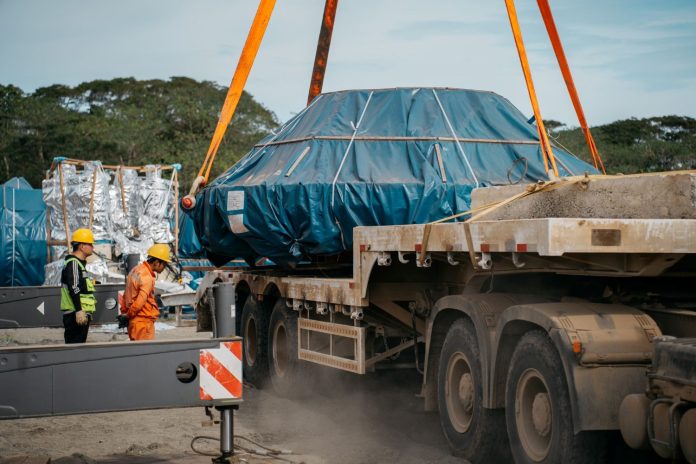
The team behind the Tina River Hydro Project (TRHP) confirms that the 75 metres machine arrived in the country last month and was safely transported to the remote construction site on Sunday, August 17, 2025. The dam site is located approximately 30 kilometres southeast of Honiara.

Once fully assembled, the TBM will excavate a 3.2-kilometre tunnel through gravel and sandstone, a key component in the development of the Solomon Islands’ first large-scale hydropower station. Tunneling works are scheduled to begin later this year.

The project is considered one of the most transformative infrastructure developments in the country’s history, with the potential to power over 180,000 homes upon completion, mostly in and around Honiara.

The new hydropower station will supply up to 15 megawatts of clean energy, expected to cover nearly 70% of Honiara’s electricity demand, significantly reducing reliance on imported diesel, which currently dominates the country’s power supply.

It is also projected to lower electricity costs by over 40% and drastically cut carbon emissions, making it a flagship renewable energy project in the Pacific.

According to a statement from the World Bank this week, the project is currently 28% complete, with major civil works progressing steadily.

“A massive Tunnel Boring Machine has successfully reached the Tina River dam site near Honiara. The machine’s safe arrival marks another step forward in one of the most ambitious infrastructure projects in Solomon Islands’ history. Tunneling will begin later this year, paving the way for clean, affordable, and more reliable power for over 180,000 Solomon Islanders,” the statement read.

The Tina River Hydro Project has been in development for over a decade, with planning and consultations beginning in 2009.

It is being implemented by Tina Hydropower Limited (THL), in partnership with K-water of South Korea, and overseen by the Ministry of Mines, Energy and Rural Electrification (MMERE).

The project has received strong backing from a coalition of international development partners, including the World Bank, the Australian Government, the Asian Development Bank (ADB), the Korea EXIM Bank’s Economic Development Cooperation Fund, the Abu Dhabi Fund for Development, and the Green Climate Fund (GCF).

These partners have provided a combination of technical expertise, grant funding, and concessional financing to make the ambitious $240 million project financially viable.

By the end of 2025, all major preparations for dam construction are expected to be completed, paving the way for full-scale construction to begin in 2026. Once operational, currently scheduled for commissioning in 2028.

The Tina River Hydro Project remains a top national priority and is central to the Solomon Islands Government’s long-term vision of energy independence, economic sustainability, and climate resilience.

Photo: World Bank

For feedback, contact:[email protected]