Home Blog Page 257

Takwa community celebrates opening of renovated maternity ward

0

BY CHRIS ALEX

The people of Takwa in Lau Baelelea Constituency have celebrated a transformative milestone with the recent opening of the newly renovated maternity ward at Takwa Rural Health Center, a development described as a vital lifeline for remote communities in the northern region of Malaita.

The upgrade was made possible through the leadership of Member of Parliament for Lau Baelelea Constituency, Ben Maenuu, and the constituency office.

The facility will now serve thousands of people in the northern region of Malaita, offering essential primary healthcare ranging from routine checkups to emergency maternal care.

Speaking during the event, Nurse in Charge at Kwailabesi Clinic expressed heartfelt gratitude on behalf of expectant mothers across the constituency. She recalled the challenges women previously faced, with nighttime deliveries often depending on the dim glow of mobile phone torches, if available.

“When complications arose, families had no choice but to beg truck owners for rides over rough roads to distant hospitals like Malu’u or Kilufi. It was often a matter of life and death.

“No more. This ward means safe births, skilled care, and hope for our mothers and babies. On behalf of every mum in Lau Baelelea, we are deeply thankful,” she expressed.

According to Eddie Kairi, Takwa Rural Health Center is one of more than 300 rural health facilities across the Solomon Islands providing free services such as immunizations, maternal care, and child health checks.

With 82 percent of Solomon Islanders living in rural areas, such facilities are crucial in bridging health service gaps, reducing long travel times, and saving lives in communities facing challenges like limited transport and the growing impacts of climate change.

The renovation of the maternity ward is expected to significantly strengthen primary healthcare in the region, ensuring safer deliveries and better health outcomes for mothers and children.

The community has hailed the development as a step forward in building a stronger, healthier Solomon Islands one ward, one ambulance, one step at a time.

For feedback, contact:[email protected]

54th PIF Leaders communique emphasises on gender equality

0

BY LORETTA B MANELE

The 54th Pacific Islands Forum (PIF) leader’s communique lays emphasis on “gender equality”.

Under the headline “Gender Equality”, it states that leaders recommitted to leading national and regional advocacy efforts for gender equality as aligned to political commitments in the revitalised Pacific Leaders Gender Equality Declaration (PLGED).

This includes championing the engagement of men and boys in transforming social norms to advance women’s rights.

In relation, the communique stated that recognising cross-sectorial significances, leaders also endorsed Gender Equality and Social Inclusion (GESI) as well as the institutionalisation of Early Childhood Development (ECD) as standing agenda items within the PCD (People Centered Development) Thematic Area on the Leaders’ Agenda while also taking into account the ongoing work on the RRA (Review of Regional Artitechture).

To add on, as stated, leaders also support the mainstreaming of GESI in all key regional policy priorities with the inclusion of climate financing, governance, implementation structures of the PRF and the inclusion of women’s voices in peace and security dialogues and decision-making processes.

The 54th PIF leader’s communique notes that the 54th PIF leaders also welcomed the Pacific’s global leadership, being the only region to host human rights treaty body reporting of the 84th Session of the Committee on the Rights of the Child (CRC84) in Samoa in 2020 and the Pacific Technical Cooperation Session of the CEDAW Committee in Fiji in April 2025.

For feedback, contact:[email protected]

Solomon Islands children to learn and lead on climate resilience

0

BY NED GAGAHE

Guadalcanal Province has taken the lead in a new national initiative that aims to make schools safer and more resilient to growing threats of climate change and natural disasters.

Yesterday, at a vibrant ceremony was held at Mbalasuna Primary School on the Guadalcanal Plains where the Ministry of Education and Human Resources Development (MEHRD), Guadalcanal Province, and UNICEF officially launched the School-Based Disaster and Climate Resilience (SBDCR) Planning Program for 13 schools across three wards in the province.

The launch was attended by key stakeholders, including the Minister of Education for Guadalcanal Provincial Government, John Botsi, MEHRD Deputy Secretary for Education Services, Christopher Sakiri, and UNICEF’s Programme Specialist for Climate and Environment, Daeun Han.

The program, supported by the Korea International Cooperation Agency (KOICA) and implemented with technical guidance from UNICEF, is designed to strengthen the capacity of schools, teachers, and communities to prepare for and respond to disasters while adapting to climate-related risks.

In his keynote address, Minister for Education for Guadalcanal Province, John Botsi highlighted the significance of the initiative, saying it marks “a major step forward in building a climate-smart and disaster-ready education system in the Solomon Islands.”

“Guadalcanal is honoured to be the first to roll out this program. These 13 schools will serve as models as we expand this work nationwide,” he said.

Botsi praised the strong partnership between MEHRD, the Guadalcanal Provincial Government, UNICEF, and KOICA, noting that the collaboration reflects a shared vision for resilient, inclusive, and future-focused education.

The launch also unveiled a newly revised SBDCR Handbook – a practical tool designed to guide school leaders, teachers, and communities in assessing risks, establishing disaster committees, conducting drills, and integrating resilience into school culture.

Minister Botsi welcomed the initiative, emphasizing the critical role of schools in safeguarding children and communities.

“Schools are at the heart of our villages. When they are safe and prepared, our communities are too,” he said.

Over the next four days, school leaders and education officers will undergo training on implementing the SBDCR approach in their schools. MEHRD confirms that the program will eventually be scaled up to schools across other provinces.

Solomon Islands remains highly vulnerable to climate change impacts and natural hazards, including cyclones, floods, and earthquakes. Education services are often disrupted during disasters, putting children’s safety and learning at risk.

With this new initiative, stakeholders are hopeful that integrating disaster risk reduction and climate adaptation directly into school planning will lead to long-term improvements in both education outcomes and community resilience.

For feedback, contact:[email protected]

SIEC relocates to temporary office

0

BY SAMIE WAIKORI

The Solomon Islands Electoral Commission (SIEC) has relocated to a new office at the National Stadium in East Honiara.

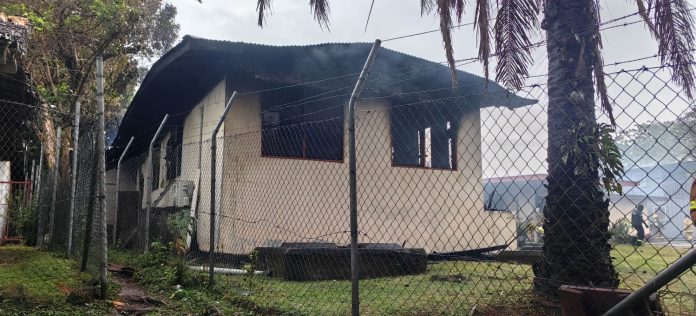
Their relocation comes following the tragic incident last Wednesday, where their office at Vavaya Ridge was destroyed by fire.

In a press conference yesterday, the Chief Executive Officer (CEO) of SIEC, Jasper Highwood Anisi thanks the national government for swift action to offer them a space to continue with their work.

The space will be used as a temporary office from now until they find and move to a new office.

Anisi said in terms of their recovery plans, they have gone a few steps ahead in securing this space for their operations.

He added that as part of the recovery plan, SIEC will ensure they replace equipment lost in the fire, and secure temporary office arrangement that is suitable to run elections.

Also highlighted is that they will mobilize support from the government and partners to restore full capacity.

The CEO furthered that the plan will run in parallel with their 2028 national joint election work-plan, as they have election preparation ahead.

“Nothing will be on-paused, we still moving,” he said.

Meanwhile, Asini said since the incident last week, SIEC is yet to come up with the cause of fire.

“What caused the fire is still unknown, but the matter is before the police for investigation.

“The police are looking at every possible cause. But if someone burned down the building for intentional purpose, it would amount to criminal offense.

“At the moment, the police are looking at the causes of the fire. We will wait for the outcome of the investigation,” he said.

For feedback, contact:[email protected]
SIEC stands strong despite fire setback

0

BY SAMIE WAIKORI

The Solomon Islands Electoral Commission (CEO) assures that it stands committed to its electoral programmes despite the fire setback experienced last week.

SIEC Chief Executive Officer, Jasper Highwood Anisi expressed this in a press conference yesterday, highlighting that the setback won’t have disruptions on their mandate to deliver election programmes.

“The SIEC remains committed to its full programme and work leading to the 2028 national joint election.

“And our preparatory plans, timetables, timelines, and activities continue as scheduled,” he said.

The CEO explained that this includes an updated voter registration for 2028 election, civic and voter education initiatives, and their legal and procedural reforms.

He added that SIEC is working on its electoral reforms, and it should be brought before parliament next year.

Anisi noted that this will allow time for the SIEC civic team to go around and inform the nation about potential changes to the Electoral Act 2018.

He reiterated SIEC’s commitment to deliver on its programs and operation despite the recent fire incident.

“In terms of looking forward, our message today is simple. The Electoral Commission stands strong, our work continues, and our commitment to deliver our constitutional mandate – which is credible election in 2028 is unchanged.

“The fire is a setback, but also an opportunity to rebuild stronger.

“We invite the public to work with us, to trust the process and to stand behind the institution that safeguards the people’s voice,” he said.

For feedback, contact:[email protected]
SIEC reveals plan for permanent office complex

0

BY SAMIE WAIKORI

The Solomon Islands Electoral Commission (SIEC) has revealed a proposal to build a permanent office in Honiara.

Chief Electoral Officer (CEO), Jasper Highwood Anisi spoke about this at a press conference yesterday when giving an update on SIEC’s work following the fire incident at the office at Vavaya Ridge last week.

Reflecting on the incident, a big lesson SIEC learned is that they are without a permanent home.

In this regard, Anisi said they want to have a permanent home as soon as possible so they can comfortably deliver the 2028 joint elections.

“As an institution that is at the height of our democracy, it is vital SIEC secures a well-resource office to serve the people,” the CEO said.

He calls on the national government, development partners, and the public to support SIEC in having a permanent office by 2027.

In the meantime, Anisi said they are working on a plan for a new complex building.

“At the moment, we’ve secured engineers and architectures for the design of the new building,” he said.

Anisi added that as long as the work is done, they will know the cost of the building and there is also land that is ready to accommodate the building.

Moreover, he said SIEC also plans to carry out a functional review, as captured in their plan last year.

“Currently, we only have 29 staffs, who ran the joint election in 2023. They were established under the Public Service.

“We want to increase that number to 50 plus, because there is a huge task to operationalize joint elections across the country,” Anisi said.

The CEO said if the new office complex is built, it will be big enough to cater to more than 50 staff.

For feedback, contact:[email protected]
SIEC LOSS

0

Destruction by fire on Electoral office tolls between $60-70 million

BY SAMIE WAIKORI

The Solomon Islands Electoral Commission (SIEC) has lost between $60-70 million worth of equipment in a fire that destroyed their office at Vavaya Ridge last week in Honiara.

The equipment was mainly vital election kits that SIEC had been using the since it began the biometric system in 2013.

In terms of money, only $10,000 belonging to their Social Club was burnt during the incident including personal items of some of the staff.

In a press conference yesterday, SIEC Chief Executive Officer (CEO), Jasper Highwood Anisi said the equipment lost was mainly registration kits SIEC used to collect data and the server that hosted the data.

He explained that SIEC got the software that keeps the data after signing a contract with the Electoral Service International, based in Canada, Germany and Belgium.

Anisi added that under the contract, the company keeps the data because the software belongs to them, but the data belongs to the government.

He said to retrieve the data, there are two options – one is to host the data for temporary purposes, and the other is to work on rebuilding the data centre. This is so that the data can be hosted there.

Anisi stated that SIEC is looking at both options, but the less expensive one is to talk with ICT to see if they can temporarily host the data in one of their servers in the country.

He furthered that in line with the idea, they are planning to rebuild a new data centre to import required resources and will be working on it over the next few months.

Anisi said there are talks with the Australian Electoral Commission that showed willingness to set up the SIEC data centre.

He said they are still in talks and nothing is official as yet. SIEC could also reach out for support from its network of partners in the Pacific.

For feedback, contact:[email protected]

SINU students to showcase at London–Honiara fashion exhibition week

0

BY NED GAGAHE

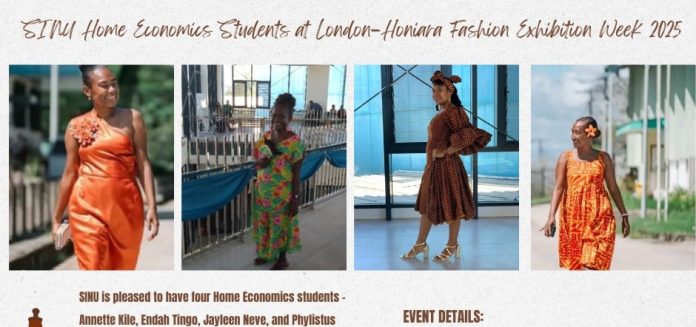
Four Solomon Islands National University (SINU) Home Economics students will represent the university at the upcoming London–Honiara Fashion Exhibition Week set for September 22–27, 2025 in Honiara.

The students, Annette Kile, Endah Tingo, Jayleen Neve, and Phylistus Ulioha, were selected following a mini fashion show held earlier this year at the Faculty of Education and Humanities (FEH).

The international fashion event is organised by the British High Commission in partnership with the Solomon Islands National Art Gallery.

It will feature a week-long program showcasing and promoting local designers and their products through school tours, exhibitions, and fashion shows.

SINU has encouraged its staff, students, and the wider community to support the four students by attending the exhibition at the National Art Gallery and casting votes for their designs starting Monday, September 22.

“This is an opportunity to celebrate SINU’s Home Economics students and to showcase our local talent at an international cultural event,” a statement from SINU said.

The program runs throughout the week with activities designed to highlight creativity, innovation, and Solomon Islands fashion to both local and international audiences.

Photo: Supplied

For feedback, contact:[email protected]

Dr Maru Earns PhD in Meteorology and Climate Change

0

BY NED GAGAHE

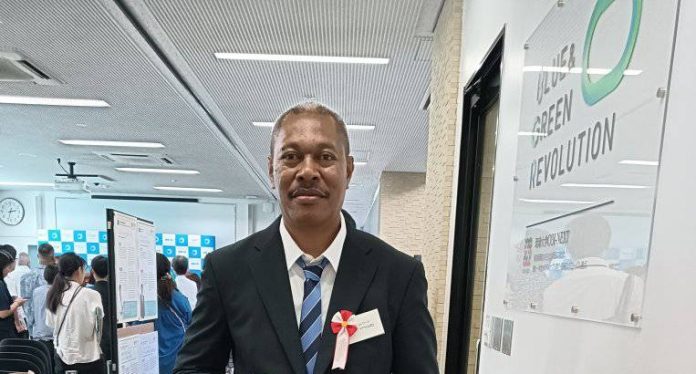
The country is celebrating another proud achievement after Solomon Islander Dr Edward Maru successfully earned his PhD in Meteorology and Climate Change from Kyoto University in Japan.

Dr Maru, who hails from Tikopia in Temotu Province, has been widely congratulated on social media for his outstanding accomplishment.

Before pursuing further studies in Japan, Dr Maru worked with the Solomon Islands Meteorological Services as a weather forecaster.

As part of his academic journey, Dr Maru published three research articles in internationally recognised journals.

His specialised research focused on cyclone studies in the Western Pacific, a field of critical importance for the region’s understanding of extreme weather and climate systems.

Many have described his achievement as inspiring, commending his dedication, perseverance, and commitment to advancing knowledge in meteorology and climate change.

Dr Maru’s success is seen as a proud moment for Solomon Islands, with his expertise now contributing to both national and regional capacity in weather and climate science.

Photo: Supplied

For feedback, contact:[email protected]

U.S. Policy Shifts open door for China’s growing influence in the Pacific

0

BY BEN BILUA
Gizo

RECENT changes in United States policy towards the Pacific Islands is creating a ripple of implications across the region, threatening the once “Good-Old-Friend” relationship between Pacific Island countries and Washington.

This concern was underscored during the 54th Pacific Islands Forum Leaders Meeting, where the Communique highlighted the need for a unified regional response to evolving U.S. policies.

Section 18 of the Communique noted the endorsement of the Report on the Implications of U.S. Policy Shifts on the Pacific Islands and CROP Agencies by Forum Troika Leaders.

The report recommends a coordinated, region-wide advocacy agenda with the U.S., including the potential appointment of a Special Envoy to strengthen engagement.

Put simply, Pacific leaders are seeking to speak with one voice on critical issues with the aim to safeguard regional interests amidst uncertain U.S. policy directions.

While Washington appears to be stepping back, China has seized the moment to consolidate its influence across the Pacific, particularly in Solomon Islands.

Remarks by the Solomon Islands Minister for Police, National Security, and Correctional Services, Hon. Jimson Fiau Tanangada, at the 2025 Conference of the Global Public Security Cooperation Forum in Lianyungang, China, signals a clear pivot.

He emphasized that security cooperation with China “primarily aims to enhance the domestic security of the Solomon Islands, while also contributing to regional and global security,” even describing China as the “leader in global public security.”

This positioning suggests that the Solomon Islands is not only engaging with China tactically but is establishing Beijing as its preferred security partner, a move with significant implications for the country’s sovereignty and regional power dynamics.

Where it begins

Solomon Islands’ diplomatic shift from Taiwan to China in 2019 reflects a pragmatic decision shaped by economic, political, and strategic calculations. Beijing’s offers of large-scale financial assistance, infrastructure investment, and access to its vast market outweighed the limited support available from Taiwan. Leaders also viewed alignment with China as a means to secure domestic development resources and consolidate political support, illustrating the interplay of domestic priorities and international strategy.

Since 2019, China has invested heavily in Solomon Islands’ development. Projects such as the Pacific Games Stadium in Honiara, road and bridge upgrades across Guadalcanal, and the construction of a modern hospital have reshaped the nation’s infrastructure and public services. These initiatives have not only improved connectivity and healthcare but have also demonstrated China’s commitment to a long-term partnership extending beyond mere infrastructure. Medical teams, equipment, and local training programs further underscore China’s holistic approach to development assistance.

Geopolitics in the region

The Pacific region, long considered within the traditional spheres of influence of the U.S. and Australia, is now increasingly a theatre of geopolitical competition. While Washington and Canberra seek to reinforce their presence through aid, diplomatic missions, and security guarantees, China has emerged as a compelling alternative development partner. Through infrastructure, concessional loans, and diplomatic engagement, Beijing appeals to island nations grappling with climate change, infrastructure deficits, and economic challenges.

This rivalry presents both opportunities and challenges for Pacific Island countries. On one hand, gaining leverage to secure essential resources and attention from major powers. On the other, the region risks becoming a pawn in a larger strategic contest, where external agendas may overshadow local priorities. Pacific leaders have consistently emphasized that climate change, sustainable development, and sovereignty remain their top concerns. How effectively the U.S., Australia, or China can align with these priorities will shape the future of geopolitics in the Pacific.

In the shifting sands of Pacific diplomacy, one thing is clear: the islands are no longer peripheral players, they are central actors navigating a complex web of power, influence, and development ambitions.

For feedback, contact:[email protected]