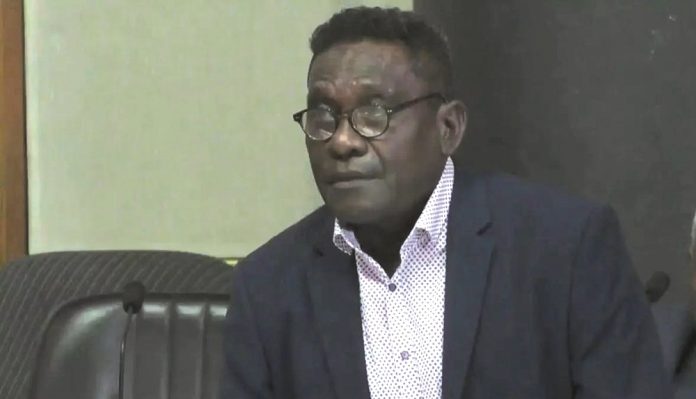
The North Guadalcanal constituency has successfully delivered projects worth $1.4 million for the year 2025.
An additional SBD $3.7 million is secured to continue these efforts until June 2026.
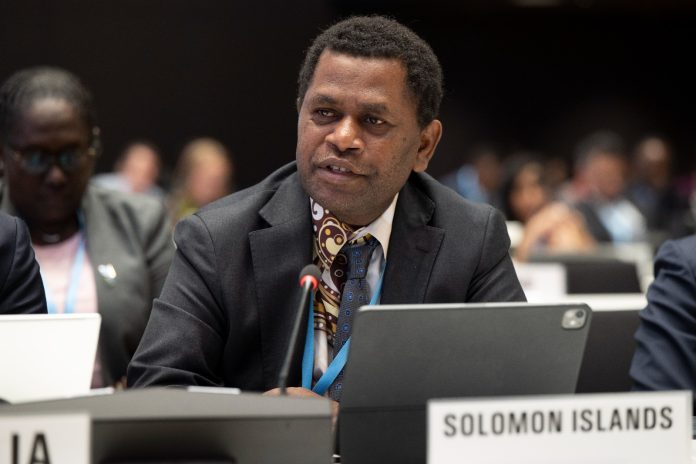
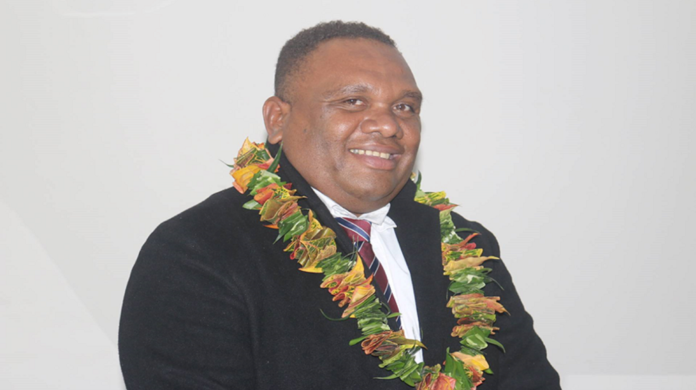
Speaking during the Sine Die Motion early this week, Minister for Health and Medical Services and Member of Parliament for North Guadalcanal, Dr Paul Popora Bosawai, updated parliament of this.
He also expressed gratitude to his constituents for their ongoing support and cooperation in executing these initiatives.
“We have made significant progress in 2024. For example, our road infrastructure maintenance has helped establish 12 economic zones, which in turn has allowed us to invest in education and improve livelihoods within the community,” he said.
The Member of Parliament further noted that the constituency has already delivered projects valued at SBD $1.4 million this year, with plans to continue executing projects until June 2026, totalling SBD $5.1 billion.
Looking ahead, Bosawai spoke about the upcoming launch of cooperative societies within the 12 zones, acknowledging the leadership and trust placed in him by the community.
“I firmly believe in the importance of developing a sustainable rural economy.
“I urge all constituents to ensure that the work we’ve started is maintained and continues to thrive,” he said.
He also took a moment to thank both local and foreign investors for their ongoing contributions and cooperation in strengthening the economy of the constituency.
The National Parliament has considered and passed three Bills during the final sitting for 2025, and the formal conclusion of the Third Meeting of the Twelfth Parliament yesterday.
The Third Meeting commenced on Thursday, 24 April 2025, and concluded on Wednesday, 17th December 2025, bringing the total number of sitting days to 50, inclusive.
The three Bills considered and passed include the Special Economic Zone Bill 2024, the National Building Standards Bill 2025, and the Public Service Bill 2025.
In addition, three Appropriation Bills that were presented, debated, and approved are; the 2025 Supplementary Appropriation Bill 2025, the 2024 Supplementary Appropriation Bill 2025, and the 2026 Appropriation Bill 2025.
The Speaker of the National Parliament, Patteson J. Oti, said that the work of Standing Committees’ inquiries and reports during the Meeting relate solely to the six Bills considered by the House.
He said the Public Accounts Committee (PAC) and the Bills and Legislation Committee (BLC) each conducted three inquiries and tabled three reports, respectively.
He said that the Public Expenditure Committee conducted one inquiry, which was not completed; hence, no report was tabled, with several deliberative meetings held by other Standing Committees, with no further inquiries were undertaken, and no reports were presented to the House.
He said that no Private Members’ Business was introduced during the Third Meeting.
The Speaker of Parliament said that there remains a scope for greater productivity, particularly in relation to the oversight role of Standing Committees.
He emphasised the importance of conducting more inquiries into matters of public interest and tabling reports for consideration by the House, to improve the quality of life of citizens.
He highlighted that Statements by Ministers were underutilised, seeing that Ministers are accountable to the people through Parliament by reporting on actions and decisions taken within their portfolios.
The Speaker of Parliament also expressed hope that future meetings will see increased use of ministerial statements, a higher number of committee inquiries and reports, and the introduction of Private Members’ Business going forward.
He also encouraged the adoption of a parliamentary sitting calendar to enhance planning and operational efficiency.
The Speaker conveyed his sincere appreciation to all Members for their contributions to the deliberations of the House throughout the Third Meeting, despite these observations.
He expressed his hope that the coming year will bring renewed unity, peace, and prosperity to all communities across the country.
The Ministry of Foreign Affairs and External Trade (MFAET) has announced its proposal for Solomon Islands to have its own United Nations Resident Coordinator.
This move aims to increase the presence of United Nations (UN) in the country, a statement by MFAET Tuesday this week said.
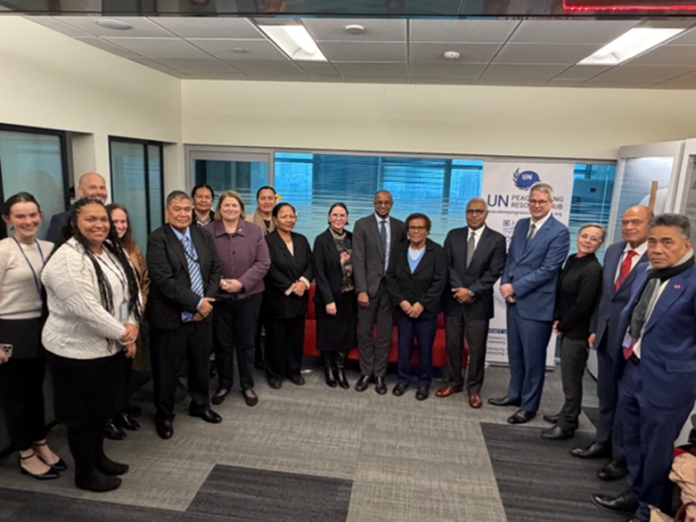
This follows a meeting between permanent representatives of the Pacific Islands Forum (PIF) to the United Nations with the three United Nations Resident Coordinators (RCs) for the Pacific.
The UN resident coordinators are: Dirk Wagener, UN resident coordinator for Fiji, Solomon Islands, Tonga, Tuvalu and Vanuatu; Karla Robin Hershey, for Samoa, Cook Islands, Niue and Tokelau; and Mamadou Kane, for the Federated States of Micronesia, Marshall Islands, Palau, Kiribati and Nauru.
The meeting was held on December 2 at the United Nations Headquarters in New York, United States of America, the MFAET statement said.
The meeting was chaired by the Solomon Islands Permanent Representative to the United Nations, Her Excellency Jane Waetara.
Waetara acknowledged the United Nations’ continued commitment to the Pacific and underscored the vital role of Resident Coordinators in ensuring sustained UN engagement in the region.
She noted the importance in advancing national and regional development priorities and in supporting the achievement of the Sustainable Development Goals (SDGs) across Pacific Island countries.
Waetara said the PIF group looks forward to tabling the biennial resolution on cooperation between the United Nations and the Pacific Islands Forum.
Meanwhile, the meeting also discussed the UN80 reform initiative and its potential implications for the Pacific region.
The meeting provided an opportunity for the resident coordinators to brief permanent representatives on their work across the Pacific, promote information sharing and further strengthen cooperation between the Pacific Islands Forum group and the UN Resident Coordinator system.
The permanent representatives highlighted the importance of active engagement by the PIF group throughout the UN80 reform process.
A highlight of the discussions was the need to ensure that any reforms do not compromise support for Small Island Developing States (SIDS), including the preservation of UN programmes tailored to SIDS and strengthened coordination through the UN Resident Coordinator system in the Pacific.
Minister for Health and Medical Services and Member of Parliament for North Guadalcanal constituency, Dr Paul Bosawai Popora appeals to citizens across the country to celebrate this Christmas with dignity and safety.
He made the statement when speaking on the debate of the Sine Die Motion in parliament early this week, to lessen burden on health workers as they will continue to serve the country during this festive season.
Bosawai said, while many will celebrate this Christmas with families, health workers will remain on duty in facilities across the country.
“With that, let me ask our good people across the country to celebrate with dignity and safety, and not to burden our health services through accident-related cases that relate to alcohol.
“Christmas is not a day to drink a lot of beer, but it should be a time to reflect, celebrate, and moving forward to develop our beloved country, Solomon Islands,” the minister said.
He acknowledged all health workers for their great sacrifice this Christmas to save people’s health across the country.
Bosawai said that despite ongoing challenges, they must remain committed to strengthening the ministry and delivering quality health care services to all Solomon Islanders.
He also thanked partner ministries and development partners for their collaboration throughout the year.
Located far in the midst of Wanderer Bay, West Guadalcanal, far from the shoreline, past lush plants, and trees is the ECE (Early Childhood Education) Centre, the only one serving more than 10 communities in Wanderer Bay.
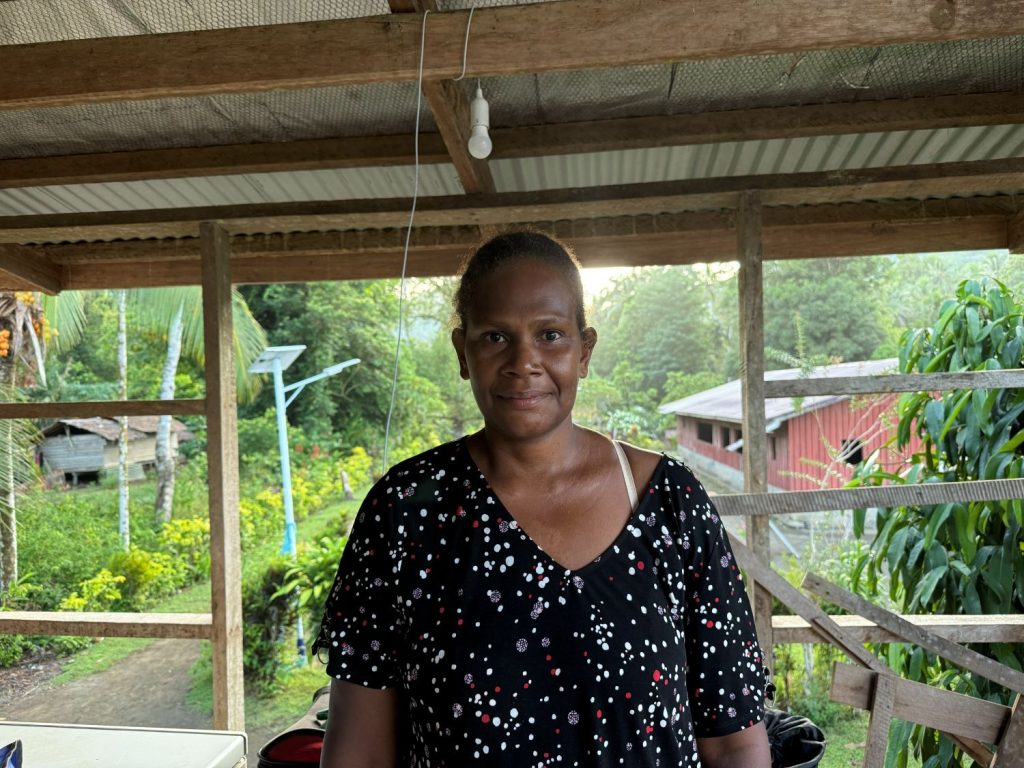
Supervising ECE Teacher Lorine Laubua
The day is sunny and the breeze is friendly as ECE Supervising teacher, Lorine Laubua from Sughu community of Wanderer Bay takes the lead in brining me to the ECE Centre.
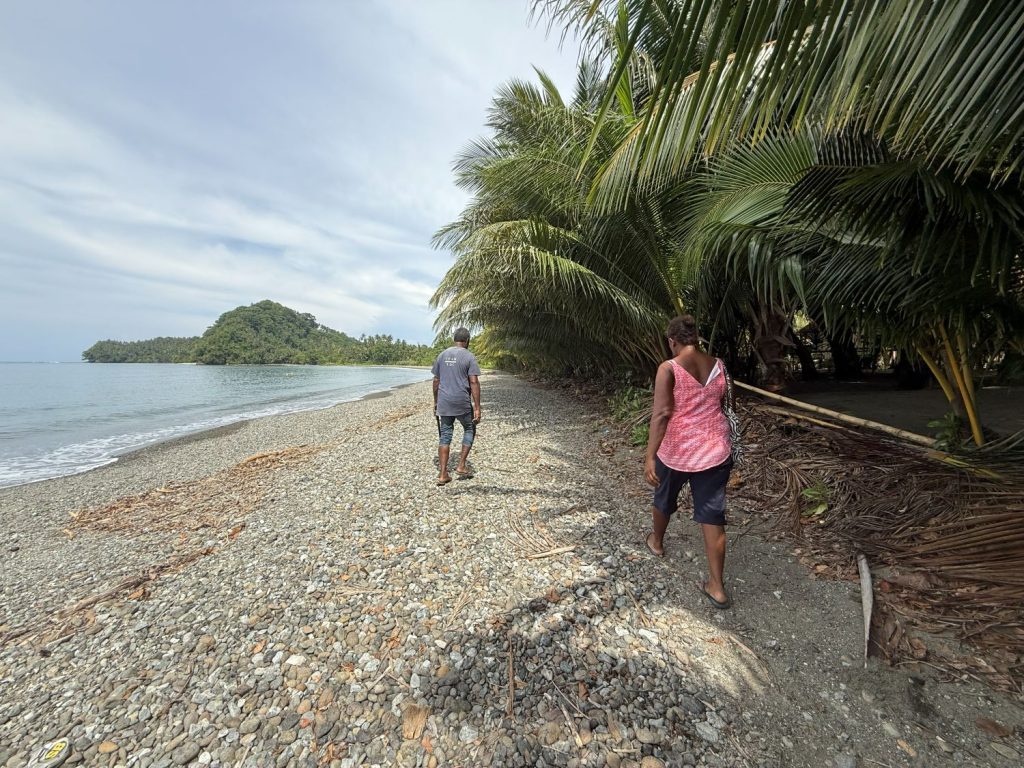
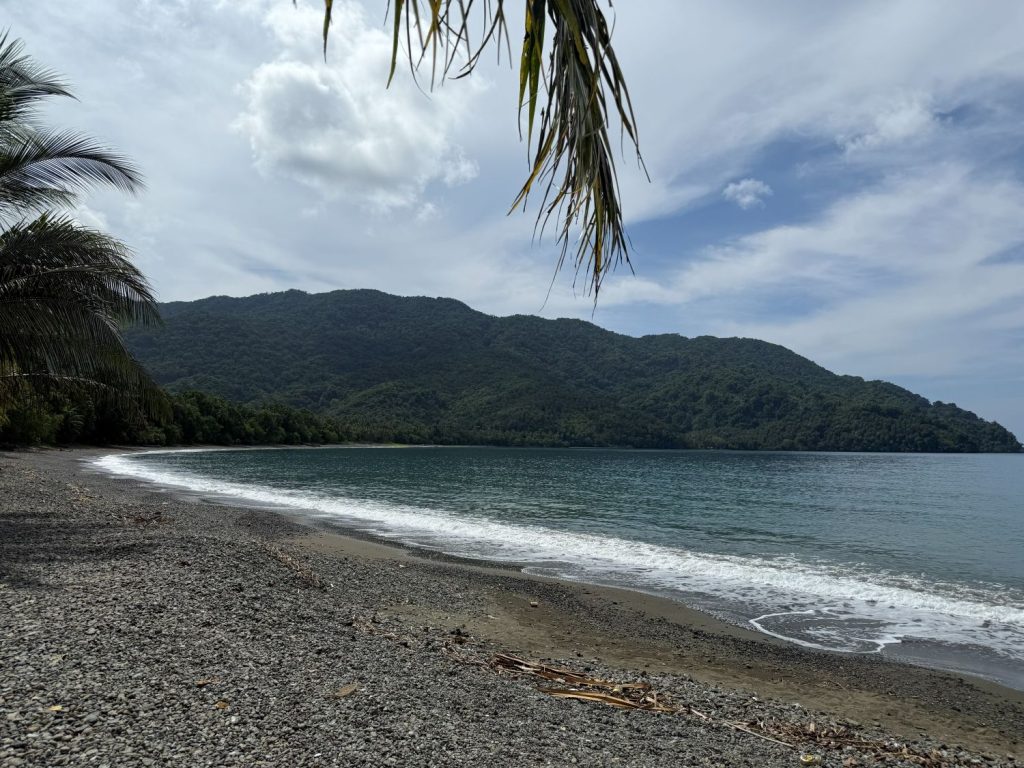
A road leading outwards to the beachA walk along the beach to the school
We walk through a cocoa plantation from Sughu village and onto a road from another village ahead of us known as the “Roman Catholic community” before a short walk along the beach.
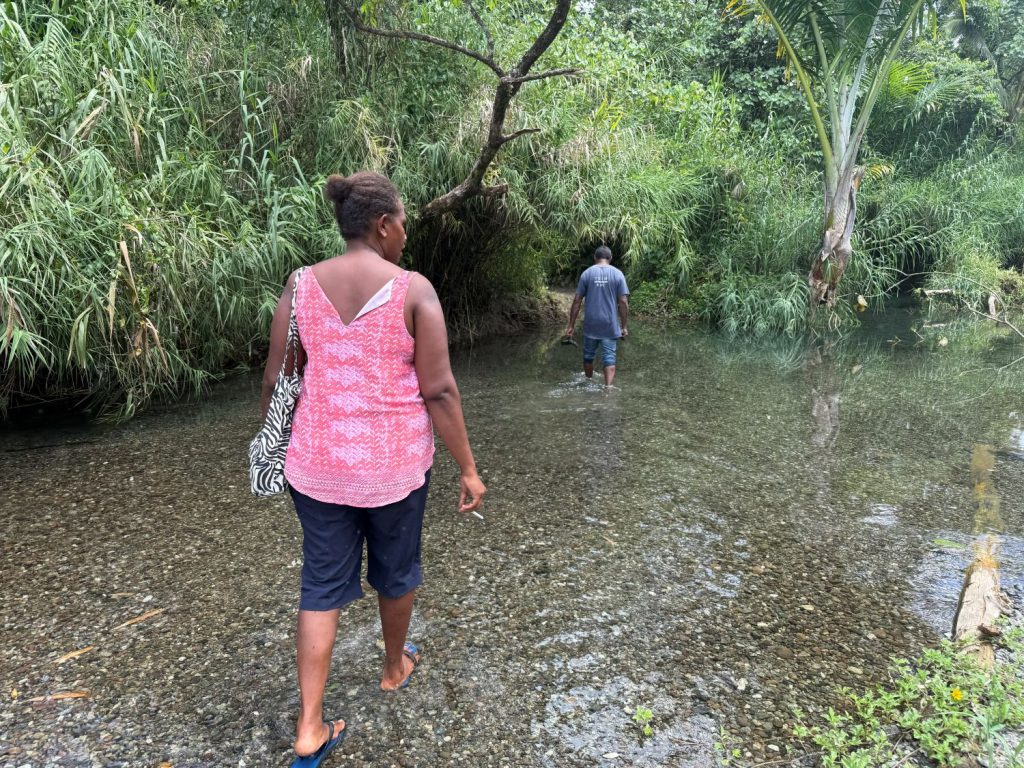
Passing through a small stream to get to the school
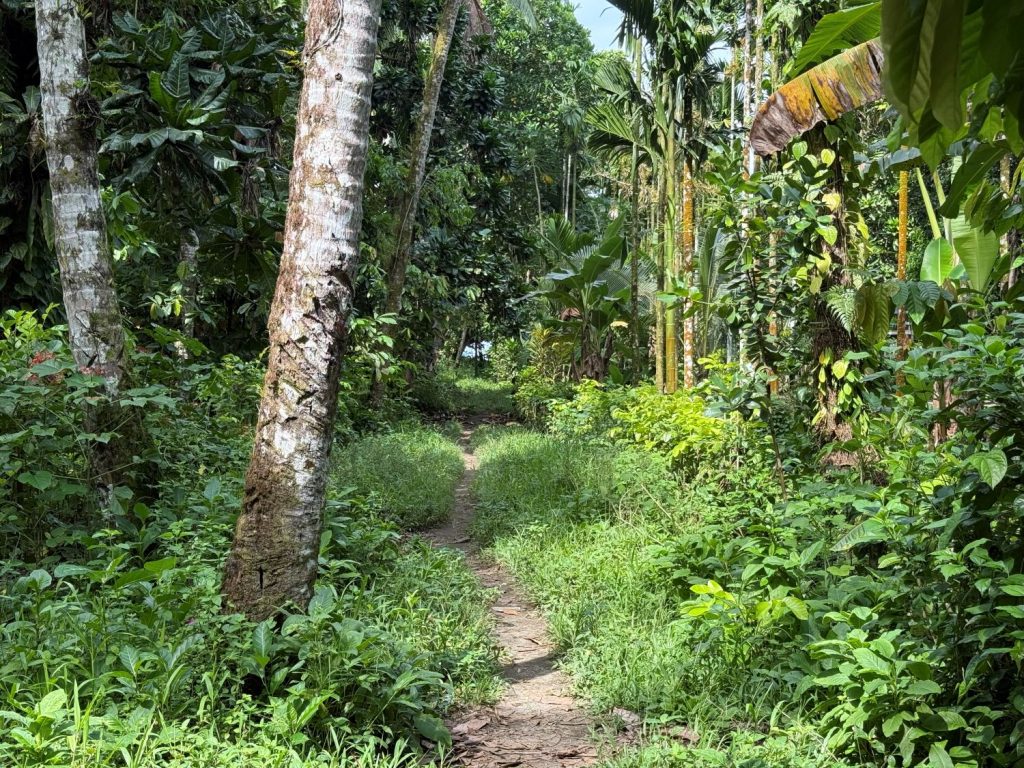
The path finally leads us inwards into what in Solomon Islands is locally called a “bush” that is after we pass a small stream. But the journey is still in its initial stages.
We walk for a good amount of time, trekking through a small path through trees, plants and all living things that dwell in the natural environment.
Mind you, from Sughu to the school is closer than where most children live and have to travel from to get to the school.
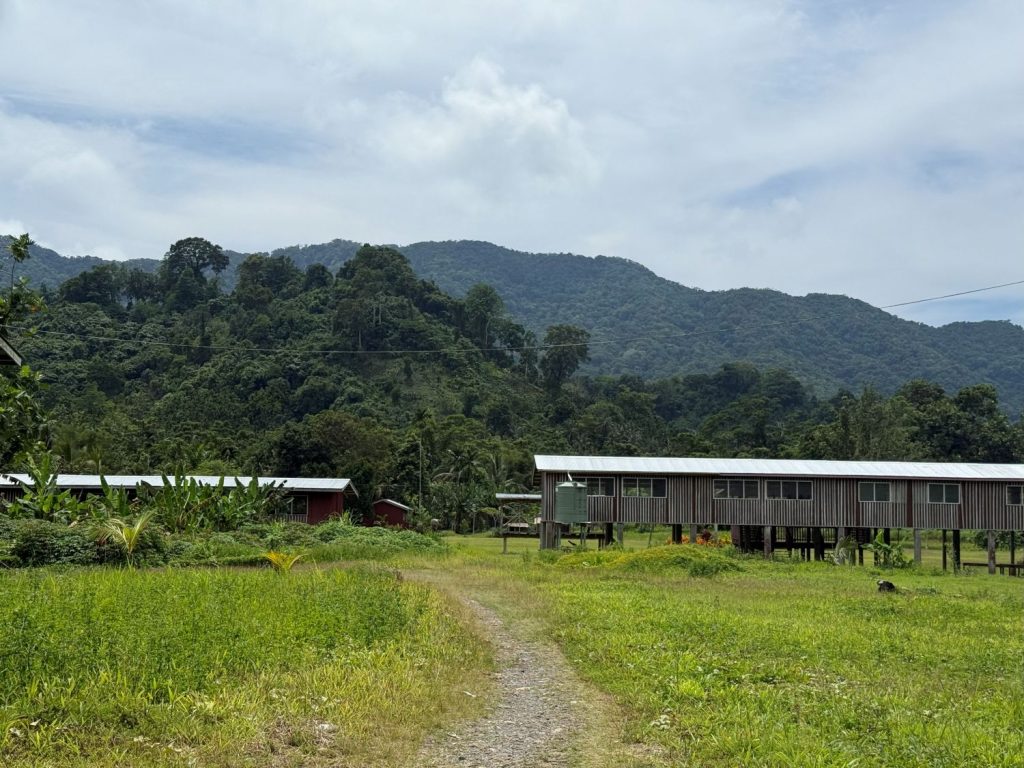
A road leading to the school compound
Finally, we arrive at the Wanderer Bay Community High School of which in its compound is the ECE Centre.
The ECE Centre in Wanderer Bay
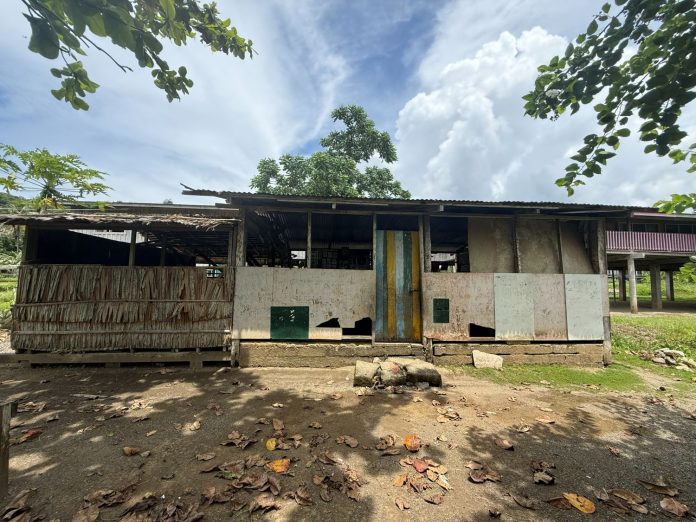
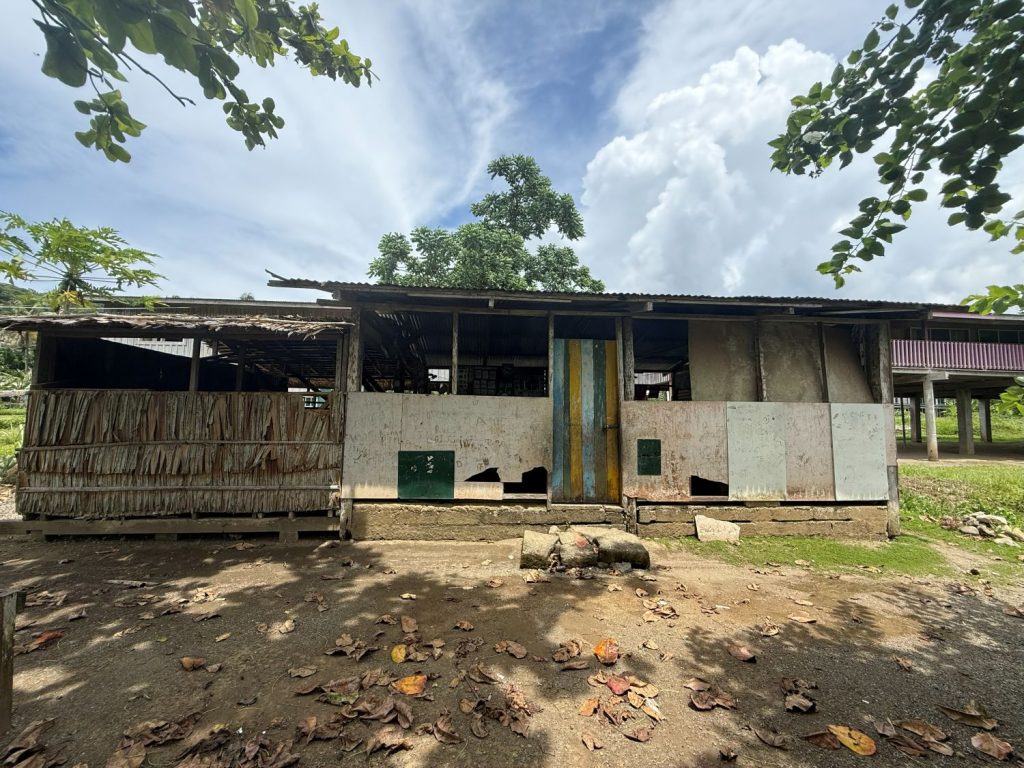
The sight of the ECE classroom is just sad, a low structured classroom that is in dire need of not maintenance but replacement.
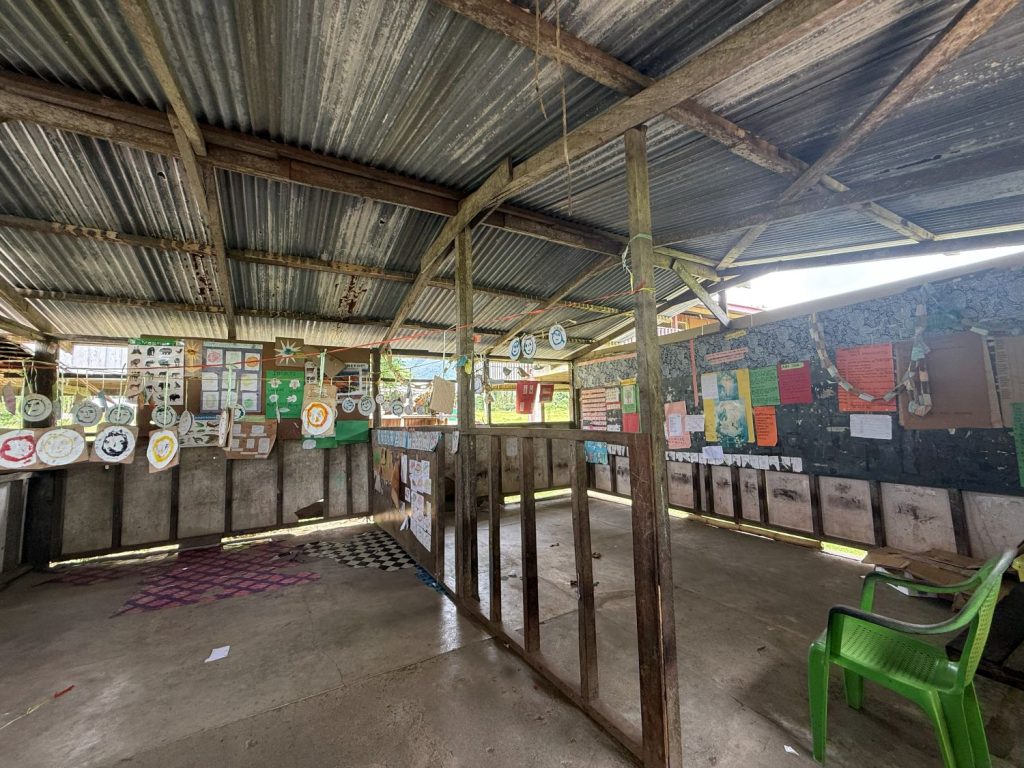
Inside the ECE classroom
From the window which lacks proper frames and louvers as most classrooms, you see before you dangling decorations, and as you look inwards, is where these children come to learn.
A total of 150 children from communities in Wanderer Bay were enrolled this year.
ECE Supervising teacher, Lorine Laubua explained that the number was initially 200 but given the lack of space in the classroom, they could only take 150 children, leaving the remaining 50 without the right to Early childhood Education.
“So, the rest of the kids were sent back home. This is not fair for the kids who cannot enrol in school because as children they have the right to be educated.
“ECE is the foundation of a child’s learning so it is not fair that we have to do this,” Lorine said.
Interestingly, with this high number of children enrolled at the ECE Centre, not all the children attend school consistently throughout the year.
The biggest reason for this is because they live very far from the school.
Most of these children have to walk for about 2 to 3 kilometres before they can reach the school and they all live in different places.
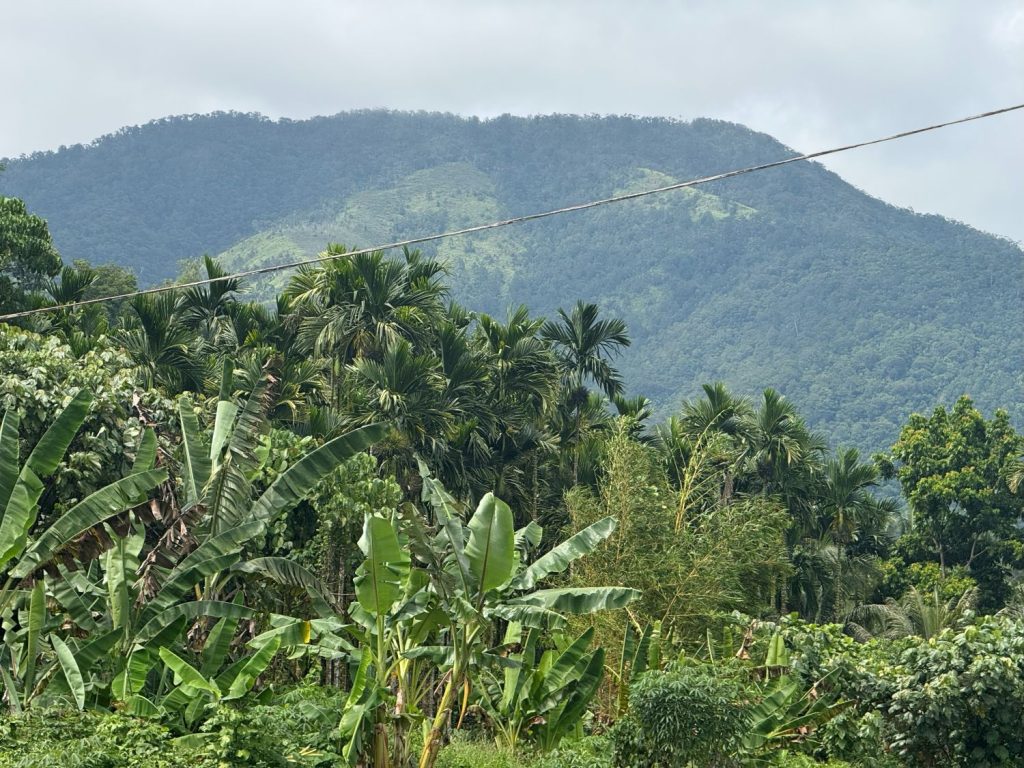
Some children live in communities along this part of Wanderer BaySome children live as far as in communities at the bottom of the mountain
Some children come from communities from the left end of the bay, others on the right end and then there are children who travel all the way from communities in the mountain and others from their homes in communities situated at the bottom of the mountains.
The distance has caused some parents to give up bringing their children to school consistently because they wouldn’t have time to attend to household duties and being in the village, the top priority is going to the garden to harvest crops as means of subsistence.
Lorine says the classroom is old, small and not spacious enough for them as well as the space they have outside of the classroom.
It was built a long time ago, and as population rose in the communities, it has little space to offer for children giving them the disadvantage of learning in an environment that is not conducive to healthy learning.
Like students, the environment is also not favourable for their teachers.
Lorine recalls that at one time, there were only three of them ECE teachers who cared for the children.
As there were many of them, this was a challenge especially when water supply is an issue for the school.
They would have to carry the children to the stream if they wanted to go the bathroom.
“They would also be scattered everywhere.
“We would also take turns to carry them to the stream because of our water supply.
“In class, we would all squeeze in together and this was very uncomfortable for all of us,” she said.
This struggle has been going on for a number of years.
Despite this, they have tried their best to address this issue, but it’s still a far-fetched solution.
The new classroom that is yet to be completed
A new ECE classroom was built back in 2017 during the time of a different Supervising ECE teacher.
However, progress on this projected ceased as years later the classroom was left idle.
Last year, Lorine tried her best to at least do something she says.
This involved efforts in getting timber, some brick work as well as a concrete slab of the classroom facility.
It is however far from reaching the finished line yet.
When asked where they get money from to build the new classroom, she said it comes from parents’ yearly contribution which is a mere SBD 200.
The have tried raising the amount to SBD 500 for a year per parents’ contribution, but parents say it’s too high.
Disappointed, Lorine stressed that parents don’t understand how important ECE is.
“Parents don’t understand the importance of ECE, in our community they regard primary and secondary education as more important.
“In ECE, if we put the amount to 500, they will say it is too high.
“ECE is the foundation of a child’s learning and materials for ECE are expensive as well and we’ve tried to explain this to the parents,” she said.
Lorine goes on to stress that for children to really have a good ECE they need to be able to learn in a good classroom.
When asked if the new ECE classroom if completed would be able to cater for all the children in Wanderer Bay, Lorine nodded, saying it wouldn’t.
To address this issue, there would need to be 3 or 4 ECE Centres throughout Wanderer Bay to cater for the many communities in and around the area.
Lorine says this is a serious need for children of Wanderer Bay.
“It is a need for our children to learn in a proper environment. So, I call on responsible authorities to look at this issue of ECE in Wanderer Bay.
“Because if we continue to operate like this, a lot of children will miss out on school. There are also some children who don’t even go to school and then just remain at home,” she said.
What is scary about this, is the impact it will have in the later years of children who miss out on ECE.
She said there are children who have not come to attend ECE until they reach the ages of 9 or 10 and by then, they shy away from going to school.
“So, when they miss out on school at a young age, they no longer have the interest to attend school and just remain in the villages.
“When they are older, they can somehow affect their communities by the things they get involved in.
“So, this is a big problem for the communities. When children miss out on school, they won’t be able to follow the rules in their communities,” said Lorine.
She again emphasises that if only, there were 3 more ECE Centres, it would be easier for parents to bring their children to school.
“It would be great if aid donors could help build ECE centres for us,” she says with little hope.
*Reporting for this story was supported by Pacific Media Assistance Scheme (PACMAS)
Rural communities remain the country’s backbone yet often the least supported: MP Rina
BY JOHN HOUANIHAU
Rural communities, which make up the majority of Solomon Islands’ population, remain the backbone of the country, yet are often the least supported.
Member of parliament for East Central Guadalcanal Lazarus Alfred raised this concern in parliament in his speech for the Sine Die motion yesterday.
Mr Rina said that the nation continues to face major national challenges with low service delivery and development pressures on urban centres and persistent inequalities between urban and rural communities.
He said that strengthening rural economies, expanding access to ancestral services, addressing rural-urban imbalance, promoting inclusive development, and ensuring accountability in government programmes are vital.
“These national issues affect every sector, health, education, infrastructure, agriculture, fisheries and local entrepreneurship. Honourable Speaker, our rural communities sustain our nation. They drive agriculture, support fisheries, protect our cultural heritage and represent the majority of our population,” Rina said.
He said that national progress will only happen when the daily realities of farmers, market vendors, fishermen, youth, women and village-based entrepreneurs are improved.
“Some key areas requiring continued focus include improved roads, bridges, works and inter-island connectivity, reliable electricity, water supply and communication systems, stronger market and support for small businesses, access to digital technology for information, banking, education and innovation, support for value-added industries to boost local incomes,” he said.
Rina said that these are essential foundations for empowering communities and driving long-term development.
He stressed that to ensure meaningful progress, government support must continue and be strengthened in the polling areas, infrastructure development in the provinces.
“This is all inclusion for rural and remote communities, support systems for farmers, fishermen, women and youth, strengthening cooperative structures and market access, transparent implementation of community development programmes, strong monitoring, coordination and accountability across ministries,” he said.
He said that implementation, monitoring and accountability remain essential if national initiatives are to deliver real improvements on the ground.
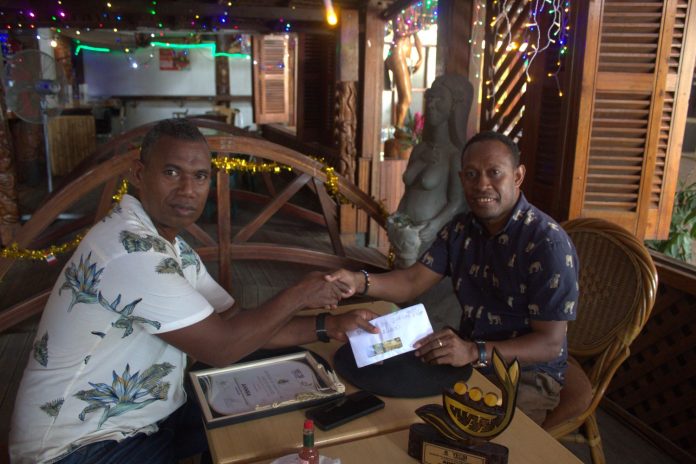
Mr Pola, a notable local businessman and former Member of the Provincial Assembly (MPA), made significant contributions to the community of Raroisu’u Ward 21, Malaita Province on December 9, 2025.
Pola’s efforts go towards the construction and renovation of essential church buildings, with the Sarawasi and Eliote community churches as the main beneficiaries.
This support has played a key role in improving both the spiritual and social infrastructure of the area.
During the handover ceremony, he emphasised the importance of these church buildings for the local community.
“The church is the cornerstone of any community. Without a church, there is no unity,” he said, underscoring the crucial role of faith in strengthening community ties and fostering mutual support.
His commitment to the construction and repair of church buildings illustrates a profound understanding of the relationship between faith and community dynamics in creating a unified society.
His initiative highlights the belief that bolstering the church not only enhances its physical infrastructure but also fosters greater cohesion among community members.
Abel Oscar Watersao, Secretary of the Sarawasi church committee, expressed sincere gratitude for the timely support.
He said the contribution will be vital to complete the Sarawasi Catholic church building, which is in urgent need of hardware materials.
He assured Pola that this support will not only quicken the building’s completion but also strengthen the partnership between the church and the community, ultimately enhancing the well-being and spiritual life of its members.
Watersao, whilst expressing gratitude to Pola, told him that the invaluable support will not go unnoticed.
“Your efforts have truly made a difference, and we are all appreciative of your dedication,” he said.
Franklyn Wasi, Minister for Agriculture & Livestock (MAL) has outlined the ministry’s achievements when he spoke during the Sine Die Motion in parliament on Monday this week.
Delivering his speech on the floor of parliament, he read out 20 summary achievements of the ministry.
Among these achievements, Wasi shed light on a number of them.
He said in-service training of 32 MAL staff at Solomon Islands National University (SINU) and abroad, including staff who attended six different short-term trainings in China and Japan this year, is one of the Ministry’s achievements.
He also spoke about another achievement, the launch of the country’s first-ever Agricultural National Advisory Council (ANAC).
This a technical oversight body to assist the Ministry with policies and plans to develop the sector.
Wasi went on to state that another milestone MAL reached is a new historic record of cocoa exports surpassing the previous high of 2011.
“The largest increase in the export volumes of both copra and cocoa in the last 10 years. Copra export volume stands at 13,000 metric tonnes, 5,000 metric tonnes more than last year,” Wasi said.
He said that cocoa export volume is at 6,782, 500 metric tonnes more than last year.
In relation, the ministry also achieved the rollout of the cocoa revolving fund, contributing an additional 1,000 metric tonnes of cocoa and copra to the total export volume this year.
Then there is the provision of fuel-subsidised shipping services.
“Provision of fuel-subsidised shipping services to Makira, Guadalcanal and Choiseul, with planned expansion to all provinces in the new financial year,” he said.
Other achievements, according to Wasi, include;
Recruitment of 42 new staff, a new director for communication and two new veterinary science officers to join in 2026.
Contracting of directors for MAL’s seven departments, the human resource manager and the financial controller.
Commencement of the construction of two new double-storey office complexes in Auki and Kirakira.
Construction of the National Cattle Breeding Centre in Isabel.
The replanting and rehabilitation of coconut and cocoa farms.
Purchasing new outboard motors and canoes for biosecurity borders.
Successful trials with a very high yield than the world average yield per hectare; current trials were 9,000 kilograms per hectare.
Launching of the Sape Cassava processing facility.
Operationalisation of the vapour heat treatment facility at Henderson and the construction of a new incinerator at the biosecurity disposal site.
Partnership with the private sector to improve the availability of alternative feedstocks.
Completion of a new slaughter facility at our KG6 farm.
Funding assistance to small and medium-sized business enterprises.
Funding assistance to young business entrepreneurs through EXE.
Securing new funding opportunities from FAO, IFAD, UNICEF and the Government of Japan.
PUBLIC Accounts Committee (PAC) Chairman and Member of Parliament for Central Honiara, Gordon Darcy Lilo, has calls for stronger resourcing of parliamentary committees and greater respect for accountability during the Sine Die Motion in Parliament yesterday.
Lilo said year 2025 is a “very enriching year” for the PAC, highlighting its work in scrutinising supplementary budgets and the Appropriation Act, including the 2026 Supply Bill which has just been passed.
Lilo said Parliament carries a heavy responsibility in nationhood building, stressing that while statehood and nationhood are different concepts, all leaders and institutions have a duty to contribute to strengthening democracy.
“As members placed in state institutions, we carry a serious responsibility to perform our roles properly,” he said.
The Central Honiara MP praised the commitment of PAC members, the parliamentary secretariat, and partners such as the Westminster Foundation for Democracy and the United Nations Development Programme for supporting the committee’s oversight work.
He also acknowledged the Speaker and Parliamentary Board for their continued backing.
Lilo said that budget scrutiny capacity across the Pacific region remains thin, but said Solomon Islands Parliament is making progress compared to some regional counterparts.
He said this progress must continue through parliamentary reforms, improved schemes of service, and ultimately greater institutional autonomy for Parliament.
A key theme of his address was the role of democracy, particularly the importance of minority voices in holding the majority to account.
“The principle of majority rule must not silence the minority. The minority must always have the space to scrutinise and hold those in power accountable. That is the beauty of democracy,” Lilo said.
He also echoed calls from other committee chairpersons for urgent resourcing of select committees, warning that without adequate support, the quality of legislation and oversight will suffer.
“If select committees are properly resourced, they will deliver quality work. Parliament is the highest accountable institution in this country, beyond this, there is none,” he said.
Lilo pleaded for continued support for parliamentary committees, particularly as workload increases with legislation, treaties, and international conventions requiring careful scrutiny.
The recent increase in the budget for the Ministry of Health and Medical Services (MHMS) has helped address longstanding issues of medical supplies and drug security, which have plagued the country for years.
Minister for Health, Dr Paul Popora Bosawai, highlighted this during the Sine Die Motion in parliament this week, admitting that these challenges have had a significant impact on the country’s citizens.
“The challenges of medical supplies and drug security have long affected our people. With the increased budget for 2025, these issues have eased significantly, including the repayment of major outstanding bills,” Bosawai said.
He also acknowledged that there is more work left to be done.
“We are addressing bottlenecks in procurement, payment, storage, and distribution to ensure that medicine reaches all facilities on time and to eliminate stockpiles,” he explained.
Bosawai added that the Ministry’s finance team, along with the National Medical Store, is closely collaborating with the Ministry of Finance and Treasury, as well as partners, to resolve longstanding issues.
“These are shared responsibilities, and we will continue to strengthen our systems to ensure that no citizen is left without essential medicines,” he said.
Meanwhile, the Minister praised the efforts of the Ministry, alongside donor partners, in improving the country’s health services.
He noted that earlier this year, more than 25 senior clinicians and executives from the Ministry completed clinical governance training, earning international certification.
Bosawai called this achievement a major step towards improving the standard of care, accountability, and patient safety, both at the National Referral Hospital and nationwide.
“It equips our clinical leaders with the skills and systems needed to drive continuous quality improvement and reinforces our commitment to delivering safer, more reliable health services for all Solomon Islanders,” he said.
The Minister also assured the public of the Ministry’s ongoing commitment to improving healthcare services across the country.