Home Blog Page 229

‘Kilu’ufi hospital has enough medical drugs’

0

By RODRICK DESURI 

AUKI 

The Kilu’ufi Hospital in Malaita Province is running smoothly with normal services to care for sick patients in the province after receiving fresh stock from the National Medical Supply Store.

Director of Nursing at Kilu’ufi Hospital, Richard Maegerea, told Island Sun Auki in an interview that they have just received medical supplies from the National Medical Supply Store.

He said every clinic in the province should have enough medical drugs and treatments, unless they need more.

“At the moment, our clinics in the province should have enough stock of medical treatments and drugs that they need. In the North, East, South, and Central. Unless there is a need for any clinic, then we’ll add it,” he said.

In the meantime, Maegerea stressed that no suspects have been arrested yet in regards to the missing life-saving medicines at Kilu’ufi Hospital Pharmacy in August 2025.

He said the Ministry of Health and Medical Services confirmed an ongoing investigation into the disappearance of essential medical drugs at Kilu’ufi Hospital in Malaita Province.

When asked if any suspects have been arrested for the missing medical supplies, Maegerea stressed that until now, no arrests have been made, as they have handed the case over to the police for investigation.

He mentioned that while they suspect some people, no arrests have been made yet.

Island Sun understands that the Minister of the Ministry of Health and Medical Services, Dr. Paul Bosawai, said that they are treating the case seriously.

For feedback, contact: [email protected]

FAR FROM IDEAL

0
Dr Paul Popora Bosawai

Solomon Islands’ doctor/nurse to patient ratios behind World Health Organization’s recommended level, Health Minister reveals

BY SAMIE WAIKORI

Solomon Islands’ doctor/nurse to patient ratios are behind those recommended by the World Health Organization (WHO), it is reported.

The WHO recommends a ratio of one medical doctor for every 1,000 people, and one nurse for every 400 people.

In Solomon Islands, there is one doctor to more than 3,000 patients, and one nurse to around 750 patients.

Minister for Health and Medical Services, Dr Paul Popora Bosawai said currently there are only 251 medical doctors employed under the Public Service and 1,097 nurses and nurse aides working in the country.

These doctors and nurses are serving a growing population which is estimated to be more than 800 thousand.

Speaking in parliament last week Mr Bosawai emphasised that the country is still far from meeting WHO’s recommendations.

Bosawai added that even if doctors working in private clinics were included, the nation would still fall short of the recommended ratios.

He said of the 251 doctors working for government, 179 are stationed at the National Referral Hospital (NRH), 68 are working in provincial areas, and five are assigned to the Ministry of Health and Medical Services.

The distribution of medical doctors across the country is as follows:

  • 12 doctors in Guadalcanal province
  • 10 doctors in Malaita province
  • Two doctors in Central Island province
  • Two doctors in Choiseul
  • 11 doctors in the Honiara City Council (HCC)
  • Four doctors in Makira-Ulawa province
  • Two doctors in Isabel province
  • One doctor in Renbel province
  • Seven doctors in Western province
  • Three doctors in Temotu province

In terms of nursing staff, the Minister reported that there are currently 1,688 registered nurses and nurse aides working across both urban and rural health centres throughout the country.

This figure includes nurses employed by the government through the Public Service, as well as those working in provincial and faith-based hospitals such as Helena Goldie, Atoifi, and Good Samaritan.

Bosawai added that out of the 1,097 registered nurses and nurse aides, 65 percent are stationed in urban areas, including at NRH, while 35% serve in rural health centers.

The WHO’s recommended benchmark for nurses is 25 nurses per 10,000 people, or one nurse for every 400 people.

Bosawai acknowledged that the country is also significantly falling short of this benchmark.

He described this as one of the major challenges facing the Ministry of Health and Medical Services, and assured that efforts are underway to address the matter through various means.

For feedback, contact: [email protected]

Landowner calls for road development on Ranongga Island

0

BY BEN BILUA
Gizo

A TRIBAL leader from Ranongga Island in Western Province has made an open call to the government to prioritize road development to improve accessibility and unlock the island’s economic potential.

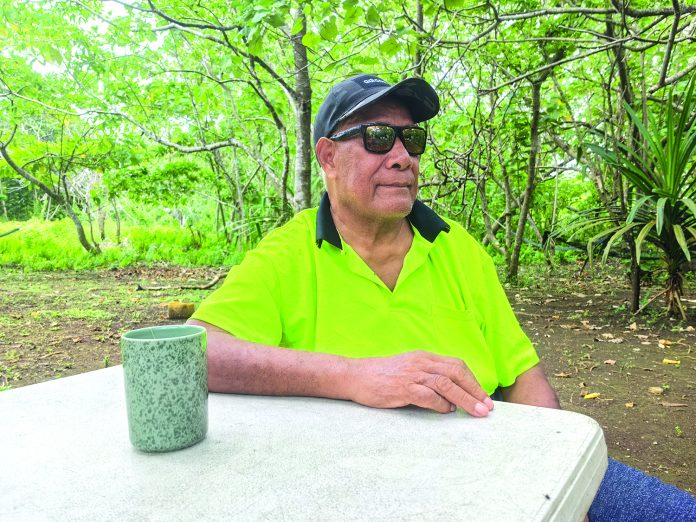
Head of the Niubari tribe, Rodrick Tikera, said his tribe, which owns the land stretching from Niubare to the western end of Ranongga, is ready to work with the government and give access to their land for road construction.

Tikera said road infrastructure is vital for the island’s development, particularly in connecting isolated communities to essential services such as health, education, and markets.

“We often hear stories about disagreements between landowners and the government over development projects. This time, I want to make it clear — my tribe is ready and willing to support the road project,” Tikera said.

He stressed that a proper road network will make it easier for mothers to reach clinics, students to attend schools, and farmers to transport their products to markets.

“Ranongga has many hardworking people who cultivate and harvest coconuts and other crops. However, transportation remains a huge challenge. A proper road will make a big difference,” he added.

Tikera said his tribe’s decision to support development reflects their commitment to improving livelihoods and promoting rural progress.

He urges the national and provincial governments to listen to the people’s call and take concrete steps towards building the road.

“If the government is serious about diversifying infrastructure development and supporting local economies, then Ranongga should not be left behind,” he said.

Tikera’s statement signals a rare moment of cooperation between landowners and authorities, an opportunity that, if acted upon, could change the face of development on Ranongga Island.

*Reporting for this story was supported by Pacific Media Assistance Scheme (PACMAS)

For feedback, contact: [email protected]
Call to register Malole Primary School

0

BY BEN BILUA
Gizo

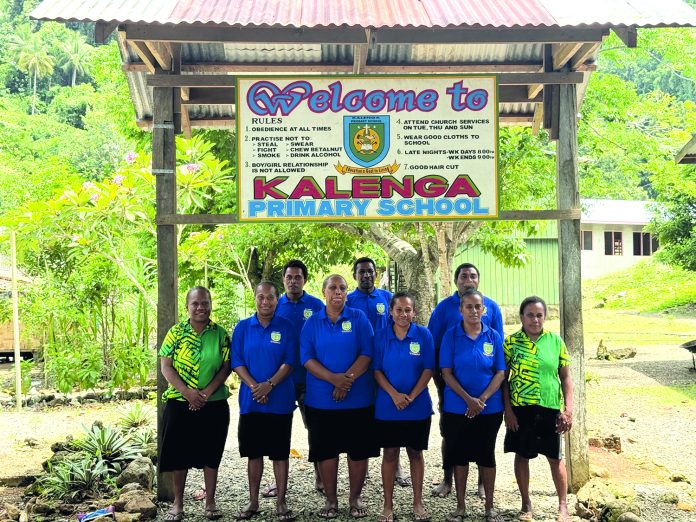
CHIEFS, elders, and women of Marava Community in Ranongga Island, Western Province have issued a heartfelt call to the government and education authorities to urgently register Malole Primary School as a stand-alone institution.

The call reflects growing concerns among community members who believe that formal registration will help address long-standing challenges faced by students and teachers.

Rallyn Mary, a teacher at the school, said the upgrade and registration of Malole Primary School will enable it to access direct support and resources that are often directed to its mother school, Pienuna Primary.

“At the moment, Malole Primary is an extension of Pienuna School, meaning most priorities in terms of development always focus on Pienuna. “We receive some support from our mother school, but it’s not enough,” she explained.

Located in the heart of Marava, the school serves three surrounding communities — Malole, Rava, and Patu — providing classes from grades one to five. Despite the dedication of its teachers and communities, many parents still send their children to Pienuna due to Malole’s lack of facilities and resources.

Mary said the school operates with only two teachers, two classrooms, and one staff house.

“We need proper water and sanitation facilities, more classrooms, and teaching materials. “At the moment, there are no toilets for students and teachers,” she said.

Mary said the community’s hopes were briefly lifted when their Member of Parliament promised to build a new staff house.

“We carried the gravel and prepared the building site, but months later, the area is now covered with grass as we continue to wait for assistance,” she said.

With a growing population and increasing demand for education, community leaders believe the registration of Malole Primary School is no longer optional but necessary.

“Our children deserve the same opportunities as others. If Malole becomes a registered school, it will open doors for better support, infrastructure, and a brighter future for our young learners,” Mary said.

For now, the people of Marava, Rava, and Patu continue to wait, holding on to hope that their small school will one day stand tall on its own.

*Reporting for this story was supported by Pacific Media Assistance Scheme (PACMAS)

For feedback, contact: [email protected]

Children of the forest

0

BY BEN BILUA
Gizo

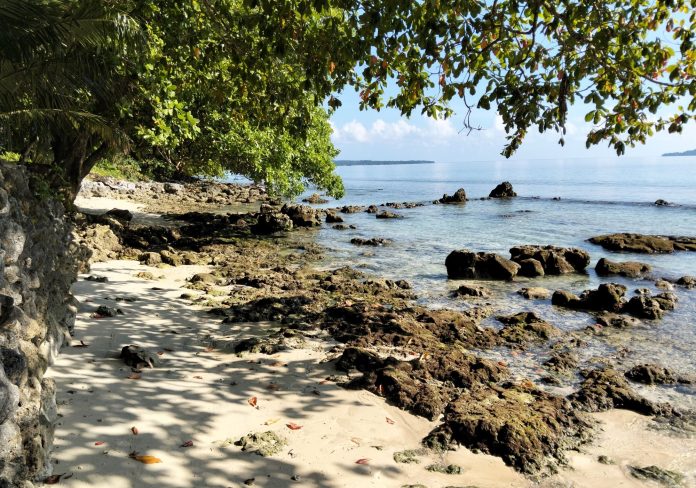
In the stillness of the forest, beneath the whispering leaves and the watchful gaze of ancient trees, children took their first breath, not in the sterile light of a hospital, but in the embrace of nature itself.

There were no doctors, no machines, no bright corridors. Only the courage of a mother, the prayers of a family, and the rhythm of the forest echoing the fragile heartbeat of a new life.

Their cries drifted through the trees, carried by the wind that spoke of both life and hardship.

It’s a reminder of the quiet struggles faced by those who live far from hospitals, where every birth is both a miracle and a risk.

This story is about women of Marava and Niubare communities, at Ranongga Island, Western Province where childbirth is not just a moment of joy but an act of endurance.

While other mothers enjoy the comfort of hospital beds and routine maternity checks, the women of Marava and Niubare walked for three to four hours beneath the tropical sun, their bellies heavy with life, their hearts heavy with hope.

Some of the women whisper their fears into the forest wind, knowing that help is far away and that every step they take could mean life or death.

For more than forty years, this has been their story.

“Bringing new life requires commitment and sacrifice,” she said softly. “We walk for hours to the clinic, even when we are seven or eight months pregnant. It’s painful, but we have no choice. Our sacrifice is for our own flesh and blood.”

Longden’s words echo the unspoken reality of many women who endure this hardship in silence.

“I sometimes regret being born a female,” she confessed, her voice trembling. Yet her resilience shone through her sorrow, a resilience shared by all the women of Marava, who continue to bring life into a world that seems to have forgotten them.

Longden said some of the mothers’ even deliver their children under the coconut trees, in the village and in canoes with the help of few mothers and relatives.

“After giving birth these mothers continued their journey to the clinic with torn womb and bleeding body. It’s life threatening but this is our life,” she said.

Another mother, Mabent Sibu adds that after child birth mothers continue to care for their children until they reach the age where they can go to the clinic themselves.

“So, after giving birth, we, mothers also took care of our children. When they are sick, we carry them on our back and walk to Pienuna clinic for medical and health checks.

“New born babies also require immunization – we carry our children to the clinic for the injections,” she said.

Similarly, those who are critically sick sometimes walked the road or travel by boat to Pienuna Clinic.

Some patients lost their lives while journeying to the clinic.

This is real for Sibu who lost her father earlier this year while trying to reach Pienuna Clinic.

“My father was a strong person but then he developed stroke like symptoms. We tried to get him to Pienuna Clinic but he was gone,” she said.

She said losing her father due to poor access to health care system makes her questioned the existence of government’s responsibility to care for its people.

There are unconfirmed reports that people both young and old lost their lives while trying to reach the clinic.

Island Sun visited Pienuna clinic and saw that the clinic is run-down. Few ceilings are falling and need repair.

Even the facility is poorly equipped.

A nurse who wants to remain anonymous told this paper that the clinic needs major upgrading as population continues to increase.

“This is a very old clinic,” the nurse said.

For community elder like Denty Aqolo, a solution to the ongoing struggle is to establish a clinic at Marava.

He suggests that Pienuna Clinic should be upgraded to Area Health Centre [AHC] and a Rural Health Centre [RHC] should be established at Marava.

“Catchment area of Pienuna Clinic covers many communities from eastern to southern part of Ranongga.

“To make life easier for our people, a clinic should be established at Marava to serve communities located on the southern region. Only emergency cases can be referred to Pienuna Area Health Centre or to Gizo Hospital,” he said.

Island Sun understands that, two months ago, the National Healthy Setting Conference was held at Gizo, Western province.

Theme of the conference was “Building Sustainable Healthy Settings in the Solomon Islands”.

Health professionals, government officials, and donor partners discussed strategies to address public health challenges and improving health outcomes.

Key discussions were focused on expanding the “Healthy Settings” initiative, with specific focus on health promotion in everyday environments like schools, villages, and workplaces.

The conference was part of the National Healthy Settings Policy (2021) which promotes the creation of healthy environments in villages, schools, workplaces, and markets.

It recognizes that health is shaped by daily living conditions and aims to involve communities in their own health development.

The National Healthy Settings Policy (2021) also played major role in the drafting of the 2022–2031 National Health Strategic Plan (NHSP) which sets the country’s health priorities and goals.

It aims to give all citizens equitable access to quality healthcare programs and focuses on population-level health issues by moving beyond clinical settings.

For the people of Marava and Niubare, these conferences, strategies and policies mean nothing as their suffering tells a deeper story, one of state neglect, of promises left unfulfilled, and of communities surviving on courage alone.

Each birth in the forest, in a canoe or in a village house is both a testament of love and a quiet cry for help, reminding the nation that even in its remotest corners, life is sacred and deserves care.

At Ranongga Island, beyond the breaking waves and under the canopy of the forest, life continues, fragile yet fierce. Children are born, mothers’ weep, and the wind carries their story beyond the skies.

*Reporting for this story was supported by Pacific Media Assistance Scheme (PACMAS)

For feedback, contact: [email protected]

Reopening of airstrips will boost development: Atu

0

BY SAMIE WAIKORI

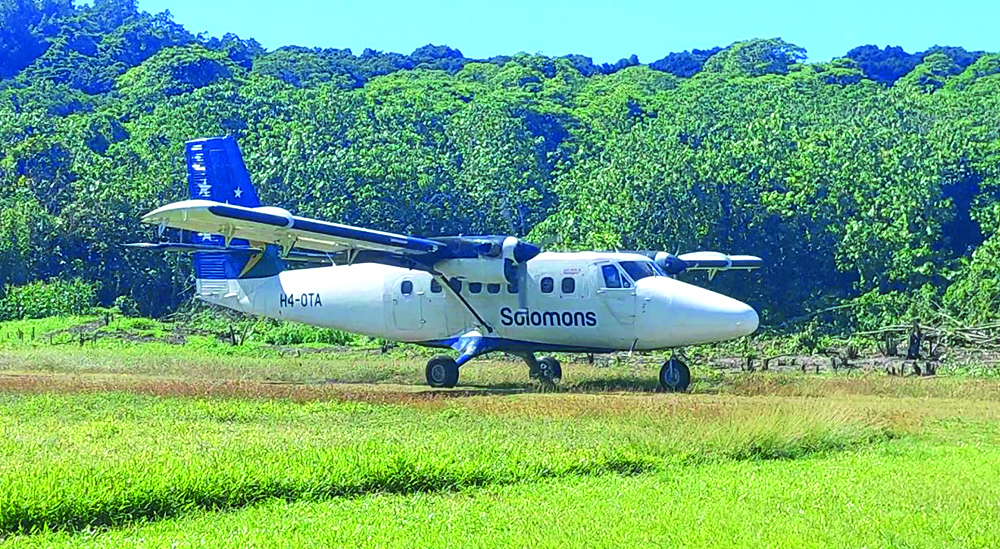
The Premier of Guadalcanal Province, William Atu, says the reopening of airstrips across the province will reconnect communities and pave the way for greater development.

This follows a tender released by the Ministry of Communication and Aviation (MCA) in September for the rehabilitation of Avu-Avu airstrip that has been closed for several years.

Speaking at the Turarana Cultural Centre during the 19th anniversary of the founder of the Gwaena’alu Association, formerly known as the Moro Movement, the late Chief Pelise Moro, Premier Atu expressed his delight over the progress.

“As Premier, I am very happy that the tender for the rehabilitation of the Avu-Avu airstrip has already closed, and we expect work to begin soon. This will enable air services to return to Avu-Avu,” he said.

Premier Atu also revealed that his government is working closely with relevant stakeholders to reopen the Babanakira airstrip.

“Just recently, we sent three of our provincial members to meet with landowners of Babanakira to discuss the reopening of the airstrip,” he said.

Alongside Avu-Avu and Babanakira, the provincial government is also pushing to reopen the Marau airstrip.

“These are some of the key projects my government is working on. We need to restore air services across the province because we believe the reopening of these airstrips will make development easier,” he added.

In addition to airstrip rehabilitation, Premier Atu highlighted another major infrastructure initiative — the Kaoka–Marau Road in East Guadalcanal.

He said the tender for the road survey will close next month, after which work is expected to commence.

Premier Atu reaffirmed his government’s commitment to improving essential infrastructure, including roads and airstrips, to connect communities throughout Guadalcanal Province.

“Our goal is to ensure all people and communities are connected through better infrastructure,” he said.

For feedback, contact: [email protected]

CBSI warns of scam targeting individuals in SI

0

BY JOHN HOUANIHAU

The Central Bank of Solomon Islands (CBSI) through the Solomon Islands Financial Intelligence Unit (SIFIU) urges the public to remain vigilant following reports of sophisticated scam targeting individuals in the Solomon Islands.

In an official statement, CBSI said the scam involves the misuse of personal bank accounts to launder money through a series of transfers, ultimately benefiting the scammer.

The statement issued on Monday 20 this month explains how the scam works.

“How the Scam Works: Victims are approached by scammers often online via social media platforms like Facebook or WhatsApp, or through phone calls, who trick them into revealing their bank account details using false pretences such as fake job offers, financial aid, investment opportunities, romance, or inheritance.

“Victims are told to deposit funds via cash or mobile transfer into an unknown third-party local bank account (who are likely victims as well), then the local bank account owners are advised to withdraw the deposits and further deposit/transfer the money to another third-party local account and so on,” CBSI said.

The statement said this process is repeated through multiple accounts, typically three or more called Money Mules, disguising trails of transactions that obscures the origin and destination of the funds.

“The money eventually reaches a local bank account accessed by the scammer, through a Visa Debit Card (VDC) that locals have sent to the scammers overseas. This scam is part of a money mule operation, which is illegal and can result in serious consequences for those unknowingly involved,” said CBSI.

CBSI strongly warns individuals not to share bank account details with unknown individuals or entities, especially those ones online.

“This includes sharing your Visa Debit Card (VDC). Report suspicious activity to your bank, the Royal Solomon Islands Police Force (RSIPF), or the Solomon Islands Financial Intelligence Unit (SIFIU). Educate family and friends about the risks of online scams and money laundering schemes,” said CBSI.

For feedback, contact: [email protected]

‘Moro’s vision to promote conservation in Guadalcanal is in vain’

0

BY SAMIE WAIKORI

One of the key pillars of Gwaena’alu Association is conservation; to protect and manage the nature or the environment sustainably.

Founder of Gwaena’alu Association, formerly known as Moro Movement, late Chief Pelise Moro believed nature is the source that breaths life to the culture of the people of Guadalcanal.

However, whether members of the movement are serious about it is the question, when looking at reproachful investments in the province.

Speaking at the 19th anniversary in remembrance of the legacy of Chief Moro, Mr David Cornelus shared a trailing trend on conservation in the province.

He said one of the aims of Moro Movement is to conserve land and environment in Guadalcanal.

Meanwhile, the question is on how serious the people in Guadalcanal are conserving their environment.

“The terminology “conservation” begins to evade us. Conservation is becoming a non-issue, and why does it have to happen that way? One thing that stands out is because of foreign influence and law.

“Solomon Islands will continue to be exploited, mutually destroyed, because we continue to collude with foreigners,” Cornelus said.

He recalled prophecies made by Chief Moro and it’s happening now. Moro once said, in the future, a child will land in Guadalcanal.

“It will eat away our land, our resources, our culture, our laws, our ideas and our practise. The child is huge and powerful and cannot be defeated unless we come together as one.

“And I tell you, the child is right here, eating away everything. And it’s happening right in front of our eyes,” Cornelus said, referring to mining operations at Gold Ridge and Turarana.

On the same note, Premier William Atu of Guadalcanal Province shared the sad and harsh reality the province faces in the benefit sharing in the mining industry.

“There are challenges we faced on revenue sharing when comes to investment especially mining in Guadalcanal.

“But I thank the people in Vulolo, who host the Gold Ridge mining, and those in Tasimboko, who also host the Oil Palm industry in the country.

“These investments are good for the country, but as I always said, there are areas that need improvement especially revenue sharing of mining,” he said.

Premier Atu mentioned that in terms of royalty of mining, 97 percent goes to the company, 1.5 percent to the national government, 1.2 percent to landowners and 0.3 for the province.

For feedback, contact: [email protected]

FFA management conference in Honiara this week

0

BY JOHN HOUANIHAU

Forum Fisheries Agency (FFA) members are in Honiara for the 21st Management Options Consultations (MOC) set to take place at the FFA Headquarters from October 27-31.

FFA said that members underwent a series of preparatory sessions last week ahead of the MOC.

In their statement, FFA said members covered a broad range of discussions including the FFA Strategic Plan Review 2020 – 2025, the Independent Refresher Review (IRR), the Country Partnership Agreement (CPA) instrument, the Special Pacific Islands Parties (SPIP) Meeting on the US Treaty, and the South Pacific Albacore (SPA) session.

The agency said these meetings provide an important platform for members and the Secretariat to review progress, strengthen coordination and prepare for next week’s consultations.

Speaking on last week’s discussions, FFA Director-General Noan David Pakop said this week is about resetting and aligning member states focus as an organisation, consolidating the different work processes, strengthening corporate governance and to ensure that the Secretariat continues to respond effectively to members’ priorities.

The FFA said that the Management Options Consultations (MOC) is an annual meeting where FFA Members and the Secretariat review technical analyses and management options for the Western and Central Pacific tuna fishery.

FFA notes that the MOC provides a forum to agree on regional strategies that support sustainable fisheries and shared economic benefits and is also to prepare FFA Members for the annual Western and Central Pacific Fisheries Commission Regular Session in December.

For feedback, contact: [email protected]
MP Hou lauded for church support

0
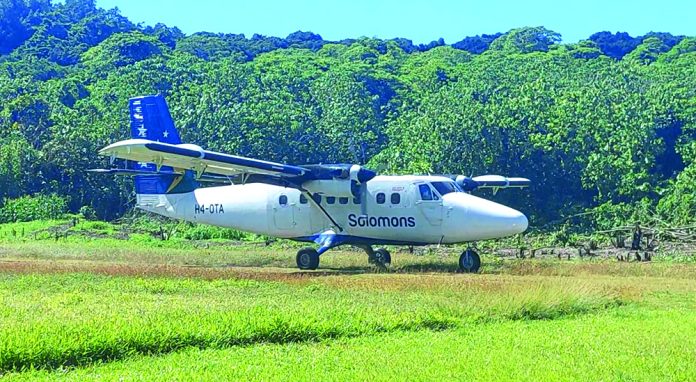
Rick Hou. Photo supplied.

BY JOHN HOUANIHAU

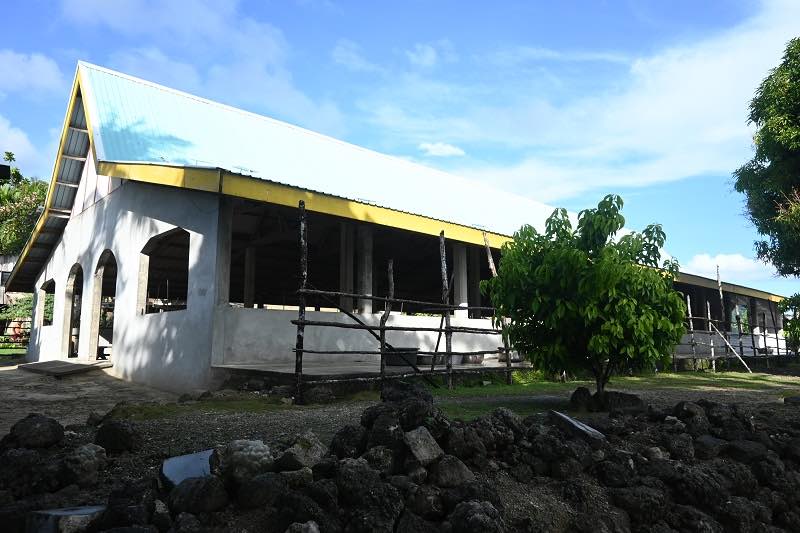
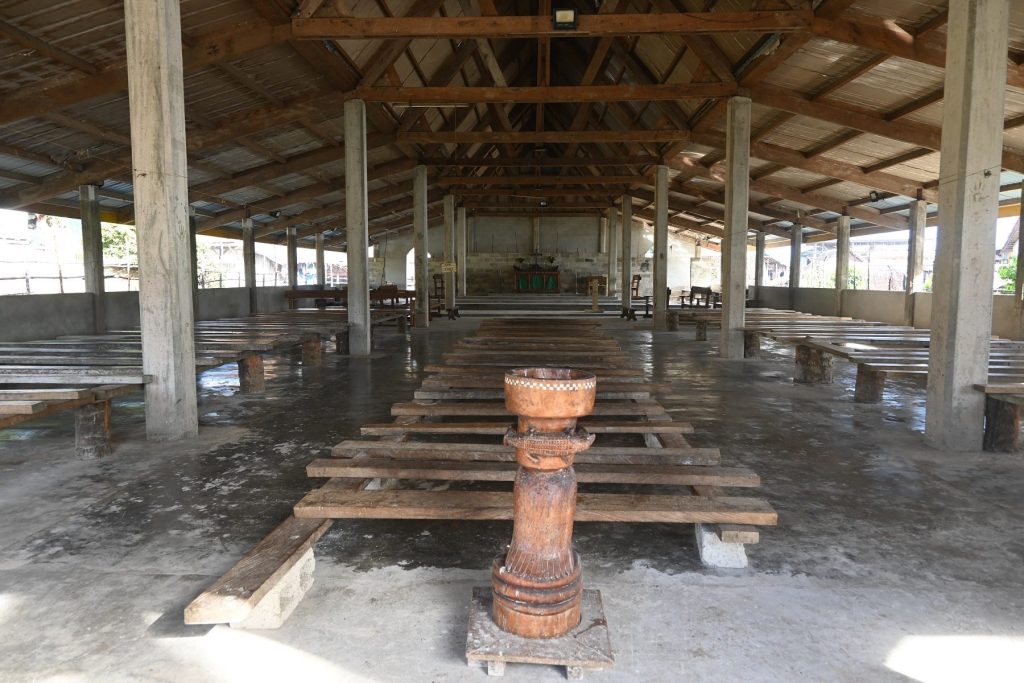
Rick Hou, Member of Parliament for Small Malaita constituency has received gratitude for assisting Angouru, a Seventh-day Adventist (SDA) Church community in Small Malaita.

Speaking to Island Sun recently, Beven Aieile, Project Coordinator and Secretary for Small Malaita SDA Honiara based committee said without the MP’s support which came in a timely period, things would not be easy for them.

He said the constituency under the leadership of Rick Houenipwela supported them with materials worth around $150,000.

“On behalf of the Angouru SDA Church in Small Malaita, we would like to thank Hon Rick Hou for supporting our church project. We started the project in 2015 however in 2022 the project was on halt after one of our members who was behind it passed away. We started it again in 2023,” he said.

Aieile said to ensure the project continues, they formed a Small Malaita SDA Honiara based committee to move the project forward.

“Each Sunday we meet to support Seventh-day Adventist Church projects. The aim is to raised funds help in terms of Church Building, rest house, and sanitation projects. Our aim is to also support other communities in their endeavors,” he said.

For feedback, contact: [email protected]