Home Blog Page 221

Australian-Funded Water Tanks to Bring Clean Water to Neo Island

0

BY MORRIS NAFU

The Australian High Commission in Solomon Islands, is set to deliver 40 water tanks to Neo Island in Santa Cruz-Temotu Province, providing much-needed access to clean water and improving the quality of life for local residents.

Previously, islanders depended on unreliable sources such as wells, natural sea outlets during low tide, and even coconuts for drinking water.

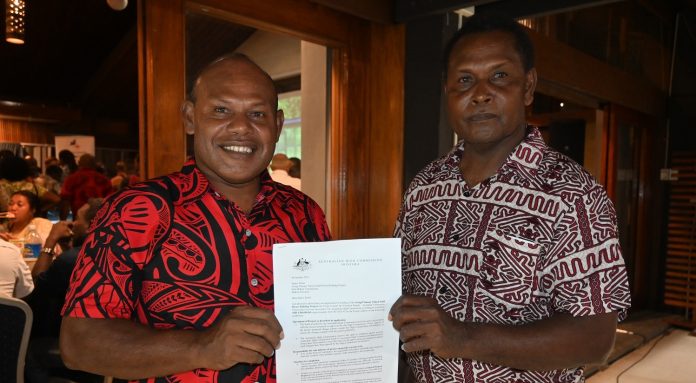
The project was officially signed and cleared for implementation during the Australian Small-Scale Projects award night at Mendana Hotel last week.

Peter Lano, a representative of the project recipients, welcomed the initiative as a transformative step for the community, where water scarcity has long been a major challenge.

Speaking to Island Sun News, Lano noted that the tanks will serve three surrounding communities, including the Polynesian settlement on the island.

“We are thrilled that the Australian Government has acknowledged our struggles with clean water access.

“This will greatly benefit our people. Obtaining clean water has always been a hardship, and this project feels like a blessing for our villages,” said Lano.

I personally thank the Australian Government for their support.

“This isn’t our first application—we submitted requests for a few villages last year—and we’re grateful for their recognition in promoting a healthier lifestyle,” said Lano.

Lano urges residents to take responsibility for the project’s success.

“We must unite to support the rollout and completion of this initiative.

“Once the tanks are installed, please maintain them well, as they’ve been provided free of charge. This will help sustain our health and well-being,” he said.

Acting High Commissioner Andrew Schloeffel emphasized Australia’s dedication to Solomon Islands’ development.

“We take pride in the large-scale infrastructure we’ve backed nationwide, but we also value the profound effects of smaller, community-focused efforts, particularly in remote regions.

“These projects transform lives on a personal and enduring level,” he said.

This initiative is the second rollout of 2025 under the Australian Government’s Community Partnerships program, which supports 57 such projects across the country.

The water tanks are expected to significantly enhance hygiene and health outcomes in this isolated area.

For feedback, contact: [email protected]

Australian-Funded Staff Housing Project to Boost Aorigi Primary School

0

BY MORRIS NAFU

Aorigi Primary School on Santa Catalina Island in Makira Ulawa Province will receive a new staff housing project funded by the Australian High Commission.

The initiative aims to address long-standing accommodation shortages that have hindered teacher recruitment in the school.

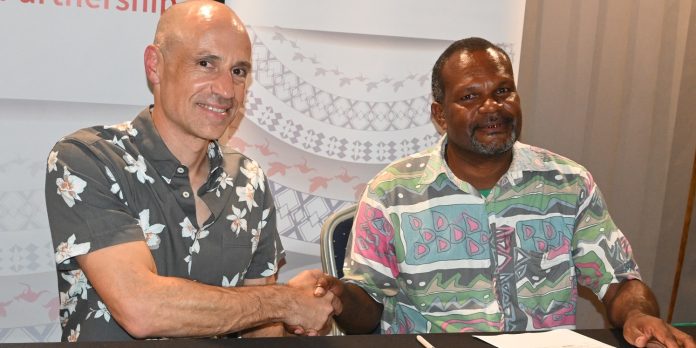
The agreement was formalized last week during an official project award ceremony at Mendana Hotel, where Australian Acting High Commissioner Andrew Schloeffel signed the deal alongside representatives from the school.

The initiative, valued at $ 300,000 SBD, will be constructed by Smart Technology in partnership with the East Makira Constituency office.

James Rofoi, the school’s Project Coordinator, voiced eagerness for the development, describing it as a critical solution to a persistent challenge.

“We currently have only two staff houses for the entire school, which has made it tough for teachers to relocate and teach here.

“We’ve often had to look elsewhere for educators, but the lack of housing has been a major obstacle. This project directly tackles one of our most pressing needs,” Rofoi explained.

Rofoi added that the new facilities will enhance the school’s infrastructure, supporting broader development goals.

“We’re thrilled about this initiative; it fulfills a long-overdue requirement that we faced for so long.

“We extend our gratitude to the Australian High Commission for acknowledging our situation.

“The community is buzzing with excitement, and you’ll witness our joy firsthand next year at the official handover,” Rofoi said.

Schloeffel highlighted Australia’s commitment to Solomon Islands’ progress.

“We take pride in the large-scale infrastructure we’ve backed nationwide, but we also value the profound effects of smaller, community-focused efforts, particularly in remote regions.

“These projects transform lives on a personal and enduring level,” he said.

This marks the second rollout of 2025 under the Australian Government’s Community Partnerships program, which funds 57 such initiatives across the country.

For feedback, contact: [email protected]

PM to attend important engagements

0

Manele set to visit provinces before overseas trip

BY JOHN HOUANIHA

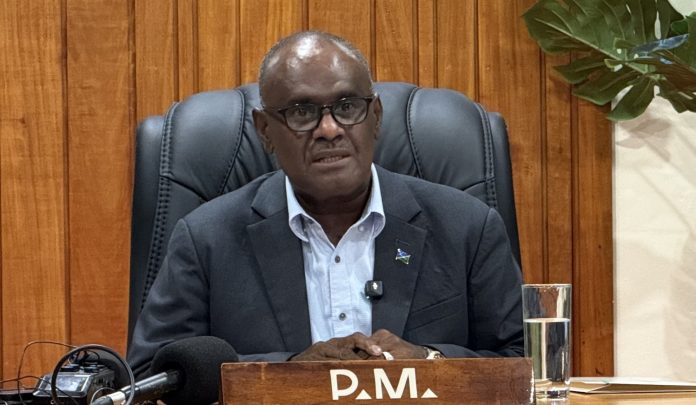
Prime Minister Jeremiah Manele will be having important engagements both domestically and abroad starting next week.

He revealed this during his press conference with local media at Office of the Prime Minister and Cabinet (OPMC) yesterday.

“Looking ahead, the coming weeks will include several important engagements, both domestically and abroad. Next week, I will be in Noro, Western Province, to officiate the official opening and handing over of the new Noro Police Station,” he said.

Prime Minister Manele said this facility represents continued collaboration to improve police presence and support safer communities, with the support from the Government of Australia.

“Following this, I will travel to Kolombangara for the presentation of certificates of the Investment Corporation of Solomon Islands (ICSI) shares at KFPL to Kolombangara Islands Investment Limited. From there, I will travel to Isabel Province for the opening and handover of two health centres in the Hograno, Kia/Havulei constituency,” he said.

The Prime Minister added that he will also be travelling to Brisbane, Australia, to attend the 14th Australia-Solomon Islands Business Forum, which provides an opportunity to promote trade, investment and private sector collaboration between our two countries upon his return to Honiara.

He also told the media that Parliament is expected to reconvene on 24th November 2025.

The PM’s press conference yesterday was joined by the Permanent Secretary for Mines, Energy and Rural Electrification, Dr Chris Vehe, the Chairman of the SIWA Board, Dr. Culwick Togamana, supported by Secretary to the Prime Minister (SPM), Dr Melchior Mataki, who also serves as a SIWA Board member and Attorney General, John Muria (Jnr).

For feedback, contact: [email protected]
NOD a pathway to healthy village: Kris

0

BY BEN BILUA
Gizo

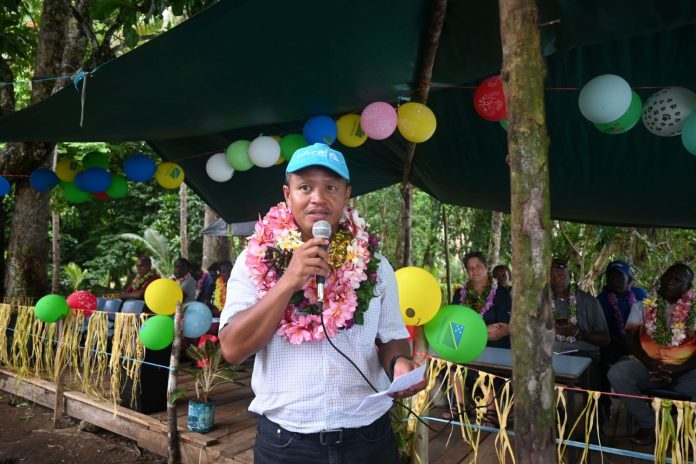
UNICEF’s Sanitation Specialist, Basilius Kris Cahyanto says the No Open Defecation (NOD) initiative is a critical pathway towards building healthy and resilient rural communities in the Solomon Islands.

Speaking during the declaration of NOD villages in Western Province last week, Mr Cahyanto said the achievement reflects strong community leadership and aligns with the National Health Strategic Plan.

“A healthy village begins with proper sanitation. NOD is not just a target—it is a pathway to a healthier future for our children, our families and our communities,” he said.

He acknowledged the commitment of chiefs, women, youth and elders for driving the initiative at the village level, and commended the Western Provincial Health Authority for successfully coordinating the program.

According to Mr Cahyanto, the NOD initiative plays a vital role in achieving the country’s national health goals and contributes to the Sustainable Development Goals (SDGs) 2030.

He stressed the importance of improved sanitation and hygiene, noting that diarrhea remains one of the leading causes of child mortality globally.

“Every year, 400,000 to 500,000 children die from diarrhea—a disease that can be prevented through improved water, sanitation and hygiene practices,” he said.

Mr Cahyanto said personal hygiene, especially among children and girls, is crucial to maintaining safe, dignified and healthy communities.

He emphasized that NOD promotes cross-sectoral development, enhancing human development, dignity, safety, and environmental protection.

So far, 31 villages in Western Province have been declared NOD, contributing to a national total of 173 villages—benefiting more than 20,303 people across 4,000 families.

Mr Cahyanto reaffirms UNICEF’s commitment to continue working alongside the Ministry of Health and Medical Services, (MHMS), Australia’s Department of Foreign Affairs and Trade (DFAT), Provincial Governments and Health Authorities, and other development partners to build on these achievements.

“The success of this program shows what strong partnerships and community leadership can achieve. Together, we are building healthier and stronger communities for our children’s future,” he said.

For feedback, contact: [email protected]
It’s not a one-off conference: Prof Narayan

0

BY LORETTA B MANELE

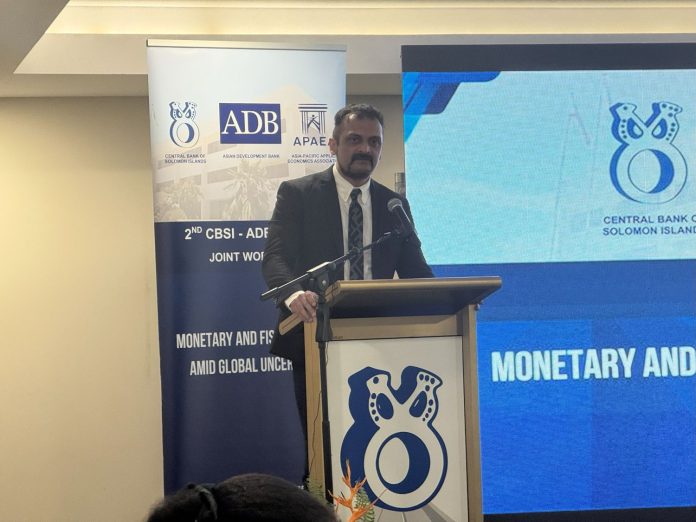
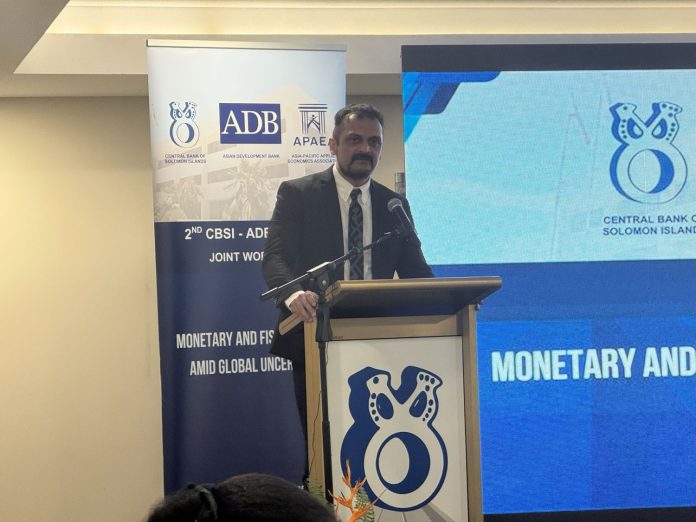
Often, there are those one-off conferences, the recent CBSI-ADB-APAEA conference however, is not one of them says Prof Paresh Narayan of Monash University and APAEA (Asia-Pacific Applied Economics Association).

Speaking at the “2nd CBSI-ADB-APAEA Joint Workshop” held at the Heritage Park Hotel just late last week, he voiced that the conference is about creating an ecosystem of high-quality policy research, knowledge sharing and the search for partnerships.

Prof Narayan said it is about creating an ecosystem of high-quality policy research with very strong academic rigor in that research.

“….as you will see throughout the day in the presentations, led by the central bank,” he added.

Prof Narayan expressed that this is a very important thing the central bank wants to share and it is the type of thinking that often happens behind closed doors as they don’t get access to central bankers.

He said apart from the conference being a knowledge-sharing conference, it is also about searching for partnerships and new ideas.

“We are here not to say that we have monopoly on the ideas that we are going to present, but we are here to also listen to you in terms of how we can improve on the type of research we are doing and the type of thinking that we bring to that research,” said Prof Narayan.

He also took the opportunity to speak on their collaboration with central banks in the Asia Pacific region.

Prof explained that the APAEA (Asia-Pacific Applied Economics Association) partners with 10 central banks in the region.

He said this partnership has made a landscape change to the type of policy research that is happening in the region.

Prof Narayan mentioned that the 10 central banks from the Pacific Island countries include; the Central Bank of Solomon Islands, the Reserve Bank of Vanuatu, the Reserve Bank of Fiji, and Bank PNG.

He said all the banks mentioned are present at the conference thus, the quality of the policy discourse that emerges out of this conference resonates right across the Pacific.

“And that is indicated by the fact that we have a very strong presence from all these central banks,” said Prof Narayan.

He noted that the workshop is also about creating a point of convergence of ideas and that’s the value the Central Bank of Solomon Islands brings.

“Yes, it is domesticated in terms of the policy discussions we will have, but it is also bringing together other central banks,” said Prof Narayan.

For feedback, contact: [email protected]
Good ideas but lack of partnership

0

BY LORETTA B MANELE

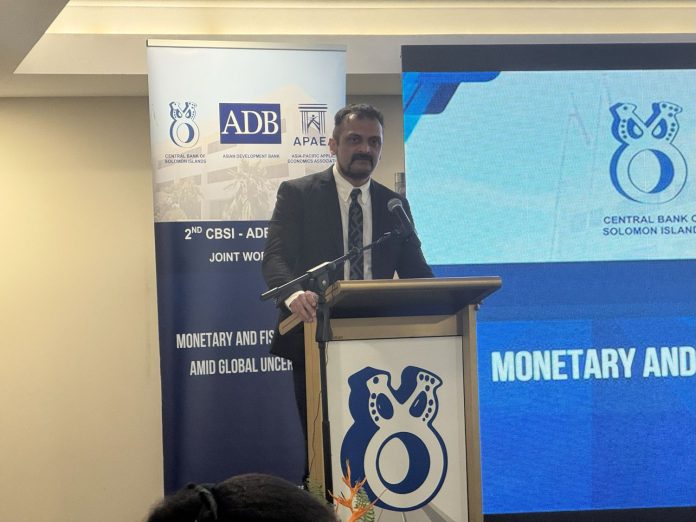
Prof Paresh Narayan, of Monash University and APAEA (Asia-Pacific Applied Economics Association) says the problem they face in developing countries is having good ideas but not implementing them simply because they they are not working together.

He raised this at the “2nd CBSI-ADB-APAEA Joint Workshop”, that catered to heads of central banks in the region particularly, Fiji, Vanuatu and Papua New Guinea, ADB representative, Dr John Beirne, government officials and stakeholders.

“The problem that we face in developing countries in particular, we have good ideas, but we cannot implement them.

“And one of the reasons we are not able to implement that is because we are not working together.  And if we come together like what we have done here, that means we can start to work together,” he said.

Prof Narayan stated that they can have more robust discussions on some of the ideas which may not necessarily fit certain type of economic problems as solutions.

Moreover, he said this forum and the forums that have been happening throughout the region in the last eight years is creating that kind of knowledge bundle.

Prof Narayan also referred to the Asian Development Bank (ADB) as a key regional partner.

He expressed that the Asian Development Bank’s partnership in this project is allowing central banks and APAEA to build that bridge stronger between policy research, policy design, and its implementation, which is the key thing.

Prof Narayan also spoke briefly about APAEA (Asia-Pacific Applied Economics Association).

“So, what the Asia-Pacific Applied Economics Association, under my leadership, is doing, is working very closely not only with central banks but other policy institutions like the National Provident Fund,” he said.

Prof Narayan on this note, informed the audience that they had signed a MOU with the National Provident Fund of Solomon Islands to undertake research in capacity building.

He said this has come about because of the spillover effects of what the central bank is doing.

“And that’s what the role of the central bank in any country is. You must lead research, not by hiding research, but by becoming inclusive, like the way Governor Luke Forau has engaged with all of you,” Prof Narayan said.

For feedback, contact: [email protected]
MAL to clear issues with FAO sub-regional before project roll out

0

BY LORETTA B MANELE

The Ministry of Agriculture and Livestock (MAL) has some issues to straighten out with Food and Agriculture Organisation’s (FAO) sub-regional office in Apia, Samoa before rolling out an approved programme.

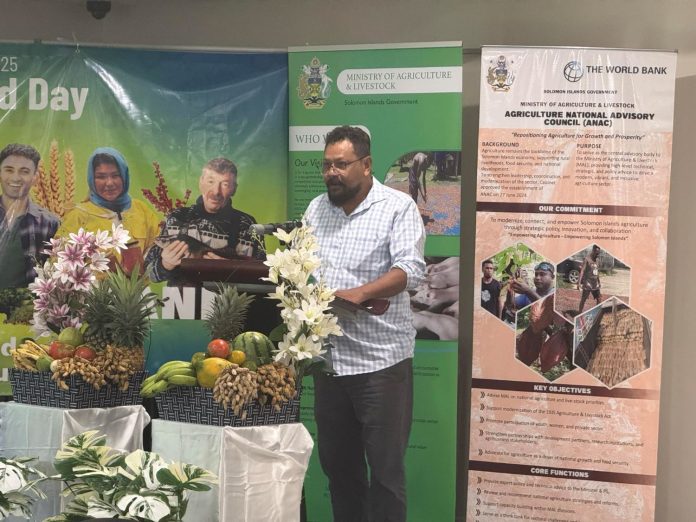
Douglas Yee, National Project Coordinator for Integrated Forest Management Project relayed this to the paper during an interview last week at MAL’s event comprising of the celebration of World Food Day, and launch of MAL’s 2025-2028 Corporate Plan and launch of it’s first ever Agriculture National Advisory Council (ANAC).

When asked about some of FAO’s current projects with the Ministry, Yee said there are a number of programmes, such as those coming through the Global Environment Facility (GEF).

He said one programme, the “Food Systems Integrated Programme” has already been approved and it is now up to the Ministry to set themselves up and establish the project management unit to implement it.

Yee also mentioned that at this stage, for that particular project, there are some issues the Ministry has to sort out.

“At this stage, within that particular project, there are some issues where the Ministry has to clear within FAO via our sub-regional office in Apia,” he said.

Yee explained that only after having cleared those issues, can they start rolling out funds for  MAL to implement the project.

He mentioned that they are also doing consultations for one other project through GEF as well.

Yee said for this project, they are trying to access funds from the Least Developed Countries fund, where GEF is also managing, adding that it is a bigger project compared to the first one mentioned.

He stated that for this project they are trying to get about $10 million.

Yee stressed that collaboration and partnership is important, pointing out that apart from MAL and FAO’s partnership, they also need support from wider stakeholders including donors and other government partners.

He also acknowledged UNDP’s support for MAL in establishing the Agriculture National Advisory Council (ANAC), a first for the ministry.

“It is also good to see that UNDP had lent their support in this particular event, and especially with the establishment of the Agricultural National Advisory Council,” he said.

For feedback, contact: [email protected]
EREPA concludes N-PAN Consultation

0

BY JOHN HOUANIHAU

Ensuring Resilient Ecosystem and Representative Protected Areas (EREPA) recently concluded a three days consultation workshop on the Development of the National Protected Areas Network (N-PAN) Roadmap for Solomon Islands.

The “Ensuring Resilient Ecosystem and Representative Protected Areas” (EREPA) initiative is a project led by the Solomon Islands Government under the Ministry of Environment, Climate Change, Disaster Management and Meteorology (MECDM).

Speaking during the workshop EREPA Chief Technical Advisor, Dr. Kristina Fidali thanked Senior Provincial Government representatives, Provincial Deputy Premiers from Temotu Malaita, Western, Guadalcanal, Makira and Renbel and other Protected Area leaders from Rennell and Bellona, Choiseul, Makira, Malaita, Western, Isabel, Guadalcanal and Temotu Provinces for availing their time to attend the workshop.

Dr. Kristina encouraged all Provincial government committees to work closely with the local protected area committees so that those that are yet to declare protected areas could do so.

The National Protected Area Network’s (N-PAN) primary goal is to protect Solomon Islands’ biodiversity by creating a national network of connected terrestrial and marine protected areas.

The project involves community-level planning and implementation, working with local leaders, including traditional chiefs and committees, to build buy-in and ensure community livelihoods are considered.

The attendees of the workshop included Deputy Premier from Temotu, and Deputy Provincial Secretaries from Malaita, Western, Renbel and Makira Provinces and Provincial Protected Area representatives, Government ministry representatives, NGOs, CSOs, Development partners and the EREPA team.

EREPA supports the development of sustainable livelihoods, including income-generating activities, for communities within and around protected areas.

By promoting healthy ecosystems and a connected network of protected areas, the project aims to increase the country’s resilience to climate change impacts.

N-PAN is a strategic mechanism that extends beyond biodiversity conservation contributing to cultural and livelihood security, climate change resilience, governance and knowledge sharing, long term financing and meeting international commitments such as the Aichi and post 2020 Global Biodiversity targets.

The recent workshop focused on developing this roadmap to coordinate and strategically connect protected areas across the country.

For feedback, contact: [email protected]
Pay our DSA accordingly: Sore

0

BY BEN BILUA

Gizo

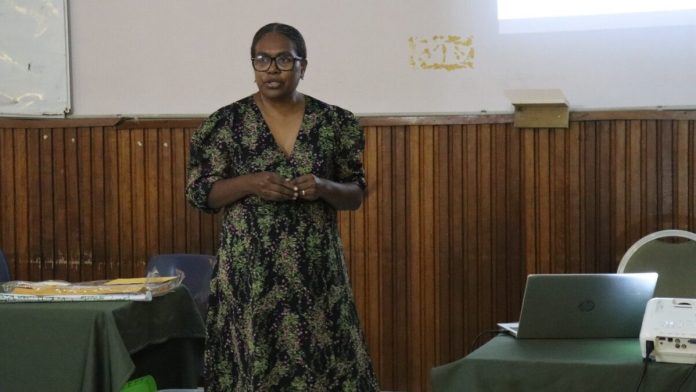
Member of Provincial Assembly for Ward 7 in Western Province has expressed disappointment over the delay of Daily Subsistence Allowance for those attending the Ward Profiling Workshop.

Speaking on behalf of the 26 MPAs, Chairperson of the Ward Development Committee, Ward Development Support Officers and other stakeholders, Rence Sore said Daily Subsistence Allowance should be paid upfront before the meeting.

He adds that DSA must be different from the sitting allowance.

Sore said MPAs are elected leaders and not ordinary individuals and they deserve respect.

He also said Ward Development Committees must also be treated the same.

“According to arrangements, accommodation will be paid, DSA will be paid and sitting allowance will not be paid. So do the right thing and give our DSA on the first day”, Sore said.

He explained that MPAs need the DSA to survive and also have responsibilities to their voters while in Gizo.

On the same note, Sore acknowledged the Ward Profiling Workshop saying that it provides an opportunity for MPAs and WDCs to sit down and draw up a good ward profile document.

“This is the first time that we sit with our WDCs to develop this document,” he said.

For feedback, contact: [email protected]
CBSI acknowledged for leadership role

0

BY LORETTA B MANELE

The Central Bank of Solomon Islands (CBSI) has been acknowledged for its leadership role in regards to quality of policy research.

Prof Paresh Narayan of Monash University and APAEA (Asia-Pacific Applied Economics Association) made the acknowledgement at the recent “2nd CBSI-ADB-APAEA Joint Workshop” at Heritage Park Hotel.

“The importance of central banks hosting this, and again at this point I should acknowledge the leadership, the vision that Governor Luke Forau has demonstrated over the last several years to enhance the quality of policy research that comes out of the central bank, because it sends a signal to all of them,” he said.

Prof Narayan went on to state that he thinks it is that signal they want to harness, to nurture and they want to search for the optimality in success that emerges out of those signals.

“And you will see that signal or signals throughout the day in terms of the key messages that come out of the research that is happening at the central bank, but also the type of research that the central bank is thinking about doing, maybe in collaboration with some of the policy makers that are in the room today,” he added.

Prof Narayan pointed out that the joint workshop is not only about knowledge sharing but also about multiplying on that knowledge.

“And on that note, the Central Bank of Solomon Islands, under the leadership of Governor Luke Forau, is playing a very, very important role,” he said.

For feedback, contact: [email protected]