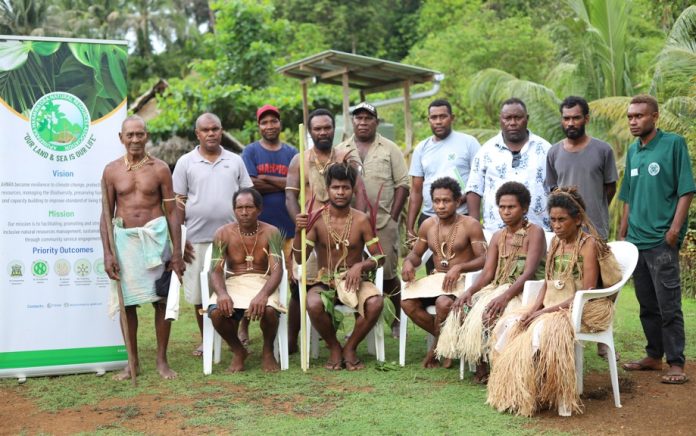
The Apunepara Ha’amwaora Natural Resources Association (AHNRA) recently launched their Sisihola initiative (Our Story) Project.
The project, themed “Restoring Traditional Ecological Knowledge and Cultural Practices”, aims to restore and revitalise Traditional Ecological Knowledge (TEK) and practices within the conservation communities in Maramasike Passage, in Small Malaita.
The primary goal of the project is to capture ancestral practices and ecological wisdom that have historically been the foundation of the community’s relationship with the environment.
The attendees were told that the project’s theme pertains to the recognition, revitalisation, and application of the accumulated knowledge, practices, and beliefs that indigenous and local communities have developed over generations regarding their local environment.
Henceforth, the project aspires to restore damaged ecosystems and encourage sustainable resource management by merging these time-honoured methods with contemporary conservation practices.
The launch was officiated by four guests: Mr David Mane, Malaita Provincial Government Southern Region Senior Admin Officer, Mr Jeffery Kinifu, Malaita Provincial Government Southern Region Senior Forestry Officer, Mr Francis Nori, a conservation representative from Mamara’o’orou and Edward Huitarau of SI-Rangers.
The project was initiated and launched by the Apunepara Ha’amwaora Natural Resource Association (AHNRA).
Representatives from ten communities attended this significant event at Waitoto village, Maramasike Passage.
In the small, remote village of Oliveti, situated in the highlands of Northwest Choiseul in Solomon Islands, a harsh reality looms.
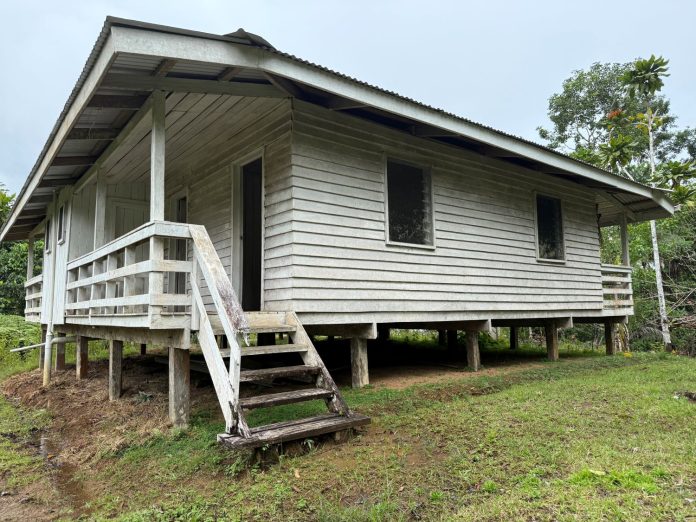
The Oliveti community clinic
There is the community’s clinic, and although built with great hope and anticipation, sadly, it has remained without a nurse and essential medical equipment since it was completed and handed over to the community in 2019.
Although it stands as a symbol of progress to offer basic medical care to the villagers, the clinic has become a hollow structure, empty of the very healthcare workers who are supposed to fill it.
For the people of Oliveti, this issue has resulted in tragedy after tragedy, with the most vulnerable paying the highest price.
For years, the clinic has remained a beacon of hope, yet that hope has gradually turned to frustration and despair. For villagers who depend on it for everything from routine check-ups to emergency care, the clinic has become a sad reminder of the deep injustices that persist in rural healthcare systems.
“A few of our elderly people died because there was no one to help. I believe if we had a nurse, these people wouldn’t have died. On occasion, we have to carry our sick to coastal clinics. This is the sad reality we are facing,” said Chief Raziva Vatukikesa.
In Oliveti, it’s not uncommon for women to give birth at home or even during a trek. The absence of a trained healthcare worker to oversee deliveries is a grave issue, one that has cost the community dearly.
“We want a nurse here, someone who can help us when we need it most. We have a lot of cases where women gave birth in the community, some along the road while on their way to coastal communities where clinics are built. Luckily, most of these children are alive,” Vatukikesa said.
The loss of life in Oliveti, due to the lack of skilled medical staff, is not confined to childbirth. People suffering from basic illnesses like malaria, pneumonia, or infections often face a grim reality; with no healthcare professional available, they must either travel to a distant clinic or, too often, wait until it’s too late.
The lack of a nurse affects not only the immediate health of the village but also the long-term well-being of its people. When emergencies arise, they are forced to either rush to the faraway clinics in the coastal communities, which would be a four to six-hour trek, or attempt to treat themselves with little to no medical knowledge.
This situation also means that medical conditions that could easily be treated with timely intervention are left to escalate into life-threatening situations.
The people of Oliveti are not idle in the face of this ongoing crisis. The village has been asking for a nurse to be stationed at the clinic for years.
Oliveti clinic outpatientInside the non-functioning clinic in OlivetiOne of the Clinic’s admission roomClinic’s admission roomThe clinic lacks equipment and medical personnelThe clinic lacks equipment and medical personnelThe Oliveti clinic staff house
The clinic, though built with good intentions, stands as a monument to unmet needs. While the structure itself is functional, it remains an empty shell without the necessary human resources and medicines. Without a nurse to offer care, the facility is essentially useless.
“We don’t need a fancy clinic.
“We just need a nurse. A person who can deliver babies, who can treat fevers, who can help when someone is injured. That’s all we need,” says Joseph Saotokesa, his voice filled with quiet frustration.
While urban centres benefit from advanced healthcare systems and well-staffed clinics, rural villages like Oliveti continue to suffer from the lack of even the most basic services. The villagers’ call for a nurse to be stationed in their clinic is not an unrealistic demand; it is a necessity for survival.
A nurse in Oliveti could mean the difference between life and death. It could prevent needless suffering, offer critical care during emergencies, and provide the knowledge and support that every community deserves.
For the people of Oliveti, the fight for a nurse is more than a request; it is a plea for dignity, for survival, and for the right to access the basic care that every human being deserves.
*Reporting for this story was supported by Pacific Media Assistance Scheme (PACMAS)
The first thing a visitor notices at Oliveti community in the highlands of Northwest Choiseul Province in the Solomon Islands is the silence, a silence not of emptiness, but of resilience.
A foggy view from Oliveti community looking down to the coastal area
It is broken only by the rhythm of winds striking pristine forests and the laughter of birds echoing through the forest. At the heart of this fragile, self-sustaining world live the Oliveti guardians whose authority is not written in books, but carried in stories, rituals, and the memory of their people.
A mother in Oliveti community preparing local foodLocal peanut planted in Oliveti communityA taro garden on the hill
For the 100 or so residents of Oliveti, a remote community in the land, the people are more than leaders. They are the link between generations, holding knowledge about planting seasons, fishing grounds, sacred sites, and the moral compass of the community. Their role is both spiritual and practical, anchoring highland life in a world where modernity arrives by wind.
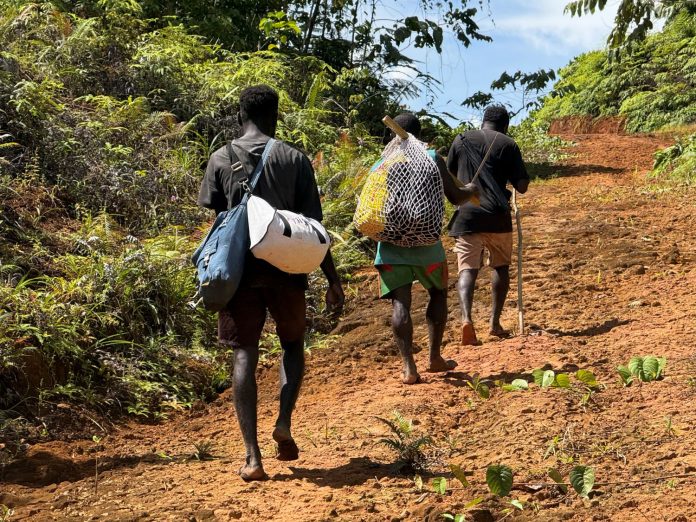
Community members walk long hours to access medical attention other services in coastal areas (1)
To reach Oliveti, one must traverse four to six hours of bush tracks from the coast, with coastal villagers often carrying visitors’ essential supplies such as backpacks, food, and other belongings.
The community’s life revolves around a subsistence-based lifestyle. Families cultivate gardens of potatoes, yams, taro, sugarcane, beans, bananas, pineapples, and vegetables, which provide food for the household and occasionally surplus to sell at markets in Taro, the provincial capital or at coastal communities.
Chief Raziva Vatukikesa
“The Oliveti people are not just people nor chiefs. They are keepers.
“They keep our respect for land. Without them, we are just adrift. This is our land, which our ancestors gave us. People go and come,” explains Chief Raziva Vatukikesa.
Oliveti’s remoteness brings significant logistical challenges. Medical access is risky, with villagers risking dangerous land journeys to reach Taro Hospital, or coastal health clinics, especially during bad weather, long distances, which has tragically resulted in lives lost.
Oliveti village
Oliveti’s isolation has long shielded its customs. With no school in the community and poor road links, daily life still revolves around subsistence gardens, river fishing, and community ceremonies. Within this pace, the Oliveti guide balances: settling disputes, reminding families of taboos, and protecting sites where ancestors are said to dwell.
The communities’ youth, many of whom now leave for schooling in the coastal communities or in Honiara, return to find the Oliveti still shaping life. An elder notes, “Our children grow up between two worlds. But the Oliveti keep one foot firmly in the world of our ancestors.”
Oliveti clinic
Despite challenges, signs of resilience are everywhere, projects such as the building of a clinic in the community, water supplies, community hall and church building whose iron roofing required coordinated effort across days under adverse conditions, exemplify the determination of villagers to improve local infrastructure.
“We really need better roads. Our children need education. We don’t have school here. So, our children have to live with our relatives in the coastal communities to attend school. We have a clinic, but since then, no nurse has been stationed here. Communication remains under development here,” said Chief Raziva Vatukikesa.
Yet even the community of Oliveti is not untouched by the outside, and local foods play a vital role in sustaining the livelihood of the Oliveti people.
“The land tells us when to hunt. The trees tell us when to plant, but now the seasons change.
“The land is sick. If we lose that knowledge, we lose ourselves,” Chief Vatukikesa explains.
To adapt, some Oliveti people have begun working tirelessly, blending traditional stewardship with modern life. Women weaving traditional baskets, men mending homes from sago-palm leaves. Each act is a quiet defiance against forgetting. And the Oliveti community remain at the centre, steadying the community through continuity.
Oliveti may appear as just a small dot on the Choiseul province map, but they embody a lesson with global reach: that culture and environment are inseparable, and that wisdom is not only inherited but practised.
Group photo of people of Oliveti community
As night falls and the sun glows over the community, the Oliveti people gather in silence. They do not speak loudly, for they do not need to. Their presence is enough: a reminder that guardianship is not about power, but about remembering what must never be lost.
*Reporting for this story was supported by Pacific Media Assistance Scheme (PACMAS)
A meeting next week is supposed to have renewed commitment from Solomon Islands two partners, Australia and New Zealand.
Collin Beck, Permanent Secretary to the Ministry of Foreign Affairs and External Trade (MFAET) spoke about this before the PAC (Public Accounts Committee) Hearing on 2026 Appropriation Bill 2025 on Wednesday, November 19, 2025.
In regards to the meeting, he informed the committee that the PACER Plus arrangement by next week is an important one for the country, especially in terms of trade.
Beck said the term for the first phase of the implementation in terms of rolling out support will come to an end on the 12th of December.
“So, the meeting next week is supposed to have renewed commitment from our two partners, especially Australia and New Zealand, he said.
Beck mentioned that under the PACER Plus agreement, the first cycle was around Australian AUD 25 million.
“So, we are expecting with the increased number of activities, we expect the envelope to increase and that will be signed off by the minister at ministerial level. So that again will be hosted here in the Solomon Islands,” he said.
Speaking of some of the economic activity they are engaged in under the PACER Plus Agreement, Beck said they are working with Chilli farmers as one issue Soltuna is facing is the lack of Chilli.
“And I think they have been importing Chilli from Nepal, from abroad. So, under the PACER Plus arrangement, we are trying to work with MAL (Ministry of Agriculture and Livestock),” he said.
Beck mentioned that they have also worked with an agriculture expert in terms of trying to ensure that those from the province, especially Western Province which is closer to the Soltuna factory, can grow Chilli.
According to MFAET, The Pacific Agreement on Closer Economic Relations (PACER) Plus is a regional trade agreement between the FICs, Australia and New Zealand.
The Agreement, initiated back in 2009 aims to achieve closer economic integration and trade relations within the Pacific and is intended to be a development friendly deal that facilitates sustainable growth for FICs (Forum Island Countries).
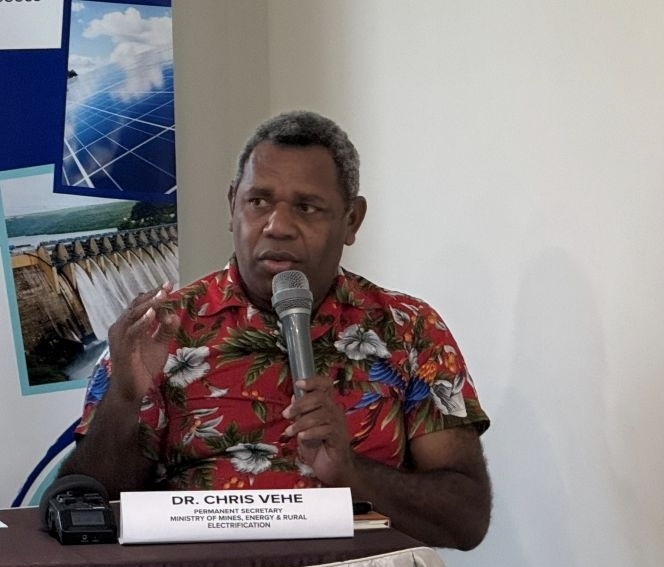
One of the major challenges in the energy sector is having a legislative framework that is not really compatible to enable us to control the sector says Chris Vehe, Permanent Secretary to the Ministry of Mines, Energy and Rural Electrification (MMERE).
He raised the concern as a panel member of UNDP and MMERE’s Panel Discussion on “Pathways towards better electric power availability, affordability, and sustainability” on Friday, November 14, 2025 at Heritage Park Hotel.
Vehe voiced that we need to have an energy sector that encourages economic development, promotes environmental protection and supports health and education.
He added that disaster preparedness is also very important for this matter.
“It is important that people have to know how to quickly prepare themselves for disasters. I’m not too sure how much people prepared yesterday when there is a sudden change in the weather pattern here in Honiara,” said Vehe.
He highlighted that this comes back to how efficient we can use the sector to be able to disseminate appropriate information.
“…..not only on the judicial review side of things, but we really, really need to have political champions in this space,” added Vehe.
He pointed out that we need to have our leaders with us, driving even this campaign.
“I just want to encourage the team. We need to engage the Prime Minister’s office in driving this.
“We cannot leave them aside while we are trying to do it, because they are the ones who handle the wheel, and we need to be together,” said Vehe.
He also stated that engaging churches, youths and schools is very important as well.
Vehen furthered that he really appreciates the effort so far and encourages everyone to put their heads together in coming up with better policy directions for our leaders in regards to the energy sector.
Commenting on a current survey on national energy planning by MMERE and UNDP, he said unless they carry out proper surveys, only then can they be able to produce proper plans that are practically sound when it comes to implementing.
“Otherwise, we will just be developing policies that are baseless. They are not data-driven, so we ended up having ourselves caught up in a situation where we developed policies that are not practically sound with what is happening in our society,” he said.
WORLD Wildlife Fund (WWF) takes the lead to strengthen community development in Saeragi by providing financial resources for the construction of a two-story office complex that will support women, researchers, and surrounding communities.
The building is a key component of the Sea Grape Management Project currently piloted in Saeragi and Kongulavata communities.
WWF Community Facilitator for Saeragi, Nerolyn Loni, said women from Bibolo, Miles Six Vorivori and Saeragi are grateful for the support, describing the infrastructure as a significant boost to community activities.
“We are grateful to WWF for recognising our need. This building will definitely boost women’s programs and activities within our communities.
“It’s not often that communities receive such a blessing and we are just thankful for the support,” she said.
According to Loni, the new complex will serve multiple purposes, including training and meeting spaces for women, as well as a hub for students and visitors interested in researching community livelihoods and challenges.
“Overall, this building will serve as a WWF Saeragi Sea Grapes Association hub to host regional and local meetings,” she added.
Construction team leader and Local Knowledge Broker (KB), Joseph Lipa, confirmed that work is progressing well.
He said the development stems from a Memorandum of Understanding (MOU) signed between the Solomon Islands National University (SINU) and WWF.
“This development follows an MOU signed between SINU and WWF, allowing Knowledge Brokers to later pursue courses at SINU while enabling students to conduct part-time fieldwork in Saeragi,” Lipa explained.
He said the building is expected to be completed next year.
A concerned landowner of San Jorge Island has spoken out against the San Jorge Landowners Association (JLA), accusing the group of acting against the interests of genuine resource owners and allowing what he calls a “cheap mining company” to take over their resources.
Allan Tavake, a vocal member of the landowning groups on the island, said many resource owners have been sceptical of the mining company and the association since the beginning of the engagement process.
He claimed that most decisions made between the company and the JLA did not reflect the views of the actual landowners but were pushed forward by the association.
“From the beginning we have seen incompatible issues such as the Surface Access Right Agreement, Landing Fees, exploration conducts, and benefit sharing,” Tavake said.
He further alleged that the association has continuously sided with the company because few individuals within the JLA have been benefitting from the operation from day one.
Tavake warned that unresolved issues between landowners and the company could jeopardise the successful implementation of the proposed mining project.
“There are existing issues between landowners and the company that will threaten the project. Only a few within the Association are benefiting from this operation, and I must warn them that time will come and they will see what needs to be done,” he added.
Earlier this week, Secretary of the San Jorge Landowners Association, John Kabu, announced on the association’s Facebook page that Far East Resource Company has been granted a mining lease over South San Jorge in Isabel Province.
Kabu described the mining lease as a long-anticipated achievement for both the mining company and the JLA.
He also highlighted the proposed consolidation of prospecting licences and a new payment arrangement that would shift previous fees into a single-stream lease payment along with upfront support funds — part of what the company claims is an effort to ease tensions and demonstrate shared benefits.
The company’s representative, Johny Shu, reportedly confirmed the development, calling it “great and much awaited,”.
While the association and the company celebrate the milestone, surrounding communities remain anxious about potential environmental damage.
Residents have pointed to the pollution at the Suma mining site as a grim reminder of the destructive legacy mining operations can leave behind.
Many fear that San Jorge could face similar consequences if concerns raised by landowners continue to be ignored.
Former Council of Women leader blasts gov’t for talk and no action
BY BEN BILUA Gizo
FORMER President of the Western Province Council of Women (WPCW), Rendy Solomon, has criticised the national government and its line ministries for “talking too much” without providing the necessary support to implement women’s programs and activities across the provinces.
During a recent gathering, Solomon highlighted that rolling out government-endorsed programs at the provincial level remains a major challenge due to the country’s diverse geographical landscape.
She said some provinces have a clear advantage because of their smaller populations and lower logistical costs, but this is not the case for provinces like Western Province.
“For us, we have scattered islands and bringing all the participants together in one place requires a lot of effort and financial resources.
“Just think about Marovo to Shortland. The distance is quite far and, as I’ve said, it needs a huge amount of money to get women together,” Solomon said.
She added that the challenge does not end at gathering participants, noting that delivering programs and activities to remote communities is often a “hectic effort.”
Solomon reminds the government that Councils of Women serve as essential agents of the Ministry of Women, tasked with translating national policies and agendas into action at the community level.
She said these councils play a dual role — implementing programs and feeding information back to the government by identifying issues affecting women and girls in rural areas.
“If we look at how we operate, Councils of Women are playing an active role in ensuring that women’s issues are brought to light.
“Our role is to help the mother ministry and the government, and this requires extra support from the government,” Solomon said.
She warns that Councils of Women across the country will continue to struggle unless the government recognises and fully supports the vital work women perform in community development.
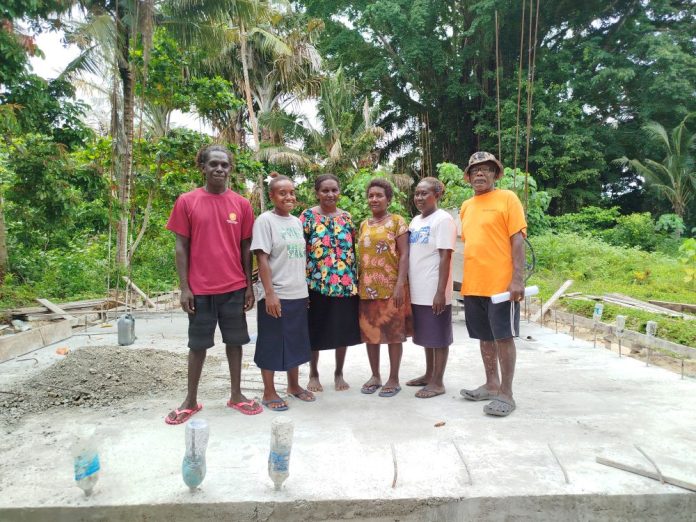
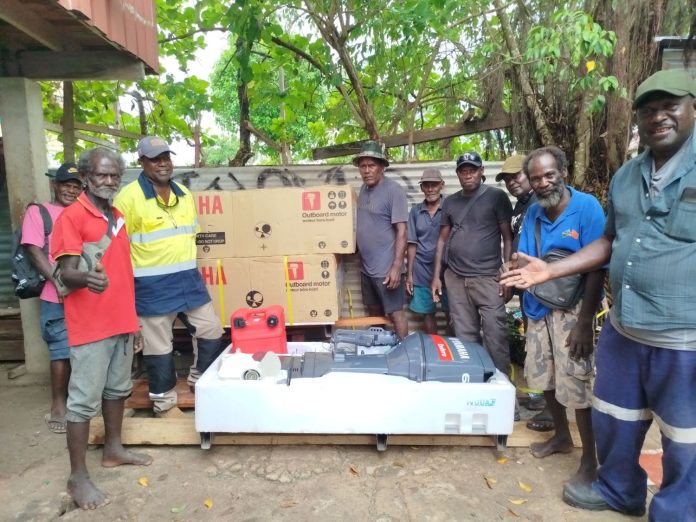
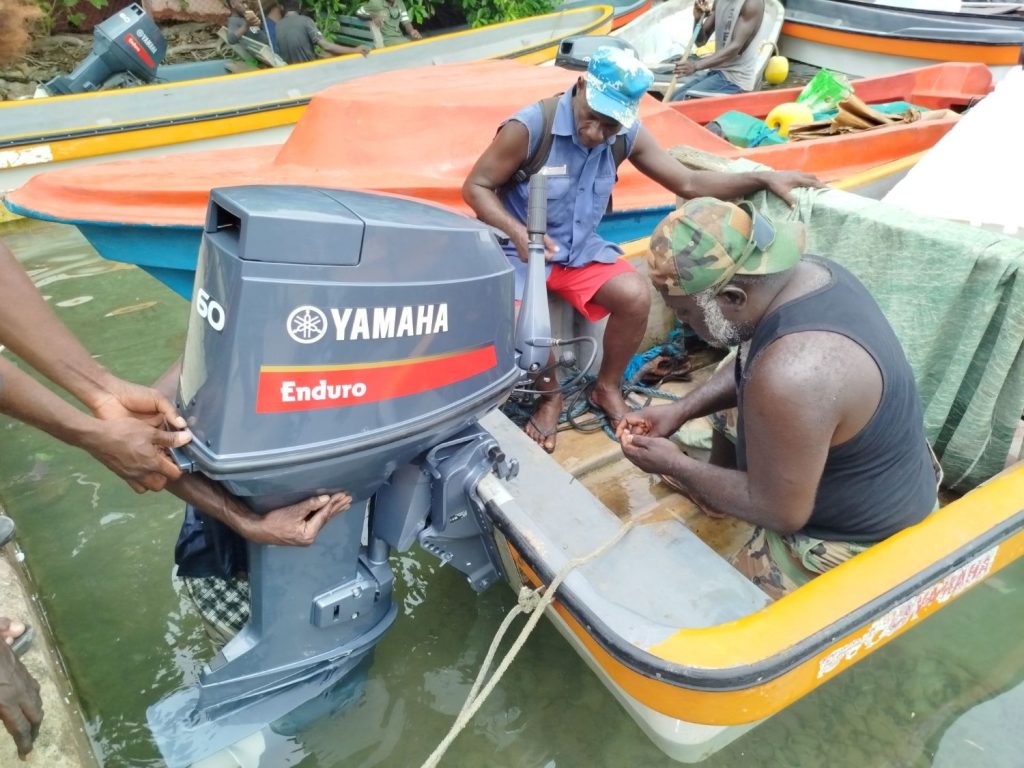
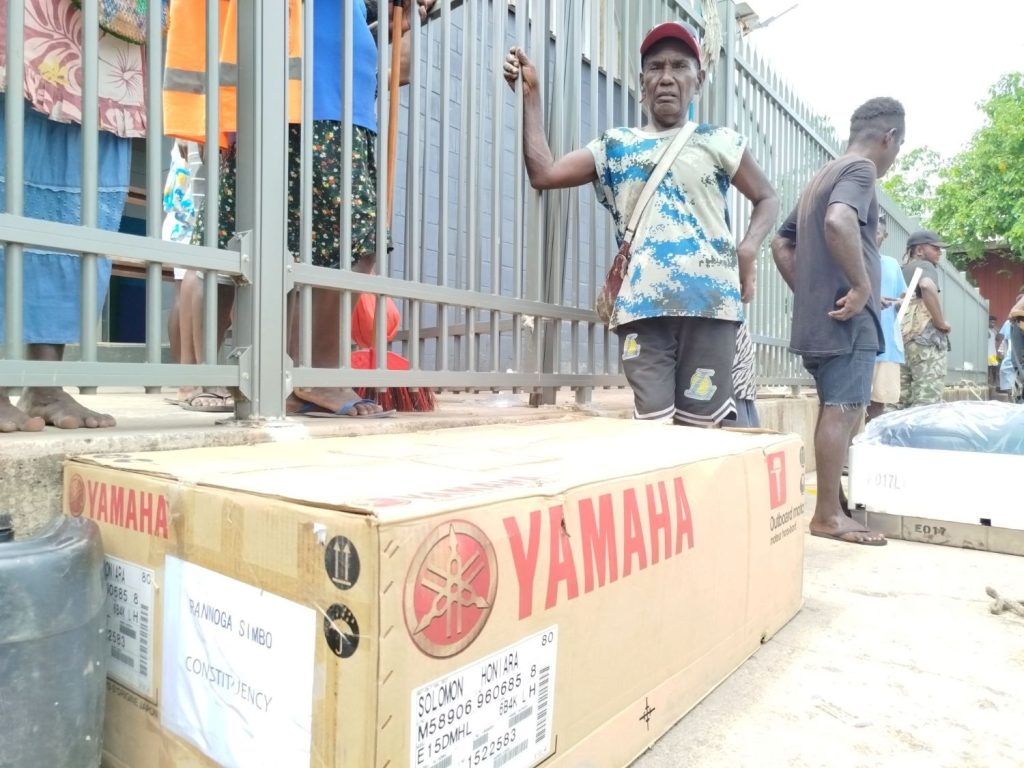
THE Member of Parliament for Ranongga/Simbo, Wayne Osopo Ghemu, has delivered a major boost to communities across his constituency with the donation of outboard-motor engines and boats to farmers, fishermen, and rural villages.
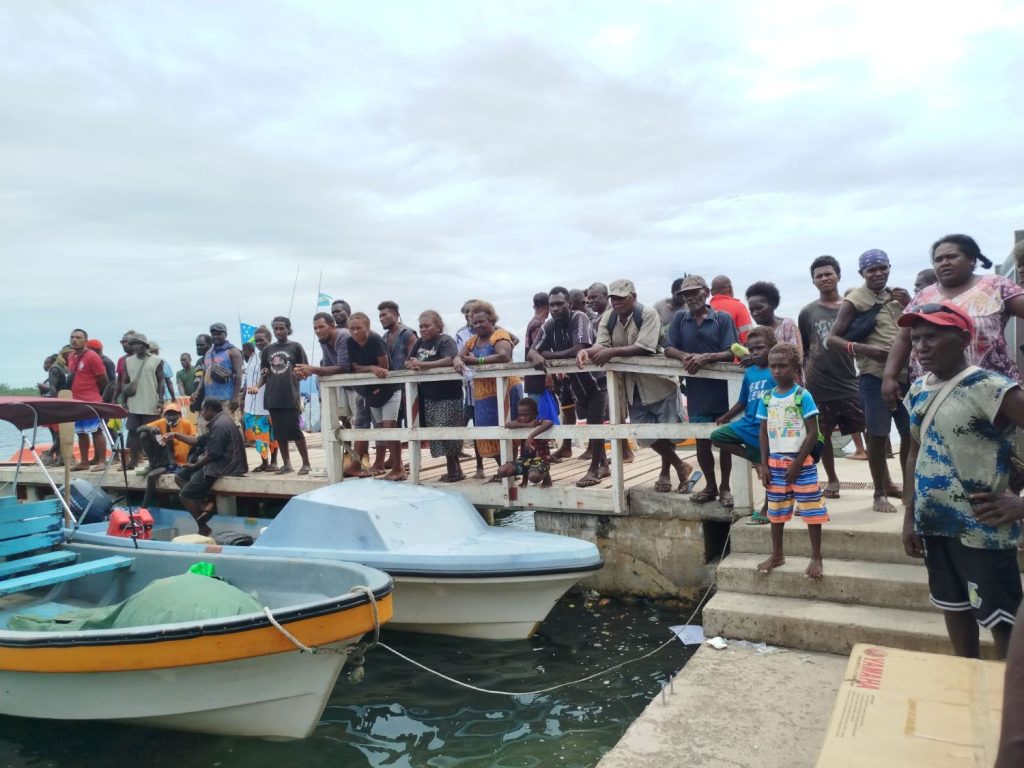
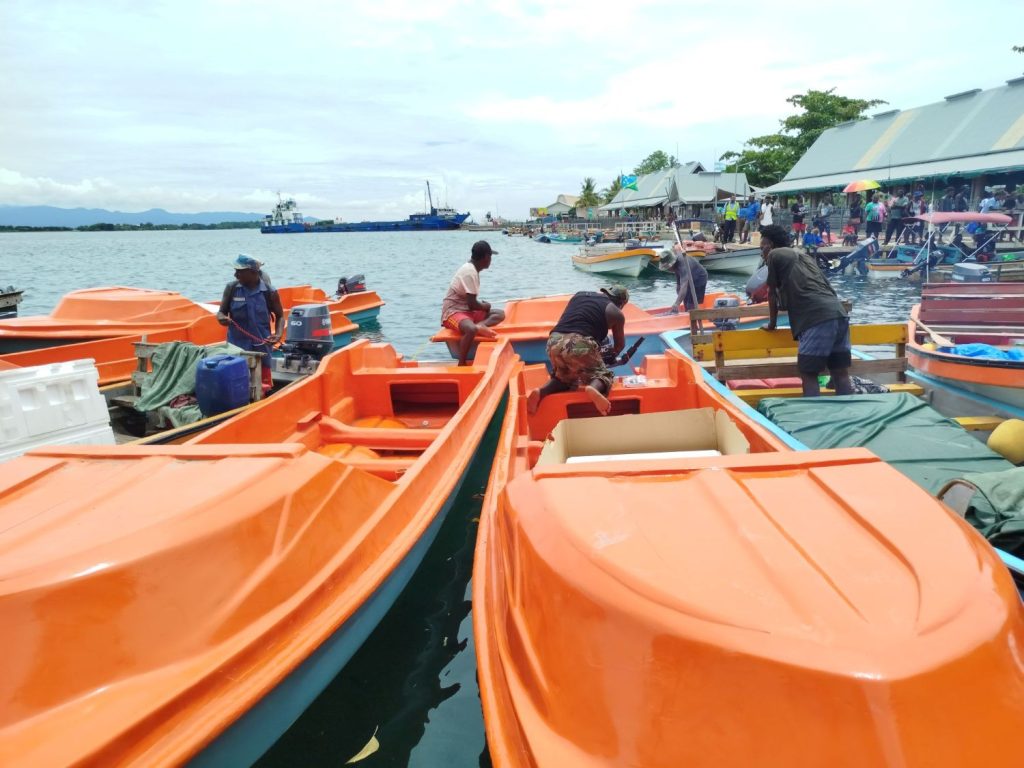
The brand new boats at Gizo wharfPeople attracted by the handing over ceremony
Gizo Wharf came alive yesterday as hundreds from Ranongga/Simbo and neighbouring islands gathered to witness the official handing over of the transport assets.
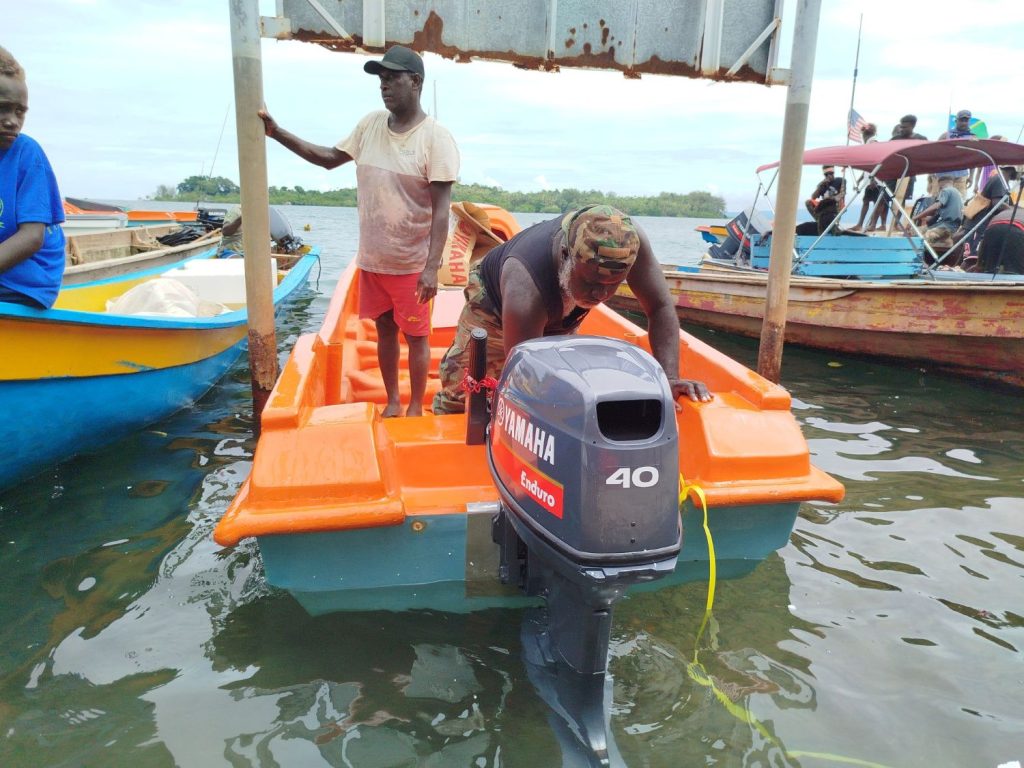
The atmosphere was filled with cheers and smiles as recipients watched their new boats being launched and fitted with brand-new engines.
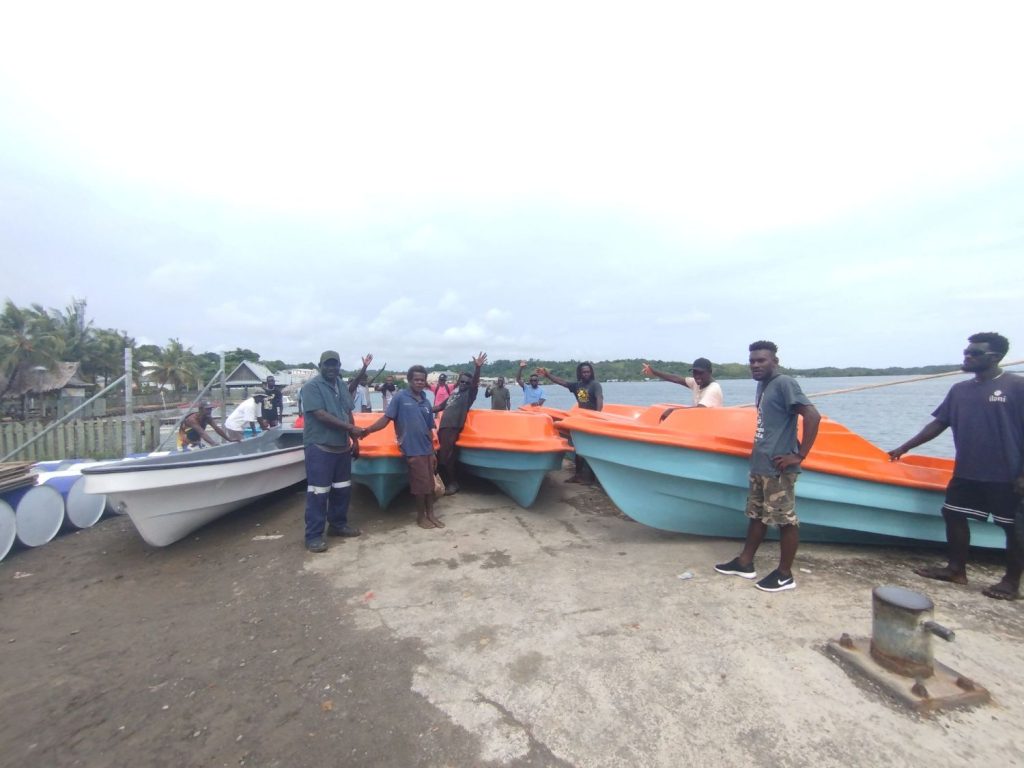
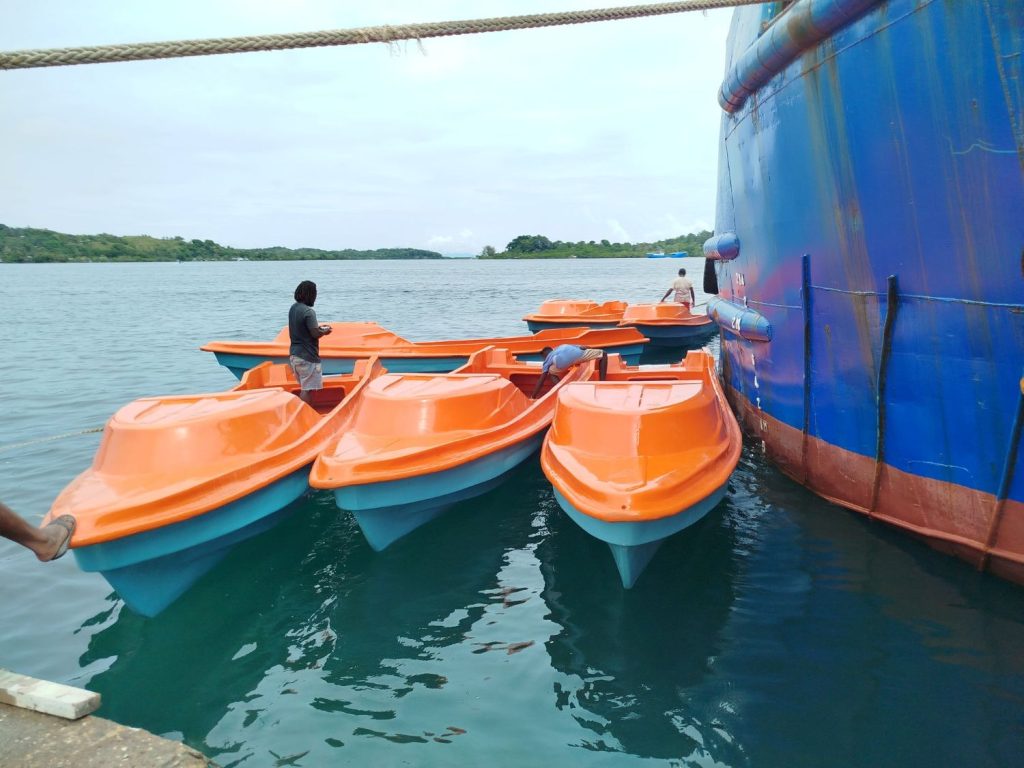
Brand new 40hp engine mounted into a brand new boatOne of the brand new 60hp engine mounted to a boatTesting. An expert testing the engines before they left for RanonggaHappy moment. CDO Lawrance Walter with recipients standing next to the brand new boats.The brand new boats ready to be transported to Ranosi Constituency Office
For many, it was a long-awaited moment that signalled improved access to markets, hospitals, and essential services.
One recipient, Frank Vavira, described the occasion as a “happy and important day” for the people of Ranongga/Simbo.
He said transport difficulties have long affected communities, especially when travelling to Gizo Market or during medical emergencies.
“This time we have these important assets, and I want to acknowledge our Member of Parliament for recognising our need.
“This engine will help our community, especially women, to transport their produce to Gizo market, transport the sick, and support other commitments,” Vavira said.
Frank, who received a 30hp Yamaha engine, added that owning such equipment was once unimaginable due to the cost.
“Not in a million years did I imagine owning an engine…For that, I acknowledge our Member of Parliament for supporting us with these important assets,” he said.
Another recipient, Hopkin Keza, who received a 60hp engine, also praised the MP for the support.
He said the boat will serve multiple purposes, including market trips, emergency runs, school transport, and church activities.
“I’m humbled and honoured to be one of the recipients of the Ranongga/Simbo Transport Project,” Keza said.
Mr Issac Puge standing close to his engine
For Isacc Puge, the handover was nothing short of a dream come true.
He spent the day smiling “like a man who had won a million-dollar lottery prize.”
Puge said the boat and engine will open new opportunities for his family and community.
“There will be no more looking for a boat to transport our products to Gizo. We now have our own engine and boat – meaning we can transport our products more frequently,” he said.
Constituency Development Officer (CDO) Lawrence Walter said the donations were funded under the Ministry of Infrastructure and Development’s (MID) Transport Initiative Fund.
He said the constituency distributed four 60hp engines, six 40hp engines, two 30hp engines, and seventeen 15hp engines.
Walter adds that the constituency also purchased two Ray-boats and five fibreglass boats.
He said the objective of the program is to strengthen essential transport services for rural communities.
“This is part of our ongoing plan to equip communities with necessary services to improve their livelihood,” Walter said.
He said more projects are underway, including the distribution of 60-watt solar lights to elderly individuals, and the planned rollout of 500-watt solar power sets to households in the coming months.
Walter assured that the constituency office will keep implementing development initiatives with the aim to improve the lives of the people with the continued support of MP Ghemu.
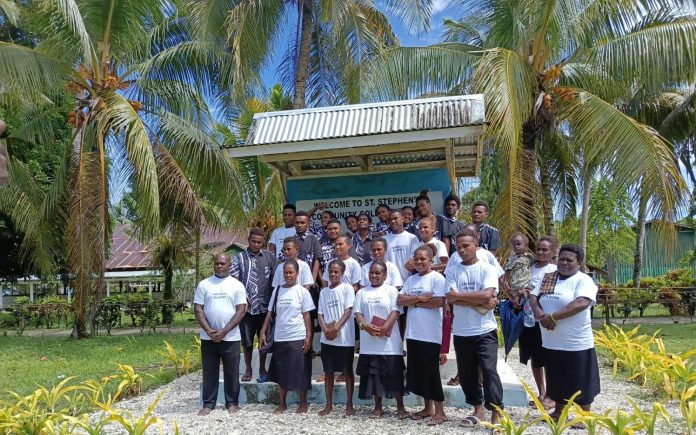
More than 300 members of the Anglican Church of Melanesia (ACOM) in Makira Ulawa Province converged at St. Stephen Pamua Community College last week for a week-long youth rally celebration.
The event themed “Hanuato’o Youths and Discipleship of Christ from Hanua to Hanua in Hanuato’o Diocese,” aims to foster spiritual growth and community unity among young participants.
The rally commenced with a solemn opening Eucharist, followed by vibrant parades where groups entered the venue with colorful floats and banners representing their parishes.
Diocesan leaders delivered speeches, and the day wrapped up with communal refreshments. The diocesan bishop and provincial member for Ward 12 of the Makira Ulawa Provincial Government, who hosted the event, departed later that afternoon.
Evening entertainment, blending religious, social, and cultural elements, was provided by Pamua Community College youth, offering a mix of activities that engaged attendees well into the night.
The following day focused on educational sessions led by Diocesan Mission Office (DMO) staff, covering a range of topics to deepen participants’ understanding of faith and mission.
In the evening, parish-led religious activities provided interactive programs to strengthen spiritual connections.
On the third day, DMO staff continued their teachings, with the afternoon featuring a special contribution from a Kirakira police team, who shared insights on community safety and responsibility.
The day concluded with lively cultural performances by each parish group, showcasing traditional dances, music, and customs.
While full details of the remaining days were not immediately available, organizers reported a successful wrap-up, with participants leaving enriched and inspired.
The event highlighted the diocese’s dedication to youth empowerment, promoting unity and spiritual development within the Melanesian community.
Bishop of Hanuato’o praised the rally as “a beacon of hope for our young people, equipping them with tools for faith and life”.
The Pamua Rural Training Centre served as an ideal venue, balancing structured learning with joyful fellowship.
As the Anglican Church of Melanesia looks to the future, such initiatives are poised to enhance diocesan outreach in the years ahead.