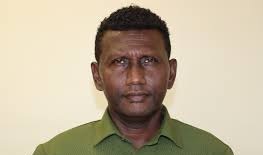
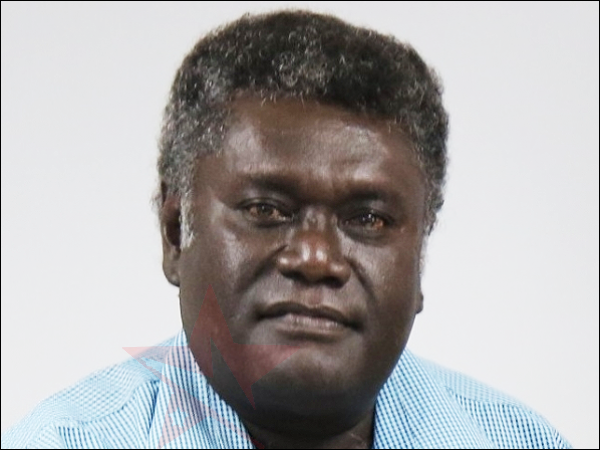
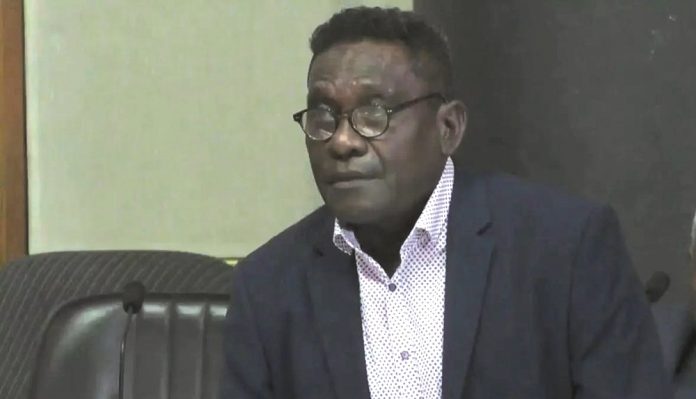
The Minister for Police, National Security and Correctional Services, Jimson Tanangada has said the 2026 budget must be guided by realism, responsibility and impact.
He pointed this out on Wednesday, Dec 17 whilst speaking on the final day of the Sine Die Motion in parliament.
Tanangada said it is their mandate to ensure that they implement the budget truthfully to achieve the anticipated outcomes they have.
“To ensure that it must uplift communities, strengthen justice and build capacity, not only for this generation but future generations,” he said.
The Member of Parliament for Gizo/Kolombangara highlighted that the Ministry of Finance and Ministry of Planning as their duly responsibilities, will secure resources, ensure debt sustainability and align financing with national priorities.
He however, also raised that responsibility cannot stop at mobilisation.
“I therefore call on government secretaries, accounting officers and heads of government agencies to take full ownership of implementation.
“Without disciplined execution, a budget may remain unclear and not progress,” Tanangada said.
He stressed that the 2026 budget must translate policy into tangible services.
On this note, Tanangada said they must ensure there are classrooms in rural villages, functioning health clinics with medicines, cleaner roads and jetties, market access for fisheries and farmers, electricity and water for our households, police presence in high crime areas, extension of police stations and outposts, efficient justice delivery and jobs for our youths.
He added that these are areas they anticipate the 2026 budget to achieve.
Tanangada said this is the responsibility that lies heavy on the shoulders of all the important people who are members of public servants, staff of permanent secretaries, heads of departments and heads of government agencies.
“This is not optional.
“It is the critical mission of this government and everyone is responsible to ensure that they implement the tasks that rest their shoulders,” he said.
Tanangada also stated that the ASEAN Development Bank has been projecting growth to accelerate in 2026, supported by mining, fisheries and construction.
He said the World Bank focused on stronger activity in agriculture, tourism and infrastructure of which could reduce poverty and improve living standards.
Tanangada added that this is reflected in the 2026 budget including the support of our development partners.
The Minister for Police furthered noted that success will depend on inclusive implementation.
“If we measure progress only in urban centres, we fail the majority in villages and outer islands. Therefore, the true test of the 2026 budget will be that change is delivered to the poor, vulnerable and marginalised,” he said.
While the Health budget appears large, its structure tells a different story, says Member of Parliament (MP) for South New Georgia/Rendova- Tetepare Constituency, David Gina.
Sharing this concern during the Sine Die Motion in parliament on Wednesday this week, he stressed that clinics remain without reliable buildings, staff housing, or medicines despite the government prioritising public health.
“This does not deliver care; they deliver transmissions,” he said.
Gina said public health infrastructure determines whether services work in practice and not just on paper.
“Total funding stands at around 700 million in 2025 and rises to about 852 million in 2026. Yet, Public Accounts Committee analysis shows that only about 8.1 percent of the allocation for development with more than 91percent absorbed by recurrent costs. This sits outside the stated policy model of an 80-20 ratio balance and civil limits of pace of infrastructure delivery,” he said.
Gina said that even the small development shares are not fully translated into results.
“Development execution stands at around 44 percent compared to 77 percent for recurrent spending and 78 percent for donor-funded programmes. This explains why long lists of promised clinics co-exist with communities still waiting for completed facilities,” he said.
Gina said it is important to recognise achievements, noting that the first major increase in many years was the $125 million funding for the national medical stores to increase and help stabilise medicine and drug supplies.
“Six primary health care facilities; Dedeo, Konide, Wagina, Leona, Tukutaunga and Kwantai have been completed and handed over. The development portfolio now includes 10 new rural health clinics; showing progress where funding and execution align. I must congratulate the Minister for Health for a job well done,” Gina said.
He also raised that sanitation and drainage failures in Honiara feed directly into disease and hospital pressure.
“Weak development funding across government means this problem continues to land at the doors of the health system. Absence of public amenities in Honiara and provincial centres is not only a public health risk, but also an impact on our visitors and tourists,” he said.
Gina warns that public health requires discipline to lift development investment, improve delivery, align infrastructure, workforce, and the supply system and cannot run on recurring spending alone.
MEMBER of Parliament for Central Honiara, Gordon Darcy Lilo, has called on the government to review land ownership arrangements in the capital, warning that high-value land and property assets are increasingly concentrated in the hands of a few entities.
Speaking in Parliament on Tuesday this week during the Sine Die Motion, he said while he welcomed investments in urban infrastructure and social services, land ownership in Honiara remains a major concern.
“I am quite pleased with what we are being given for infrastructure development and other amenities in the urban centres, including improvements in the health sector,” Lilo said.
He said the growing population in Honiara made it necessary for the government to pay closer attention to land issues in the capital.
“I would like to talk about land. Minister, take a look at land in Honiara. You will find that in many ways, land from Henderson to White River is in the hands of one or a few entities,” he said.
Lilo said Fixed Term Estates (FTEs) in Honiara were also largely controlled by a small number of interests, and urged the government to investigate the concentration of ownership of what he described as high-value national assets.
“Let us find out where the concentration of these high-value assets of our country is vested, and by whom. Minister, you will find it shocking,” he said.
Lilo said land and properties along the stretch from Henderson to the Central Business District, including former Levers Solomons Limited properties, as examples.
“We are not jealous of them, but this is where the concentration of power in the urban centre lies,” he said.
The Central Honiara MP also raised concerns about the country’s taxation framework, arguing that it focuses too heavily on income tax while ignoring capital gains.
“This is why I talk about capital gains. The main thrust of our taxation system is on income. It is not on capital gains,” he said, calling on the Minister of Finance to consider reforms in this area.
Lilo said most of the country’s high-value assets are located in Honiara in the form of property and real estate, rather than in the provinces.
He pointed to regional examples, saying that in countries such as Tonga, land is vested in the state, while Fiji has strict land regulations.
Inclusivity and resilience are key pillars of the 2026 budget, said Rexon Ramofafia, Minister for Finance and Treasury.
Speaking in parliament during the Sine Die motion on Wednesday he said the budget seeks to ensure development benefits and services are equitable across the provinces.
Ramofafia said the government is fully aware that the credibility of the budget rests not only on formulation but on effective execution.
He said that capacity building remains a critical enabler of effective budget implementation.
Ramofafia also stated that the budget has been carefully designed to promote sustainable and inclusive economic growth, recognising the need to balance physical responsibility with developmental imperatives.
“It seeks to expand in areas that can create growth, employment and important services that we are to deliver to our people,” he said.
Ramofafia said the government’s strategy for budget implementation is anchored on prudent fiscal rules, a strengthened public financial management system and strict adherence to appropriation.
“The PAC committee has demonstrated its crucial role through its independent and provisional scrutiny of the budget. The examination of allocation, fiscal assumptions and implementation framework has enhanced transparency, accountability and fiscal discipline,” he said.
Ramofafia added that his ministry will continue to prioritise the timely and predictable release of funds to ministries and agencies in line with cash management plans and fiscal targets.
“The government will continue to invest in strengthening institutional capacity across public service, in areas such as planning, budgeting, procurement, financial management and project implementation and reporting. These efforts are essential to improve efficiency, accountability and service delivery outcomes.
“Our target for early 2026 is to secure funds to implement the budget early. From our timetable and budget, we are targeting rollover of $170 million. Of course, we target more than that to secure funding, especially in our domestic borrowing areas, as much as possible. Work on that has already started,” he said.
Ramofafia said the successful delivery of the 2026 budget and national priority is a shared responsibility.
“I wish to reaffirm my ministry’s commitment to upholding the trust placed in us by Parliament and our people to manage the country’s finances with integrity, transparency and discipline, guided by principles of accountability and service to our people,” he said.
The Minister for Mines and Energy, Derrick Manuari, has told Parliament that government is working towards commercial cooperation in the mining sector.
Speaking during the Sine Die Motion in parliament on Wednesday, he said the Ministry is developing policies that will enable the government to participate in equity sharing arrangements and in the establishment of state-owned enterprise.
“The government is engaging in these transformation policies and aims to release the full potential of resources for our country.
“We are also foreseeing the government and people to commercially participate for the increase benefits resulting from non-renewable resources,” he said.
Manuari said some of the reforms will lead to establishment of the sovereign wealth fund raised and therefore it is important to ensure there are benefits from extraction in the future.
“These reforms will also pave way for effective and sustainable provision of renewable energy in the future. This policy is important for it will regulate how we will provide service and energy through solar to our people,” Manuari said.
He said the purpose of the reforms is to strengthen governance, transparency, and accountability in the management of the country’s resources.
“The ministry has been driven by a single purpose that is to responsibly unlock natural national resources, wealth and power for a sustainable future,” Manuari said.
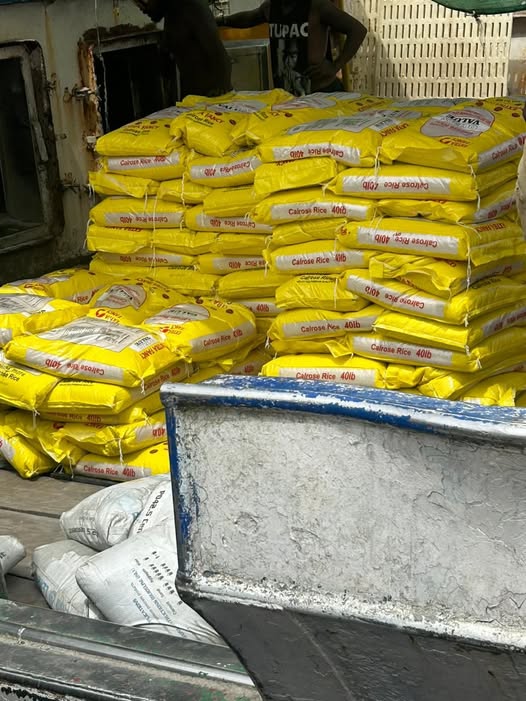
MEMBER of Parliament for East Makira Constituency, Franklyn Derek Wasi, has once again delivered Christmas assistance to his constituents, gifting them tons of rice for the festive season.
Wasi announced yesterday that all eight wards in his constituency will each receive a ton of rice, bringing the total distribution to eight tons.
“East Makira Constituency has a total of eight wards, so eight tons in total. This is a present from me as their MP. I did the same last year as well,” Wasi told Island Sun.
He said the initiative was intended to support families during the Christmas period, particularly as rice is a staple for festive gatherings.
“I know my people will need to buy rice for their Christmas functions, so this is my way of helping,” he said.
In a Facebook post, Wasi confirmed that three tons of rice were loaded and ready to set sail aboard MV Solomon Prestige for wards 17, 18 and 19.
“My good people of wards 19, 18, and 17 in the East Makira Constituency, your Christmas gift of three tons of rice is coming on MV Solomon Prestige. The port of call for ward 19 is Marunga, ward 18 is Waihaga, and ward 17 is Bagarei,” Wasi said.
He added that arrangements are being made to transport the remaining five tons of rice to wards 12, 13, 14, 15, and 16.
Wasi also extended Christmas greetings to his constituents, calling on them to reflect on the true meaning of the season.
“As we celebrate the joy and meaning of Christmas, I extend my warmest greetings to our elders, women, youth, children, churches, communities, and families throughout East Makira.
“Christmas is a time of reflection, gratitude, and renewal. It reminds us of the values that bind us together as a people—love, peace, forgiveness, humility, and unity,” he said.
Wasi encouraged his constituents to celebrate responsibly and to look after one another during the festive period.
“I encourage everyone to celebrate responsibly, to ensure that this festive season is safe and meaningful for all. Let us remember those who are less fortunate, share what we have, and extend a helping hand where we can,” Wasi said.
MV Solomon Prestige will depart Honiara to Makira today Friday December 19, 2025.
A survey has revealed the huge negative impacts high electricity costs is having on average and low-income households in the country.
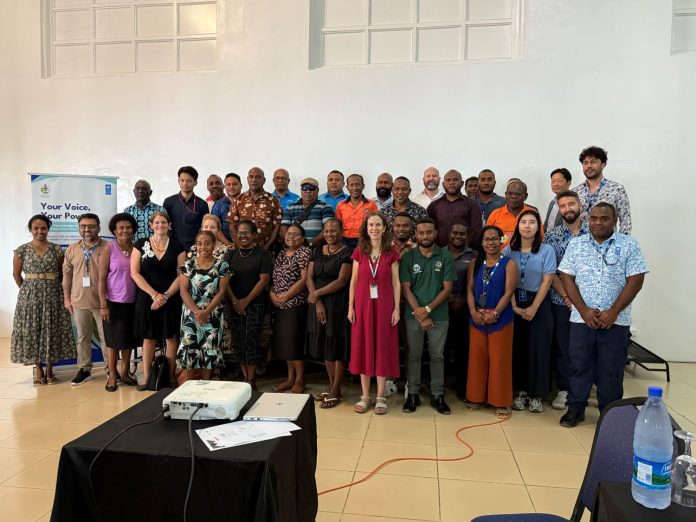
The Ministry of Mines, Energy and Rural Electrification (MMERE) and the United Nations Development Programme (UNDP) hosted a key event at the Pacific Crown Hotel yesterday to present findings from a comprehensive survey on energy access and affordability in the Solomon Islands.
The ceremony concluded with 10 survey participants, selected as award winners through a draw earlier this week, receiving their prizes for their involvement in the program.
Deputy Resident Representative of the United Nation Development Programme (UNDP) in the Solomon Islands, Raluca Eddon in her address, highlighted critical insights from the survey.
“One of the questions in the survey asked about their incomes and what proportion of their income they pay for electricity.
“And of course, electricity is expensive for everybody. It is extracting a very high toll on lower-income and disadvantaged households,” she said.
Eddon revealed that 39 percent of respondents fell into the lower middle-income range, with one in three earning less than $1,500 per month.
These households spend 11 percent or more of their income on electricity—on average 11 percent.
“That’s huge, locally, anything above 10 percent is considered extremely high in terms of the cost of electricity,” Eddon said.
The survey also pointed out that the burden disproportionately affects poor and low-income households, with many dedicating a significant portion of their earnings to power.
Eddon added a second key finding, which was that even when people have disposable income, the supply of electricity limits their access.
“Even if people have more money and they do have more money to spend on electricity, the access is constrained by availability of electricity,” she explained.
The data also indicated a willingness to pay for improved services, which Eddon described in technical terms as a positive sign for future initiatives.
Looking ahead, she announced that her team plans to actively reach out to people in the provinces to generate more localized information.
“It’s going to be access by province. The reason why I was saying that it probably matters whether somebody from a province answers the question whether it’s in Honiara or they answer the question when they’re based in the province,” she said.
She pointed to challenges in remote areas, citing a discussion about Choiseul Province where about 30 percent of people reported access to electricity.
However, interpretations vary—respondents might claim access if they have occasional power, solar panels, or connections in nearby urban areas, but not necessarily a reliable grid connection.
“As we get responses to their results, we know which parts of the survey would have to be unpacked further going forward,” Eddon said.
Overall, access to electricity remains low in rural provinces, with most people outside provincial capitals lacking reliable power.
“This is the headline,” she remarked.
Eddon also touched on preferences if electricity were more accessible and affordable. Top choices included investments in schools and information and communication technology (ICT).
Situated in the centre of the North West Choiseul, Choiseul Province, the Oliveti community has been facing a crisis that echoes a growing challenge in many remote areas – the absence of a local school.
The community is without a school of its own and situated in the remote bushlands of North West Choiseul; for them, this means walking far to access education in coastal communities.
Responding to the issue, Choisuel province education provider, Chief Education Officer Henry Deva acknowledged the community’s isolation and admitted the fact that they have never visited the community.
“We plan to increase education for our children. We will reach out to remote communities as well. We still have the opportunity to visit Oliveti to ensure that every child is enrolled in the education system in our province,” Deva said.
He also acknowledged the Oliveti community’s eagerness to establish a school in their community.
“Probably we will visit Oliveti in the first quarter of 2026. In previous years, we have done mapping to collect Early Childhood Education (ECE) data, and yet to receive pre-primary and primary data,” he said.
Deva said there was an ECE school previously operated at Oliveti.
He said their priority now is to visit the community to identify children’s enrolment and seek assistance on how to support the community.
“In fact, the challenges for us are its remoteness and isolation. But it’s in the plan that we will visit them. We want to expand that access to pre-primary and primary from class one to three, while students attending classes four to six can attend the mother school in the coastal communities.
“Having in mind too, the guideline provided in the Education Act, the compulsory age for a child to be enrolled is six and above. So, this is compulsory in terms of access to education. If there are more than 20 children and within and above that age, then a school must be established,” he said.
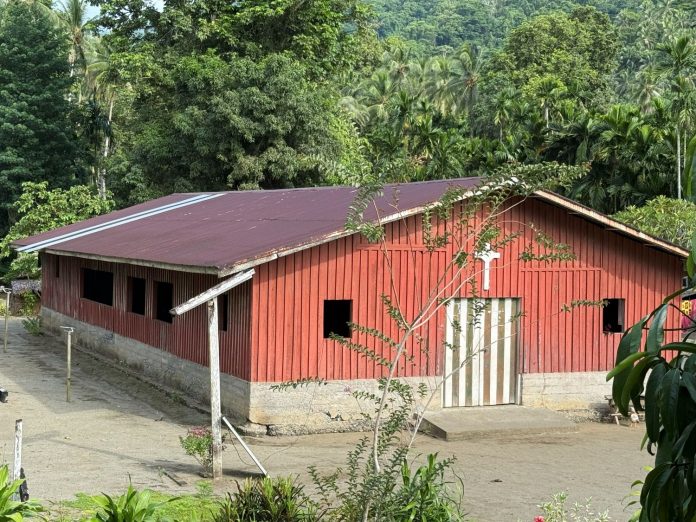
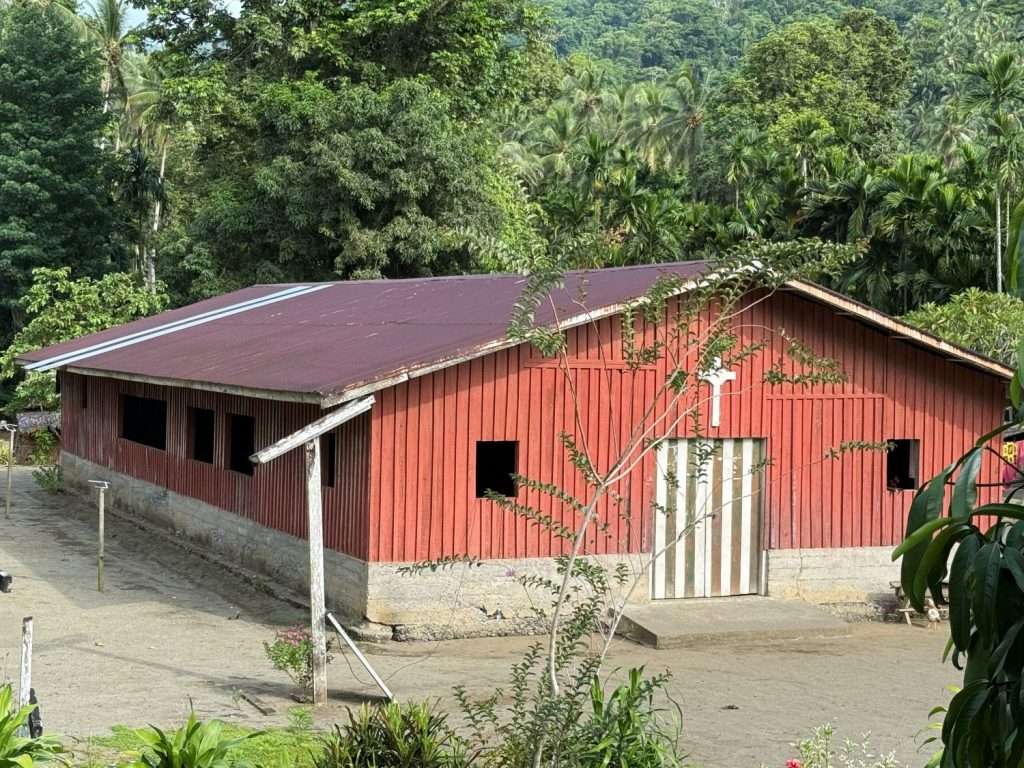
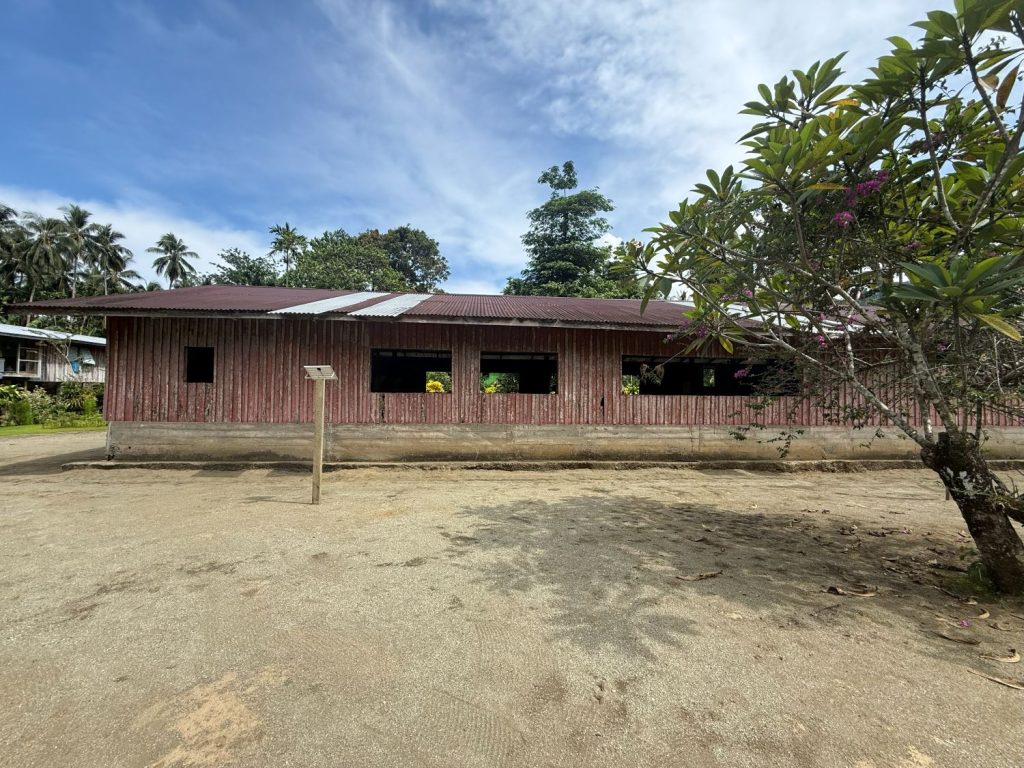
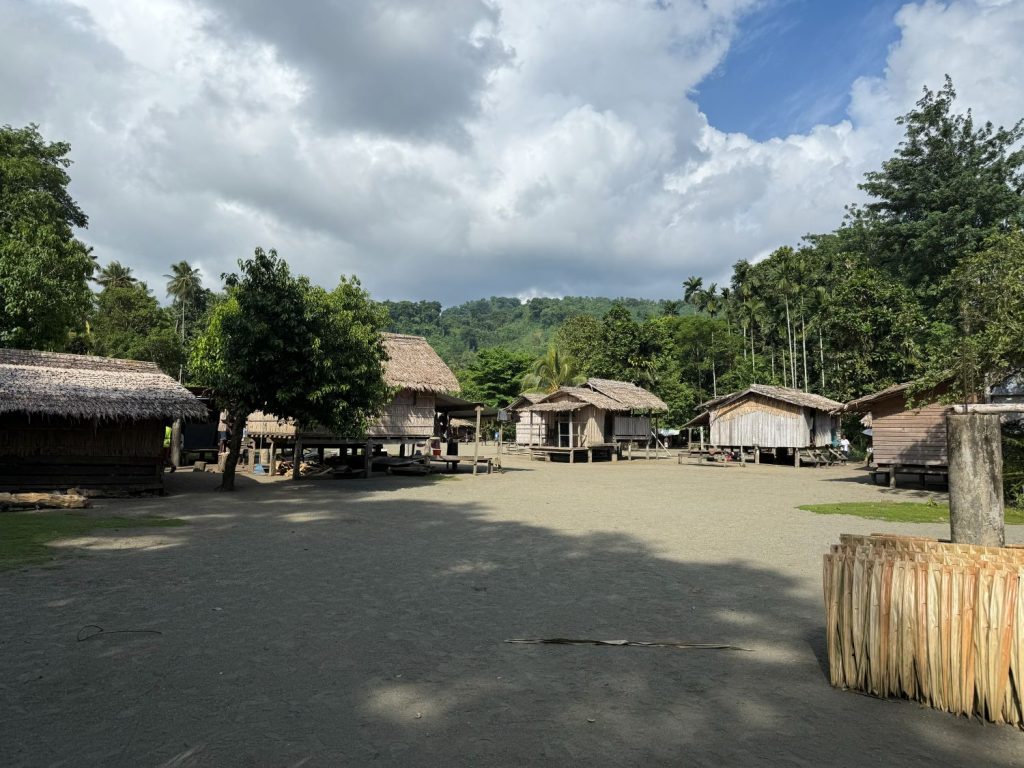
In Sughu community, Wanderer Bay, West Guadalcanal stands St Paul Anglican Church.
St Paul Anglican ChurchA sideview of St Paul Anglican Church
The church’s roof is rusting away and there are no window frames, louvres and cracks on the concrete flooring are evident.
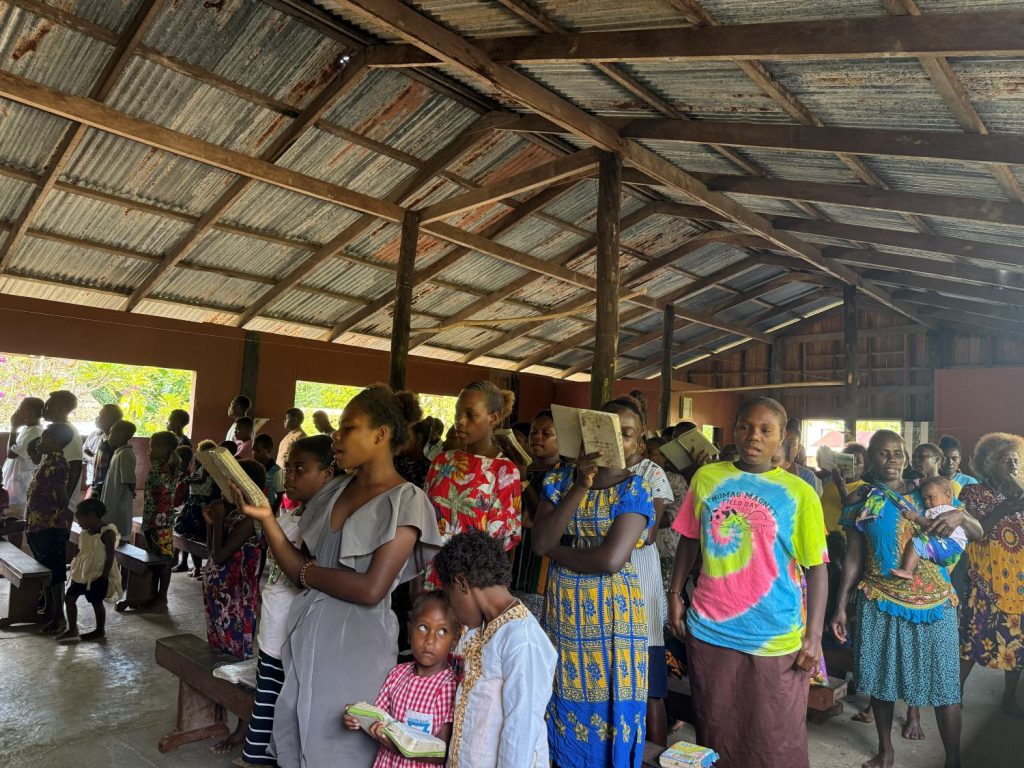
Inside the church building
Inside the church, looking up, your eyes are met by years’ worth of rust on the inward roof copper with a few holes here and there.
As scary it might look, people of Sughu community go to church every Sunday in this church building; little kids, men, women, young people and young women with their babies in their arms.
The thought and question of “Is it safe?” came to mind when I went to this church on a Sunday.
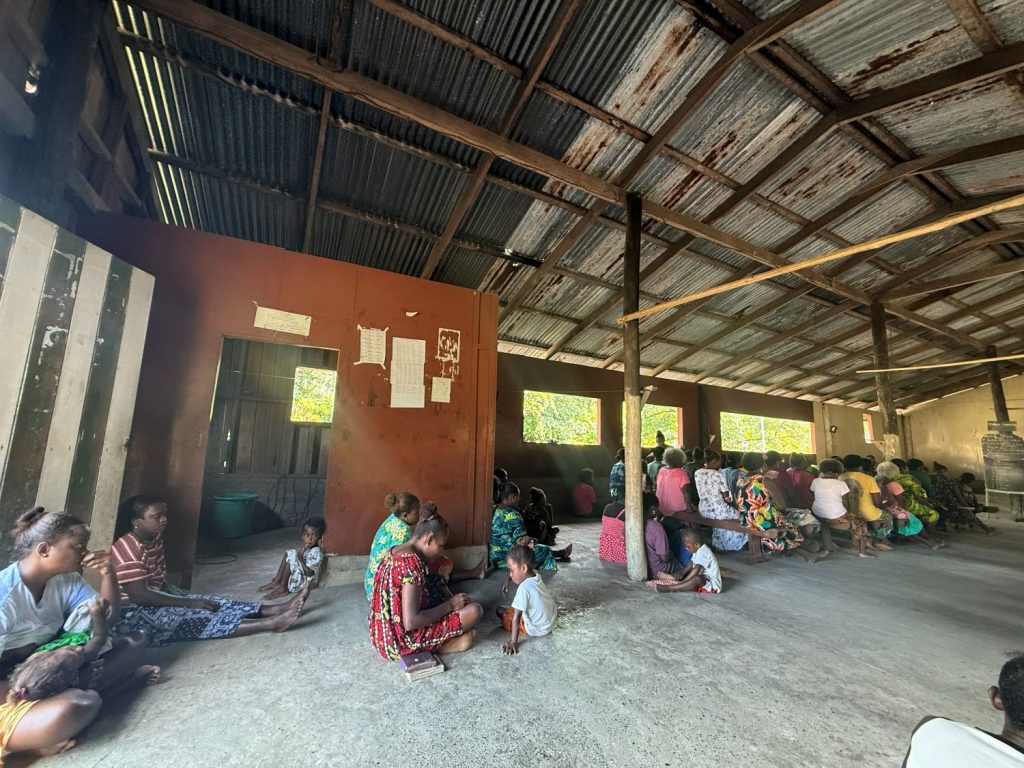
Women and young chidren sitting on the concrete floor in the church
It is also not spacious enough as some women and their children had to sit on the concrete floor during the church service.
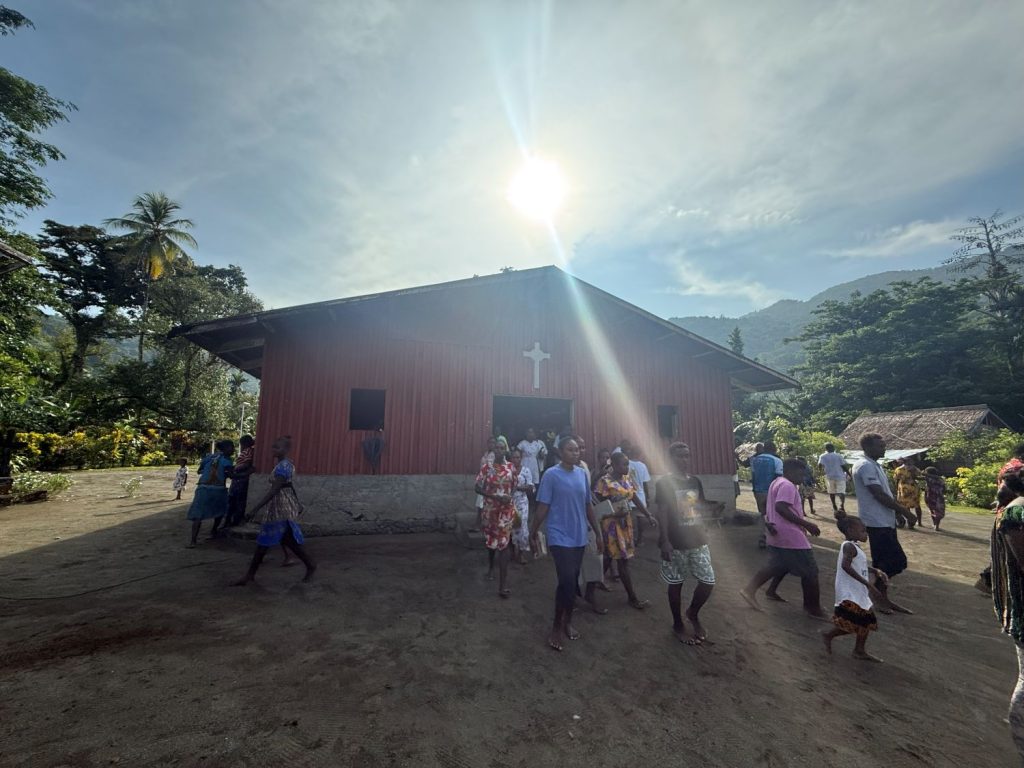
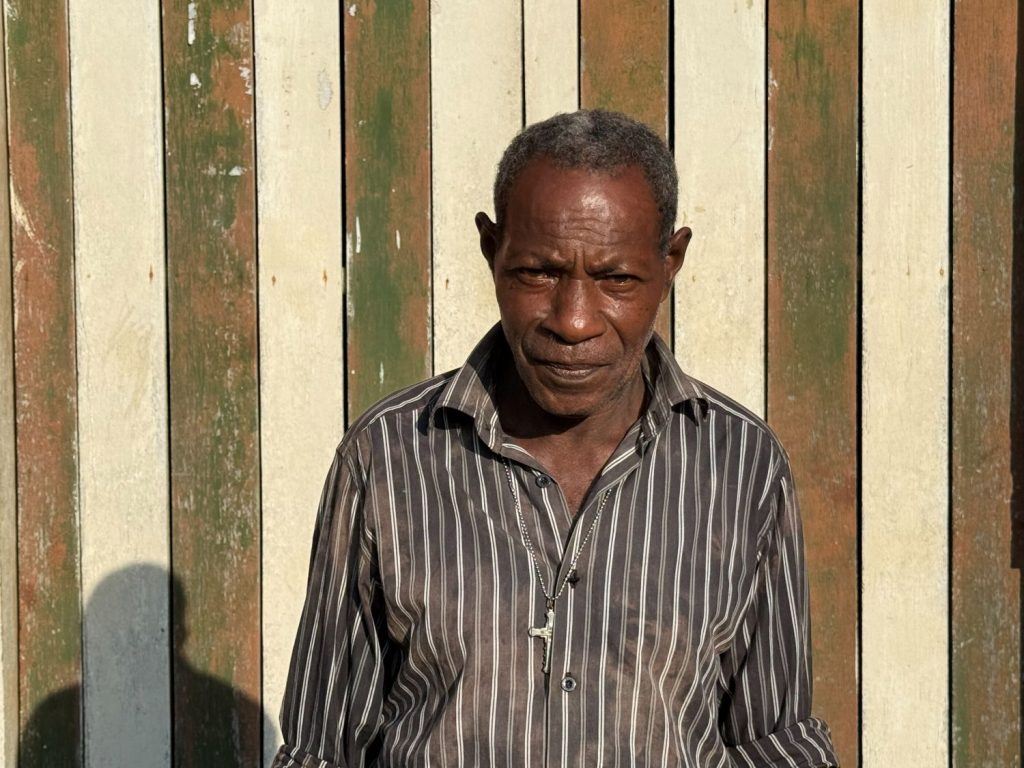
Young people exiting the church building after Sunday serviceCatechist Robert Borana
The community’s Catechist, Robert Borana said work on constructing the church building began back in 1970 and in 1975, the church building reached completion.
Hearing this, made more sense as to why they church looked very old and is clearly in dire need of total rehabilitation.
On November 22, 1975, the church was consecrated by then Archbishop, Norman Palmer and on the same day the ordination of the late Fr Lionel Longarata took place.
Since then, no maintenance work took place.
“Only, more than 5 years ago, they changed the walling section of the church”, Borana explains.
Apart from that, no other changes were made.
Borana happily remarks that the community is working on building a new church.
“We plan to build a new church that is bigger and will be able to accommodate us all,” he says with a pitch of hope in his eyes.
Borana stresses that over the years, the community’s population has grown hence their church building can no longer cater to them like how it could back in the old days.
More importantly, he says it’s also about safety.
“Our current church building is very old.
“It might collapse one day and we will have a problem so that is why we need a bigger church,” Borana said, noting that this would mean a new environment as well.
Borana said it’s necessary to pray in a church that is spacious and built in a good environmental setting.
Interestingly, Sughu community already has a structured plan of how they would like the new church building to be constructed.
They also have their own foreman and as mentioned, will chip in themselves for the labour work.
One other major reason the community aspires to have a new church building is because how vital the church is to life.
Although being more than 50 years old, Sughu community’s St Paul Anglican Church like any other church still hosts very important events like baptism, weddings, ordinations, confirmation classes, Sunday school, Mother’s Union and Men’s Fellowship.
Even today, the church still carries on some of these tasks.
When asked about what the community is currently doing in efforts to achieve a new and much bigger church building, Borana said they have done some fundraisings and have prepared timber.
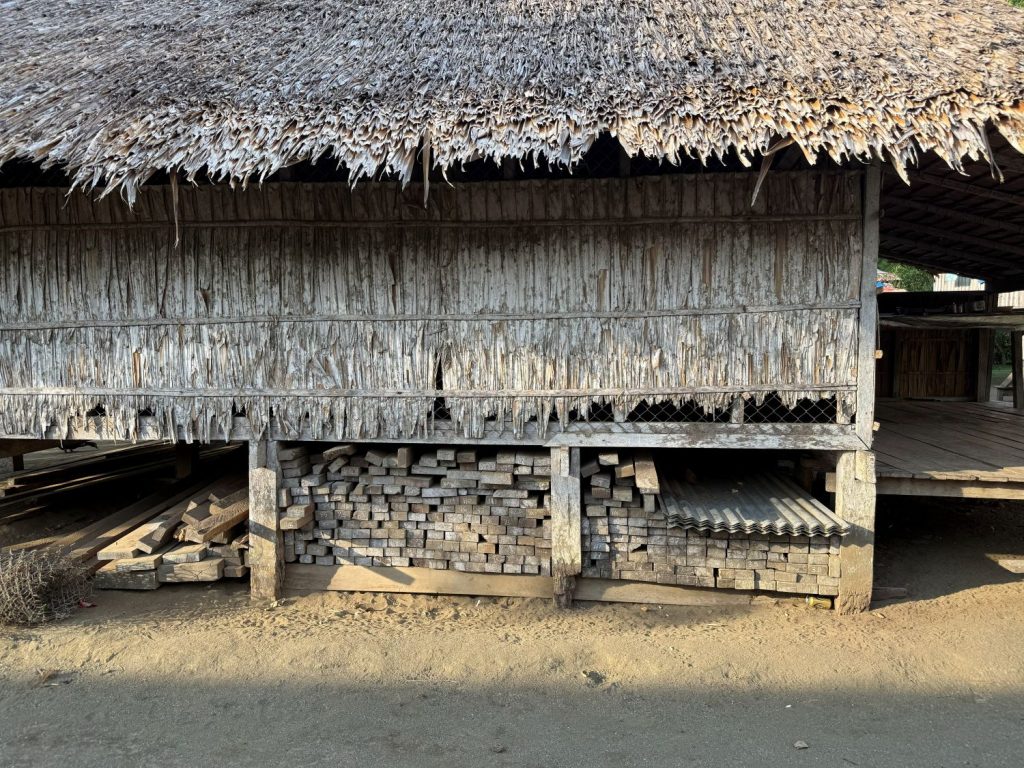
A number of sawn timber piled under a locally built house
Persistent in this endeavour, and humbly, he says they already have a number of sawn timber piled under a locally built house but will need to get more logs in order to get more timber.
And to get these logs, it means they will have to spend money to buy logs, transport those logs and then spend more money to have the logs sawn for timber.
The price of one log alone depending on the size costs about SBD $1000 to $2000 Borana says and they purchase it from a nearby community, St Francis Xavier Roman Catholic community.
“And we need to have money to do this,” he adds.
With much more work to do, the road ahead in pursuing this dream for the community itself is miles away.
The community has sent out requests in the past for assistance but unfortunately, somehow no financial means ever reached them, says Borana.
He highlighted that as a community they need to work together to achieve this.
Borana also appeals for any financial assistance to help the community build a new church building.
“To help us cover materials and labour costs,” he said.
It’s 50 years now since the St Paul Anglican Church in Sughu community, Wanderer Bay was built.
Sughu Community, Wanderer Bay, West Guadalcanal
Surpassing the essence of time, one can’t help but think about whether the community will still have to wait for who know how many more years till they can wake up on a Sunday morning and go to pray in a new, safe and bigger church building.
*Reporting for this story was supported by Pacific Media Assistance Scheme (PACMAS)
Access to clean water remains a significant challenge across the Solomon Islands, and it’s a struggle that many rural communities continue to face.
This issue is nothing new as it has been around for generations.
By 1980s, rural villages in the Solomon Islands started accessing proper water supplies but on a very limited scale. Today not much has changed.
Around 80 percent of the 800,000 population of Solomon Islands live in rural areas. Villagers frequently travel long distances to find clean water sources.
Nou village, on Santa Cruz Island, Temotu Province, is one of the many rural villages facing this struggle.
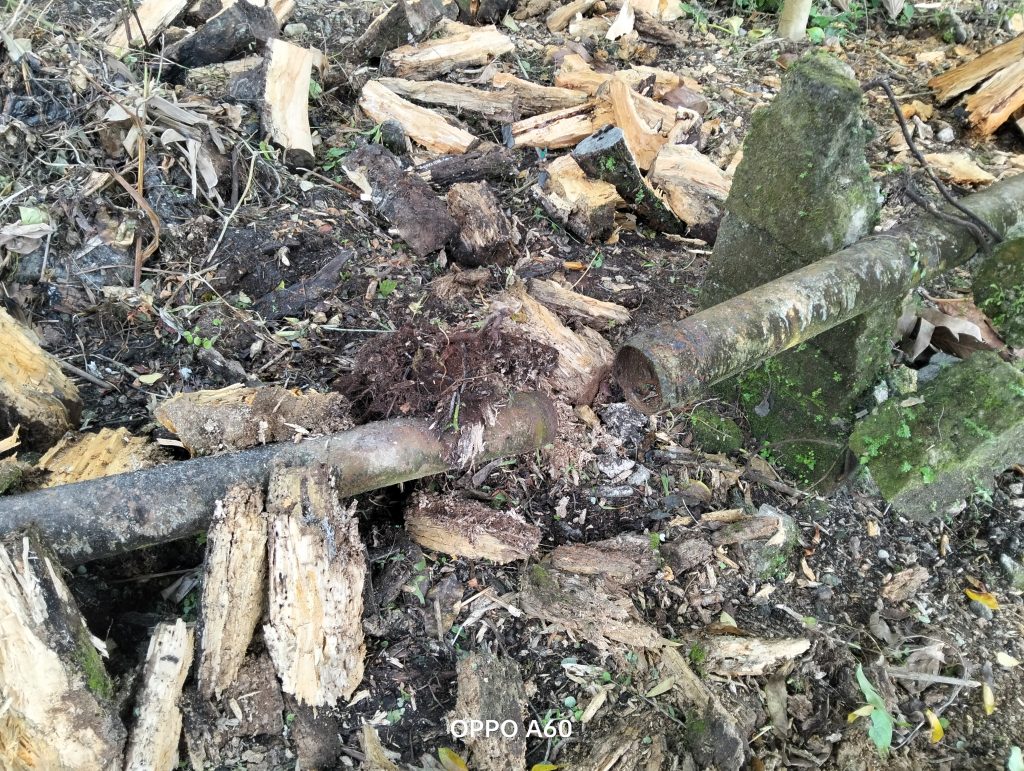
A pipe from a water system that served Nou village 20 years ago
The village once had a water supply system that broke down 20 years ago. Since then, the villagers have been left without reliable access to water.
Today, they depend on a few limited water tanks that were funded through the Rural Development Program (RDP) – an organisation that was dissolved a few years ago.
These tanks were distributed to number of communities within Gracious Bay including Nou. Each community received two tanks and this was shared with a ratio of 15 households per tank.
However, this supply was never enough, and the community was left to search for other alternative ways to get water.
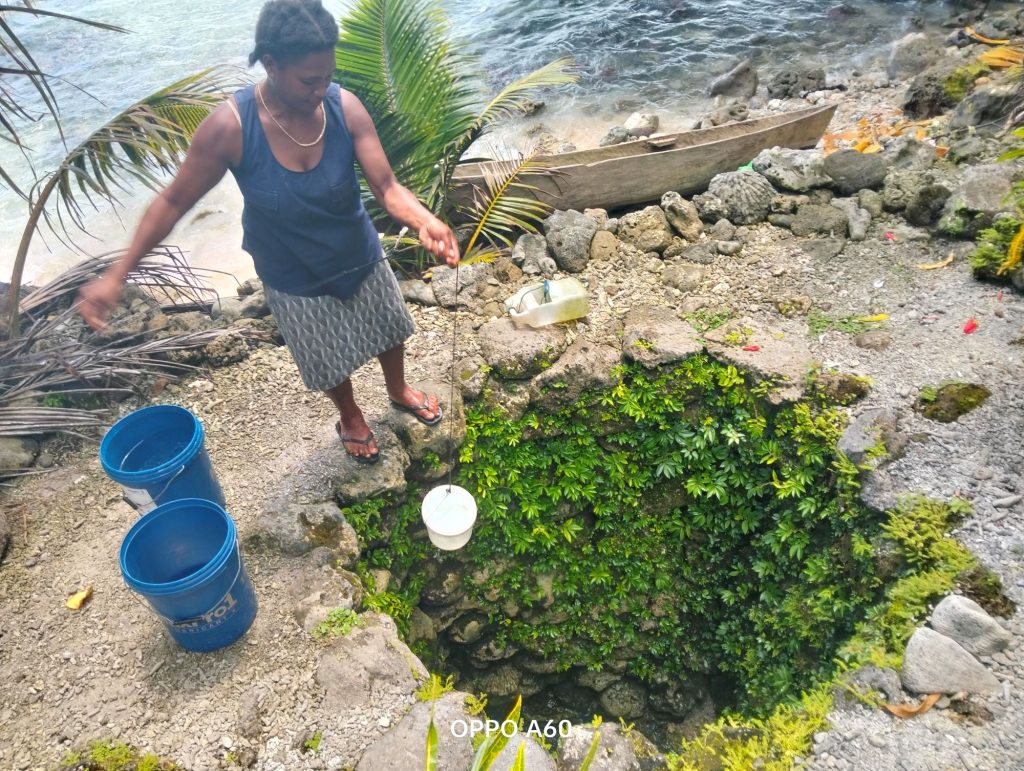
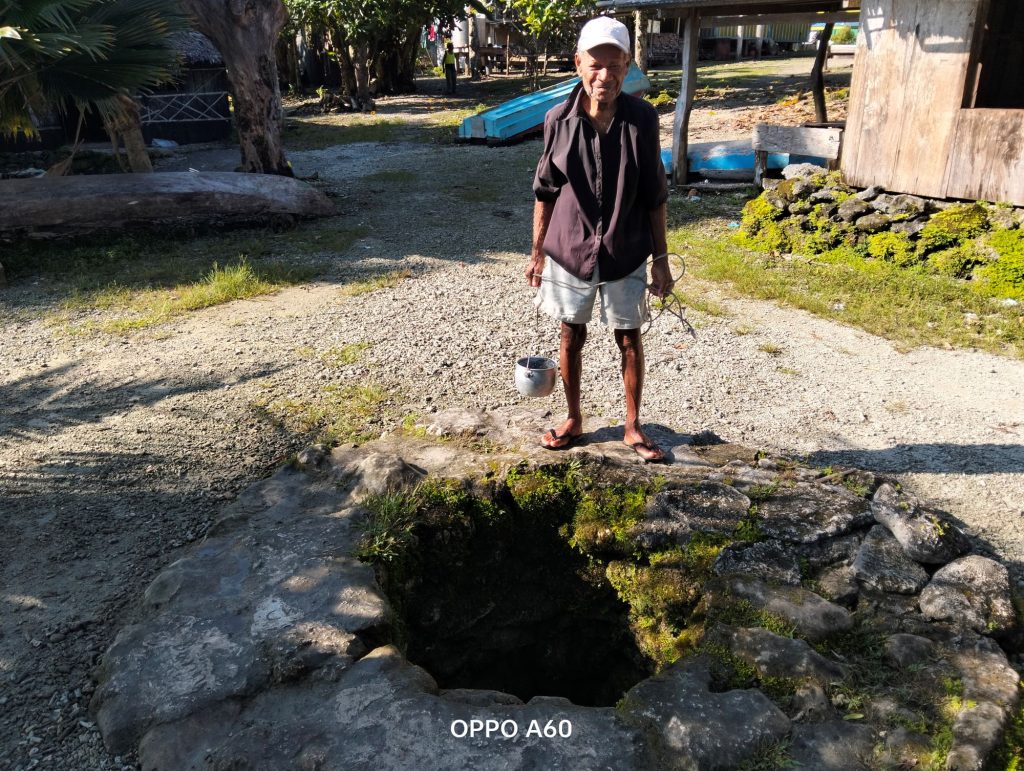
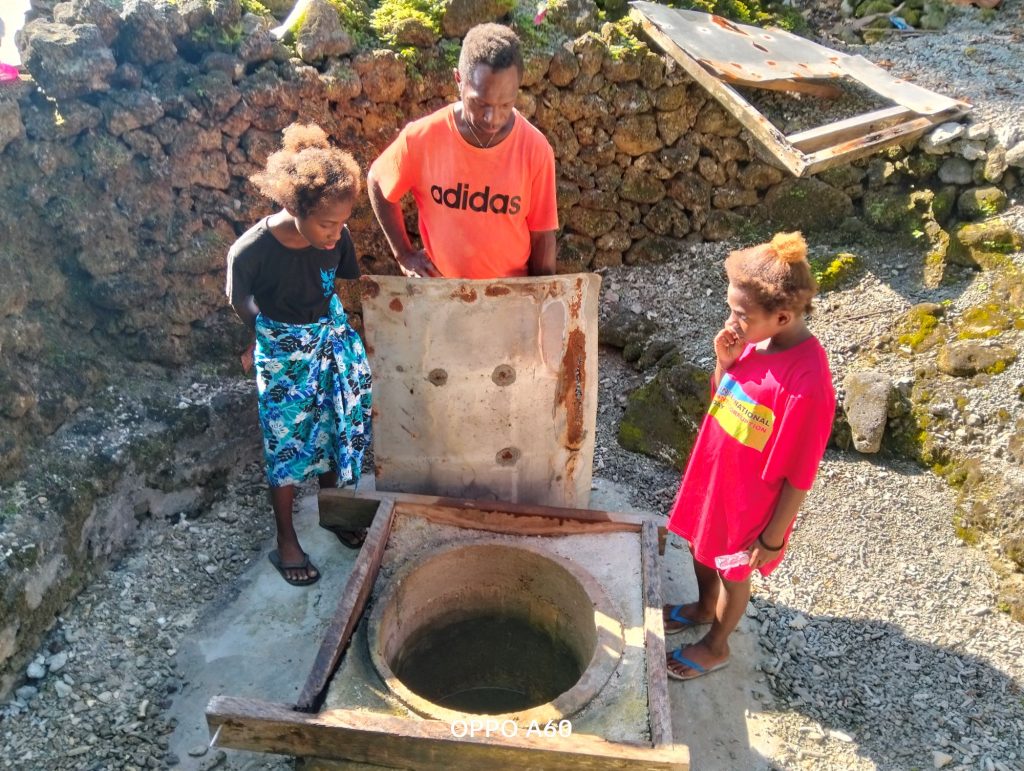
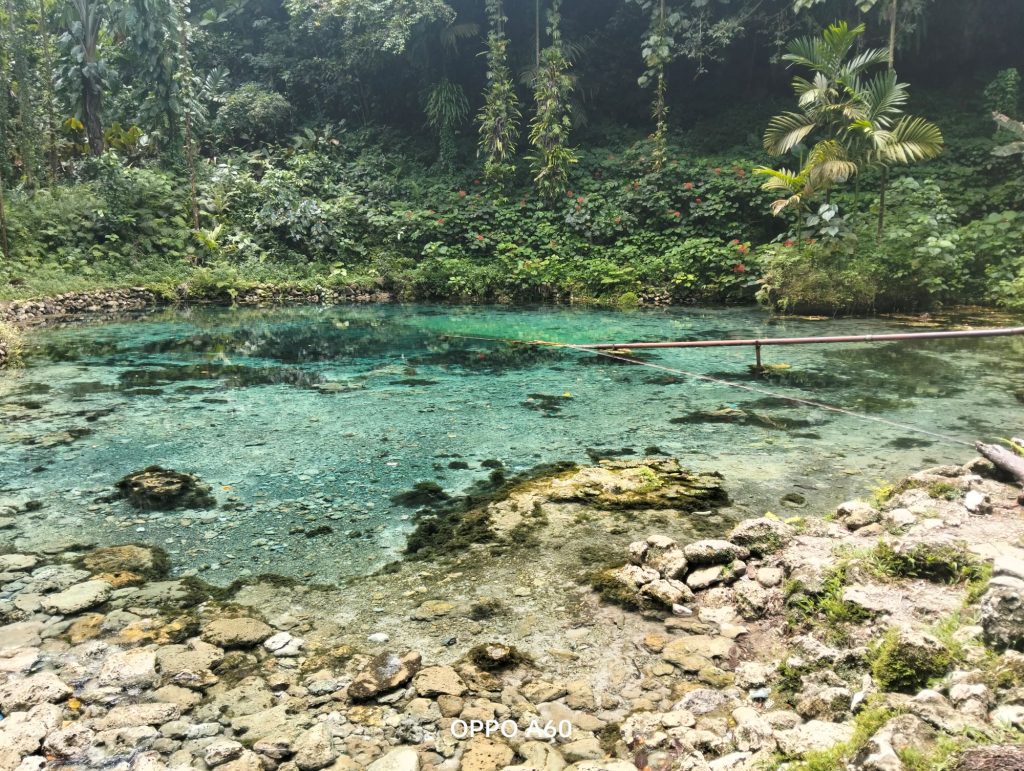
A young mother from Nou village is drawing water from a wellAfter women collect water from nearby wells, they do they wash their clothes beside their houseAn elderly man from Nou village ready to fetch water from a wellMr Terry (middle) and two young girls from Nou village looking at a newly built wellNou villagers get drinking water from Nembo water source, which is roughly 5km walk from the village
In the absence of a functioning water supply, they were left to rely on wells for drinking water or would endure a long 5-kilometer walk to the Nembo water source.
This ongoing struggle places a heavy burden on the community, particularly on women and children, who are often at the forefront of the effort to gather water.
While many of the interviewees acknowledged that women bear the brunt of this responsibility, it’s important to note that this should not be seen as solely a gender issue.
In a Melanesian society, it is common for women to take on these tasks, but it is a responsibility that should be shared more equally by all members of the community.
Ella Ivaio, an elderly mother in her 60s, shared her experience with water at Nou village. She recalled the hardships she had gone through when the village had no water supply.
“I married here long before the village had water access. Life was tough. We had to walk to Nembo to fetch drinking water, and we used wells for cooking and washing.
“Since most of our wells are just a few meters from the coast, sometimes the water was contaminated with salt,” she said.
Ivaio recalled when the village had a water supply system 20 years ago.
Recalling this, she said it made life much easier for them, especially women and children.
“We were able to focus on other family activities, like gardening, without the constant worry of water scarcity.
“But after the system broke down, we were back to square one. It’s hard, especially for someone like me who is getting older and no longer has the strength to carry out these tasks,” she said.
Mary Menapi, a young mother in her 20s, shared a similar story. She explained how different age groups within the village are impacted by the water shortage in different ways.
“As a youth and mother, I feel like we are the group mostly affected. We are the ones who are energetic and able to carry the load, but it’s still hard.
“Many of the young people in the village are in high school, and this water challenge is one of the barriers to their education,” she said.
Menapi said most young people at Nou village are high school students and for girls especially, they are commonly tasked to provide water for their households.
“After school they have to walk long distances to fetch water, and by the time they return home, they are exhausted and unable to do their studies,” she said.
The lack of water also creates challenges when it comes to menstruation.
“Since we don’t have water at home, we have to use public wells or the sea to wash ourselves. This makes it difficult to maintain proper hygiene,” Menapi explained.
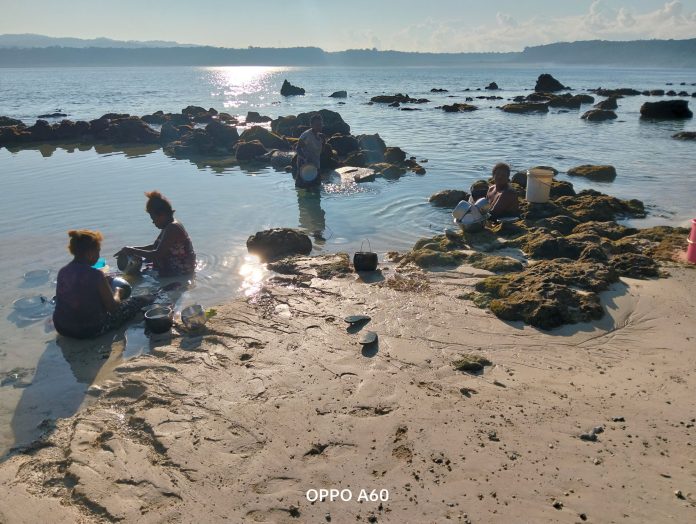
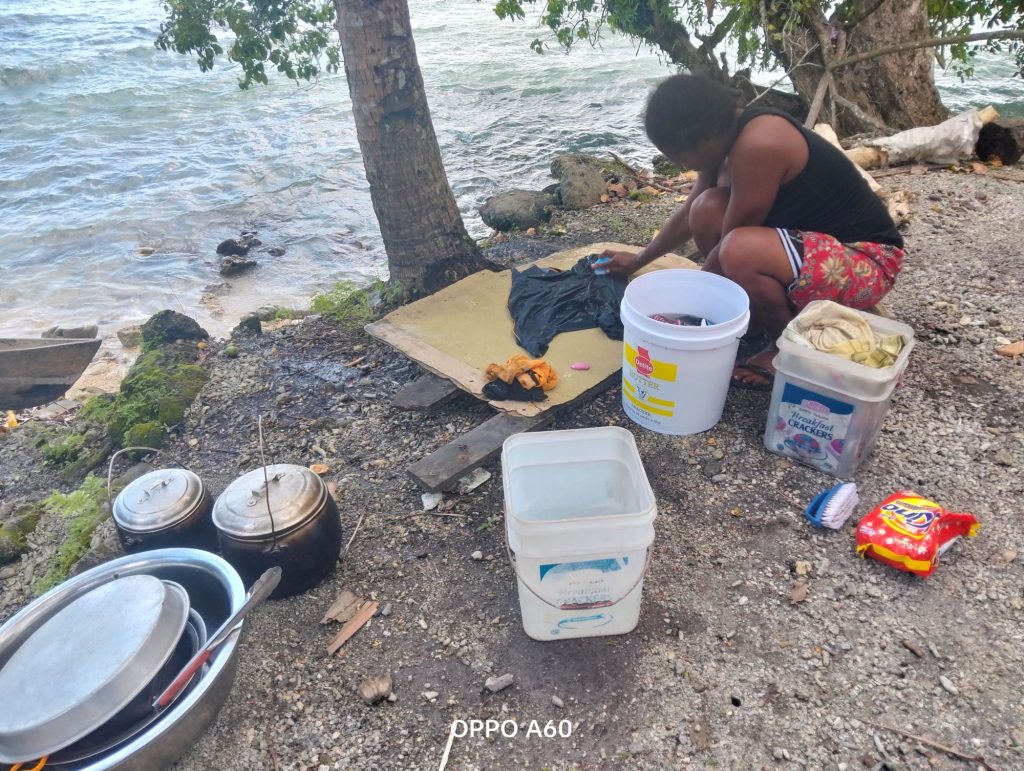
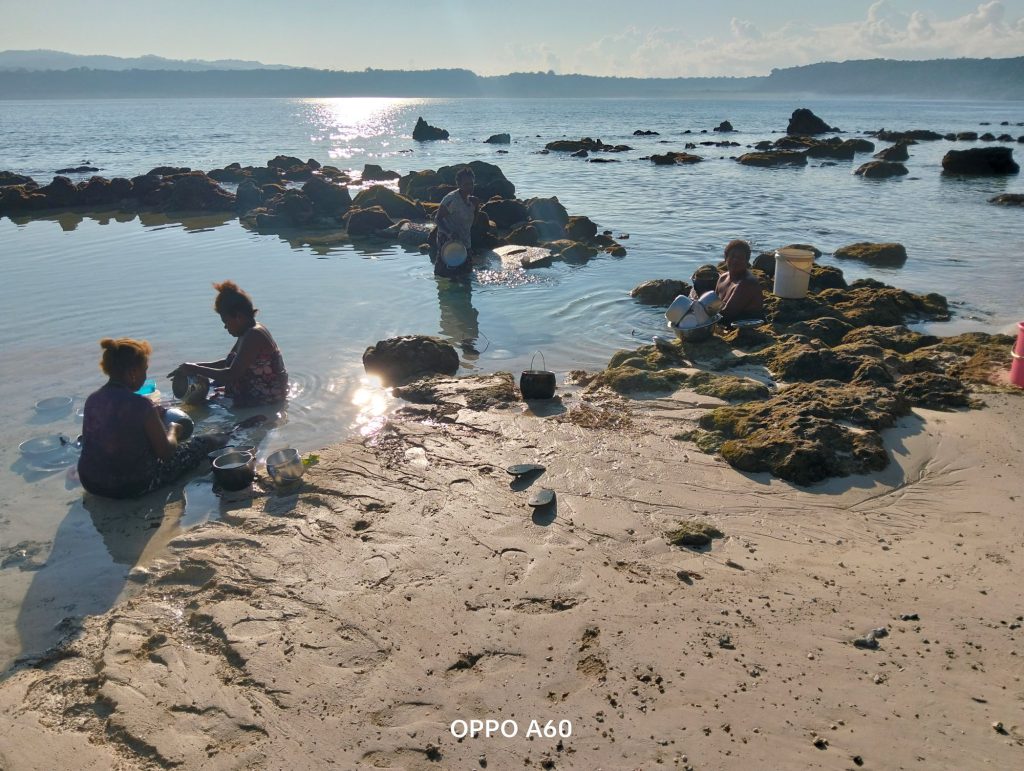
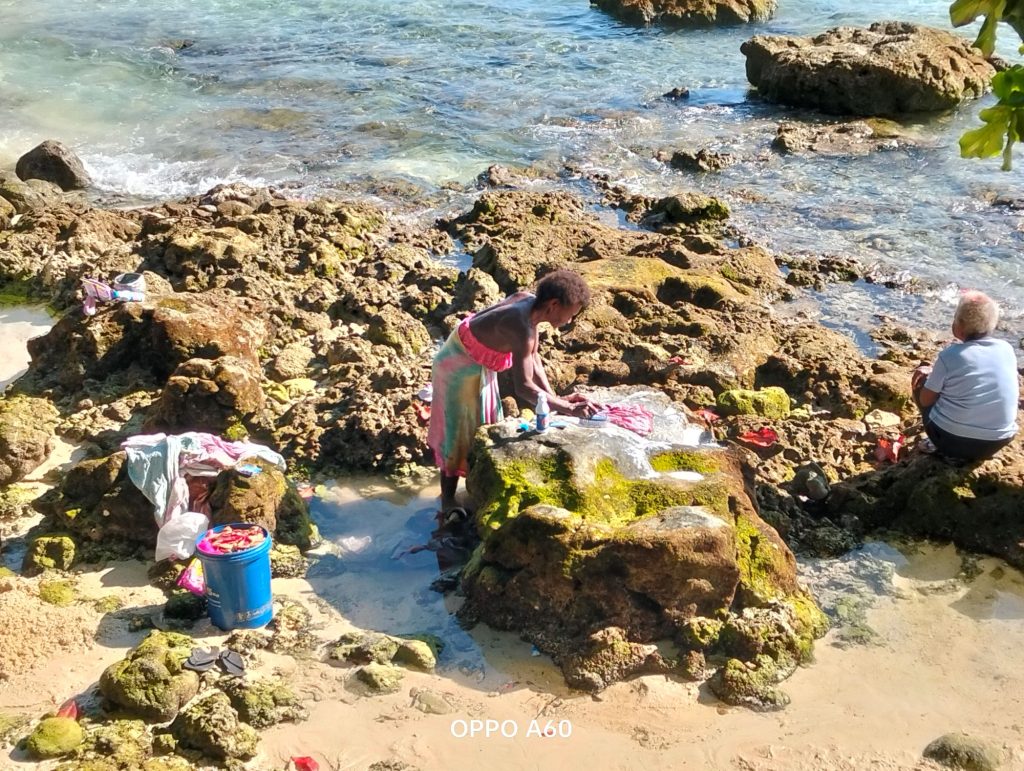
Women from Nou village using saltwater to wash kitchen utensils Women using saltwater to wash clothes
Furthermore, due to the lack of clean water, villagers often use saltwater from the ocean to wash clothes and kitchen utensils.
Nicholas Bolon, a father and elder in the village, acknowledged that the water issue affects everyone, but more especially women and girls.
“We men also feel the burden, but we don’t face the same daily challenges as women and children. And above all, if we had proper water supplies at our doorsteps, it would make life much easier for everyone,” he said.
Bolon said their leaders, including their Member of the Temotu Provincial Government and the Member of Parliament, are aware of the situation. However, the villagers believe there is more that can be done.
“Maybe the issue is how we can work together with our leaders and stakeholders. Because they know about our situation. And I want to assure that we’re ready to work with whoever to find a solution to address our situation.
“If the Ministry of Health and Medical Services (MHMS) through its RWASH department can provide water systems to other communities in the Solomons, why not us?
“We are willing to do whatever is needed to support this important cause. We hope to see our leaders, NGOs, donors, and the government intervene in our situation and bring lasting solutions,” he said.
The water struggle faced by Nou village and many other rural communities in the Solomon Islands is a pressing issue that demands urgent attention.
While there have been efforts to provide clean water to some areas, many communities still face significant challenges.
It’s clear that more needs to be done, and that access to safe, reliable water must become a top priority for the government and development partners.
For the people of Nou village and similar communities, the dream of having clean water at their doorsteps is not just a matter of convenience—it is a matter of survival, dignity, and the future of their children.
*Reporting for this story was supported by Pacific Media Assistance Scheme (PACMAS)