Home Blog Page 200

WARA hosts first Are’Are women’s land rights forum

0

BY SYLVANA TEKUMAHA

THE West Are’Are Rokotanikeni Association (WARA) successfully hosted the first-ever Are’Are Women’s Land Rights Forum from October 8 –10, 2025, at Pupuiasi in West Are’Are, bringing together women, girls, chiefs and community members to strengthen understanding of women’s roles and rights to land.

The forum was designed to empower women and girls with knowledge about land ownership, land use, and their cultural connection to land under the Are’Are land tenure system.

It followed recent research on women’s land rights conducted by Junior Michael Siwainao, which highlighted the need for greater awareness and inclusion of women in land-related decision-making.

Over the two-day program, local chiefs shared traditional knowledge on Are’Are land tenure, emphasizing the special place and responsibilities of women within the system.

Chief John Uipaewa said women play a central role in preserving land identity and heritage.

“Women give birth into the land and carry hutaa, the genealogy of Are’Are land. When women understand their land rights, they can guide future generations and ensure our traditions are respected,” Chief Uipaewa said.

He added that the forum created a safe and inclusive space for women and girls to learn, ask questions, and reconnect with their cultural heritage.

“By equipping women and girls with this knowledge, the community is ensuring that Are’Are land traditions are passed down and respected for generations to come,” he said.

Georgina Oitareamane, a young women’s leader from the Cuthill community in Zone 7 (WARA), said the training strengthened her confidence and ability to work alongside chiefs and community leaders.

“Since the training, chiefs have recognised me as a young woman leader,” she said.

She shared a recent example where she was involved in organizing a tribal reconciliation event.

“The chairman recognised me as a woman leader, and I worked with the chiefs and community to organise the event. Women and youths really benefited from this change. It improved their knowledge and confidence,” Oitareamane said.

She stressed that increased awareness of land rights is critical to preventing disputes.

“Without proper awareness, our people will not know their land rights, and lack of knowledge can lead to land disputes,” she said.

The forum was attended by more than 150 participants, including women, girls, chiefs and men from across West Are’Are.

The Are’Are Women’s Land Rights Forum was made possible through financial support from the Oxfam–Kotui Programme.

For feedback, contact: [email protected]

Delay in audits, millions spent, Auditor General seeks courts

0

BY IRWIN ANGIKI

The Office of the Auditor General has resorted to seeking the Courts’ advice over the National Hosting Authority’s (NHA) expenditure and procurement activities for the Pacific Games 2023.

This follows the NHA’s failure to cooperate with the auditing process, and not providing documents requested by the auditors which show NHA’s spending.

“There are still outstanding audit queries and documentation sought from NHA as of today’s date,” Auditor General David Dennis said in an email to Island Sun Friday last week.

Normally financial audit reports are completed 12 months after the Games, Pacific Games Council (PGC) Chief Executive Andrew Minogue told Radio New Zealand in February this year.

“Based on the experience with previous hosts, we normally expect the financial audit to take about 12 months,” Mr Minogue told RNZ Pacific.

It is now two years, and still no financial audit report for the Pacific Games 2023.

NHA is the body set up by the government to lead preparations and management of the Games.

It had cost government and donor partners around $2.5 billion to host the Games in December, 2023.

The NHA is being audited by the Office of the Auditor General (OAG) with the help of KPMG Fiji.

Two types of audits are carried out covering NHA’s activities – the financial statements audit which covers the calendar period from 2019 to 2024, and the special procurement audit which investigates the procurement practices of NHA.

In February this year, falling behind schedule, the OAG told media that the delay was due to NHA not providing requested documentation of its spending.

Auditor General David Dennis told In-Depth Solomons:

“Challenges in NHA providing requested documentation continues to delay the timely completion of these audits.

“To date proper documentation to support the validity of actions and transactions for certain major procurements had not yet been provided and remains a concern.

“Updates to the likely completion dates for the remaining financial audits covering calendar periods 2022-2024 will be shared at a later date,” Dennis said.

On Wednesday last week, Dec 17, OAG announced that it was taking the matter to court.

“The Office of the Auditor General, is seeking legal clarification over the National Hosting Authority’s expenditure and procurement activities for the Pacific Games in 2023,” the statement by OAG said.

“This intention has been conveyed to the Hon Prime Minister Jeremiah Manele at a meeting recently held at the Office of the Prime Minister.”

It is unclear when the courts will have its say on the matter, with the judiciary being on holidays and the legal year 2026 likely to begin in late January.

Auditor General Dennis emphasised the importance of completing the audits, saying “It is critical that the audit reports deliver detailed clear findings and learnings from hosting of significant events such as the Pacific Games. Resolving the applicable legal basis for NHA’s expenditure and procurement activities will ensure both the financial and special audits are finalized and published.”

The OAG said it has engaged senior lawyer Gabriel Suri since the Attorney General is a member of the NHA board.

Meanwhile, NHA Executive Director Christian Nieng did not reply to questions sent to him yesterday.

NHA Chairman, and secretary to the Prime Minister Special Duties, Sir Dr Jimmie Rodgers, could not be reached for comments.

The NHA was established in 2018 under the Pacific Games Act 2017 to deliver the Pacific Games 2023.

Following the Games, NHA was to be abolished after it handed over the sporting facilities to the National Sports Council (NSC) and the audit report tabled in parliament.

However, all except two of the sporting facilities have been handed over to the NSC – the dining hall building and the administration building located within the national stadium complex.

And, the audit report is yet to be tabled in parliament.

Photo: Supplied

For feedback, contact: [email protected]

SIWA closes Kombito water source due to heavy rain

0

BY ALICE TRICHELLE CAMPBELL

THE Solomon Islands Water Authority (SIWA) has informed its valued customers that water supply from the Kombito source was closed yesterday due to heavy rainfall caused by increased cloud cover over Honiara.

In a statement yesterday, SIWA said the decision was made to prevent risks associated with poor water quality, including silt, mud and algae entering the system, which could clog pipes and result in unsafe water for consumers and affect service delivery.

Areas affected by the closure include Abira, Gilbert Camp, April Valley, Lau Valley School, Lio Creek, Panatina Valley, and Panatina SINU to KG Heights.

SIWA said its technical team is closely monitoring the turbidity levels at the source and will resume supply once conditions improve and water quality meets safety standards.

SIWA appeals to the public for patience and understanding while monitoring continues to ensure the safety of customers.

For feedback, contact: [email protected]

Another road asset damaged at Kukum

0

BY NED GAGAHE

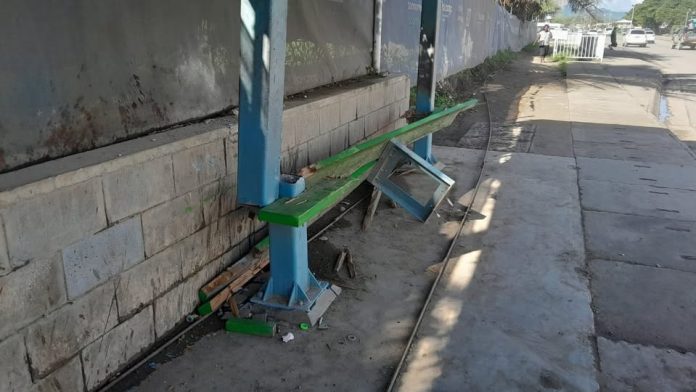
THE Ministry of Infrastructure Development’s Transport Infrastructure Management Services Division (TIMSD) has expressed disappointment following damage to the bus stop at Kukum Hot Bread after a speeding vehicle smashed into its benches last week.

Ministry of Infrastructure Development (MID) in a statement said the incident is a setback to ongoing efforts to improve the city’s urban transport network, which has involved hard work and substantial funding support from development partners.

“These bus stops are more than just benches. They provide shade and safety for passengers, including students, the elderly and other public transport users,” MID said.

The ministry said that careless driving continues to undermine investments made to improve public transport facilities and road safety.

TIMSD appeals to all motorists to drive responsibly, especially during the festive season, and to respect public infrastructure that serves the wider community.

The ministry also calls on the public to take collective responsibility in protecting road assets to ensure they remain safe and functional for everyone.

Photo: Supplied

For feedback, contact: [email protected]
TOUGH YEAR

0
  • Public Expenditure Committee hampered by funding and quorum challenges

BY JOHN HOUANIHAU

CHAIRMAN of the Public Expenditure Committee (PEC) and Member of Parliament for East Central Guadalcanal Constituency, Lazarus Alfred Rina, says 2025 has been a challenging year for the committee due to persistent resource and operational constraints.

Speaking on the floor of Parliament last week, he said the committee continues to operate with limited financial resources, which has affected its ability to conduct thorough investigations and effectively carry out its oversight role.

“This year, indeed, was a very challenging year for the Public Expenditure Committee. Some of the challenges we were faced with were issues of quorum during committee meetings, lateness to meetings, and budget constraints,” Rina said.

He explained that inadequate funding has restricted the committee’s ability to engage consultants, provide training for members and staff, and access modern data analysis tools.

“As a result, the committee is forced to prioritise only a few cases, even when many issues require examination,” he said.

Rina reminded Parliament that under Standing Order 71F, the Public Expenditure Committee is mandated to review budget expenditure and make observations and recommendations arising from its deliberations.

“In line with this mandate, the committee resolved on 24 February 2025 to conduct budget reviews for the 2025 financial year, as well as for the third and fourth quarters of 2024. This inquiry is ongoing,” he said.

He added that the committee has already conducted hearings with officials from the Ministry of Education and Human Resources Development and will continue with other ministries next year.

Rina said the inquiry is critical to ensuring transparency and accountability in the management of public funds.

“This is important for Solomon Islands, as people need to know how budget allocations are being spent to ensure public resources are used effectively for the benefit of our citizens,” he said.

He said that budget constraints have long been a recurring issue affecting parliamentary committees in the execution of their oversight responsibilities.

“I recommend that Parliament be allocated sufficient financial and human resources to enable committees to effectively carry out their oversight role,” Rina said.

Photo: Supplied

For feedback, contact: [email protected]

Star Harbour communities face the brunt of Sea Level Rise

0

BY MORRIS NAFU

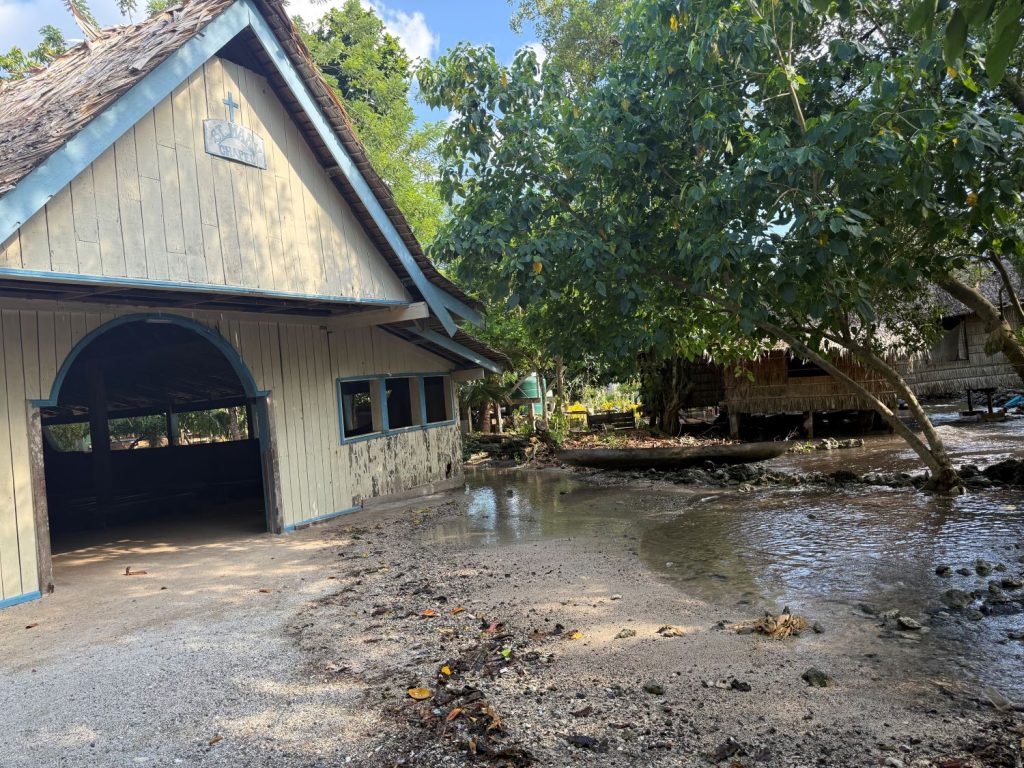
IN the peaceful yet vulnerable coastal shores of Star Harbour, the relentless march of climate change is rewriting the landscape and the lives of its people.

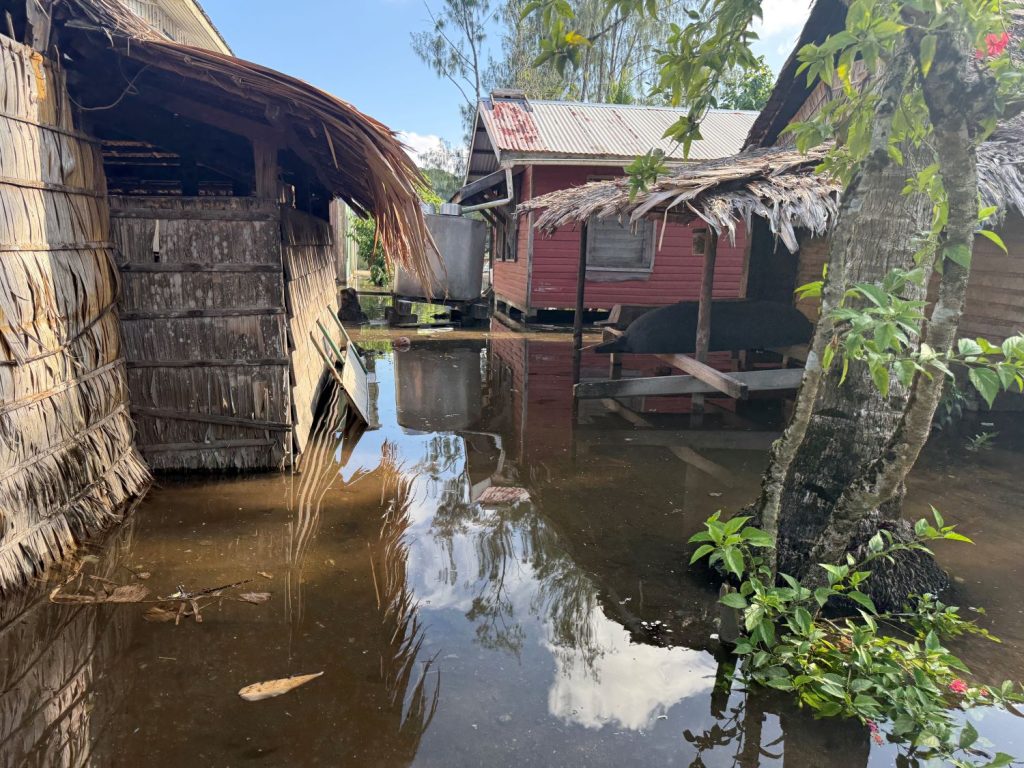
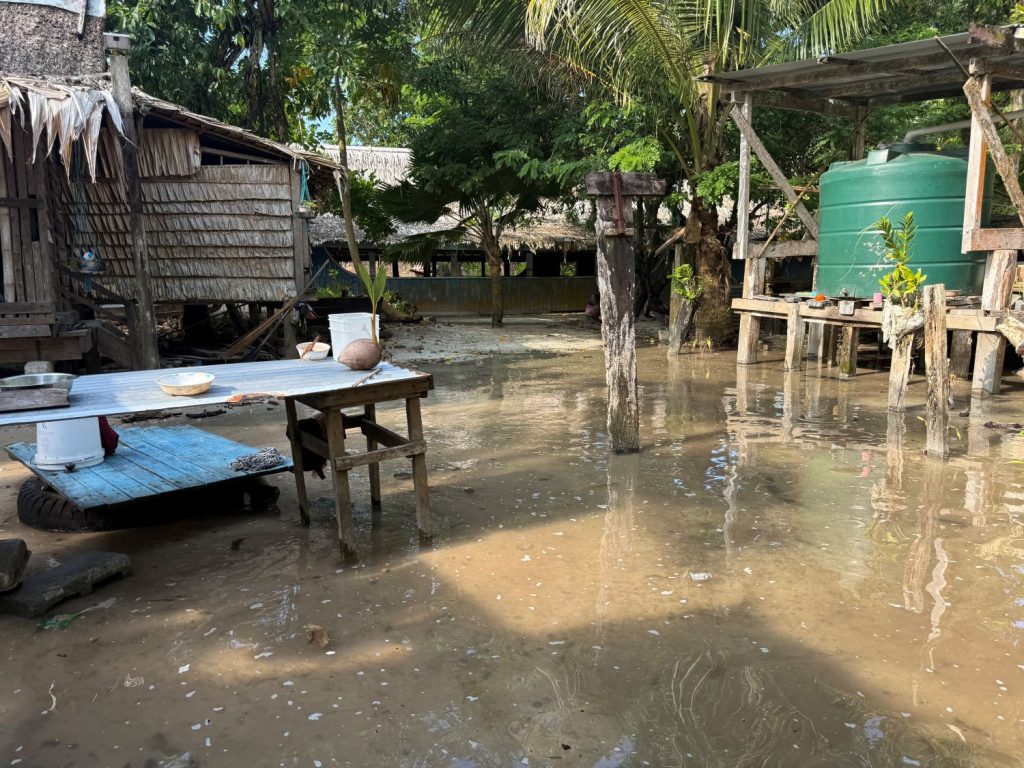
Low-lying communities like Namamaru are grappling with accelerating sea level rise, a phenomenon that has escalated dramatically in recent years, turning once-stable shores into battlegrounds against the intruding tides.

For decades, these communities have been a wall-hanging of lush mangroves, fertile swamps, and resilient villages.

But as global temperatures climb and polar ice melts, the sea is rising faster than ever, posing an existential threat.

Coastal erosion, once a minor concern, is now a daily reality, with visible scars creeping deeper into the land each year.

Residents report that the changes began intensifying around 2015, with tides surging higher and more frequently, forcing families to abandon homes and relocate inland.

Located next to the Namuga sub-station, Namamaru represents this plight.

The community, with its sparse mangrove defenses, has tried to fortify against the waves by constructing stone sea walls.

Yet, these barriers stand no match for the relentless force of the rising seas, which crash in with unyielding power.

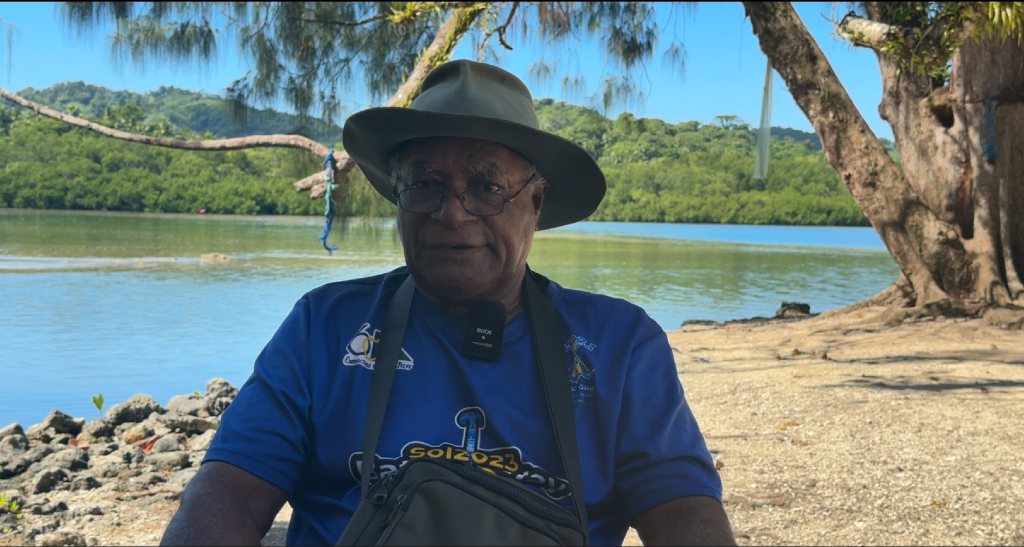
“We attempt to build sea walls to protect our houses, but that does not match the flow of the sea coming into our village,” says Alfred Murray, a respected community elder.

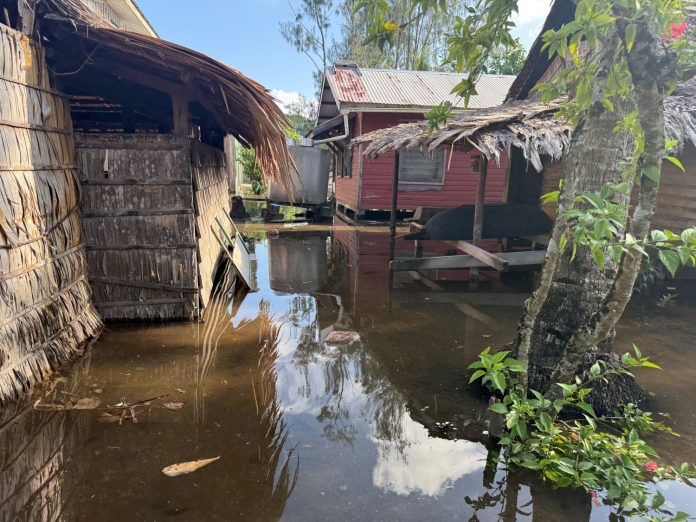
“At first, we don’t usually experience this kind of high tides, but as years pass, it’s now getting normal to see high tides flowing right across the village, even reaching 30 to 40 centimetres high in the middle of the village.

“It’s something we don’t experience before.

“Sea level rise is not only our community issue but a global issue that affects people worldwide, especially for low-lying communities and islands.

“For us here in Namamaru, we are badly affected by this ongoing issue,” he said.

Looking ahead, Murray expresses grave concern of which is, without intervention, most communities, including Namamaru, could be washed away in as little as in the next 10 to 20 years.

The consequences extend beyond eroded shorelines and flooded homes.

As islands within the peninsula vanish and coastlines reshape, the very fabric of life is unravelling.

Food security, a cornerstone of Star Harbour’s culture and survival, is also under threat.

Swamp taro, known locally as “kakake”, has long been a lifeline—providing food during lean times between harvests and serving as a key ingredient in traditional feasts like the renowned Makira pudding, a staple for feasts and festivities.

But saltwater intrusion is poisoning these vital crops. Farmers in low-lying swamps are witnessing a sharp decline in yields, with kakake plants producing smaller, less abundant fruits.

“We are now starting to experience low production of kakake as it is really affected by salt water, causing them to produce small portions of fruits compared to before,” explains Festus Fagatangi, a concerned farmer whose livelihood depends on the crop.

The impact is profound; what was once a reliable food source is declining, worsening vulnerabilities in an already risky existence.

People may debate the scale of sea level rise in distant boardrooms, but for those in Star Harbour, it’s a life-threatening matter.

Homes are eroding, livelihoods are vanishing, and the ocean’s advance shows no signs of retreat.

 As Murray puts it, “Our homes are now slowly eroding away, and that puts our lives at risk”.

The call is clear: urgent action is needed to mitigate this threat, from global emissions reductions to localized adaptations like mangrove restoration and resilient infrastructure.

In the face of such upheaval, the resilience of Star Harbour’s people shines through. Yet, without concerted efforts, the rising tides may soon claim more than just land—they may erase entire communities from the map.

*Reporting for this story was supported by Pacific Media Assistance Scheme (PACMAS)

For feedback, contact: [email protected]
Kiu village with long-standing health and sanitation challenges

0

By RODRICK DESURI 

Auki 

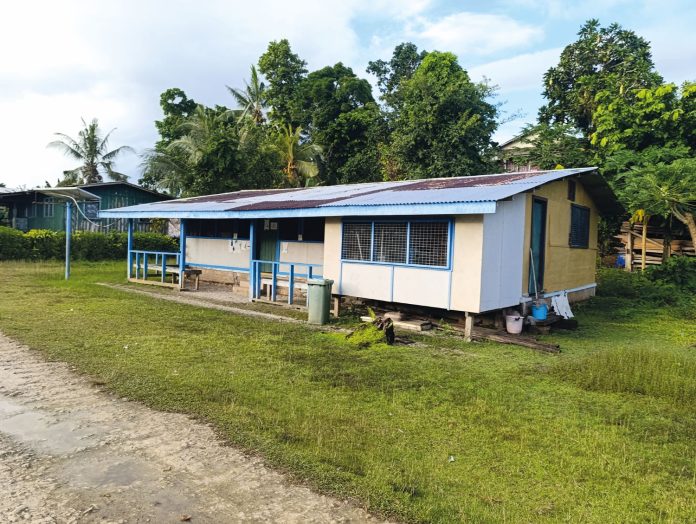
Kiu village in West Are’are, Malaita province is a thriving rural community but with one long-standing problem – struggling health and sanitation service.

The health of the large population living in the rural areas of Kiu village is still at risk. 

Built in the 1970s, the clinic is deteriorating as the population grows faster and ages. 

The space of the entire building is the main constraint faced by the two nurses serving at the clinic. 

Overcrowding of patients, access to clean water and sanitation, transport access for emergency cases, and community support are challenges faced by the clinic. 

One of the nurses, Mavis Surutaro, a registered nurse who has served at the clinic since last year, describes the current situation as very hard, challenging, and in need of intervention by the health authority as soon as possible. 

She stressed that space in the clinic is limited thus, they have come across challenging times when attending to patients.

“Here at the clinic, the space is limited.

“The antenatal room, admission room, store room, dressing room, and even the outpatient area, all need space.

“Challenging times that we have experienced are when there are many patients. For example, if we have three mothers in the antenatal room plus two other patients being admitted at the same time, we can hardly put them in one room because of customs, but the two patients will be placed in the outpatient area,” she said. 

Another challenge the clinic faces is access to clean water for sterilisation and essential uses.

“There is no water connection to this clinic. Whenever we need water, we use a bucket to get water from the community tap. Sometimes, we wash our used tools and stained items at the tap. 

“This is not safe for the whole community.

Meanwhile, sanitation poses as another issue patients face when they go to the clinic.

“Sanitation is also a challenge that patients are facing.

“We don’t have a toilet and shower room here at the clinic. Whenever our patients need to relieve themselves, they have to go along the coastal seaside, which is also not safe for women, especially during the daytime, and for older people,” she explained. 

Community support is another challenge. 

Many notices and appeals have been made to community members to complete the new clinic staff house and to conduct a general clean-up around the clinic boundaries, but these have fallen on deaf ears. 

“As a result, our staff house is not progressing, and the clinic’s surroundings are still overgrown with bushes,” she said. 

Surutaro emphasised that, before the clinic becomes a meaningful place for survival, Kiu community itself needs to show their commitment before the health authorities, like Kilu’ufi Hospital and the responsible Ministry, can support the clinic.

The population of Kiu village is roughly 1,000 to 2,000 people. About half of the mature population have lived and worked in government ministries, abroad, and even own private businesses in the country.

*Reporting for this story was supported by Pacific Media Assistance Scheme (PACMAS)

For feedback, contact: [email protected]
Kiu village enjoys strong cash flow

0

By RODRICK DESURI 

Auki 

Like many rural villages in Malaita Province, Kiu village has been badly affected by economic challenges.

However, with resilience and headstrong determination by community members to flourish, Kiu continues to expand its cash flow position, becoming stronger. 

Situated between two main rivers in West Are’are, the Siwa River marks the southern border of East and West Are’are, while the Wairaha River forms the northern border with West Kwaio and West Are’are. The total population of Kiu village is about 1,000 people. 

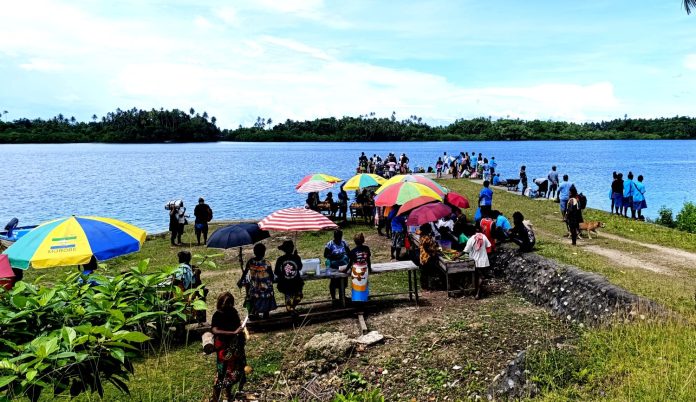
The selling of copra, cocoa, virgin oil, a weekly vessel route to their location, and remittances from their Australia-based seasonal workers is what helps to bring new cash into the village and strengthen cash flow in the community. 

The cash flow in Kiu village can be traced each day by how often people make payment transactions for whatever sort of food is sold, which can be finished in just a few hours.

A village elder, a pastor, and former police officer, Steven Nouka, stressed that strong cash flow in Kiu village is a blessing for them.

He stated that every day is the same; people pay for food in the market, in the canteens, for household tools and equipment, and even for labor.

“It’s like a blessing for us, the people of Kiu. We don’t know how we get money, but I can see through how people buy food and other stuff is ridiculous. Every day, people make payment transactions for food in the local markets and in the stores,” he said.

The same sentiment was also echoed by 70-year-old David Rikihanua, a former planner and canteen owner in Kiu.

His experience of earning $1,000 per day is the reason behind his statement that Kiu has a strong cash flow.

He continued that the lowest he can earn is $400 to $500 per day.

“All I can say is that Kiu village has a strong cash flow.

“This is because, as the owner of the canteen here, I have experienced that I can earn $1,000 per day, and $400 to $500 on my bad luck days. This means that I might open just for half a day,” he said with a smile.

When asked what commodities and other items can bring cash into their village, he said that copra, cocoa, and marketing during the weekly vessels’ stopover at Kiu port brings in new cash.

“I am a copra buyer, and I usually buy between $10,000 and $20,000 worth of it. So, I know our people here have more money.

“In addition to that, we have the weekly route of vessels like the Express Pelican. It is time for our people to prepare their food and other sellable items.

“Not only the Express Pelican, but we also have Gulatatae and Taimareho,” he said.

A young female, Stalla also relies on the shipping schedules to earn income for her family, especially when people come over from ships.

Her produce is usually sold out when ships come to Kiu port; helping her to earn money and pay for essentials for her family.

“During times when ships stop over here, it is the only time that we can sell our produce and earn income to support our families. So, we are very happy to earn income every week. Any food, like cake and pudding, will be paid for,” she said.

Most villagers also voiced that their village is not like other rural communities where market products are left unsold.

*Reporting for this story was supported by Pacific Media Assistance Scheme (PACMAS)

For feedback, contact: [email protected]
NATIONAL CONCERN

0

MP Douglas raises the Methamphetamine problem in parliament, calling for mandatory testing

BY JOHN HOUANIHAU

Choylin Yim Douglas, Member of Parliament (MP) for Ngella Constituency, Central Province, has voiced support for mandatory testing to tackle the rising Methamphetamine problem in the country.

She said Members of Parliament are well aware that the Methamphetamine drug is a threat to national security.

Douglas raised the issue of drugs on the floor of parliament when she delivered her speech during the Sina Die Motion on Wednesday this week.

“I want to raise a national concern that threatens the well-being of our people, the integrity of our institutions, and the future of our country. The rise of Methamphetamine and other hard drugs in the various communities.

“This honourable house knows well that Methamphetamine is not just a criminal issue but is one of the national security threats, one of the health crises, and a direct attack on the moral fabric of our society,” she said.

Douglas said the integrity of the public service must be protected to save Solomon Islands from dangerous drugs.

“If we want to protect our nation, we must start by protecting the integrity of our public service,” she said.

Douglas strongly supports and calls for mandatory drug testing for all public servants, including those in leadership, frontline service and enforcement agencies.

“I believe that cleaning the public service is important to protect public trust, make ethical decision-making, strengthen accountability, and show a good example to our people,” she said.

Douglas also called for strengthening of laws to ensure drug traffickers, manufacturers, and distributors face penalties that match the seriousness of the crime they commit.

“Methamphetamine damages families, weakens communities and kills national productivity. We must not allow this poison to take Solomon Islands, where we call home,” she said.

Douglas said efforts must be made to promote a positive mindset in the public service, one that stands on discipline, integrity, patriotism, and service to others.

“A strong nation doesn’t build on strong law and enforcement, but on character and the value of its people as well,” she said.

Photo: Supplied

For feedback, contact: [email protected]
Unexpected phone wins for survey participants

0

SYLVANA TEKUMAHA

Ten participants were awarded mobile phones through a raffle draw for the Opinion Survey 2025 during the Energy Opinion Survey Closing at Pacific Crown Hotel yesterday.

The Ministry of Mines and Energy (MMRE) and UNDP led the Energy Opinion Survey 2025 with the aim to help the government and Development Partners plan better energy reforms for communities.

According to figures provided, around 12,000 plus Solomon Islanders participated in the Energy Opinion Survey this year.

The goal however was to reach 100,000 respondents.

Speaking to Island Sun during the closing John Goodwill Manakako, one of the awardees from West Guadalcanal said he saw the survey through SMS survey and took the online survey.

“After participating I look forward to reaching out to more respondents because UNDP has given us the opportunity to be Ambassadors. If we have more respondents to the questions in the online survey form, it will help our communities develop because we are now living in a modernised world and electricity is crucial,” he said.

Participants who completed the Energy Opinion Survey 2025 and voluntarily submitted their mobile numbers were automatically entered into the raffle draw. Each eligible entry received a unique raffle ID generated by the system.

The draw was held on Tuesday in the presence of Supervising Assistant Commissioner Provincial Policing, Tex Tafoa to ensure transparency and credibility. Selected winners were verified against the original data survey before being contacted.

For feedback, contact: [email protected]