Ten police investigators from White River police station have received criminal investigation training from the China Police Liaison Team (CPLT) on December 9, 2025.
CPLT provided expertise and conducted practical sessions on crime scene sketching and introduced modern criminal investigation technologies such as forensics, a statement by police media yesterday said.
The statement said the training covered the full investigative process, including crime scene protection, preliminary investigations, evidence collection, investigative techniques, interrogation methods, and case documentation.
RSIPF said the criminal investigative training is to strengthen the capabilities of investigators to deal with changing reality in dealing with crimes.
An investigator who participated in the training said it boosted their investigative knowledge and critical thinking.
RSIPF expresses their gratitude to the CPLT for supporting the initiative, acknowledging that it effectively addressed gaps in investigation.
RSIPF looks forward to continue cooperation with CPLT in the future.
Abandoned for years and facing demolition, Kalenga Clinic in Gao-Bugotu Constituency, Isabel Province, will be reconstructed driven by the determination of young people who refused to accept neglect as their community’s future.
Island Sun travelled to Isabel Province in late October as part of the Voices from the Rurals project, which documents the lived realities of people in remote communities.
After a four-hour outboard motor ride from Honiara, I arrived at Suva – one of the communities near Kalenga on the evening of Friday October 24, 2025.
Following meetings with chiefs from Suva village, one issue repeatedly surfaced: the alarming condition of Kalenga Clinic. It quickly became clear that the clinic’s deteriorating state was not just an infrastructure problem, but a human dignity issue affecting thousands.
A Community Left Behind
Kalenga Clinic serves an estimated population of 1,700 people from four communities of Sepi, Suva, Thathaje and Kalenga Secondary school. Built nearly 25 years ago with funding from the Australian Government through the former AusAID program, the clinic has long outlived its intended lifespan.
Its last major refurbishment was more than a decade ago under the Australian Direct Aid Program (DAP). Despite assessments by the Ministry of Health in 2018 highlighting serious service gaps, little improvement followed.
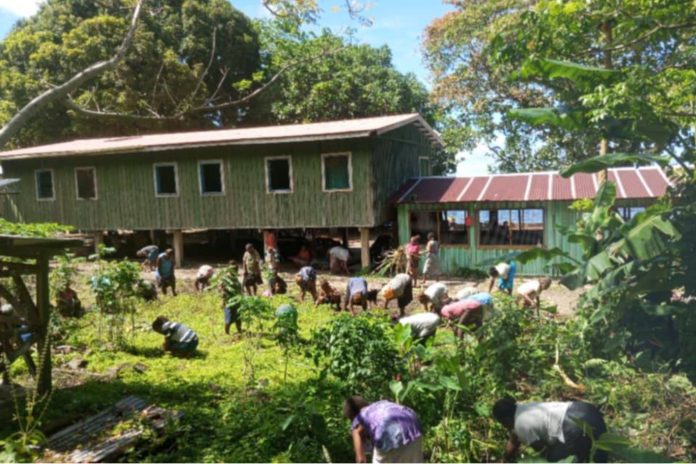
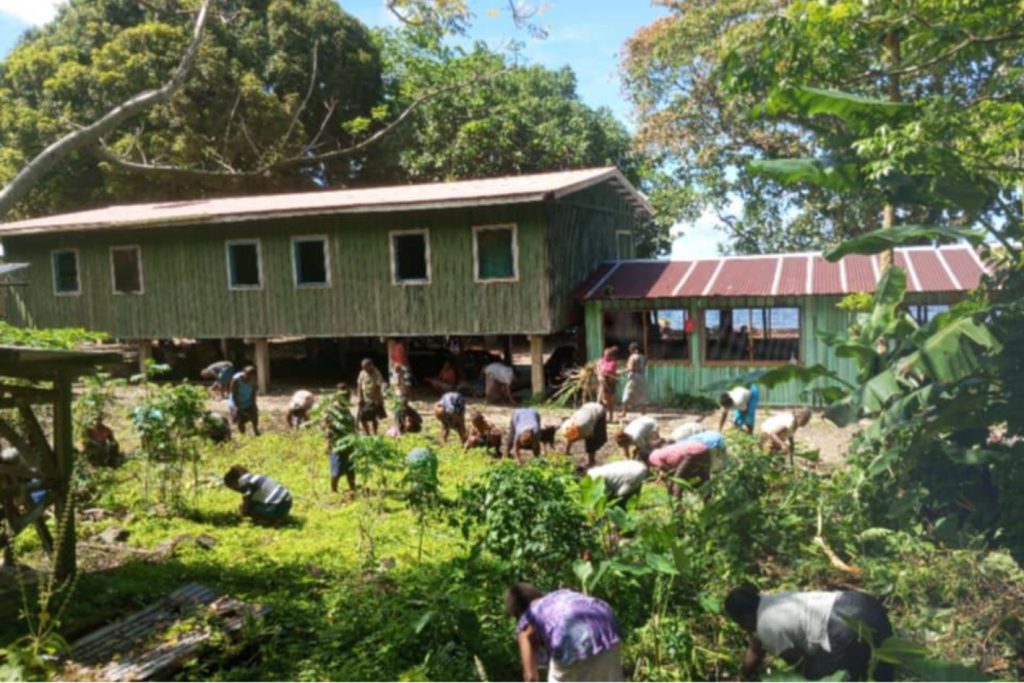
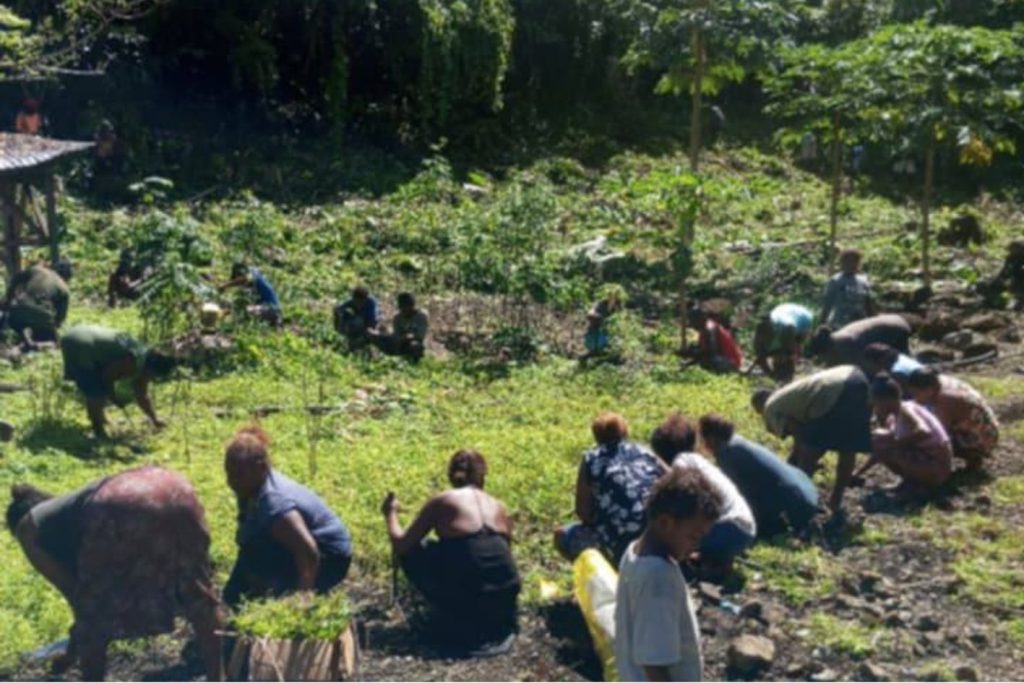
Communities clearing the area to make way for the new clinic building. Photo SEPI Forum.
Situated close to the seashore, the clinic was constructed on high posts. While practical at the time, the design created new challenges. The elevated structure is inaccessible to women, the elderly, and people living with disabilities, who must climb steep stairs to reach healthcare.
A Nurse’s Daily Struggle
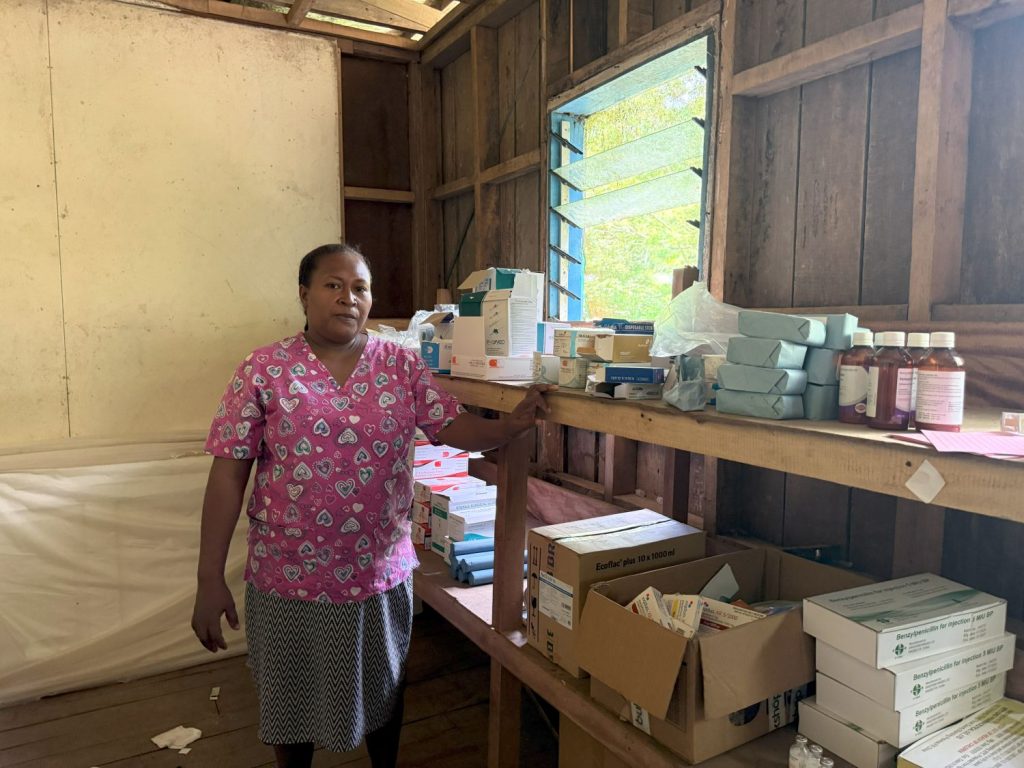
Nurse Roronu inside the storage area
Registered Nurse and Midwife, Elizabeth Roronu has been stationed at Kalenga Clinic for three years. She describes working conditions that fall far below basic health standards.
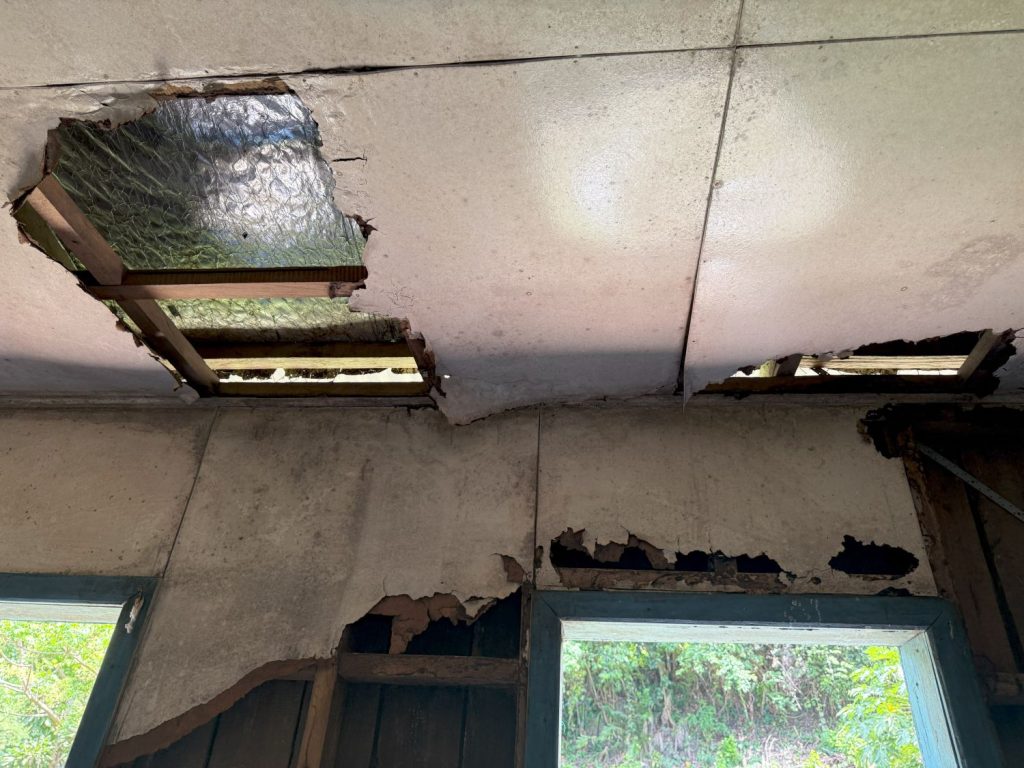
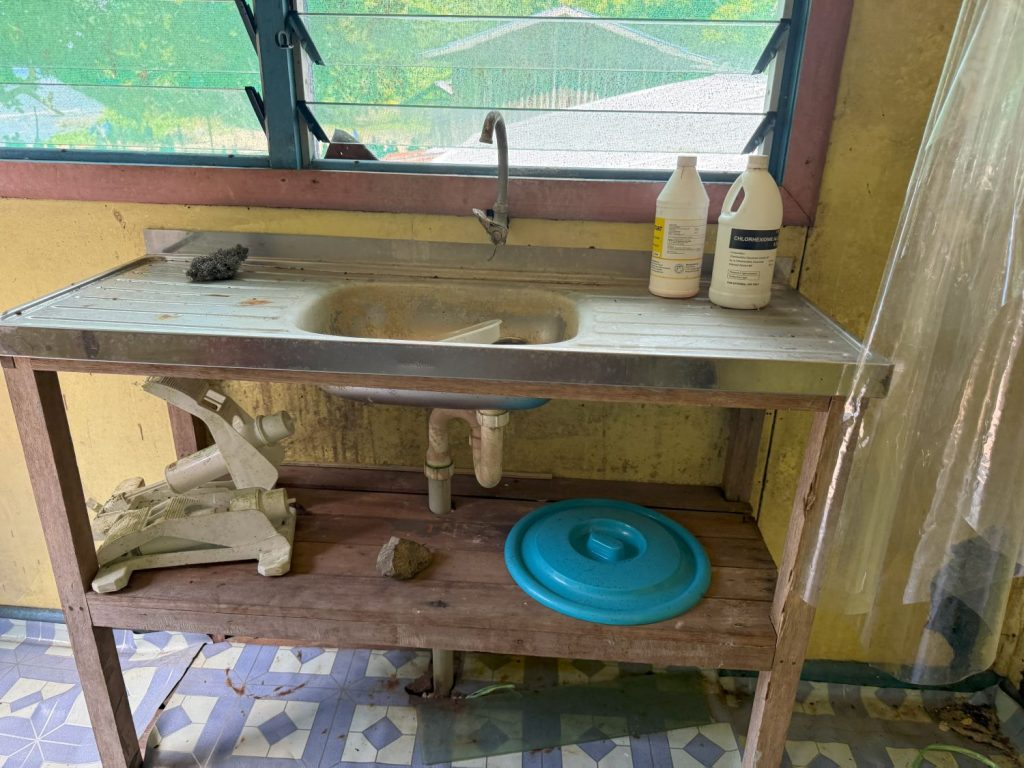
The rundown buildingA tap with no running water
“The building is too old. The ceiling is falling apart, and there is no running water.
“There is no light at night. When patients are admitted, we use our own flashlights. There are no toilets or washrooms. If patients can walk, they go to the seaside to relief themselves. If they can’t, we use buckets and throw the waste into the sea,” she said.
The clinic also lacks transport. Without its own outboard motor (OBM), staff must hire boats from the community to collect medical supplies, leading to additional burden to patients and community.
“Sometimes medicines don’t last the full three months. Transport and fuel are our biggest challenges. Our Local Purchase Orders (LPOs) can take up to six months to process. Meanwhile, businesses here require cash,” Nurse Roronu explained.
As a result, communities and patients often shoulder the cost themselves. Some LPOs, she said, have remained unsettled for up to three years.
Rising Malaria Cases
Malaria is on the rise in Kalenga and surrounding villages. Nurse Roronu reports that on some days, up to ten patients test positive, with weekly numbers reaching 30 cases.
“We often run out of Coartem and Primaquine. When we test patients positive and have no medicine, we just send them home,” she said.
Island Sun understands that some patients resort to sending money to relatives in Honiara to purchase medicines. There are also allegations of medicines being sold privately in the community—claims that remain unsubstantiated.
Youth Step in Where Government Fell Short
For years, the community suffered in silence. But the younger generation decided enough was enough.
Led by youths from the communities, discussions began on how to replace the failing clinic. These conversations gained momentum through Sepi Empowerment & Progress Initiative (SEPI), a Facebook Forum, which became a hub for ideas, planning, and collaboration.
Recently, the application for funding was submitted through the Solomon Islands–Australia Community Partnerships Program. Then in May this year, the project was approved and signed for building the new clinic.
The project is a collaboration between the donor, the community, and the constituency driven largely by youth leadership.
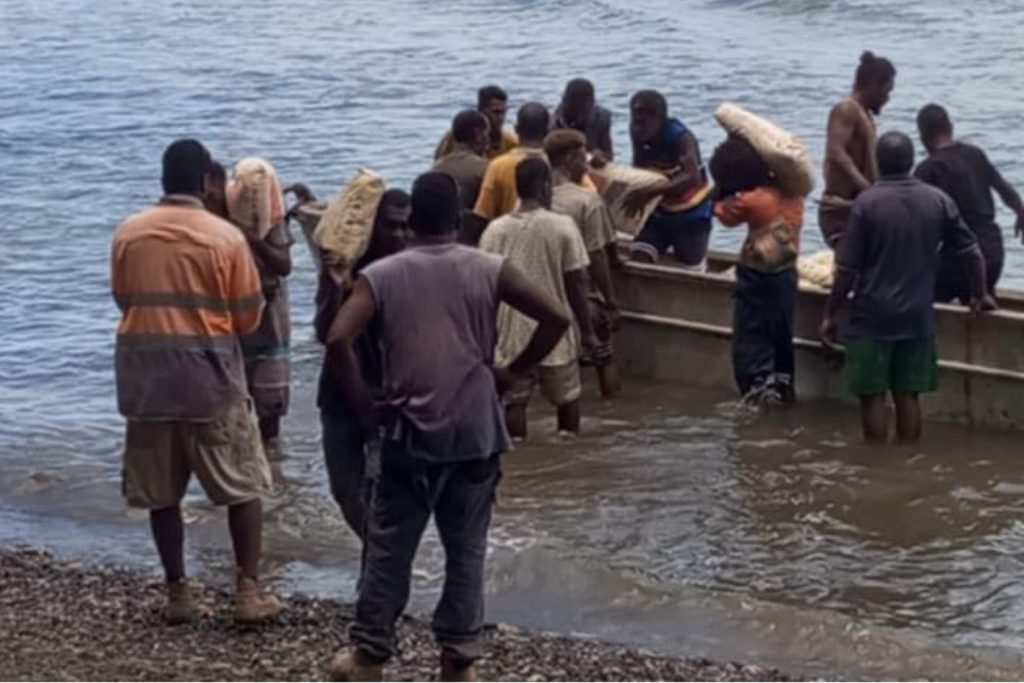
Community members helping out to carry the materials for the new building. Photo Sepi Forum
Following the signing, materials were shipped to the community, with freight costs included in the funding. The constituency assisted by chartering a vessel to transport materials to the site. Meanwhile, the community contributed gravel, sand, and labour, identifying skilled individuals to help construct the building.
Community Leadership Speaks
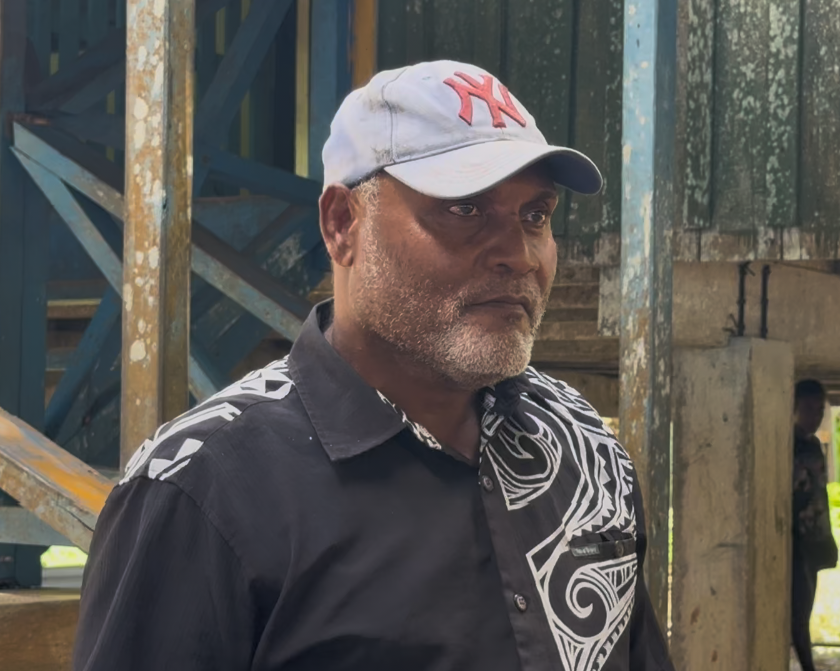
Kalenga Clinic Chairman Jonas Nohe said medicine shortages have plagued the community for over a decade.
Kalenga Clinic Chairman Jonas Nohe
“We travel to Susubona – an Area Health Centre in another constituency using nine gallons of fuel just to collect supplies, but often the medicine runs out within days.
“The population here is too big for the supply we receive,” he said.
As shortages persist, people increasingly rely on traditional remedies or purchase medicine privately—something unheard of in the past.
“Malaria has increased. In the 1980s and 90s, health officials came for spraying and awareness. Now, you hardly see them.
“Our ears are tired of hearing about millions of dollars on the news. We don’t feel it here,” Nohe said.
He welcomed the new clinic project, thanking the Australian Government and all those involved.
“My vision is simple: I want my people treated like human beings. Government services must reach us fairly. Enough is enough.”
A New Clinic, A New Beginning
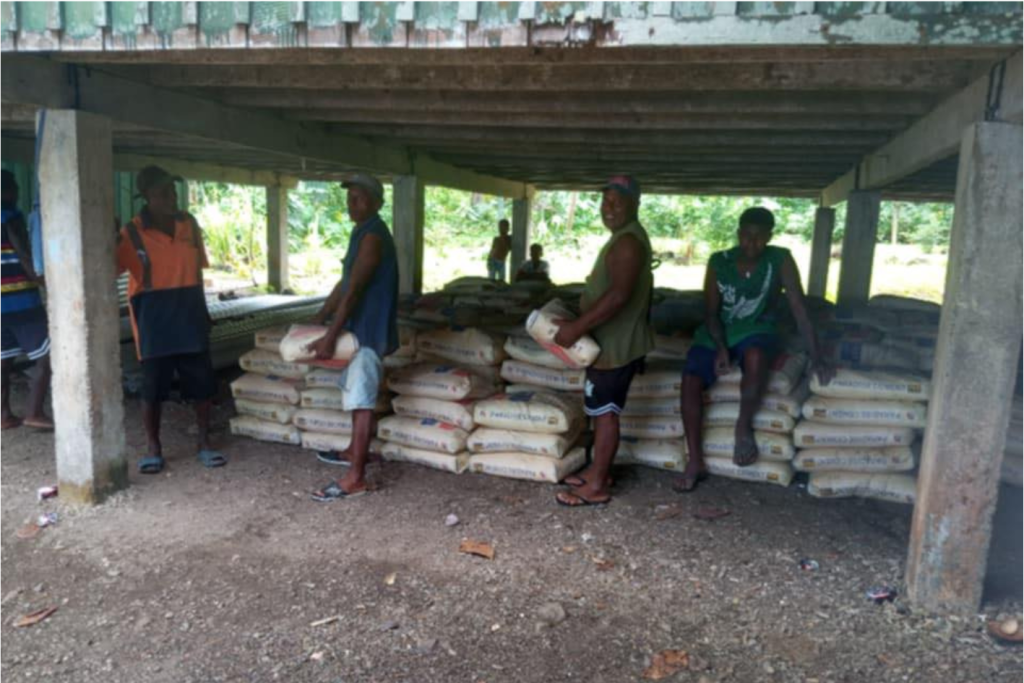
Bags of cement for the new clinic building Photo: Sepi Forum
All materials for the new clinic have now arrived, and construction is set to begin. Nurse Roronu believes the new facility will address many of the challenges they face daily.
“Honestly, this clinic should have been closed already because it does not meet health standards. But we continue out of compassion for our people,” she said.
Government Response
Prime Minister Jeremiah Manele recently acknowledged in Parliament that access to healthcare in rural areas remains a major challenge due to inadequate infrastructure, staffing, and medical supplies.
Meanwhile, Minister for Health Dr. Paul Popora Bosawai said an increased health budget for 2025 will help ease longstanding issues with drug security and medical supplies.
“These challenges have long affected our people. With the increased budget, we are addressing bottlenecks in procurement, payment, storage, and distribution,” Bosawai said, while admitting more work remains.
He also highlighted recent clinical governance training completed by senior clinicians as a step towards improving accountability and patient safety nationwide.
Hope Rooted in Youth Action
Communities of Sepi, Suva and Thathaje clearing the site in preparation for the construction of the new building Photo: Sepi Forum
While policy promises continue at the national level, the story of Kalenga Clinic shows that real change often begins at the grassroots—driven by young people who refuse to accept neglect.
*Reporting for this story was supported by Pacific Media Assistance Scheme (PACMAS)
A small-scale dam was built in Sughu community, Wanderer Bay, West Guadalcanal in 2009 by World Vision, easing access to water supply for people of Sughu.
The small-scale dam is situated far from the village and further up near the water sourceOne of the standpipes at Sughu community
But today, as the population increases over the years, with a greater number of households in the community, getting access to water through standpipes is now an issue.
Joshua Bulolo of Sughu community
Joshua Bulolo from Sughu, said the small-scale dam built far from the village was constructed along with a tank from which water is supplied to the village through standpipes.
At the time, standpipes located in the village prior to being built were estimated to be one per 5 households.
He stressed that as there are more people in the community than before, people are finding it hard to share water, especially when there are less than 10 standpipes in the community of more than 10 households.
This has caused the people of Sughu to experience shortage of water more especially because some people have resorted to creating their own water connections, causing disruption in the flow of water supply.
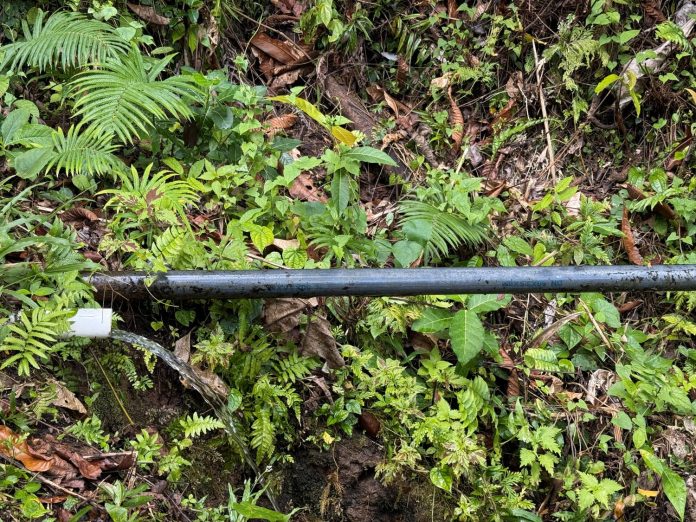
The small dam since being built has not been maintained as well and one of two pipes from the dam leading to the tank for water supply to the village was broken from flooding.
A front view of the small-scale damWater flowing from one of the broken pipes from the dam
“The flooding was so strong it broke one of the pipes at the dam so the broken pipe needs to be changed,” said Bulolo.
He pointed out that there should be a full rehabilitation of the whole water supply system which includes the small dam, tank, pipes, and standpipes.
“What should be done as well is recalculation of how many households there are in the community at present to know how big the dam should be to provide more water for the community.
“There should also be an increase in the size of the storage tank so that it has enough water to supply people of the community,” he said.
Bulolo mentioned that the dam also needs to reconstructed.
He emphasised that no maintenance of the water supply system has been done, hence the challenge of water supply usage in the village.
Bulolo said although the community does not have enough money to do this, they should work together for a start, adding that assistance from the government and aid donors would greatly assist them in curbing this challenge.
Women and young girls of Sughu who use water more often everyday than everyone else are also feeling the impact of unequal access to water supply.
Clera, a young woman from Sughu community
Clera, a young woman from the community shared her experience about this.
“We use the water supply to prepare food, for drinking, washing cooking utensils, to bathe and to wash clothes,” she said.
Clera added that the issue of not having enough standpipes is that when they go to fetch water to drink, or bring their clothes to wash them or when they go to bathe, they have to wait because people are already at the standpipe.
“This affects us women and girls, because everyday we have different tasks to do which all involves the use of water.
“So, when we go to use water from the standpipe but it is already occupied, we have to wait which means we will delay whatever task we had planned to do throughout the day” she stressed.
Like Bulolo, Clera also concurrs to the fact that the growing population in their community has impacted access and use of water from the now limited standpipes they have.
“So, we need more standpipes,” she said.
*Reporting for this story was supported by Pacific Media Assistance Scheme (PACMAS)
Unlike government schools that have access to grants, Kiu Community High School in Malaita Province survives and thrives only by financial contributions from parents.
Kiu Community High School
The lack of access to school grants, aid donors and constituency funds is still a major setback for Kiu Community High School as it faces challenges in accessing them.
The motives behind the halt of funding, such as school grants, aid donors, PCDF, and constituency support for Kiu School, are not clear.
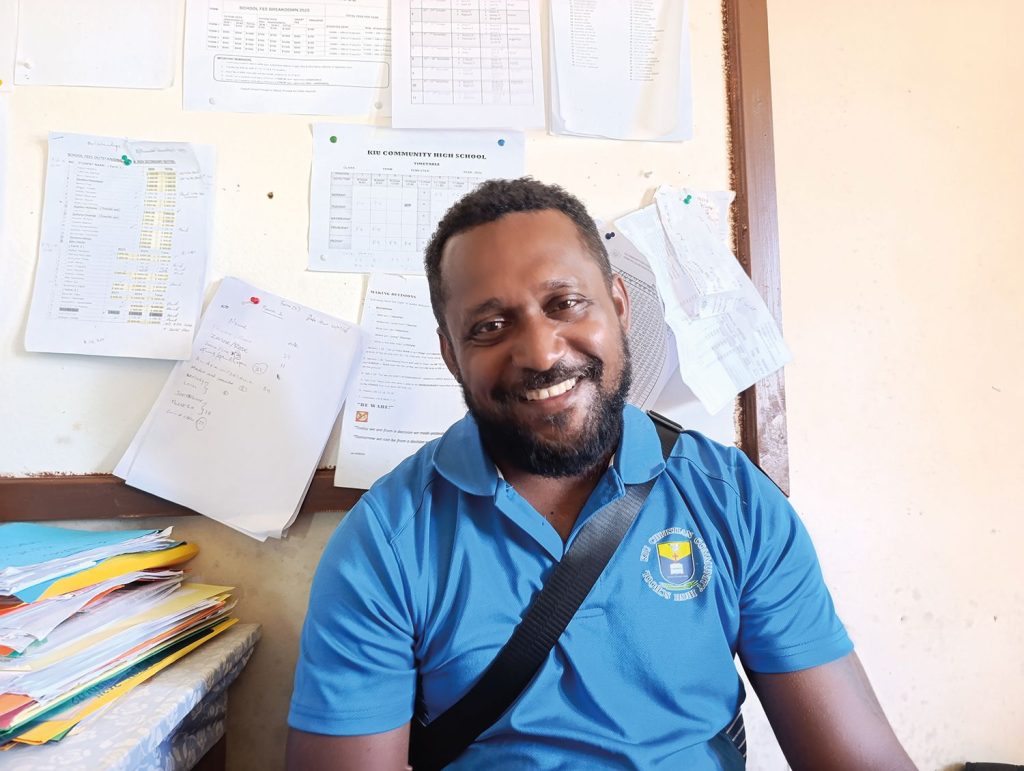
Kiu Community High School Deputy Principal, Amos Tafea’ataramae
However, the Deputy Principal of Kiu Community High School, Amos Tafea’ataramae, said so far, they have shown community resilience in holding up the school to run without these external supports.
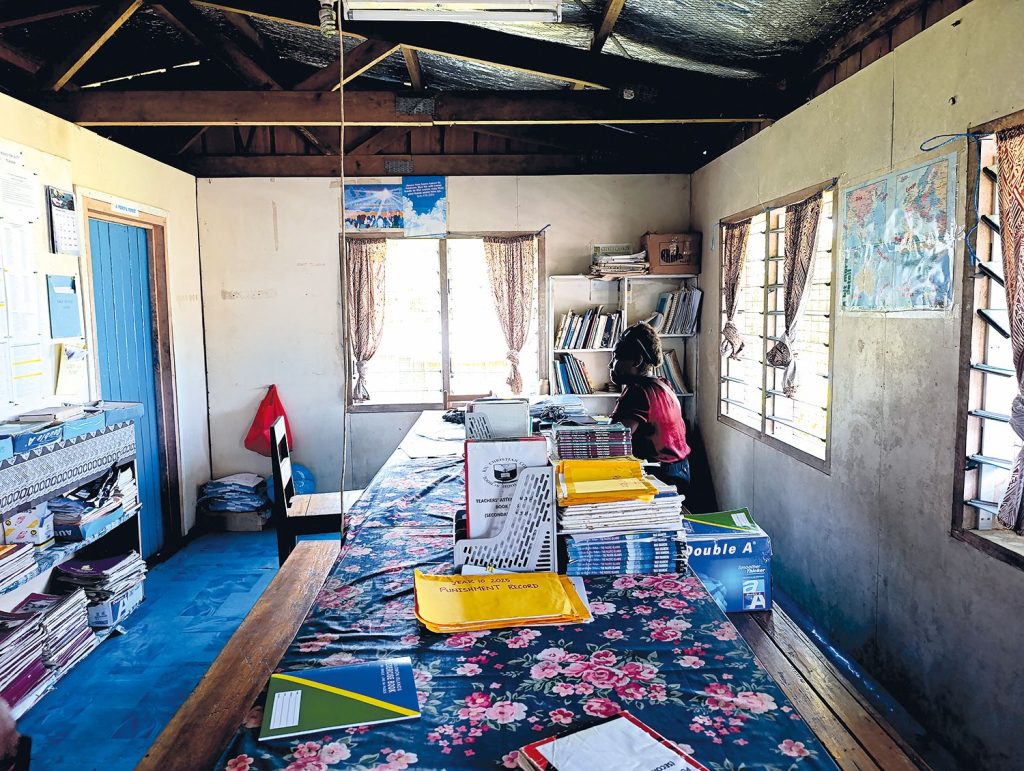
One of the school’s staff preparing for her class
But, the reality is without these external supports the school can only manage to develop very slowly.
Tafea’ataramae said they can only carry out minor renovations and maintenance.
“In terms of school development, this is one of our main difficulties. So, with the only small amount that we receive from the tuition fees, we managed to do minor developments like renovations and maintenance work in the school,” he said.
The absence of funds not only disrupts school development, but also contributes to a lack of resources and required facilities for students.
“Since we have a growing population at the moment, we need more development in the school. Currently, we have a library, but it doesn’t cater to every student, and there are also scarce resources like reading books and others,” he said.
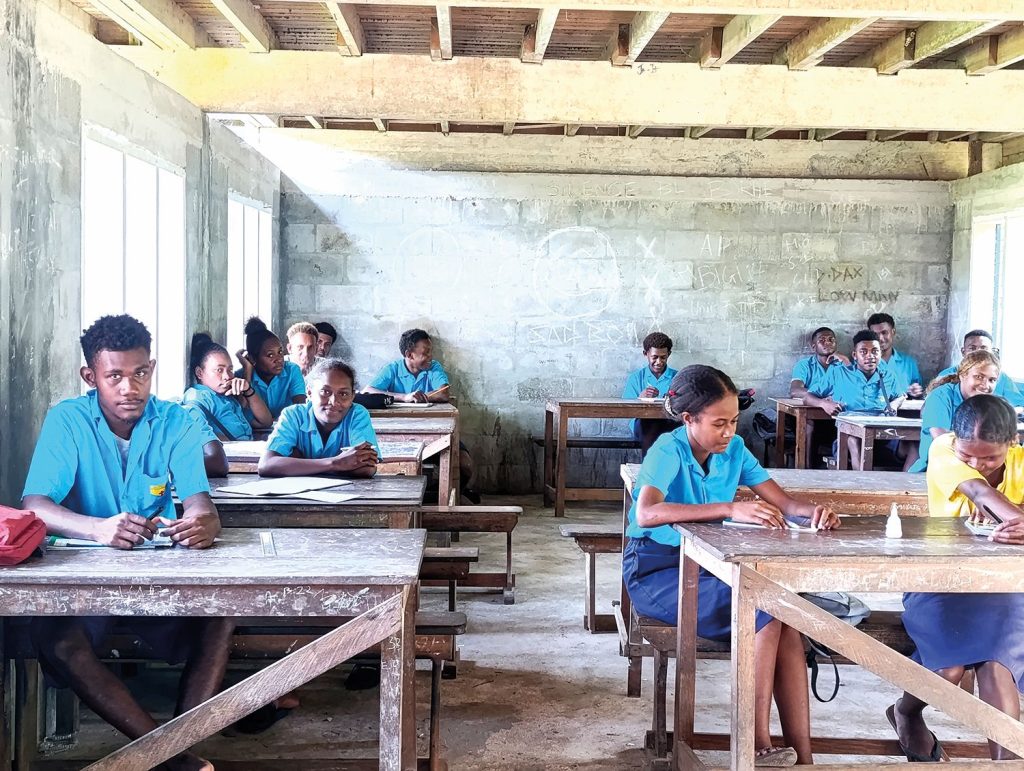
Form four students during one of their classes
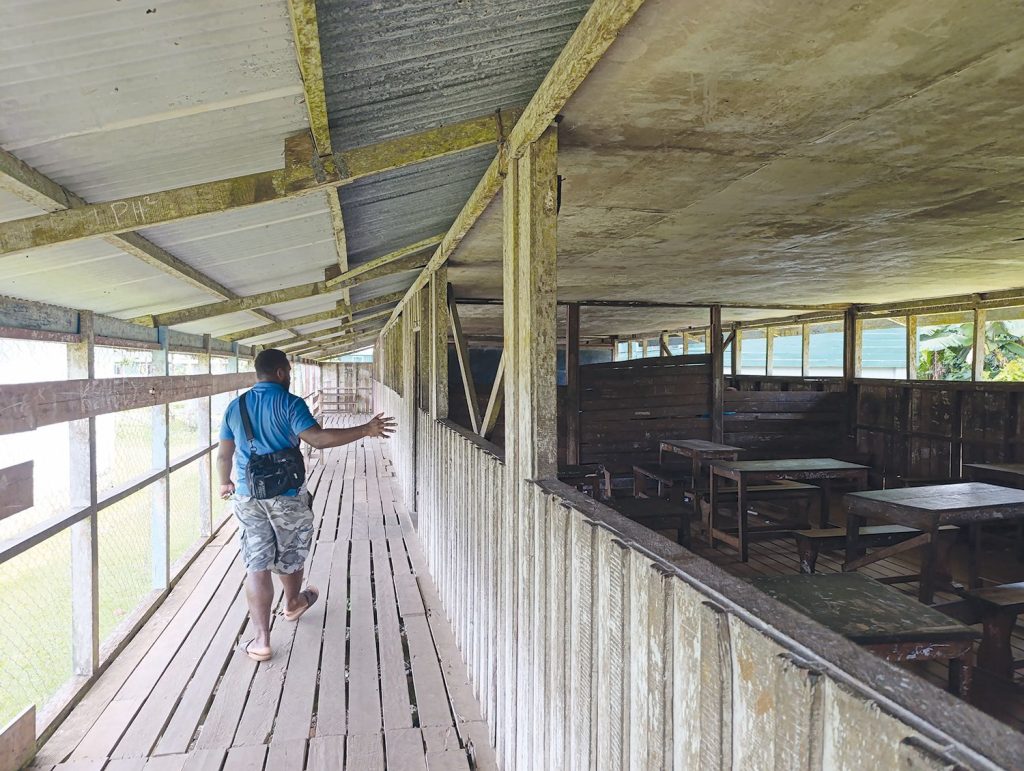
The learning environment for the students is also a grave issue, which the Deputy Principal said almost all their classrooms need to be extended to have more space and to accommodate new classrooms.
The school is also in dire need of a school hall for end-year programmes, like the graduation ceremonies.
A classroom normally used for graduation ceremonies and school activities
“We also need a school hall. Every year during our graduation, we just use a classroom, which doesn’t accommodate everyone. At times, every parent stays outside of the classroom when they should be in the room witnessing their children graduating,” he said.
Other barriers faced at Kiu School are road access to Auki township and school boundary expansion.
Tafea’ataramae appeals to national and provincial leaders to visit their school and see for themselves what the school is facing.
He urges the provincial education authority, which is the body that oversees and is responsible for assessments of all schools in the province, to make an urgent assessment of their school to see for themselves.
“Yes, I want to call on national and provincial leaders, and especially our provincial education authority, to please make an attempt to visit every school in the province at any time next year.
“Through the visit and assessment of the schools, you’ll figure out what is most needed and what each school is facing, without saying that every school is running smoothly,” he said.
*Reporting for this story was supported by Pacific Media Assistance Scheme (PACMAS)
Santa Cruz Island in Temotu Province holds a profound place in the history of the Solomon Islands. It is the island that hosted the first recorded foreign visitors to the country.
In 1568, Spanish explorer, Álvaro de Mendaña became the first European to discover the Solomon Islands. This discovery marked the beginning of centuries of European contact with the archipelago.
During his voyage, Mendaña reported finding gold on one of the islands, leading him to believe he had discovered the legendary riches of King Solomon.
In 1595, Mendaña returned to the Solomon Islands and established a settlement at Graciosa Bay on Santa Cruz Island. He later died there, making the island an important site in early Pacific exploration history.
Evidence of Mendaña’s settlement can still be seen today. Corroded iron remnants of the centuries-old wharf he built in Graciosa Bay remain visible. Additionally, descendants of the fowls (chickens) he brought with him during his return voyage are still found on the island.
Santa Cruz Island does not only preserve this significant chapter of history; it also represents the gateway through which the Solomon Islands were first opened to the outside world, eventually leading to contact, change, and modernization.
However, this piece of history appears to have received little recognition, as reflected in the ongoing development challenges faced by Santa Cruz Island and Temotu Province.
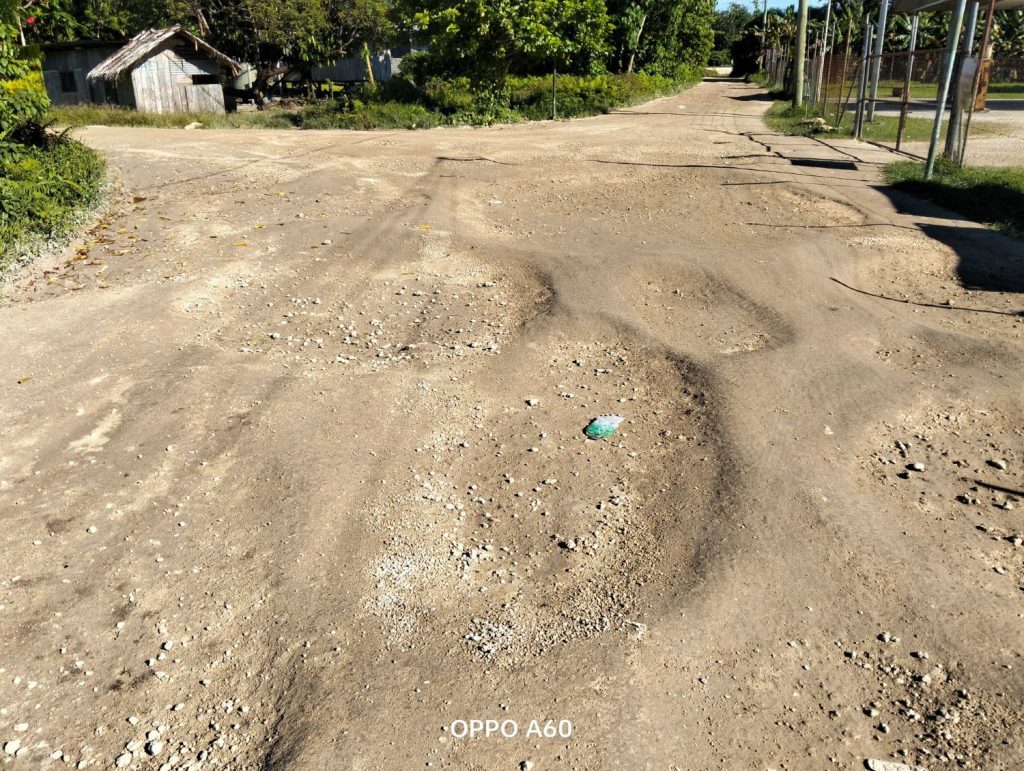
Main road connecting Lata township to Nembo
As observed—and as acknowledged by rural Temotu residents and leaders—the province remains among the least developed in the country.
George Mepirke, an elder from Nou Village, says the province continues to face significant development challenges, particularly in infrastructure.
In a developing country like the Solomon Islands, he said infrastructure is key to unlocking development and improving the delivery of basic services.
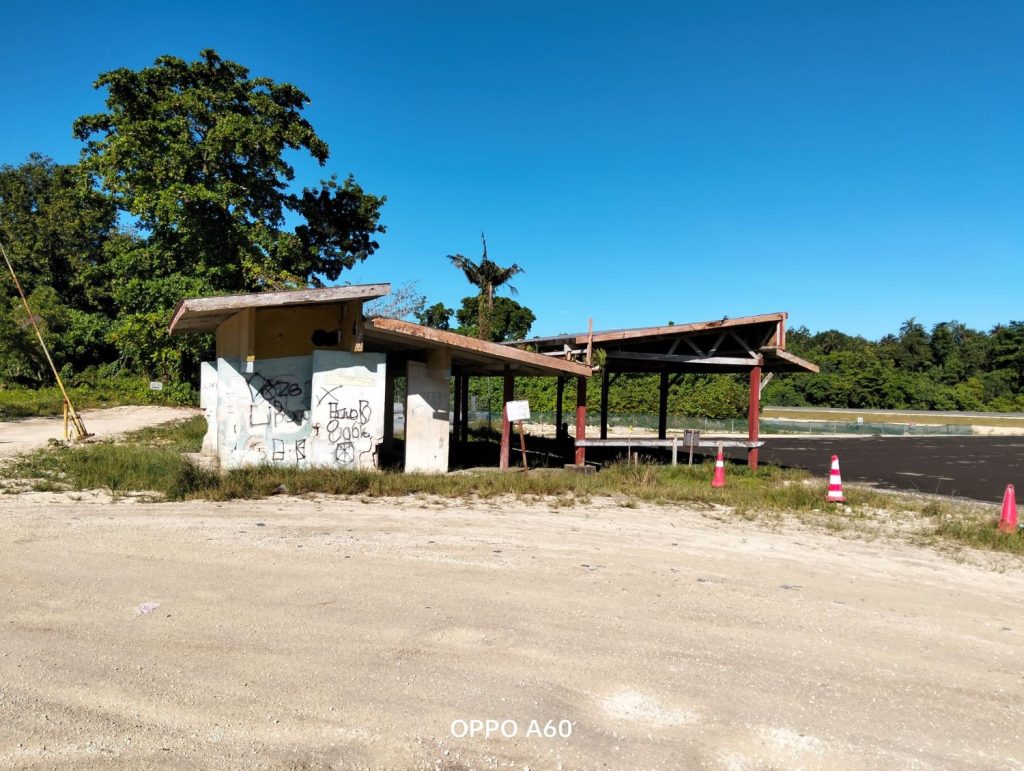
Condition of a heavily wharf on the outskirt of Lata townThe main wharf at Lata townCondition of roads within Lata TownshipThe old Lata air-terminal
“We are in need of good wharves, roads, airfields and other essential infrastructure to encourage development in the province,” he said.
“Additionally, it seems we have been left behind, perhaps due to our geographical isolation. I am not saying this out of envy, but based on the trend of development across the country.
“It appears that development efforts are centred on only certain provinces, and the distribution is unfair,” he added.
During the parliamentary sine die debate this week, the Member of Parliament for Temotu Pele, James Bonuga, echoed similar sentiments.
He said that for far too long, development, resources, opportunities and essential services have not been distributed fairly across the country.
Bonuga said the province continues to bear the burden of remoteness without receiving the level of support required to overcome it.
“This is not a new issue, and it can no longer be addressed with general statements of commitment alone,” he said.
He added that Temotu Province, like many others, faces unique challenges arising from its geography and distance from the capital.
The MP said these challenges affect the delivery of essential services, the movement of goods and people, and the ability of communities to fully participate in economic development.
“The people of Temotu continue to contribute to the national economy and our shared identity as a nation.
“Yet they continue to experience limited access to healthcare, education, markets and economic opportunities. This imbalance is unacceptable if we are serious about inclusive and equitable development,” Bonuga said.
Daniel Sawa, a young father from Nou Village, has shared the challenges faced by communities in Temotu Province in accessing basic essential services due to inadequate infrastructure development on Santa Cruz Island and across the province.
He said Temotu Province is made up of scattered and far-flung islands, with connectivity—particularly transportation—remaining one of the province’s biggest challenges.
Sawa emphasized that poor connectivity has significantly contributed to the limited delivery and accessibility of basic services throughout the province.
“Connectivity is our biggest challenge, and it has a huge impact, especially on the health and education sectors in the province.
“Sometimes we lose members of our communities simply because of the lack of transport and the high cost of accessing health care services.
“This is common in our outer islands, as the only provincial referral hospital is located at the provincial headquarters in Lata on Santa Cruz Island.
“If adequate health services were accessible in our remote islands, some of the deaths experienced in our families and communities could have been prevented,” he said.
Sawa added that insufficient infrastructure development in the province continues to undermine the education of children.
“We have very few high schools in the province, and they offer limited spaces for our children to further their education,” he said.
He also highlighted the economic challenges faced by rural Temotu communities as they struggle to sustain their families.
“We live in a society where money is essential, but with very limited economic activities, cash flow in the province remains weak.
“Lata is the economic hub of the province, and people from outlying islands travel long distances at high cost just to sell small quantities of produce at the market.
“Often, they return home with very little, which is far from enough to meet the basic needs of their families,” he said.
Sawa said these challenges have been experienced for decades, and despite the hardship, communities continue to endure them.
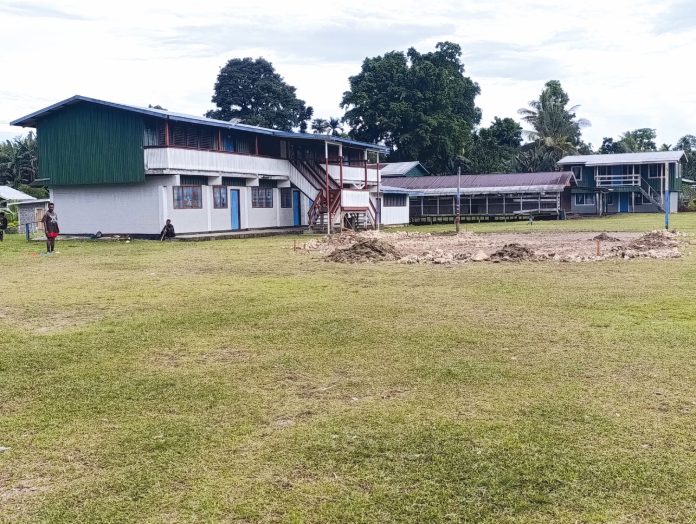
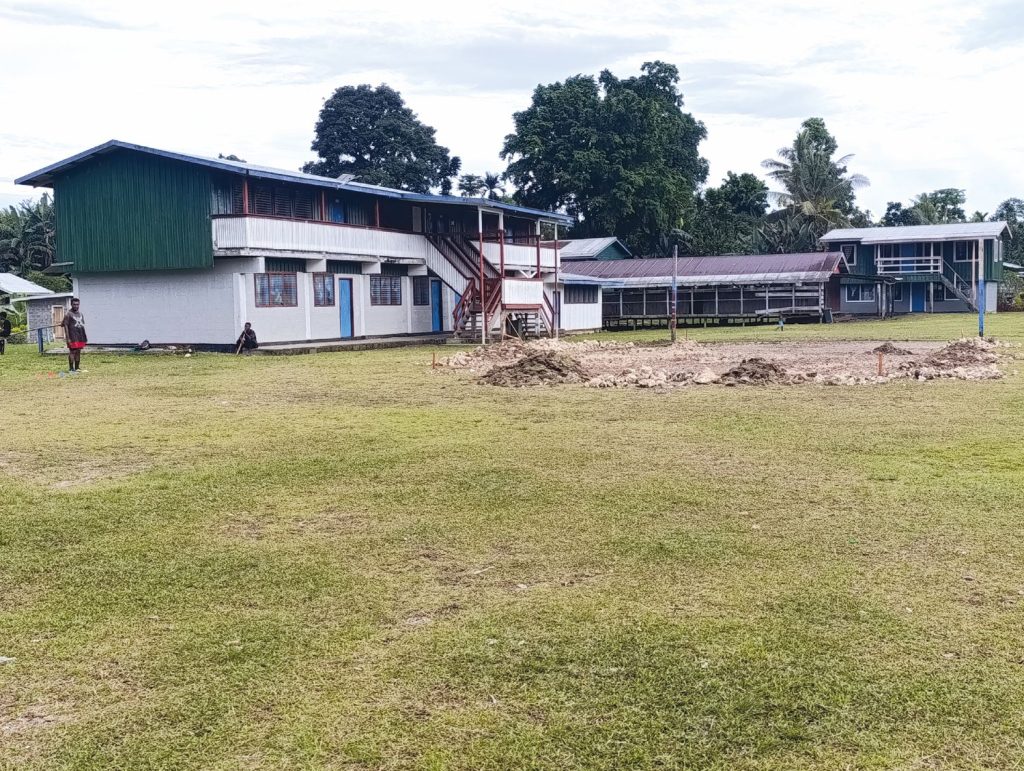
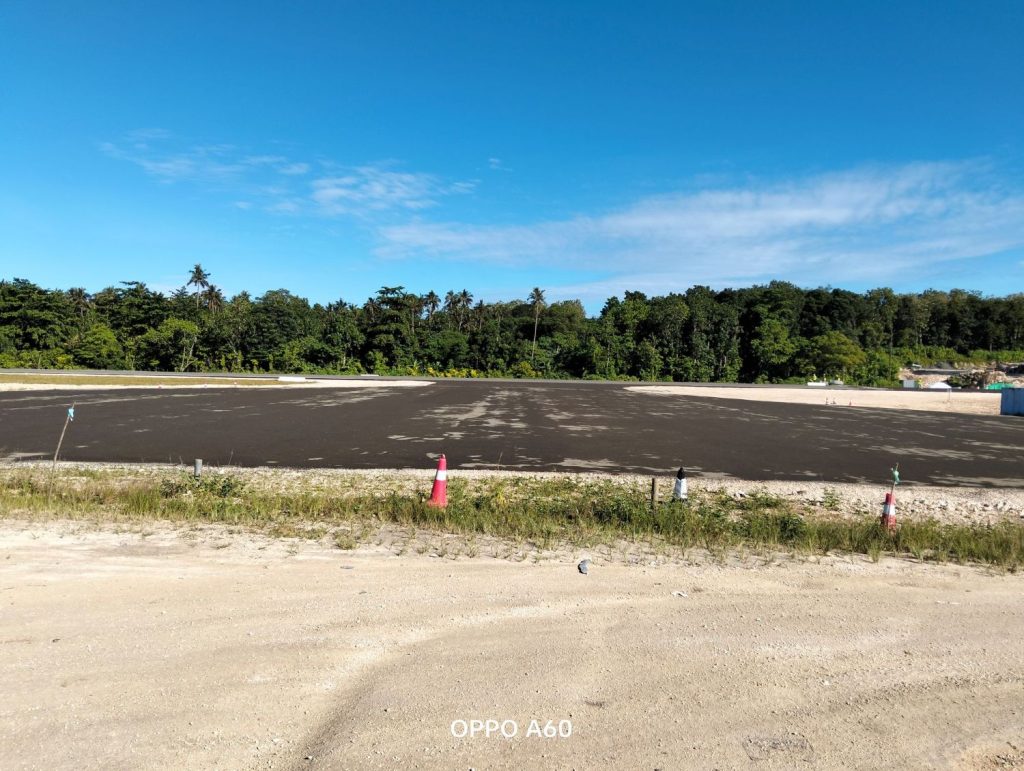
Construction of this new terminal at Lata upgraded airport is ongoing.
On that note, he acknowledged the collaboration between the Temotu provincial government, the national government, and development partners in advancing major infrastructure projects in the province.
Sawa highlighted that the upgrade of Lata airfield will significantly improve transportation to the province and help stimulate the growth of key sectors, particularly tourism.
While thanking the national government for these infrastructure developments, he emphasized that the most critical need in Temotu Province is a reliable shipping service.
He urged the government to address this need by providing a vessel to transport goods and people to the province, or even better, by ensuring a vessel is available to serve the islands within the province.
*Reporting for this story was supported by Pacific Media Assistance Scheme (PACMAS)
-Education Minister Leokana sets out legal rates that schools may charge
-Schools not allowed to charge registration fees, transfer fees, exam fees
By SYLVANA TEKUMAHA
Schools across Solomon Islands have been warned not to over-charge students and parents.
Minister of Education and Human Resources (MEHRD), Tozen Leokana clarified in parliament in his Sine Die address that schools charging fees beyond the limits set out under the Education act 2023 are in direct contravention of the Ministry’s order.
Speaking during the Sine Die Motion last week Leokana said schools are strictly prohibited to charge registration fees, transfer fees or examination fees.
“No child should be excluded from education due to temporary financial hardships,” he said.
Leokana added that compliance to the law is not optional and parents/guardians are encouraged to report breaches directly to the Permanent Secretary of MEHRD.
“The Ministry’s officials are instructed to act immediately and they will have my full political support.
“Under the authority granted by the Education act 2023, I have already exercised my power to regulate school fees.
“I have issued a ministerial order setting maximum fees,” Leokana said.
School fees are based on level, location, and boarding status. Non-boarding primary schools may charge up to $1,200 in urban areas and $250 in non-urban areas.
For junior secondary, the maximum is $2,000 in urban and $800 in non-urban, while senior secondary non-boarding schools may charge up to $4,000 in urban centers and $3,000 in non-urban areas.
MEHRD also plans to review grants that are provided to schools and education providers.
This is the response to the prevailing circumstances including raising costs, inflation and the overarching need to ensure grants funding support the smooth and effective operation of schools.
PRIME Minister, Jeremiah Manele says that SIPA (Solomon Islands Ports Authority) should not only invest in the existing ports facility but also plan ahead for terminal storage expansion.
Prime Minister Jeremiah Manele delivering his keynote address at SIPA’s groundbreaking ceremony of Berth 1 ProjectPrime Minister Jeremiah Manele marking the groudbreaking ceremony at Berth 1 project site(Centre) Prime Minister Jeremiah Manele with officials from SIPA and stakeholders marking the groundbreaking ceremony
He made the statement whilst delivering the keynote address at SIPA’s milestone groundbreaking ceremony on Friday, December 19, 2025 to mark Berth 1’s redevelopment project.
Manele said projections indicate that between 2030 and 2035, annual container throughput could exceed 40,000 20-foot equivalent units, noting that at that level, congestion risks become real, not only at the wharf but also within the container yard, access roads and surrounding urban areas.
“This is why SIPA should not only invest in the existing port facility but also, planning ahead for terminal storage expansion,” he said.
Manele also said that he takes note of SIPA’s plans that the Chairman has alluded to, not only here in Honiara but also at Noro, our other international port and other areas in the future.
He said one strategic solution is to complement the Point Cruz main container yard with additional capacity well before congestion reaches critical levels.
Manele said that the development of a Ranadi outport container yard is both timely and necessary.
He said Ranadi’s proximity to the main container terminal and its location within our industrial zone make it a logical and cost-effective extension of port operations.
“Container movements between Ranadi and Point Cruz can be efficiently facilitated through barge transport. The use of barges to transport containers represents a modern and efficient freight solution.
“Over time, it can gradually replace the heavy reliance on trucking, which is increasingly inefficient and limited in capacity.
“Barge transport allows movement of higher container volumes per trip, overnight and off-peak transfers; improving efficiency for customers and reduced disruption to daytime urban activity,” said Manele.
He said that it will shift heavy container traffic of the east-west Honiara main road, easing congestion, improving road safety and reducing pressure on critical urban infrastructure.
Manele said that beyond logistics of efficiency, this approach contributes to a better urban environment.
“Fewer container trucks mean lower emissions and reduced road damage. At the same time, it will directly support industrial growth in the Ranadi industrial zone.
“Key national businesses, such as Solrais, SolBrew, Tongs, Top Timber, Gold Ridge and others, rely on reliable, efficient ports and logistics services to remain competitive and grow,” he said.
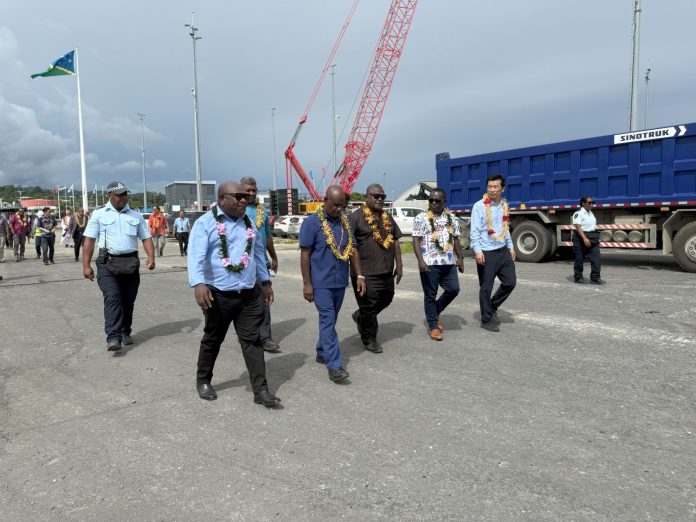
Prime Minister Jeremiah Manele led on a tour of Berth 1 project site by SIPA CEO, George Rausi (left of PM) and SIPA Chairman, Moses Virivolomo
The Prime Minister said that the rehabilitation of Berth 1 must therefore be viewed as part of a broader national port development vision, one that integrates infrastructure investment, modern legislation, sound SOE governance, urban planning and private sector growth.
“The Government remains committed to working with the Solomon Islands Ports Authority to ensure our ports are safe and resilient, efficient and competitive, and governed by legislation that reflects the realities of a modern society or economy,” he said.
Stakeholders, development partners and members of the Diplomatic Corps at the groundbreaking ceremony
Manele also took the opportunity to acknowledge SIPA and development partners and stakeholders in this venture.
“I commend the Board, Management and staff of SIPA for their leadership and foresight. I also acknowledge our development partners including ADB and stakeholders for their continued support in strengthening our national infrastructure.
“On the same note, I also thank the representatives of our contractor, CCECC, (China Civil Engineering Construction Corporation) for the work that they will undertake to implement and complete this project in time as part of the Board’s 70th celebration, but more so, our country’s 50th Independence Anniversary come 2028.
“With those remarks, may I take the opportunity as well to wish all of you a blessed, festive season and Happy New Year 2026.
“May this project strengthen our ports, support our economy and serve the people of the Solomon Islands for generations to come,” he said.
MEMBER of Parliament for West Kwaio Constituency and Chairman of the Bina Harbour Tuna Project, Claudius Tei’ifi is calling for the prioritisation of house that will be affected by the domestic international seaport developments of the project.
He made the appeal on the floor of parliament during the Sine Die Motion last week.
“My committee has consistently called on government through the Implementation Agency to prioritise relocation of houses affected by the domestic international seaport developments,” he said.
He said that this matter must be given priority in the 2026 Work Plan and beyond.
“While the Ministry of Fisheries are leading at Bina Habour, I also urge government to ensure that other sectors such as police and security, health, education and utilities are integrated into the broader planning framework,” he said.
Tei’ifi said that coordination across government and stakeholders is critical to upward delegations and maximize the impact of the public investment.
He said that scale of the Bina Habour Development Project has placed additional pressure on his constituency government planning, particularly in Ward 28, where the project is located.
“The constituency work plan seeks to prepare communities to improve housing, water and sanitation, community infrastructure and livelihood programs. I therefore respectfully request government agencies and partners supporting Bina Project to also consider and support constituency level preparedness initiatives,” he said.
Tei’ifi acknowledges the support of Australia Department of Foreign Affairs and Trade (DFAT) and the People of Republic of China (PRC) and look forward to deeper collaboration in 2026 and beyond.
“I thank my constituents for their patience and ensure them that we will work together to implement projects within the available budget,” he said.
THE Solomon Islands Government, through the Ministry of National Planning Coordination (MNPDC) is preparing for the country’s graduation from it’s Least Developed Country (LDC) status in 2027.
This was announced by the MNPDC in a statement following a high-level global meeting co-organized by the State of Qatar through Qatar Fund for Development (QFFD) and the United Nations Office of the High Representative for Least Developed Countries, Landlocked Developing Countries and Small Island Developing States (UN-OHRLLS).
MNPDC’s Director of Development Cooperation Division, Samuel Wara, represented Solomon Islands at the meeting.
He said the meeting was timely as Solomon Islands prepares to graduate from LDC status by the end of 2027.
Wara added that close coordination among MNPDC, the Ministry of Foreign Affairs and External Trade (MFAET), the Prime Minister’s Office and the Ministry of Finance and Treasury (MoFT) remain critical, and that the meeting outcomes reaffirmed the need for continued engagement with development partners to ensure a smooth and resilient graduation from LDC status.
The meeting emphasized the importance of strong partnerships among governments, development partners, international financial institutions, regional banks and the private sector, as well as the need for gradual transition arrangements, continued trade support and increased financing for climate resilience, the MNPDC statement said.
Also highlighted is the importance of a robust Smooth Transition Strategy (STS) aligned with national development plans and budgets.
Wara said that Solomon Islands’ STS is embedded within the National Development Strategy 2016–2035 and will continue to be refined to support the country’s transition.
Meanwhile, held under the theme “Forging Ambitious Global Partnerships for Sustainable and Resilient Graduation of Least Developed Countries,” the meeting forms part of the Doha Programme of Action, which aims to support the graduation of 15 LDCs by 2031.
Key challenges discussed included climate vulnerability, weak global economic conditions and declining access to concessional finance, alongside lessons from countries that have successfully graduated, as such, practical guidance on managing the transition while sustaining development progress.
The three-day meeting concluded in Doha, Qatar, on Thursday December 4 2025.
Members of the Tetena Farmers Association in Na’na, East Makira Constituency, have received farming tools through the Ministry of Agriculture and Livestock (MAL) Solomon Islands Agriculture and Rural Transformation (SIART) Programme to support and strengthen their operations.
SIART materials
The assistance is part of SIART’s ongoing effort to sustain and improve farming activities among rural farmers.
Association Project Manager, Francis Wehi, said the Tetena Farmers Association officially began its operations following its launch on 3 August 2025 at Na’na village, just a week after signing a grant agreement with SIART in Honiara.
He said the farming materials recently supplied to the association were part of the conditions outlined in the SIART contract agreement.
Wehi expressed sincere appreciation to the SIART Programme for its continued support, saying it demonstrates strong commitment and dedication towards empowering rural farmers.
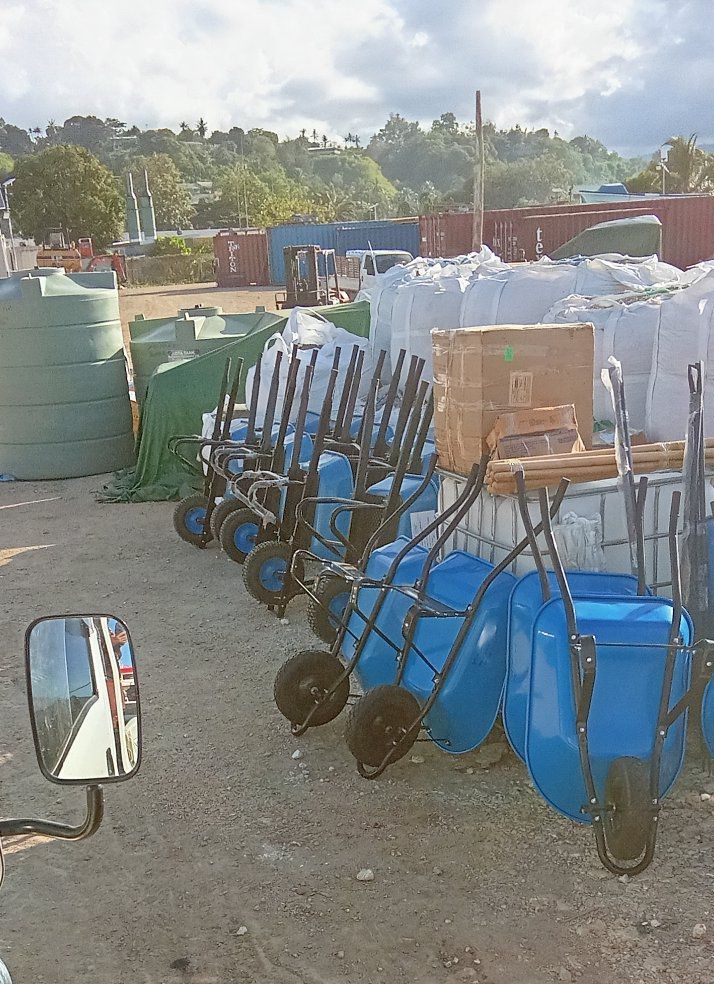
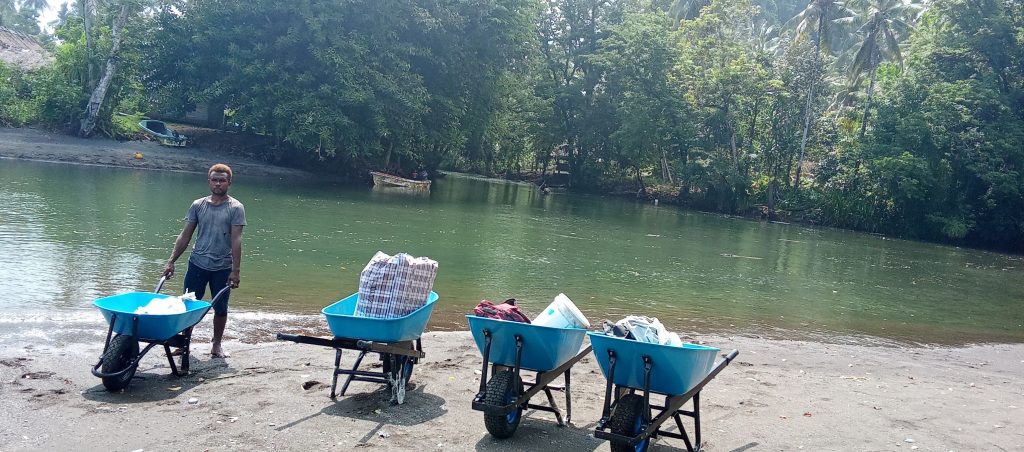
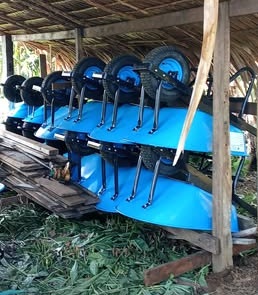
Wheelbarrows that arrived in MakiraWheelbarrows
The items distributed include; wheelbarrows, copra knives and grass cutters, all of which have now been delivered to members in their respective homes.
Wehi acknowledged that the association’s current operations remain challenging, but said he is determined to face these challenges for the benefit of the group.
He said transportation difficulties, the area’s geographical location, and limited network services are some of the main obstacles affecting communication with the SIART head office.
Despite these challenges, Wehi said the association has successfully made two shipments of copra to Honiara in recent months.
He also thanked SIART project officers in Honiara for their continued assistance and guidance.
The Tetena Farmers Association is among 19 successful farmer associations in Makira Ulawa Province that have benefited from support under the SIART Programme.