Home Blog Page 1412

Murder trial resumes in Auki

0

BY JENNIFER KUSAPA

THE hearing of evidence into the Basakana killing incident which occurred on November 9, 2015 has resumed in the Auki High Court.

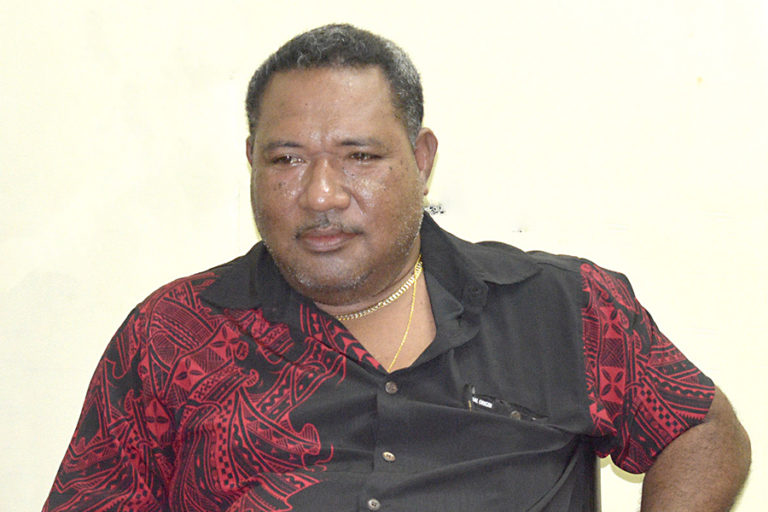
The accused on the case, Eddie Arodo, is charged with one count of murder for allegedly killing a woman, Christina Kokoto (deceased), on November 9, 2015.

Prosecution will be calling three witnesses during the trial.

The Director of Public Prosecution Ronald Bei Talasasa in his opening address said the onus is on the prosecution, not only to exclude the defence of provocation, if raised, but also to establish the required intent in the charge of murder.

“That specific intent is that the killing was done with malice aforethought as provided under section 202 of the Penal Code,” Mr Talasasa said in his statement.

The allegation said on Monday November 9, 2015, on the island of Basakana, the deceased was staying at the village, Basakana Village. She decided to go to the garden, to dig potato, at around midday or early part of the afternoon. She asked her daughter, Brenda Kaelonga, to accompany her.

Brenda teaches at Basakana Primary School and had finished at around 11.30am that day and returned to the house.

The allegation further said by the time it was going towards the end of the day, the husband of the deceased asked his family if his wife had returned from the garden but by the early part of the evening, or as night fell, and still she had not returned to the house, her husband decided to follow the way she had gone, to the garden.

The husband with another man upon reaching the garden discovered the body of his wife, lying down on the ground. She had sustained severe injuries on her head, and wrists and she was dead.

The prosecution then alleges that the accused was seen earlier on that day walking towards the garden area of the deceased. This was at about the time the deceased had gone to or at the garden. The accused was later seen, the next day, at the coconut plantation area, hiding.

The matter was reported to the Auki police and the accused was interviewed in which he was charged with murder in relation to that incident.

Ronald Bei Talasasa Jr & Margaret Suifa’asia of the Office of the Director Public Prosecution appears for the crown while Nigel Galo of the Public Solicitor’s Office is representing the accused.

New clinic building for Kanata

0
Choiseul Premier Jackson Kiloe.

BY BARNABAS MANEBONA

OVER one thousand people witnessed the handing over ceremony of Kanata’s new clinic building at Nuatabu community in Kiruqela Ward 16, Northeast Choiseul, yesterday.

According to Mr Nerio Ulemiki the media coordinator for Christ the King Parish at Northwest Choiseul reporting, the Premier of Choiseul province Hon Jackson Kiloe and his delegation arrived during the morning from Taro Station in which he the Premier handed over the new clinic building to the Nuatabu community to replace the old clinic building.

“The new clinic building was funded by the Provincial Capacity Development Fund (PCDF) with a total cost of more than $900,000,” said Ulemiki.

He said Nuatabu community and the surrounding communities of Kiruqela Ward 16 thank the Premier on behalf of the Choiseul Provincial Government and the Ministry of Provincial Government and Institutional Strengthening (MPGIS) on behalf of the National Government for funding the new clinic building that will serve the people.

PNG urged to target niche tourism to unlock potential

0

DEAR EDITOR, quoting Radio New Zealand International – April 18, 2018, “Most tourists who visit Papua New Guinea want to return, according to the International Finance Corporation.

“The IFC has released an assessment into tourism demand in Papua New Guinea with the results of the 2017 International Visitor Survey.

“It identifies five key niche markets – cultural tourism, soft adventure, bird watching, diving and historical tourism – where it is says PNG can unlock its tourism potential.

“As part of its collaboration with Australia and New Zealand through the Papua New Guinea Partnership, the IFC is urging government and private sector investment in tourism in PNG.

“IFC’s Tourism Operation Officer (Pacific) Becky Last said the Survey underscored that visitors connected with PNG’s friendliness and cultural uniqueness.

“When people come, they actually love it. The people are one of the strongest elements that came through when we asked people what they enjoyed most about their trip. The statistics absolutely tell the story.

“About 75 percent of people are satisfied, and 92 percent would return – and that’s out of the total number of visitors, that’s not just the tourist arrivals.”

“The International Finance Corporation recommended a range of small and large-scale investments in PNG tourism.

“Small-scale investment recommendations include development of specialised guiding, for instance in PNG’s bird-watching sector.

“We know that bird watching is a really important growth market in the global sense, and Papua New Guinea has phenomenal assets in this regard,” Ms Last said.

“It (PNG) has some really unique bird species, and we know that bird travellers are prepared to travel distance and put up with some slightly more basic infrastructure in order to be able to see these dream birds that are on their wish list.”

“The IFC said developing niche market tourism could attract another 40,000 tourists annually to Papua New Guinea.

“Its findings showed that last year PNG had 86,403 air visitors, who spent around US$205 million dollars, mostly business visitors.

“Ms Last said it was recommended that PNG invest about 78 million US dollars to address critical constraints and stimulate growth.

“If that’s done, PNG’s niche markets could reach in the region of 87-thousand arrivals (in a year) by 2027, bringing in about US$286 million in annual revenue.”

“She said it was a strong message that could help people understand why it was important to activate these investment recommendations in PNG.” Copyright © 2018, Radio New Zealand

Yours sincerely

FRANK SHORT

Ungodly pastors

0

DEAR EDITOR, as the country head towards the poll, people started to push hard for their preferred candidates.

It is normal but abnormalities is happening in some churches where Pastors are laying hands on their preferred candidates urging their congregation for their support.

This is very wrong and evil.

The good book told us that when the apostles need a replacement for Judas Iscariot, they did not appoint but prayed for the Holy Spirit to reveal the replacement.

So what some Pastors in some SSEC congregations are doing by anointing their preferred candidates during Sunday Services and forcing church members to support is unbiblical and ungodly.

Pastors as such should be dethroned from church leadership.

In other words, they are opportunists with greed that will accumulate wealth from their candidates should they win.

They have very bad intentions and the SSEC church in Solomon Islands must severely discipline them for bringing the name of the church into question.

Their actions is far worse than those chewing betelnuts which the church regarded as backsliders.

John Aonima

G Camp

Defining violence against women in terms of human rights

0

DEAR EDITOR, speaking in Honiara in March on the occasion of Women’s Day, Casper Fa’sala, the Acting General Secretary of the National Council of Women, said to his audience (quote)

“Let me remind all of us again that this International Women’s Day is a reminder that gender equality is a basic human right for all women and girls to enjoy their full legal equality of opportunity and have the same life prospects as their male counterparts.”

“Solomon Islands as a State must do everything possible to ensure that the dignity of our women is never trampled upon but translate our statements and good intentions into concrete actions for the betterment of our women who represents almost half of our Solomon Islands’ population.”

I am mindful at the time of the Universal Declaration of Human Rights; violence against women was recognised as a violation of their human rights, but several decades on the international community is still coming to terms in tackling the problem of physical violence and effective enforcement by bringing to bear the human rights framework on women’s private experiences.

Violence against women, and clearly evident in the Solomon Islands context, is linked to the historical inequality between men and women.

It has been argued that removing the political, economic and cultural structures which oppress women is the main way to eradicate male violence.

The SINCW gives voice for women to articulate experiences of violence and I would urge the organization to continue to define violence in all forms against women in terms of human rights. By so doing, the level of expectation about what can and should be done makes the state and civil society more accountable; the problem will then be seen as a legitimate public policy.

Thinking in terms of human rights will encourage a buildup of energy through major campaigns by local women’s organizations such as the SINCW and could lead to better systematic policies to criminalize gender violence, and to empower women seeking remedies.

Yours sincerely

FRANK SHORT

Countries agree to cut shipping emissions, to Pacific delight

0

DEAR EDITOR, quoting Radio New Zealand International – April 15, 2018, “The global shipping industry agreed a plan to cut its greenhouse gas emissions for the first time on Friday in a deal that had been hard pushed by small Pacific countries.

“The agreement came at the end of a week-long meeting of the International Maritime Organisation, a United Nations body, in London, where small countries were pitted against large shipping nations that were against such restrictions.

“Friday’s agreement calls for global shipping emissions to peak as soon as possible, and to reduce the total annual greenhouse gas emissions by at least 50 percent of 2008 levels by 2050. It also calls for efforts to be pursued to phase out greenhouse gas emissions from shipping entirely.

“The IMO’s Secretary General, Kitack Lim, hailed the agreement as a “successful illustration of a spirit of cooperation,” while Pacific leaders called it historic.

“Today the IMO has made history,” said the Marshall Islands president, Hilde Heine, in a statement. “While it may not be enough to give my country the certainty it wanted, it makes it clear that international shipping will now urgently reduce emissions and play its part in giving my country a pathway to survival.”

“More than 2 percent of global emissions of carbon dioxide come from the shipping industry, which is roughly equivalent to Germany’s emissions. But shipping, like aviation, has been excluded from previous environmental accords, such as the 2015 Paris Agreement, because its focus was based on a system of state-level targets.

“The Pacific countries have long pushed for a reduction in shipping emissions, which have been mostly unregulated until now.

“In 2015, the then-foreign minister of the Marshall Islands, Tony de Brum, called the former IMO secretary general Koji Sekimizu “danger to the planet” after Mr Sekimizu spoke against regulating emissions in the industry. Last year, Tuvalu’s Prime Minister Enele Sopoaga called for greater accountability for shipping emissions.

“But while the agreement has been hailed by these countries as a victory, it’s just as much a compromise. It falls well short of some of the lofty ambitions Pacific countries and others held going into discussions.

“The European Union and the Marshall Islands, which is the world’s second-biggest ship registry, had sought a goal of cutting emissions by 70 to 100 percent by 2050 going into the meeting. The Marshall Islands, at the conference’s opening, warned failure to achieve deep cuts would threaten the country’s survival as global warming intensifies.

“In a joint statement on Saturday, the EU’s transport commissioner Violeta Bulc and climate commissioner Miguel Arias Canete said that while the union had “sought a higher level of ambition, this is a good starting point that will allow for further review and improvements over time.”

“The Marshall Islands’ environment minister, David Paul, said that “to get to this point has been hard, very hard. And it has involved compromises by all countries. Not least by vulnerable island nations like my own who wanted something far, far more ambitious than this one.”

“If a country like the Marshall Islands, a country that is vulnerable to climate change, and particularly depends on international shipping, can endorse this deal, there is no credible excuse for anybody else to hold back,” he said.

“Clearly, other large shipping nations didn’t agree.

“The United States, Saudi Arabia, Brazil and Panama didn’t want any targets for cutting shipping emissions at all and, according to reports, it was their opposition that saw the target dragged down to 50 percent. After the deal was signed with a clear majority, the head of the United States delegation to the talks, Jeffrey Lantz, continued to state his country’s opposition.

“We do not support the establishment of an absolute reduction target at this time,” he said in an interview with the BBC, where he also criticised the IMO’s handling of the talks, describing it as “unacceptable and not befitting this esteemed organisation.”

“A clear majority of the 100-plus nations at the IMO meeting, though, did agree with the need to cut emissions, signing an agreement which also committed to rapid innovation in the industry in terms of fuel efficiency and ship designs.

“But a final plan is not expected until 2023, and even then, the initial strategy would not be legally binding for member states.

“Still, Mr Paul said history had been made: “Our job is far from over. This is a step – an important step – on our journey to a safe and sustainable future,” he said in a statement. “There are many steps to come.” Copyright: RNZI 2018   (All Rights Reserved)

Yours sincerely

FRANK SHORT

Renbel gears for a tough year

0
Premier Collin Singamoana

BY BARNABAS MANEBONA

RENNELL and Bellona province is keeping its head up high in a year which many describe as ‘tough’.

Faced with a cut in its provincial capacity development fund (PCDF) from the national government and the anticipated drawdown in logging revenues, Renbel province is choosing to be optimistic and daring.

At $12million, Renbel province’s budget is ‘just enough’ to maintain services to its people and possibly continue to try and stimulate economic development in all sectors.

Although the province has a three-year development plan 2016-18, ad hoc and piecemeal spending based on political expediency continues to alienate annual budgets with this plan.

Thus, this year’s budget tries to combine addressing development issues, which are based on the millennium development goals (MDGs) contained in the national government’s national development strategies (NDS), and realistic situations on the ground.

And, with a projected tough year for provincial governments, Renbel is adamant that it can pull through with its 2018-19 objectives.

Passed during the final week of March, the 2018-19 budget focusses on undertaking reforms to provide financial stability and keep the provincial government on track while undertaking social and economic investments to create service.

The expected outputs of this year’s development budget include; staff house renovations of the Premier, PS and treasurer in the province’s capital – Tigoa; staff houses for medical and the Kagua primary school; rural aid post for ward 3; boys dormitory for New Place PSS; furniture for the Kanava community hall; Tegano clinic construction; ward 7 kindergarten; and Niupani water tanks.

Renbel’s budget assumptions include political stability throughout 2018-19, projected increase in the rates of business licences, prices of goods and services remain high, and a reduction in the number of forestry/logging licence holders.

Understandably, for Solomon Islands’ demographically smallest province, the current slash in the national budget to the Ministry of provincial government (MPGIS) is an enormous setback for Renbel.

This has forced the provincial government to lean back on its internal revenues.

From the $12,564,452 2018-19 budget, an estimated revenue of $5,748,000 is expected from ‘own source revenue’. This stands at 46 percent of the total budget.

The PCDF is second with an estimated injection of $5,361,376 (43 percent of the total budget).

The SIG covers for the majority of the remainder at $1,405.076 (11 percent of total budget).

Events, operations, capital and development investments account for 90 percent of expenditures.

In the budget breakdown, it is interesting to note a significant amount of investment on sports and women’s development. This is understandable with the province being host to this year’s Solomon Games and Renbel’s push for gender equality in its development visions for its people.

Development planning, works and development, education and health also receive their fair share.

Critics on the other hand believe that tourism remains to be highlighted, with a mere $60,000 allocated for it.

Premier Collin Singamoana explains that while tourism is a huge potential that is yet to be tapped, situational analysis does not favour heavy investment at this point in time.

But, Mr Singamoana stresses that this does not mean that Renbel is turning its back on tourism.

“In the near future, tourism will play an integral role in Renbel’s economy, however for the time being it is not. Renbel is recovering and realistic statistics do not favour tourism in Renbel as yet, however we are patient and optimistic that Renbel will one day soon reach a point where its tourism potential can be tapped and realised.”

Speaking during the budget meeting late last month, Singamoana, who is also the province’s finance minister, said that this year’s commerce, lands, agriculture, fisheries, transport and communications investments will undoubtedly stimulate some tourism growth.

On the overall, Singamoana says the fair allocation of Renbel’s limited resources to the various sectors shows his government’s commitment to ensure that service delivery is maintained and improved in the long run.

“This shows that we are committed to provide the basic services that we have been mandated to deliver for the benefit of our people.”

Police arrest 7 suspects in Russel Islands

0

POLICE in Central Islands province (CIP) have arrested seven men on Tuesday this week for allegedly being involved in various crimes at Kalan Logging Camp close to Ale village in West Russell Islands.

The arrests were made after a joint police operation between Tulagi and Yandina officers.

It is alleged the men were armed with weapons such as knives and intimated the employees of Kalan Logging Company.

They also allegedly damaged the company’s properties, put up road blocks and participated in an unlawful public gathering on April 9, 2018.

It is further alleged, the men were angry the company operated on their land and also polluted their water source.

Provincial Police Commander (PPC), CIP, Superintendent Patricia Leta says, “The seven suspects are currently in police custody and will be processed for court in due course.

“I appeal to the community at Ale in the Russell Islands and as well as across the rest of the CIP not to take the law into your hands and but must think carefully before doing any act that may amount to a criminal activity.

“The police will take stern action if anyone is found to have committed any criminal act.

“Logging issues will always cause problems between disputing parties but involving in criminal activities will not solve your problems.

“Let me remind you, there are procedures and avenues provided by law to go about your grievances.

“You are encouraged to channel your claims through the Environmental Health for alleged pollution of water and land ownership claim through the courts – either local or the magistrate court or High Court of Solomon Islands.”

–POLICE MEDIA

Western chiefs body strengthened

0

By Mike Puia

Gizo

AT least 15 chiefs from the Western province will attend a workshop next week to look at structuring and registering the Famoa Council of Chiefs (FCC).

The two-day workshop, which is sponsored by the Ministry of National Unity Reconciliation and Peace (MNURP) and facilitated by Western provincial peace and reconciliation office, is proposed to open in Gizo next Tuesday.

Western provincial peace and reconciliation deputy director, Wilson Liligeto, confirmed that chiefs mostly from Shortland Islands will attend the workshop.

“The workshop is purposely to allow the Famoa Council of Chiefs to re-look at the structure of the council and to look at the possibility of having the body registered under the charitable act,” Mr Liligeto said.

He said these work are part of their effort to strengthen the work of chiefs in the province.

“The workshop is in line with the Solomon Islands Democratic Coalition for change government (SIDCCG) policy document which pledges to recognise, strengthen and empower traditional governance systems and structures and protect and preserve the diversity of our organic traditions and culture in Solomon Islands,” Liligeto said.

He said after settling the FCC, being the final council of chiefs, they will move to deal with houses of chiefs.

Liligeto said they have been registering council of chief since 2013 and to date nine councils have been registered. FCC will be the 10th.

Malaita Anglican diocese eyes reconciliation for vision 2020

0
Diocesan Secretary (DS) of the Anglican Diocese of Malaita, Mr Anthony Maelasi

BY SAMIE WAIKORI

Auki

Diocesan Secretary (DS) of the Anglican Diocese of Malaita, Mr Anthony Maelasi

RECONCILIATION is a platform for Anglican communities in Malaita province to achieve the church’s vision 2020.

The vision was put in place by the Anglican Diocese of Malaita for all its parishes to become self-reliant by 2020.

In an interview during the recent reconciliation ceremony at Buma village, Diocesan Secretary (DS) of the Anglican Diocese of Malaita, Mr Anthony Maelasi said Buma has set precedence for all Anglican communities in the diocese.

He said in whatever aspect within the society, whether family, community, churches, organisation or the country – when peace is not upheld nothing would succeed.

“For the Anglican communities in the diocese of Malaita, reconciliation is very important so that people would unite together to work towards the vision.

“The Diocese always advocate for reconciliation as its number one priority area to ensure it happen when needed before implementing any of its plan.

“The Anglican church sees reconciliation crucial in its work not only for the purpose of vision 2020, but to go a line with the church,” Maelasi said.

He appealed to all Anglican communities in the diocese to heal differences through reconciling with each other and work together for their good and the good of the church.