Home Blog Page 1133

Postponement confirmed

Nick Hatigeva

Solomon Games moved to January

By Taromane Martin

Vice Chairman for for Solomon games Nick Hatigeva

THE Local Organising Committee for the Solomon games has confirmed the much anticipated Solomon Games set to happen this month in Rennell and Bellona Province will not take place.

Vice Chairman for the Games Mr Nick Hatigeva made the confirmation yesterday via the games Facebook page.

Mr Hatigeva said the Solomon Games is now rescheduled for January 14th to 25th, 2019 following a meeting held by the Renbel SG organising committee.

The vice chairman also two of the provinces that had withdrawn from attending the games has now reaffirmed their participation should the games take place in January 2019.

“Confirmed, the Renbel SG LOC had passed in a meeting last week to reschedule the Solomon Games to be hosted in Renbel Province from 14th to 25th January 2019,” he said.

“The decision was reached after consultation with the National Sports Federations (NFs), Provincial Sports Authorities (PSAs) and other stakeholders of the Solomon Games.

“The LOC wishes to also announce that following the decision to reschedule the games for January next year, Western Province and Guadalcanal Province had confirmed their participation in the upcoming games.

“Malaita and Temotu had verbally confirmed their participation as well, but that will be officially confirmed soon.

“This will take the number of provinces that will participate in the upcoming Solomon Games to nine (9), that is eight provinces and Honiara,” Hatigeva said.

Meanwhile sports that were confirmed for the Solomon Games include athletics (track and field), basketball (5v5) and (3v3), boxing, futsal, lawn tennis, netball, rugby 7s, rugby league 9, soccer (men), swimming, table tennis, taekwondo, and touch rugby, volleyball (indoor and beach).

Exhibition sports include triathlon and weight lifting. Para sports include athletics field events and table tennis.

Back to normal

0

Public transport resumes service after agreement reached with Inland Revenue Division

BY BARNABAS MANEBONA

PUBLIC buses and taxis have resumed normal services as of Thursday evening.

Honiara public transport services have resumed after a staged sit-in protest was made yesterday by public bus and taxi owners, which dragged Honiara to an almost standstill as commuters of various walks of life found themselves with no transport.

The sit-in protest was aimed at government’s business income tax on public transport owners, which the protesters say is unreasonably too much. The public transport interim association members met with the Inland Revenue Division (IRD) yesterday afternoon.

Mr Fred Peter, representing the public transports association committee, after having consultations with IRD yesterday confirmed that they have reached an agreement on which IRD will be lenient with them, agreeing on a lesser amount that both sides have accepted.

Peter said paying yearly income tax returns will not start from 2015 but 2017, and the first mentioned charge of $7,000 yearly for taxis is now reduced to $1,500 and the $10,000 yearly tax for buses has been decreased to $3,900.

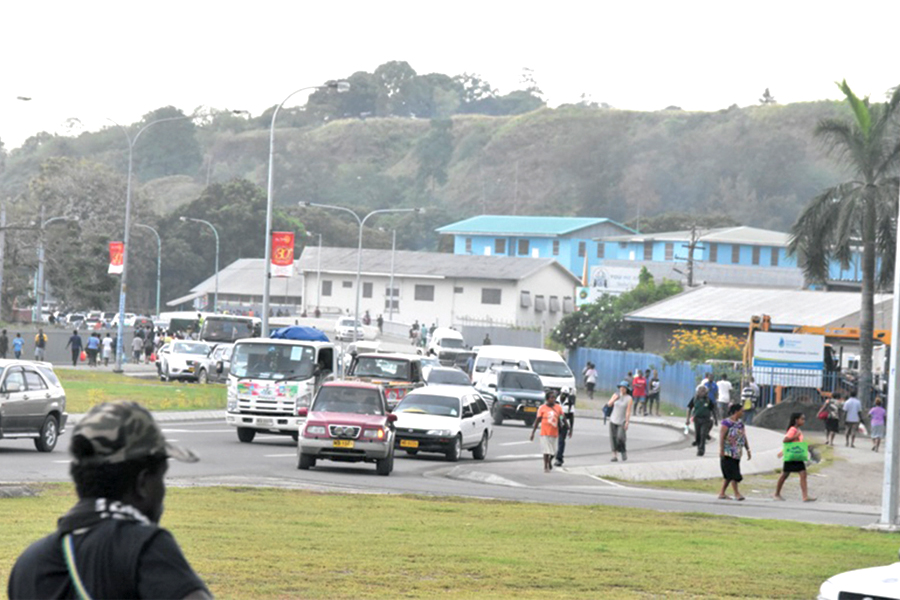
Honiara public walking as a result of the staged sit-in protest demonstrated on Thursday by the transport business owners closing down public transport services in the Capital City. PHOTO BY MANEBONA BARNABAS.

Yearly tax returns for 2018 and beyond will be sorted and made known later, according to report.

It is understood that unlike other businesses in the country, the public transport service business sector is one that has not been taxed.

This is why its system is new to public transport owners when the government recently enforced the charge last month, October.

However, understanding on the wins and losses of operating a public transport business, the yearly tax returns reaching $7,000 for taxis and $10,000 for buses first charged was what concerned the public transport associations stating that the tax rates are too high in which the business environment will be a one-sided benefit only for the government.

They suggest that the government should had consultations with them first in order to work out how they would carry out their charges compared to daily expenses and other areas that would make their implementation a win-win for all of them.

“As public business transports are new to the country’s system of income tax by IRD, as a start, IRD is planning to coordinate trainings for all public transport owners to attend purposely to know how to keep records on the operations of their businesses,” said Peter.

The public transport associations Committee has expressed gratitude that the authority has listened to their call agreeing to be lenient with them.

Public transport services had resumed after 5pm yesterday when the outcome of the meeting between IRD and the public transport associations Committee was relayed to public transport owners in front of the Multi-purpose Hall.

The public transport associations apologises to the general public for the hiccup caused yesterday over which they point that they had to sort their rights first too which will be a benefit for the public transport service in the long run.

All bus and taxi charges are said to remain the same as the Committee of the public transport associations want to let the general public know that there had not been any discussions over public transport charges to increase or so.

Response to PAC report on Judiciary spending

0

DEAR EDITOR, please refer to the article in the Island Sun Issue no. 3054 of November 7, 2018, at page 3, headed “Judicial spending on Contingency Warrant concerns PAC”, which contains inaccurate material and which we wish to correct herewith.

It is important to note that the case, Austree Enterprise Pty Ltd and Others v. Shiyao Guo and Others cc 322 of 2012 (also referred to as “the Town Ground Plaza case”), during directions hearings, was initially given an estimate time for trial of 4 months, which meant that none of the current judges would be able to hear that case in view of their already heavy work commitments.

This was the primary reason why another judge, styled a “Commissioner of the High Court”, had to be recruited to hear the case.

The costs of a Commissioner to hear the case, which included costs of travel, accommodation, per diems, sitting allowances etc., estimated at $1,380,064 for the duration of 4 months explains why a Contingency Warrant (“CW”) for that amount was applied for.

The Commissioner took carriage of that case and commenced hearings from the 12 – 16, and September 19-23, 2016; 27 – 29 March 2017; 2 April 2017; and 10, 11 May 2017. This partly explains why that money had to be carried over from the year 2016 into year 2017 as the case could not be concluded in 2016. It was incorrect therefore to suggest the money had been locked away, for it was especially budgeted and reserved for a particular purpose (trial), until completed.

The trial was not completed at the High Court until May 2017 and judgement delivered on or about July 3, 2017. By the time payments were raised in or about October 2017, difficulties were encountered to release payments due to cash-flow problems experienced by the Government then.

No one anticipated that it would take half the time estimated to complete. Due to rigorous and efficient management of the case and trial, money has been saved. The case has been completed right through to appeal at the Court of Appeal. The National Judiciary therefore had to spend only a total of $351,429.04, approximately a quarter of the CW and explains why there was money left over from the CW at the conclusion of trial.

As usual by end of the budget year, any funds not used were re-absorbed back into the Consolidated Fund. We are disappointed by the criticisms of PAC for failing to appreciate how those funds had been utilised and not misused or misspent in anyway.

It was unnecessary, condescending and inaccurate as well to say that the national judges lacked technical skills to hear such case, the reason having already been explained above.

Continuing judicial education, training and development to improve knowledge, skills and attitudes for judges is ongoing, with Judges being accorded such training and mentoring as and when these become available and or are needed. Judges have continued to attend conferences, workshops and seminars to widen their knowledge base and improve skills in judgement writing and decision making. It is incorrect to say that High Court judges are not able to preside over complex commercial cases. The fact they have been appointed as Judges of the High Court is a demonstration of the confidence that the Judiciary has on their ability and capacity to hear all sorts of cases within their jurisdiction.

On the issue of the number of judges for the High Court, the Prescription of Judges (High Court) Act [cap. 90] limits the maximum number of judges in the High Court to seven. This is why an extra judicial officer, styled a Commissioner has had to be engaged to hear such case as no other judge was available to take on such a lengthy trial that had been given a time estimate of four months. In any event, this ceiling on the number of judges is being addressed with a request to have it removed so that judges can be appointed onto the High Court Bench as and when needed.

In terms of mediation, which is part of alternative dispute resolution, this has been an ongoing project, which will continue to be pursued in the New Year.

Myonnie Tutuo Samani

Registrar High Court


Remembrance Day

0

DEAR EDITOR, Solomon Islands, use the occasion of Remembrance Day to honour the memory of those lost in war but also to pursue the path of reconciliation and peace at home

This coming Sunday is Armistice Day, also known as Remembrance Day and the day when people in Britain, the Commonwealth, France, Belgium and in many other countries remember those who were lost in the Great War, the Second World War and who died in conflict since those times.

In my published book ‘Policing a clash of Cultures,’I wrote the following Dedication

“For the men and women who fought and died defending the nation during the occupation of the Solomon Islands during World War II

The sacrifices made by their selfless acts of bravery and heroism should serve as a lasting legacy of the need to serve, protect and preserve the sovereignty of the Solomon Islands now and forever”.

The Solomon Islands endured civil conflict between late 1998 and up till 2003 and this Sunday one might reflect on the causes of that conflict and in the collective consciousness of the people declare there will be no more internal conflict and vow to pursue the path of reconciliation and peace.

I would ask you all to remember “Without freedom there can be no ensuring peace and without peace no enduring freedom.”

Yours sincerely

Frank Short

A timely notice of Taiwan’s development assistance to SI

0

DEAR EDITOR, Solomon Islands Prime Minister, the Hon Rick Hou, last week spoke during a business workshop in Honiara about Taiwan’s development assistance to his country.

The PM was quoted by the Solomon Star newspaper has having said.

“Much innovation has been established in the agriculture sector, including fruit trees, vegetables, crops, poultry, pig-farming and the introduction of green energy to rural villages.

“Taiwan’s assistance programs in strengthening the delivery capacity in our health and medical services and tertiary education; cooperation in meteorology data system management, climate change and disaster prediction systems installation and training, continue to be implemented,” he said.

“Their impacts are felt throughout many rural communities, villages, households and even within the wider government circles,” he said.

Mr Hou said since Solomon Islands gain independence, the two country’s ongoing diplomatic ties continue to strengthen their partnership.

Taiwan has often been criticised for having put money, annually into the Solomon Islands political elite by contributing “constituency development funds,” better understood to be discretionary funds made available to the Members of Parliament to use in funding projects and infrastructure in their own constituencies.

Often the arguments are raised that such funds have done little, or anything to aid the constituencies with few tangible results.

Putting the focus on what Taiwan has done by way of direct assistance programs, as the Prime Minister highlighted, was a good way of demonstrating the real development work done by Taiwan’s assistance since Solomon Islands gained independence.

It was also, in my view, a timely notice because it can be expected that with visit to Port Moresby for the APEC meeting of President Xi Jinping of China, the Chinese leader might very well take the opportunity of saying what China could do to aid struggling small nation states like the Solomon Islands and claim they are missing out.

Yours sincerely

Frank Short

Is the demise of the RSIPF engineered from within?

0

By Alfred Sasako

IN the wake of the departure of the Regional Assistance Mission to Solomon Islands (RAMSI) in 2013, the Royal Solomon Islands Police Force (RSIPF) was more than just an organisation.

It was a hype of activities.

In many ways it was more or less a workshop to continue to remould a new emerging police force in a post-conflict situation.

The idea is to maintain the continuity of the good work that RAMSI has done in its 10-year tenure in restoring law and order in Solomon Islands. Because many old members of the RSIPF were blamed for taking sides based on ethnic line during the ethnic tension, those who engineered the training of the new force of youthful and energetic men and women want to see the new outfit is free of taints from the past.

Ordinary Solomon Islands men and women too were proud of the new RSIPF. RSIPF’s new image was the by-product of years of hard work.

One of the many good things that the RAMSI administration has put in place is the setting up of a Professional Standards Internal Investigating (PSII) unit. Its work, amongst other things, is to investigate complaints against members of the new RSIPF.

There were other internal matters that the public knew little or nothing about.

One of these is the setting up of a new crack unit to investigate national leaders such as Members of Parliament.

Six people were tasked with the assignment. Their mandate is to investigate arrest and charge Members of Parliament (MPs) who have abused their offices by way of misuse of public funds, commonly known as the controversial Rural Development Fund (CDF) grants.

It is estimated that in the seven years to September this year, all 50 MPs have received combined grants totalling $2.215 billion. Despite this hefty investment, there was little to show for it either in Honiara or in the rural areas, where 85 per cent of the population lives.

Members of this crack unit – this Unit is quite separate from what the public know today as JANUS – were hot on the heels of faulting MPs. In 2016 for example, members of the unit interviewed the Member for East Kwaio over the alleged misuse of hundreds of thousands of dollars the MP received from the $10 million National Cattle Rehabilitation Project funded by Taiwan.

Investigators travelled to the Kwaibaita River Basin on east Malaita in September of that year. It is public knowledge that Kwaita River Basin in Ward 17 is where much of the $800, 000-plus funding was to have been spent. They came back with fresh evidence, but this was where the case stopped.

Private lawyer, Leslie Kwaiga, said on social media earlier this week that the MP for East Kwaio had been cleared of any crime.

Our investigation found that two key people investigators meant to interview never did, because they never followed it up. In the process, files on the case were reportedly missing, resulting in the investigators taking the usual easy way out.

So while the East Kwaio people still wait for justice, it seems police officers tasked with the investigation had never bothered. Why?

There is a probable explanation for this too.

While investigators were busy working on cases, someone, somewhere deep within the RSIPF had allegedly cooked up a plan, perhaps intentionally to dismantle the crack unit of six senior police investigators.

The dismantling of the unit probably explained why things have come to a snail’s pace in terms of progress.

Only one officer, a Constable, survived the onslaught.

Michael Kemadika led a new group of 14 recruits, who according to sources from within were left to their own devices.

“These new recruits were engaged in largely fund-raising activities,” RSIPF insiders said.

Their leader, Kemadika too had been accused of allegedly using Police Headquarters at Rove for giving election-related pep talks even before he arrested the MP for Savo Russell, Dickson Mua, over a week ago.

“He told the people who came to him of his own plan to contest the Savo/Russell seat because the MP was going to jail,” according to some who had listened to him.

There were serious allegations against police investigators who were digging into cases involving Members of Parliament. In many cases, police officers do not go directly to the MP(s) in question. Instead, they go through a third party.

One officer for example went through an intermediary – in this case an agent who was organising the purchase of a vessel for the MP’s Constituency.

“The officer asked the agent to tell the MP that he (the officer) wants a 60hp engine and a banana boat in return for the case against the MP to be dropped. The message was conveyed but the MP refused to entertain the request.

“That’s bribery and I do not want any part of it. If there’s anything against me, let the police bring out the charge(s),” the MP reportedly told the agent to tell the officer.

There was another case, which involved an incumbent MP and a former MP. Both were approached directly by police officers who asked for large sums of money in return for their case to be dropped.

“Both men refused,” the source said.

Some said there were cases where large sums of money were paid, but it did not stop the case going into the courtroom.

Whoever drew up the plan to dismantle the crack unit of senior police officers appears to know what he or they are doing.

There are growing speculations of mass arrests of MPs in December this year. Some termed it the 17/17 before 17 December this year when the House is dissolved.

If there are none, it might mean substantial payments must have changed hands between now and 17 December 2018.

19 drivers arrested during weekend check

0

THE Traffic Department of the Royal Solomon Island Police Force (RSIPF) has arrested and formally charged 19 drivers with presence of alcohol in the blood over the legal limit during an operation in Honiara from November 2-3, 2018.

Supervising Director Kukum Traffic Police, Inspector Brian Surimalefo says, “During the traffic operation my officers checked 590 vehicles. Out of that, 19 were positive with presence of alcohol in their blood over the legal limit.

“All the 19 drivers were charged and released on bail to appear in Court at a date to be set.

“Three drivers were also charged for driving unlicensed vehicles and released on principle bail to appear in Court at a date to be set.

“During the two nights operation there were no emerging issues except for three vehicles that were involved in accidents at different locations over the weekend. These accidents were the result of driving under the influence of liquor.”

“We will continue the traffic operations at any time in Honiara during the week to ensure that our roads are safe for all road users.

“I appeal to vehicle owners and drivers not to drink and drive. If you thinking of taking alcohol make sure you arrange for someone who has not consumed alcohol and who has a valid driving licence to drive you safely home to avoid any accident.”

“Be responsible for your actions when you are driving. Check your driver’s licence, third party documents and ensure you have a valid vehicle license. Your vehicle must also be road worthy.” says Inspector Surimalefo.

–POLICE MEDIA

PAC concerned about Solomon time

0

BY GEORGINA KEKEA

THE Public Accounts Committee (PAC) is concerned about the recurring practice by the government of procrastination.

In its report on the 2017 Supplementary Appropriation Bill (SAB) 2018, the Committee said, the process of bringing forward arrears from previous years to another fiscal year have a diverse impact on the following year’s budget.

The report said, this will also have a diverse bearing on the implementation of government’s action plans which will cause unnecessary strain on the current budget.

The 2017 SAB 2018, though already been spent a year ago, is a requirement by the Public Financial Management Act 2013.

As required by the Act, the hearing into the said SAB is to correct monies spent through Contingencies Warrant (CW) and Advance Warrants (AW).

In the report, the Committee concluded that most of the requests made in the 2017 SAB 2018 were foreseeable and could have been factored in the 2017 Appropriation Bill 2017.

“Except for issues of unknown nature as stipulated in provisions of the National Constitution and the Public Finance Management Act 2013,” the report said.

On this note, the Committee reiterates it previous calls for the Ministry of Finance and Treasury (MoFT) to have robust planning processes within the fiscal budget year and factor these known expenditures in that year to prevent the application of a CW and further supplementary appropriation for that fiscal year.

MoFT in August this year (2018) during the 2019 National Budget Launch, highlights procrastination and complacency as all-time issues faced by the Ministry.

Lack of procurement planning in Government’s ministries is also an issue.

At the same launch, during the 2019 National Budget Launch, a representative of the Core Ministerial Coordinating Committee in the Office of the Prime Minister made a strong call to agencies and senior officials. The coordinating committee as part of their aims and objectives are to ensure implementing agencies and senior government officials are accountable for their actions or non-actions in delivering the priority policies of the government.

The National Budget is a priority policy of the government.

Judicial spending on Contingency Warrant concerns PAC

0
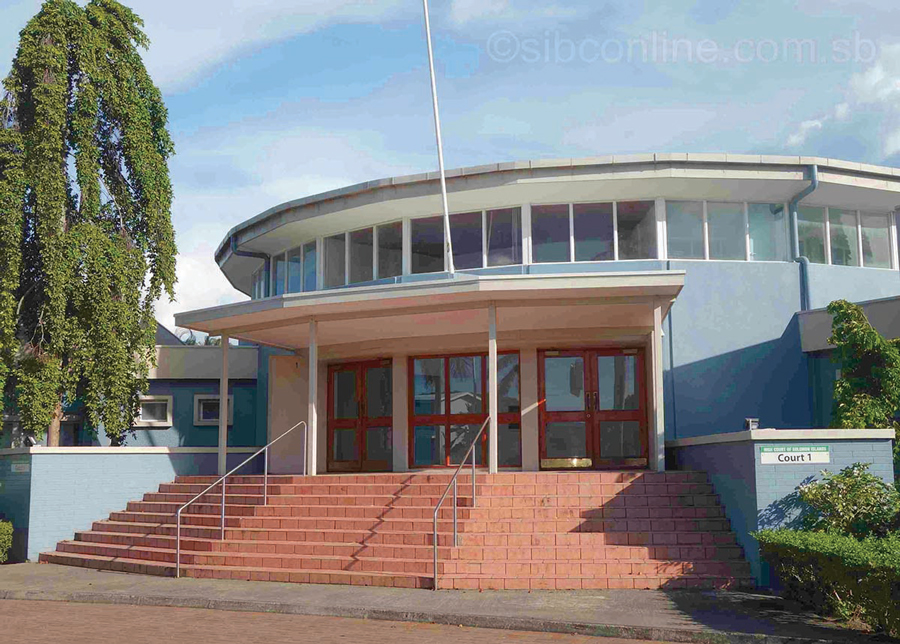
The High Court of Solomon Islands. Photo by SIBC.

BY GEORGINA KEKEA

THE amount locked for the remuneration of the High Court Judge to preside over the Town Ground Plaza civil case has cost government more than one million dollars.

In the PAC report on the 2017 Supplementary Appropriation Bill (SAB) 2018, $1,380,064 was itemised as additional funding for High Court judge’s remuneration to preside over the Town Ground Plaza civil case.

With this much amount budgeted under Contingency Warrant (CW), the PAC is concerned that CW has not been fully utilised for the case.

“These locked up funds could be utilised for other purposes,” the Committee said.

The PAC is also concerned that local judges lacked technical skills to preside over complex commercial civil cases such as the Town Ground plaza case.

The Judicial Ministry had confirmed before the Committee that the case has gone to the Court of Appeal and judgement delivered.

The Ministry also told PAC that the law was said to restrict the number of judges to six so the Ministry is unable to recruit additional judges.

“There is a need to upskill and train high court judges so that they can be able to preside over complex commercial cases,” a recommendation from the PAC report said.

At the same time, the committee noted that the Ministry of Justice and Legal Affairs had found it difficult to recruit a consultant for a project on dispute resolution.

During the scrutiny of the 2017 SAB 2018, the Ministry informed the Committee that a CW was raised for $2.5 million in 2017 to fund a study on alternative dispute resolution.

This was not spent, thus it was appropriated again in 2018 under the 2018 Appropriation 2018 Act.

Since the Ministry found it difficult to recruit a consultant for the project, funds provided by DFAT was held under the watch of the Office of the Prime Minister.

The Committee in its conclusions said, responsible ministries, in particular Ministry of Finance fails to adhere to repeated advices by the Committee to strengthen its budgetary process and make provisions to avert the use of CW for foreseen expenditures and recurrent expenditures.

The Committee also re-emphasise that spending of monies intended for public good without parliament’s approval is illegal and monies should be appropriated prior to any expenditures.

At the same time, underspending was also an issue raised by PAC in their report.

Gov’t to reintroduce Dual Citizenship Bill

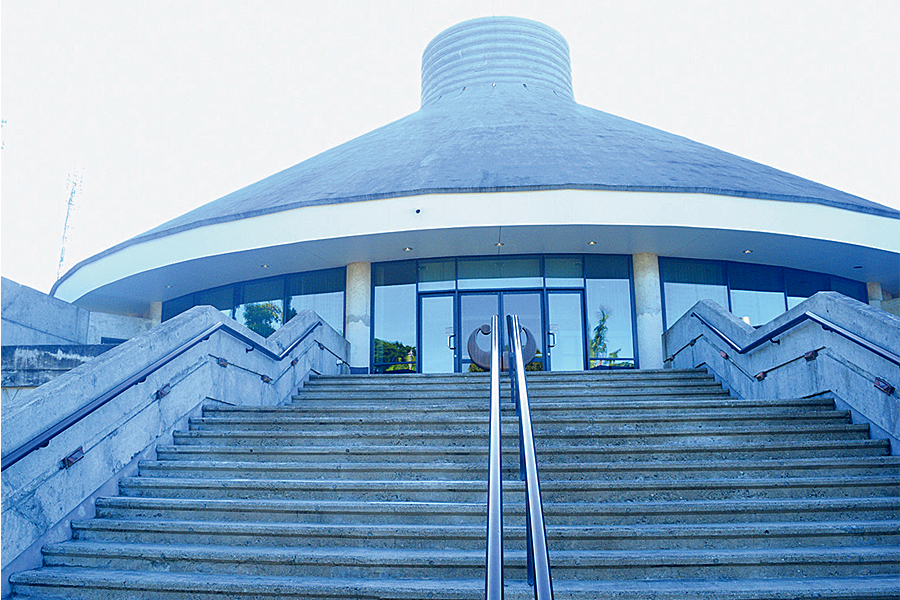
National Parliament of Solomon Islands

By Gary Hatigeva

AT its resumption on Friday, November 9, Parliament is expected to receive the return of the Dual Citizenship Bill for its pre-deliberations as well as first reading.

This was confirmed by the Prime Minister Rick Houenipwela when presenting the government’s businesses that have been scheduled for Parliament ending Friday.

The Dual Citizenship Bill comes in the form of two supporting bills, namely the Dual Citizenship (Constitutional Amendment) Bill 2018, and the Citizenship Bill 2018.

The Constitutional Amendment Bill is looking at amending the Constitution to allow for Dual Citizenship, because currently, it prohibits any dual citizenship status, while the Citizenship Bill looks into the structures and application of the dual citizenship proposed legislation.

The Bill will be presented for the first reading and then later be put down for the Bills and Legislation Committee (BLC’s) inquiry, where it will be scrutinised before it is taken up again for its second and third readings, including the Committee of the Whole House’s thorough proceedings.

The Dual Citizenship Bill was tabled early this year during a previous sitting of parliament but forcibly withdrawn, and according to the Prime Minister, this was done because the house was one MP short of the two thirds majority required to pass constitutional amendments.

The withdrawal was also done in recognition of the Bills and Legislations Committee’s recommendation, based on issues highlighted to be missing in the bill, which would have helped tightened it.

Initially, the BLC recommended for the Dual Citizenship (Constitutional Amendment) Bill to be withdrawn and have the Citizen Bill withdrawn, but the government had decided for the withdrawal of both bills.

But the Deputy Prime Minister, Manasseh Sogavare during that session, explained that the Procedures on dealing with a bill is outlined in Standing Orders 43 to 60, which he clarified that when a bill is introduce into the system of parliament to the stage where it is now ready to be moved for second reading, the only provisions available for not to deal with it is under Standing Order 59, and that for the withdrawal of Bills.

He said the Bills will have to come through the normal processes again when they are ready to be reintroduced to Parliament, and the government had ensured this is so, now that the bill is confirmed and ready to be reintroduced.

The bill’s later proceedings, which include its second reading, scrutiny through the Committee of the Whole House, and third reading, are all expected in the coming weeks as parliament continues to deliberate on the remaining government bills.

Other Bills that are also lined up for Parliament’s deliberation include the Payment System Bill 2018, the Development Bank of Solomon Islands Bill 2018, and the Traditional and Custom Facilitation Bill 2018.

Meanwhile, the Prime Minister also announced that a few of the Bills will also be put down for their further proceedings in the house this Friday when Parliament resumes.

However, due to the current situation parliament is going through, especially with the loss of its House Committee Chairman, the outlined are still in doubt, as Friday is also a private members day, and would require an approval by the Committee to allow for government businesses to be tabled on that day.