Home Blog Page 1098

UNDP and PEJN enhance journalists on climate early warning system reporting

0

BY JARED KOLI

In Nadi, Fiji

A weeklong workshop aimed at enhancing pacific journalists to report accurately on Climate Early Warning Systems (CLAW) and related issues kicks off in Nadi, Fiji today.

Held at the Tanoa International Hotel Convention Center, the workshop was a collaboration between the United Nation Development Program (UNDP) Pacific Office in Fiji, the Pacific Environment Journalists Network (PEJN), with support from the India-UN Development Partnership Fund.

The workshop designed at strengthening knowledge and empowering the ability of journalists from the Pacific Islands including those from the seven focus countries – the Cook Islands, Federated States of Micronesia, Kiribati, Nauru, Republic of the Marshall Islands, Solomon Islands and Tonga to report accurately and more regularly on Climate Early Warning Systems and related issues.

A concept note states it aims to improving networking and partnerships amongst Pacific Island reporters and regional climate change experts, ensuring a regular flow of information and post activity.

“Improved news content in Pacific Island media through the conceptualizing, discussion and development of a range of relevant news and in-depth stories over the duration of the activity/workshops highlighting Climate Early Warning Systems and related issues.

“The goal will be to inculcate amongst these regional journalists a sense that these issues can be prominently mainstreamed into their daily reporting activities, instead of one-off seasonal events such as a cyclone or torrential flooding,” it states.

It also aimed at improved relationships between the Pacific media and key partners such as UNDP, the Indian Government, PEJN and the Internews-Earth Journalism Network (EJN).

Facilitators include Climate Early Warning Systems and climate change science experts, Meteorology experts, and others include from Earth Journalism Network, PEJN and UNDP.

About 14 journalists, with a selection based on membership with the PEJN from focus countries – are attending the workshop.

They are joined by other seven journalists from the non-project focus countries, four journalism students from USP and five Fiji working journalists.

UNDP, PEJN and India-UN Development Partnership Fund have justified that as with any major project, generating and sustaining awareness and visibility is critical to its long-term success.

“This reflects the Partnership Funds vision to work closely with the media as vital development partners to help Pacific Island Countries’ boost their capacity for disaster preparedness and recovery, especially in the areas of national meteorology and hydrology services.”

It says for many of the workshop participants, this could also be the first time for them to be exposed to some of the concepts and practices associated with CLEWS.

“While climate change articles routinely feature in the media, there is not much discussion on CLEWS. Journalists there may not necessarily consider CLEWS as part of their core work and this training workshop hopes to change that by enticing them to integrate it into a cross cutting and all-encompassing issue.”

Updating news on the Solomon Islands Rural Development Programme 2008-2020 for an external audience

0

DEAR EDITOR, In early 2008 I read that up to $31.8 million was to be injected into the Solomon Islands Rural Development Programme in a joint investment initiative by the World Bank, Australia, the European Union, and the International Fund for Agricultural Development and the Solomon Islands Government.

The investment programme was aimed at raising the living standards of rural households by improving infrastructure and services, as well as helping the Ministry of Agriculture and Livestock to deliver advice and services to farmers.

Phase 2 of the intended programme would run from 2015 to 2020 and would ensure small scale village infrastructure projects in every ward of Solomon Islands, support alliances between the private sector and smallholder farmers and stimulate agribusiness activity in rural areas.

As Phase 2 is already 3 years into its programme, it would be helpful to know how the plan has worked out and what village infrastructure projects are already providing rural people with the income they need.

In addition, could it be said what is expected to see developed in support of Phase 2 in the next 2 years?

I am aware of the advice given to cocoa farmers and the increased crop yields that have added to exports.

Palm oil production has continued to be a contributor to agro-crop exports and I am hopeful that one might yet see local kava production and sales aid rural people.

With the very recent discovery of gem quality moisannite in East Kwara’ae, perhaps some attention might be devoted in the remaining years of Phase 2 to support the idea of a local cottage industry as envisaged by the Technical Institute of Malaita (TIM)

My website www.solomonislandsinfocus.com attracts a wide international audience and it would be of interest to be able to demonstrate the success of the jointly supported and financed Rural Development Programme.

Yours sincerely

Frank Short

The key to strengthening governance of Non-communicable Diseases in the Solomon Islands

0

DEAR EDITOR, Last week in Honiara, the Prime Minister, the Hon. Rick Hou, spoke at the round table meeting with the Ministry of Health and Medical Services and the World Health Organisation (WHO).

The PM outlined the fact that the Pacific Islands countries have the highest prevalence of ‘tobacco use’ than the global average of 23 percent.

In the Solomon Islands, Prime Minister Hou said the average prevalence of tobacco use was almost double the global average of about 44 percent.

The PM went on to say how the Pacific had been described as the epicenter of the global diabetes epidemic and the world’s capital of NCDs.

Referring to Non-communicable diseases (NCDs) the Prime Minister said it was “better late than never to tackle the problem” posed by NCDs.

Given that statistic show that 70 percent of all deaths in the Solomon Islands are attributed to NCD related illnesses such as diabetes, heart disease, cancer, stroke and chronic respiratory diseases, to give just a few examples, it is indeed a very sad irony that it is only now that the “penny seems to have dropped” to do something about tackling the killer disease that has cost so many lives already.

It is also, to my mind, a double irony because it is well documented that in July 2014, Pacific Health Ministers and Economic Ministers approved the Pacific NCD road map, to guide each country’s efforts to reverse the trend of the NCD epidemic in the region.

Sadly, however, 7 years after the declaration of the NCD crisis, and four years after the call to develop national NCD road maps to combat the NCD epidemic, very few countries have heeded the call.

In the Solomons what might now change to make things happen?

One has to comment, despite the excellent set of policy options contained in the NCD road map report, the fact remains that the MHMS is constrained by their lack of resources, including physical infrastructure, health workforce and sustainable financing.

Where health budgets are severely limited, as is the case in the Solomon Islands, the government may be forced to choose between treating people who are sick, and seeking to reduce the future burden of NCDs and associated expenditures.

Quoting an extract from a World Bank report in 2014, one reads:

“It is not surprising that the political imperative to direct limited resources towards those who are currently sick often wins out. For this reason, there is a strong case for governments to seek to expand their revenue base at the same time as they scale up their budget for NCD control, particularly by increasing taxes on those products that most contribute to NCDs, including tobacco, alcohol, and unhealthy foods and sugar‐sweetened beverages.”

“Despite this, raising taxes may be politically challenging for governments: ‘the [political] pain in raising taxes is now, [whereas] the public health gain is later”

One might say here that for all the reasons, the challenge Solomon Islands face it is not the lack of knowledge about the policies that could make a difference, but implementation: translating knowledge into actions at the country level.

Whether seeking to raise taxes, or to implement other regulatory responses the government would likely face resistance from tobacco, alcohol and processed food industries and potentially from other countries, including development partners.

What I see is required today is the political leadership and politicians who will become ‘issue champions, ‘ in pursuing a policy of strengthening health systems, re-focusing on primary care and getting greater regional and international cooperation to be sustained by accountable monitoring systems to measure progress.

Although urgent action on NCDs makes good economic sense for the Solomon Islands government the challenge of NCDs is more than just about responding to rising health expenditures, or the impoverishing impact of out‐of‐pocket payments on families.

The real key is the absolute obligation of the government to take action on NCDs which is enshrined in the right to health, a universal human right.

“All countries have ratified at least one international treaty that imposes obligations on government regarding the right to health.” (WHO 2014)


Yours sincerely

Frank Short

www.solomonislandsinfocus.com

Solomon Islands: A Member of Parliament, Mathew Wale, MP, has claimed health shortages are costing local lives

0

DEAR EDITOR, Friday, 30 November 2018, Radio New Zealand broadcast a news bulletin via its Pacific Service citing a Solomon Islands MP, Mathew Wale, as saying the Solomon Islands government’s failure to address drugs and equipment shortages in hospitals around the country was costing lives.

The news broadcast went on to say that “part of the reason for recent drug shortages was a change in the procurement procedure at the Ministry of Health.”

‘Take My Hands’ (TMH) my partner charity based in New Zealand and the very recent winner of the NZI Sustainable Business Award 2018, entered into a Memorandum of Understanding (MOU) agreement with the Solomons Ministry of Health and Medical Services and the National Referral Hospital (NRH) over three years ago to supply the NRH with regular shipments of containers with essential medical supplies and equipment such as hospital beds, mattresses, side tables, mobility aids, including wheel chairs and other basic needs, as assessed as being needed by the procurement personnel of the NRH.

The second phase payment needed to secure the continuation of such supplies has not been met by the MHMS/NRH and consequently the shipment of containers was suspended a year ago.

To meet an urgent need for hospital beds at the NRH and two provincial hospitals a donation of some $US,11,000 was given to TMH by the Solomons Forest Association (SFA) and this led to a container of 50 hospital beds and some wheel chairs being shipped and received in Honiara on 17 November.

A second 40 foot container with another 50 hospital beds and more wheel chairs is expected to leave Auckland soon for Honiara.

It might be recalled that earlier this year Radio New Zealand, in another broadcast, illustrated the shocking plight of many patients at the NRH sleeping on the floors in the corridors of the hospital because of a shortage of beds for them. Those images went around the world.

TMH has now kindly resorted to seeking donations from the public in New Zealand to help continue the service it has generously devoted to helping the Solomons MHMS in the absence of the MOU being paid- up in full.

The cost of the outstanding payment, $NZ 25,000, is considered a small amount compared with the benefits the continuation of the MOU could bring.

TMH recently highlighted the fact that well over NZ$370, 000 worth of equipment had been received by the MHMS/NRH since the inception of the joint agreement and more than 100,000 local people been the beneficiaries of the aid.

Yours sincerely,

Frank Short

Malaitans urge to work with CLOs

0

BY SAMIE WAIKORI

AUKI

UNDER Secretary for the Ministry of Provincial Government and Institutional Strengthening (MPGIS), Mr. George Eric has called on people in Malaita to work with their Community Liaison Officers (CLO).

Mr. George made the appeal during a recent interview with Island Sun and as well explained the role of CLOs in the communities.

He said the CLO programme comes under the Community Governance and Grievance Management Project which is supported by provincial governments and the MPGIS.

George said there are 15 CLOs who represent wards within Malaita province and are based at the community level to do the work.

He said in executing their work, they will liaise with community leaders to achieve two main objectives.

The objectives are to strengthen community governance and conflict and secondly, to link up communities with both provincial and national governments and the police.

George said they will become focal point of province and national ministries in their wards or communities.

He said CLOs to work with existing institutions in communities such as chiefs, church women groups and youth groups to achieve the two main objectives.

George said they will also be supporting ward development committees activities like MPA visits and activities in wards.

He said their other role is to track delivery of basic services in the communities and to provide province and national government with information on issues of concern by communities.

On the same note, Mr George also said communities hold significant roles in supporting CLOs carry out their work in the communities.

He said community leaders need to include CLOs in affairs of the community and also to support, supervise and monitor them.

George said communities are obliged to assist CLOs in enhancing their knowledge in traditional values and to assist them in conflict or problem resolution.

He said communities are also required to suggest to CLOs on information that needs to be brought forward to governments, both local and national governments, adding they will be liaising and coordinating with CLO and the Provincial Coordinator (PC) especially on monitoring the CLOs.

George said idea behind the programme is to work towards national peace and stability right at community levels in paving way forward for developments.

He said similar programme was already introduced to other provinces as Makira, Central and Renbel.

With the Malaita the latest, it will soon roll out to the remaining provinces.

Community leaders train to become peacebuilders

0
Ms Azusa Kubota, Country Manager of the UNDP Solomon Islands

BY LYNTON AARON FILIA

Ms Azusa Kubota, Country Manager of the UNDP Solomon Islands

THE United Nation Development Programme (UNDP) has trained nearly 60 community leaders on how to respond to violence and ways to maintain peacebuilding.

In a four-day workshop organized by Ministry of National Unity, Reconciliation and Peace (MNURP) 60 participants have learned about trauma, healing, basic counselling concepts and mediation services which are useful to victims when crisis arise.

UNDP Country Manager Ms Azusa Kubota said the approach applied in the workshop responds directly to the Sustainable Development Goals (SDGs).

She said in the UN they have facilitated a number of peacebuilding dialogues across the country, and common message is that without peace, there is no development.

She said, “Without development, there is no peace. In order to achieve 17 Sustainable Development Goals by 2030, we must engage with community leaders.”

Following the workshop on Traditional Governance Leaders Peacebuilding and Mediation last week, Ms Kubota said they are responding to SDG 16 which is to achieve peace, justice and strong institutions.

“Similarly, in support of SDG 5 which aims to achieve gender equality and empower all women and girls, we consider that women and girls not as victims but as active peacebuilders and agents for change, taking power of building peace back into their hands,” she adds.

Meanwhile, during the course of the four-day, group of community leaders comprises of men, women and youths have discussed the principles of Gender Equality, women’s role in mediation, and women’s role in peace and security.

Socio-economic development, political stability and social cohesion in Solomon Islands largely depend on the sustainable and inclusive development of provincial urban centers, where conflict is inherent.

Peacebuilding is a central theme in the UN’s work in Solomon Islands.

Currently, UNDP through Peacebuilding project, have been supporting community-led initiatives in close collaboration with the MNURP.

It is understood that conflict is an inherent part of urban and community life, involving interaction between business, local communities and language groups.

In the 2017 UN peacebuilding survey, over three-quarters (76.2 percent) of all respondents said they knew of a dispute that had occurred in the last 12 months.

The most common cause of disputes was alcohol and other substance abuse with 71.9 percent of respondents, followed by land disputes account to 50.3 percent and logging 20.5 percent.

Alcohol and other substance abuse were identified as the primary cause of conflict in Guadalcanal.

Youths were identified as the group most likely to cause disputes with 64.0 percent, followed by adult men 51.5 percent and tribes or clans 36.4 percent.

The most likely group to be victims of disputes was identified as children account to 70.4 percent, adult women 66.7 percent and youths 51.7 percent.

Following the report, youths were identified as group most likely cause disputes and at the same time victims of disputes as well.

Community leaders across SI empower on peacebuilding

0

BY LYNTON AARON FILIA

ABOUT 60 community leaders across Solomon Islands have been empowered with abilities to prevent and resolve conflicts through a four-day workshop on peace building and meditation held in Honiara last week.

The workshop was organized by the Ministry of National Unity, Reconciliation and Peace (MNURP) and supported by the United Nations Peace-building Fund (UNPBF) project, which is jointly implemented by the United Nations Development Programme (UNDP) and UN Women.

One of the primary purpose of the workshop was to help leaders analyze and develop a non-violent approach to conflict and learn mediation skills.

The sessions covered through the workshop comprise peacebuilding, understanding the basics of conflict and how to mitigate escalation to violence to maintain peace in communities. Other sessions included were trauma and healing along with counseling and mediation services available to victims of conflict in the country.

Upon the completion of the workshop, the participants are now qualified to carryout trainings and awareness on peace-building in their respective communities.

Genesis Kofana of MNURP said chiefs and church and community leaders have considerable experience as peacebuilders across the country.

“After the tensions, every institution failed. Only the church and the women and youth groups that stayed in the villages were able to maintain peace and able to re-grow Solomon Islands,” he said.

“They have been playing that role informally, but this workshop has enabled us to bring the leaders together to formally train them to recognize that skill.”

Mr Kofana added that community and traditional leaders remain important resources in maintaining peace at the local level.

According to a 2017 UN peacebuilding survey of 2,500 people from across Solomon Islands, more than 76 percent of all respondents said they knew of a dispute that occurred in their community within the past 12 months.

UNDP Solomon Islands Country Manager Azusa Kubota said seemingly small conflicts have the potential to escalate if those involved lack the skills to manage them.

“When tensions increase to such a level that they begin to restrict economic activity and affect personal security, it stifles business, development and investment,” Ms Kubota said.

She added that if businesses leave and take opportunities with them, it influences cohesion in the community and the country.

“Community leadership plays a very important role in maintaining peace and accelerating prosperity,” Ms. Kubota said.

By participating in the peacebuilding and mediation workshop, leaders are expected to develop skills to address the root causes of conflict in their communities, employing nonviolent resolutions that help them collaborate with governments and NGO partners to ensure sustainable peace and development.

Meanwhile, participants of the workshop comprises of traditional and urban community leaders, including youths and women from Honiara city.

Plans underway to transform tourism

0
Hon. Minister for Culture and Tourism, Bartholomew Parapolo.

BY LYNTON AARON FILIA

SOLOMON Islands Visitors Bureau (SIVB) has plans to venture into digital transformation to aid the country’s travel and tourism industry move forward.

Part of this move is the official launching of the two new websites for Tourism Solomons by Minister of Culture and Tourism Batholomew Papapolo which was done last week, initiated by SIVB.

Along with the two new websites, Hon Parapolo said they are working on e-based tactics which will provide an easy online shopping for travelers, tagged with an option to choose Solomon Islands as a next destination.

“We are not stopping here with just these new ideas. Very soon to come are more aggressive and strategic rollouts of many other e-based tactics including a mobile app, e-newsletter, social media influencing and online digital advertising,” he said.

“We are small but actually that only makes us stronger because the arrows we shot can be more accurately targeted online to help our clearly defined markets,” he adds.

“We can now compete online with anyone. We are a nation that has always led by our desire to explore and to break new ground,” Minister Parapolo said.

From the initiatives, Minister Parapolo said they intend to become frontrunners at expanding its already positive word of mouth now matched by their enthusiastic, internal efforts of work of mouse.

He said they stake a greater claim to Solomon’s place in cyberspace to let world know about us, desire to experience and help promote Solomon Islands to new heights.

Meanwhile, the website is sought to breakdown into two wholly different and distinct websites.

The first website known as www.visitsolomons.com is the MCA and SIVB’s window to the world.

It has been strategically redesigned and reengineered to specifically blend with all the strengths of its new brand—Solomon Is.

The website is said to be more actively separated its niches.

The MCT and SIVB have more proactively provided access to its creatively attempted can bring out best of the Solomon Is. branding with striking vigor.

The aim is to accomplish through a blended of imagery, words and design that hopefully help visitors experience enough their special offerings to trust and select them as destination for their next adventure.

The second website, www.tourismsolomons.com is brand new.

It is a corporate website that specifically targets tourism industry stakeholders both in country and abroad.

Its aim is to keep all informed about relevant industry news, serve as a resource for tactical strategies, archive library for image and other copyright and branded collateral.

The website also set as training ground for overseas travel agents and sellers and portal that fosters networking and shared promotional experiences.

HIV diagnosis is no longer a death sentence

0

BY ELLISON.T.VAHI

“A positive HIV diagnosis is not something to be taken lightly, but with modern treatments, the diagnosis is no longer a death sentence.”

This was the statement uttered by Mrs Alice Buku during last Friday’s celebration of the 2018 World Aids Day at the University of the South Pacific Solomon Islands Campus in Honiara.

Mrs Buku said today’s HIV/AIDS positive patients can expect to live a long and happy life.

“HIV is not a death sentence. So today, I would like to encourage each and every one of you, to PLEASE! Do get tested, and know your status,” she voiced.

“I’m living with HIV for 15 years with my 12 year old negative son and a negative husband.

“Currently I’m working, enjoy, healthy, productive, live normal life as any other non-positive people.

“With strict treatment, you will have enjoyable life, if only you know your HIV status”.

In concluding her remarks, she encouraged all who are being diagnosed with HIV to live life positively.

RSIPF calls for respect

0
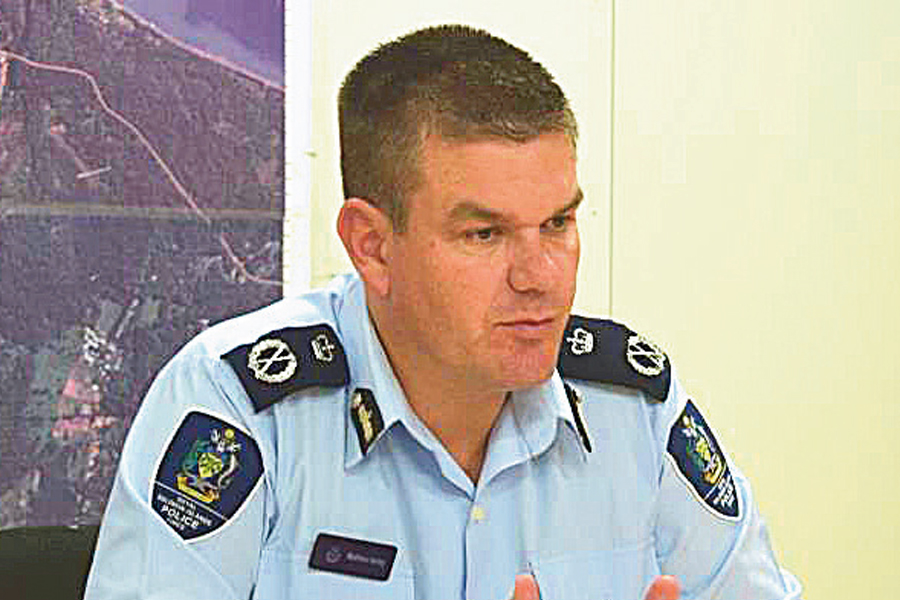
PC Mathew Varley

THE Royal Solomon Islands Police Force (RSIPF) calls on all people throughout the country to respect the public inquiry process into omissions and objections filed following the registration of voters as it launches a national operation to ensure the process is carried out safely and securely.

The public inquiries will be conducted at venues to be determined by the Solomon Islands Electoral Commission in the 50 National parliamentary constituencies from 4 – 23 December 2018.

“As the lead law enforcement agency for providing a safe and secure environment for a ‘free and fair’ National General Election in Solomon Islands next year, the RSIPF is launching a national operation this week to ensure the public inquiry into omissions and objections to the registration of voters goes smoothly,” said RSIPF Commissioner Mathew Varley.

Commissioner Varley explains: “This operation will involve police in all the provinces and Honiara City conducting high visibility operations and a presence at the selected venues where the public hearings will be conducted. Community policing officers in the provinces will also be conducting awareness meetings in communities during the public appeal period.”

“A national Police Operations Command Centre will be established at the Rove Headquarters in Honiara to monitor and coordinate operations across the country. Specialised units from RSIPF Headquarters in Honiara will also be sent to assist in one or two provinces with reinforcements. In all provinces Provincial Police Commanders will lead local operations while reporting through to the national Police Operations Centre,” Commissioner Varley adds.

He said, “The RSIPF is working together with the Solomon Islands Electoral Commission to ensure this public inquiry phase is carried out safely and that those who have filed their objections and omissions and those whose registration have been objected to will be given a fair hearing.”

“Police will be present at many of the venues for the public hearings and will not tolerate any one who makes any attempt to disturb the process. We urge those who are involved in the process to respect whatever the decision of the inquiries will be. Police will take stern action against anyone who takes the law into their own hands.”

“I appeal to chiefs, church and other community leaders to talk to members of your communities to spread messages of respect, tolerance and patience throughout this period. Please encourage all people to respect the laws of this country. Let us show the world that Solomon Islands is a peaceful democratic country whose citizens respect law and order. There is no place for violence, intimidation or interference in these public hearings,” Commissioner Varley emphasises.