BY DOUGLAS VAHIA
Australia funded a specialised healthcare waste management training for staff of the new Naha Birthing and Urban Health Centre as preparations continue for the facility’s opening.
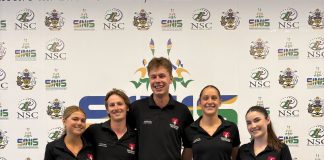
A total of 22 healthcare workers from the Honiara City Council (HCC) and the Naha Birthing and Urban Health Centre recently completed a week-long practical workshop delivered by medical waste management experts from the Pacific Regional Environment Programme (SPREP).
A statement from the Australian High Commission (AHC) said, the training forms part of Australia’s support to ensure the new health facility is ready to provide safe, environmentally responsible and professional healthcare services.
Head Nurse Ellen Jilini said the workshop provided valuable practical knowledge for staff who will manage medical waste at both the current Naha Clinic and the new centre.
“Waste management is a very important part of maintaining safe facility operations,” Ms Jilini said.
“The key takeaway from the workshop is how to identify and manage different types of waste correctly to prevent the spread of infectious diseases in the new facility.”
Participants received training on the safe handling of healthcare waste, including waste segregation, storage, transportation and disposal. They also took part in practical exercises designed to strengthen coordination between the new centre and HCC.
Australian High Commissioner Jeff Roach said the initiative highlights the importance of regional cooperation in strengthening Solomon Islands’ health sector.
“We’re incredibly grateful to benefit from SPREP’s strong regional leadership in medical waste management.
“It is a testament to how Pacific regional institutions are best-placed to deliver Pacific-led solutions to Pacific challenges,” Mr Roach said.
He said the project combines regional and local expertise to ensure the facility is fully prepared before opening.
“Together, we’re ensuring the right skills and systems are in place before opening to deliver the very best healthcare, safely, with dignity and with respect,” Mr Roach said.
The Naha Birthing and Urban Health Centre is expected to more than double the number of birthing suites available in Solomon Islands and will provide healthcare services directly within the community it serves.
Mr Roach said Australia continues to work closely with the Ministry of Health and Medical Services (MHMS), Honiara City Council (HCC) and the National Referral Hospital (NRH) to address operational training requirements ahead of the centre’s opening.
“Waste management training is essential to protect frontline health workers, as well as assuring the safety of the surrounding community from infectious diseases,” he said.
The workshop brought together operations staff, midwives, supervisors and HCC health workers.
Training activities included practical walkthroughs tracing waste flow from wards to final disposal, demonstrations on safe waste handling and storage, and role-play exercises focused on managing placental and birthing waste in culturally appropriate ways.
SPREP Lead Trainer Soseala Tinilau said poor healthcare waste management could have serious consequences for public health.
“This training has equipped Honiara City Council and Naha Birthing and Urban Health Centre staff with the right tools to break the chain of infection, starting with correct waste segregation at the point of generation,” Mr Tinilau said.
The training was supported through the Australia-Solomon Islands Partnership, which aims to strengthen health systems, promote safer environments and enhance regional cooperation.
Photo credit: AHC
For feedback, contact: [email protected]
Editor: [email protected]