BY NED GAGAHE
Nineteen young Solomon Islanders have graduated from a renewable energy training programme that aims to build local skills in solar installation and support the country’s transition to clean energy.
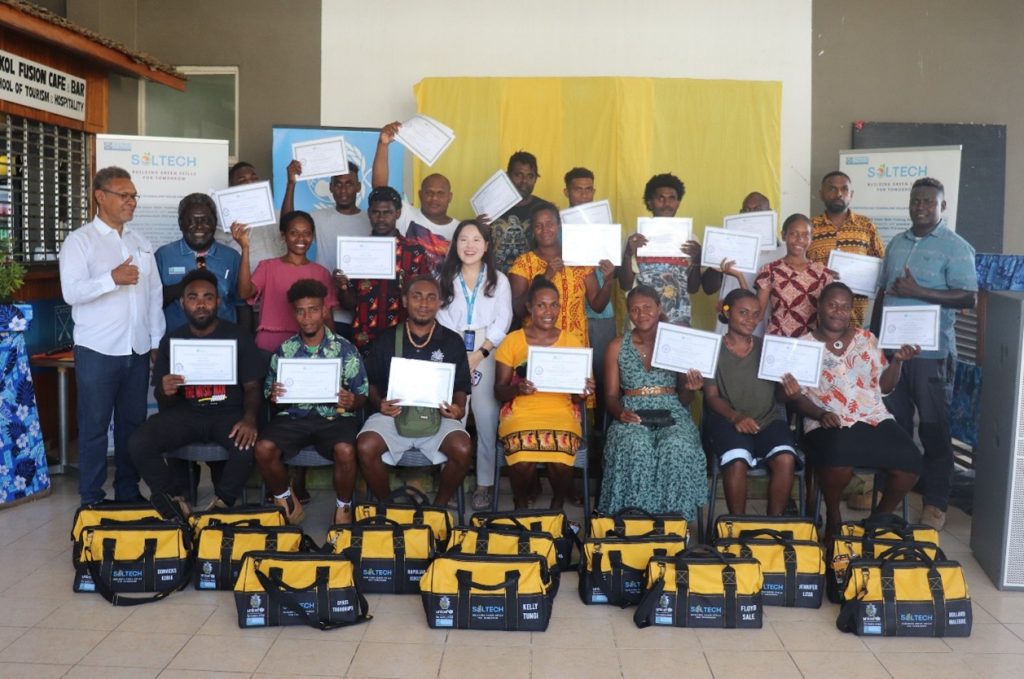
The graduates, including seven women and twelve men from communities across north and northeast Guadalcanal, completed the four-week SolTech: Building Green Skills for Tomorrow training programme focused on basic photovoltaic stand-alone solar systems.
The programme is funded by the Korea International Cooperation Agency (KOICA) and implemented by UNICEF in partnership with the Solomon Islands National University (SINU) through its Technical and Vocational Education and Training (TVET) division, with technical guidance from the Ministry of Mines, Energy and Rural Electrification (MMERE).
Speaking at the graduation ceremony on Thursday last week, UNICEF Chief of Solomon Islands Field Office, Benjamin Grubb said the initiative demonstrates how investing in young people can support national development.
“In a nation where, young people make up a large share of the population, your achievement carries even greater meaning. You represent what is possible when youth are given opportunity, quality training and support. You are not just beneficiaries of development — you are leaders in it,” he said.
Participants received hands-on training in electrical circuits, solar panel installation, wiring systems and safety standards, preparing them for employment opportunities in the growing renewable energy sector.
Kelly Tungi from Numbu village said the training changed his understanding of electrical work and safety.
“Before the training, we used any cable that could conduct electricity. Now I understand that different cables have specific ratings and proper wiring standards are important,” he said.
Tungi hopes to continue further electrical studies and eventually establish a licensed electrical business to serve rural communities.
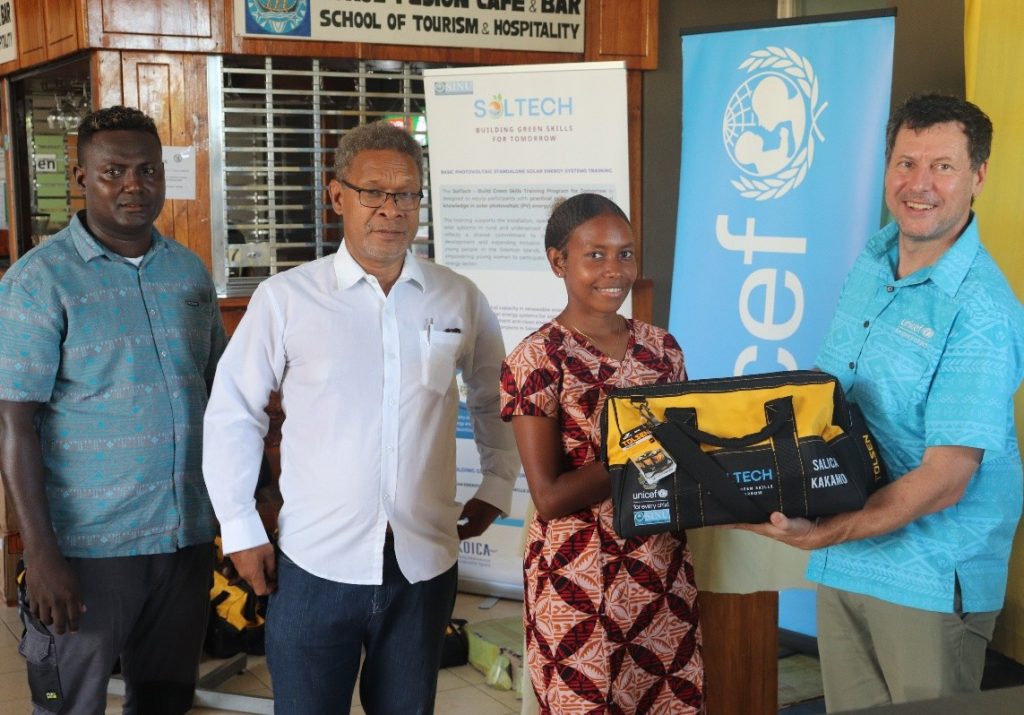
Fellow graduate Salica Kakamo from Taona village said the programme equipped her with practical skills she plans to use to assist families, schools and clinics with solar installation and maintenance.
“I learned that safety and efficiency depend on using the correct specifications. I want to use these skills to help my community and support my family,” she said.
As part of their practical training, participants designed and installed a small solar photovoltaic system for the Numbu Community Rest House, providing electricity to a facility that previously had none.
Mr Grubb also highlighted the importance of encouraging more young women to enter technical and STEM fields, saying their participation helps redefine leadership in the energy sector.
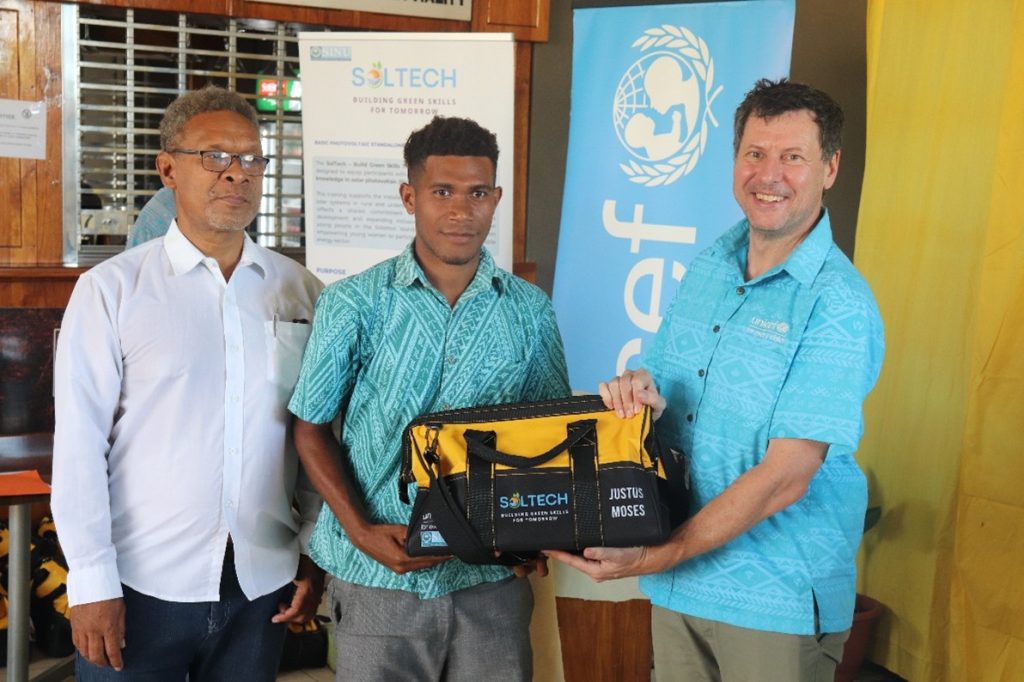
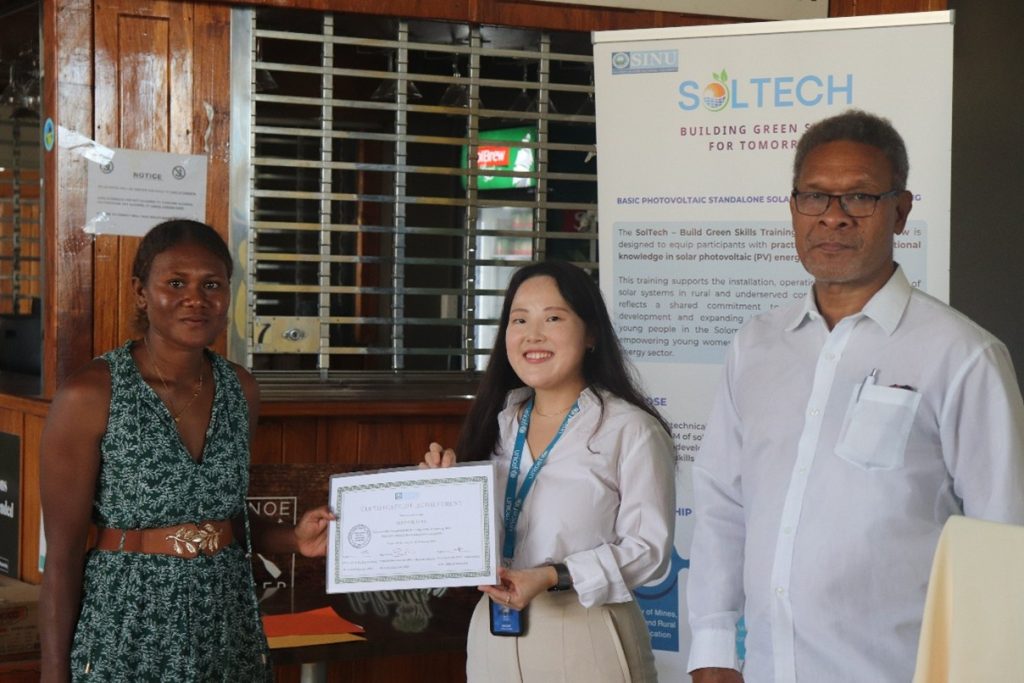
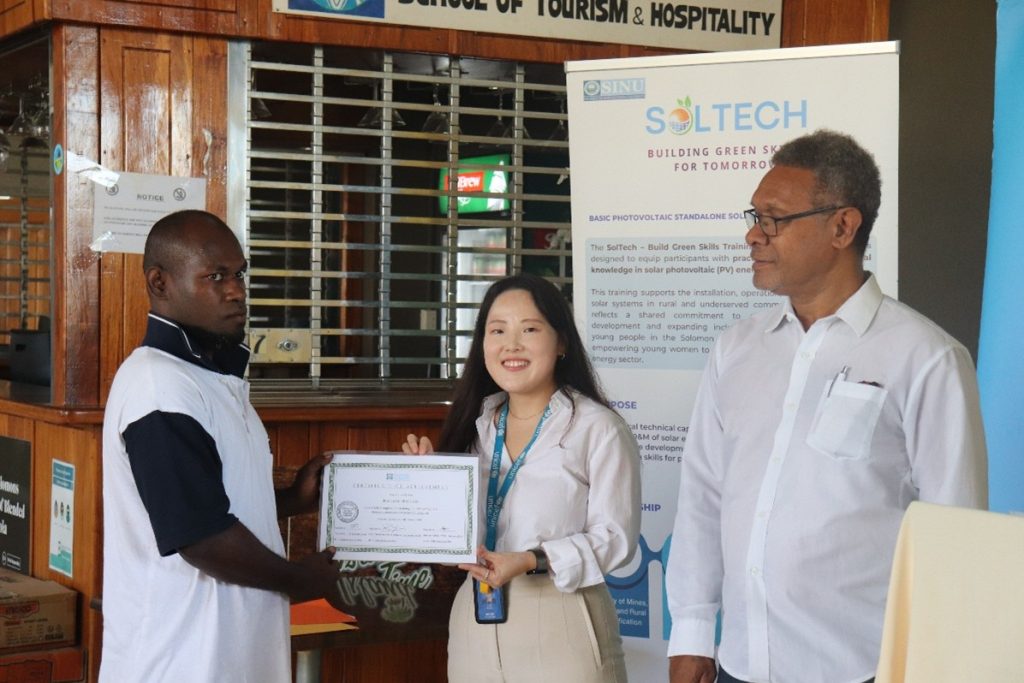
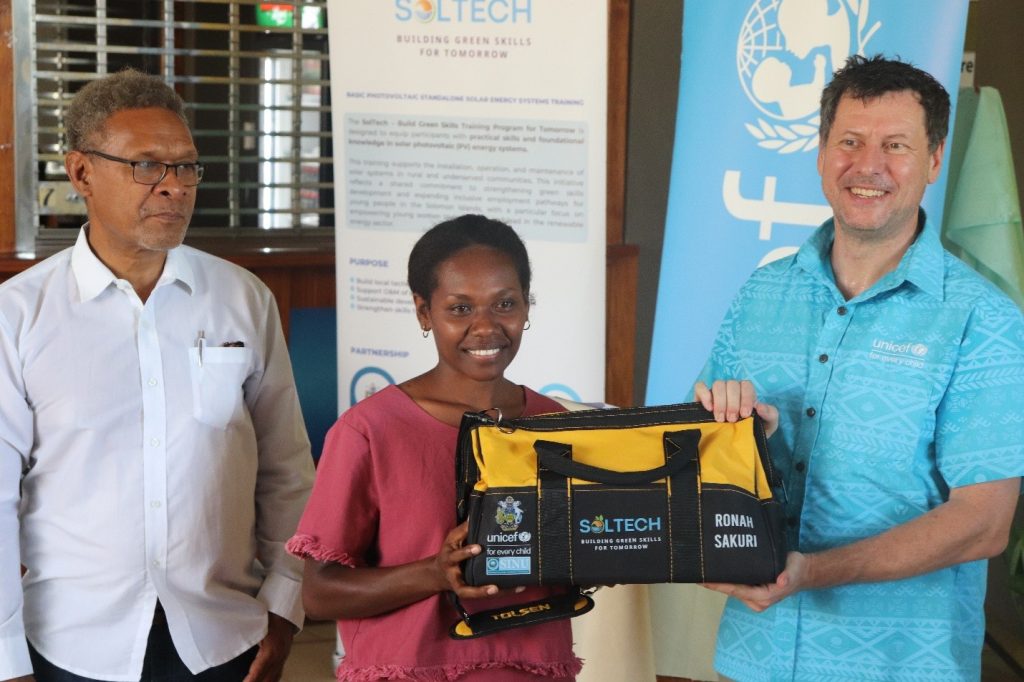
With solar energy expanding across rural areas, organisers say programmes like SolTech are helping prepare young people with skills needed to support sustainable energy solutions and strengthen community resilience across Solomon Islands.
Photo: Supplied
For feedback, contact: [email protected]
Editor: [email protected]