Home Blog Page 473

Govt clarifies cancellation of prospecting licence over Koloula catchment

0

Government has come out to explain the actions of the Mines and Energy minister in cancelling the prospecting licence of a company for the mineral rich Koloula catchment in South Guadalcanal.

Responding to a call from the Opposition Leader questioning the cancellation, a Government Communication Unit in a statement this week clarified the air over the matter.

The Ministry of Mines, Energy, and Rural Electrification (MMERE) wishes to address public concerns regarding Minister Bradley Tovosia’s recent decision to revoke the intention to issue a prospecting license to Ni Hao Investment (SI) Ltd over Koloula, the statement said.

After careful consideration and consultation with relevant stakeholders, the intention was decided to be revoked.

The Ministry would like to assure the public that this decision was made in the best interest of the country and its resources.

MMERE remains committed to ensuring transparency and accountability in all matters related to mining and energy in the Solomon Islands.

Minister Tovosia acknowledges the discussions and differing opinions surrounding this decision and seeks clarity, the statement said.

The following key points outline the rationale and legal basis for the Minister’s decision:

i. Due Process and Consideration

The Minerals Board reviewed the renewal application from Ni Hao Investment (SI) Ltd in its meeting on 6th February 2024. Following a comprehensive assessment, the Board recommended rejecting the application. However, in exercising his statutory authority, the Minister conditionally approved the application, emphasizing strict compliance with prospecting requirements.

Minister Tovosia’s decision was based on the principles of due process and fair consideration, considering all relevant factors. By approving the renewal application with conditions, the Minister aimed to balance the interests of both the investor and the state, ensuring that all legal requirements were met. This decision reflects a careful and deliberative approach to governing natural resource investments, prioritizing accountability and transparency in decision-making processes.

ii. Conditions of Approval

As part of the conditional approval, a Letter of Intent was issued on 26th August 2024, explicitly requiring the successful negotiation and conclusion of a Surface Access Agreement (SAA) before formally issuing the prospecting license. This condition is a standard requirement to ensure lawful access and minimize disputes.

The Surface Access Agreement will clarify the terms and conditions for access to the land for prospecting activities. It will outline the responsibilities of both parties and establish guidelines for environmental protection and restoration. By prioritizing legal compliance and cooperation, the government aims to foster positive relationships between resource investors and local communities, promoting sustainable regional development.

iii. Community Concerns and Access Issues

The Ministry received multiple objections from key stakeholders, including local landowners and community representatives, raising serious concerns about accessibility and consent for prospecting activities in the proposed area. These objections highlighted the lack of guarantees that Ni Hao Investment (SI) Ltd would secure full and unhindered access to conduct prospecting operations.

iv. Minister’s Statutory Responsibility

Given the significance of landowner concerns and the potential for operational difficulties, the Minister acted within his legal mandate to ensure that any approved prospecting activity has a reasonable prospect of success. The absence of clear access assurances would have posed significant obstacles to effective mineral exploration. Therefore, the Minister prioritised addressing these objections and working with Ni Hao Investment (SI) Ltd to establish a clear plan for securing access to the proposed area.

The Minister fulfilled his statutory responsibility to promote responsible and successful mineral exploration while respecting landowners’ concerns. This proactive approach ultimately paved the way for a more collaborative and mutually beneficial relationship between all parties involved in the prospecting activities.

v. Final Decision

In light of these developments, the Minister determined that proceeding with the issuance of the prospecting license would not be in the best interest of the stakeholders involved, nor would it align with the ministry’s commitment to responsible and conflict-free resource development.

Consequently, the decision to revoke the intention to issue the prospecting license was made by legal and procedural frameworks. This decision marked a significant turning point in the ministry’s approach to resource development, emphasizing the importance of ethical considerations and responsible decision-making.

MMERE reiterates its commitment to transparency, responsible resource management, and stakeholder engagement.

“We encourage open dialogue and cooperation among all parties to ensure the sustainable development of the nation’s mineral resources.”

WWII OIL RISK

0

War wrecks not covered by international agreements. Largest ship grave in front of Honiara

BY JOHN HOUANIHAU

In front of Honiara lies Solomon Islands’ largest number of World War II wrecks beneath the Iron Bottom Sound sea, posing a huge environmental disaster risk.

But, to date, there is no international agreement to address this risk in the case that the oil products contained in the wrecks start leaking.

Paul Irving, marine pollution officer for the PAC Plan Resilience Project from Secretariat for the Pacific Regional Environment Programme (SPREP), raised the concern to Island Sun in an exclusive interview this week.

“3,500 World War II wrecks in the Pacific still have oil on them, and it’s a big and difficult problem to deal with. Solomon Islands has a lot of them,” said Mr Irving.

He said that the wrecks are now at least 70 to 80 years old since they sank.

“The oil was a cargo because they were a tanker, or whether the oil was fuel.  Some of those ships might start to leak a little bit of the oil inside of them, and the question becomes, is what do we do with that?” he said.

He stressed that international agreements do not cover War wrecks.

“There’s no international agreement like you have with oil tankers or cargo ships now. I think the Solomon government should be engaging in international discussions about whether there could be a new international instrument or a new international organisation to start dealing with the problem of potentially polluting wrecks,” he said.

“It’s a difficult problem. The difficulty comes from the fact that the ships are also war graves. Some still have the original cargos, which might mean ammunition, tanks, bullets or explosives. So, they’re not safe. And so, it’s a real big problem,” he said.

“Any oil inside them held by the steel will start to bubble out when it rusts. That is nasty oil. It’s World War II-quality fuel and World War II-quality crude oil,” said Irving.

He said that most of the wrecks are Japanese, and there’s an issue of who owns them.

“The model that I look at and think is so successful is the organisation that deals with landmines. After a war, the landmines get left behind, and the people who have to face those are the local farmers and the local population. So, several countries have come together and said, we’ll help clean it up.

“It’s not being done fast because it’s a big job. I think the same needs to be done with potentially polluting wrecks, where there’s an international agreement, a coalition of countries that have the expertise and perhaps the history, Japan, the United States, UK, Australia, who have that history associated with these wrecks, could come together and be helpful,” said Irving.

For feedback, contact: [email protected]

URGENT CALL TO ACTION

0

 Opposition Leader Wale says UNICEF report on child abuse ‘alarming’

LEADER of Opposition Matthew Wale says alarming reports of child abuse in the Solomon Islands and the region as a whole is a serious matter.

A statement from the Opposition office yesterday said Wale’s comments followed reports released in the media by UNICEF on the shocking rate of child abuse in the region including Solomon Islands.

The Opposition Leader said addressing child abuse has always been a neglected agenda by successive governments.

Wale said there is a lack of commitment and cooperation across all sectors in all levels of governance to tackle violence and abuses against our children.

“More needs to be done in the enhancement welfare and protection of our children and it is the responsibility of the government to take the lead,” he said.

The Opposition Leader said the Child and Family Welfare Act 2017 should also be reviewed.

Wale said the reports of child abuse in the media and cases before our courts itself are shocking, indicating vulnerability amongst our children even within their own homes.

“These are indicators of failed family systems, social structures and legal protections,” he said.

The Opposition Leader also adds data on the issue at hand is out dated and the government and stakeholders need to strengthen their partnership and collaboration.

Wale said the rights of children should be part of ongoing awareness in schools, churches and our communities.

“Children need to be taught in schools, churches and communities on the issue of child abuse,” he said.

The Opposition Leader said more support is also needed to empower social welfare officers in their role to provide services to children and families.

Wale said the government must take the lead in identifying the problems and put more efforts into mitigation.

“We must not turn a blind eye on this issue,” he said.

‘Solomon Islands is not alone with oil spill crisis’

0

BY JOHN HOUANIHAU

The Solomon Islands is not alone when it comes to oil spill crises and response.

Paul Irving, Marine Pollution Officer for the PACPLAN Resilience Project under the Secretariat of the Pacific Regional Environment Programme (SPREP), spoke to Island Sun yesterday during the Ocean Country Partnership Programme Solomon Islands Oil Response Training Workshop at the Heritage Park Hotel.

“The important thing for the Solomon Islands to know is that they’re not alone. If a small spill occurs in the port or at the terminal, South Pacific Oil or SIMA can handle it,” said Irving.

“If it gets a bit bigger, then it might involve Team Solomon—the Solomon Islands Maritime Authority (SIMA) and other organizations such as the National Disaster Management Office, Fisheries, Health, and others stepping in to assist,” he added.

“If it escalates further, like the Solomon Trader oil spill at Rennell Island in 2019, international assistance is available. Australia is the primary responder, but SPREP, through its PACPLAN framework, also plays a key role,” he said.

Irving explained that the PACPLAN framework outlines how countries collaborate on regional and international responses to marine pollution incidents.

“So, the Solomon Islands is not left to handle these incidents alone. There is a structured system in place—from managing small spills locally to receiving substantial assistance for major disasters,” he emphasized.

For feedback, contact: [email protected]

AMBIPAR equips stakeholders on oil spill response

0

BY JOHN HOUANIHAU

AMBIPAR, a leading environmental consultancy company, is conducting a workshop on oil spill response in the Solomon Islands.

The weeklong workshop, which began on Monday and will conclude on Friday, is currently underway at the Heritage Park Hotel in Honiara.

Led by Ambipar Response senior trainers Glenn Hill and Nicola Jackson, along with Paul Irving from SPREP, the workshop brings together representatives from the Solomon Islands Maritime Authority, the Ministry of Health, South Pacific Oil, National Fisheries Development, and other organizations involved in emergency management.

The workshop is being delivered by the United Kingdom in collaboration with the Secretariat of the Pacific Regional Environment Programme (SPREP) through the Ocean Country Partnership Programme, engaging Ambipar as the consultancy company.

The goal of the workshop is to educate and equip stakeholders with the necessary skills to prepare for and respond to oil spills in Solomon Islands waters.

Speaking to Island Sun, Paul Irving, SPREP PACPLAN Resilience Project Marine Pollution Officer, stated:

“Participants are learning how an oil spill can occur, what preparations have been made, where the equipment is located, what the planning process entails, and who will respond and how those individuals will carry out the response.”

He added that another key objective of the workshop is to strengthen teamwork among these organizations during oil spill crises in the Solomon Islands.

“A similar workshop was held last year, but it was more of a preparatory session. This one focuses on the national response plan,’’ said Irving.

“Last year, we discussed what an oil spill is and its potential impact on the environment and people. This year, we are looking at the systems in place to respond effectively,’’ he added.

For feedback, contact: [email protected]

SINBIP tower set to revolutionise boat travel and communication in Isabel and Central provinces

0

BY NED GAGAHE

The days of boat travelers from Isabel Province braving perilous journeys without reliable communication are over.

Thanks to the newly implemented Solomon Islands National Broadband Infrastructure Project (SINBIP), a joint project between the Solomon Islands and China, boat operators and passengers can now travel with peace of mind, knowing they can call for help in case of emergencies at sea.

SINBIP is a telecommunications project that involves building towers to improve internet connectivity in the country.

The SINBIP Tower, which was officially launched recently at Tathi, Central Islands Province marks a significant improvement in safety and communication for boat travelers.

Before its implementation, residents and visitors in the Isabel to Honiara route, passing through Gella, often faced unreliable or no mobile coverage, putting them at risk during their travels.

Now, with the SINBIP Tower in place, boat operators are able to stay in touch with clients and receive urgent calls of confirmation for travel plans.

Brian Mickley, a boat operator from Sepi, Isabel Province, expressed his excitement about the tower’s impact on his business.

“We are very happy to have the tower connected. It makes it much easier for us to receive calls of confirmation from clients who want to use our boats for travel,” Mickley said.

The tower’s opening has eliminated communication issues that once hampered transportation and business operations, enhancing both safety and convenience for all involved.

Boat transportation, an essential service for many residents and visitors in the area, can now operate with greater reliability, knowing that assistance can be reached immediately in case of disaster or emergency.

The introduction of the SINBIP Tower is being hailed as a game-changer for the region, not only improving safety but also contributing to the local economy by facilitating smoother business operations.

“We are excited to see more positive impacts from this project and how it will continue to improve the lives of Solomon Islanders,” said a local government spokesperson.

“With improved connectivity and communication, boat travel in the Solomon Islands has entered a new era of safety, reliability, and convenience.” He said.

For feedback, contact: [email protected]

UNICEF, KOICA partner with Guadalcanal for USD7m climate programme

0

By Loretta B Manele

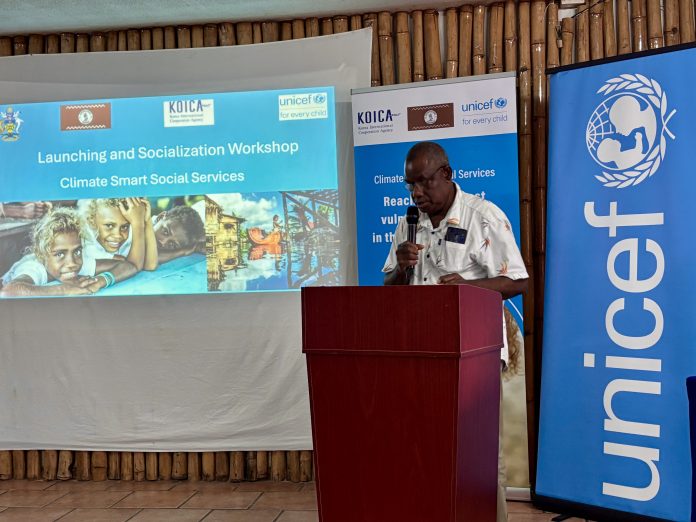
The United Nations Children’s Fund (UNICEF) and KOICA (Korean International Cooperation Agency) has partnered with Guadalcanal province for a US $7 million Climate Smart Social Services Programme.

William Atu, premier of Guadalcanal while speaking at the launching of the programme at King Solomon Hotel on February 4 said he is glad that the project is targeted towards vulnerable children in Ghaobata ward, North Guadalcanal.

He said they are at the launching to discuss the interventions to mitigate the threats and vulnerabilities that were identified.

Atu stressed that climate change has affected all faces of life and must be embraced as a development agenda.

“I am glad that in this project, children and gender are the primary target in the hard interventions while climate policies, climate finance, access to climate justice are some of the soft approaches.”

Atu expressed that climate change is here to stay and even if we were to reverse the greenhouse gas emissions back to zero in the next few years which will never happen, we will still have to live with the effects of climate change now and our future successive generations.

Moreover, he said he would like to conclude that at the end of this project which is 2027, it will achieve both hard and soft outcomes.

“The hard-smart outcomes interventions should not be too smart for the recipients to maintain its longevity and sustainability and resilience after the life of the project, while at the same time the soft interventions can be used as tool to guide other climate change interventions in other wards in Guadalcanal and sister provinces in Solomon Islands.”

He also took the opportunity to extend his gratitude to UNICEF and KOICA.

Atu said as the current Premier and leader of Guadalcanal province, he sincerely thanks UNICEF and KOICA for this partnership and in helping them to achieve their strategy in climate change and at the same time, addressing 7 of 17 SDGs which was stipulated in their policy.

He mentioned that his government has launched a policy since coming into office last year in May called Guadalcanal Government for Good Governance Policy Strategy (2024-2028) where they tried as much as possible to align their long-term goals with the GNUT (Government for National Unity and Transformation) policy, the NDS (National Development Strategy) and the 17 Sustainable Development Goals.

Atu said in their Climate Change and Disaster Management Policy, one of the components is to work in partnership and collaboration with the Solomon Islands government and key development stakeholders in areas of climate change and disaster risk management.

He furthered that they look forward to working with UNICEF and KOICA in the duration of this project and beyond.

For feedback, contact: [email protected]

National employment policy to look at job availability and quality

0

By Loretta B Manele

Solomon Islands National Employment Policy (NEP) will really look into the availability and quality of jobs.

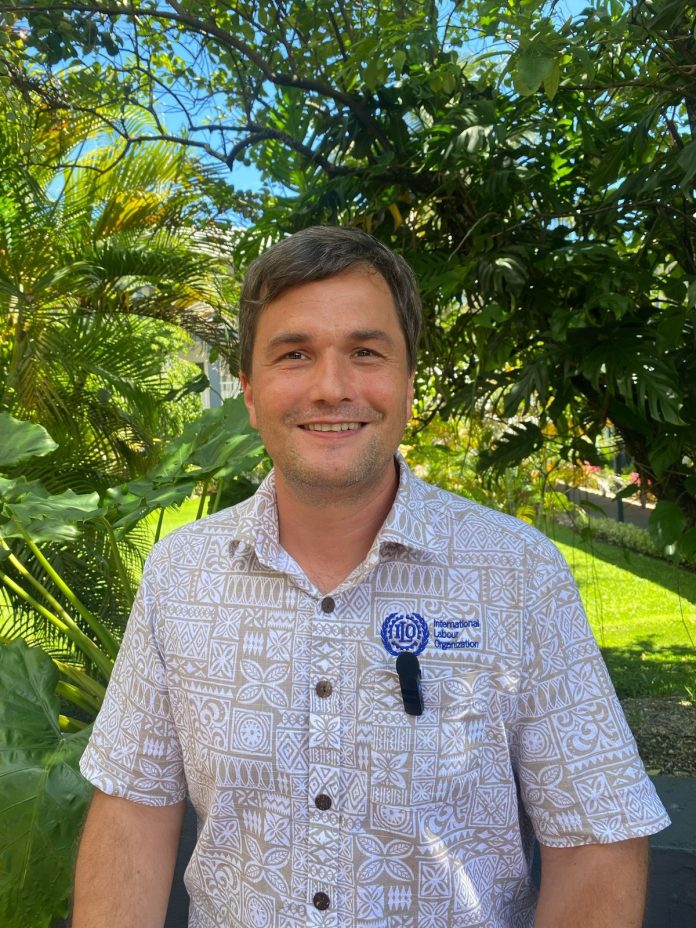
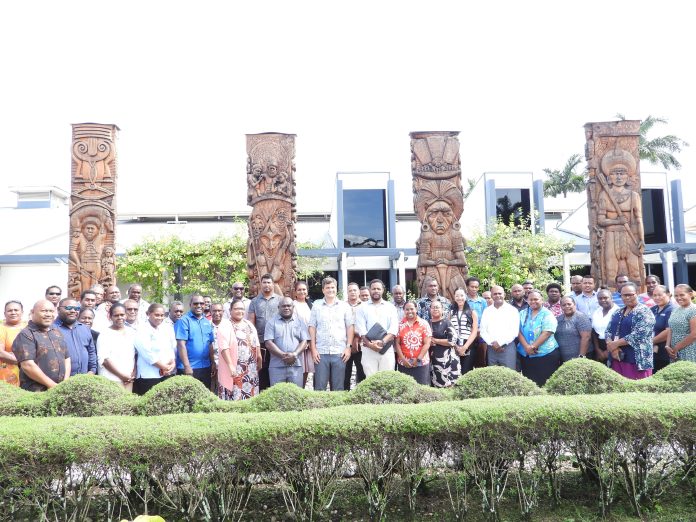
Christian Viegelahn, Employment Specialist for the Pacific from the International Labour Organization (ILO) expressed this to the media on the final day of the two-day “Solomon Islands National Employment Policy” validation workshop which ended on Wednesday this week at the Heritage Park Hotel.

He said this policy is really looking at having jobs available while also considering the quality of these jobs.

Viegelahn stated that it is important that jobs are available for everyone as well as for Solomon Islanders who take on jobs in countries like Australia and New Zealand.

In relation, he said this is why the aspect of working conditions is something that they have various dimensions to consider when discussing the issue of labour mobility.

Viegelahn added that there is also pre-departure training to workers so that they are aware of their labour rights and are informed of what they expect in their destination countries so they are well prepared should they observe or encounter any labour rights or violation of any type.

He said their main counterpart in this policy initiative is the Ministry of Commerce, Industry, Labour and Immigration (MCILI) given that they have a labour division and all their conversations will go to the government through this channel.

Viegelahn stressed that when they support a country in developing a national employment policy, what they certainly suggest and strongly propose is to have all stakeholders on board so they have a role in promoting employment.

“Employment is such a cross-cutting issue and literally involves every government department, but then of course it’s also important to have employer representatives, worker representatives involved as well as representatives of civil society.

So, I think it’s really important to have all these voices heard and all these inputs taken on board.”

Viegelahn explained that this is why in the current draft of the policy document, they have action plans to really provide very concrete guidance on which institution is responsible for certain actions that are part of the policy, as well as a time plan.

He mentioned that it would then be upon the government and consultation with employers and workers to implement the policy and as an international aid organization they will stand ready to provide support employers and workers to implement the policy.

“Certainly, we as an international aid organization do stand ready to provide support or to have discussions on how we can support effective implementation as well.”

Viegelahn said the workshop triggered very vivid discussions and gave them a lot of inputs and they will look at the draft document and try to consider and factor in the comments received from the workshop.

He furthered that he understands that the Solomon Islands government and the Commission of Labour plans to actually take this policy document to the provinces as well.

For feedback, contact: [email protected]

‘National employment policy a milestone for SI’

0

By Loretta B Manele

The Solomon Islands National Employment Policy (SINEP) has been regarded as a milestone for Solomon Islands.

Mary Elizabeth Ramosaea, National Employment Consultant from Tetra Tech International who is working with International Labour Organization (ILO) to develop the policy referred to SINEP as a “milestone” and highly important.

During an interview with the media halfway through the “Solomon Islands National Employment Policy” validation workshop’s final day at the Heritage Park Hotel yesterday, she spoke of participants feedback and the next step for the draft National Employment Policy 2025-2028.

Ramosaea emphasized that the draft NEP is very important and a big milestone for the country.

She expressed that gathering all the feedbacks, discussions and contributions from every single stakeholder at the workshop representing various ministries, NGOs, private sector and civil society organisations play an important role in shaping this document and taking it forward.

“Just looking around the room, you can feel the vibe that comes out. Everybody pays keen interest and are also criticizing and contributing to the objectives and key focus areas under each particular policy area.”

She said for the day’s discussions; they looked at the aspects of the labour market and formalization of the informal economy.

“I would also like to look at how we can resolve the issues regarding employment and growth and workforce, but also securing the future of Solomon Islands.”

She stated that as a consultant for this work, it drives her to look further into what we have in place, what resources are already available and what potential is out there.

“Where we can pull them together and shape the Solomon Islands National Employment Policy (SINEP) and also, so that everyone benefits from it.”

She explained that after the workshop, having talked with the Ministry of Commerce and Labour and ILO, they will develop the draft policy document and socialise it.

“First and foremost, we will go back to the stakeholders in line ministries, where they are responsible for certain aspects of that particular policy area and if they agree with that objective and key focus area, then we will pass it on and validate it.”

Ramosaea noted that they will also be bring the document to the provinces as suggested by the minister of commerce.

She said this is so that the whole country has their finger prints on the document or in other words, so that everyone has a say in the National Employment Policy (NEP) document.

“This is so that the ownership of this policy is not driven from MCILI alone but from everyone.”

For feedback, contact :[email protected]

No recruitment for now, public warned of fake agents

0

BY NED GAGAHE

The Labour Mobility Unit (LMU) under the Ministry of Foreign Affairs and External Trade has issued another warning to the public regarding individuals and groups falsely posing as recruitment agents for employment opportunities in Australia and New Zealand.

In a statement released on Tuesday, the LMU clarified that the unit is the sole agency responsible for facilitating the registration process for the Pacific Australia Labour Mobility (PALM) Scheme. The LMU also emphasized that no new recruitment for the PALM scheme will be conducted at this time.

“The PALM scheme does not operate through agents. However, some individuals and groups have been misrepresenting themselves as local agents and demanding upfront payments from job seekers,” the LMU said.

The LMU strongly reminded the public that the PALM scheme is completely free of charge. Applicants are only required to cover the costs of their passport, police clearance, and medical clearance. No other fees are required to participate in the PALM scheme.

For those seeking employment under the Recognised Seasonal Employer (RSE) scheme in New Zealand, the LMU clarified that recruitment is conducted exclusively through approved agents. Job seekers are urged to verify the list of authorized agents with the LMU before engaging in any recruitment process.

Additionally, the LMU reiterated that no new recruitment for the PALM scheme is being conducted at this time. Any updates or changes regarding the recruitment process will be communicated to the public officially.

The LMU continues to advise job seekers to be cautious and avoid falling victim to fraudulent recruitment agents. The public is urged to only engage with verified, legitimate sources to ensure they do not become targets of scams.

For feedback, contact :[email protected]