Home Blog Page 423

Women continue to be underrepresented in SI: Tuki

0

By Loretta B Manele

Today, Solomon Islands women continue to be underrepresented in decision-making roles.

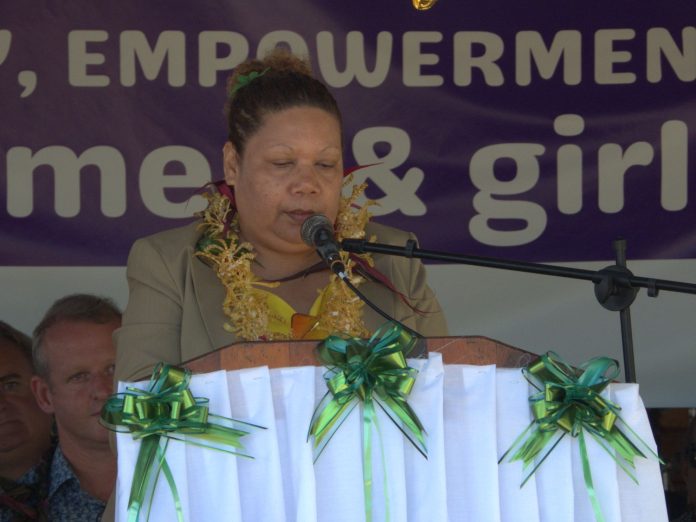
Freda Tuki, minister for Women, Youth, Children and Family Affairs (MWYCFA) stressed on this whilst speaking at the first day of the International Women’s Day program at the National Museum Auditorium yesterday.

She said since 1978, only eight women have been elected to parliament and only 17 women have been elected to provincial assemblies since 1981.

Tuki stated that women’s voices are also missing from many decision-making boards and commissions and only 7% of women hold senior management roles like CEOs.

She added that only 23% of women are business owners with most of them being in entertainment and catering sectors.

Tuki mentioned that these issues are not just at the local level but also on the global level.

Moreover, she said the biggest barrier to women’s economic empowerment is their over-representation in unpaid care and domestic care.

“In the Solomon Islands, women work nine hours more than men on unpaid care work.”

She highlighted that Solomon Islands women have proven and played vital roles as peace builders and contributors to peace-building and conflict resolution, however are often unrecognized.

“The changing landscape of how women and girls experience peace and security, particularly in the context of increasing global shocks, such as the COVID-19 pandemic and natural disasters, online harms and climate-induced conflicts disproportionately affect women.

In times of crisis, women, especially those in rural areas, take on additional burdens, including caregiving, managing sanitation and food security and helping their families cope with health challenges, including mental health.”

She emphasized that despite these challenges, women’s resilience and ability to adapt must be acknowledged and supported.

Tuki said to move forward, we need to change the way we have been doing things and that is to now act quickly and focus on making real, meaningful changes.

“We must commit or reaffirm our commitments to accelerate action through supporting policies that give women more opportunities to lead and make decisions, adopt affirmative actions to address the historic barriers women face in decision-making roles, including in earning, accessing and benefiting from natural resources.”

Tuki highlighted that in our homes, workplaces and communities, we can also accelerate action by speaking out against violence and harassment.

She also took the opportunity to thank both past and present governments for taking important steps to promote gender equality.

“Some of our key achievements include rectifying the Convention on the Rights of Persons with Disabilities in 2023 and launching a related policy, conducting the Equality Insights Rabbit Study in 2022 to better understand poverty and inequality, expanding services for victims of gender-based violence to the provinces, the Solomon Islands government being one of the only governments to have both a Women’s Economic Empowerment National Action Plan and a National Women’s Financial Inclusion Strategy in place, and the development of more sectoral policies that support gender equality.”

Whilst officially opening the 3-day program, she announced the Gender Equality and Social Inclusion Policy 2025-2030.

“I have the honour of announcing, on behalf of the Ministry of Public Service and the Ministry of Women, Youth, Children and Family Affairs, the passage of the Ministry of Public Service, Gender Equality and Social Inclusion Policy 2025-2030.”

Tuki furthered that this is a testament to the vision of the government to ensure the principle of non-discrimination, equal treatment and opportunities are practiced for the well-being of women, men and persons with disabilities employed in the public service and essentially a catalyst for people-centred development and gender mainstreaming across the public sector.

For feedback, contact:[email protected]

Australia announces new investment for women and children

0

By Loretta B Manele

Australia as Solomon Islands largest partner in supporting gender equality has announced a new investment for women and children.

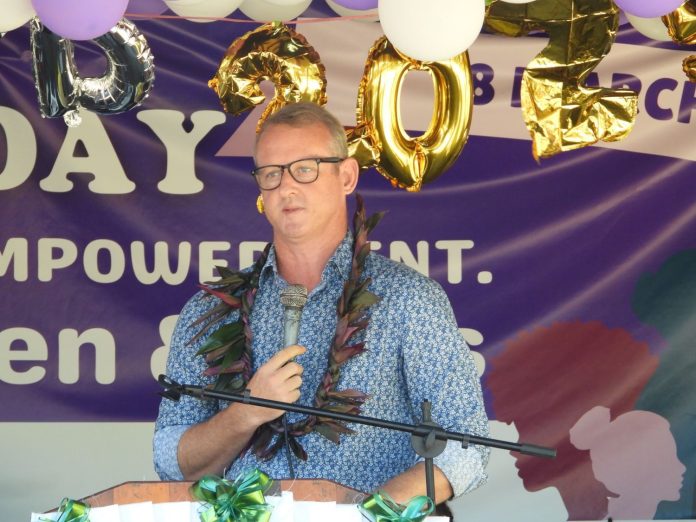
Rod Hilton, Australian High Commissioner made the announcement on the first day of the International Women’s Day program at the National Museum Auditorium yesterday.

He expressed that he is very happy to announce the launch of Australia’s new investment for Solomon Islands which is “Advancing gender equality inside Solomon Islands”, an initiative that will go towards supporting gender equality in the country.

Hilton said Australia will invest 46 million dollars for a three-year period that will go towards fostering strong leaders and economic empowerment of Solomon Islands women and to tackle violence against women and children.

He highlighted that this new investment will help unleash women’s full economic potential, reduce violence against women and remove barriers for women in leadership, particularly in politics.

Hilton stressed that Australia will continue to work with its partners to take action in gender equality within women’s rights action movement such as in efforts to increase women’s political representation in Solomon Islands.

For feedback, contact:[email protected]

DANGER IN THE RURALS

0
_cuva

-Alarming rate of online gender-based violence in Small Malaita and nearby communities of East and West Are’are: AHNRA report

-Nearly 90 percent youths, 63 percent women affected: Report

BY IRWIN ANGIKI

Online gender-based violence is high in Small Malaita and nearby communities of East and West Are’are as digital technology usage increases in the rural areas, a report launched yesterday has shown.

In what is regarded the first of its kind, the Apunepara Haamwaora Natural Resources Association (AHNRA), a community-based organisation in Small Malaita, released its research findings on communities in Small Malaita constituency and neighbouring communities of West and East Are’are constituencies.

As high as 88 percent of youths have experienced online gender-based violence (OGBV). 63 percent of women too have experienced the same.

Men are also exposed to cyber dangers, with 67 percent saying they have experienced OGBV.

In the research, OGBV includes: cyberstalking – verbal harassment, posting abusive information against each other on social media; doxxing – posting of personal information without consent online; sextortion – sharing nude images online which results in divorce, mental disturbance; malicious deep fake – bad and fake videos posted online to cause hate; argument – between social media groups and/or individuals; emotional abuse – something making them angry or sad.

Around 20 percent of youths and 15 percent of women do not know how to deal with OGBV, which researchers have acknowledged is a huge risk.

According to the research, dealing with OGBV include: ignoring perpetrators, refrain from social media platforms, notably facebook, blocking accounts and destroying the Sim card, talk to teachers and family members about OGBV, avoid sharing phones with others passwords to social media accounts, seeking reconciliation from community leaders, pay compensation, seeking advice from experienced mobile and internet users, adhere to community by-laws and guidelines, counselling services, awareness from village leaders and police.

Of the 111 youths interviewed, “most indicated that they chose to ignore the perpetrators entirely, distancing themselves from the negativity”.

“The majority of women opted to take a break from social media, particularly by refraining from using facebook to protect their mental well-being,” the AHNRA report said.

Perpetrators of OGBV according to the research include mostly hackers, followed by chat partners, photographers and mobile users, and internet users, ‘anyone’ and media producers.

On digital media producers, the report explained, “Creators of content that perpetuate harmful narratives or imagery related to gender-based violence”.

The report recommends more education and awareness to be carried out in Small Malaita, East and West Are’are communities on digital technologies and platforms and the risks associated with their usage, along with how to safely engage in these communication tools.

Community and families were highlighted as the ones who need awareness and education most.

“Parents and guardians should be supported in becoming the first teachers and role models for their children, helping to control their access to digital services and ensuring their safety online,” the report said.

Community-based organisations (CBO) and non-government organisations (NGO) also have a role to play towards providing awareness and education on online dangers, the report said.

“There is a need for collaboration between the government and telecommunication providers with NGOs, CBOs and CFBOs [community faith-based organisations] to raise awareness across all provinces about the safe usage of handsets and digital platforms, highlighting their negative impacts and benefits,” the report said.

Government is also being called on to create laws to protect citizens from the harm digital engagements can bring.

“The government through its ICT department should develop legislation related to digital applications and equipment. This includes requirements for the registration of all mobile handsets and SIM cards,” the report said.

It is understood that the nationwide registration of telecommunication sim cards is ongoing, having extended from its initial deadline in November last year to July 2025, following low turn-out and related “customer feedback”.

More than 140 youths took part in AHNRA’s research from the age-range 14-29 years old.

Around 60 women, and more than 20 men took part, from the age-range 30-49 years old.

The research was funded by the European Union, facilitated by the UNDP through its Pacific Digital Democracy Initiative.

The report was launched with a press conference at the SIBC conference room yesterday.

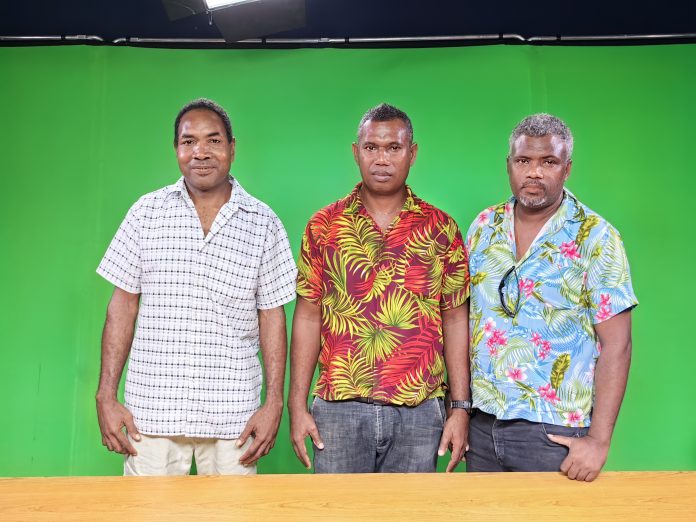
Media personnel met with researchers AHNRA chairman, Gibson Oasanau and board members Amos Oscar Watesau and Desmond Oraiola. The trio are also marine and terrestrial rangers for their organisation in their conservation efforts in the Waitoto community of Small Malaita.

The 2019 national census puts the population of Small Malaita at more than 16,000, with around 50 percent being females, and 22 percent being youths (15-29 years old).

For feedback, contact:[email protected]
UN Women hosts International Women’s Day breakfast event

0

By Loretta B Manele

UN Women through the Markets for Change (M4C) project hosted an International Women’s Day breakfast event on 7th March, Friday at the Heritage Park Hotel.

The theme of the program was “Accelerate Action for all women and girls; Rights, Equality, Empowerment.”

They kicked off the program with opening remarks from Tristan Armstrong, Councillor from the Australian High Commission which was the followed a speech from Vaela Ngai, the Director for Women’s Development Division of MWYCFA.

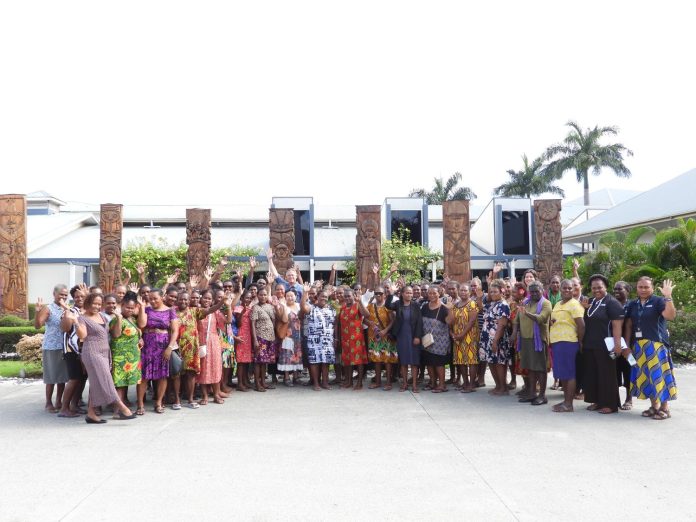
The women then gathered for a group photo session to mark the special day before having their breakfast.

During breakfast, there was a panel discussion.

Patricia Maike, Women’s Economic Empowerment (WEE) officer from MWYCFA (Ministry of Women, Youth, Children & Family Affairs) was one of the panellists who contributed to the discussion.

The question asked to the panel was “How can MWYCFA enhance its collaboration with UN Women to implement more effective and targeted strategies that accelerate gender equality and empower women market vendors in Solomon Islands?”

Maike said the market for change program which market vendors come under is nicely aligned with MWYCFA policy under National Strategy on Economic Empowerment of Women and Girls.

This market for change program is an UN Women project and multi-country initiative with the aim to ensure that marketplaces in Fiji, Solomon Islands, and Vanuatu are safe, inclusive, and non-discriminatory, promoting gender equality and women’s empowerment.

Meanwhile MWYCFA’s has a policy called the Gender Equality and Women’s Development (GEWD) Policy 2016-2020 which aims to promote gender equality and women’s human rights, with a vision of women and men as equal partners in development.

Maike stated that the ministry continues to work with its partners and stakeholders, government and even the private sector to make sure that this policy works.

She mentioned that MWYCFA is also working with financial institutions and CBSI is working closely with the ministry through platforms like YouSave that helps women in the rural areas to save money and other schemes like M-Selen.

Maike said one of the big things the ministry continues to roll out in our provinces through the provincial women development officers, is the Savings Club.

She stressed that UN Women and MWYCFA need to collaborate more on this because not everyone is involved in the Savings Club program.

“We need to make sure that all women come on board on this program.”

She added that MWYCFA and UN Women should also work together in terms of capacity building like training.

Maike expressed that this is important so that women can empowered and move on to take up bigger roles in life such as executive and leadership roles.

According to UN Women, they are implementing the Markets for Change (M4C) project, which is aimed at ensuring marketplaces in rural and urban areas in Solomon Islands are safe, inclusive and non-discriminatory environments, promoting gender equality and women’s empowerment.

The birth of International Women’s Day (IWD) came a long way.

As stated in an IWD website, it was back in 1910 that a second International Conference of Working Women was held in Copenhagen.

It was during this time when a woman by the name of Clara Zetkin, the leader of the ‘Women’s Office’ for the Social Democratic Party in Germany tabled the idea to have an International Women’s Day.

Her proposal was that every year in every country, there should be a celebration on the same day, a Women’s Day to press for their demands.

A conference of over 100 women from 17 countries, representing unions, socialist parties, working women’s clubs and including the first three women elected to the Finnish parliament welcomed Zetkin’s suggestion with unanimous approval which led to the birth of International Women’s Day.

For feedback, contact:[email protected]
Minister Bosawai and Australia’s global health ambassador join forces to improve health

0

The Minister for Health and Medical Services,Paul Bosawai, joined Australia’s Ambassador for Global Health, Dr Lucas de Toca, during the first day of the Ambassador’s official visit to Solomon Islands.

Ambassador de Toca leads Australia’s relationship with multilateral health organisations and international development assistance in health.

The Minister and Ambassador toured health facilities in Honiara and Guadalcanal Province to hear firsthand from health officials and frontline workers about progress being made to improve local health services and to see how Australia’s support is assisting this effort.

At the National Referral Hospital, Minister Bosawai and Ambassador de Toca visited the High Dependency Unit, which is providing critical care to the most acute patients, to hand over new equipment.

Minister Bosawai said the equipment for the High Dependency Unit would significantly improve the care nurses and doctors provide for critically ill patients.

“The training and ongoing support provided by Australian advisors enables our staff to deliver high-quality care, improving how services are delivered in Solomon Islands’’, Minister Bosawai said.

Ambassador de Toca said he was pleased to have the opportunity to meet the dedicated staff of the National Referral Hospital, including Australia Awards alumni, and the Australian volunteers, students and visiting clinical teams working alongside them.

“This visit to the National Referral Hospital truly highlights the strong people to people links we have fostered under our longstanding partnership,” Ambassador de Toca said.

“It is so heartwarming to meet and hear about the many Australian doctors and nurses who have longstanding connections to support improved healthcare delivery in Solomon Islands.”

At the Good Samaritan Hospital in Guadalcanal Province, the VIPs met Sister Dali who explained how the new solar power system, funded by Australia, has allowed them to redirect funds previously spent on costly diesel for generators to patient care instead.

Minister Bosawai said the solar panels are a positive step, promoting sustainability by minimising environmental impact, and ensuring essential services can be delivered both day and night.

Ambassador de Toca said it was rewarding to see the positive impact of Australia’s investments in communities outside of Honiara, including provincial grants, solar electrification systems, and medical supplies for people living in Guadalcanal Province.

“Providing health services in rural areas is not an easy task, and I acknowledge the hard work that everyone has contributed to delivery of these essential services,” Ambassador de Toca said.

At the National Medical Store, Minister Bosawai formally received a new forklift which will greatly improve safety and efficiency for staff unloading stores.

The new outdoor forklift complements the indoor forklift and flat-bed truck, donated by Australia in 2022.

Japan and Solomon Islands sign additional grant for Kilu’ufi Hospital improvement

0

BY NED GAGAHE

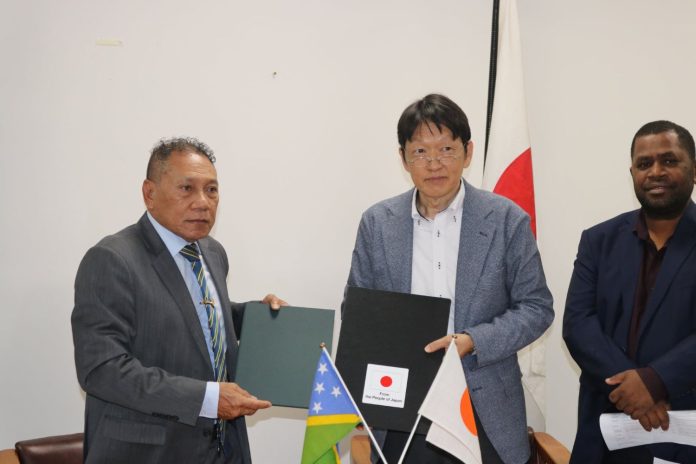
The Minister of Foreign Affairs and External Trade, Peter Shanel Agovaka, on Friday, signed an amended Grant Agreement for the Kilu’ufi Hospital Expansion Project with the Ambassador of Japan to the Solomon Islands, His Excellency Keiichi Higuchi.

The original Exchange of Notes and Grant Agreement for the improvement and expansion of Kilu’ufi Hospital in Malaita Province was signed in June 2023, with Japan providing an initial grant of 2.011 billion yen (SBD $120 million).

However, due to global price escalations and the depreciation of the Japanese yen, work on installing medical equipment and facilities was suspended following the project’s commencement in October 2024.

The amended agreement now provides additional grant aid to resume the suspended components of the project. An additional 356 million yen (SBD $20 million) has been allocated, bringing the total project value to 2.367 billion yen (SBD $130 million).

Minister Agovaka expressed his deep gratitude to the Government of Japan for its continued support and emphasized the significance of this collaboration.

“I am so honored to have you all here this morning to witness the signing of the amended Grant Agreement regarding the Kilu’ufi Hospital Expansion Project. Excellency, such a kind gesture shown by the Government of Japan is again one of those obvious indicators of the unwavering friendship between our two countries.

“Allow me to express our heartfelt and deepest acknowledgement and appreciation to the Government of Japan for the invaluable support extended to the Solomon Islands over the years,” Minister Agovaka said.

The Minister further highlighted that once completed, Kilu’ufi Hospital will serve at least 24% of the country’s population. He added that Kilu’ufi is the only public hospital in Malaita Province, which is the most densely populated province in the country.

“Given its accessibility by boats and aircraft, patients from neighboring provinces can also opt to seek medical treatments and services there once the Kilu’ufi Hospital Expansion Project is completed,” Agovaka said.

Ambassador Higuchi also expressed his appreciation to everyone involved in advancing the project and reaffirmed Japan’s continued commitment to the Solomon Islands.

He stated that the recent visit by Prime Minister Jeremiah Manele to the hospital site, noting that it reflects the enthusiasm surrounding the initiative.

“Although I have not yet traveled to Malaita Province, I would like to visit the hospital and explore Malaita at an early opportunity. This project responds to the calls made by Prime Minister Hon. Manele during the Tenth Pacific Islands Leaders Meeting (PALM10) held last year in Japan.

“Lastly, I would like to extend my sincere gratitude to all those who have been working for this project, including officials of the Ministry of Health and Medical Services, officials of the Malaita Provincial Government, staff at Kilu’ufi, consultants, and contractors,” Ambassador Higuchi said.

The newly improved Kilu’ufi Hospital is set to open next year.

For feedback, contact:[email protected]
Japanese Ambassador commits to visiting Malaita as Kilu’ufi Hospital expansion project gets underway

0

BY NED GAGAHE

Japanese Ambassador to the Solomon Islands, Mr Keiichi Higuchi, has reaffirmed Japan’s commitment to improving healthcare services in the Solomon Islands, particularly in Malaita Province, through the funding of critical medical equipment for the Kilu’ufi Hospital.

Speaking at the signing ceremony of the amended Grant Agreement for the Kiluúfi Hospital Expansion Project on Friday last week, Ambassador Keiichi Higuchi highlighted the importance of this project not only for Malaita but for the entire nation.

He acknowledged the province’s significant role as the most populous in the Solomon Islands and emphasized that the well-being of its people is central to the country’s overall development.

“Many people have mentioned to me that ensuring the well-being of people in Malaita is of great importance, not just to Malaita but to Solomon Islands as a whole.

“This visit by Prime Minister Hon. Manele to the hospital site further reflects the enthusiasm surrounding this initiative.” Ambassador Higuchi said.

The project, which was first initiated in 2023 with the signing of the Exchange Notes, is now in its active phase.

The latest phase of the project aims to cover medical equipment that was unable to be fully funded in earlier stages. With a total budget of ¥2,367,000,000 (approximately SBD 135 million), the funding will provide essential equipment to enhance healthcare delivery in the province.

The Ambassador also stated that this initiative aligns with the commitments made by Prime Minister Hon. Manele at the Tenth Pacific Islands Leaders Meeting (PALM 10) held in Japan last year, underscoring the collaborative relationship between Japan and the Solomon Islands.

“I look forward to visiting the hospital and Malaita Province in the near future to witness firsthand the progress of this important project,” He added.

Ambassador Higuchi expressed his sincere appreciation to all those involved in the project, including the officials from the Ministry of Health and Medical Services, Malaita Provincial Government, Kilu’ufi Hospital staff, as well as consultants and contractors.

He said their collective efforts are pivotal in ensuring the project’s successful implementation.

“The hospital project is part of Japan’s ongoing commitment to supporting the Solomon Islands’ development and improving the health and well-being of its citizens. The Japanese government has long been a partner in enhancing healthcare infrastructure across the Pacific region, with this project in Malaita representing a significant step forward in that mission.” Ambassador Keiichi said.

Meanwhile, the province is eagerly awaiting the completion of the hospital project, which is expected to significantly improve healthcare services for the people of Malaita and contribute to the overall health security of the Solomon Islands.

The improved hospital is expected to open next year.

For feedback, contact:[email protected]
BBC Media Action hands over equipment to Dreamcast Theatre

0

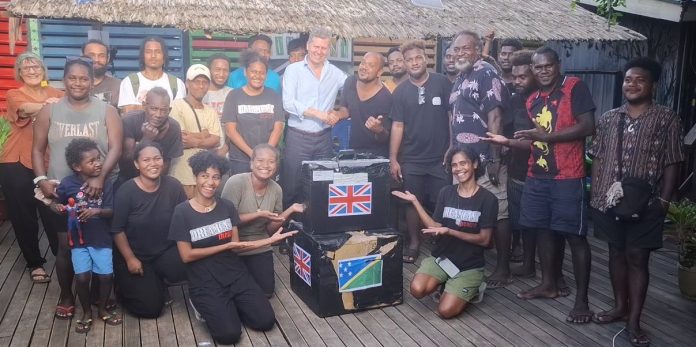
On March 5, 2025, BBC Media Action, in partnership with the British High Commission, officially handed over essential equipment to Dreamcast Theatre in Honiara.

The event, held at Dreamcast Theatre, marked a significant milestone in supporting the growth of media, arts, and storytelling in the Solomon Islands.

Dreamcast Theatre was founded in response to the civil unrest in the Solomon Islands as a community-driven drama group aimed at fostering peace through theater performances.

Over time, the group has evolved into a dynamic organization that supports local creative talent. Dreamcast Theatre provides a creative space for artists to collaborate, develop their skills, and create meaningful art for both personal and professional growth.

Since its official registration as a social business in 2016, Dreamcast has grown into a family of musicians, dancers, photographers, actors, and filmmakers. The theatre has expanded its creative output to include film, photography, music, and dance, while continuing to produce films for NGOs, businesses, and government agencies.

This project has been months in the making, with significant effort behind the scenes to ensure that the equipment was delivered to Honiara and placed in the hands of Dreamcast Theatre. The partnership began with a shared vision between BBC Media Action and Dreamcast Theatre to nurture creativity and artistic expression in the Solomon Islands.

Overcoming numerous logistical challenges, including coordinating the shipment across multiple locations and securing financial support, the British High Commission played a crucial role in facilitating the successful delivery of the equipment.

“This moment is not just about the official handover, but also about recognizing the dedication, persistence, and teamwork that brought us here,” said Georgina Kekea, BBC Media Coordinator for the Solomon Islands. “We acknowledge the efforts of those who contributed to making this possible, even though they are no longer in the country.”

Neil Nuia, Creative Director of Dreamcast Theatre, also expressed his gratitude for the timely support. “We are deeply thankful to the British High Commission and BBC Media Action for their generous contribution. This equipment will significantly enhance our work in the production space, enabling us to create even more impactful and meaningful content for our community and beyond.”

The equipment which was handed over by the British High Commission included an HS 1300 Mobile Cast System and an ITC 300 Intercom System. These audio and lighting systems will significantly enhance Dreamcast Theatre’s capacity for creative production and media expression. This equipment will enable the theatre to expand its operations and further its commitment to fostering local talent.

His Excellency Paul Turner, British High Commissioner to the Solomon Islands, shared his excitement about the ongoing collaboration with Dreamcast Theatre. He highlighted the vibrant media and artistic scenes in Honiara and expressed anticipation for the new productions made possible by the equipment.

“We are proud to support Dreamcast Theatre in their creative journey, and we look forward to seeing how this equipment will contribute to the future of media and the arts in Honiara,” said H.E. Turner.

This partnership between BBC Media Action, the British High Commission, and Dreamcast Theatre marks a significant step forward in empowering local talent and expanding the creative horizon of the Solomon Islands. With the support of this new equipment, Dreamcast Theatre is set to further elevate its impact on the media and arts scene, inspiring new generations of storytellers and creators.

Noro Community High School students off to Japan

0

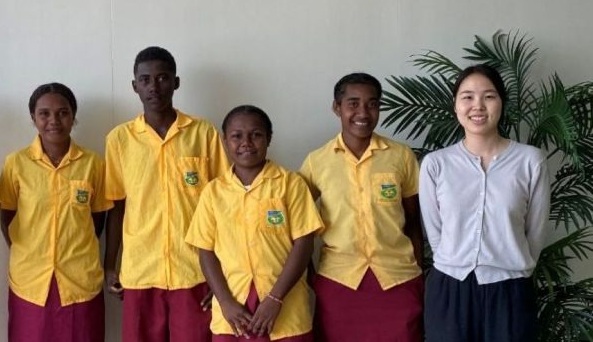
Noro Community High School will be representing Solomon Islands at the 2024 JENESYS Program.

The composition of the delegation consists of five year eleven (11) students and one (1) supervising staff. The delegation will leave on Tuesday 11th March, 2025 and will return on Thursday 20th March 2025.

The “2024 Japan-East Asia Network of Exchange for Students and Youths” (2024 JENESYS Program) is a people-to-people exchange program launched by the Government of Japan in 2015 between Japan and the Asia-Pacific region.

The two main objectives of the program are (1)To enhance the interest in and understanding of Japan among talented young people from other countries and regions and (2) To promote understanding of Japan’s politics, economy, society, culture, history, and foreign policy in accordance with the participants’ interests.

In this year’s program Solomon Islands will be joining seven other pacific island countries; Marshall Islands, Micronesia, Samoa, Cook Islands, Kiribati, Niue and Palau. The program will be held in Japan (Tokyo City, Oita and Kochi Prefectures) from March 12th,2025 to March 19th 2025. This year’s program will mainly focus on Climate Change/Sports and Japanese Culture. During the program the participants are going to attend lectures, visit historical sites, home stay, join exchange activities and finally the program will conclude with a  debriefing workshop. The debriefing workshop is mainly for participants to share what they have learnt during the program and to present their plan to disseminate information about their experience of participating in the program in their respective countries.

The supervisor for the delegation Mr. Franklyn expressed his gratitude for this historical opportunity given to Noro Community High School to represent Solomon Islands at 2024 JENESYS Program. He also said that this will be an opportunity for the students to learn about the culture and technology in Japan to motivate and reset their educational journey.

All the participants are grateful and looking forward to experiencing and learning the Japanese Culture, Lifestyle and build new networks and friendships through this program. The delegation also expressed their gratitude to the Ministry of Education and Human Resources Development and the Embassy of Japan in Honiara for selecting them to represent the country in the 2024 JENESYS Program.

The king’s commonwealth message to the UK, Realms and Commonwealth

0
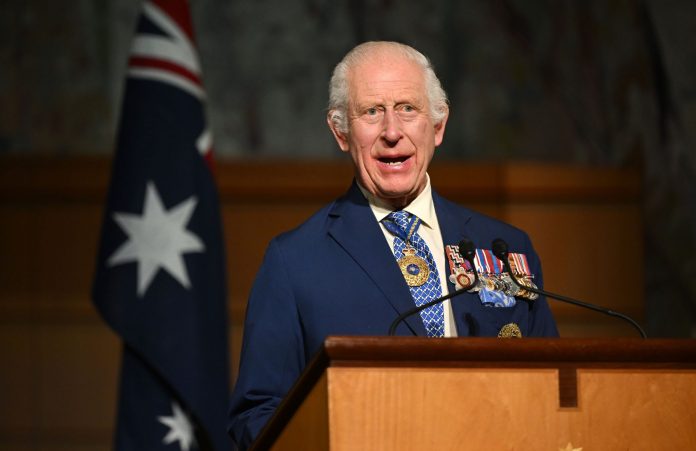
CANBERRA, AUSTRALIA - OCTOBER 21: King Charles III speaks during the ceremonial welcome and Parliamentary reception at the Australian Parliament House on October 21, 2024, in Canberra, Australia. The King's visit to Australia is his first as monarch, and the Commonwealth Heads of Government Meeting (CHOGM) in Samoa will be his first as head of the Commonwealth. (Photo by Victoria Jones - Pool/Getty Images)

Last October, leaders from across the Commonwealth came together in Samoa to reaffirm their “belief in the value of the Commonwealth as a trusted forum where diverse voices of our member states, the large and the small, the young and the old, come together as one family.”

These gatherings are important for helping all Commonwealth nations to tackle the challenges of the day,yet they also play another vital role.

In these uncertain times, where it is all too easy to believe that our differences are problems instead of a source of strength and an opportunity for learning, the Commonwealth’s remarkable collection of nations and peoples come together in the spirit of support and, crucially, friendship.

This year, the world reflects on the eightieth anniversary of the end of World War 2. More than one- and-a-half million men and women who served during the War came from across the Commonwealth to support the United Kingdom and its allies.

On this special anniversary, we remember with particular pride and everlasting gratitude the untold sacrifice and selflessness of so many from around our Family of Nations who gave their lives in that dreadful conflict.

The Commonwealth’s ability to bring together people from all over the world has stood the test of time and remains as ever-important today. Leaders recently reiterated the importance of collaboration for peace and human rights, as well as for the restoration of Nature both on land and in the oceans.

As we mark this Commonwealth Day together, there is no more important task than to restore the disrupted harmony of our entire planet. For the sake of our younger generations’ threatened future, I can only hope that the Commonwealth will continue its vital work to restore that harmony.