Home Blog Page 413

New Mines minister describes illegal mining in SI as “gold rush”

0

BY JOHN HOUANIHAU

The situation the country is now facing in terms of illegal mining is almost like a gold rush.

New Minister of Mines and Rural Electrification, Derick Manu’ari, said this when he responded to Opposition Leader Mathew Wale, MP for Small Malaita, Rick Hou and MP for West Are’are John Maneniaru on the floor of Parliament Thursday this week.

He was responding to questions raised regarding illegal alluvial mining operations in the upper Balasuna River in Guadalcanal province, which is now under police investigation.

“You know our situation now is almost like a gold rush. People come in to try to apply for a licence. Not only alluvial mining, but also, other forms of mining. And like alluvial itself, at the moment, the total number of current alluvial mining permits is 17. The locals who are currently engaged in mining.”

“We can only effectively manage a certain number of operators. So, we do interviews for vacant positions in the ministry,” said Manu’ari.

He told the three opposition MPs that with the Ministry’s reforms, more transparency and accountability processes are anticipated.

“To ensure that we engage with genuine investors. Not only on a small scale, but also in terms of prospecting and mining operations,” he said.

He also assured the leaders that he has noted their comments to strengthen the ministry’s roles and responsibilities to ensure similar mistakes are not repeated in the future.

“It’s a point that has been duly noted and that’s the objective of the ministry. To ensure that there are transparent and accountable processes to deal with genuine investors to be able to maximise the benefits we have from utilising our non-renewable resources,” said Manu’ari.

For feedback, contact:[email protected]

Solomon Islands to launch first-ever CMO on Wednesday

0

BY NED GAGAHE

Ministry of Culture and Tourism (MCT) is set to launch the country’s first-ever Collective Management Organization (CMO) on Wednesday, 21st May, marking a major milestone for the Solomon Islands’ creative sector.

The Solomon Islands Performing Rights Organization (SIPRO) is the first CMO to be established in the country.

Key highlights will include the official unveiling of the SIPRO logo and banner as well as the signing of the founding certificate.

A Collective Management Organization, also known as a collecting society, is responsible for licensing copyright and related rights on behalf of creators such as musicians, composers, writers, visual artists, and producers.

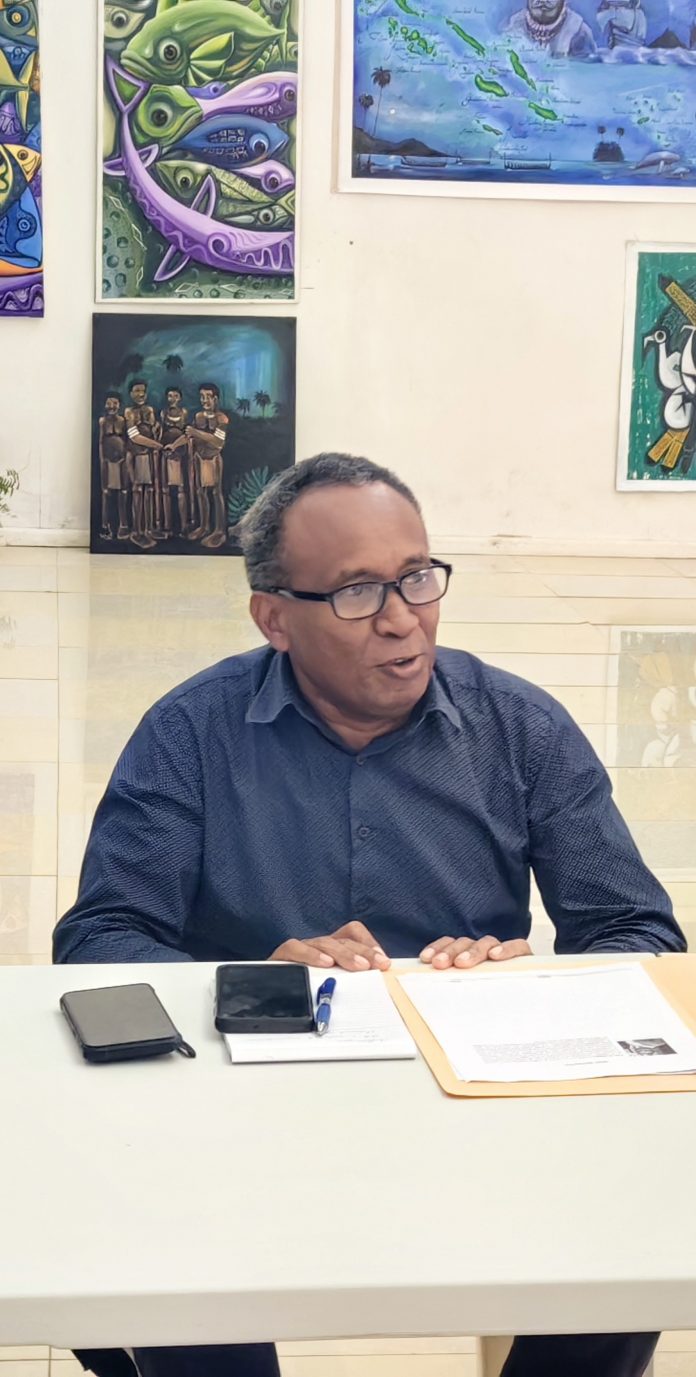
Director of Culture, Dennis Marita, said SIPRO represents a significant step in strengthening the country’s music sector.

“This initiative represents a long-awaited advancement in ensuring that our talented musicians and music producers receive the recognition and financial benefits they deserve for their creative works,” Marita said.

“Aligned with the provisions of the Copyright Act and intellectual property laws, SIPRO will also contribute to generating vital revenue for the country’s economy. Given the richness of artistic talent in our music sector, SIPRO aims to safeguard the economic interests of creators and producers, fostering sustainable growth and development in our cultural industries.”

Earlier this year, from 3rd to 10th February, the MCT and the UNESCO Office in Apia, Samoa, co-hosted a six-day workshop focused on copyright in music.

The idea to establish SIPRO emerged from discussions during the workshop, highlighting the need for a structured system to protect artists’ rights and enable them to earn a sustainable income from their creative work.

Marita said that following that workshop, MCT and Ministry of Justice and Legal Affairs have been collaborating working on the establishment of the CMO until its successful establishment.

“Our two ministries have been collaboratively working on the establishment of a Collective Management Organization (CMO) for the Solomon Islands, aimed at managing the rights and royalties of our local musicians both locally and internationally.

“With the support of international partners such as UNESCO and the Fiji Performing Rights Association (FPRA), we are set to officially launch SIPRO on Wednesday next week at the National Art Gallery.” Mr Marita said.

For feedback, contact:[email protected]

Bina processing plant must proceed- PM assured Tovosia

0

BY JOHN HOUANIHAU

Fisheries Minister Bradley Tovosia said that the Prime Minister Jeremiah Manele told him that the Bina Harbour Tuna processing must proceed.

He said that building on fundamental work on securing land access and formalising land tenure, clarifying infrastructure needs and developing stakeholder partnerships, for the projects is now on generating the evidence-based and operational readiness required to transition from design to construction.

He said that the key deliverables through the Bina Harbour Projects Office in the next 12 months include a 30% concept design report and associated cost plan, documenting the total development, a detailed business case and the governance structures required to represent the interests of Bina area villages and water and harbour rights holders.

“Mr Speaker said, when I was given the portfolio, the Honourable Prime Minister said, Bina project, must proceed. It is one of the flagship programs of GNUT,” said Tovosia.

He said that the Public-private partnership structure presented to the Cabinet for approval and the associated rebate scheme policy enabling regulations finalised.

 “To deliver this work programme, the project office will be reorganised and streamlined, become more outward-focused and work closely with the stakeholders, including the Malaita Provincial Government and other national government agencies, government parties and potential investors,” said Tovosia.

“This is very important to us, Mr Speaker said, to move this project,” he said.

He said that the land and marine geotechnical site investigations have recently been completed for the Bina Harbour Port and enabling landslide infrastructure to support the operation of the tuna processing operation.

“The findings will inform the development of the 30% concept design report and cost plan,” he said.

He said the other studies and inputs to inform enabling infrastructure planning and design, including constraints and mapping that consider potential risk to the site, flooding and coastal inundation and to identify important cultural sites and land use features such as dwellings, plantations and natural resources, will be completed by June 2025.

He said that construction materials surveyed, sustainable resources for the supply of the land, field and other local materials will be supported by the Ministry of Infrastructure Development.

He adds that Water supply and wastewater studies have been undertaken with the Ministry of Mines, Energy and Rural Electrification and the Solomon Islands Water Authority are likely to confirm the Kwailegwa River as the project site’s sustainable water source.

He said that the Solomon Islands Water Authority is providing information to support project engineering.

“We are exploring the potential to participate in the construction of Bina Harbour,” he said.

For feedback, contact:[email protected]

Call to blacklist illegal miners

0

BY JOHN HOUANIHAU

Leader of the Opposition Mathew Wale has strongly urged the Minister of Mines, Derick Manuari, to take stern action against illegal mining activities.

Wale made the call after the cessation of illegal mining operations in the upper Balasuna River in Guadalcanal this year.

The case, which is now under police investigation, involved a company that was identified as AAA after a collaborative inspection from the Police, the Ministry of Environment and the Ministry of Mines and Rural Electrification last month.

“I wonder if the Ministry, I mean, this kind of behaviour, we have seen in logging for many, many years. They go in a concession, and then encroach all over the land that is not signed up for in that concession. And get away with it, and they find it too easy to get away with it.

“So I’m wondering if the Ministry should take steps to put up a blacklist so that companies, company directors, company shareholders, company workers and individuals involved in this kind of blatant arrogance, illegal activity of mines, get on that. And then they will never be able to deal with the Ministry again in any way, form, whether on behalf of someone or consultant, or apply for a licence themselves, or speculate or anything,” said Wale.

He said that this would be a very good way to respond administratively to this kind of blatant arrogance and flouting of our laws.

In February this year, a report was submitted to the Ministry that machines were being moved to Balasuna.

On the 21st of the same month, a letter was delivered to the Guadalcanal Provincial Police to request the operators to immediately cease the activities.

However, no actions were immediately taken at that time and an inspector was sent to visit the site on 24th March this year, conducting a verification report and issuing a verbal order to stop operations.

A few days later, on 28th March, another stop notice was issued, along with a verification report, delivered to the Guadalcanal Police.

A week later, the police went to visit the site and ceased all operations and removed all machines.

For feedback, contact:[email protected]

Wale questions GNUT on its promise for forestry sector

0

BY SAMIE WAIKORI

Leader of the official Opposition group in Parliament, Matthew Wale has questioned GNUT of its promise to reform the forestry sector of the country.

The forestry sector, under the Ministry of Forest and Resources (MFR) has long been faced with controversy for industry such as logging and other programs or activities that need to be properly regulated.

Speaking in parliament this week, Wale said “in the forestry sector, the government’s 100-day policy promises remain largely unmet.

He said the review and reform of the Forest Resources and Timber Utilization Act is still incomplete, with no clarity on whether it will be a full repeal or amendment.

Wale added the enforcement of the 8% milled timber quota remains weak, undermining efforts to create local jobs and value-adding.

“Monitoring and compliance across log ponds, a key 100-Day action, is crippled by underfunding and manpower shortages, allowing revenue leakages to persist.

“Plans to promote downstream processing and launch sustainable carbon trading initiatives have stalled,” he noted.

Wale said in a sector that should be a pillar of wealth, government negligence and mismanagement of our forest resources has left only stumps where forests and opportunity should stand.

“There is nothing that gives hope in an industry that should be a natural strength in our economy.

“Government’s approach in forestry seems to me to be one of merely managing the diminishing industry.

“There are opportunities in forestry, but government seems uninterested in them,” he expressed.

For feedback, contact:[email protected]

SEZ bill, developed through partnership and perseverance

0

BY LORETTA B MANELE

The Special Economic Zone (SEZ) bill was developed through the path of partnership and perseverance.

Jamie Vokia, Minister of Commerce, Industry, Labour and Immigration (MCILI) highlighted this when he introduced the bill on the floor of parliament this Wednesday.

He explained that in 2015, Cabinet had established a SEZ taskforce compromising senior officers from across government with a clear mandate.

Under the mandate, the taskforce was to rethink the country’s investment strategies, ensuring to harness strengths and unlock new opportunities.

The other responsibilities as listed were; to craft a policy and a legal framework that enables growth in economic growth centres, in industrial parks and maybe household growth centres and to engage international expertise while grounding the bill in an unique Solomon Islands context.

He said the ministry has concluded two rounds of nationwide consultations.

“First in 2015, reaching every province and again in 2016, with focused dialogues in Gizo, Auki and Honiara.”

He stated that these discussions shaped the Solomon Islands Special Economic Zone Policy 2015 which was launched by Cabinet in 2016 and now guides the SEZ bill.

Vokia said his ministry also engaged with other government ministries and organizations like the Ministry of Lands and Survey, Customs, IRD, Immigration as well as with provincial leaders to ensure local perspectives is central.

He mentioned that businesses and civil society including SICCI and DSE (Development Services Exchange) were also involved.

Vokia said although drafting on the bill had delayed since the Attorney General’s original work in 2022, MCILI and its partners have worked tirelessly to refine the bill.

For feedback, contact:[email protected]

Establishing SI Special Economic Zone Authority

0

BY LORETTA B MANELE

Jamie Vokia, Minister for the Ministry of Commerce, Industry, Labour and Immigration (MCILI) brought up the establishment of a Solomon Islands Special Economic Zone Authority (SISEZA).

Speaking in parliament on Wednesday this week after having introduced the Special Economic Zone (SEZ) Bill, he said an initial focus would be to establish a Solomon Islands Special Economic Zone Authority (SISEZA).

Vokia said in the local context, the SISEZA concept is intended to be an economic policy tool to achieve meaningful economic development by addressing inadequacies of foreign direct investment strategies to attract high-quality investment in strategic sectors.

He expressed that as SISEZA is new and will grow, external assistance will be needed to establish the authority.

Vokia said this will involve putting in place systems and processes as well as seeking assistance from the country’s development partners to build the authority’s capacity and oversight staff.

He assured parliament that his ministry is fully committed to implementing the legislative framework to increase foreign investments and provide an internationally competitive and hassle-free environment for exports that will in turn facilitate fair participation by domestic enterprises and manufacturers to be competitive globally.

For feedback, contact:[email protected]

SIPFP rallies behind unity to push national agenda

0

BY NED GAGAHE

The Solomon Islands People First Party (SIPFP) is calling for unity, political cooperation and renewed focus as it looks to help steer the country through post-election recovery and development challenges.

The call came during a “Meet and Greet” dinner hosted by the SIPFP Executive Committee on Friday 9 May.

The event brought together MPs, new and returning, alongside Party executives and supporters to regroup after recent political uncertainty.

In a statement, Deputy Prime Minister and SIPFP Parliamentary Wing Leader Fredrick Kologeto set the tone, urging members to put national interest above all.

“All Members of the Party must work together in the interest of the country. Ministers have a big responsibility, so perform to the best of your ability,” he said.

Now the second-largest party in the ruling Government for National Unity and Transformation (GNUT), with a total of 11 MPs, SIPFP’s influence within the coalition remains crucial.

Kologeto stressed that strong lines of communication between SIPFP, OUR Party, Kadere and other coalition partners will be key to pushing forward government priorities.

“Communication is key, it safeguards political stability, drives economic progress, and lifts the standard of living for our people,” he said.

New Minister for Mines, Energy and Rural Electrification, Derrick Manu’ari, credited SIPFP for launching his political journey in 2014.

“SIPFP is the reason I entered politics,” he said. “Its vision convinced me to return, and I remain committed to it.”

Youngest MP and Minister for Infrastructure Development, Rick Fu’o, said his time on the Opposition bench gave him a clear view of what’s expected from leaders.

“I joined politics to move the country forward. The challenges are real, but I’m ready to work for our people,” he said.

Chachabule Rebi Amoi MP for Marovo commended the energy and enthusiasm of the Party’s younger leadership.

“The quality you bring is the fuel that will keep GNUT’s flame burning in Parliament,” he said. “Our people look to you as the new hope for better services.”

SIPFP Executive President Ernest Teutao reminded the Party’s leadership of their dual roles.

“You are the brains of the Party, our MPs are the voice,” he said, urging members to help shape smart, inclusive policies for all Solomon Islanders.

The dinner ended with a renewed call for coordination, as SIPFP reaffirms its role as a key partner in delivering GNUT’s development priorities.

For feedback, contact:[email protected]

Finance Minister outlines progress on tax reforms in Parliament

0

BY NED GAGAHE

Minister of Finance and Treasury Harry Kuma told parliament on Monday that the government is making significant progress on tax reforms as part of its broader efforts to modernize the tax system and stimulate economic growth in Solomon Islands.

Speaking during the motion to thank the Governor-General for the Speech from the Throne, Minister Kuma said the reforms aim to improve the business environment through a fairer, simpler and more efficient tax system that ensures all liable taxpayers pay the correct amount.

“The tax reform agenda is a substantial and resource-intensive undertaking,” Kuma said. “That is why the government has adopted a phased approach to its implementation.”

Phase one of the tax reform includes the development of the Tax Administration Act and the Value Added Tax (VAT) Bill.

The Tax Administration Act, passed by Parliament in 2022 and enacted on January 1, 2023, provides the legal framework for the consistent administration of tax laws in the Solomon Islands.

“The Act modernizes administrative arrangements and harmonizes the rules across all tax laws administered by the Commissioner of Inland Revenue,” Kuma explained. “It also amends several existing laws—including the Goods Tax Act, Income Tax Act, Sales Tax Act and Stamp Duties Act—to ensure their administration falls under the new Tax Administration Act.”

The second major component of phase one is the introduction of a Value Added Tax (VAT) system.

Minister Kuma said the VAT Bill 2025 has completed final vetting by the Attorney General’s Chambers and is expected to be introduced in Parliament by mid-2025.

“The VAT is a consumption tax applied to most goods and services, collected at each stage of the supply chain, with businesses able to deduct VAT paid on their inputs,” he explained. “Ultimately, it is a tax on final household consumption.”

He added that a Cabinet paper seeking approval to table the VAT Bill has been prepared.

“I urge all Members of Parliament to support this important legislation when it comes before this Honorable House. It will transform our tax system, enhance business growth and strengthen government revenue.”

Minister Kuma also announced that initial work has begun on phase two of the tax reform agenda, which focuses on a comprehensive rewrite of the Income Tax Act.

He said Cabinet approved key policy issues in 2024 that could be included in the rewrite and the Economic Reform Unit, in collaboration with ADB advisors, is now developing a detailed policy paper to support this effort.

“These reforms are crucial for building a tax system that is not only modern and efficient but also equitable and capable of supporting long-term national development,” Kuma said.

For feedback, contact:[email protected]

Groundbreaking parametric micro-insurance to strengthen climate resilience launched

0

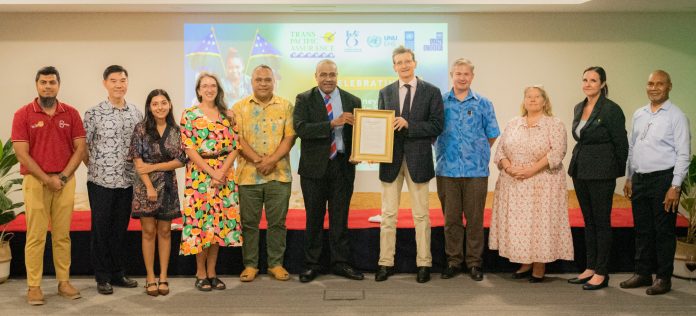
The Solomon Islands has taken a significant step towards strengthening national resilience to climate change and natural disasters with the official launch of its first-ever market based Parametric Microinsurance Product.

The launch, held in Honiara on Tuesday, May 13 at the Heritage Park Hotel, also marked the one-year anniversary of Trans Pacific Assurance Limited’s (TPAL) operations in the country, the insurance company that is set to offer this product, a statement by CBSI yesterday said.

Supported by the United Nations’ Pacific Insurance and Climate Adaptation Programme (PICAP), this innovative solution is being piloted and tested through the Central Bank of Solomon Islands’ (CBSI) regulatory sandbox.

Parametric insurance is a new form of coverage designed to provide fast, direct financial support to households affected by natural hazards such as cyclones, heavy rainfall, and droughts, the statement said.

Unlike traditional insurance, which requires lengthy claims processing, parametric insurance makes automatic payouts based on verified weather data and predefined thresholds, such as rainfall levels or wind speed thresholds, ensuring relief within days after an extreme weather event.

Building Climate Resilience through Partnership

Speaking at the event, Governor of the Central Bank of Solomon Islands (CBSI) Governor Dr. Luke Forau described the launch as a “historic milestone” and emphasized the Central Bank’s commitment to expanding financial inclusion and resilience across the country.

“As the Governor of the Central Bank of Solomon Islands, I am proud of the leadership role we have taken in this initiative. Our regulatory sandbox has provided a safe space to test this product—reviewing its actuarial models, consumer protection mechanisms, and distribution strategies to ensure it is sound and equitable,” said Forau.

“This product offers vulnerable communities an affordable safety net, strengthens financial resilience, reduces recovery time, and also supports our National Financial Inclusion Strategy 3’s goal to reach 300,000 adults with financial services by 2025,” Forau added.

TPAL Chairman Michael Sullivan acknowledged the role of the private sector in driving resilience and urged continued collaboration with government, the United Nations and donor partners to expand the product across the country.

“We see ourselves not just as an insurance provider, but as a partner in progress for the Solomon Islands,” he said.

International Partners Commend Solomon Islands’ Leadership

Development partners and donors to PICAP – the Governments of Australia, New Zealand, and the United Kingdom, commended the Solomon Islands for joining PICAP, a joint initiative implemented by the UN Capital Development Fund (UNCDF), UN Development Programme (UNDP), and the UN University Institute for Environment and Human Security (UNU-EHS).

•His Excellency Jonathan Curr, New Zealand High Commissioner, noted the regional impact of PICAP, which has already benefitted over 45,000 households in other Pacific countries. ““As a donor of this initiative, alongside Australia and the United Kingdom, New Zealand looks forward to the transformative impact of this initiative and to deepening our partnership in the years ahead,” he stated  .

•Ms. Emma Davis, Deputy High Commissioner of the UK, stressed the urgency of reaching the most vulnerable. “Parametric insurance offers a rapid, community-driven solution that strengthens resilience and supports sustainable development goals,” she said.

•Ms. Prudence Pickering, First Secretary of the Australian High Commission, highlighted Australia’s pride in supporting PICAP. “This is a practical, scalable solution empowering local communities to recover quickly after disasters,” she said.

UN Pledges Continued Support

Welcoming guests on behalf of PICAP, Ms. Shreya Rajpuriya of UNCDF highlighted that the parametric micro-insurance model being launched in the Solomon Islands builds on successful pilots across Fiji, Vanuatu, Tonga, Samoa, Papua New Guinea, and Kiribati. the product’s design – grounded in climate data and real-world testing. “This solution is tailored to respond to the needs of farmers, fishers, small businesses, and informal workers – the very backbone of our economy,” she said.

The pilot rollout will begin in Guadalcanal and Malaita through partnerships with organizations like the Solomon Islands National Provident Fund (SINPF) and M-SELEN to make the product accessible and affordable to rural and remote communities. Based on the initial feedback from the communities, this solution will be expanded to other provinces.

A New Chapter for Climate Resilience

As one of the most climate-vulnerable countries in the world, the Solomon Islands faces millions in annual economic losses due to disasters. Tuesday’s launch represents a bold step towards reducing this risk and ensuring that no family is left behind when a disaster strikes.

The Central Bank, Government, development partners, and the private sector all reaffirmed their commitment to scaling this life-changing product and building a more resilient, inclusive, and prosperous Solomon Islands.