Home Blog Page 408

INVESTMENT BOTTLENECK

0

Solomon Islands struggling to attract game changing investors: Opposition Leader Wale

SOLOMON Islands is struggling to attract the quality and size of investments that would be game changers for the economy.

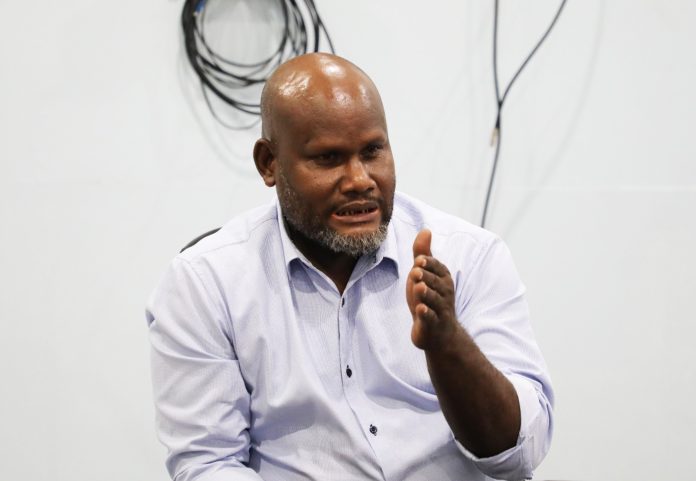
Opposition Leader Matthew Wale highlighted this in Parliament recently during his debate speech on the SEZ Bill 2024.

Mr Wale said beyond the earlier pioneer industries of Taiyo, GPPOL, and others in their various iterations, Solomon Islands has hit a bottleneck in seeing quality sizeable investments in the country.

He said the issues that conspire to cause the bottleneck are important to understand to inform policy responses, a statement by the Opposition yesterday said.

“It is right that government should be concerned about the basis for this struggle, and seek to address the policy issues associated with it,” Wale said.

The Opposition Leader said it is important to also bear in mind that Solomon Islands is in competition with other nation states for the foreign investment dollar, the statement said.

“If we do not appreciate that we are competing with other economies for foreign investment, then our attitude towards foreign investors will be one of callous disregard for what would entice them to invest their money in our economy,” he said.

“On the social level if we do not appreciate that we are in competition for foreign investment dollar, we risk a racist attitude towards foreign investors that undermines any efforts to attract investment,” Wale adds.

The Opposition Leader said it is important that we appreciate investments, whether foreign or local, to make business profits, the statement said.

“Our approach must be one to make it possible and foreseeable for investors to make reasonable business profits.

“Ultimately, it is profits that is the one sure incentive to attract foreign investment to our economy.

“If a business would be profitable without fiscal incentives, private investment will jump at the opportunity,” he said.

However, Wale said if a business will only be profitable with fiscal incentives, then that’s the situation the SEZ Bill is designed to induce.

“That will be an important determination going forward, as this Bill is implemented.

“At the policy level, our attitude must also change from the current posture that implies that foreign investors owe us something leading us to begrudge their presence in our midst, to one that cherishes foreign investment,” he said.

Protect children – unmask the appeal and get rid of e-cigarettes

0

Mango, bubble gum and milkshake… these are not just childhood treats.

They are e-cigarette flavours designed to hook a new generation on nicotine.

From Asian metropolises to small Pacific islands, these products are infiltrating communities, fuelling one of today’s most urgent public health crises: the alarming rise in e-cigarette use among children and young people.

With bright colours, fruity flavours and sleek packaging, e-cigarettes are tailor-made to attract youth.

They mask the harshness of nicotine, downplay its addictive potential and conceal the health risks. E-cigarettes can deliver high doses of nicotine − sometimes exceeding conventional cigarettes − and contain toxic chemicals and cancer-causing substances.

For children and adolescents, the stakes are even higher − nicotine harms brain development and primes them for life-long addiction.

Often disguised as everyday objects – such as highlighters, watches or wireless earbuds − e-cigarettes can be hard for parents and teachers to detect.

Influencer promotions and ads flood the digital spaces where young people spend time.

Behind the marketing lies a calculated strategy − one that turns experimentation into addiction, threatening to undo decades of progress in tobacco control and re-normalizing the act of smoking.

I have listened to teenagers recount how they were lured by e-cigarettes’ sweet flavours and sleek designs.

As a medical doctor and parent, when I hear their stories I am reminded of my own children − and the millions like them across our Region − who deserve protection.

These seemingly harmless products trap young people in a cycle of addiction and expose them to serious health consequences.

But we can do something about it. Governments can − and should − ban or regulate e-cigarettes to send a clear message: these harmful, addictive products have no place in our communities.

And as parents, concerned citizens and health professionals, we need to call on them to do so.

Momentum for this is building.

As of April 2025, 11 out of 27 Member States in the World Health Organization (WHO) Western Pacific Region have already banned e-cigarettes.

The Cook Islands, Nauru and Viet Nam are among the most recent to take this bold step, and more governments are now actively working to adopt comprehensive measures.

As the WHO Regional Director for the Western Pacific, I acknowledge that different governments may take different approaches.

But we must act boldly to prevent another epidemic of addiction and disease.

WHO’s Call to Action outlines a set of minimum measures for e-cigarette regulation.

Anything less puts our children and future generations at risk.

With World No Tobacco Day 2025 approaching, we have a critical opportunity.

This year’s theme, “Unmasking the Appeal”, exposes the truth behind the tactics used by the tobacco

and nicotine industries, and calls for stronger protections.

If we fail to act decisively, generations of young people will fall into nicotine addiction, and our health-care systems will bear the cost of the health consequences for decades to come, just as they have from tobacco use.

Governments must learn from experience: only bold, comprehensive and strictly enforced measures succeed.

The time to act is now − not years from now, when addiction rates have skyrocketed.

Despite industry claims, e-cigarettes are not a proven cessation tool at the population level, and for many young people, they serve as a gateway to conventional cigarette use.

My generation witnessed the tobacco industry manipulating science, policy and public perceptions for profit, leading to the loss of millions of lives.

We must not allow history to repeat itself with e-cigarettes.

Countries across Asia and the Pacific can lead the world in creating a tobacco- and nicotine-free generation.

But only if we take the right actions today.

By Dr Saia Ma’u Piukala,

WHO Regional Director for the Western Pacific

Hope for beekeeping industry

0

BY INDY MAEALASIA

A recent report on the Beekeeping industry in the Solomon Islands has shown a deeper interest for strategic partnership and co-investment among beekeepers and stakeholders to revive the once thriving industry.

Unveiled on Tuesday during the World Bee Day, the report indicated stakeholders’ willingness to address root causes of barriers that have hindered the growth of beekeeping.

According to the report, seven strategies have been outlined including resourcing for building capacity, co-investing in beekeeping conferences, value chain mapping, upskilling, programs to develop beeswax processing, queen bee breeding and the policy development for the honey bee sector.

Project Coordinator of the Australia Centre for International Agricultural Research (ACIAR), James Kana who officially handed over the report to the Ministry of Agriculture and Livestock (MAL) said the research highlighted critical gaps.

Kana added that the gaps can be filled through the greater need for collaboration between three primary pillars; the government, development partners and industry stakeholders.

For feedback, contact:[email protected]

MRD officially welcomes new Minister

0

The Ministry of Rural Development (MRD) has officially welcomed its new Minister, Daniel Waneoroa on May 14 with assured support and a commitment to drive the ministry’s key priorities and policies forward.

Waneoroa, MP for North Malaita Constituency, assumed the helm of Rural Development and the ministerial portfolio following his swearing-in on May 2 before the Governor-General, His Excellency Sir Reverend David Tiva Kapu.

He replaced former Minister Rollen Seleso, a statement by MRD this week said.

During the introductory and welcome ceremony, Permanent Secretary John Niroa Misite’e acknowledged Waneoroa for accepting the responsibility of leading the ministry.

Mr Misite’e said that the senior management and staff are pleased to have him as their new Minister.

He assured that the ministry is ready to provide the necessary support to advance its key priorities and ensure services are delivered to our rural communities.

Meanwhile, Waneoroa expressed his appreciation to PS Misite’e, management, and staff for the warm welcome extended to him.

Hon. Waneoroa said he is pleased to join MRD as Minister and to be part of a young and vibrant team that continues to deliver services to our rural people and support development initiatives across the country.

He added that he looks forward to working closely with everyone to achieve the best outcomes for our rural communities through the ministry’s plans and key priorities for this year and beyond.

The Minister also reaffirmed his political commitment to driving the ministry’s important policies and development initiatives for the benefit of every citizen of Solomon Islands.

MAL provincial reps and partners acknowledged

0

BY JOHN HOUANIHAU

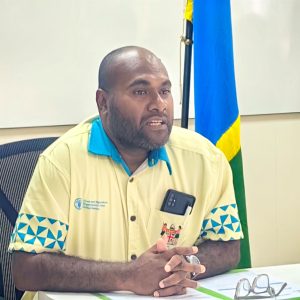
Minister of Agriculture and Livestock (MAL) Franklyn Wasi has acknowledged MAL provincial teams and partners for their ongoing support for the agriculture sector.

Minister Wasi expressed his gratitude at the Honiara Hotel on Monday this week when he officially opened the 2025, five-day MAL Annual Planning Conference.

He told the participants that agriculture continues to be the cornerstone of the Solomon Islands’ national economy.

He said that Agriculture serves as the primary source of national income, sustaining approximately 85 per cent of the rural population through food crops, cash crops and livestock which are essential for daily livelihoods and social security.

He said that the agricultural sector, excluding fisheries and forestry, on average, contributes about 16 per cent to the country’s gross domestic product.

“To our provincial teams: your role is crucial. You are the face of the ministry on the ground. To our development partners, we thank you for your continued support and welcome deeper collaboration,” Wasi said.

“To our technical officers and planners: bring your best thinking to this conference because what we do here sets the direction for the year ahead,” he said.

He also thanked the dedicated staff of MAL, the Permanent Secretary, Deputy Secretaries, Corporate Services Officers, Directors, Provincial Chief Field Officers and development partners.

“Your continued commitment and collaboration are the driving force behind our progress.  Let us work together across departments, islands and institutions to transform agriculture into a vehicle for national prosperity.

“May your discussions be productive, your resolutions ambitious and your vision for agriculture bold and inclusive,” Wasi concluded.

For feedback, contact:[email protected]

UNDP support is timely: Viulu

0

BY JOHN HOUANIHAU

Permanent Secretary of the Ministry of Agriculture & Livestock (MAL) Dr Samson Viulu has thanked the United Nations Development Programme (UNDP) SAFE project for their timely support towards this year’s MAL Annual Planning Conference.

Speaking at the opening of the five-day conference held at the Honiara Hotel on Monday this week, Mr Viulu appreciated the UNDP Solomon Islands Office for their financial support which enabled the conference to happen.

The five-day conference, from Monday to Friday this week focused on reviewing key policies, strategic planning, institutional effectiveness and strengthening implementation mechanisms across all departments of the Ministry.

“According to my memory, this is the first since COVID-19 and under the leadership of our current Honourable Minister, we would like to host this planning conference on an annual basis,” said Viulu.

“To UNDP and UNDP SAFE project, I want to assure you that your support towards the hosting of this conference is timely and will certainly boost not only the agriculture sector but all of Solomon Islands as 80% of our population dwells in the rural areas where subsistence agriculture is the current norm. They are the bedrock of economic resilience and food security of this nation,” said Viulu.

He also acknowledged the leadership of Minister Frank Wasi as a competent political leader leading the ministry for the first time in many years.

“We all believe that under your leadership, we will continue to strengthen existing collaborations and secure new ones to further develop our agriculture sector,” PS Viulu assured Minister Wasi.

For feedback, contact:[email protected]

PM Manele champions economic reform through special economic zone bill

0

Prime Minister Jeremiah Manele has strongly endorsed the Special Economic Zone (SEZ) Bill 2024 during its second reading in Parliament, describing the legislation as a “transformative tool” for economic development, job creation, and post-conflict stability in the Solomon Islands.

Addressing parliament, the Prime Minister commended the Minister of Commerce, Industry, Labour and Immigration, the SEZ Taskforce, and other stakeholders for their efforts in crafting the long-awaited bill, a statement by the PM Press Secretariat this week said.

Manele also credited the Member for East Choiseul—his predecessor as Prime Minister—for laying the early policy foundations nearly two decades ago, the statement said.

“The Bill has significant economic and developmental potential for our country,” the Prime Minister said.

“It aims to promote sustainable economic growth, diversify our economy, and increase employment opportunities for our people.”

Addressing misconceptions and land concerns

While acknowledging the work of the Bills and Legislation Committee (BLC), the Prime Minister raised concerns over certain misconceptions highlighted in its report. In particular, he addressed issues related to customary land rights, noting that mechanisms already exist under the Lands and Titles Act to register customary land, though the process can be lengthy.

“Certainty in securing land interests within an SEZ forms the foundation for fostering long-term confidence among both developers and investors,” he stated.

He also rejected claims that provincial governments were not consulted during the drafting of the Bill, clarifying that previous administrations had engaged in consultations, although records may not have been passed on to new leadership.

Economic zones as catalysts for growth

Explaining the benefits of SEZs, the Prime Minister emphasized their global track record as effective drivers of economic growth. He highlighted their role in attracting investment, generating employment, fostering innovation, and increasing exports through targeted incentives and streamlined regulations.

“SEZs are not merely economic tools—they are instruments of peacebuilding, resilience, and long-term national development,” he said.

He linked the initiative to several Sustainable Development Goals (SDGs), including poverty reduction, economic growth, infrastructure development, and peacebuilding. He added that the government plans a limited rollout of SEZs in the initial stages to ensure effective implementation.


Parliamentary oversight and separation of powers

The Prime Minister also addressed concerns surrounding the BLC’s role, particularly following the suspension of its hearings earlier this year due to funding constraints. He called for clarity around the Committee’s mandate and reaffirmed the importance of the separation of powers.

“Select Committees must remain apolitical,” he said. “They are not platforms for political agendas. Their purpose is to inform, not to obstruct.”

He urged the Speaker of Parliament to reinforce the neutral and professional role of parliamentary committees.

FRIENDS, PARTNERS- Malaita interested in more collaboration with the United States of America

0

BY JOHN HOUANIHAU

Malaita has expressed its interest to increase ‘collaboration’ with the United States, it is reported.

This was conveyed to Chargé d’Affaires of the US Embassy William Furnish when he paid a visit to Auki on May 19-20 to meet with friends and partners and to make new connections in Malaita, a statement from the embassy yesterday said.

During his trip, Mr Furnish met with the Premier Elijah Asilaua, Provincial Secretary Eric George, Malaita’s Department of Education, Auki Provincial Police Commander Tex Tafoa and the Malaita Youth Hub, the statement said. 

Furnish said that he was pleased to hear of Malaita’s interest in increased collaboration with the United States and American companies and partners, the statement said.

The Embassy also presented information on emergency services and resources for American citizens and tourists during the meeting with Police Commander Tafoa and heard about current trends in Malaita.

The Malaita Youth Hub explained that their engagement with students and young people and embassy representatives gave them information about US exchange programmes for secondary school students, university students and faculty, the statement said.

Furnish encouraged Malaitan friends and partners to speak with young people about opportunities to take part in US-sponsored programmes in the United States and throughout the Pacific.

For feedback, contact:[email protected]

Our goal is to develop plans effectively: Agriculture minister Wasi

0

BY JOHN HOUANIHAU

Minister for Agriculture and Livestock (MAL), Franklyn Wasi has said the ministry’s goal is to implement its plans effectively.

Minister Wasi said this when he opened this year’s MAL Annual Planning Conference on Monday this week at Honiara Hotel in Honiara.

The conference brings together ministry leaders, technical officers, and stakeholders to align strategies for the coming year under the theme: “Transforming Agriculture for Economic Growth.”

The five-day conference ends tomorrow and is focused on reviewing key policies, strategic planning, institutional effectiveness and strengthening implementation mechanisms across all departments of the Ministry.

“Let me be clear: our goal is not just to develop plans, but to implement them effectively. That will require discipline, innovation and stronger collaboration both within our ministry and with external partners,” said Wasi.

He said that notable progress has been made in past years-from rolling out the Ministries Development Programmes and Donor Funded Projects to strengthening food systems, promoting value addition and enhancing farmer incomes.

He said that institutional capacity must be addressed with urgency due to the challenges faced, such as persistent climate change, infrastructure gaps and limited financing.

Minister Wasi said that the conference is a critical moment to reflect, reassess and realign plans.

“I encourage each of you to engage actively throughout this week. Whether you’re reviewing work plans, budgets, or institutional reforms, remember; your contributions matter. Let us champion innovation, coordination, and accountability. Let us ensure our 2026 plans are practical, measurable, and impact-driven-not just aspirations on paper,” he said.

He said that the conference is a defining moment for the agriculture sector.

“We are sitting on untapped potential fertile soils, vibrant communities, traditional knowledge and a young population eager for opportunity. Let us harness this potential. Let us plan boldly, implement effectively and monitor honestly,” appealed Wasi.

For feedback, contact:[email protected]

‘Still waiting for response from US on aid pause’

0
THE Minister for Civil Aviation and Communications, Peter Shanel

BY SAMIE WAIKORI

The Minister for Foreign Affairs and External Trade, Peter Shanel Agovaka says the country is still waiting for official statement from the US Trump’s administration on the “90 days pause” of its foreign aid worldwide.

The Minister, joined by his colleague minister for National Planning (MNPDAC), Rexon Ramofafia made the statement, when responding to questions asked by Opposition Leader, Matthew Wale and colleague MPs from the side, on the impact of the paused US aid on the country, during the question-and-answer session in parliament yesterday.

The ministers expressed remorse, admitted that all the USAID donated and funded projects in the country were affected by the US foreign policy.

Major among them is the Millenium Challenge Cooperation (MCC) and the US25 million funded SCALE project in Malaita province.

Ramofafia said they are the programs that are directly affected by the policy. They were implemented by NGOs and reported to the ministry, especially the MCC.

The 5-years SCALE project which supposed to lapse this year, 2025 and the US foreign policy provides no clear direction on whether it will renew. So far, the SCALE project had supported natural resources management programs in Malaita, however, a number of infrastructure projects proposed for the province will be affected by the policy.

The only US project that continues in the country is the UXO, which comes under the Halo foundation. The project deals with removing World War II (WWII) ordinances that still remain high in parts of the country, especially in Guadalcanal and Western provinces.

Agovaka also emphasized that subsequent to the policy, US Aid offices in the country, even across Pacific region have closed. Responsible bodies in the region are working with the Trump administration to reviewing aid to the region.

The Minister emphasized there are number of US aided projects being implemented in the country, and will keep talking to the Trump administration.

“There are projects implemented and we must ensure these projects are fully completed and not just half-cooked,” he said.

Agovaka assured GNUT’s resolute commitment to keep talking to US government on the matter, while they are waiting for official feedback on the 90 days paused, issued by Trump administration in an executive order to put on hold all US foreign aid.

For feedback, contact:[email protected]