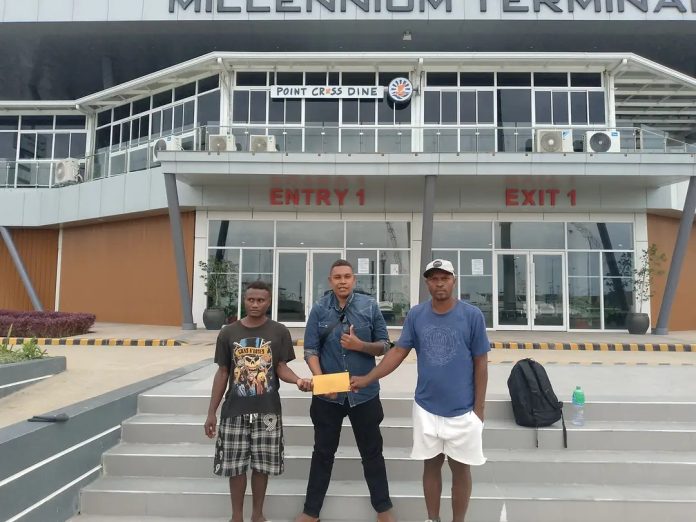
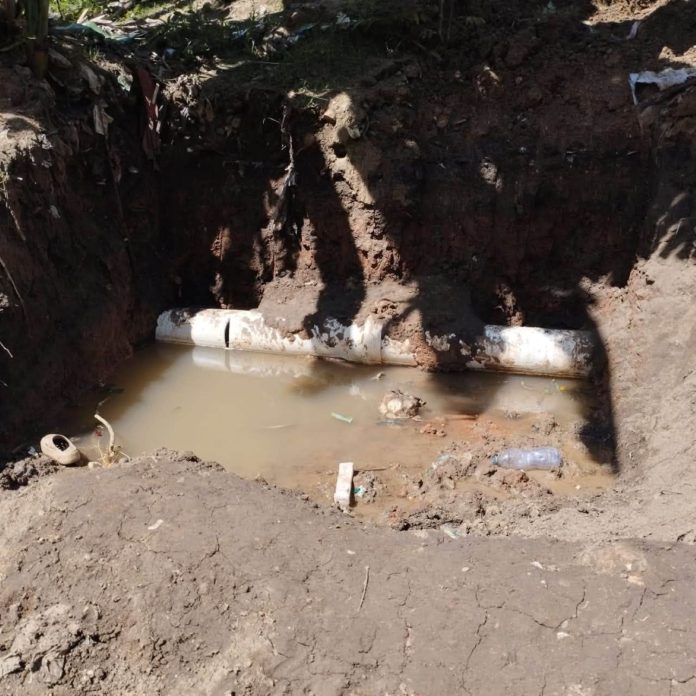
Member of Parliament for Small Malaita, Ricky Hou, has prioritised the welfare of his people by funding a water supply project for their community.
He stated that access to clean water is a basic necessity and an important foundation to improve health, sanitation, and the overall well-being of rural communities.
Hou made this statement during the handing over of the water supply project to Niu Ples, Small Malaita, last month.
He said the water supply project will improve access to safe and reliable water for rural households.
“This project reflects our commitment to enhancing essential services. Clean and reliable water will reduce the burden on families, improve public health, and foster community development,” he said.
In the meantime, he encourages the Niu community to take ownership of the facility, use it properly, and manage it well to serve future generations.
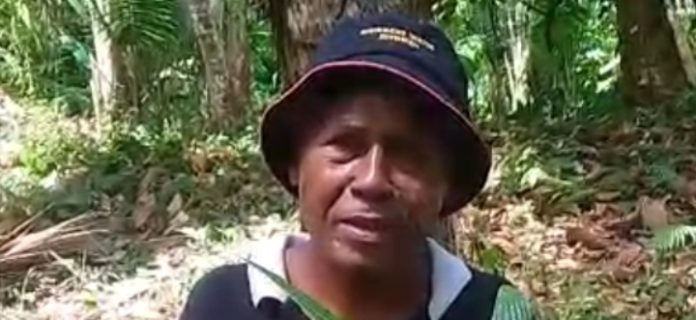
The Niu Ples community’s Water Supply Project Chairman, Shadrach Holo, thanked their MP, Hou, and the constituency office for recognizing and addressing their needs.
He said addressing their water challenges marks a historic milestone, as they never had access to such safe and reliable water before.
“Historically, our families relied on streams and natural water sources, which they often travelled long distances to collect.
“This new water system will greatly improve health, hygiene, and daily life,” he said.’
The Niu Ples community water supply project is worth $300,000 from the Constituency Development Fund.
The Member of Parliament for West Kwaio Constituency, Claudius Tei’ifi and his office delivered the first shipment of materials to his people yesterday via LC Gloria at Anoano log point.
The materials delivered yesterday were mainly for two of the three wards (Ward 26 and 27) in his constituency.
The materials included housing scheme materials, fisheries, and agriculture projects and individual and community projects.
A report from the constituency office stated that the list of project recipients for the shipment had been finalised, printed, and distributed to the Constituency Development Committee (CDC) subcommittees in each community in the three wards of West Kwaio.
It stated that the final list was well screened by the community subcommittee representatives, and consultations were held with their people.
“Each community subcommittee member should have a copy of the list of recipients. This is the final list of recipients after it was well-screened,” the report stated.
It is understood that this shipment comes as a relief given that constituents had waited for almost three years for these projects.
North Malaita’s Besi Youth Association has sent two of its members to China for a look-and-learn seminar on agricultural practices.
The two Besi Youth members left for China yesterday with the aim to gain more knowledge and skills to help their association.
The trip was made possible through a bilateral partnership between the Chinese Embassy, the Besi Youth Association and ongoing support from the Malaita Youth Council.
Vice Chairman of the Besi Youth Association, Kelly Gilead, said the trip will be a great opportunity for their members and the association to learn new knowledge and skills for their operations.
He said the trip will provide firsthand information from experienced and skillful people with aim to strengthen agricultural and fisheries aquaculture in Pacific countries.
“Like the first seminar that we attended, this one is on agriculture and fisheries aquaculture. This seminar is similar to our association’s focus on agriculture.
“This is a great opportunity for us after establishing a partnership with the Chinese Embassy,” he said.
He said they will continue to send their association members to China in the future.
“This is the second group, and our third group will soon be going to China to learn more about Chinese agricultural practices,” he said.
The Besi Youth Association (BYA) was established in 2025 in Besi Village, located in the To’abaita area of North Malaita.
The youth-led group was formed to empower young people in rural areas through leadership development, education, and sustainable agriculture, such as local taro production.
A copra farmer from Savo Island in Central Islands Province has praised the Commodities Export Marketing Authority (CEMA) for purchasing dry copra directly from rural communities at $4 per kilogramme, describing the initiative as a major boost for local farmers and their families.
Farmer Rex Kemakeza, 60, said the authority’s decision to buy copra directly from rural areas has made a significant difference to producers who previously struggled to find reliable buyers.
“I am very happy that CEMA has come down to our rural communities to buy our copra at a good price of $4 per kg,” Kemakeza said.
He said in the past, farmers faced many challenges because buyers rarely travelled to remote villages, forcing producers to struggle to sell their copra.
“In the past, there were no buyers coming to our villages to purchase our copra at a fair price. It was very difficult for us and many families struggled because we had no reliable market,” he said.
He thanks CEMA and its buying agents for reaching out to rural communities, saying the initiative has helped families to earn a stable income and meet their daily needs.
“We appreciate CEMA and its buying agents for coming to our community. This support is helping us provide for our families and meet our everyday needs,” he said.
He welcomes the improved buying price and appeals to CEMA to further support rural farmers by providing copra drying materials, including drums and drying nets, to improve the quality and production of copra.
“We are asking CEMA to assist us with copra dryer materials such as drums and nets so we can improve our production,” he said.
Reflecting on previous experiences, Kemakeza said some copra exporters who bought from farmers in the past did not provide the level of support that CEMA is now offering.
“CEMA is doing something different by coming directly to the rural communities and paying a fair price. We are grateful for this initiative,” he said.
He thanks CEMA and its buying agents for their commitment to support rural copra farmers and improve livelihoods across the province.
A man allegedly assisted his wife to stab a 27-year-old woman with a pair of scissors at Lau Valley, east Honiara, on the night of 17 July, 2026.
According to Royal Solomon Islands Police Force (RSIPF) Acting Commissioner James Aitorea, the victim received a phone call from the male suspect around 9pm asking her to meet him.
When she arrived, the man allegedly restrained her while his wife stabbed her several times.
Aitorea said the victim sustained multiple injuries to her left arm, back and leg. She was taken to the National Referral Hospital (NRH) for treatment and is in stable condition.
The Lau Valley Crime Prevention Committee (CPC) alerted Naha Police after the attack, and officers from the Central Response Unit (CRU) responded to the scene. Aitorea credited the CPC’s quick action in preventing the victim from further harm.
“Thanks to the timely assistance of the Lau Valley Crime Prevention Committee for helping to prevent further harm to the young girl,” Aitorea said.
Both suspects fled before police arrived and remain at large. Aitorea appeals for their voluntary surrender, or for anyone with information on their whereabouts to contact police.
He also thanked the CPC for their swift response, commitment, and dedication to assist police and protect the victim.
Many households across Honiara are experiencing lack of water supply for as long as a week.
Water returns but only for a day or two before being cut off again, residents told Island Sun.
Most of the residents who came forward with their complaints are from West Honiara.
Solomon Water earlier this week announced that it had fixed a major burst in its main pipes, advising that water should return in two days.
As of yesterday, the residents say they are still without water.
“It is not only these few weeks. This has been our experience since last year. We have lost count of how many times we go without water supply for up to one week,” the residents, who requested anonymity, said.
When contacted yesterday for comment, Solomon Water communication spokesperson declined to comment.
In a Facebook statement issued on Sunday this week, Solomon Water (SIWA) said repairs to its Ngossi pumping main were successfully completed and water production had resumed.
The water authority said water was gradually refilling reservoirs at Tasahe, Titinge, Lengakiki, Skyline and East Kola, but warned that because of the shutdown during the repair works, it could take up to 48 hours before water supply is fully restored to all affected customers.
“The repair involved replacing a damaged section of the 250mm High-Density Polyethylene (HDPE) pipeline to strengthen the reliability of the water supply network and reduce the risk of similar failures in the future,” SIWA said.
Despite the completion of the works, many residents in Honiara continued to report little or no water supply at their homes.
SIWA also advised customers who continue to experience no water supply or very low water pressure after the 48-hour restoration period to contact its Customer Care Centre for assistance.
The Office of the Premier of Temotu Province says it has taken “careful note” of public concerns that some Provincial Executive Ministers are residing in their home wards rather than in or near Lata Township while holding ministerial portfolios, and has committed to reviewing practical and sustainable solutions to strengthen ministerial accountability.
In a statement issued by the Office of the Premier, Premier Stanley Tehiahua thanked residents for raising the issue, calling it “a genuine concern,” and said he appreciates the vigilance of citizens in holding elected leaders accountable.
The statement follows a public post that accused several Executive Members of returning to their villages to run canteens and attend to personal interests instead of remaining in Lata to carry out government duties.
The post also noted that executive members receive around SBD$18,000 every quarter as a housing rental allowance intended to keep them close to their offices, and said the ongoing shipping problem affecting Temotu passengers had brought the issue back into public discussion.
Premier Tehiahua said that upon taking office he had directed the Provincial Government to provide office space for Ministers, but that accommodation remained each Minister’s individual responsibility, funded through housing allowances and entitlements paid directly to their personal accounts.
He said one of his early priorities was to review and amend the Temotu Provincial Executive Governing Rules to make them more comprehensive and responsive.
The statement pointed to a limited supply of suitable rental housing in Lata Township, along with the safety and welfare of Ministers’ families, as practical challenges affecting where some Ministers reside.
Premier Tehiahua also flagged the current entitlement structure — under which housing allowances are paid equally to Executive Ministers and backbench Members despite Ministers carrying significantly greater day-to-day executive responsibilities — as a matter that “may require further policy review”.
The Premier thanks residents for their constructive engagement and reaffirms his office’s commitment to review the matter further.
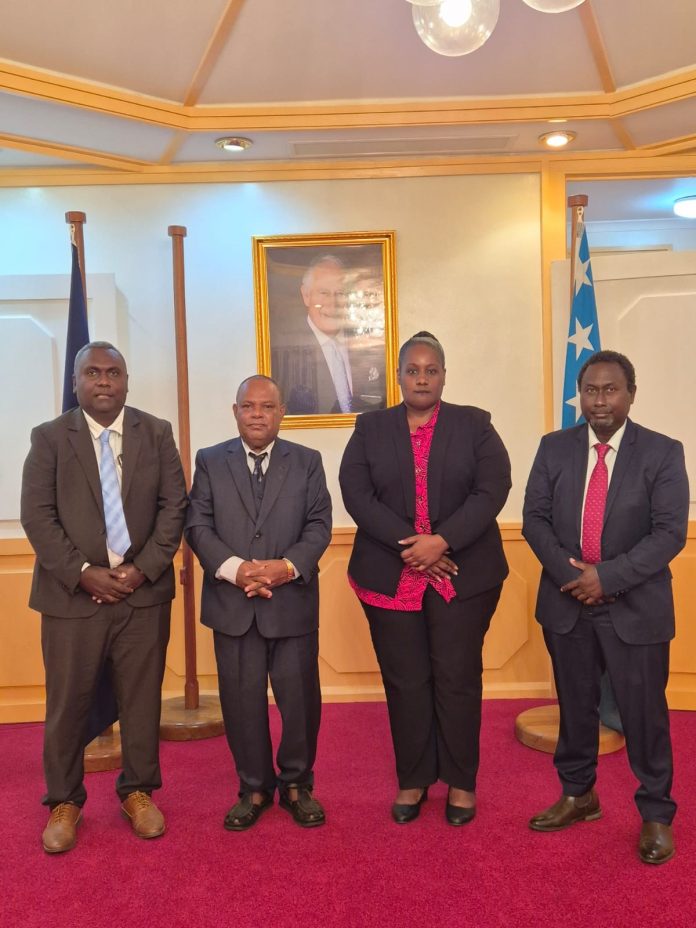
Three Acting Permanent Secretaries were sworn in by the Governor-General, His Excellency Sir David Tiva Kapu, at the Government House on Friday.
A statement from the Government Communications Unit yesterday said they are Ms Julia Twumasi for the Ministry of Police, National Security and Correctional Services, (MPNSC), Mike Qaqara for Ministry of Infrastructure Development (MID) and Dr Gregory Jilin for Ministry of Health and Medical Services (MHMS).
The statement said the three will serve as acting Permanent Secretaries until substantive Permanent Secretaries are appointed.
Ms Twumasi has served as Deputy Secretary – Corporate Services at MPNSCS since 2020 providing executive leadership across finance, human resources, procurement, infrastructure, logistics, corporate planning, governance, and risk management.
She brings over 20 years of public sector experience in the national security sector, beginning her career with the Solomon Islands Correctional Service in 2003.
Ms Twumasi holds a Master of Business Administration, a Postgraduate Diploma in Business Administration, Financial Administration, a Postgraduate Certificate in Business Administration and a Bachelor of Commerce from the University of the South Pacific. She also holds a Diploma in Business from the Solomon Islands National University in 2011.
Mr Qaqara is an experienced infrastructure and transport executive with over 25 years’ experience in engineering, project management, transport planning, policy development, and public sector administration.
Before his acting Permanent Secretary appointment, he served as Deputy Secretary Technical at MID, providing strategic leadership for transport infrastructure programs, policy planning, quality assurance, operations, and donor-funded projects.
He has managed large-scale infrastructure investments funded by the Solomon Islands Government, the Asian Development Bank, JICA, Australia, New Zealand, and other development partners.
His experience also covers strategic planning, budget preparation, procurement oversight, contract administration, and institutional strengthening.
Mr Qaqara holds a Mini MBA from the Australian Institute of Management, a Certificate IV in Project Management from USP/TAFE, and a Bachelor of Engineering, Civil, from the Papua New Guinea University of Technology.
Dr Jilin is a Public Health Physician with over 20 years’ experience in health administration at both national and provincial levels in the Solomon Islands. His experience spans leadership, public health programs, hospital management, and policy development.
He currently chairs several professional boards and technical working committees.
Dr Jilin holds a Master of Public Health from the University of New South Wales, Sydney, and a Bachelor of Medicine and Bachelor of Surgery from the Fiji School of Medicine.
He also completed Foundation Science at the University of the South Pacific.
Prime Minister Matthew Wale says fixing the economy and rolling out free education are the top priorities for his GREAT Coalition Government’s two-year term ahead of the next general election.
Wale made the comments in the first episode of PM Connect, a new programme launched by the Office of the Prime Minister’s Press Secretary in which the Prime Minister is interviewed on government policy. The episode was hosted by Press Secretary Douglas Marau.
Wale said the economy has to shift away from its reliance on unsustainable logging, noting that commercially accessible natural forest below 400 metres elevation is now nearly exhausted. He said this was already dragging down government revenue and the wider economy, since logging had historically supported many other businesses and services.
On the mineral sector, Wale said his government wants legislative changes, including amendments to mining laws before Parliament, to ensure Solomon Islanders, landowners, resource owners and provinces become genuine participants and beneficiaries rather than bystanders.
He said the plan includes state-owned enterprises holding mining tenements, government prospecting partnerships with contractors, and government equity shares in mining ventures. Trust legislation is also planned so that landowner benefits go towards long-term needs such as housing and water rather than being paid out as cash.
Wale said all mining revenue will flow into a sovereign wealth fund, to be invested overseas rather than spent directly through the treasury, with only the investment returns eventually funding health and education. He said the government also wants to stop the underpricing of Solomon Islands’ mineral exports, saying some resources have been sold for close to half the world price, and is examining options for a gold refinery and a nickel smelter to add value locally, though he acknowledged those projects will not be completed within the current two-year term.
On agriculture, Wale said the government is looking to unlock the potential of the cocoa and coconut sectors through expanded farmer extension services, research investment, and incentives for private sector investment in processing. He said the plan includes setting up nurseries for higher-yield cocoa and coconut varieties to boost returns per hectare and export earnings.
Free education is due to begin rolling out in early 2027, with a wider rollout planned for 2028, Wale said, adding that classroom and infrastructure gaps — expected to be most acute in Honiara, Guadalcanal and West Malaita — will be addressed as the policy is implemented. He said the government also wants to introduce a stronger STEM focus from mid-primary level onward, with a target of training 1,000 STEM teachers over the next two years to support both general schooling and technical and trades institutions.
Asked about the state of the economy since taking office in May, Wale said Solomon Islands’ annual GDP currently sits at around $12 to $13 billion, and should be closer to $60 to $70 billion had earlier governments diversified the economy sooner. He cited a recent Household Income and Expenditure Survey finding that close to 29 percent of the population lives in poverty, and pointed to logging-affected communities as an example of resource extraction that left little lasting benefit.
On the cost of living, Wale said fuel and freight costs are being driven up by the ongoing Iran-Israel conflict and are largely outside the government’s control, but said his government is pursuing several fronts it can influence. These include talks with Solomon Power over reducing electricity tariffs, given that Tina Hydro’s power will come at a high cost once completed, as well as talks with telecommunications providers, a cable company and the ports authority to bring down charges, and discussions with commercial banks over lending rates and fees.
Marau closed the episode by inviting members of the public to send in questions, comments or suggestions to be put to the Prime Minister in future instalments of PM Connect.
-Renbel provincial government sends one-month worth of relief supplies to Rennell and Bellona islands amid drought, water and food shortage
-Government disaster agencies silent following Deputy Premier’s call for assistance
BY JOSES SAREN
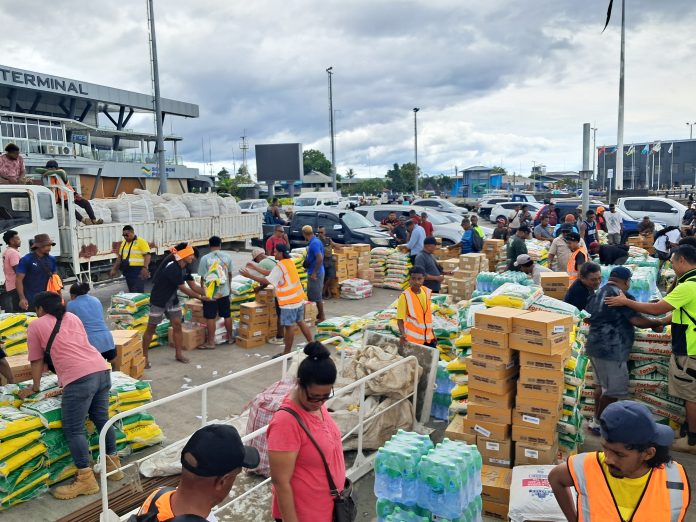
Renbel Province has begun distributing its own relief supplies to the drought-stricken islands of Rennell and Bellona, with the shipment departing Honiara this evening aboard the vessel Ocean Joy.
The supplies—including rice, canned tuna (Taiyo), noodles, sugar, coffee and water—are valued at roughly $300,000 and funded by Florida Mining Company, the only investor operating in the province.
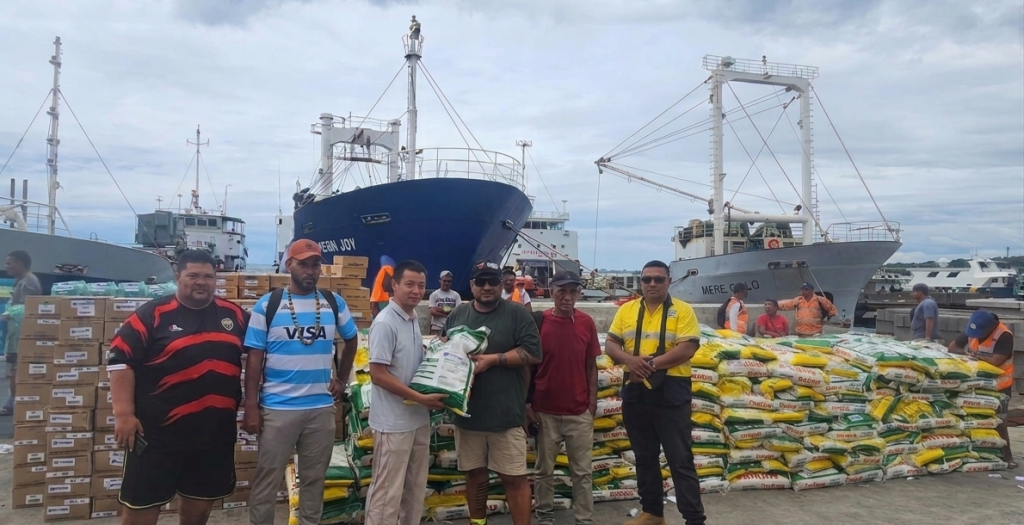
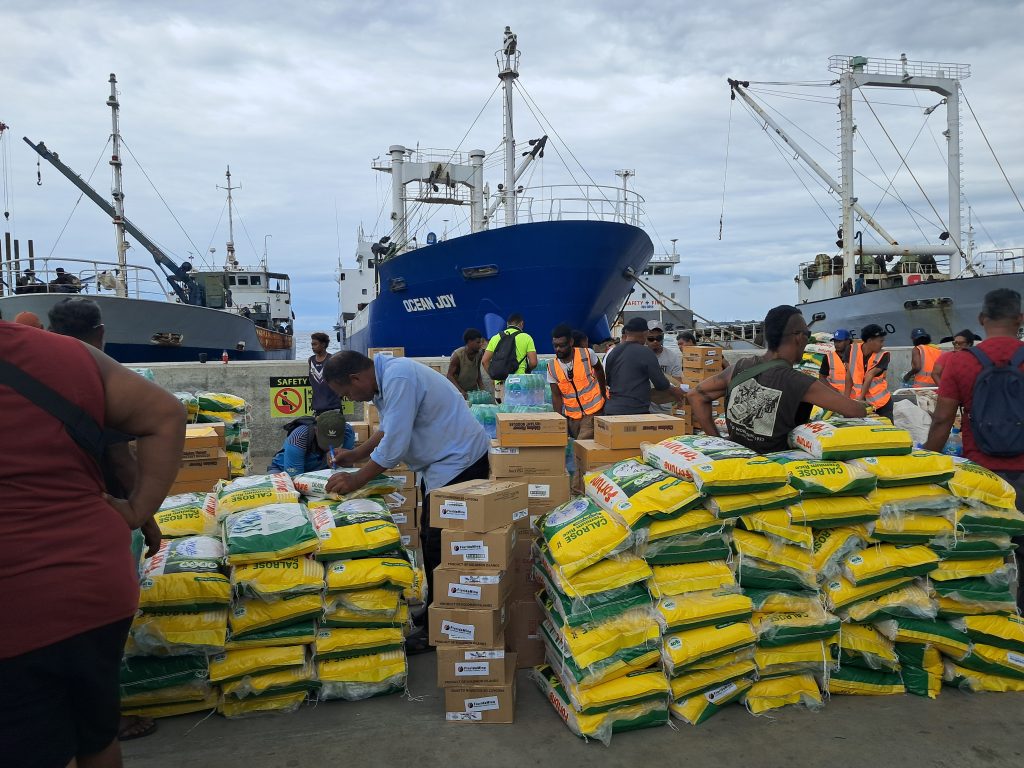
Officials pose for the handover of relief supplies bound for Rennell and Bellona, with Ocean Joy docked behind. (Far right), Renbel Premier, MPAs of Renbel Province, and a Florida Mining Company representative. Photo- SuppliedSacks of Calrose and Fortune rice and boxes of instant noodles for Rennell and Bellona are tagged and stacked at the wharf. Photo- Supplied.
These supplies are expected to sustain the two islands for about a month.
The provincial government’s relief supplies are shipped along with food and household items that individuals and families are also sending onboard MV Ocean Joy. These include items which the Renbel constituency has refunded following the cargoes lost with MV Anjeanette.
The shipment follows a four-month El Niño drought that has emptied water tanks and withered gardens across the islands, and the July 4th sinking of MV Anjeanette, which had been carrying relief supplies for the province.
Deputy Premier Collin Singamoana Tesu’atai, speaking to Island Sun yesterday afternoon, acknowledged the support while voicing frustration that the national government has yet to formally respond.
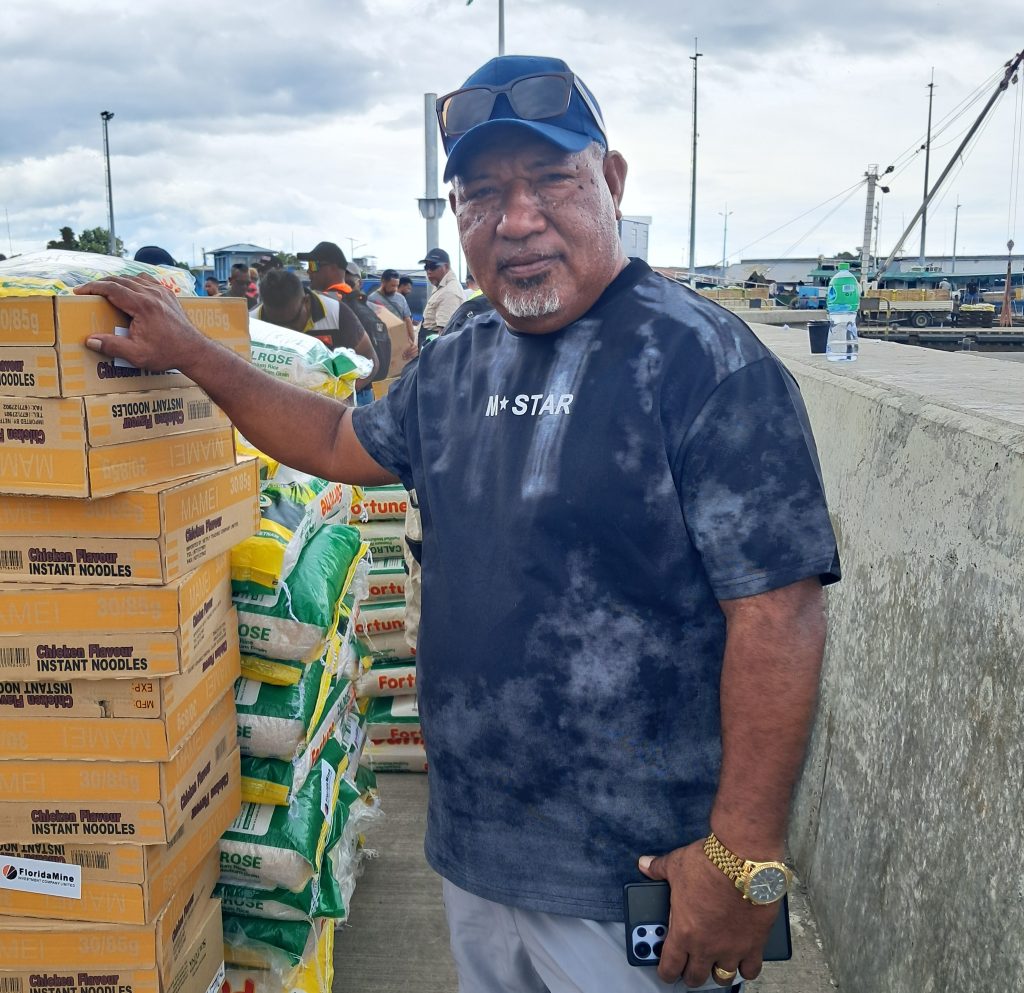
Deputy Premier Collin Singamoana Tesu’atai stands beside stacks of relief supplies. Photo- Supplied.
The National Disaster Management Office has indicated an assessment could take two to three months, and the province currently does not know who its disaster officer is.
“We feel neglected.
“It’s not fair when they deal urgently with other issues while ignoring others. Anything happening to its provinces is the national government’s responsibility,” Deputy Premier Tesuatai said.
The drought has hit Bellona Island and Ward 3 in Rennell island hardest, forcing residents to find water on the sea shores before the June school break.
Rennell’s water situation is comparatively better, but food is short across both islands, worsened by shipping and flight services that run only once or twice a month.
Tesu’atai credited Renbel Constituency MP John Tuhaika Junior for arranging the vessel and separately funding replacement goods lost in the MV Anjeanette fire.
Premier Eric Sau’eha also negotiated with the mining company to make the supplies possible.
“If not for the company, no one will rush in,” Tesu’atai said.
To officials distributing the aid, his message was direct: “Do not practise the habit of differentiating whatever you send home. Whether these people voted for you or not, help everyone in your ward. Whatever is given through MPA must go straight to the people.”
To Renbel people living in Honiara, he called for coordinated support through provincial leaders.
To those on the islands, he urged caution: “Use wisely whatever little is sent to you. It is not promised to continue every month—we do not have the budget to maintain this.”
Tesu’atai framed his criticism as a call for equal treatment, noting Renbel has never been formally declared a disaster zone despite past cyclones and droughts. He pointed to Cyclone Nina, which badly damaged Bellona, where residents went without government assistance for weeks and rebuilt largely on their own.
“It saddens me to see them not realise what disaster they are to act on,” he said.
According to the National Disaster Management Plan 2018, a ‘disaster’ is defined as – a serious disruption of the functioning of communities or society causing widespread human, material, economic or environmental losses which exceed the ability of the affected communities or society to cope using normal arrangements and which require special coordination under the arrangements of this Plan.
The Ocean Joy sails this evening with its cargo of relief. Whether the national government responds remains an open question.
People of Rennell and Bellona province are heavily dependent on processed foods, with a few families planting their own gardens to complement the menu.
However, four months of drought has seen a worsening water shortage coupled with food shortage. Making matters worse was no ship servicing the two islands for the last four months.
Families who have some processed foods left, such as rice and canned tuna, have had to strictly ration them, and families with gardens have reportedly shared whatever harvest they have had and are also trying to ration what is left.
Schools are reportedly yet to open their doors following resumption of the third term due to the drought and shortages.
A relief supply provided by the provincial government along with privately sent food items by individuals and families were lost in the devastating fire that led to the sinking of MV Anjeanette on July 4.