
Home Blog Page 316

Land owners call for rights to be vest upon resource owners

0

BY MORRIS NAFU

Landowner and Permit Holder, Apolonia Gito requests that the ownership of resources be vested upon resource owners and not the Government as side partners.

Gito made the statement before the Bills and Legislative Committee (BLC) at the National Parliament under Alluvial Miners Hearing yesterday.

Gito emphasised on “Part 1, Section 7 Ownership of Mineral subsection 1” of the draft Mineral Resource Bill 2025.

This subsection as quoted is “Ownership of a Mineral located in or on Solomon Island lands or Solomon Islands waters is vested on the people and the Government of Solomon Islands regardless.”

Gito calls on the rights to be vested in the hands of the people of the land and let the Government to act in support.

“Rights of ownership should not be equally shared and let all the rights to be vested upon the resource owning people,” she said.

She then further requests the Government to reconsider the Monarch rule, urging the Government to place the rights to the land owners.

Gito also mentioned Subsection 2 of the draft bill which reads as “In dealing with matters concerning minerals in Solomon Islands, the Government acts on behalf of the people of Solomon Islands and must act in the best interests if the people of Solomon Islands.”

In this regard, she said this where the government should be responsible and not extend its hands.

Meanwhile the Chairman of the BLC and Member of Parliament for West Are’are Constituency, John Maneniaru appreciates the concerns of all the land and resource owners present in the hearing and requests written submission to be submitted before Committee for further elaboration on the bill before tabling it on the floor of Parliament.

In a released Parliament statement, the Committee hopes to collect these submissions as evidences of its inquiry into the Bill and report to Parliament. The closing date for submissions is 4:30pm on Sunday 7th September 2025.

Inquiry into the Bill will commence on Monday 8th September 2025.

The Mineral Resources Bill 2025 is regarded as a landmark piece of legislation that aims to modernise the country’s regulatory framework for mineral resources.

It seeks to establish a clear and accountable system for authorising and regulating exploration, extraction, and processing of minerals.

Key objectives of the Bill include:

-Balancing development and protection by supporting mineral exploration and extraction while safeguarding the natural, social, and cultural environment of communities.

-Respecting customary rights, including ownership, use, and occupation of land, water, and sea in line with traditional practices.

-Promoting environmental responsibility and sound land management in mining operations.

-Clarifying rights and obligations of landowners, communities, and industry stakeholders to encourage fair, harmonious, and mutually beneficial relationships.

-Securing economic benefits by ensuring fair financial returns that maximise value for present and future generations of Solomon Islanders.

For feedback, contact:[email protected]

Finance education training for youths in Kwai, Ngongosila

0

By RODRICK DESURI

AUKI

Youths from the Kwai and Ngongisila Islands, in East Malaita are benefitting from a finance education training they attended in Adakoa in East Malaita from September 3 to 5, 2025.

This three-day training is the first of its kind and aims to give a clear knowledge and skills of management of business activities, and projects that are brought to the youths.

According to the Jack Ofasi, a total of 15 youths participated in the training.

He said the participants were fortunate and privileged to learn about the finance manual book that is very important in any business activity.

“It was a privilege for the youths here in Kwai and Ngongosila islands,” he said.

He said the training can help the youths in organising projects and business activities.

“It was a financial education training to help youths to organise their projects and any business activities that would be given to them by the National Youth Congress (NYC),” he said.

Ofasi said the training successfully ended on Saturday, September 6, 2025 wit participants receiving their certificates.

The training was facilitated by Deputy Director of the Ministry of Women, Youth, Children and Family Affairs, (MWYCFA), Richard Olita and Liveth Maesimae from the Goshen.

The training was sponsored by National Youth Congress, and was made available by ward 16 Provincial Member, Preston Billy Jnr Farobo.

For feedback, contact:[email protected]

13 members expected to sign PRF Treaty

0

BY BEN BILUA

Thirteen members of the Pacific Islands Forum (PIF) are preparing to sign the Pacific Resilience Facility (PRF) Treaty, a landmark move that will pave the way for the establishment of the region’s first international financial institution.

Speaking ahead of the signing, PRF General Manager Finau Soqo said the facility is designed to attract and manage international donations to support climate and disaster resilience programmes across the Pacific.

She explained that the institution will also play a vital role in international payments and trade facilitation for member states.

Soqo said the decision to establish the PRF as a treaty-based international financial organisation is to ensure that development partners and multilateral agencies have a clear legal framework to channel support into climate change initiatives.

“The reason behind setting up the PRF under a treaty is to provide easier and legal access for our partners who are willing to support climate programs in the Pacific,” she said.

Sogo said the PRF has secured USD 159 million in pledges, reflecting growing recognition of the region’s climate finance needs in the past 18 months.

She said contributions have so far come from countries including Saudi Arabia, Germany, China, Australia, Japan, New Zealand, Nauru and the United States.

“What we’re seeing is that, because it’s a new concept, a new idea to invest in grants, our investors are dipping their toes in the water – they’re testing, so they’re coming in with single digit contributions,” Soqo said.

She added that the long-term target remains at USD 500 million, which would ensure the fund’s sustainability before grant disbursements begin.

Despite the cautious start, Soqo remains optimistic.

“I’m hopeful that more signatories will join the treaty on Wednesday,” she said, underscoring the importance of regional solidarity in securing climate resilience financing.

For feedback, contact:[email protected]
Mining; the biggest driver of country’s GDP 

0

BY SAMIE WAIKORI

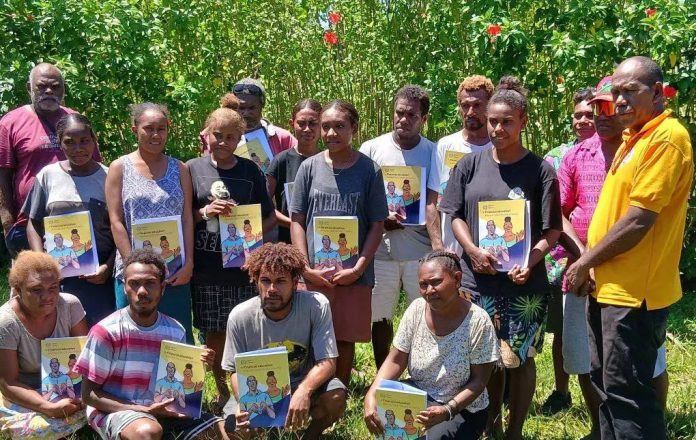
The Ministry of Finance and Treasury has reported that the mining sector will be the key driver of the country’s Gross Domestic Product (GDP) for this year and next year.

Deputy Secretary for Economics at the Ministry of Finance and Treasury, Selwyn Takana made the statement in response to questions raised by Leader of Opposition, Matthew Wale, during a recent Bills & Legislative Committee (BLC) hearing.

“In terms of the economy, we are looking at the mining sector and it will be the key driving sector to contribute to the country’s GDP.

“We projected that it will grow around 43 percent contribution to GDP this year and next year, it will grow up to 46% GDP.

“So, we are anticipating that mining sector will be the biggest driver of our economy, as logging sector is going down,” he said.

Takana said logging is anticipated to decline and the country begins to experience decrease in export of volumes of cubic metres.

In logging sector, we expect volume will be around 1.3 million cubic metres – a decline from 1.5 million cubic metres the country has previously exported. 

“So, we are anticipating mining sector to be the key driver for growth this year and next year,” he said.

Island Sun understands that three major mining operations are currently going on in the country, nickel operations in Isabel and Choiseul, while gold operation in Guadalcanal province.

Bauxite mining in Rennell Bellona province came to halt few years ago, and the country is still waiting for revenue from the 33 shipments that were exported.

For feedback, contact:[email protected]
Review of RRA ongoing

0

BY JOHN HOUANIHAU

The review on Pacific Islands Forum (PIF) Review of Regional Architecture (RRA) is ongoing.

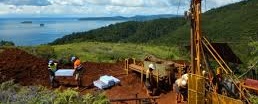
Prime Minister Jeremiah Manele said that PIF leaders will be discussing the Review of Regional Architecture (RRA) at the Leaders’ Retreat in Noro, in the Western Province.

The RRA involves the structure of institutions, processes, and partnerships focused on achieving the Pacific Islands Forum’s priorities, in line with the 2050 Strategy for the Blue Pacific Continent.

The Post-Forum Dialogue (PFD) is a mechanism for selected countries outside the Pacific Islands region to engage in discussions with Pacific Leaders after the main Forum meeting.

“This review of the regional architecture is important in terms of the work of the organisations, CROP agencies included, including the review of the post-forum dialogue mechanism. That’s part of the review of the regional architecture,” PM Manele told local Media Thursday this week.

“I believe this review of the regional architecture will further put us in a good position as a region to address the many challenges facing us, but also to capitalise on the opportunities that are before the region,” said PM Manele.

Secretary to the Prime Minister’s Special Duties, Dr Jimmie Rodgers, said that there are two parts to the reviews.

“Three of my colleagues, Melanesia, we are representing, Polynesia represented by Samoa, and Micronesia by Macedonia. We were reviewing four things. One of them is political leadership and unity,”

“The second is membership of the Forum. The third one is the rationalisation of the regional organisations. And the fourth one is how do you pull the regions together to work more together in areas that we can,” said Dr Rodgers.

For feedback, contact:[email protected]
A new season of regionalism

0

BY LORETTA B MANELE

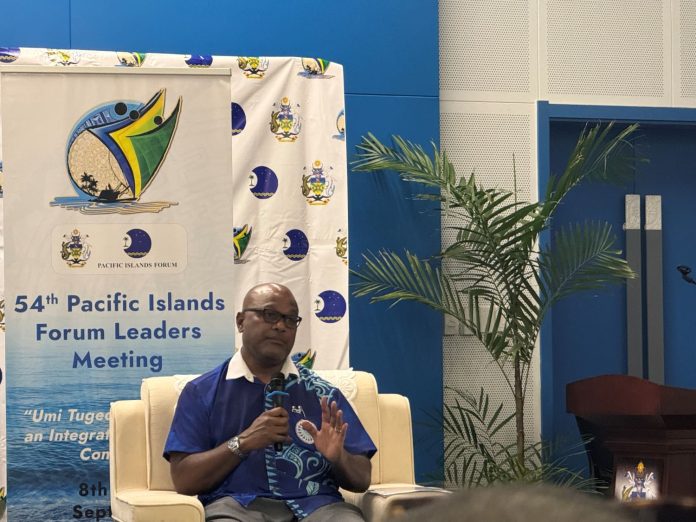
Pacific Islands Forum (PIF) leaders have realised that it is a new season of regionalism, says Esala Nayasi, Deputy Secretary General for PIF.

He expressed the sentiment when speaking at the first of a three-day PIF Workshop for regional and local media representatives on Friday, September 5, 2025 at the Forum Media Centre.

Nayasi pointed out that in journeys, a season plays a very important part as we, the Pacific family voyage and navigate our waters and seas.

“So, they have realised in their wisdom that it is a season for us to reflect, a season for us to renew our relationships, and a season for us to set a new direction for the region,” he stressed.

Nayasi added that as part of that reflection, PIF leaders have decided that as a region, we need a new strategic direction for what they now call the 2050 Strategy for the Blue Pacific Continent.

He also stated that leaders have also come to realize in making decisions as a region to fully implement and be effective in achieving goals that are set in the 2050 Strategy.

The PIF Deputy Secretary General mentioned that in regards to this, PIF members need to re-look and see and assess what systems we have.

“Original systems that we have to be able to effectively meet the challenges of our time and obviously achieve the goals and aspirations, the vision of our leaders and the aspirations of our people,” he said.

Nayasi explained that the 21050 Strategy was formulated back then and it took some time from 2019 to 2022, given the COVID phase for it to be finalised.

He said this 2050 Strategy is what we now call the “North Star”.

Nayasi went on to state that it is important as we look back and understand that the wisdom of our leaders need a direction which we can follow hence the “North Star”.

He emphasised that they need that North Star to align all our voyages, all our canoes pointing out Fiji’s Uto Ni Yalo and Solomon Islands’ Tepuke as an example.

“They need a North Star that will guide everyone. And it speaks to our values, it speaks to our principles, and it’s grounded in traditional knowledge and it’s grounded in our cultures.

Because despite our differences, we are one people and we have shared and common values which binds us together,” Nayasi said.

For feedback, contact:[email protected]
Pacific leaders to endorse labour mobility principles

0

BY BEN BILUA

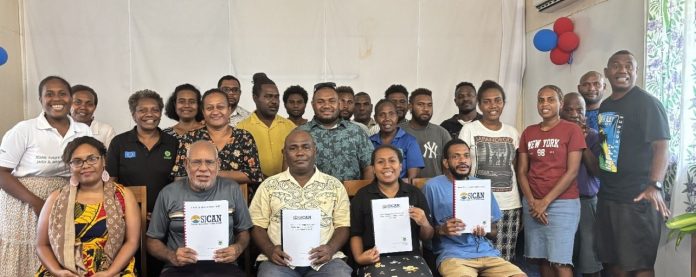
Pacific leaders are preparing to endorse the Pacific Regional Labor Mobility Principles – a new framework that aims to protect the rights and wellbeing of seasonal workers across the region.

Pacific Islands Forum Secretariat’s Team Leader of Trade, Natalia Patternot, told journalists on Saturday, September 6, 2025 that the initiative marks a critical step forward in safeguarding Pacific islanders engaged in overseas labour programs.

“Now, as we all know, labour mobility—our Pacific people—they are not commodities. So there lies the critical development of these principles.

“It’s to ensure that labour mobility continues to contribute to meaningful and sustainable economic development, social protection, as well as regional cooperation,” she said.

Patternot explained that the principles are designed as a collective approach, agreed upon by leaders, to improve conditions and experiences for Pacific workers.

She highlighted how labour mobility in the Pacific has evolved over the years—from unskilled seasonal work to opportunities in semi-skilled and certified sectors such as meat processing and aged care.

Patternot also highlighted that employment terms have also shifted from a few months to medium-term contracts lasting up to four years.

She expressed that some countries in the Pacific are now shifting from being the sending countries to being the receiving countries.

“The conversation on labour mobility has evolved quite significantly over the past decade. It’s an important opportunity, but with opportunity also comes challenges.

“Those challenges include risks of discrimination, exploitation, forced labour, and unfair recruitment practices,” she said.

Patternot said the principles are grounded in Pacific values and provide a foundation for stronger worker protections.

The final decision, however, now rests with Forum leaders.

For feedback, contact:[email protected]

Australia boosts support for Solomon Islands climate action network

0

BY MORRIS NAFU

The Australian Government, through the Australian High Commission (AHC) to the Solomon Islands reaffirms its support for the Solomon Islands Climate Action Network (SICAN).

In a statement released on Friday, September 5, 2024, the AHC confirmed its commitment to strengthen SICAN’s programmes.

“Recently, SICAN members endorsed new organisational and governance policies, backed by Australian Government funding that aim to enhance transparency and good governance.

“These policies cover financial and assessment management, fraud and corruption controls, and human resources, ensuring SICAN can effectively amplify the voices of Solomon Islanders on climate change and build a resilient community,” the statement said.

Also noted is that Rod Hilton, Australian High Commissioner, highlighted SICAN’s vital role in addressing climate change impacts in the Solomon Islands.

“Australia is committed to supporting local climate action.

“It’s encouraging to see inclusive leadership and collaboration driving climate resilience here,” he said,” he said.

SICAN Coordinator Rodrick Holness expressed gratitude for Australia’s ongoing support, noting that the new policies create a strong framework for accountability, safeguarding, and operational excellence to guide SICAN’s future.

This support builds on Australia’s backing of SICAN’s participation in last year’s United Nations climate negotiations (COP29) in Azerbaijan, ensuring Solomon Islander voices are heard on the global stage.

Looking ahead, Australia and Pacific Island nations are jointly bidding to host COP31 next year.

If successful, it will mark the first time the annual climate talks are held in the Pacific, spotlighting the region’s unique climate challenges and bringing a Pacific perspective to the world.

For feedback, contact:[email protected]

US policy shifts put pressure on Tuna Treaty

0

BY BEN BILUA

Changes in the United States’ foreign policy have placed renewed pressure on the long-standing Tuna Treaty between the US and Pacific Island countries.

Pacific Islands Forum Secretariat’s Acting Director of Governance and Engagement, Salome Taufa, revealed this during her presentation at the Pre-Forum Media Training yesterday.

Taufa said the US Tuna Treaty remains a critical source of revenue for many Pacific nations, and disruptions to the agreement could have long-term consequences for small island states.

She said the Pacific region has been directly and indirectly affected when the US changed its policy.

Taufa said the issue had been raised during the Fisheries Ministers’ meeting, where members agreed to escalate the matter to the highest level for further deliberation.

She also highlighted efforts earlier this year to repair and strengthen relations with Washington.

“Early this year, there was a mission led by the Forum Chair, supported by the Secretary General, to the US. They had good meetings there. It was trying to reestablish and just trying to strengthen the relationship with the US. Of course, the U.S. Treaty was one that was on the agenda in trying to improve the relationship,” Taufa said.

She stressed that the Tuna Treaty is likely to feature on the agenda at the 54th Pacific Islands Forum Leaders’ Meeting next week.

The South Pacific Tuna Treaty, which was signed in 1987 and entered into force in June 1988, allows U.S.-flagged purse seine vessels to fish within the exclusive economic zones (EEZs) of Pacific Island parties in return for access fees and U.S. government assistance.

The treaty is seen as an effort to balance U.S. commercial fishing interests with Pacific nations’ sovereignty over their marine resources.

Sixteen Pacific Island nations are parties to the treaty, alongside the United States. These include Australia, Cook Islands, Federated States of Micronesia, Fiji, Kiribati, Marshall Islands, Nauru, New Zealand, Niue, Palau, Papua New Guinea, Samoa, Solomon Islands, Tonga, Tuvalu, and Vanuatu.

Over the years, the treaty has undergone several reviews. A major change came in 2016, shifting the framework to provide U.S. vessels with a set number of fishing days while allowing the U.S. to purchase additional access directly from Pacific states.

In March 2024, the U.S. and the Pacific Islands Forum Fisheries Agency (FFA) signed a new 10-year financial package following the expiry of the previous arrangement in June 2023. The agreement includes an annual $60 million contribution from the U.S. government, supplemented by industry fees, along with an additional $10 million in 2023 for economic development and climate change-related projects. The deal is set to run until 2033.

Despite this renewal, concerns remain over how shifts in U.S. policy may affect the stability and future of the treaty.

For feedback, contact:[email protected]

Sea ambulance to service Savo island handed over by China

0

BY IRWIN ANGIKI

More than 4,000 people on Savo island are set to benefit from a sea-ambulance donated by China to the Savo-Russell constituency.

The constituency received a fibreglass boat fitted with a 40 horsepower Yamaha engine and fuel tank yesterday during a lowkey handover at the constituency office at Ngossi, West Honiara.

This boat is to be used as an ambulance at the Panueli clinic on Savo island, transporting patients from communities, and also referral cases to the national referral hospital (NRH) in Honiara. With no roads on the island, the only mode of transport is by sea.

Constituency development officer of Savo-Russell, George Hassar said they had requested assistance from the Chinese embassy early this year to have a sea ambulance.

“The PRC Embassy responded immediately with $100,000 funds, but engines were out of stock thus the delay. But, when the engines were available this week, we purchased it yesterday, and today the handover,” Mr Hassar said.

Hasser says this is the first sea ambulance to be given to a clinic in the constituency, and they are looking forward to having each clinic in Savo-Russell own a sea ambulance.

“With this ideal, we are looking forward to more assistance from the PRC embassy through our partnership – to donate more sea ambulances to other clinics throughout the Savo-Russell constituency,” Hassar said.

Director Gu from the Chinese embassy in his keynote address said the Embassy is happy to give the donation which will help improve the daily life of the people and communities on Savo.

“I wish to express my special thanks to Hon Oliver Salopuka and his team, who helped our embassy’s communication with the local community, worked hard during the past few weeks and making today’s event happen in such as sooner, smooth and thoughtful manner,” Gu said.

Gu reiterated China’s willingness to help Solomon Islands modernise, adding that the embassy helped establish sister relations between the Central province, in which the Savo-Russell constituency is located, and Hubei province in China to further cooperation and development opportunities.

“Looking ahead, China is ready to work with you and all Solomon Islands people to further advance our friendship and cooperation between the two countries and bring more benefit to our two peoples,” Gu said.

CDO Hassar in his keynote conveyed the gratitude of MP Oliver Salopuka, the constituency and people of Savo-Russell islands to the people and government of China for the donation.

“We really appreciate your assistance for the purpose of the sea ambulance. A common medium of transport in our constituency is the sea transport. So, this assistance is more than we expect that will really help the livelihoods of our people.

“For so long, we don’t have any mini-hospital like other constituencies, we find it so hard to help sick people. We have to move them to Honiara in search of further treatment. That’s why we are so grateful for this help,” Hassar said.

CDO Hassar said one of the constituency’s long-term plans is for Savo-Russell to have a mini-hospital.

He adds that this can be possible through help from friends like China.

More sea ambulances will be distributed to other clinics in the constituency later, Hassar said.

Hassar explained that in the Savo-Russell constituency, there are only two main clinics – Panueli being the only one on Savo, and Yandina clinic on Russell islands.

The main challenge is transporting patients to these clinics via sea transport, which often are delayed and costly for the rural populace.

Furthermore, seriously ill patients requiring treatment not available at the clinic are referred to the NRH and require transport.

Hassar said with the donation, these challenges will be addressed on Savo island.

Operation of the sea ambulance is catered for by the clinic’s budget, which is supported by the Central province and the constituency.

For feedback, contact:[email protected]